
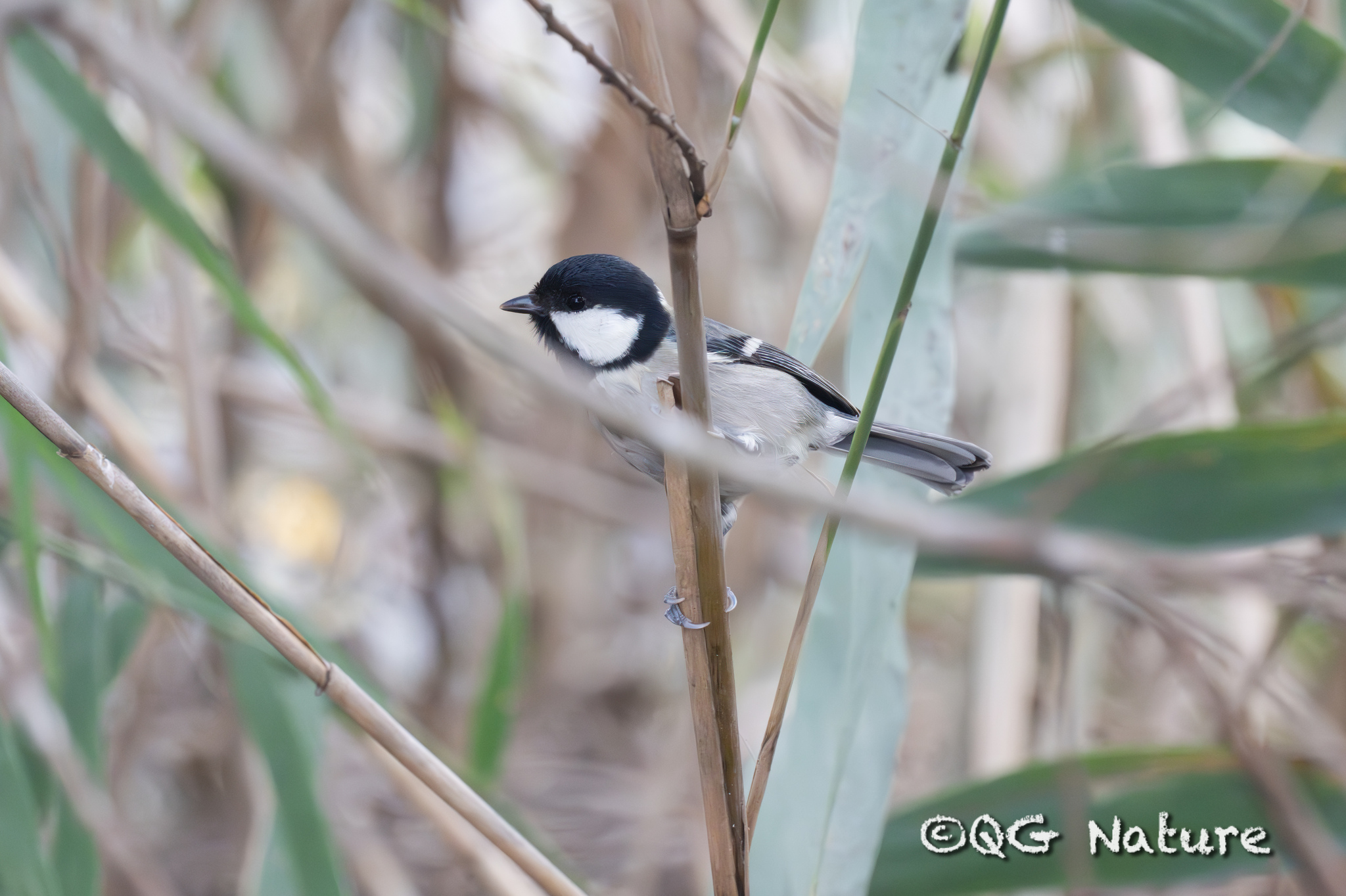
Cinereous Tit
Parus cinereus
大山雀
Introduction
The cinereous tit (Parus cinereus) belongs to the tit family Paridae. Formerly classified as subspecies of the great tit complex, molecular studies have confirmed its full species status. Recent taxonomic revision has also lumped the Japanese tit into this species. The species exhibits considerable geographic variation across its range, which extends from the Middle East through the Indian subcontinent to Southeast Asia and East Asia. Distinguishing features include grey upperparts and white underparts, which differentiate it from great tit relatives. It forages in mixed-species flocks in canopy layers. The species occupies various forest types, from temperate woodlands to tropical gardens.
Description
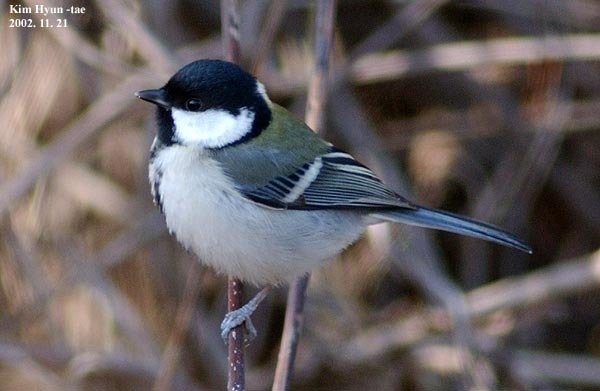
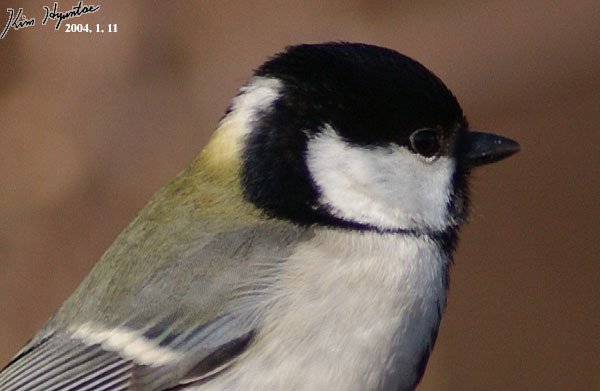
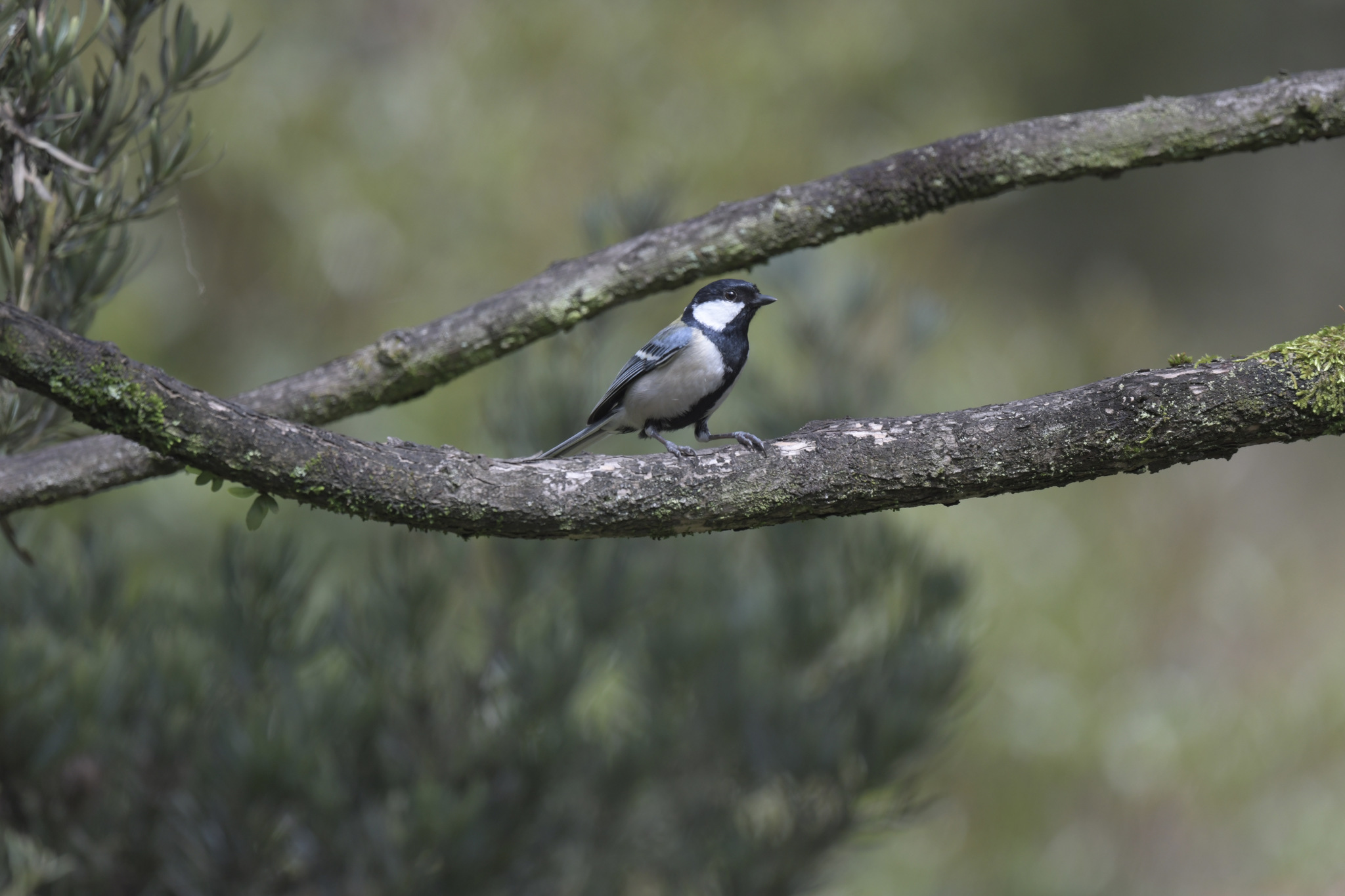
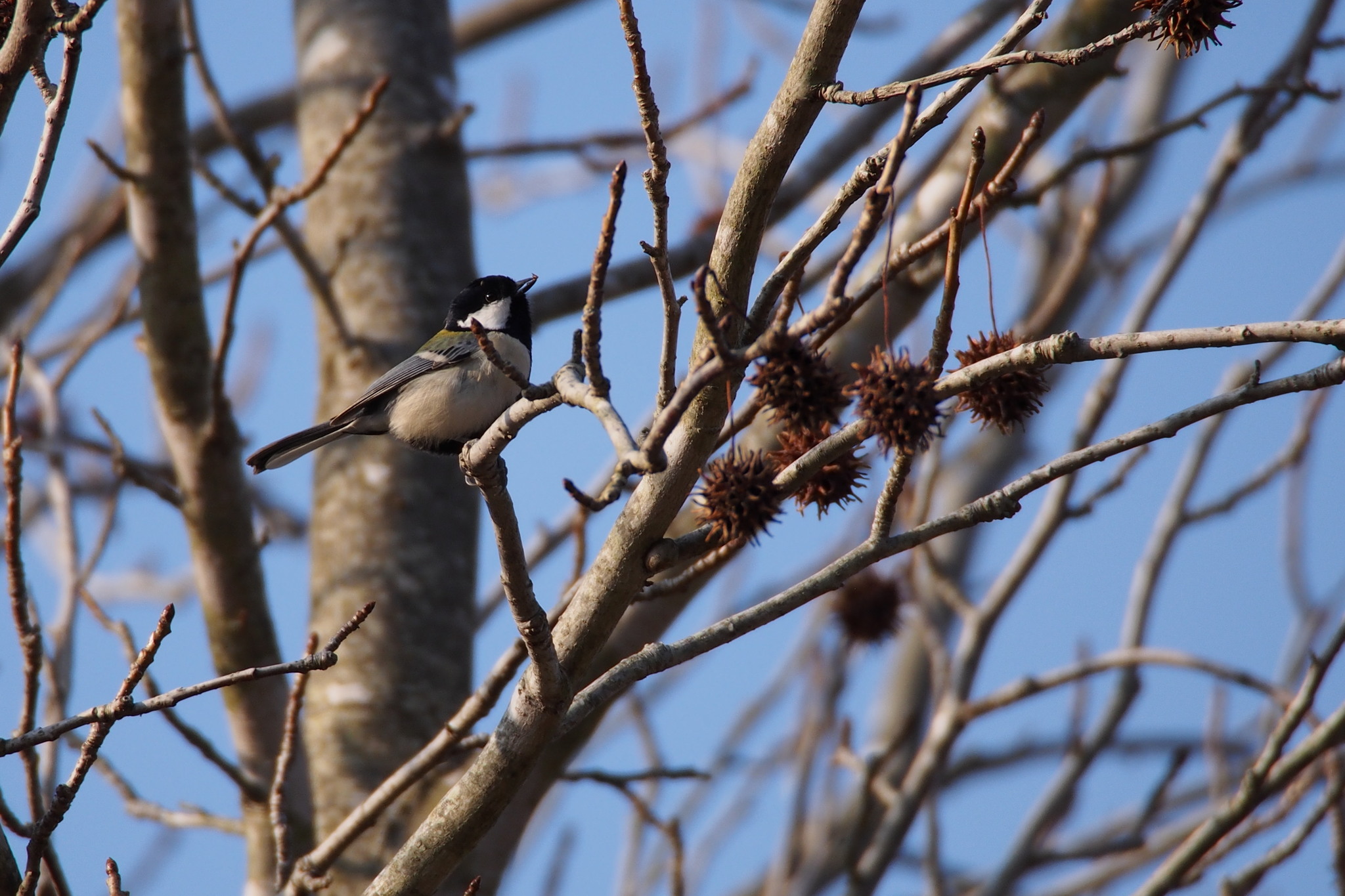
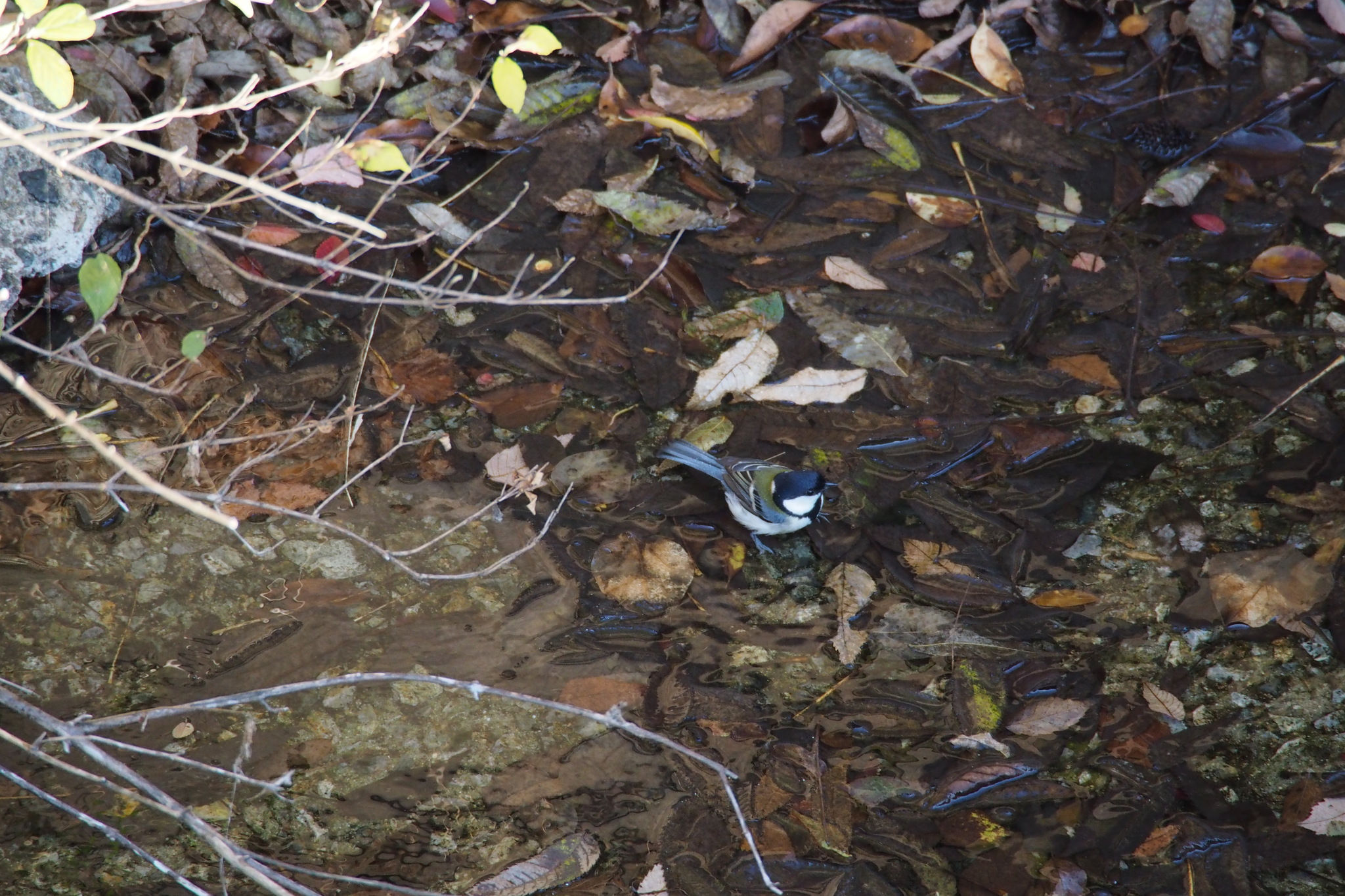
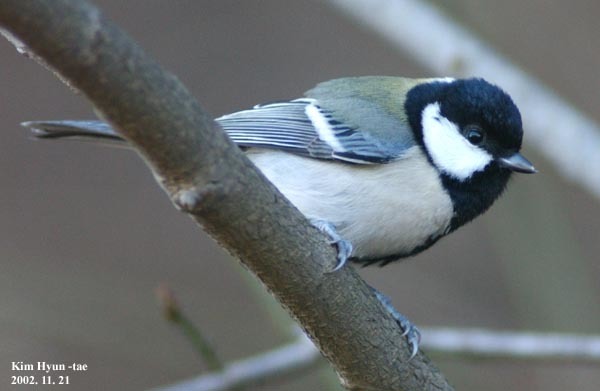
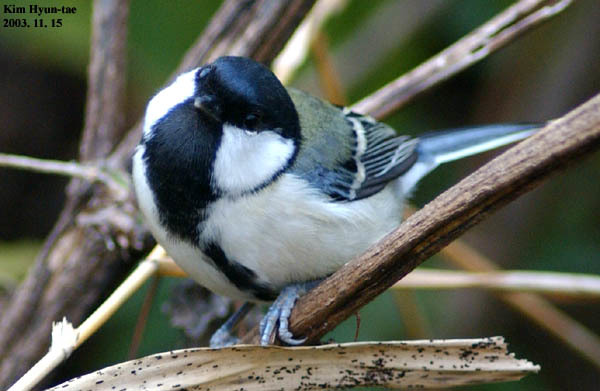
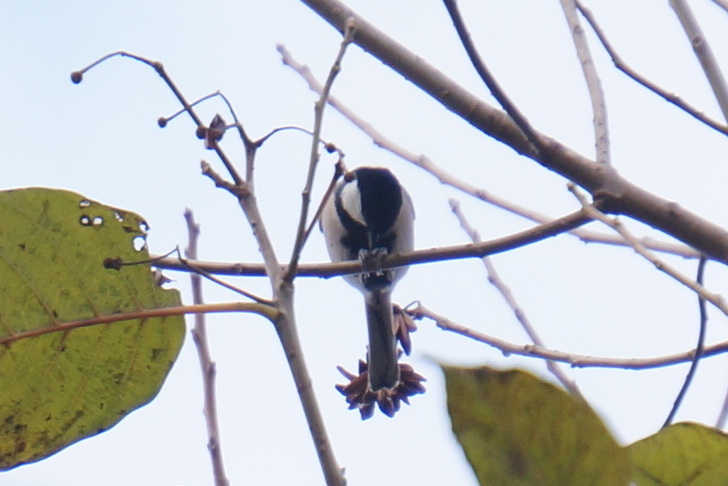
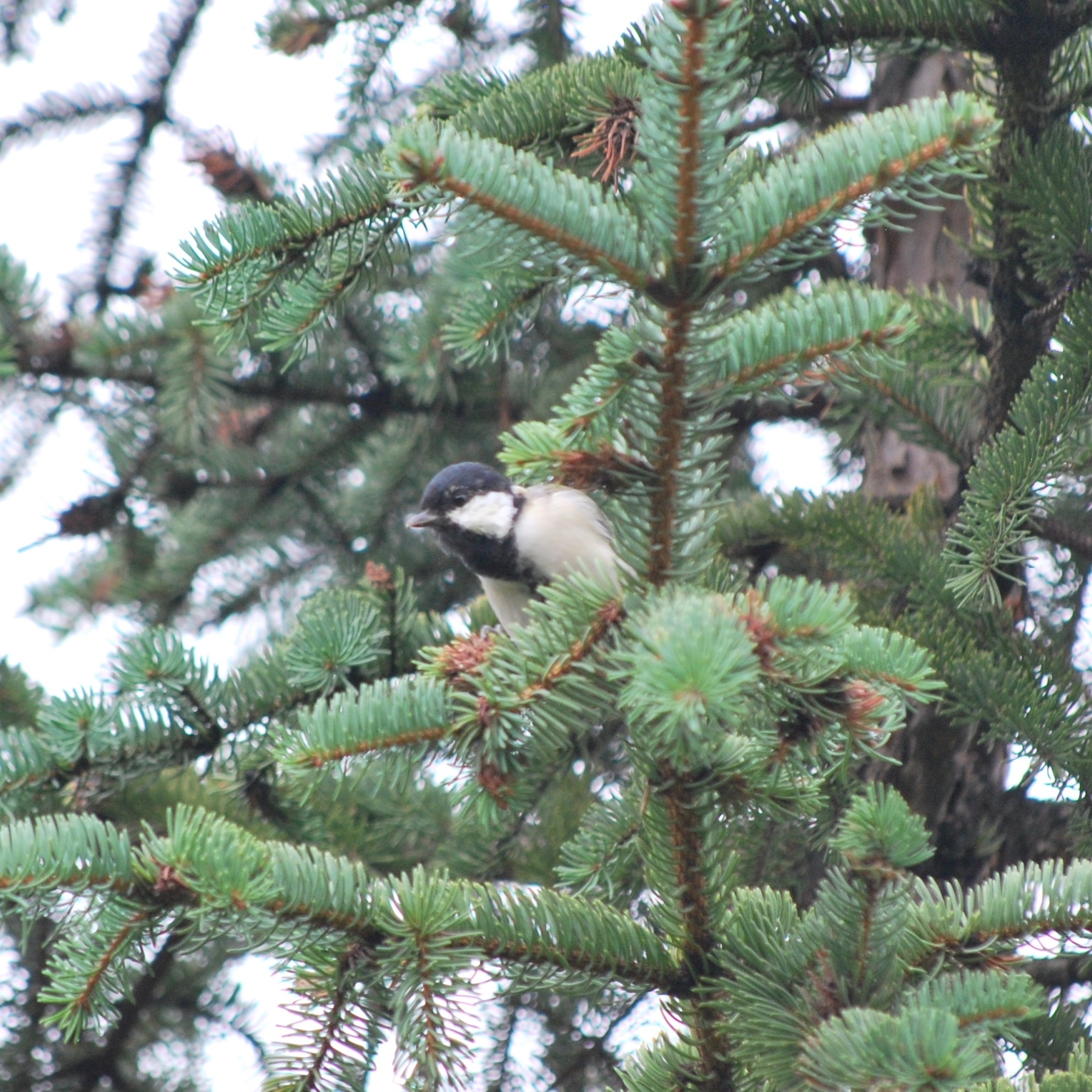
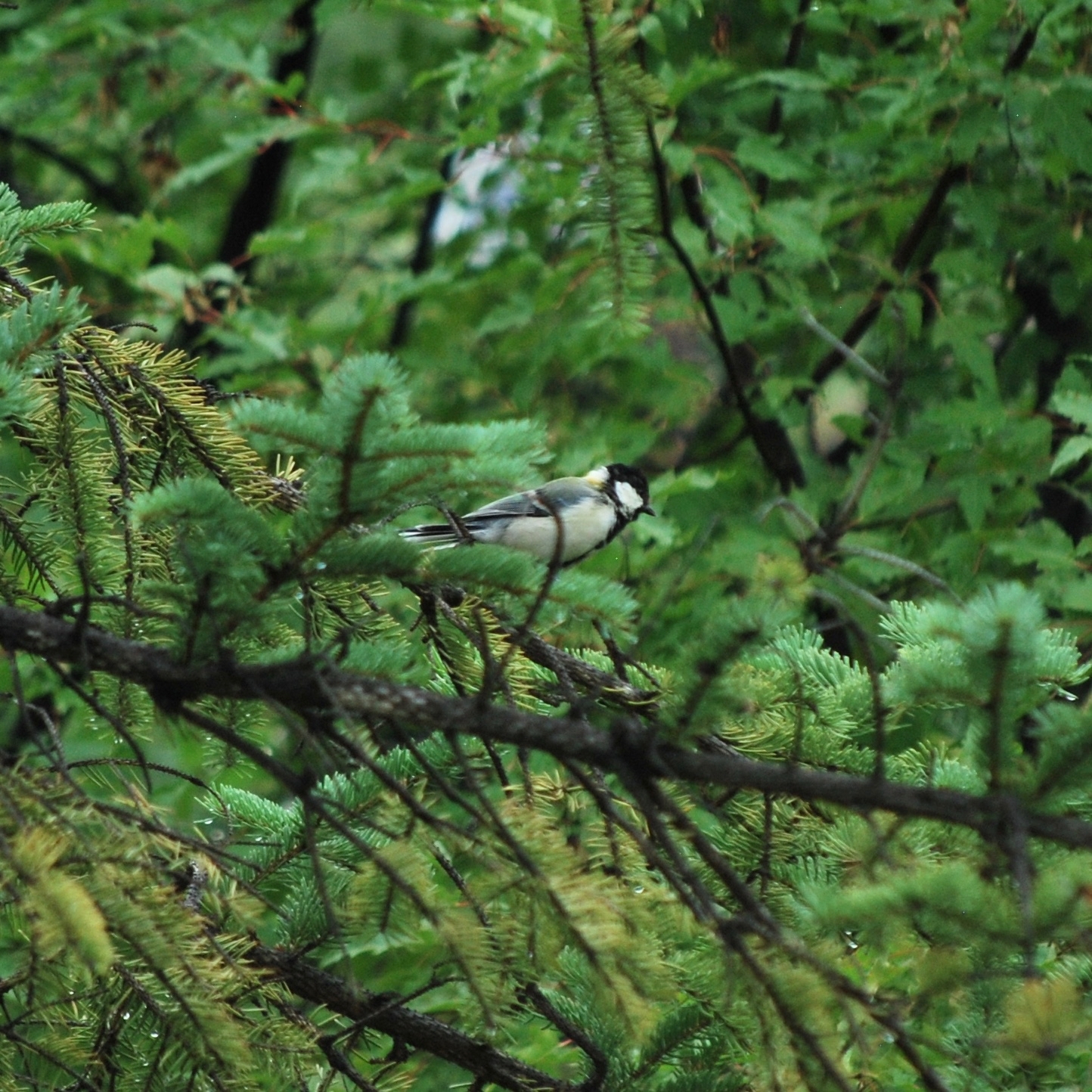
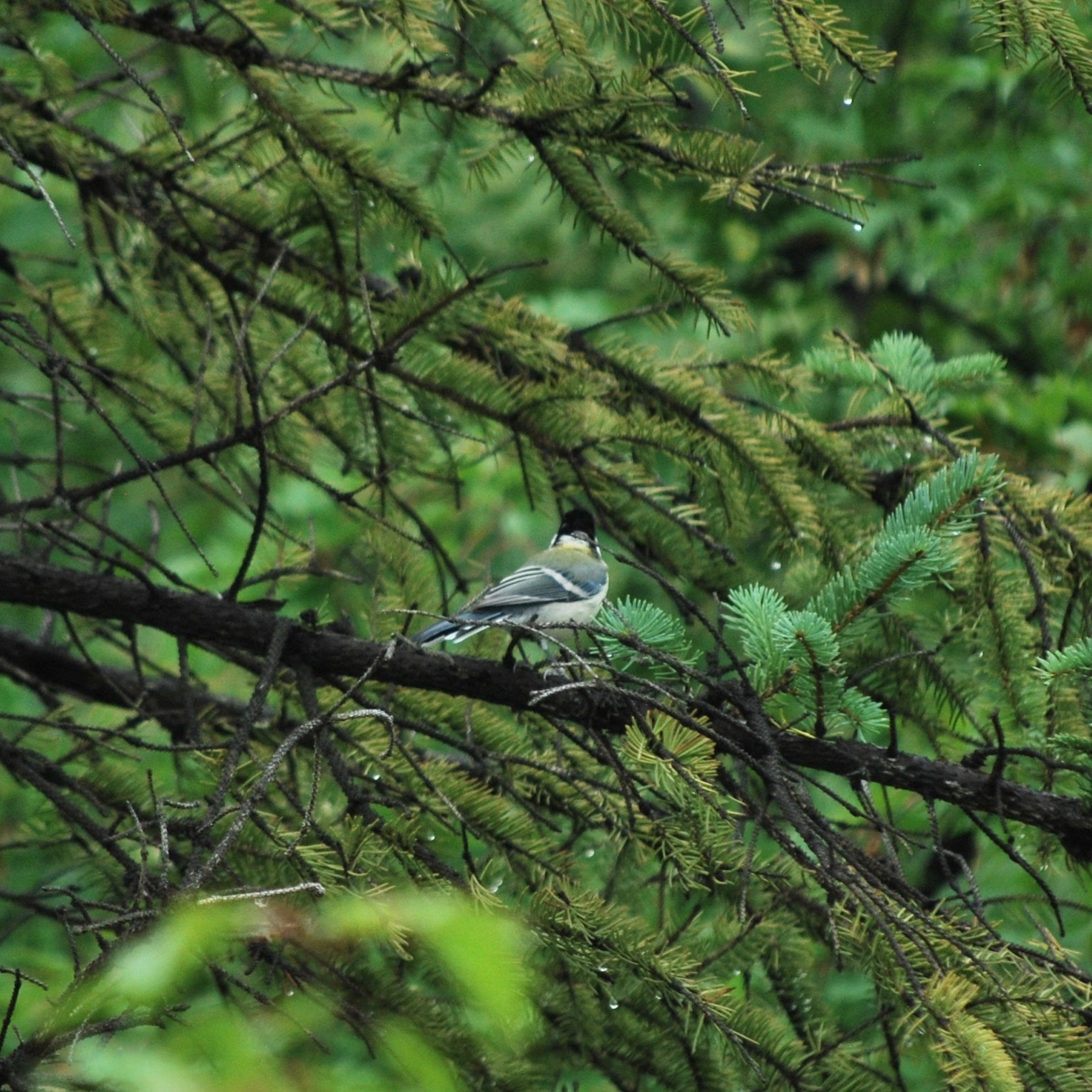
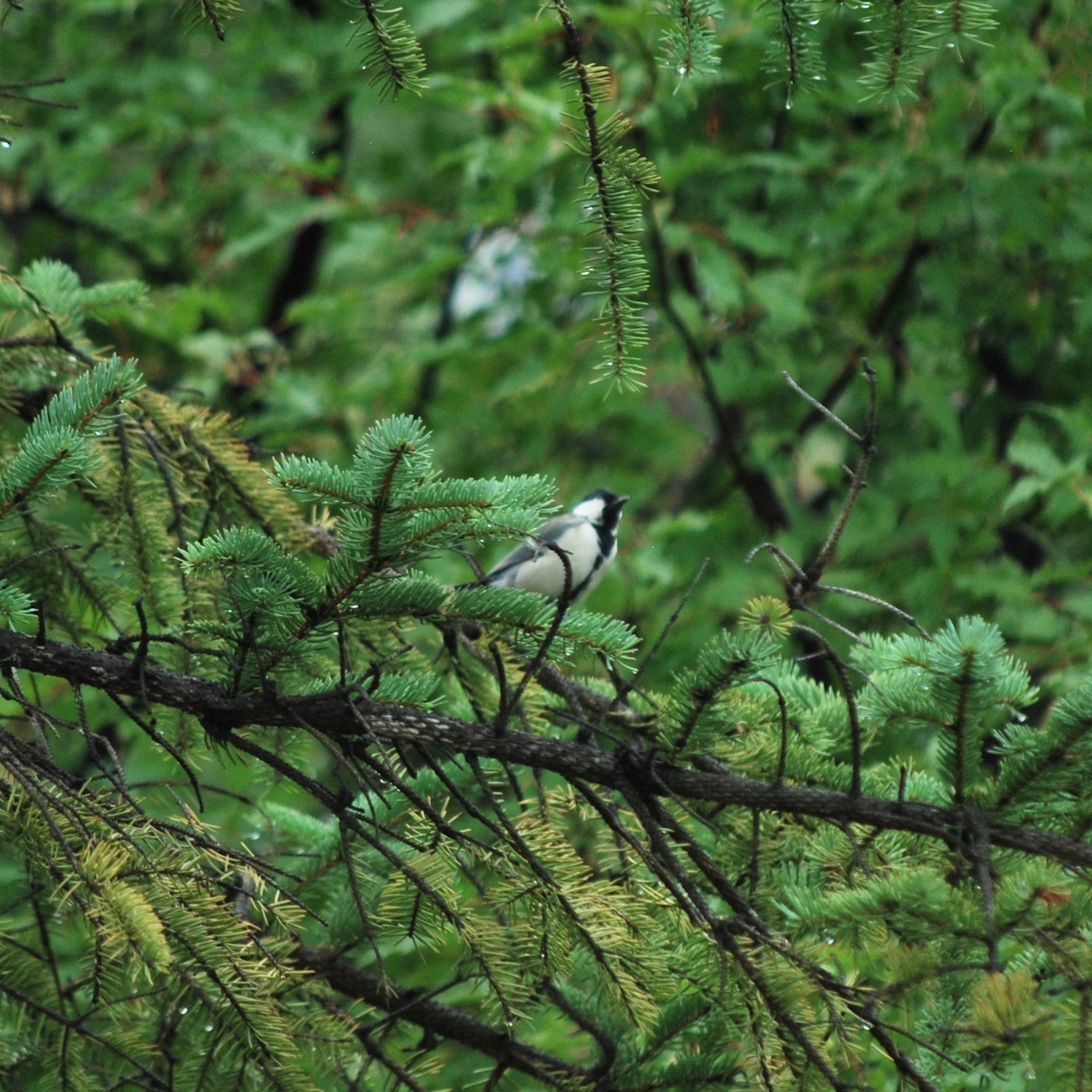
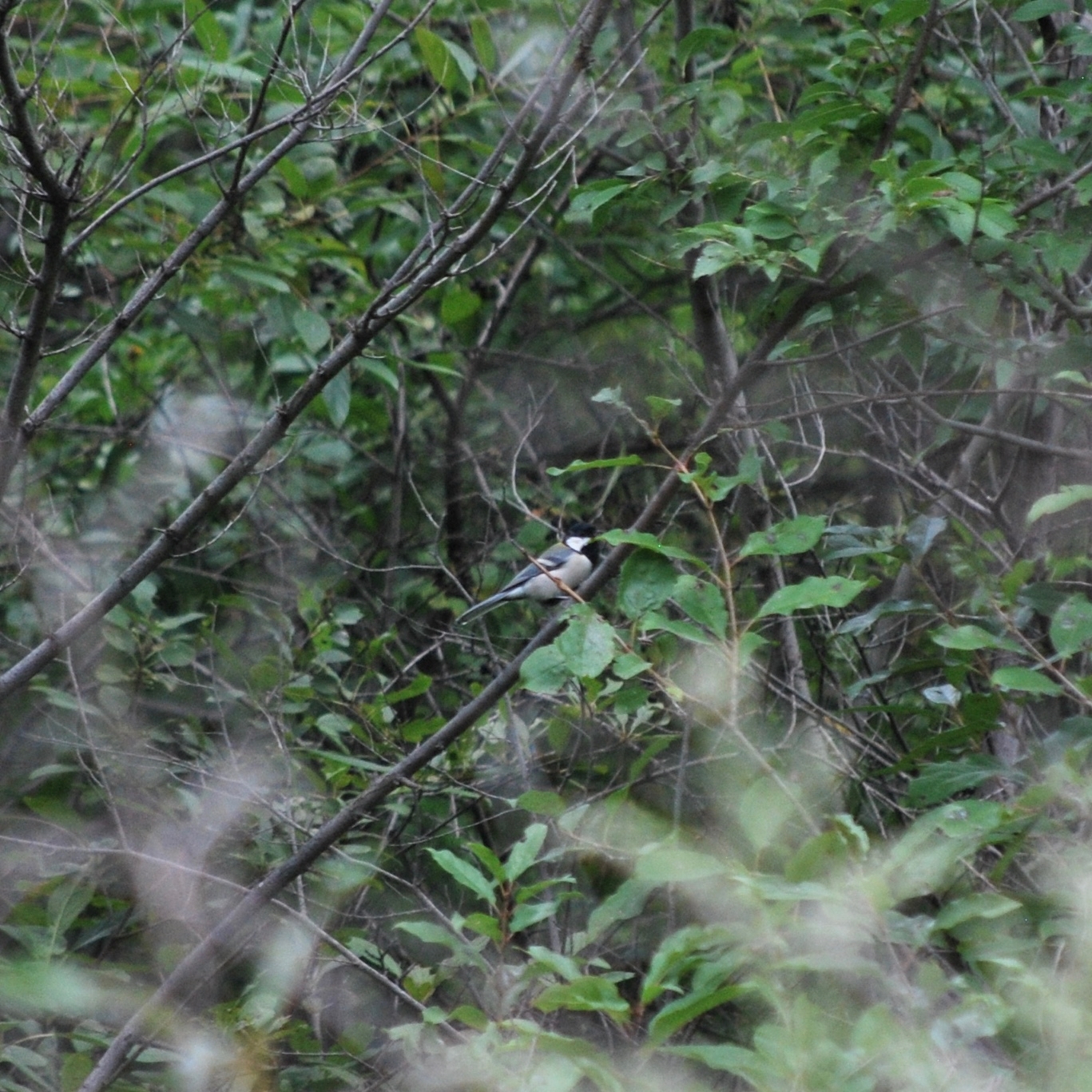
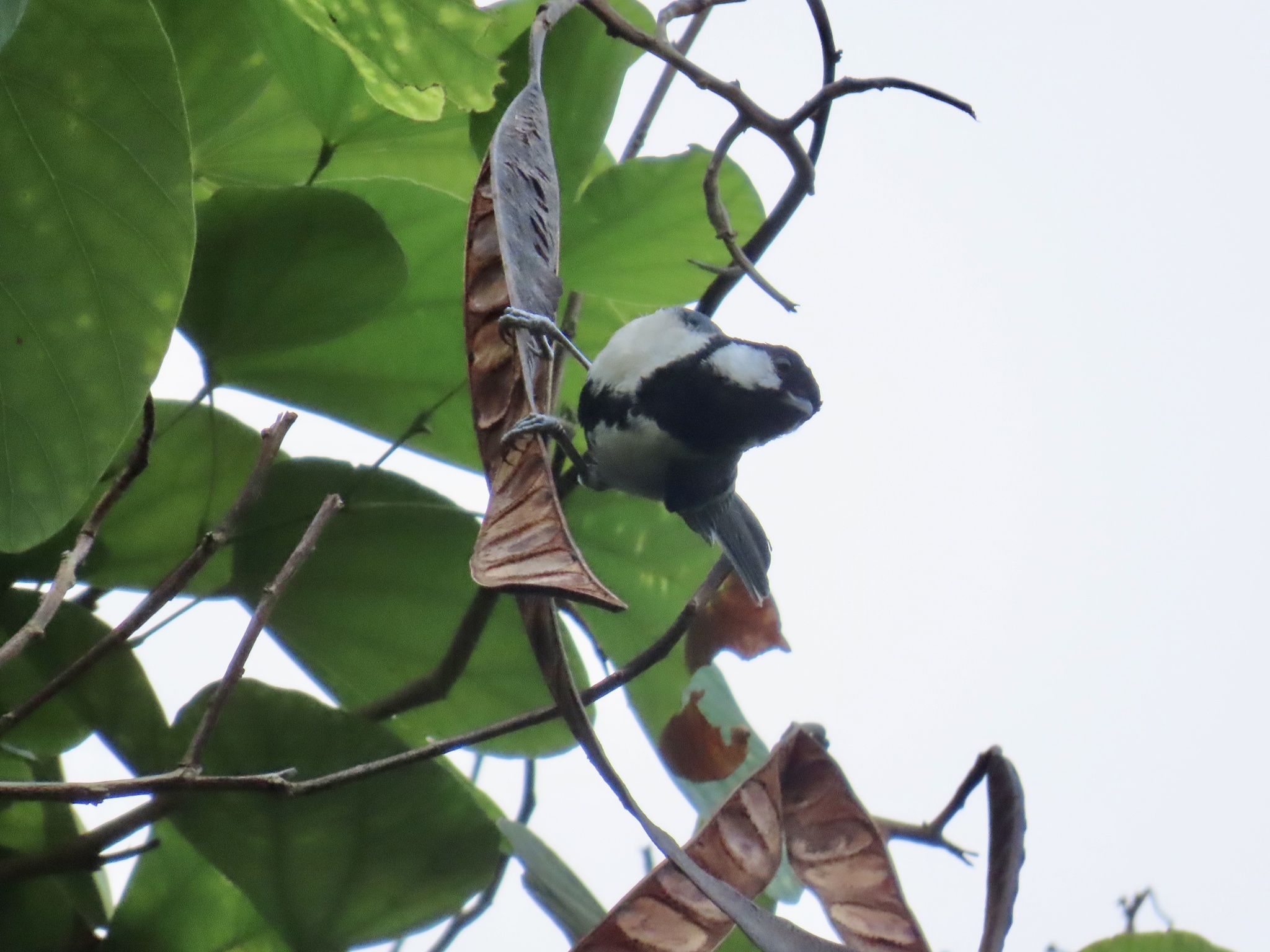
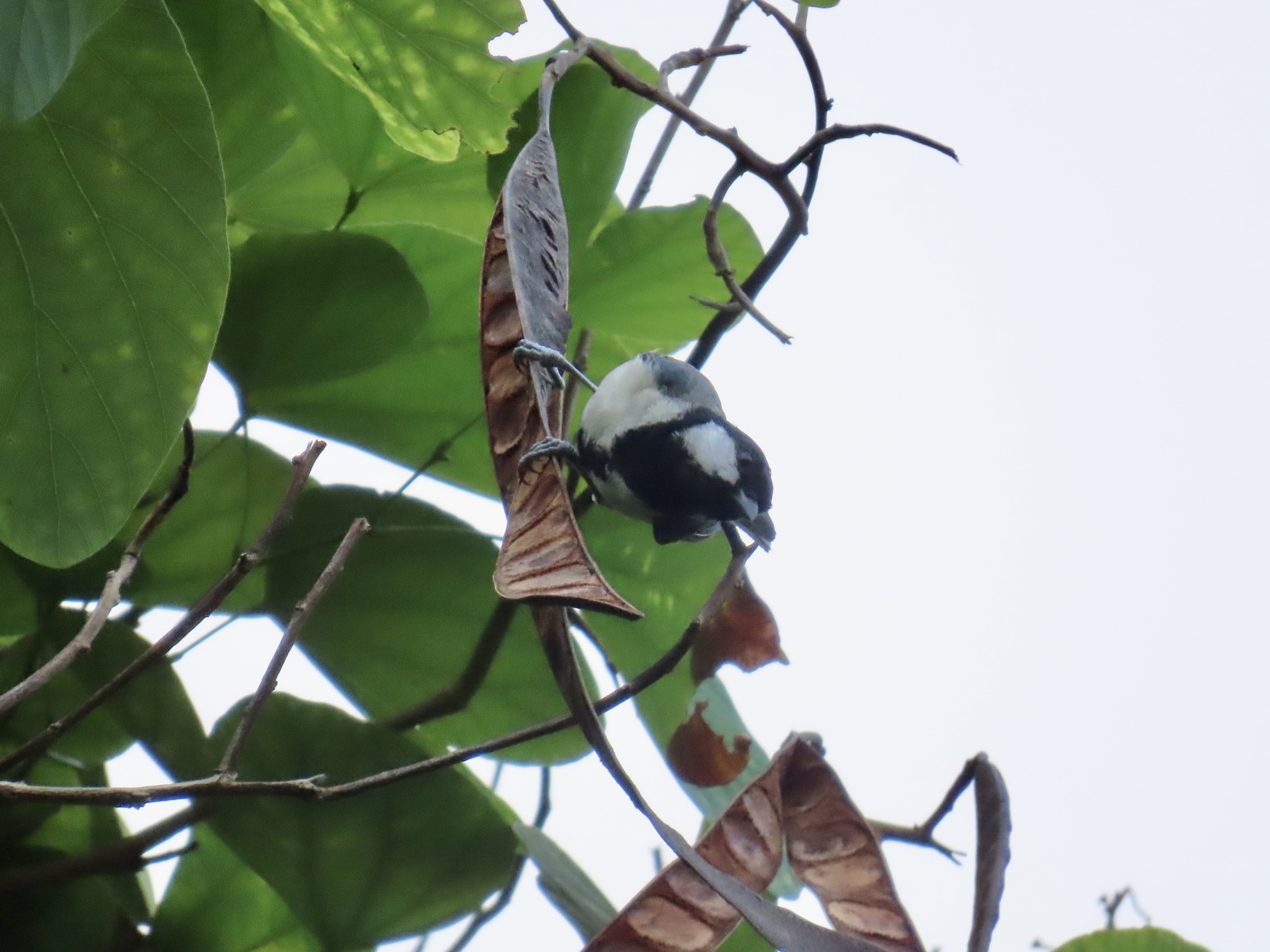
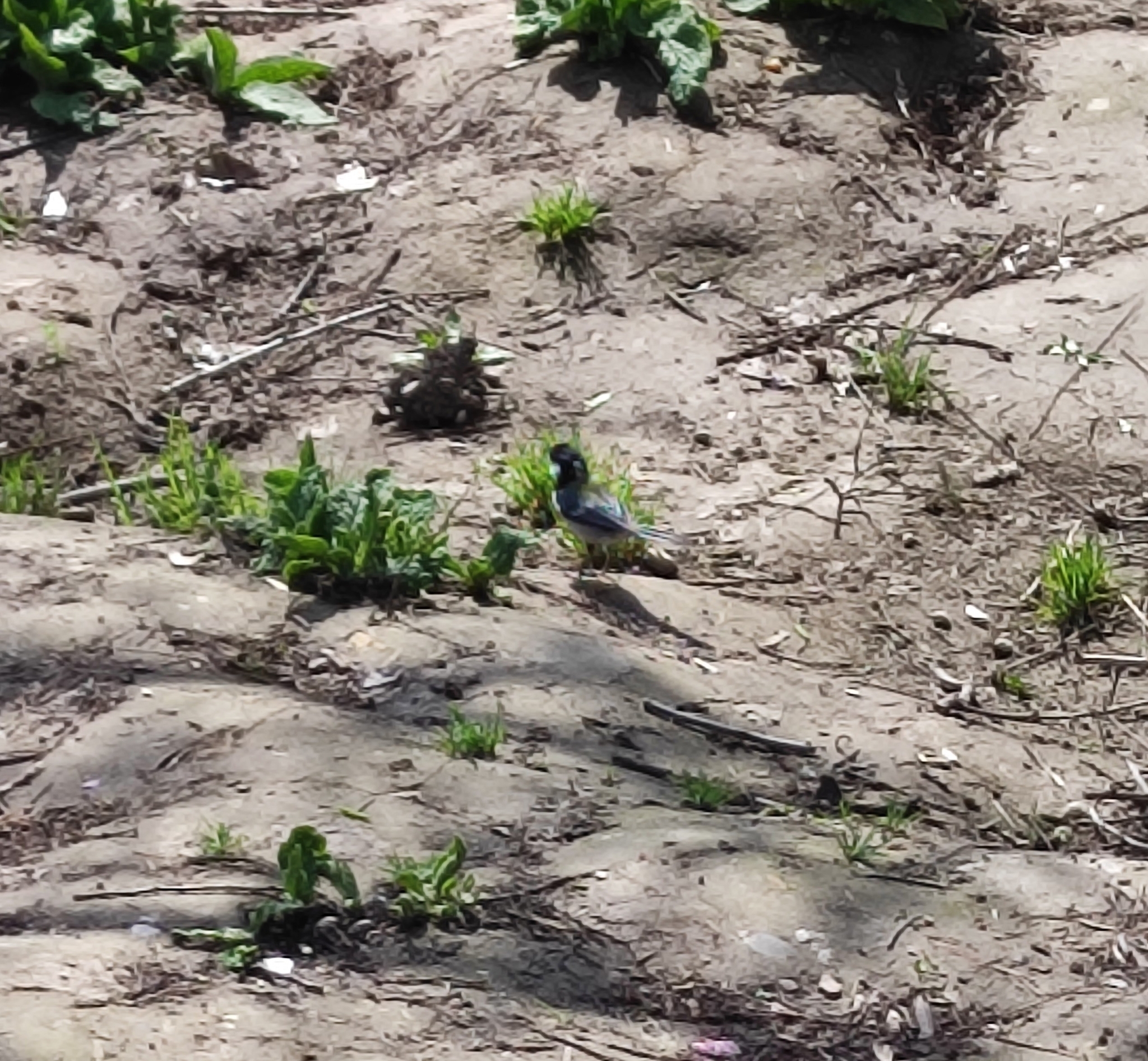
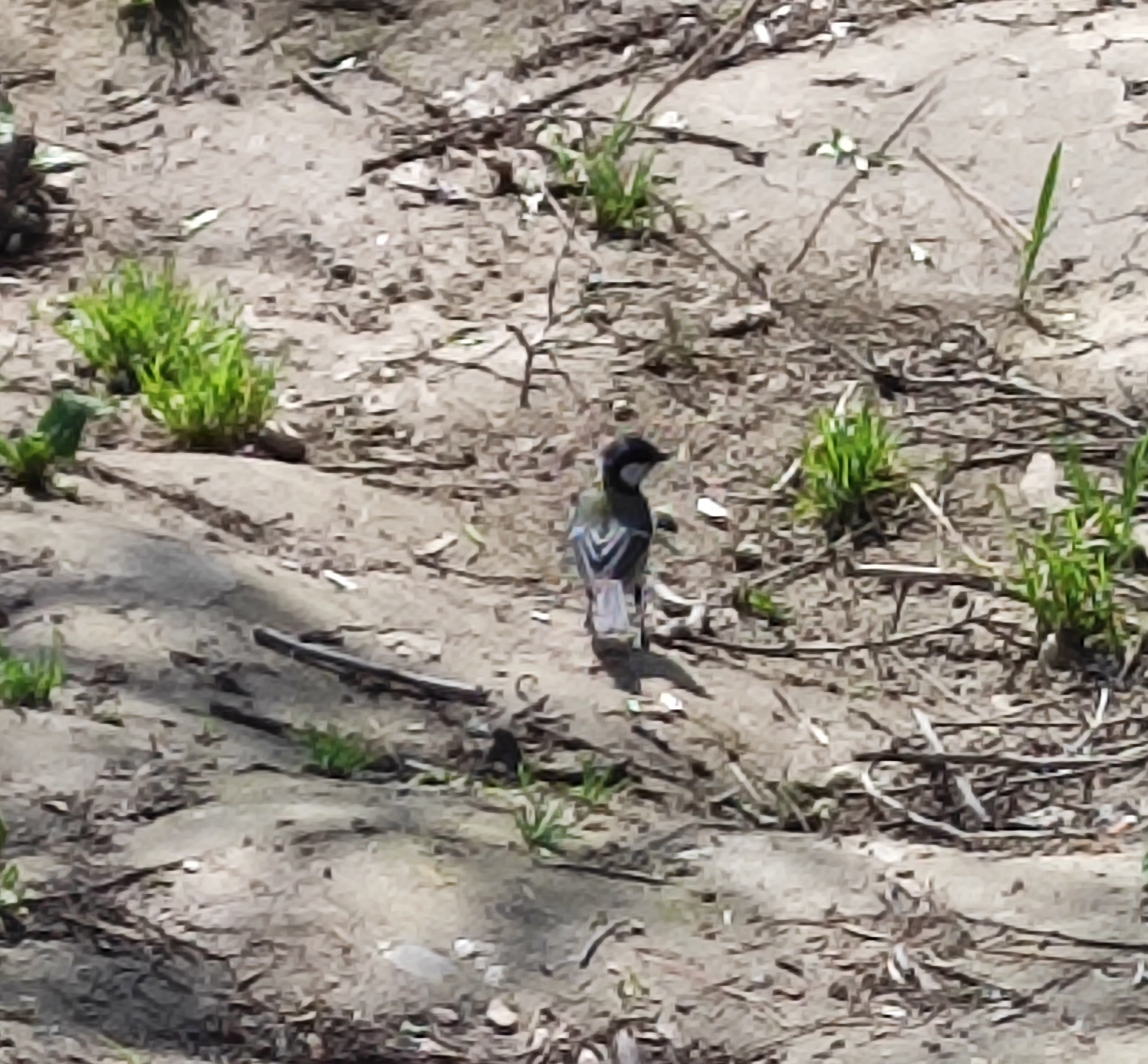
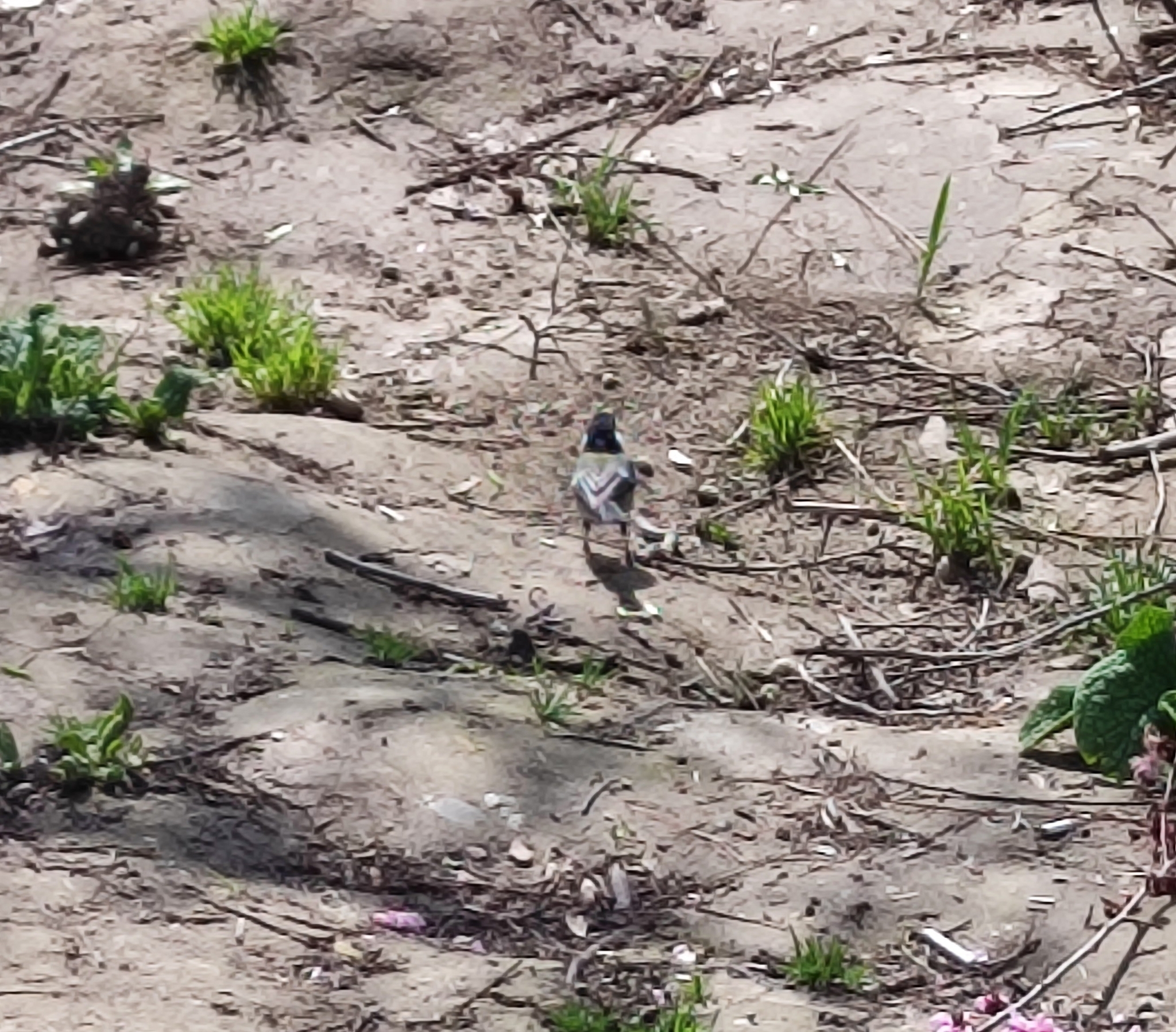
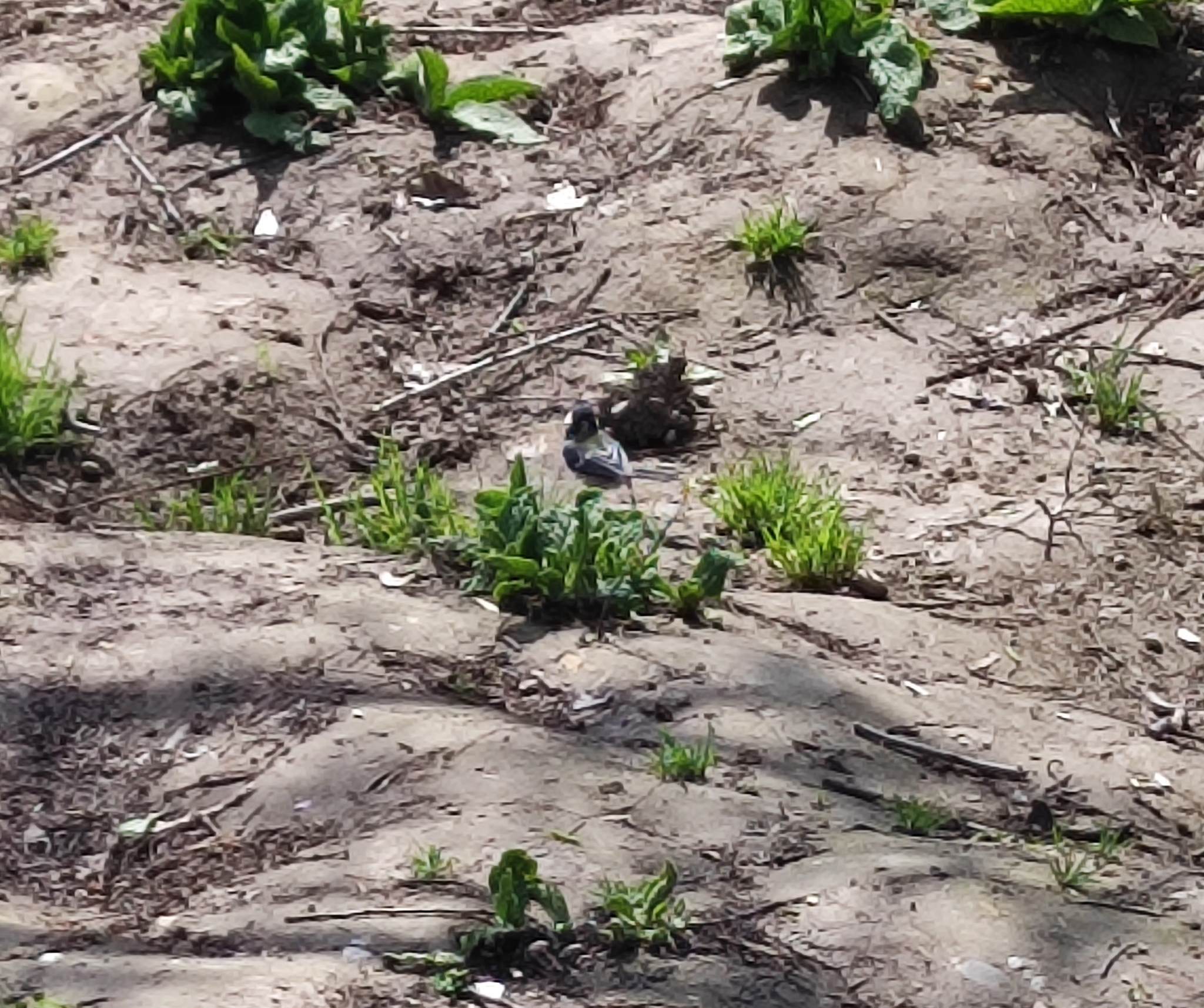
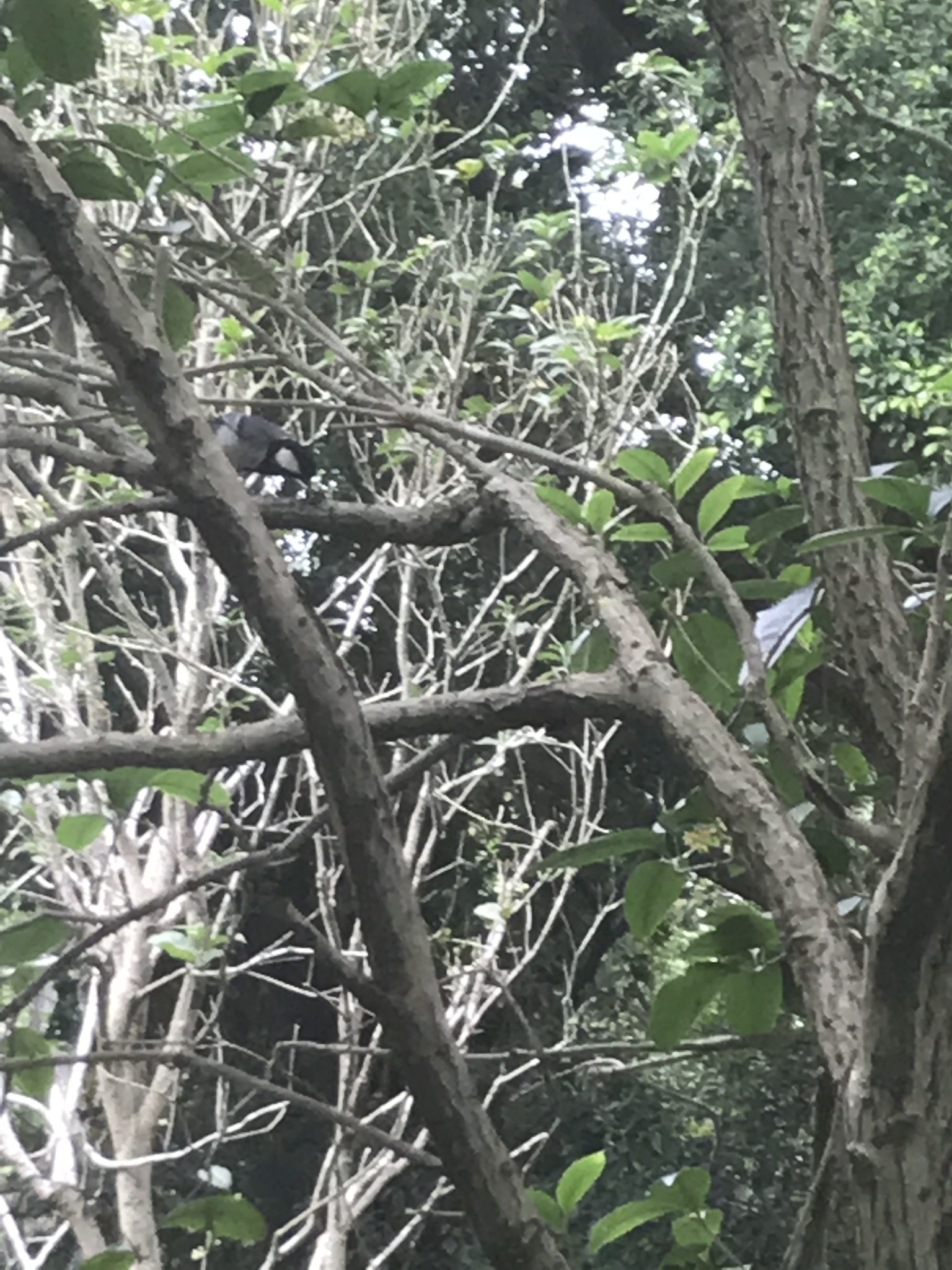
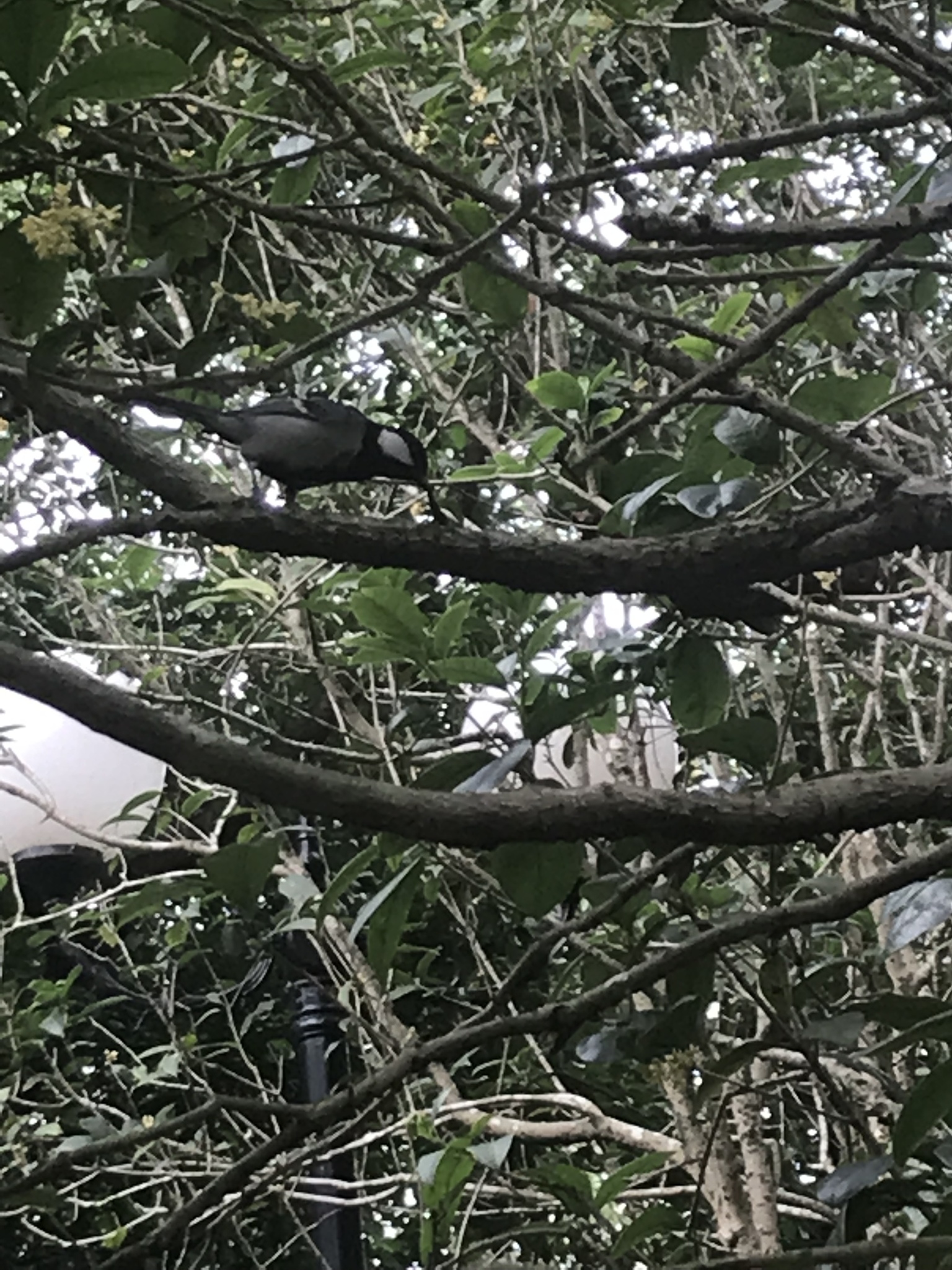
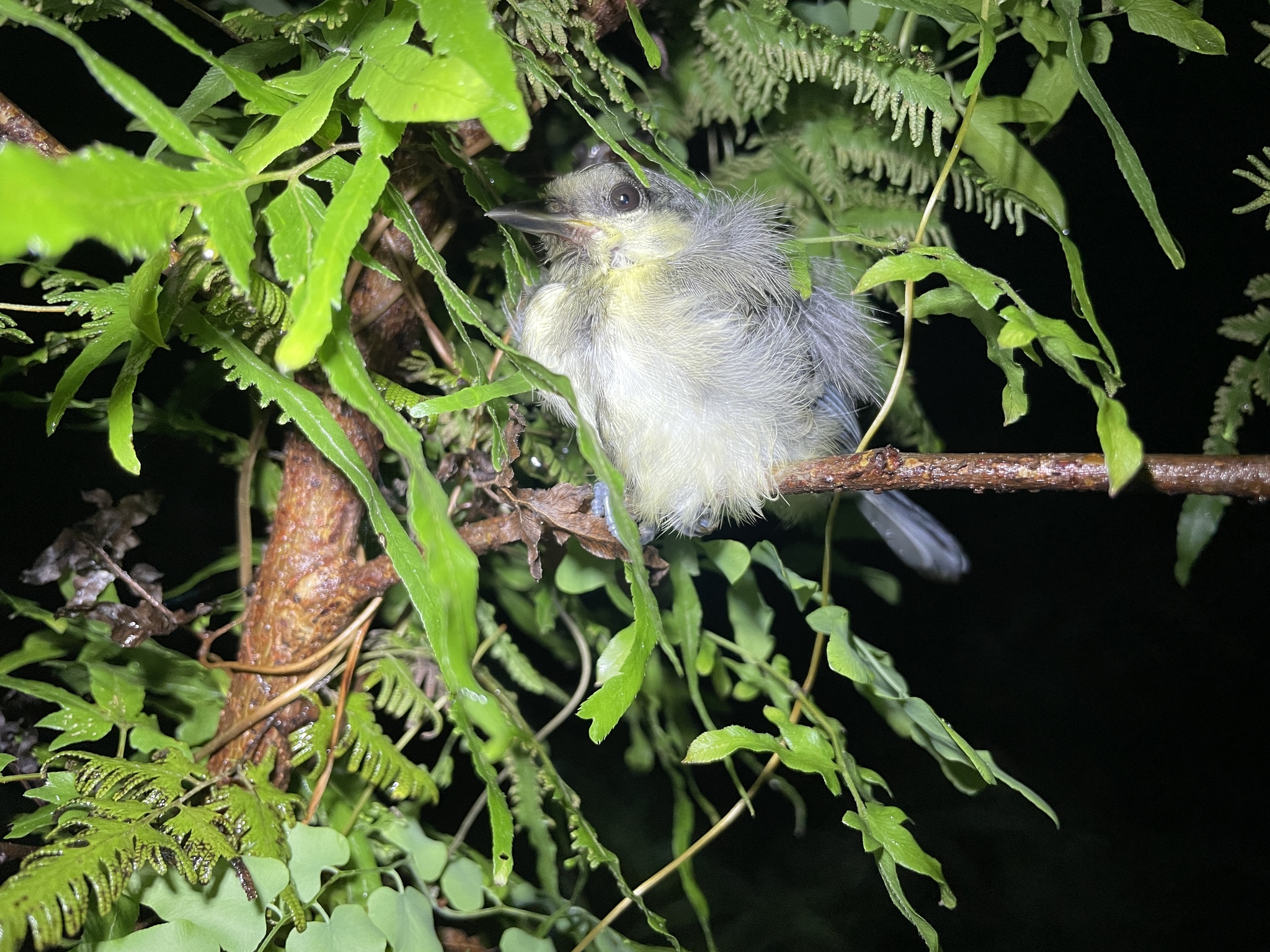
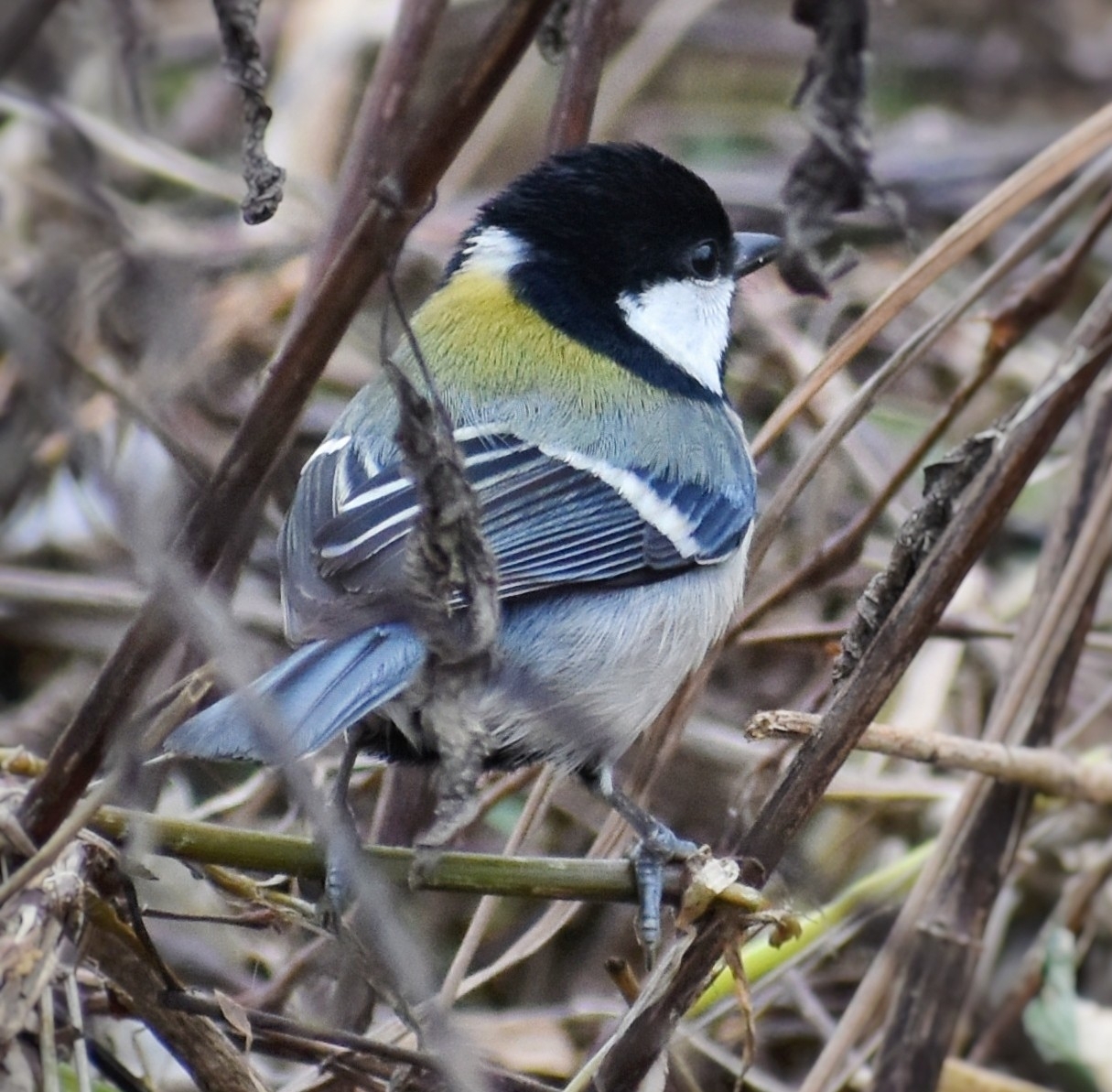
This small passerine exhibits the classic tit morphology: a compact body with a relatively large head, strong bill, and no crest. The upperparts are predominantly grey, ranging from ashy to slate tones depending on subspecies. The head features a striking black hood that extends through the eye region, contrasted by a distinct white cheek patch. A single white wing-bar marks the upperwing. The underparts are predominantly white, bisected by a prominent black ventral line that runs from the chin to the undertail coverts. The tail is black with intricate white markings: the central four feather pairs show ashy outer webs and white tips, while the outermost pair is entirely white with a black shaft. The undertail coverts are black centrally but white at the sides. Females are similar but display a narrower ventral line and slightly duller overall plumage. Juveniles differ by showing greenish tones on the back and yellowish washes on the underparts before acquiring adult plumage.
Identification
The cinereous tit can be reliably distinguished from the great tit by examining plumage coloration. While the great tit displays a greenish mantle and yellowish underparts, this species shows a grey back and clean white underparts with the black ventral stripe. Within its extensive range, the primary confusion species is the Japanese tit, which has now been lumped into this species. Birders should note the extent of white on the tail feathers, as subspecies vary in this feature. The combination of grey upperparts, black hood, white cheek patch, white wing-bar, and black ventral stripe is diagnostic. Pay attention to the specific shade of grey on the back and the precise pattern of white markings on the tail, which can help separate different subspecies. The broad black ventral line running the full length of the underparts is a key feature separating this group from other similar Parus species.
Distribution & Habitat
This species occupies an extensive range stretching from western Asia through the Indian subcontinent to Southeast Asia and East Asia. The distribution encompasses Afghanistan, Pakistan, India, Sri Lanka, Bangladesh, Myanmar, Thailand, Malaysia, Sumatra, Borneo, Java, southern China, Korea, and Japan. Twenty subspecies are recognized across this vast area, each occupying distinct geographic zones. Northern populations, including those in Japan and eastern Siberia, are migratory or altitudinal migrants, while southern populations tend to be resident year-round. These birds occupy a variety of wooded habitats including deciduous forests, evergreen forests, mangroves, gardens, parks, and human-modified landscapes. They readily adapt to human presence and are common in suburban areas with sufficient tree cover.
Behavior & Ecology
These active birds are typically encountered in pairs or small family groups, though they frequently join mixed-species foraging flocks that move through the canopy. Their foraging strategy involves methodical gleaning of insects from leaves and bark surfaces, carefully working through foliage in search of prey. Their diet consists primarily of insects including caterpillars, bugs, and beetles, supplemented by buds, fruits, and seeds. They demonstrate remarkable dexterity, using their feet to hold insects while tearing them with their bill. When handling hard seeds, they wedge them into bark crevices before hammering them open. The vocal repertoire includes a distinctive whistling call described as titiweesi...titiweesi...witsi-seesee, repeated several times with pauses between phrases. During breeding season, calling becomes particularly persistent. They respond to alarm churrs from related species but show limited response to songs of European great tit populations. Breeding occurs primarily during summer across the northern parts of their range, while southern populations breed from February to May. The normal clutch contains 4-6 eggs, though larger clutches have been recorded. Nests are constructed in tree cavities, wall crevices, or mud-banks, lined with moss, hair, and feathers. Both parents share incubation duties and will hiss defensively from the nest cavity when threatened.
Conservation
This species is currently assessed as Least Concern by the IUCN due to its extremely large range and apparently stable population trends. The species benefits from its adaptability to modified habitats and willingness to utilize human-modified landscapes including gardens and parks. While some localized populations may face habitat loss from deforestation, the species' extensive range and generalist habits suggest it is not currently at significant risk. The recent taxonomic revision merging the Japanese tit into this species has further expanded the apparent population size and range, making conservation concerns even less pressing. Continued monitoring of populations in heavily deforested regions of Southeast Asia would be prudent to ensure this adaptable species does not face future declines.
Culture
The cinereous tit does not feature prominently in cultural traditions, folklore, or mythology. As a relatively recently defined species distinct from the great tit, it has not accumulated the same level of cultural associations in literature, art, or tradition that characterize some other tit species. The bird's cultural significance is largely limited to its role as a familiar garden bird that brings entertainment to birdwatchers and nature enthusiasts throughout Asia. In regions where it occurs, it is appreciated as part of the local avifauna and contributes to the dynamic activity of backyard bird feeding stations and garden wildlife. The species' recent taxonomic history and former treatment as a subspecies of the great tit means it has primarily been of scientific interest rather than cultural or symbolic significance.
Source: Wikipedia · CC BY-SA 3.0
Taxonomy
- Order
- Passeriformes
- Family
- Paridae
- Genus
- Parus
Vocalizations
Subspecies (20)
-
Parus cinereus amamiensis
northern Ryukyu Islands (Amami Ōshima and Tokuno-Shima, southern Japan)
-
Parus cinereus ambiguus
southeastern Myanmar, peninsular Thailand, Malaya, and Sumatra
-
Parus cinereus caschmirensis
northeastern Afghanistan to northern Pakistan and northwestern India
-
Parus cinereus cinereus
Java and western Lesser Sundas
-
Parus cinereus commixtus
southern China (south of the Yangtze) to Hong Kong and central Vietnam (eastern Tonkin and coastal central Annam)
-
Parus cinereus dageletensis
Ulleungdo (off eastern South Korea)
-
Parus cinereus decolorans
southeastern Afghanistan (east of Kabul and south of the Hindu Kush)
-
Parus cinereus hainanus
Hainan (southern China)
-
Parus cinereus mahrattarum
southwestern India (Kerala) and Sri Lanka
-
Parus cinereus minor
southeastern Russia to Japan, Korea, southwestern China, and eastern Tibet
-
Parus cinereus nigriloris
southern Ryukyu Islands (Ishigaki and Iriomote, southern Japan)
-
Parus cinereus nubicolus
southeastern Myanmar to northern Thailand, northern Laos, and far western Tonkin
-
Parus cinereus okinawae
central Ryukyu Islands (Okinawa and Yagachi, southern Japan)
-
Parus cinereus planorum
northern India to Nepal, Bhutan, Bangladesh, and western Myanmar
-
Parus cinereus sarawacensis
Borneo (western Sarawak)
-
Parus cinereus stupae
central and peninsular India
-
Parus cinereus templorum
northeastern Thailand southeastward to southern Laos, northern Cambodia, and southern Vietnam
-
Parus cinereus tibetanus
southeastern Tibet, southwestern and south-central China, to northern Myanmar
-
Parus cinereus vauriei
eastern Assam (Lakhimpur district) and eastern Arunachal Pradesh
-
Parus cinereus ziaratensis
southern Afghanistan to northern Baluchistan and Pakistan
Data Sources
CBR Notes: 中文名由远东山雀恢复为大山雀,学名由Parus minor改为Parus cinereus
Species description from Wikipedia, licensed under CC BY-SA 3.0.
Bird images and sounds sourced from GBIF, contributed by citizen scientists worldwide under Creative Commons licenses.
Taxonomy data from AviList 2025.