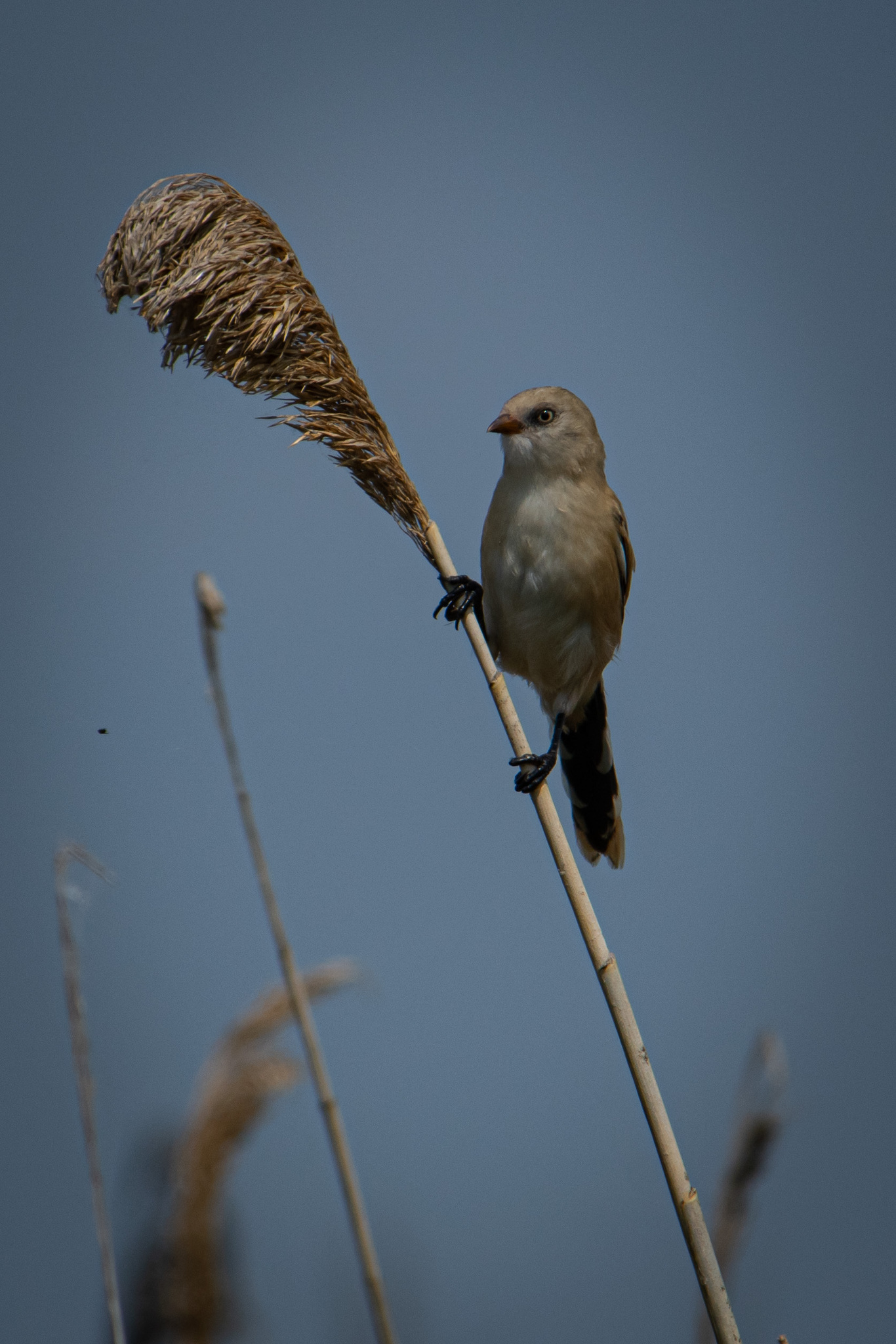
Bearded Reedling
Panurus biarmicus
文须雀
Introduction
Passerine bird in monotypic family Panuridae. Native to temperate Eurasia, from Spain and British Isles to Manchurian region. Inhabits reed beds near fresh or brackish water lakes, swamps, and rivers, also occurring in bulrushes and sedge vegetation. Highly sexually dimorphic; forms life-long pairs. Exceptionally productive, capable of raising two to five broods per season, potentially the highest reproductive output of any European passerine. Diet consists primarily of small invertebrates in summer and plant seeds in winter. Global population estimated at least 3,000,000 adults; not considered threatened.
Description
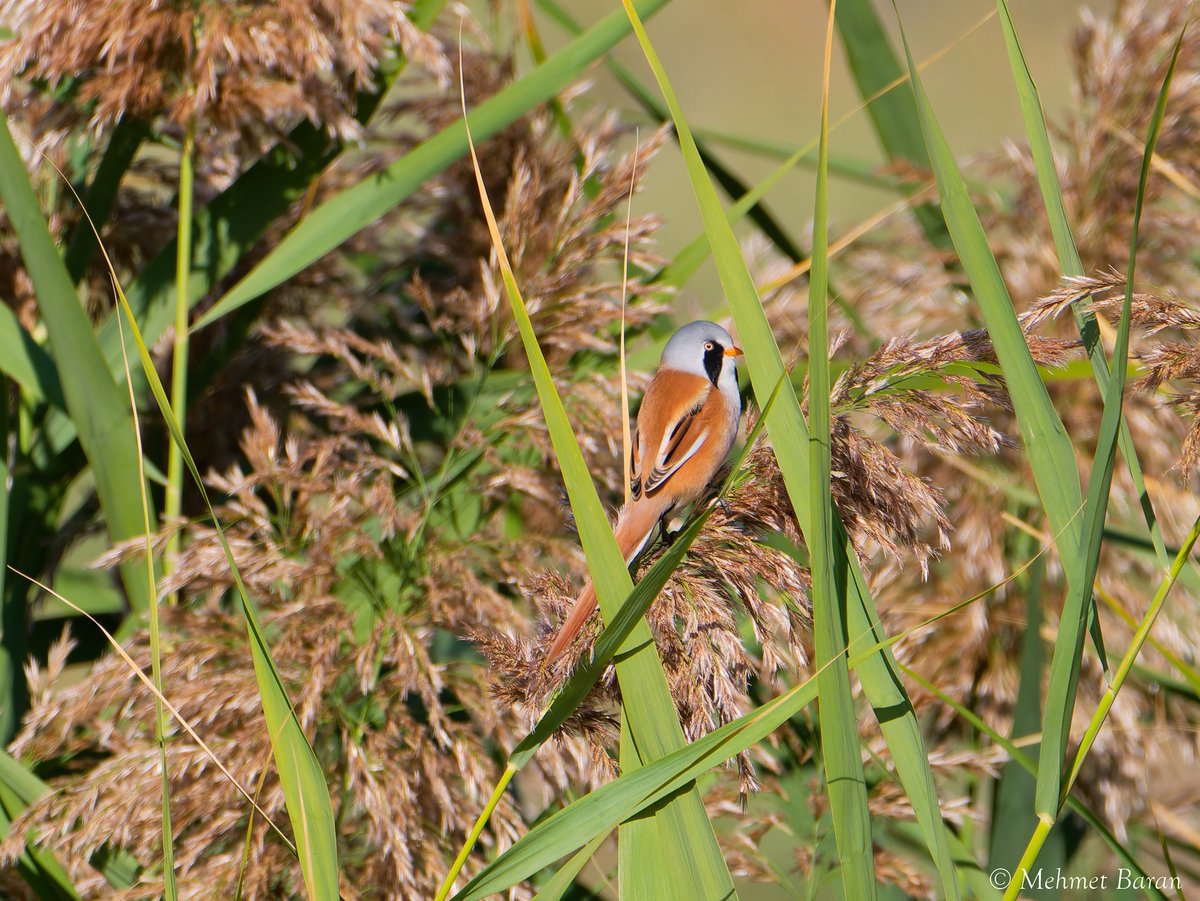
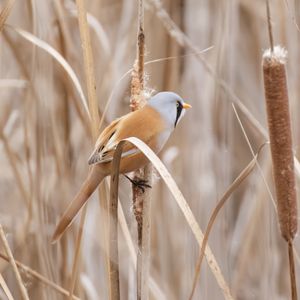
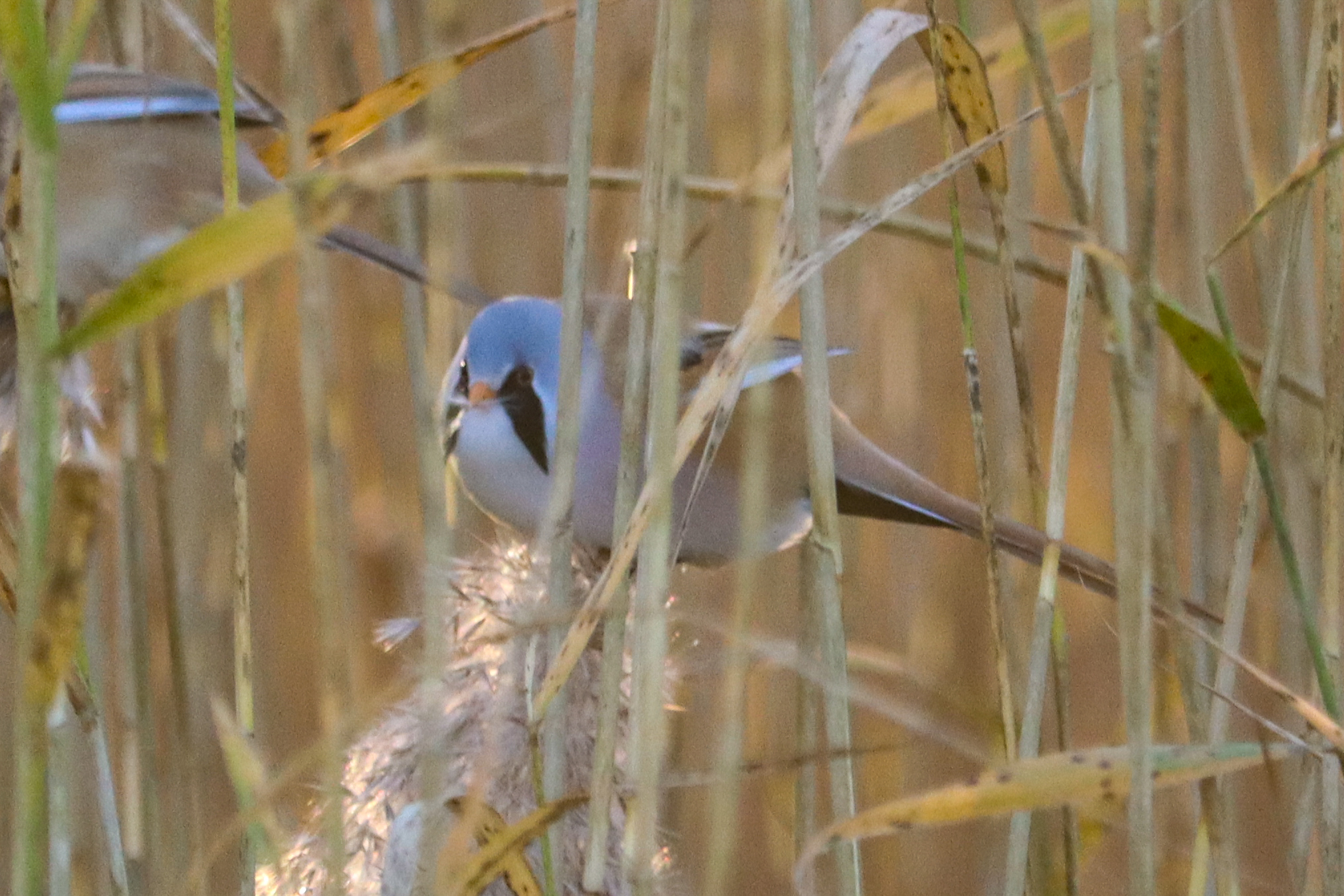
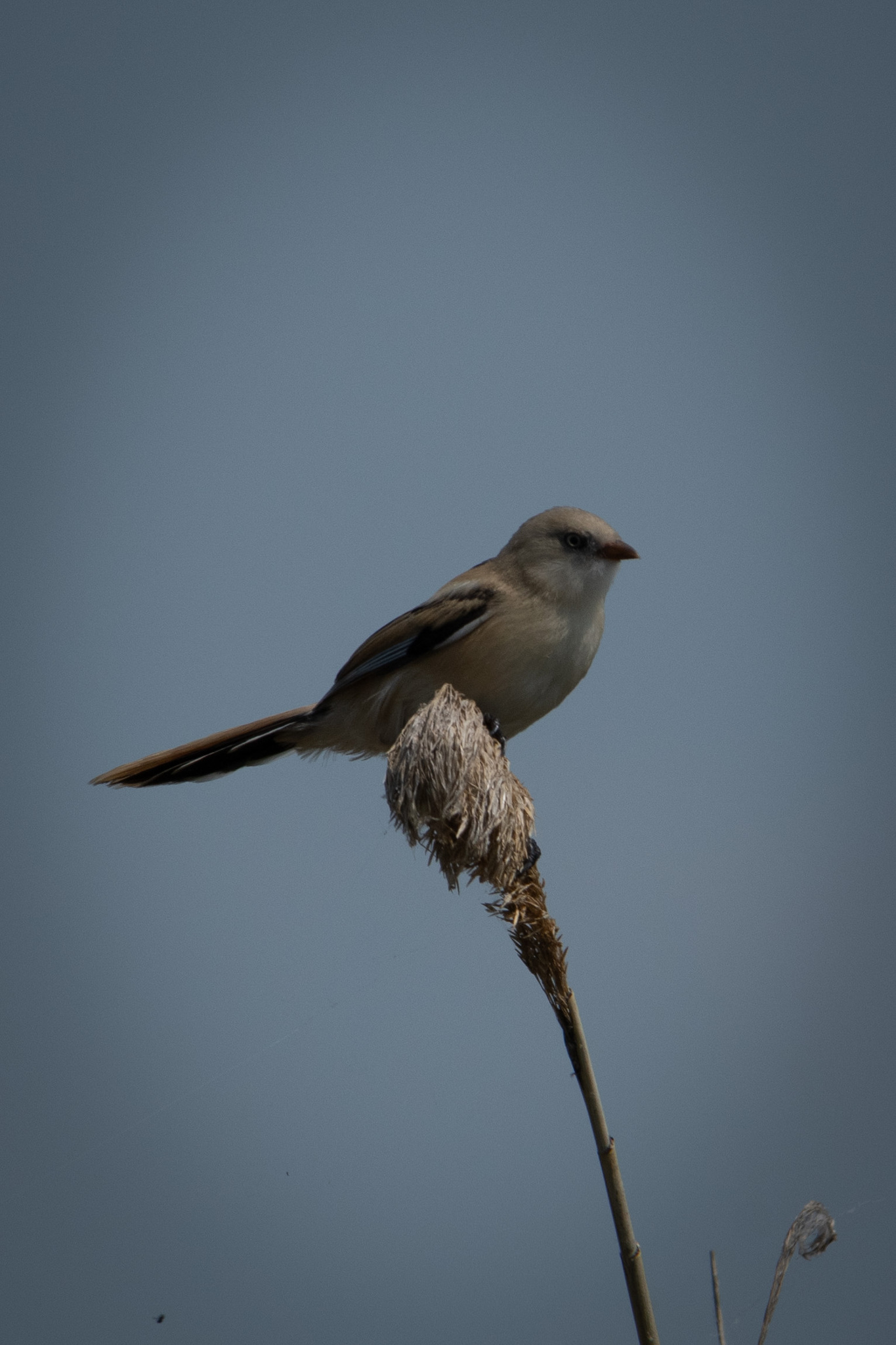
Small bird measuring 14.5–17 cm in length with a distinctive long tail. Plumage predominantly orange-brown with whitish throat and chest, contrasting black and white wing panels, and white-edged tail feathers. Adult male displays grey head, black facial 'moustaches' and black undertail coverts. Adult female is overall paler with brownish head, lacks black facial markings but may show black streaks or spots on crown and back. Bill bright orange-yellow, slightly duller in females. Flight is undulating with characteristic whirring sound from short wings.
Identification
Best detected by distinctive metallic 'ping' contact call. Male's song described as tuneful 'tschin-schik-schra'. Small size, long tail, and orange-brown plumage distinguish it from similar reed-dwelling species. Adult males unmistakable with grey head and black moustaches. Females lack male's black markings but differ from warblers in robust bill and undulating flight. Well-camouflaged in dense reed habitat; presence often revealed vocally before visual confirmation.
Distribution & Habitat
Ranges across temperate Europe and Asia from Iberian Peninsula and British Isles eastward through Russia and Central Asia to Mongolia and northern China. European populations expanded north into Scandinavia, Finland, and Baltic states during second half of 20th century. Primarily resident with some populations making short-distance migrations south or southwest for winter, typically a few hundred kilometers. Eruptive dispersals occur during food shortages or severe weather. Inhabits reed beds with common reed by water bodies, also using bulrushes and sedges. Recorded up to 3,050 m elevation in China.
Behavior & Ecology
Social species forming flocks of up to several dozen birds outside breeding season. Monogamous life-long pairs; young birds form pairs while still juvenile. Breeds from late March to September with two to three typical broods, occasionally four or five. Cup-shaped nest attached to reeds 7.5–17 cm in diameter, positioned from ground level to 0.7 m height. Both sexes share incubation of 3–11 eggs and nestling care. Diet shifts seasonally: insects and invertebrates in summer, reed and rush seeds in winter. Stomach lining strengthens and birds consume grit from September to December for seed digestion.
Conservation
Not considered threatened; widespread with large global population estimated at minimum 3,000,000 adults, with around 500,000 in Europe alone. Local populations fluctuate significantly based on winter severity and habitat availability. Vulnerable to hard winters with high mortality; recolonization possible through eruptive dispersal. Subspecies P. b. kosswigi from southern Turkey not recorded since 1962 and potentially extinct. Habitat loss from wetland drainage and degradation poses ongoing threats. Range expansion into northern Europe observed since 1960s, likely benefiting from global warming trends.
Culture
No cultural significance, folklore, or mythology documented in available sources.
Source: Wikipedia · CC BY-SA 3.0
Taxonomy
- Order
- Passeriformes
- Family
- Panuridae
- Genus
- Panurus
- eBird Code
- bearee1
Subspecies (3)
-
Panurus biarmicus biarmicus
western Europe to Sweden, Poland, Italy, Balkans, and Transcaucasia
-
Panurus biarmicus kosswigi
formerly southern Türkiye (Amik Gölü); probably extinct
-
Panurus biarmicus russicus
central Europe (Austria to northern Balkans) and Türkiye eastward through central Asia to northern China
Data Sources
Species description from Wikipedia, licensed under CC BY-SA 3.0.
Bird images and sounds sourced from GBIF, contributed by citizen scientists worldwide under Creative Commons licenses.
Taxonomy data from AviList 2025.