Accipitriformes / Pandionidae / Pandion
Osprey
Pandion haliaetus · 鹗
Introduction
A diurnal, fish-eating bird of prey with a cosmopolitan range, classified in its own genus Pandion and family Pandionidae. It is the sole extant species in the family, placed within the order Accipitriformes. Found on all continents except Antarctica, it tolerates diverse habitats near water bodies. The diet consists almost exclusively of fish, utilizing specialized physical characteristics for hunting. Evaluated as Least Concern by the IUCN.
Description
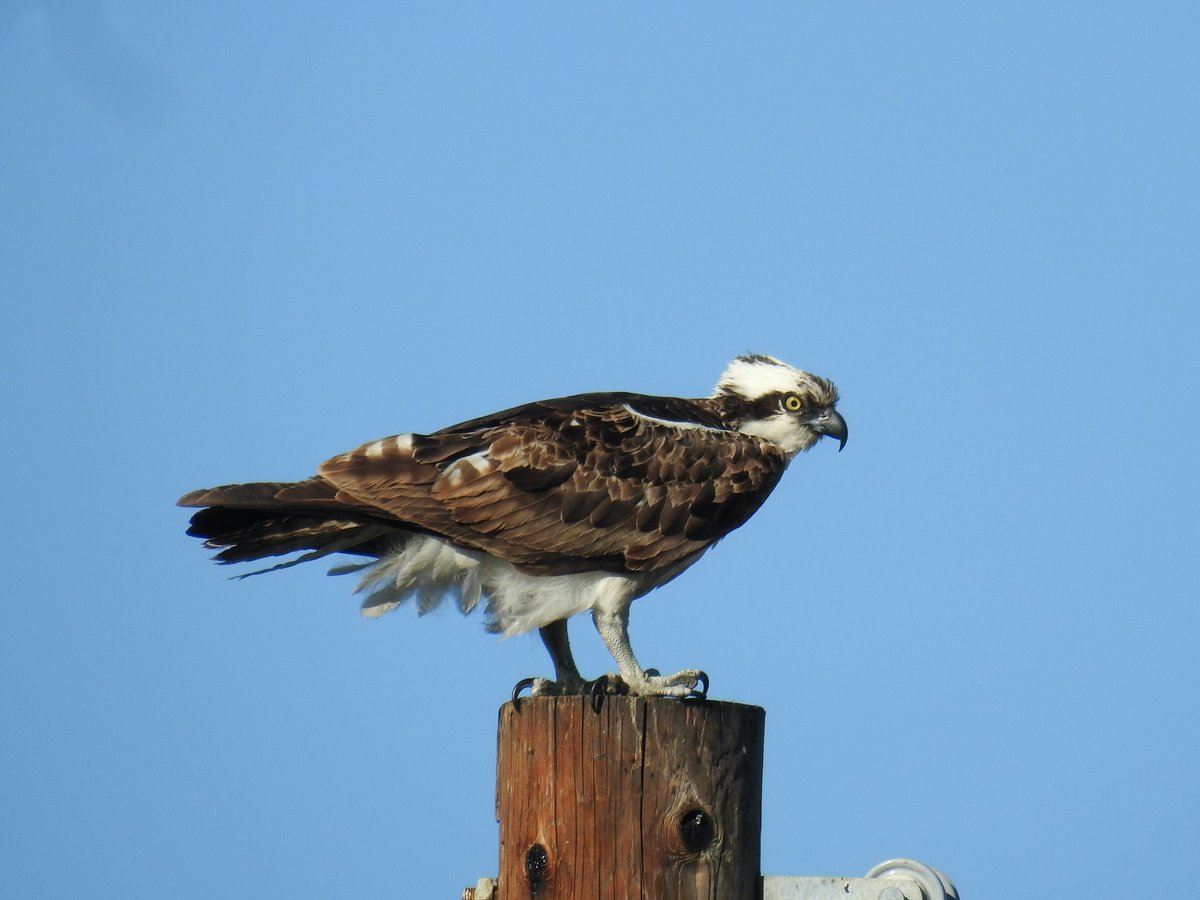
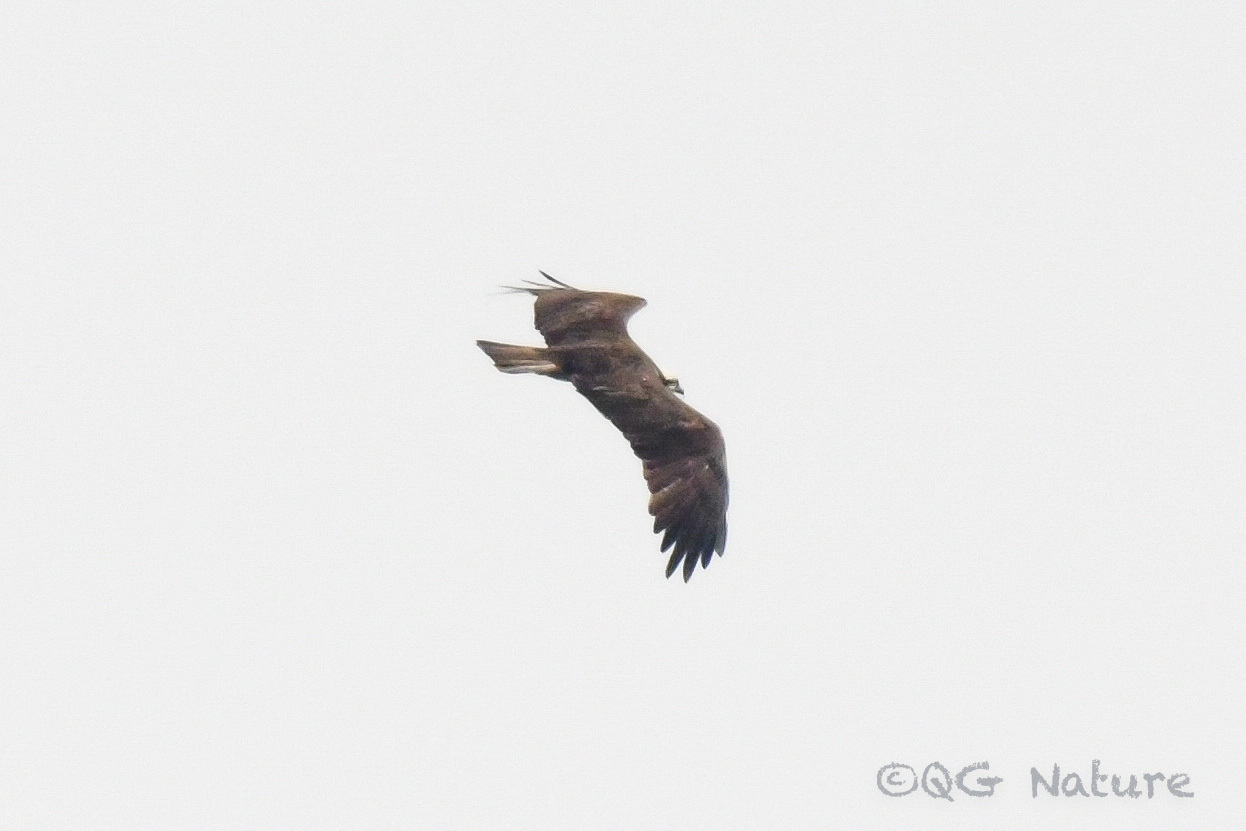
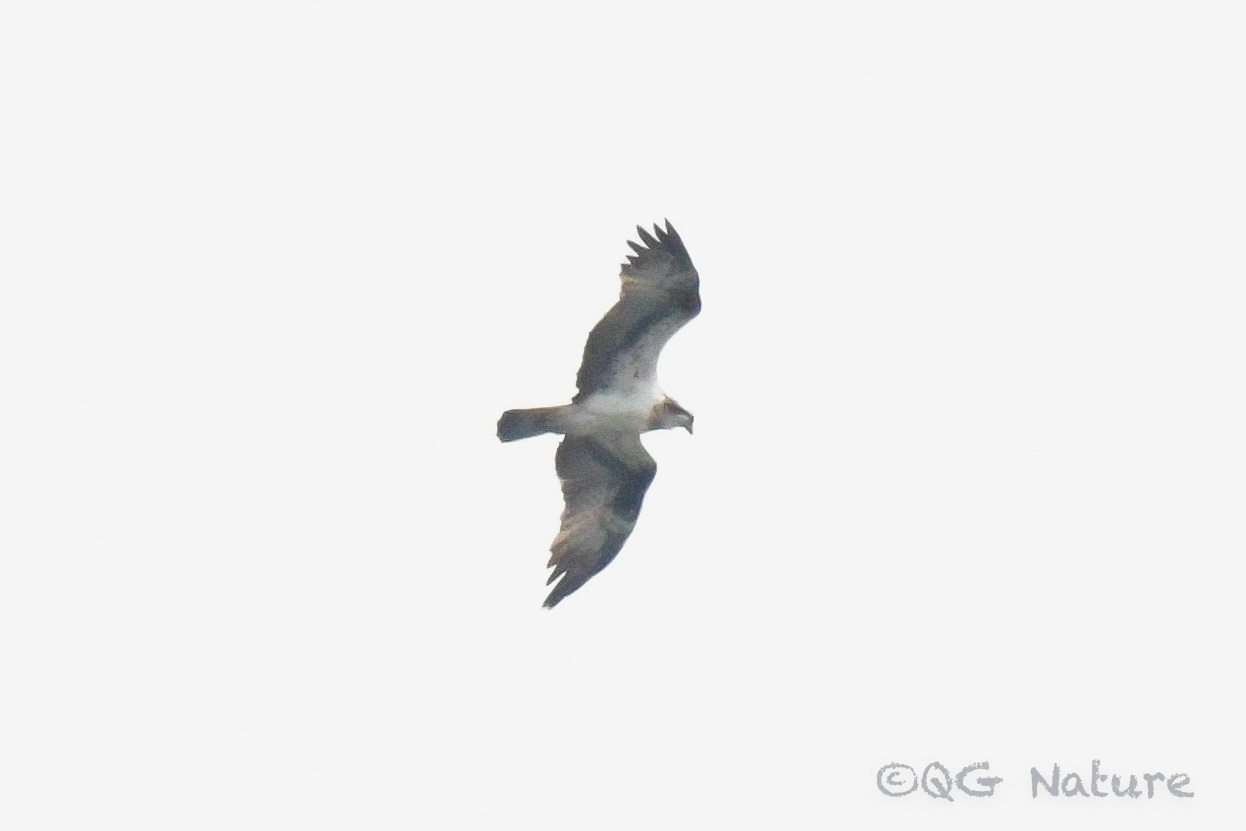
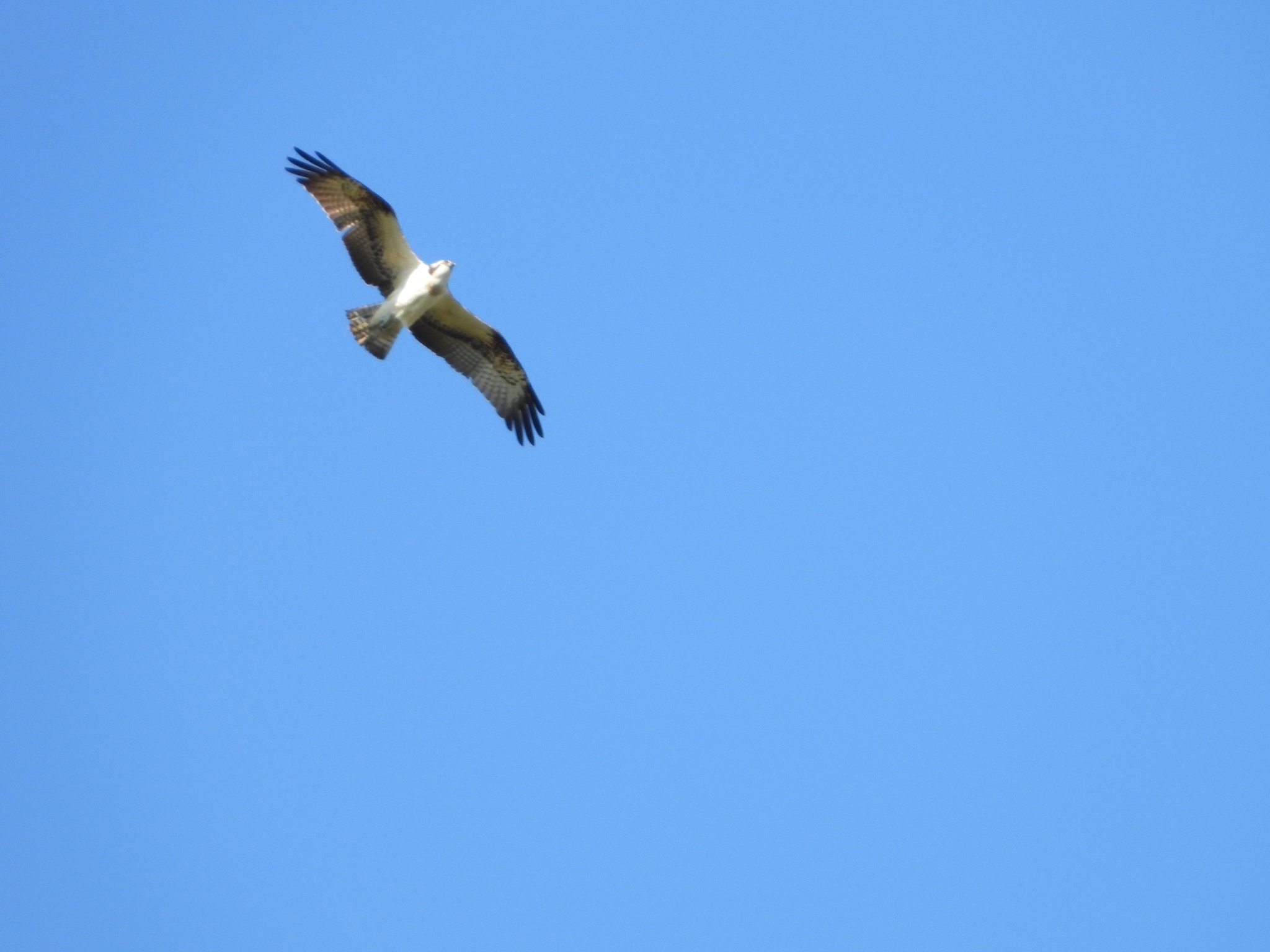
Length 50–66 cm (20–26 in), wingspan 127–180 cm (50–71 in), weight 0.9–2.1 kg (2.0–4.6 lb). Upperparts are deep, glossy brown; head is white with a dark mask across the eyes; underparts are pure white, with the breast sometimes streaked. Underside of wings features black wrists. Bill is black with a blue cere; feet are white with black talons; irises are golden to brown. Adult males have slimmer bodies, narrower wings, and weaker or non-existent breast bands compared to females. Juveniles show buff fringes on upperparts, buff-toned underparts, and streaked head feathers.
Identification
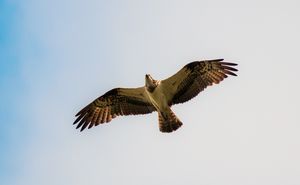
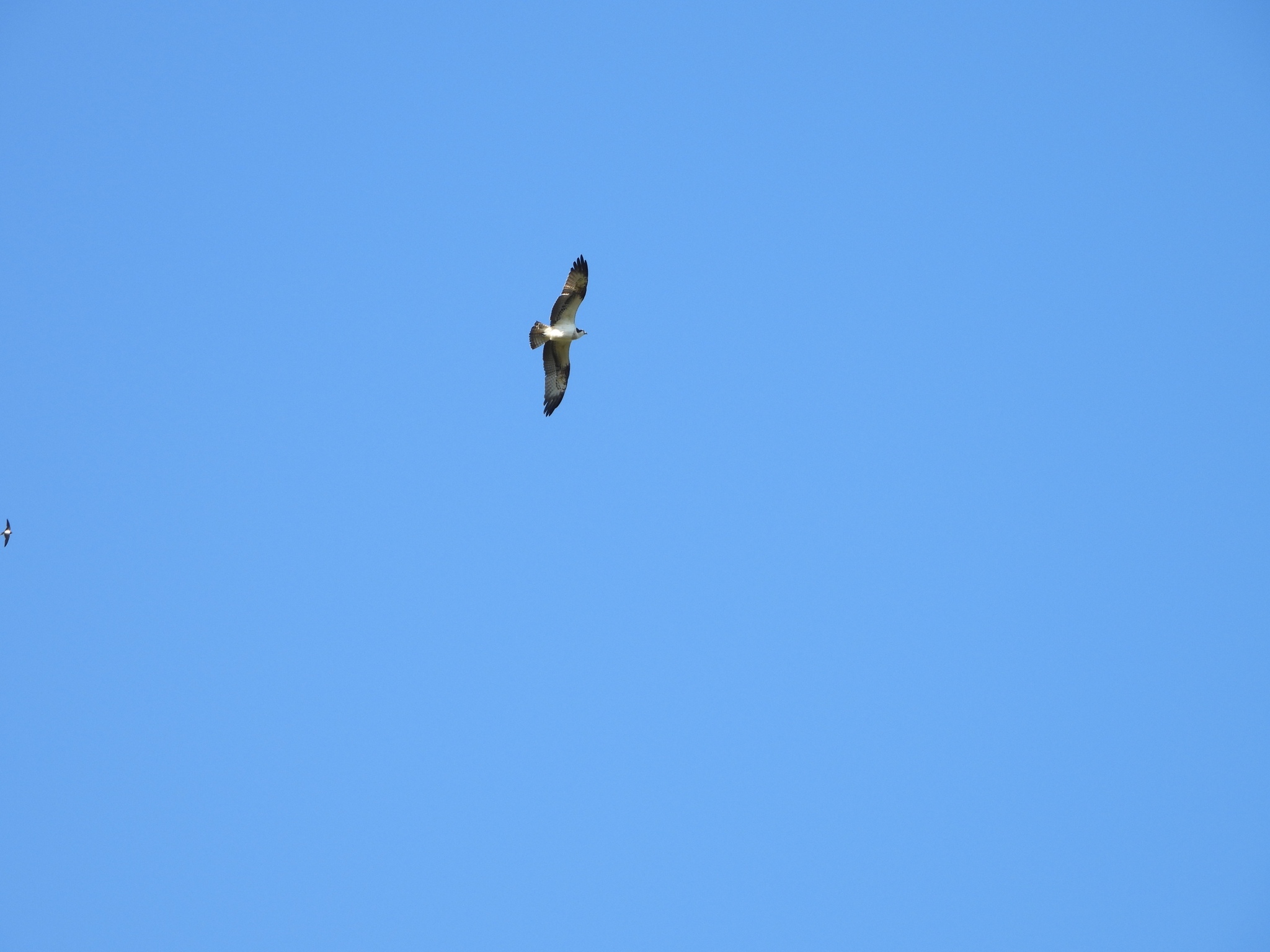
Distinctive flight profile with arched wings and drooping 'hands,' resembling a gull. Key field mark includes black wrists on the underwing. Vocalizations consist of sharp whistles described as 'cheep, cheep' or 'yewk, yewk,' escalating to a frenzied 'cheereek!' when disturbed. Differentiated from other raptors by reversible outer toes, rounded talons, and reticulate tarsi.
Distribution & Habitat
Found in temperate and tropical regions globally, except Antarctica. Breeds in North America from Alaska and Newfoundland south to the Gulf Coast; winters from the southern US to Argentina. European populations breed north to Scandinavia and winter in North Africa or South Asia. Australasian populations are mainly sedentary along coastlines. Four subspecies recognized: P. h. haliaetus (Eurasia/Africa), P. h. carolinensis (Americas), P. h. ridgwayi (Caribbean), and P. h. cristatus (Australia/Tasmania).
Behavior & Ecology
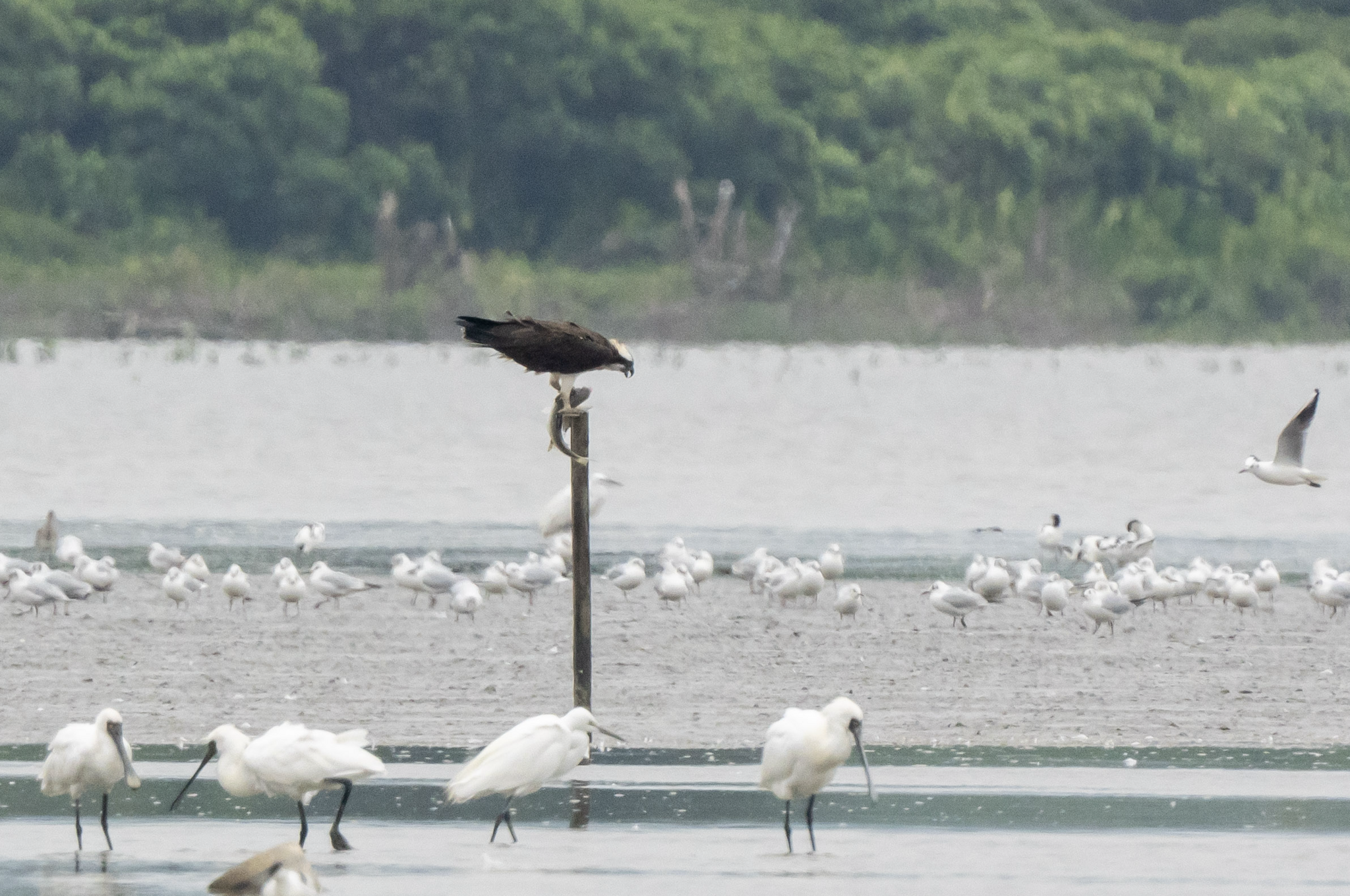
Diet is 99% fish, typically weighing 150–300 g. Hunts by hovering 10–40 m above water before plunging feet-first, adjusting for refraction. Adaptations include reversible outer toes, spicules on toe undersides, closable nostrils, and oily plumage. Nests near water on trees, rocky outcrops, or utility poles using sticks and seaweed. Clutch size is 2–4 eggs, incubated for 35–43 days. Chicks fledge in 8–10 weeks. Monogamous, often mating for life. Migratory populations cover 260–280 km per day.
Conservation
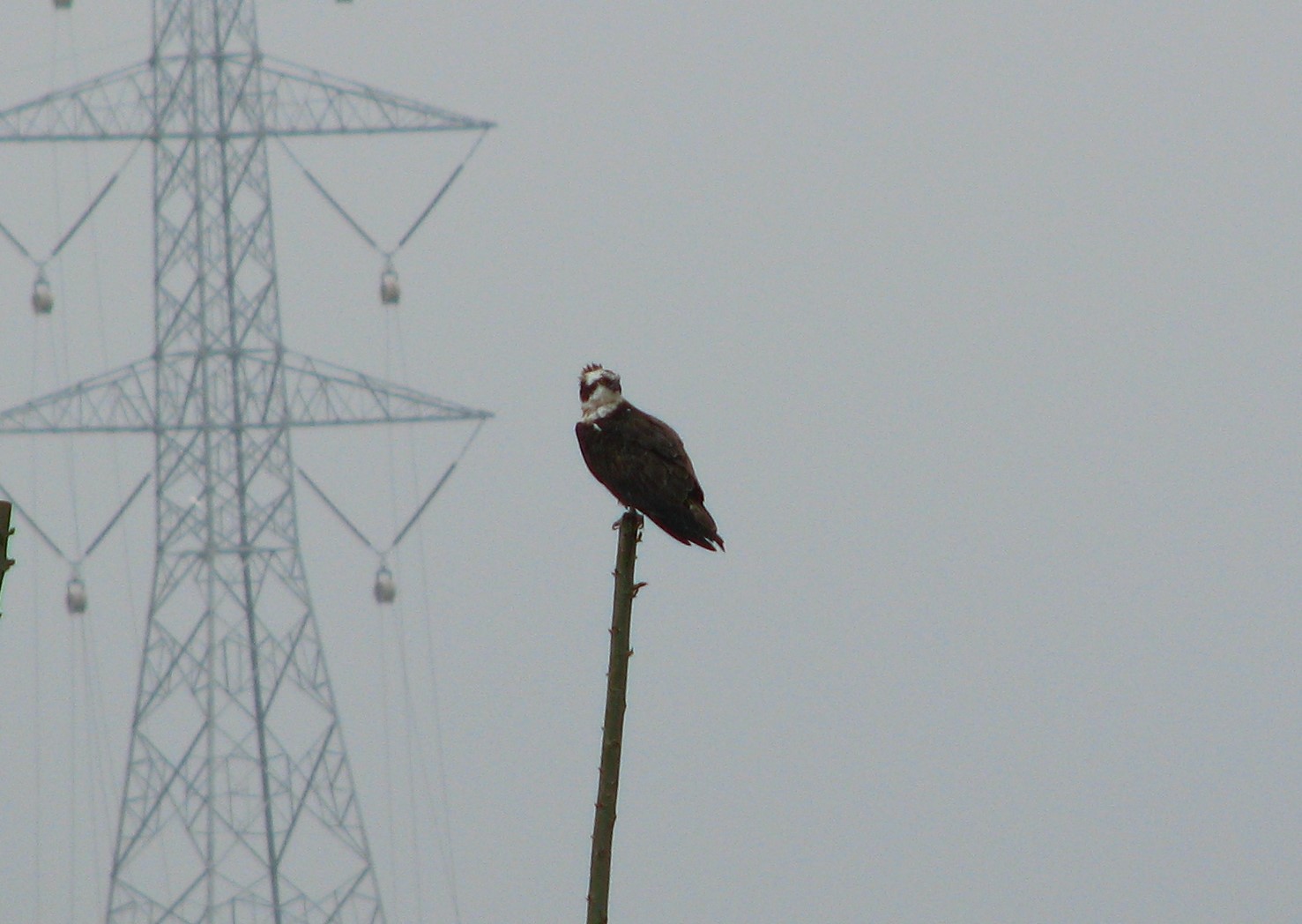
Evaluated as Least Concern with a global population estimated at 460,000 individuals. Populations declined drastically in the 1950s and 1960s due to DDT causing thin-shelled eggs but have recovered following bans and reduced persecution. Regional declines persist in South Australia. Threats include mortality during migration (especially crossing the Sahara), collisions with aircraft, electrocution from power lines, and predation by invasive pythons in Florida. Artificial nesting sites aid conservation.
Culture
Declared the provincial bird of Nova Scotia, Canada, and the state raptor of Oregon, USA. Featured in Chinese folk poetry as an icon of fidelity. Referenced in Shakespeare’s Coriolanus and by W.B. Yeats. Historically depicted in heraldry as a 'sea-eagle.' The name 'Seahawks' is used by the Seattle Seahawks NFL team. Plumes mistakenly attributed to this species were used in the late 19th-century hat trade.
Source: Wikipedia · CC BY-SA 3.0
Taxonomy
- Order
- Accipitriformes
- Family
- Pandionidae
- Genus
- Pandion
Taxonomy Changes
Pandion cristatus → Pandion haliaetus
Subspecies lump — GBIF Backbone Taxonomy uses the former name; AviList 2025 uses the current name.
Vocalizations
Subspecies (4)
-
Pandion haliaetus carolinensis
breeds Canada to southern USA; winters to Peru and Brazil
Data Sources
CBR Notes: 英文名由Western Osprey改为Osprey(Monti et al. 2015; Monti et. al. 2018; HBW/BirdLife, Clements)
Species description from Wikipedia, licensed under CC BY-SA 3.0.
Bird images and sounds sourced from GBIF, contributed by citizen scientists worldwide under Creative Commons licenses.
Taxonomy data from AviList 2025.