Osprey
Pandion haliaetus
鹗
Introduction
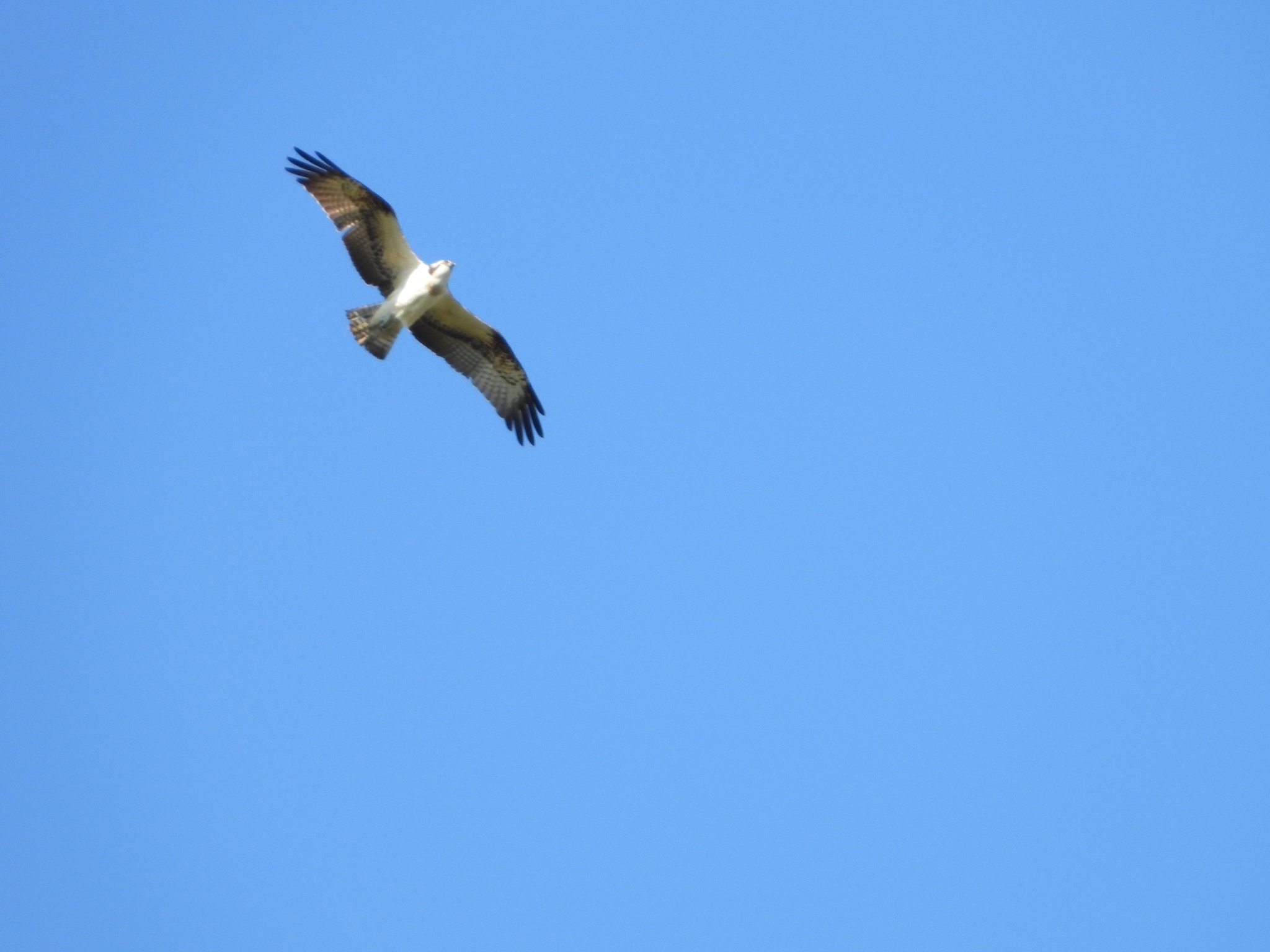
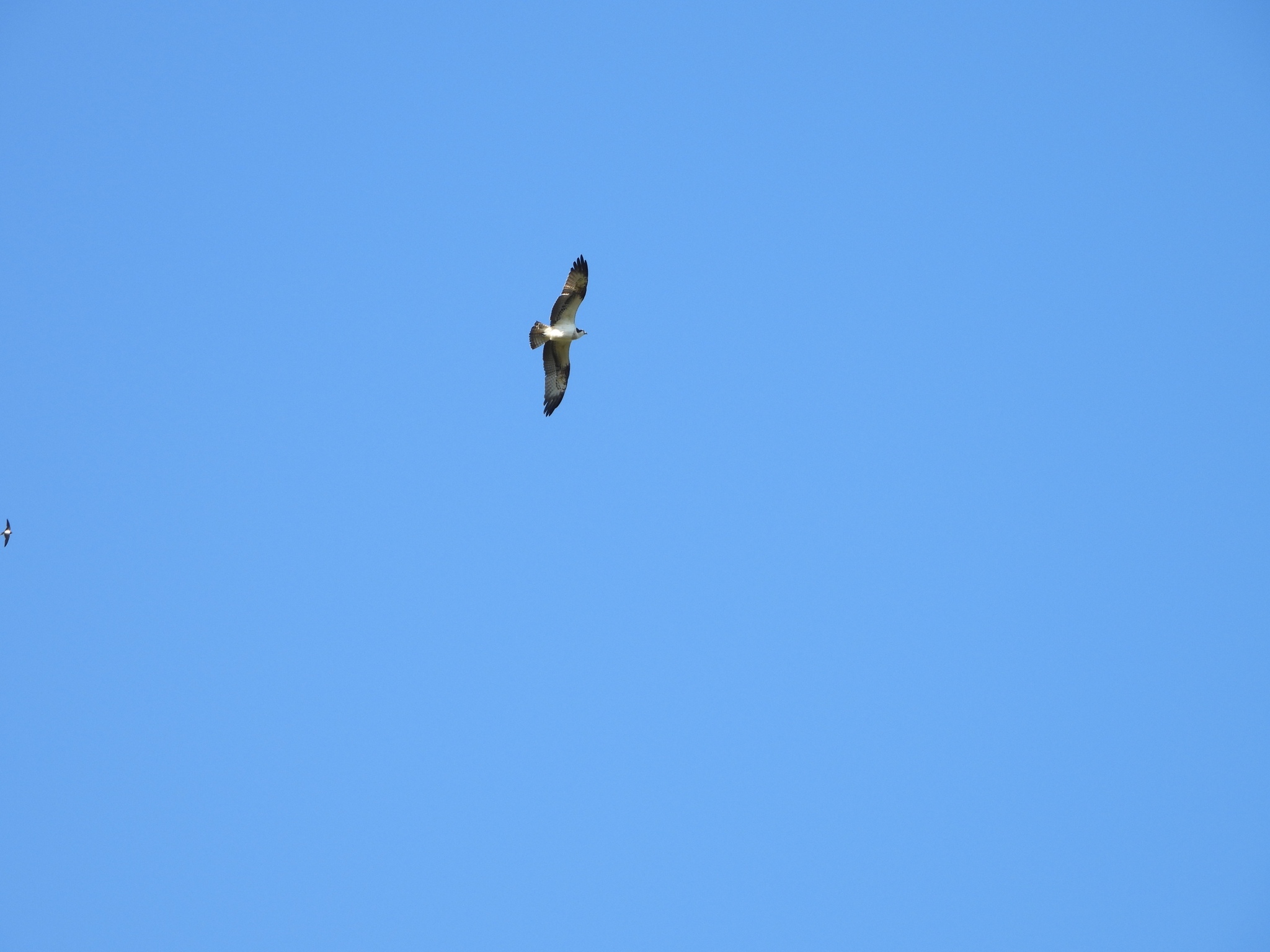
The Osprey (Pandion haliaetus) is the sole member of the family Pandionidae, distinguishing it from hawks and eagles. It represents one of six land bird species with a cosmopolitan distribution, occurring across every continent except Antarctica. It inhabits waterside environments including coastal regions, inland lakes, rivers, and estuaries where fish prey are available. The species possesses long, narrow wings with prominent primary projections and a short tail. Its foraging strategy involves diving feet-first to capture fish. Unique among raptors, it possesses reversible outer toes for grasping slippery prey.
Description
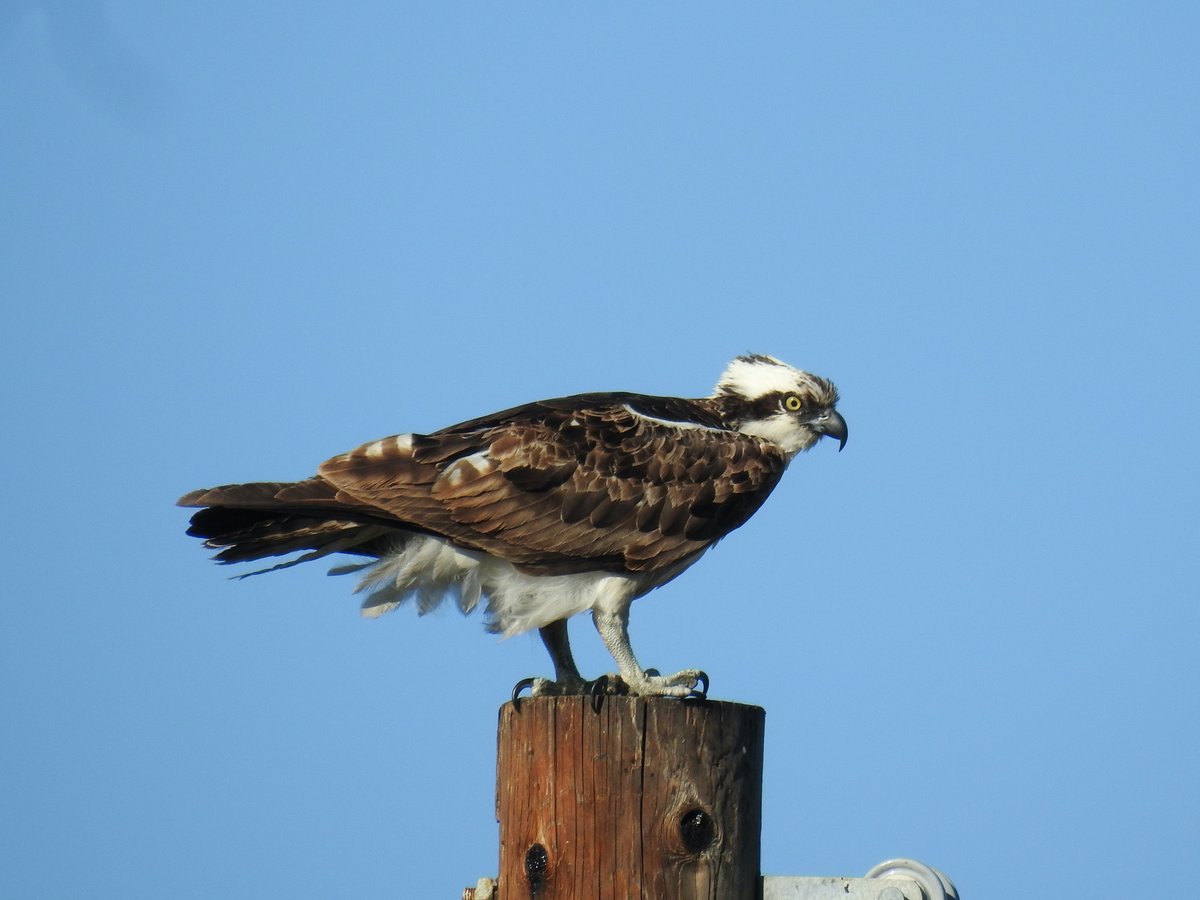
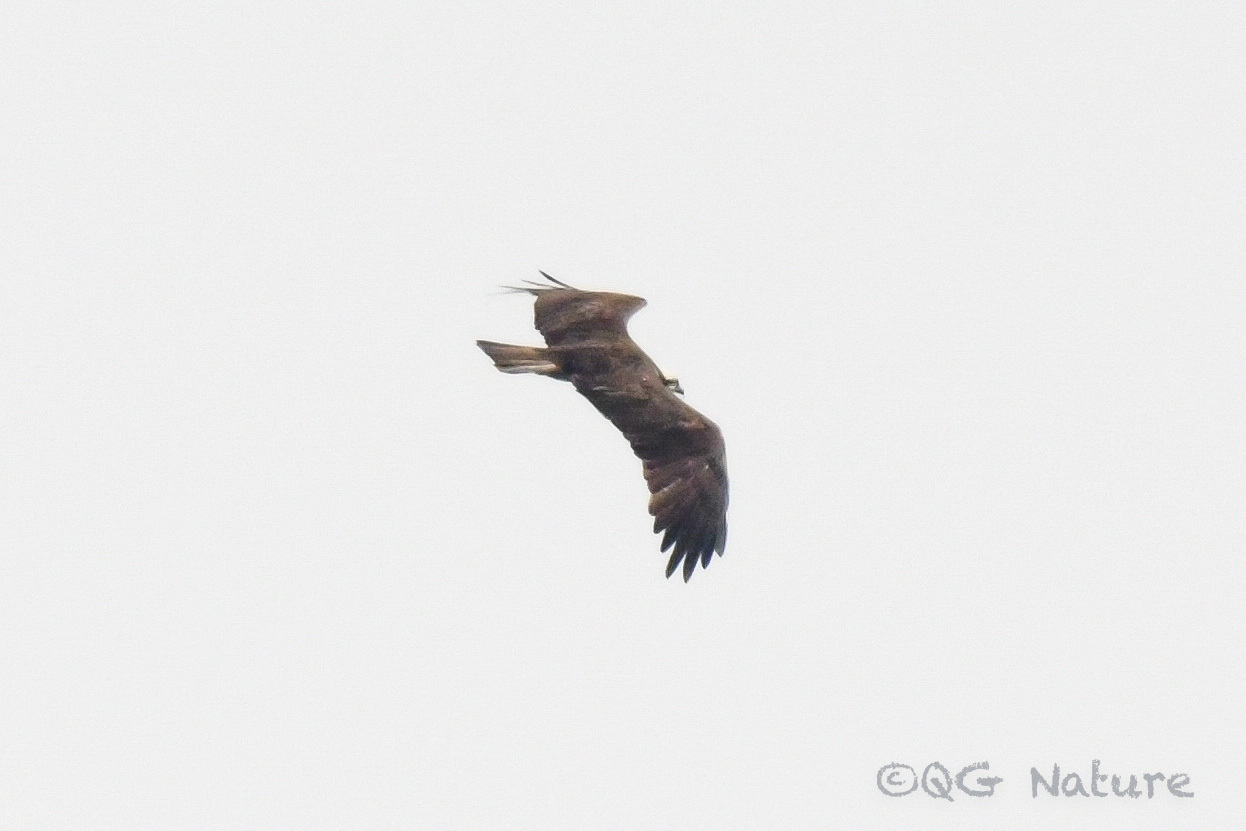
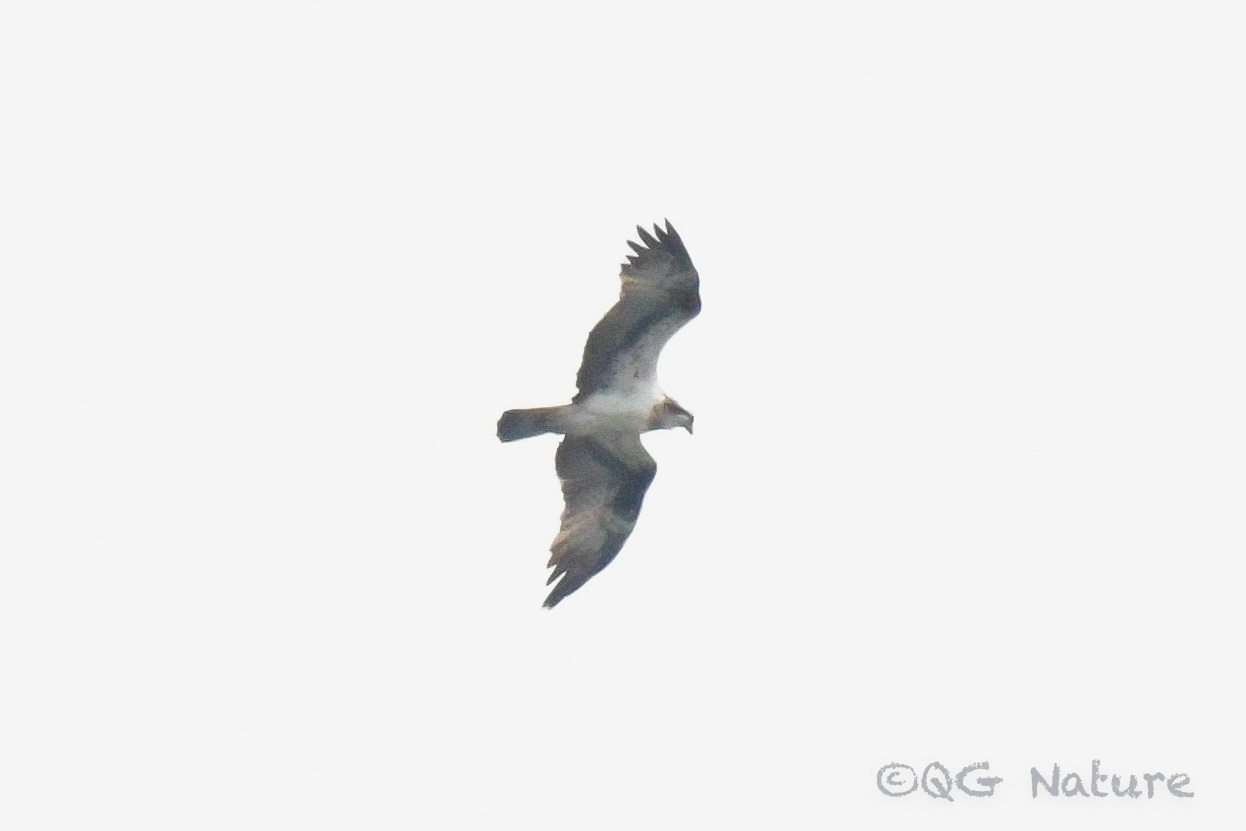
Adults measure 50-66 cm in length with a substantial wingspan of 127-180 cm, weighing between 0.9-2.1 kg. The upperparts display a deep, glossy brown coloration, while the underparts are pure white, occasionally with brown streaking on the breast. The head is white with a distinctive dark mask extending across the eyes and down the sides of the neck. Golden to brown irises and a pale blue nictitating membrane protect the eyes during fishing dives. The black bill features a blue cere, and the feet are white with powerful black talons. A key field mark visible in flight is the black wrist patches on the wing undersides. The wings show four long, finger-like primary feathers with a shorter fifth primary, giving a characteristic angular shape. Sexes appear similar, though males are slimmer with narrower wings and weaker breast markings.
Identification
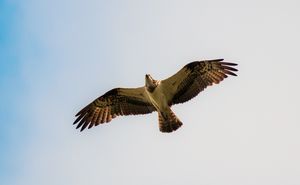
In flight, this species shows arched wings with drooping wingtips, creating a gull-like appearance that distinguishes it from hawks and eagles. The reversible outer toe is a unique identification feature among diurnal raptors, visible only at close range. The call consists of sharp, whistled notes described as 'cheep, cheep' or 'yewk, yewk,' becoming a frenzied 'cheereek!' when disturbed at the nest. Juveniles can be identified by buff-fringed plumage on the upperparts, buff-toned underparts, and streaked head feathers. Spring observation of barring on underwings and flight feathers helps distinguish young birds as upperpart feathering wears with age. The combination of white head, dark eye mask, and dark wrist marks provides reliable identification at reasonable distances.
Distribution & Habitat
This species ranks as the second most widely distributed raptor worldwide, found across all continents except Antarctica. In North America, it breeds from Alaska and Newfoundland south to the Gulf Coast and Florida, wintering from the southern United States through Argentina. European populations summer throughout the continent north into Ireland, Scandinavia, and Finland, migrating to North Africa for winter. The Australian population is largely sedentary along coastal regions, with a notable gap between western and eastern breeding sites corresponding to the Nullarbor Plain. Pacific island populations occur in the Bismarck Islands, Solomon Islands, and New Caledonia. It requires only proximity to fish-bearing waters for habitat, demonstrating remarkable adaptability to diverse aquatic environments.
Behavior & Ecology
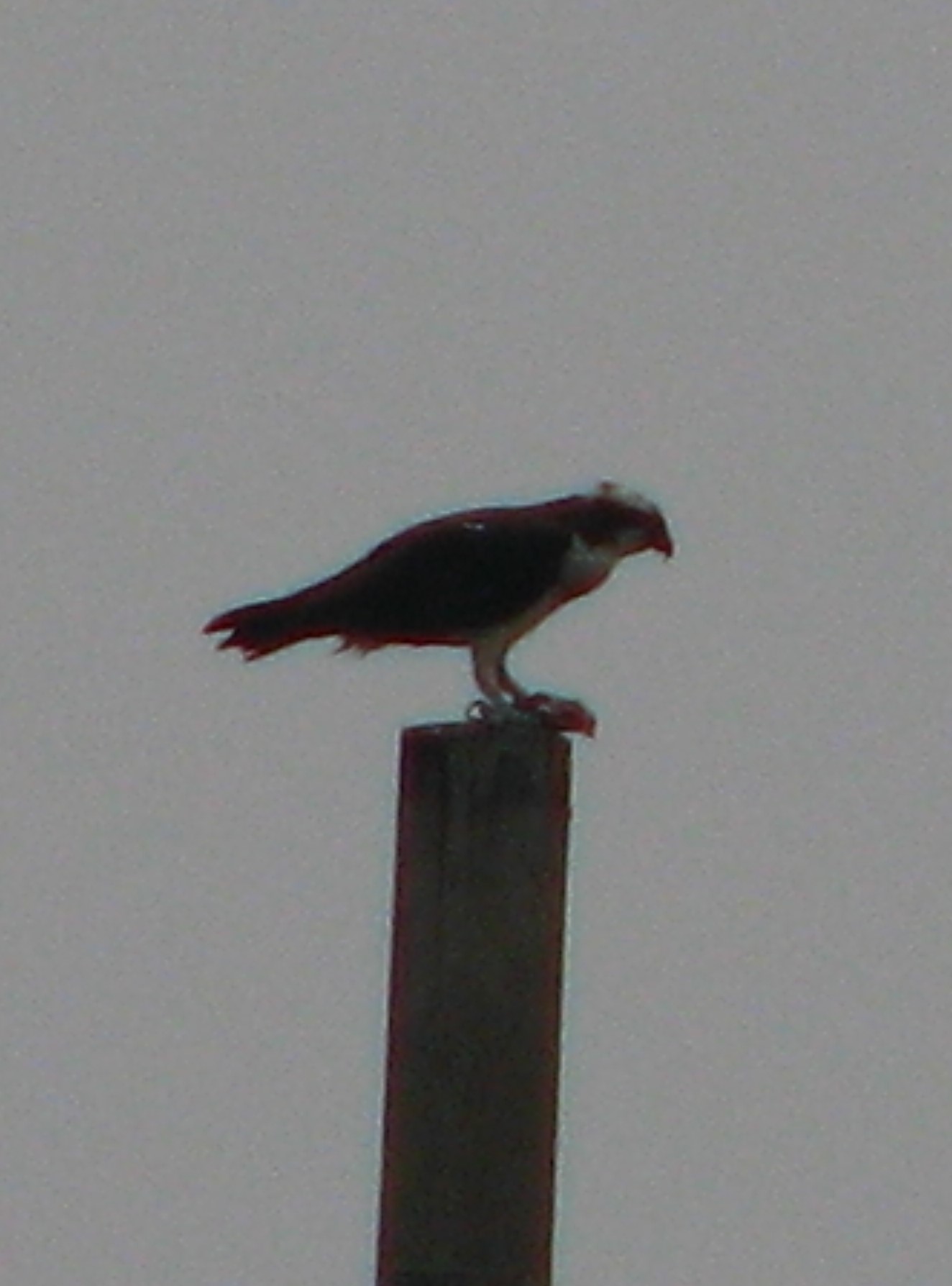
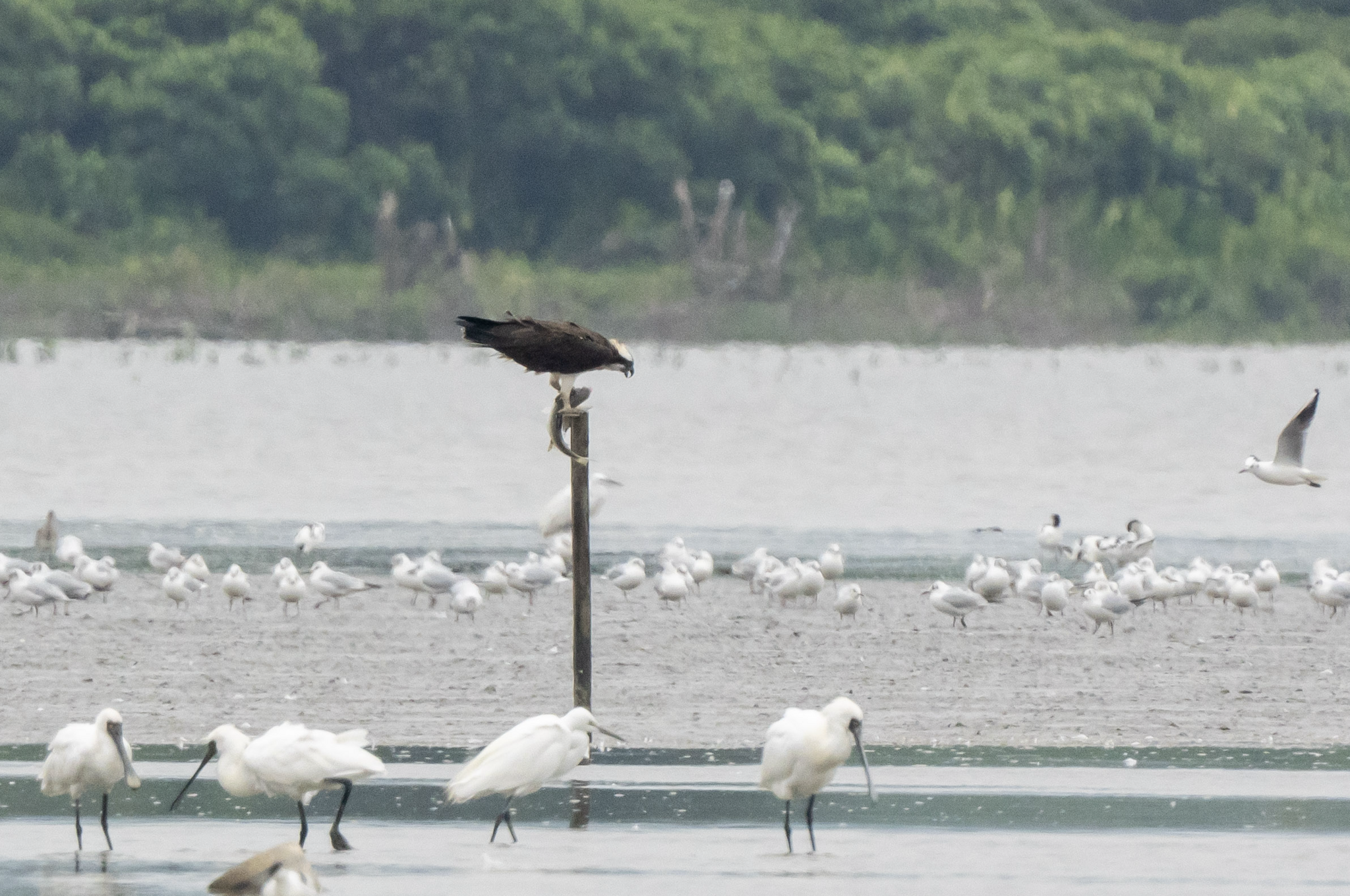
Fish comprise 99% of the diet, with prey typically weighing 150-300 g and measuring 25-35 cm, though fish from 50 g to 2 kg are taken. Hunting involves spotting prey from 10-40 m above water, followed by a dramatic feet-first plunge that often completely submerges the bird. Special adaptations include reversible outer toes with sharp spicules, closable nostrils, backward-facing talon scales, and oily, water-resistant plumage. Breeding typically begins at three to four years of age, with pairs usually mating for life. Nests are massive structures of sticks and debris, reaching 2 m wide and weighing up to 135 kg, placed in trees, on cliffs, utility poles, or artificial platforms. The female lays two to four eggs, incubated for 35-43 days, with chicks fledging in 8-10 weeks. Lifespan averages 7-10 years, though individuals can reach 20-25 years.
Conservation
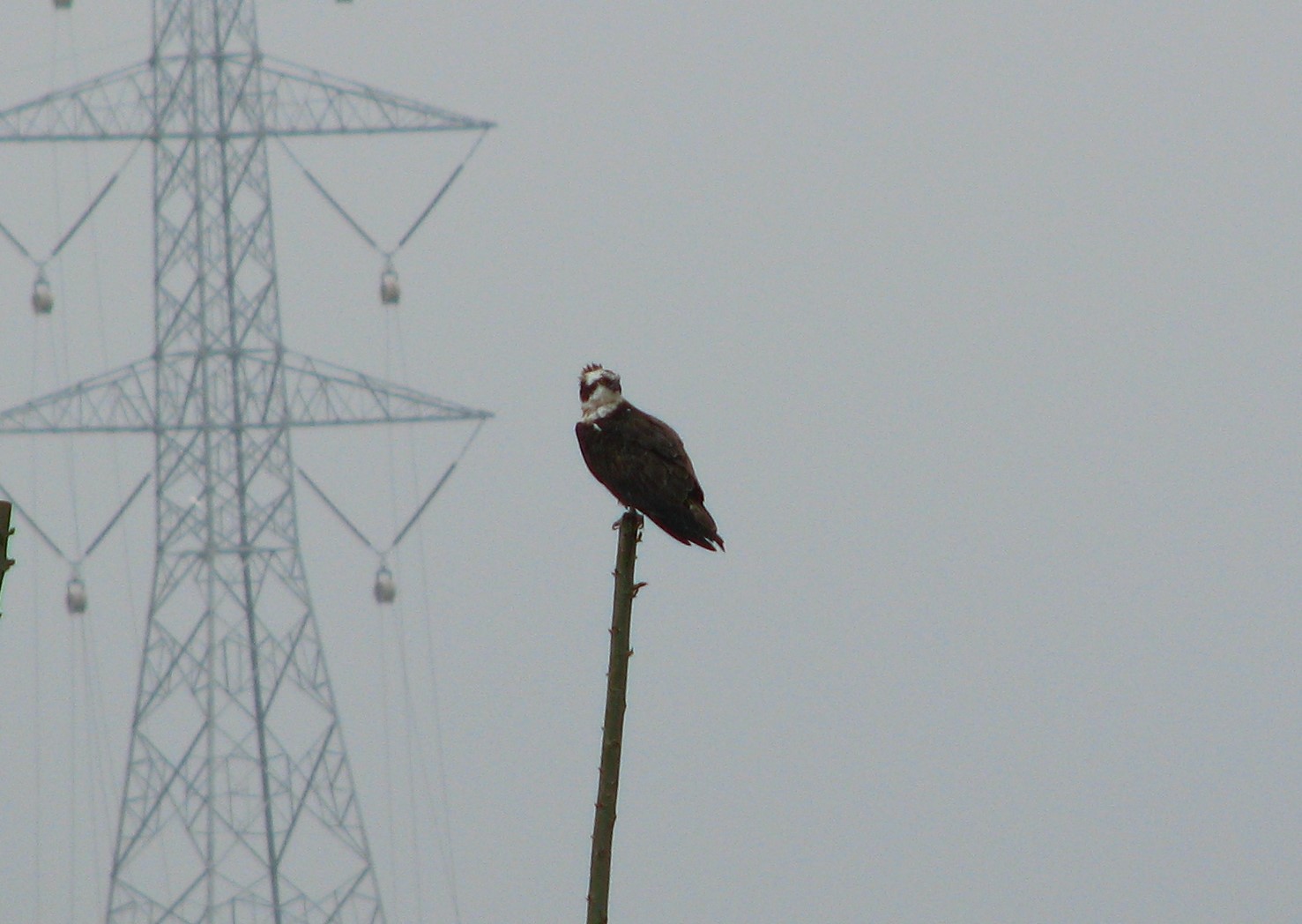
With a global population estimated at 460,000 individuals across 9,670,000 square kilometers in the Americas and Africa, the species maintains a Least Concern IUCN assessment. Global population trends have not been quantified, and the species does not approach thresholds for population decline criteria. However, regional declines have been documented in South Australia, where former territories in Spencer Gulf and along the Murray River have been vacant for decades. Historical threats included egg collection and targeted hunting, but the most significant population crash occurred in the 1950s-1960s due to DDT pesticide use, which caused reproductive failure through thin eggshells. Recovery followed DDT restrictions in the early 1970s and reduced persecution. Artificial nesting platforms have aided conservation efforts, though threats from power lines, aircraft collisions, and habitat disturbance from coastal recreation persist in some regions.
Culture
The species has appeared in literature and folklore for centuries. Shakespeare referenced the bird in Coriolanus, describing its dominion over fish as a metaphor for sovereignty. In Chinese folk tradition, it symbolizes fidelity and marital harmony due to its monogamous habits, featured in the ancient poem 'Guan Guan Ju Jiu.' The Roman writer Pliny reported a legend about parent birds testing their young by making them fly toward the sun. In heraldry, the species is depicted as a white eagle maintaining a fish in its talons, traditionally symbolizing vision and abundance. It has appeared on more than 50 international postage stamps and was designated the provincial bird of Nova Scotia, Canada, in 1994. The Oregon Legislature designated it the state raptor in 2017. Various sports teams, including the Seattle Seahawks NFL franchise, have adopted the name for its associations with aggression and regional identity.
Source: Wikipedia · CC BY-SA 3.0
Taxonomy
- Order
- Accipitriformes
- Family
- Pandionidae
- Genus
- Pandion
- eBird Code
- osprey
Vocalizations
Subspecies (4)
-
Pandion haliaetus carolinensis
breeds Canada to southern USA; winters to Peru and Brazil
-
Pandion haliaetus cristatus
Sulawesi and Java to New Guinea, coastal Australia (except Tasmania), and New Caledonia
-
Pandion haliaetus haliaetus
breeds Palearctic; winters to South Africa, India, and Philippines
-
Pandion haliaetus ridgwayi
Caribbean (including Bahamas, Cuba, and Belize)
Data Sources
CBR Notes: 英文名由Western Osprey改为Osprey(Monti et al. 2015; Monti et. al. 2018; HBW/BirdLife, Clements)
Species description from Wikipedia, licensed under CC BY-SA 3.0.
Bird images and sounds sourced from GBIF, contributed by citizen scientists worldwide under Creative Commons licenses.
Taxonomy data from AviList 2025.