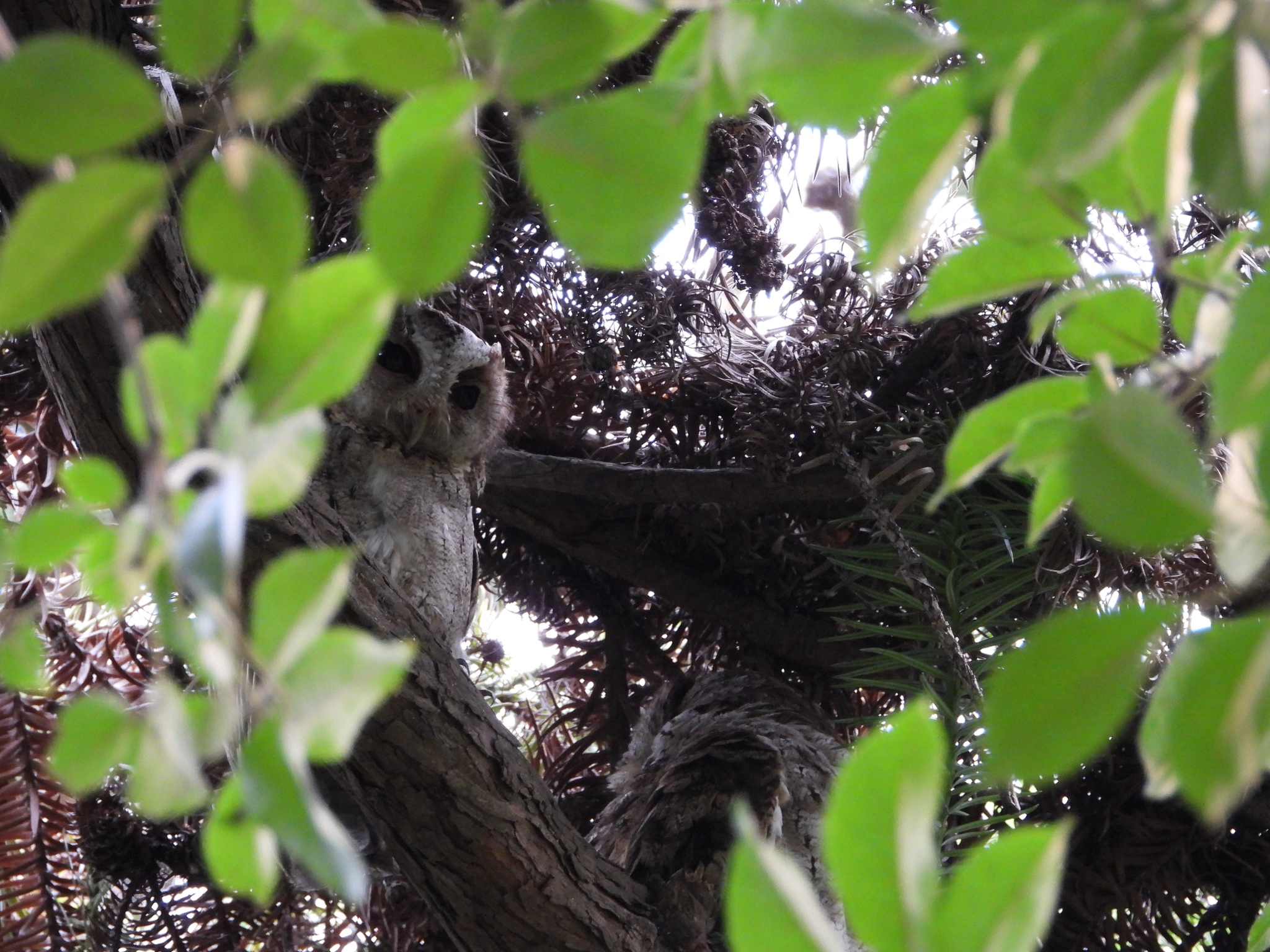
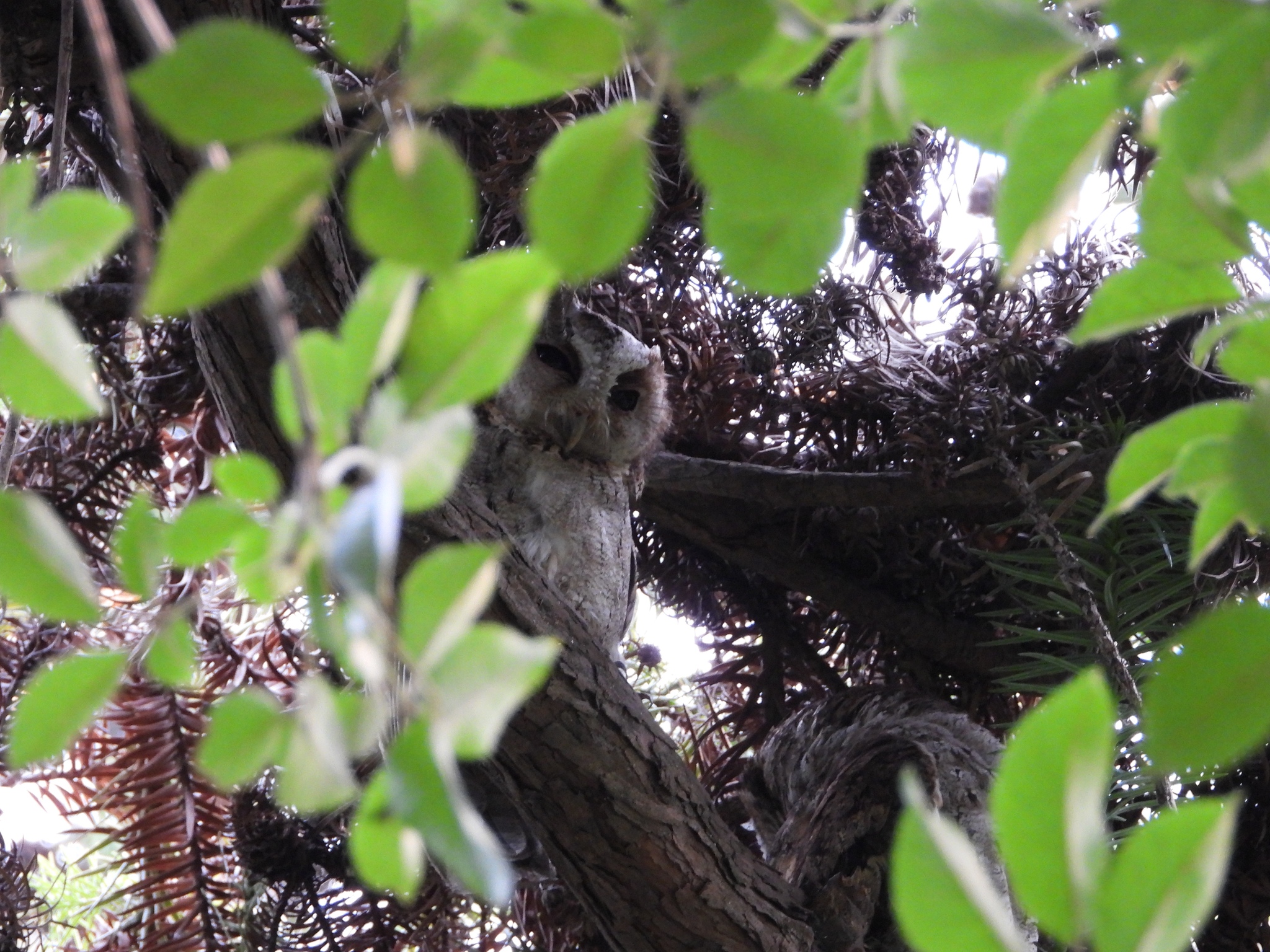
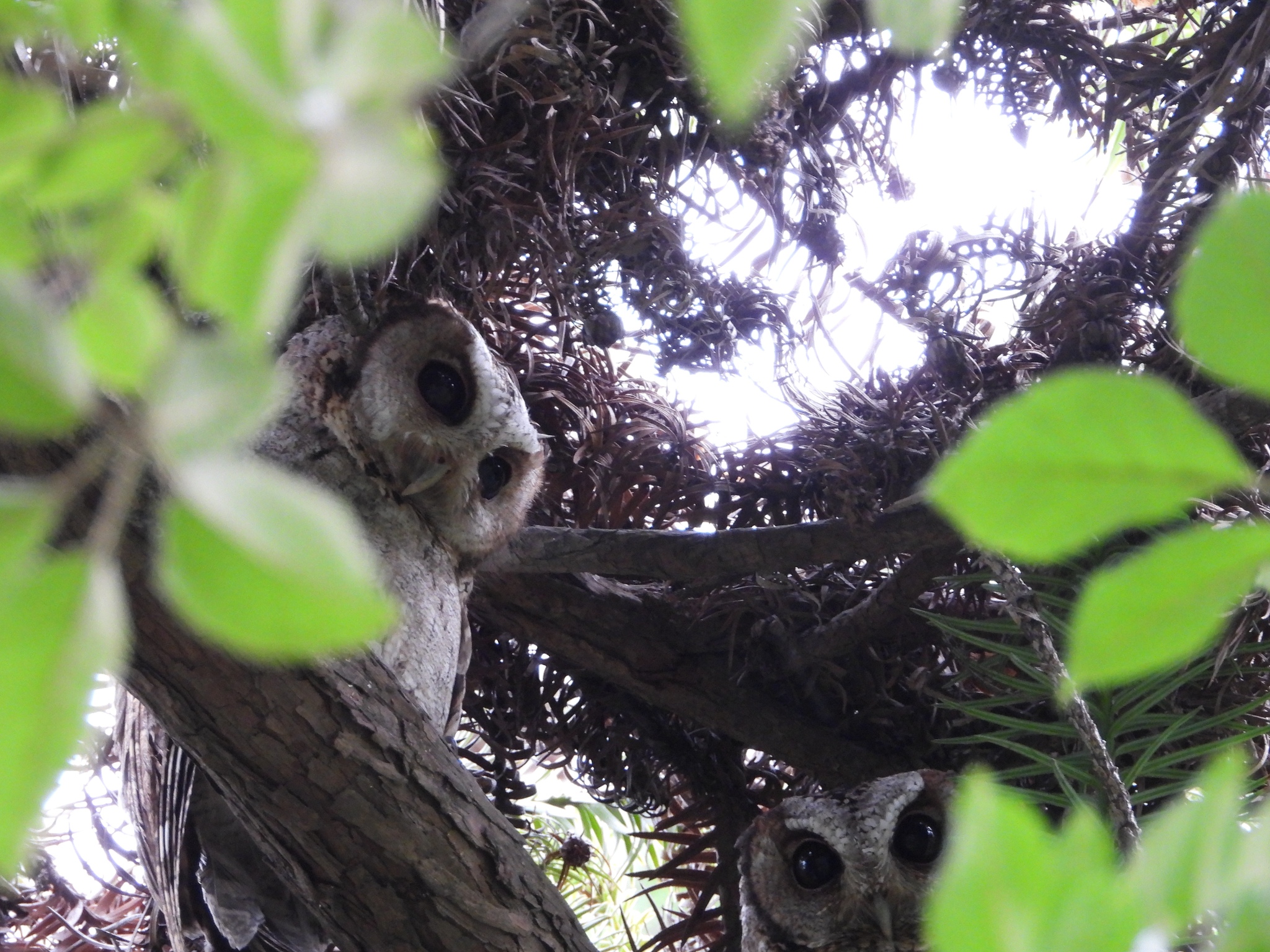
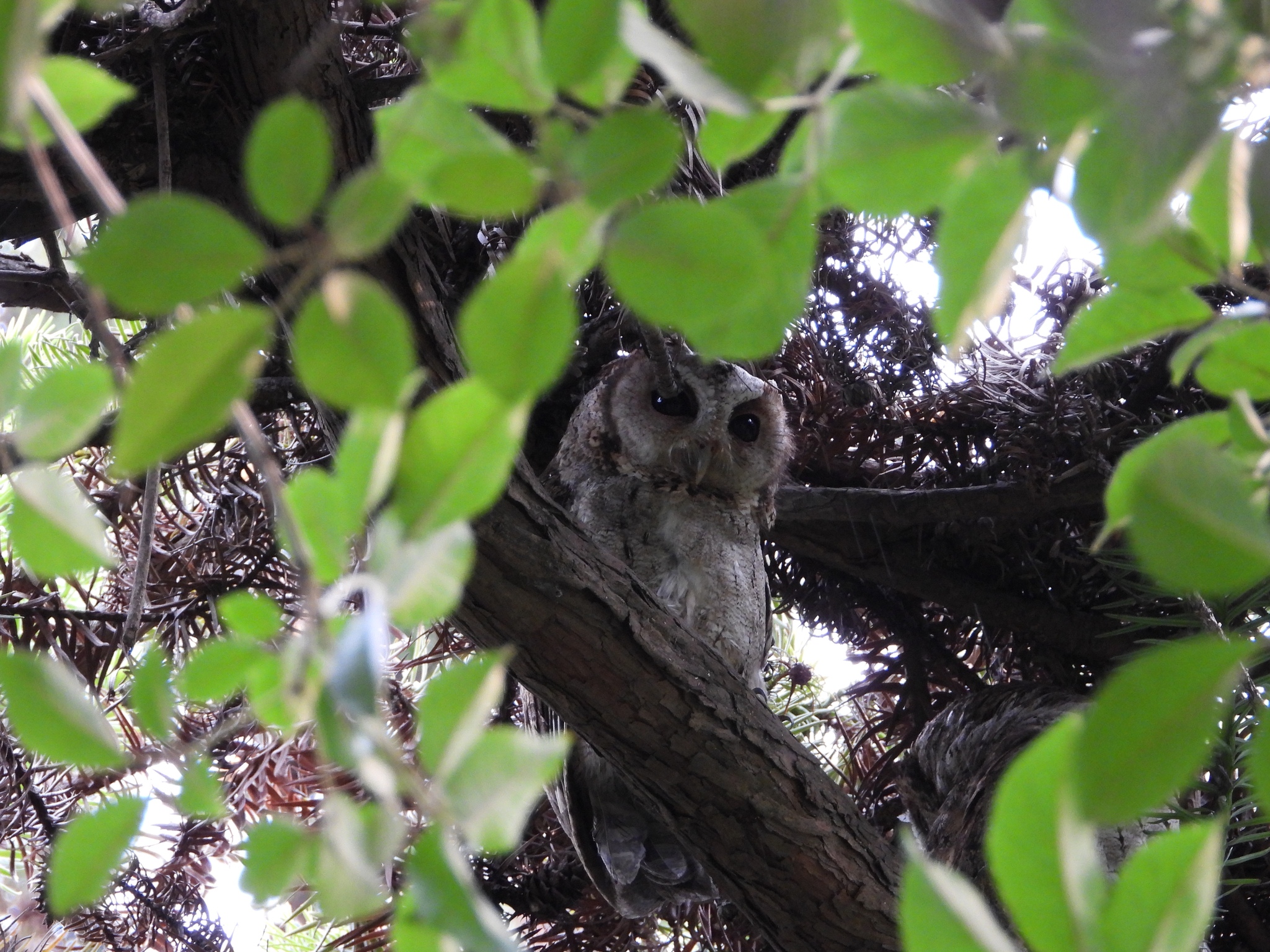
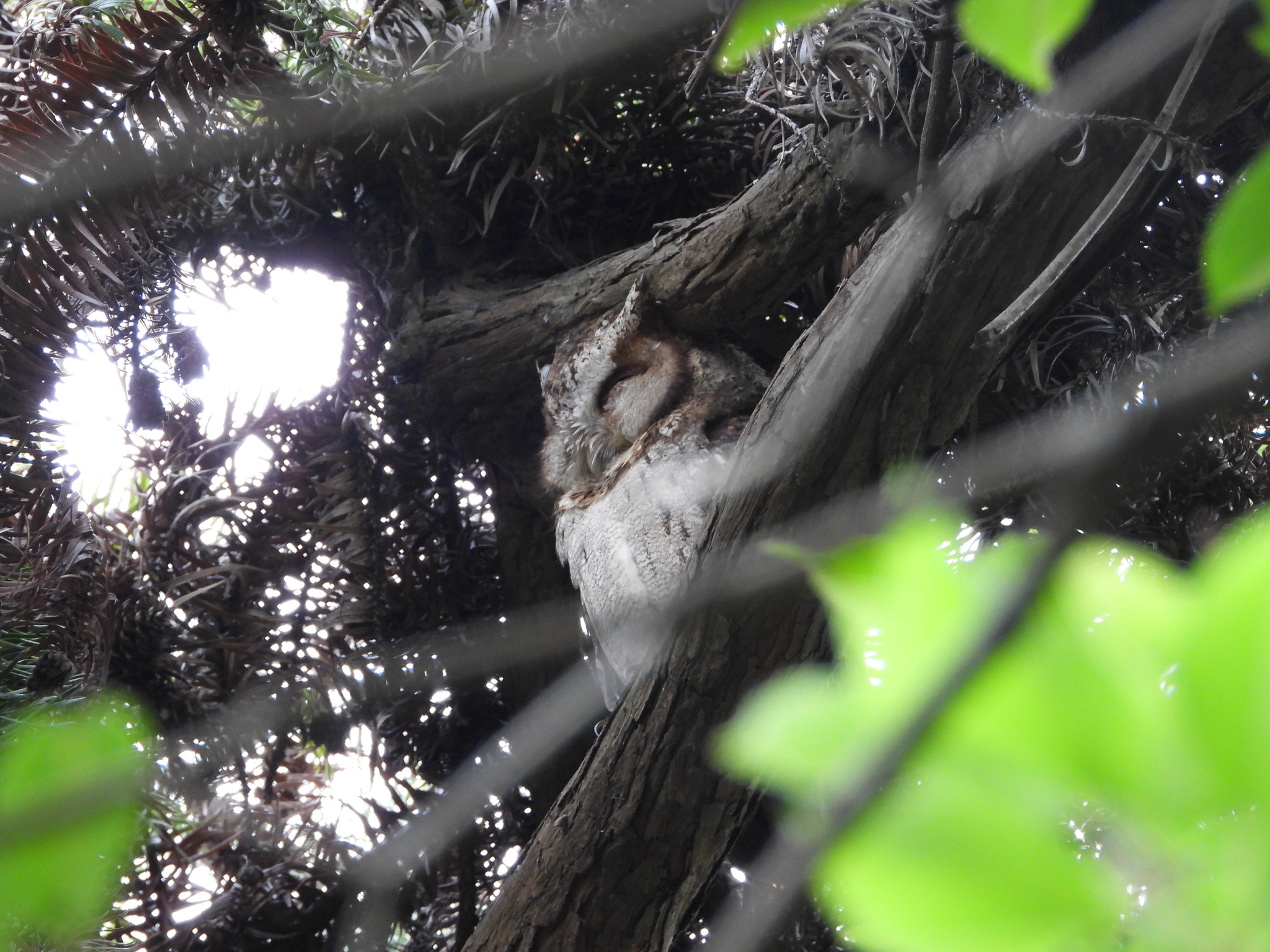
Collared Scops Owl
Otus lettia
领角鸮
Introduction
This owl is found across south Asia, from northern Pakistan and India through Nepal, Bangladesh, and the Himalayan region eastward to southern China and Taiwan. Some populations migrate south for the winter to India, Sri Lanka, and Malaysia. It inhabits forests and well-wooded areas where it roosts during daylight hours. It is the largest member of the scops owl group. Small birds often gather and mob this owl while it roosts, giving away its location. This species was once considered part of a broader complex that has since been split, with the Indian scops owl now recognized as a separate species.
Description
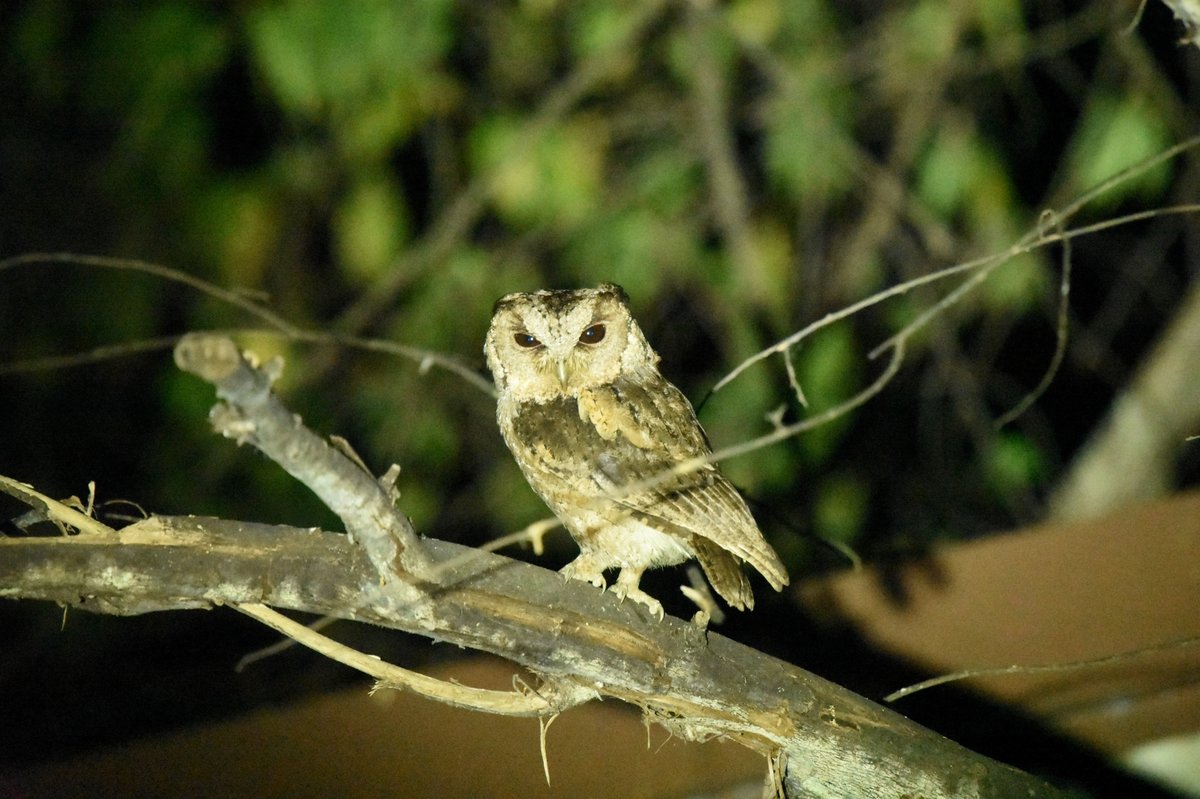
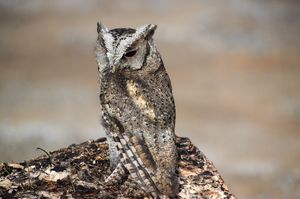
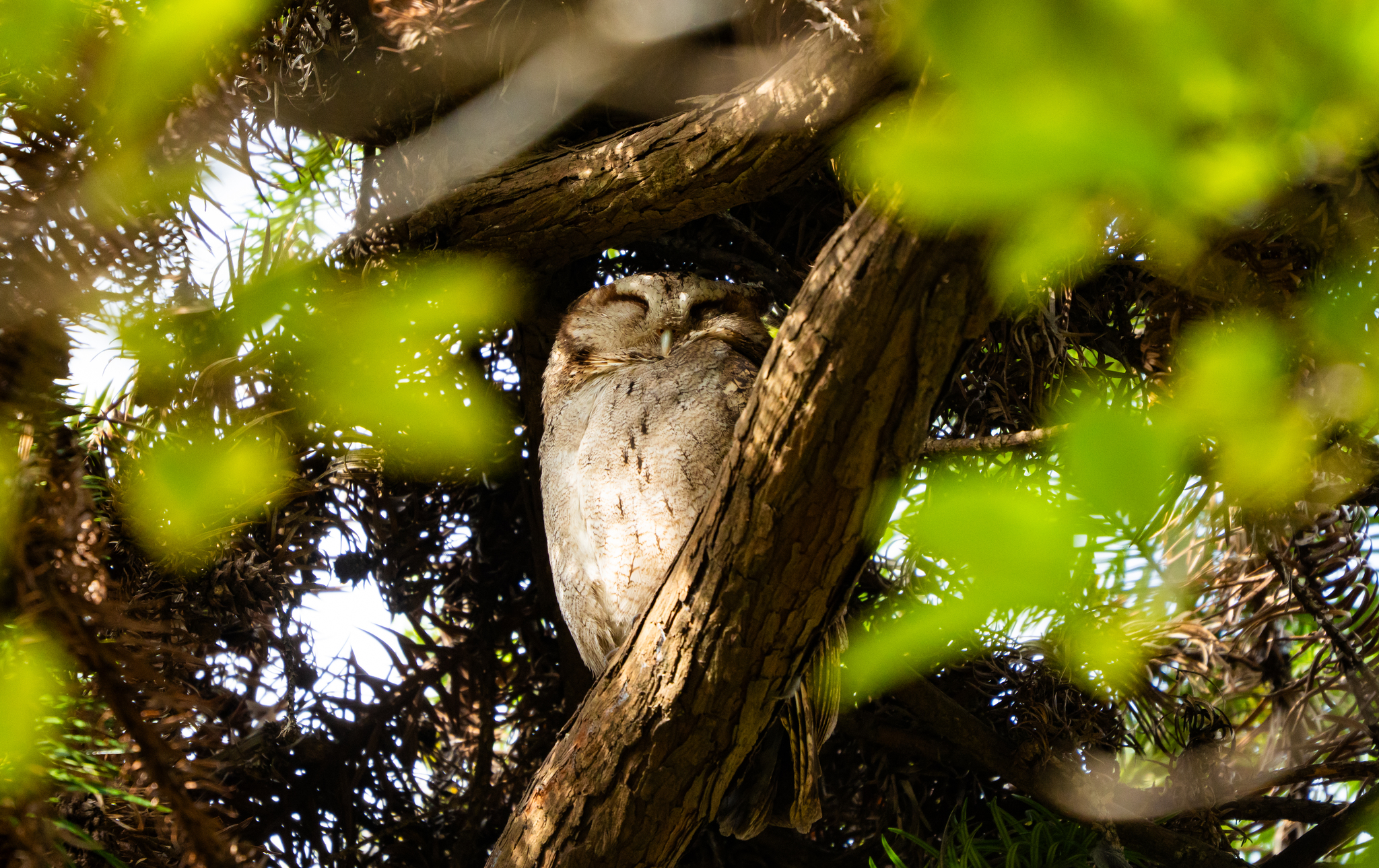
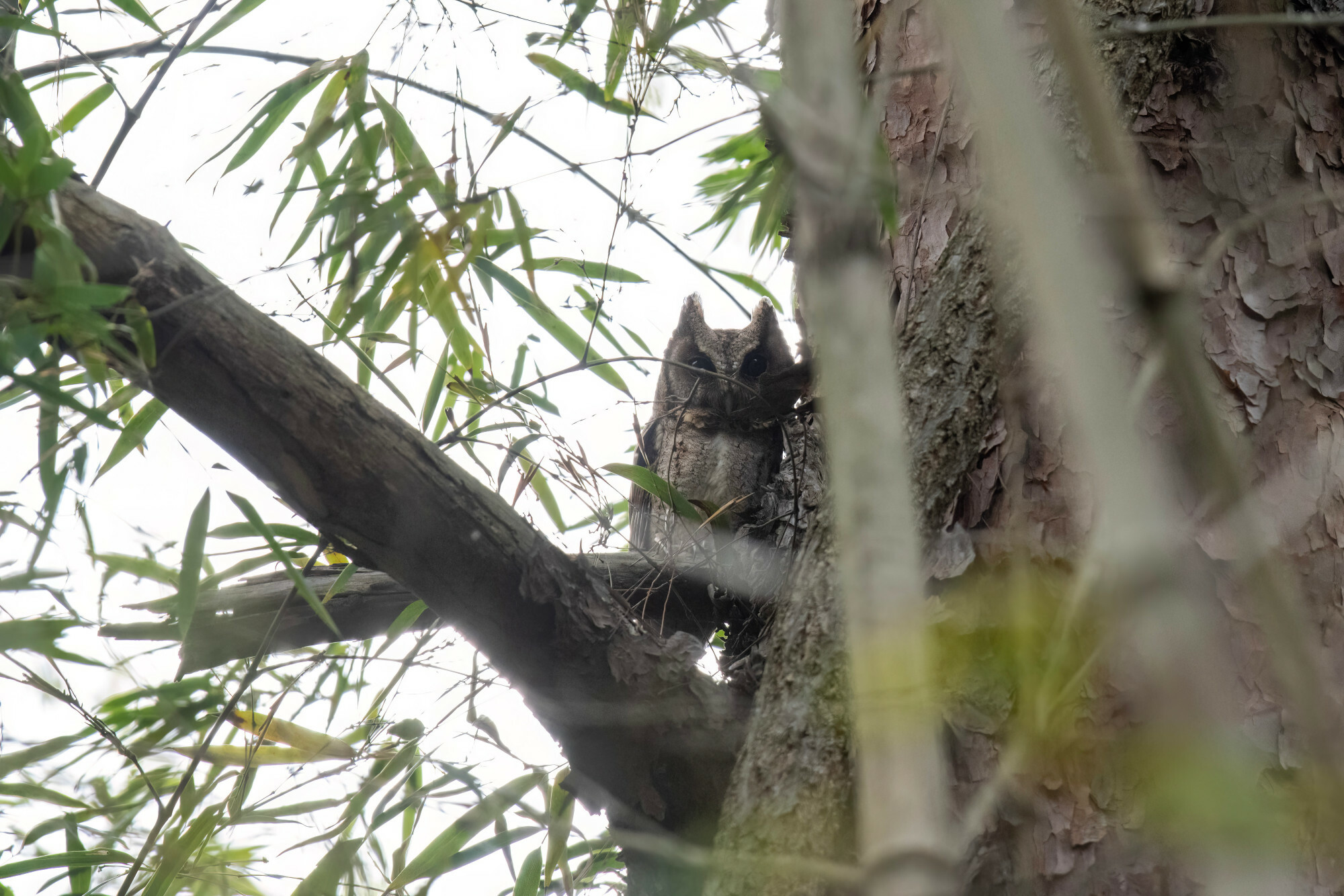
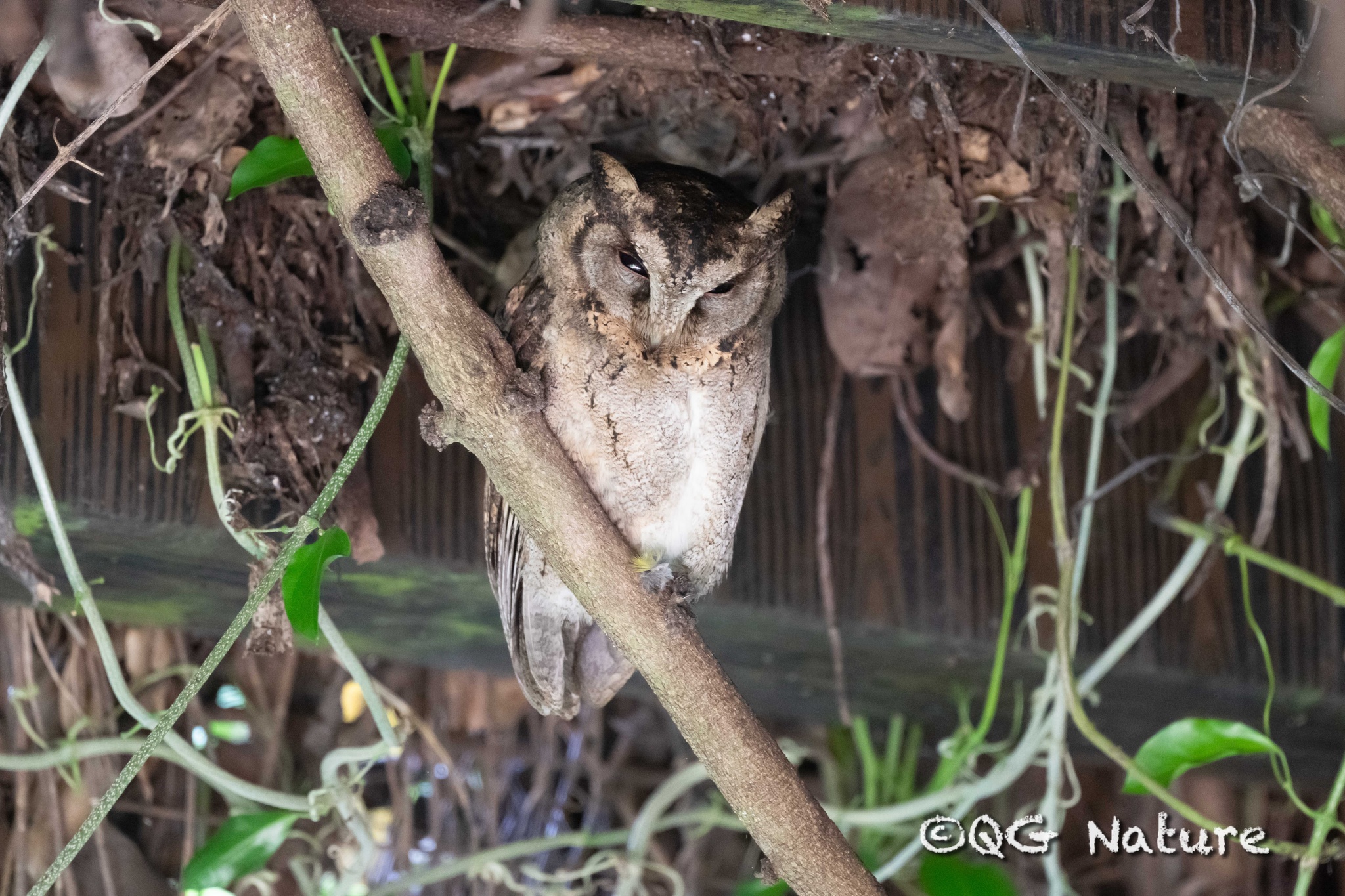
A small, compact owl measuring 23-25 cm in length, this species is the largest of the scops owls. It displays the characteristic small head tufts or 'ears' shared by its relatives. The upperparts show considerable variation, appearing grey or brown depending on the subspecies, with subtle buff spotting throughout. Underparts are buff-colored with fine, darker streaking. The facial disc is pale, ranging from whitish to buff, and the eyes can be either orange or brown. A distinctive buff-colored neckband crosses the upper breast. Males and females appear similar, and the species is characterized by a deeply undulating flight pattern.
Identification
This species is most easily distinguished from similar scops owls by its voice. It overlaps with the Oriental Scops Owl in the southern parts of its range, though that species was only recently split and remains very similar in appearance. It also closely resembles the Indian Scops Owl, which is slightly smaller. The key to confident identification lies in learning its distinctive call, a quiet 'goog gook.' Some taxonomic authorities have historically treated it as a subspecies of the Indian Scops Owl, reflecting how similar these birds appear in the field.
Distribution & Habitat
This owl breeds across south Asia from northern Pakistan through northern India, Nepal, and Bangladesh, extending east through the Himalayan region to southern China and Taiwan. While primarily a resident species, populations in the northern parts of the range are partially migratory, with some individuals moving south to spend the winter in India, Sri Lanka, and Malaysia. It is a common breeding bird in forests and other well-wooded areas throughout its range, where it occupies tree hollows for nesting.
Behavior & Ecology
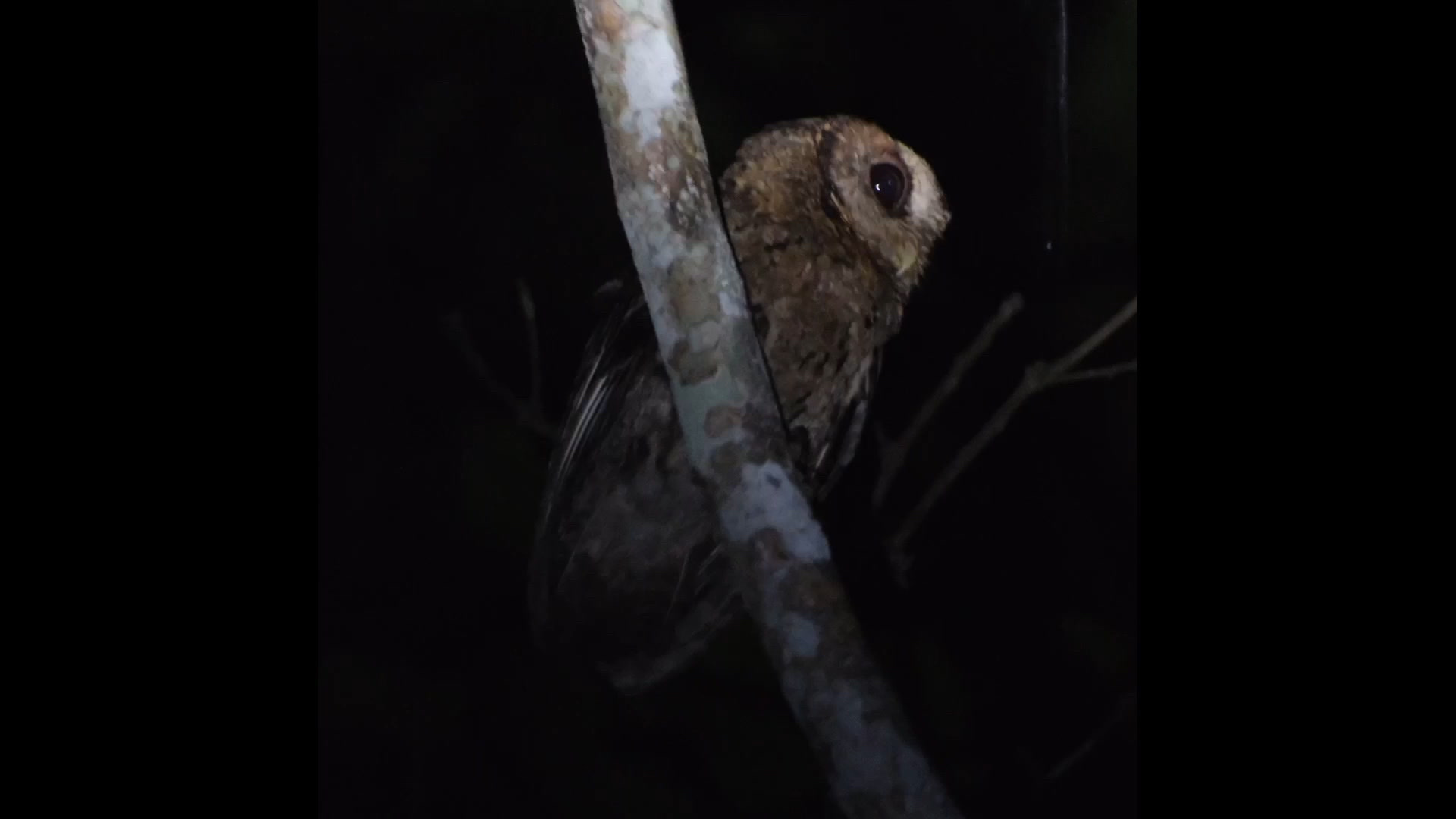
Strictly nocturnal, this owl spends its days roosting hidden among tree branches, often remaining motionless to avoid detection. However, it frequently betrays its presence through the behavior of small birds that discover it and gather to mob and vocalize at the intruder. Its diet consists primarily of insects, which it hunts at night in typical owl fashion. During breeding season, it nests in natural tree hollows, laying a clutch of 3-5 eggs. Its call is a relatively quiet 'goog gook' given during nighttime activity.
Conservation
This species is described as common throughout much of its range, though specific population numbers and conservation assessments are not provided in the source material.
Culture
No cultural significance, folklore, or traditional references to this species were documented in the available source material.
Source: Wikipedia · CC BY-SA 3.0
Taxonomy
- Order
- Strigiformes
- Family
- Strigidae
- Genus
- Otus
Vocalizations
Subspecies (6)
-
Otus lettia cnephaeus
Thai-Malay Peninsula, from south of the Isthmus of Kra to Singapore
-
Otus lettia erythrocampe
southeastern China and northwestern Vietnam
-
Otus lettia glabripes
Taiwan
-
Otus lettia lettia
eastern Nepal, northeastern India (south to Odisha and northeastern Ghats), Bangladesh, Myanmar, Thailand, and Indochina
-
Otus lettia plumipes
western Himalayas (northern Pakistan to western Nepal)
-
Otus lettia umbratilis
Hainan (southern China)
Data Sources
Species description from Wikipedia, licensed under CC BY-SA 3.0.
Bird images and sounds sourced from GBIF, contributed by citizen scientists worldwide under Creative Commons licenses.
Taxonomy data from AviList 2025.