

Otidiformes / Otididae / Otis
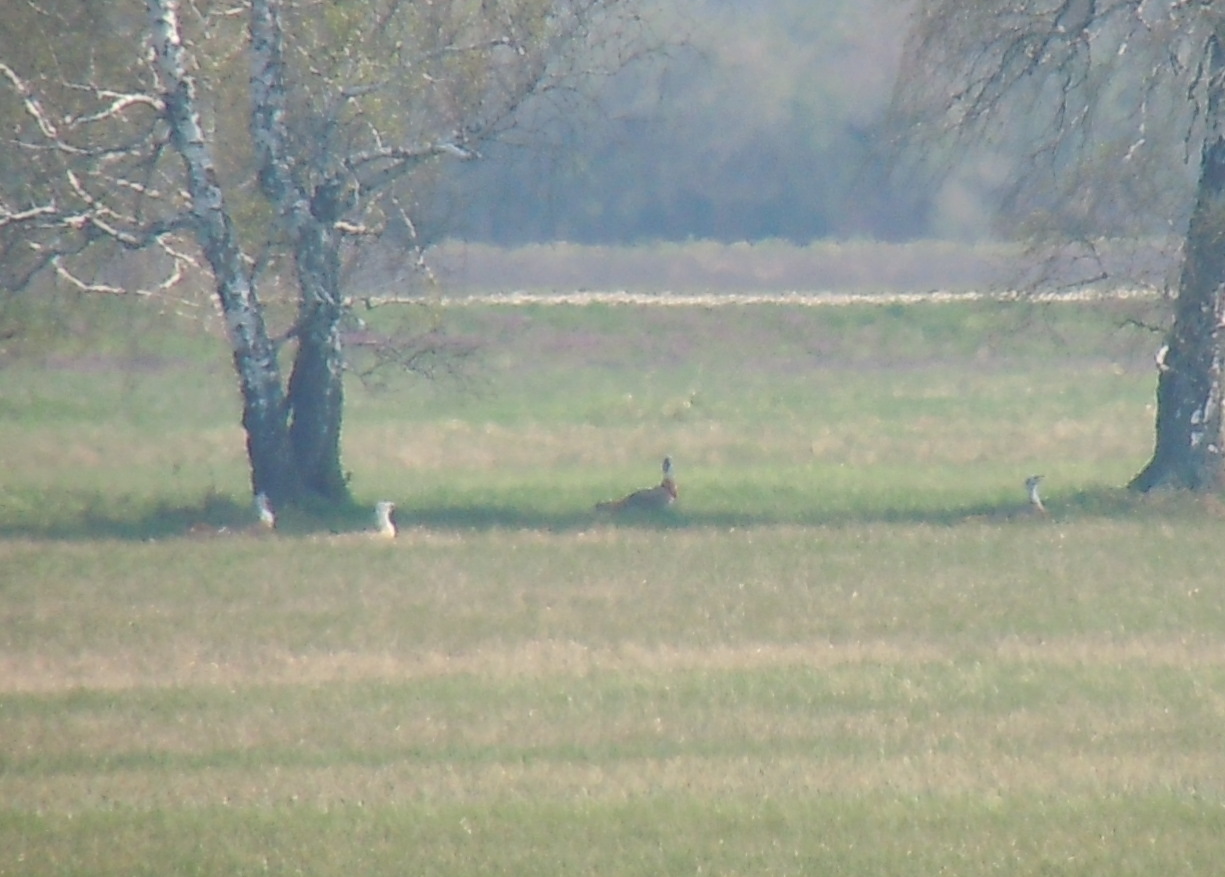
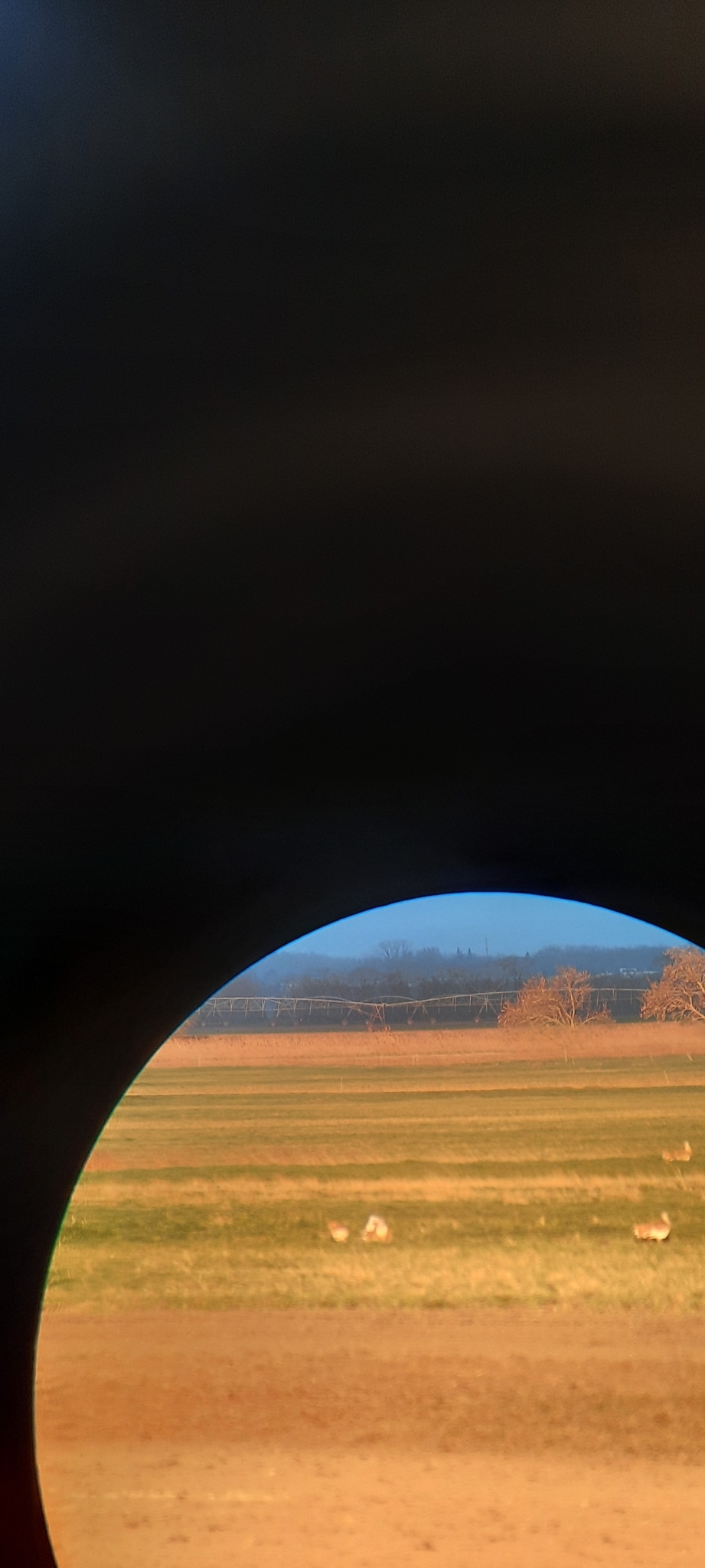
Great Bustard
Otis tarda · 大鸨
Introduction
A member of the bustard family and the only living species in the genus Otis, this bird breeds in open grasslands and farmland from northern Morocco, South and Central Europe to temperate Central and East Asia. European populations are mainly resident, while Asian populations migrate south in winter. It is classified as Endangered on the IUCN Red List as of 2023.
Description
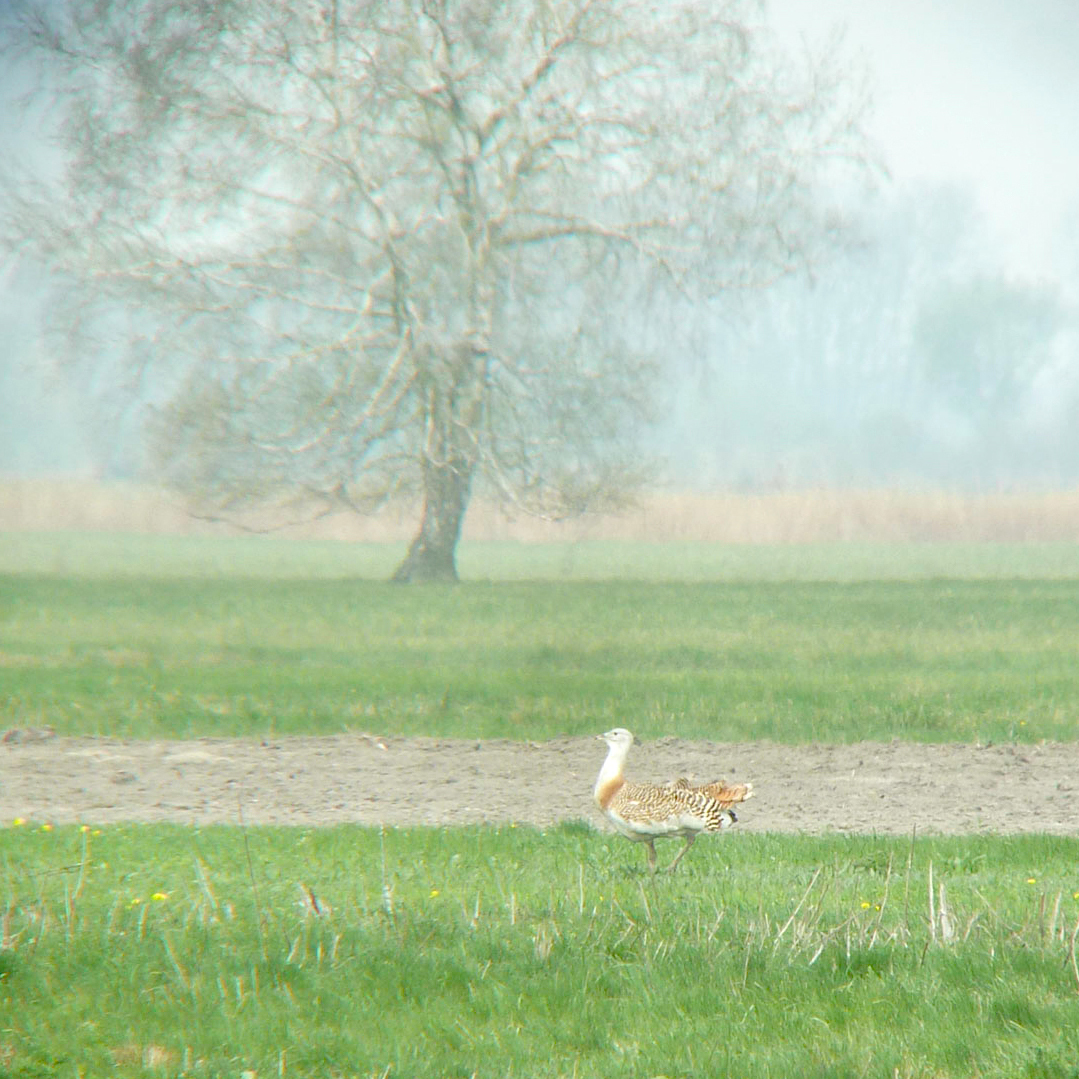
This species exhibits extreme sexual dimorphism. Adult males are among the heaviest flying birds, typically 90–105 cm tall with a length of around 115 cm and a wingspan of 2.1–2.7 m. Male weight ranges from 5.8 to 18 kg, with a verified record of 21 kg. Males are brown above with blackish barring, white below, and have a long grey neck and head with chestnut breast and lower neck sides. During breeding, males develop long white neck bristles up to 12–15 cm. Females are about one-third smaller, measuring 75–85 cm in height, 90 cm in length, with an 180 cm wingspan, and weighing 3.1–8 kg. Female plumage is buff on the breast and neck with brown and pale coloration for camouflage. Immature birds resemble females. The eastern subspecies is more extensively grey with more back barring.
Identification
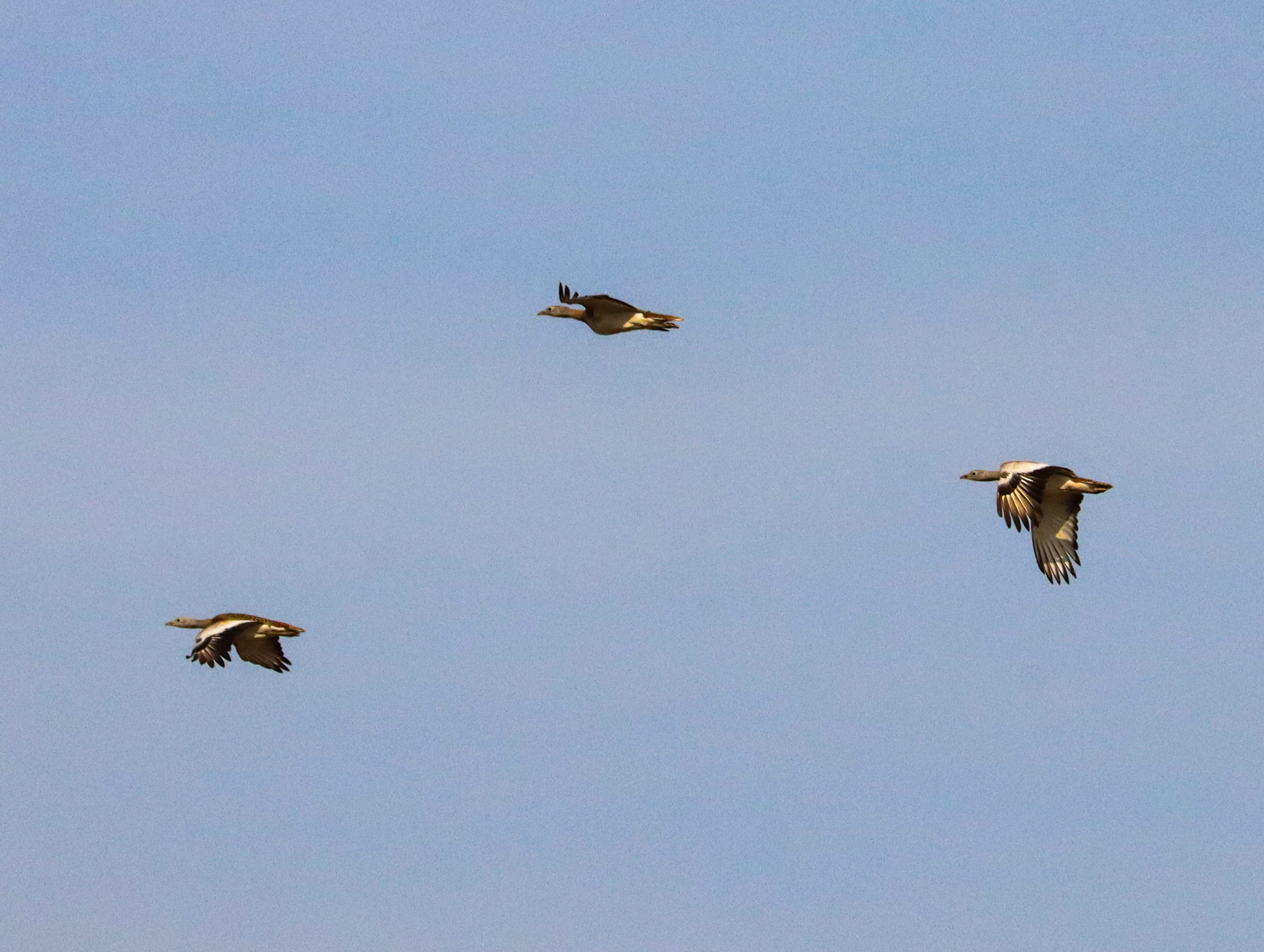
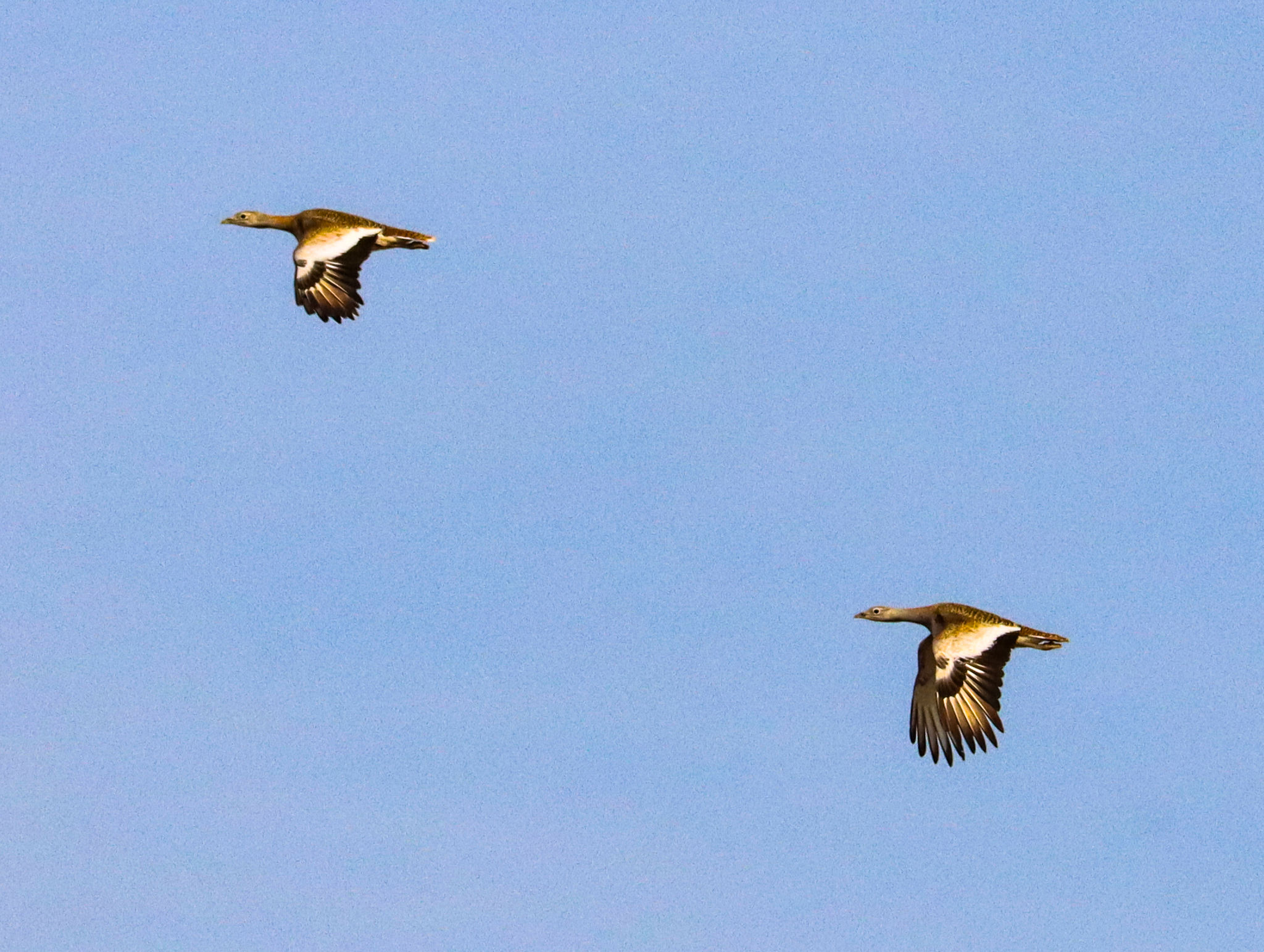
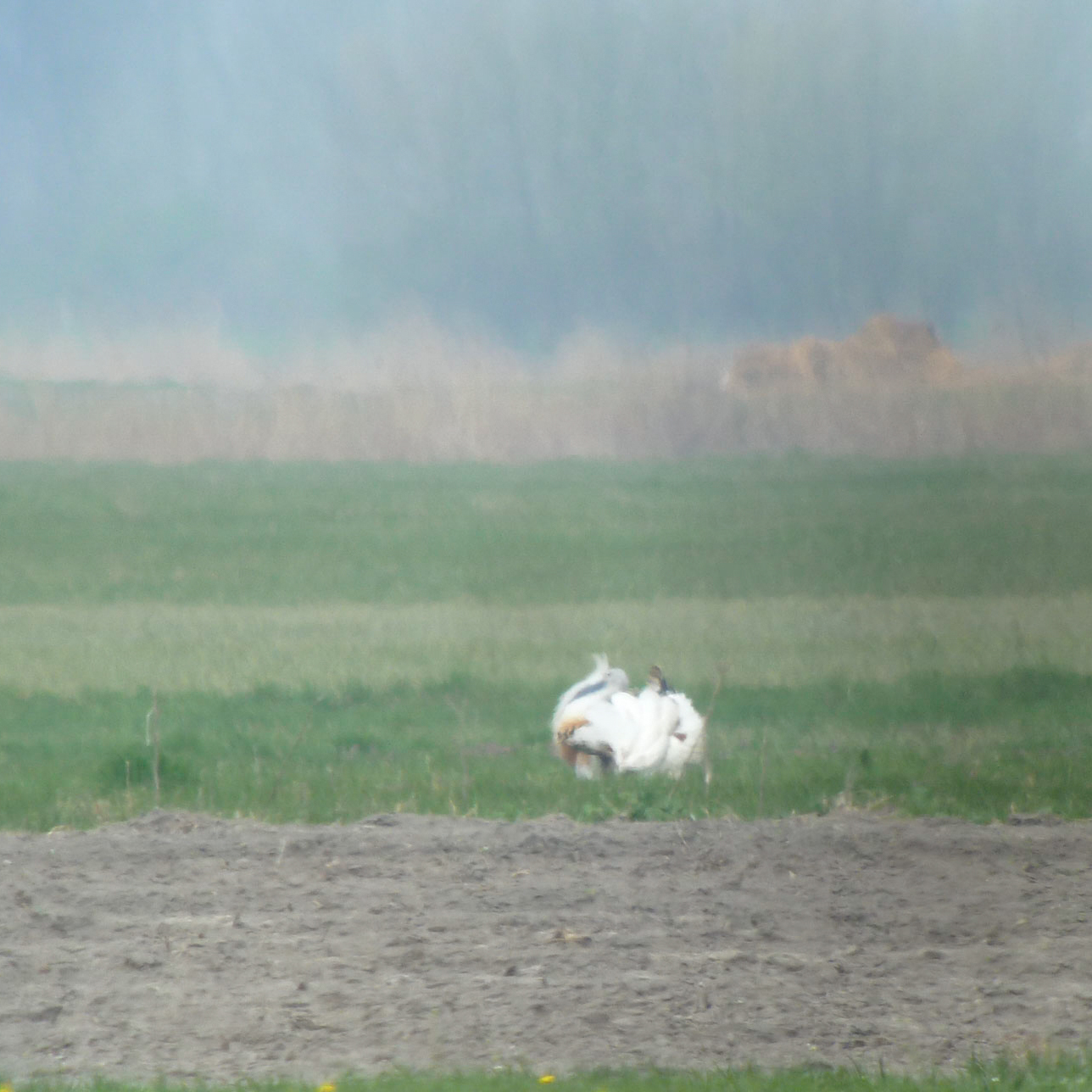
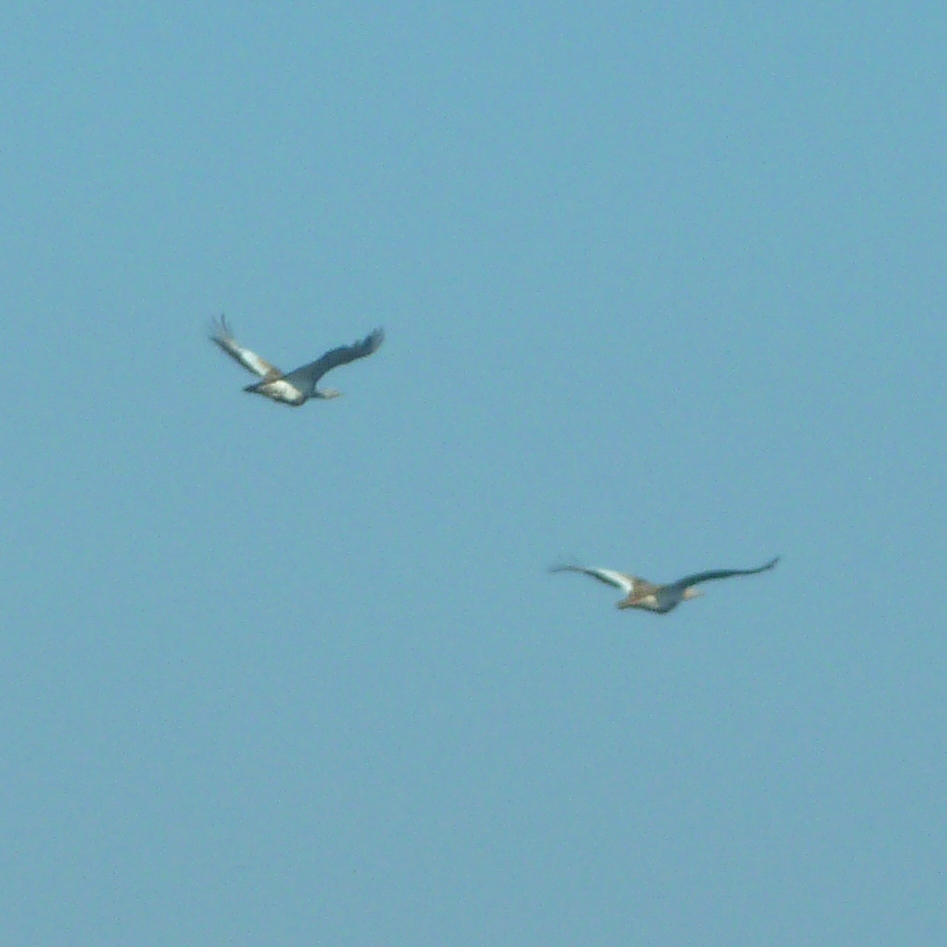
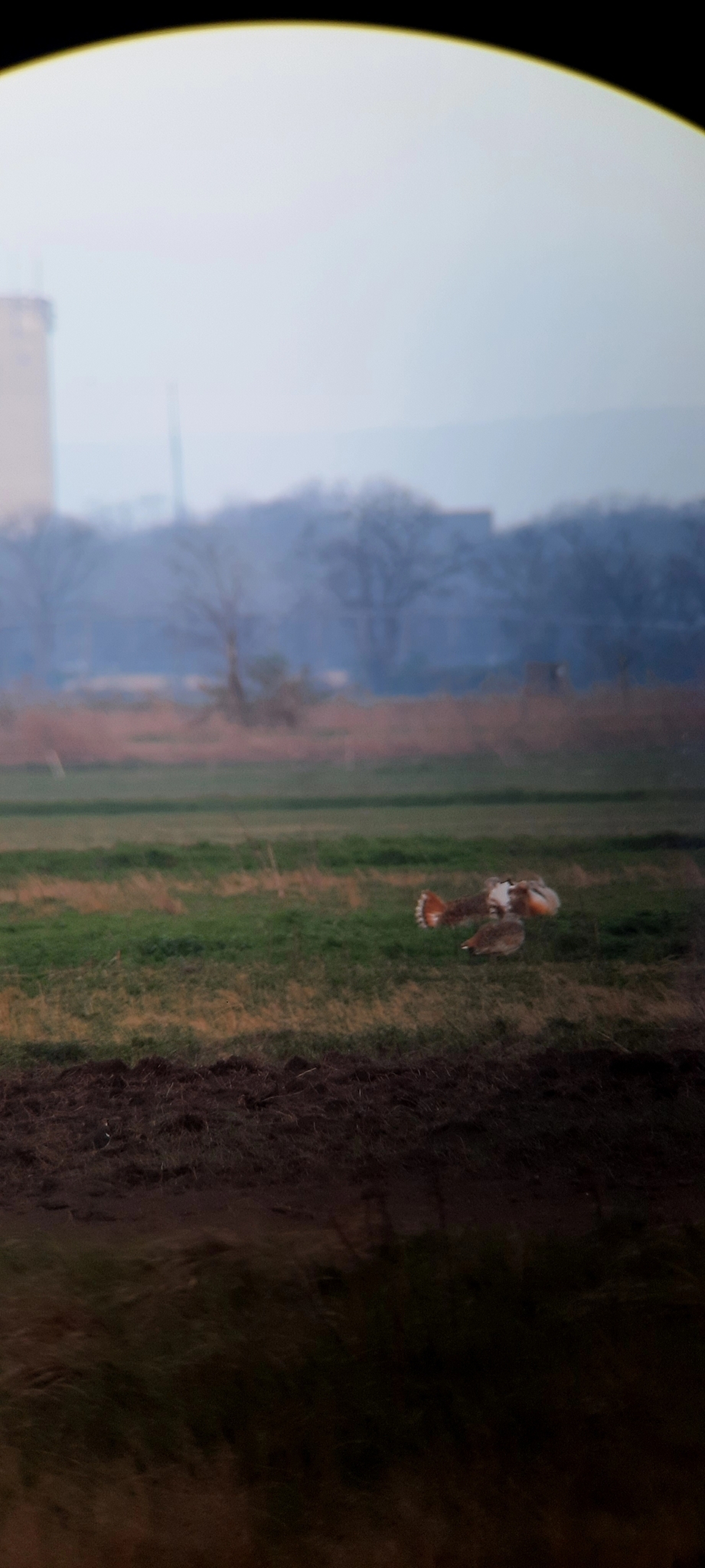
Essentially unmistakable due to its large size and distinct plumage; no other overlapping bustard species approaches its body size or coloration. In flight, long wings are predominantly white with brown edges on lower primary and secondary feathers and a dark brown streak along the upper wing edge. Males display a unique 'foam-bath' appearance during courtship, puffing the throat, hiding the head, and fanning white secondaries.
Distribution & Habitat
Breeds in open grasslands, steppes, and undisturbed cultivation from Portugal to Manchuria. More than half of the global population is in central Spain, particularly Castile and Leon. Smaller populations exist in southern Russia, the Great Hungarian Plain, Turkey, Portugal, Mongolia, and Iran (where only 19 individuals remained in West Azerbaijan province as of January 2025). The species was extirpated from Great Britain in the 19th century but has been reintroduced to Salisbury Plain since 1998. European populations are largely resident, while Russian Volga populations migrate ~1,000 km to Crimea and Kherson Oblast, and northern Mongolian populations migrate over 2,000 km to Shaanxi Province, China.
Behavior & Ecology
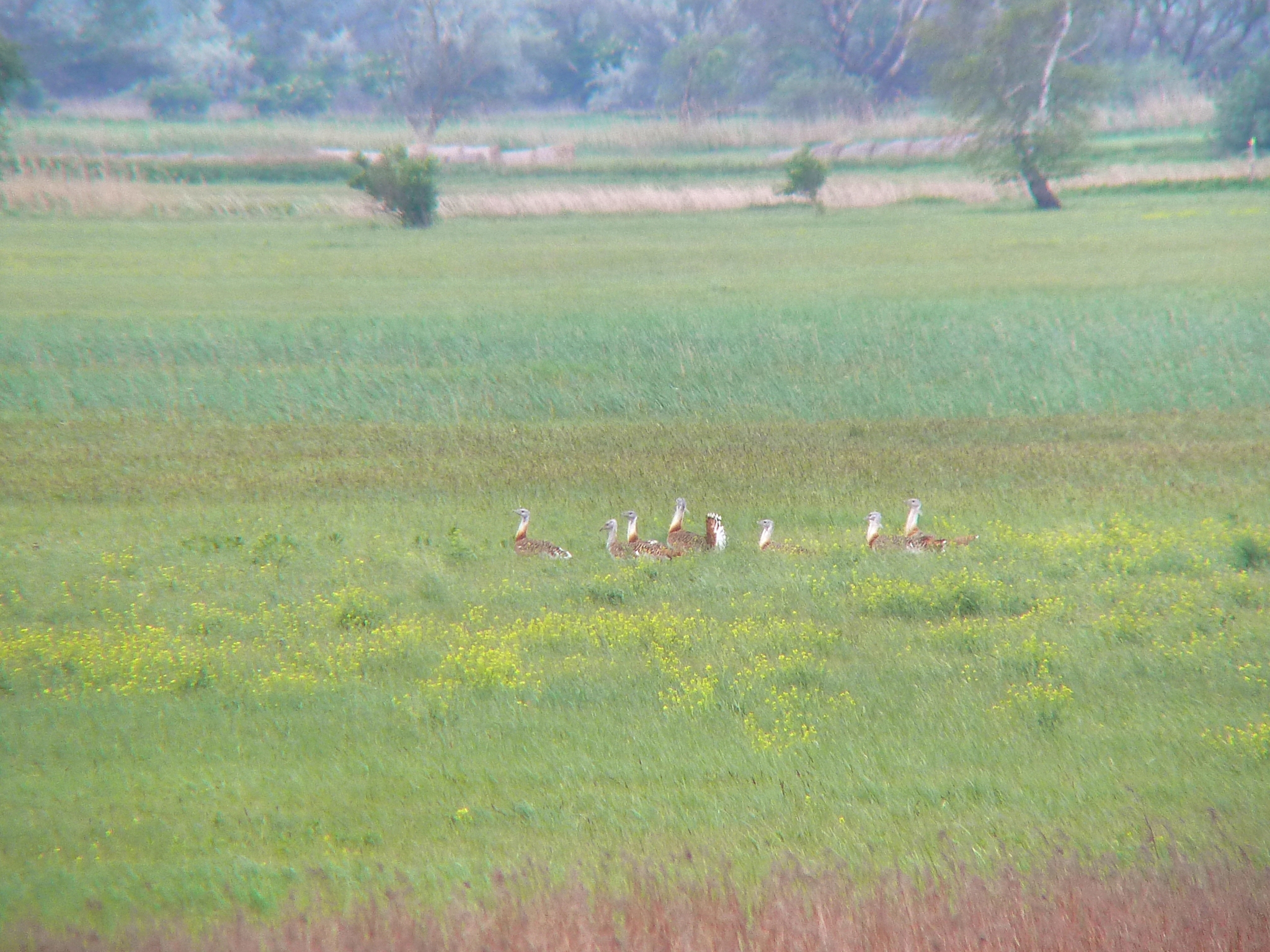
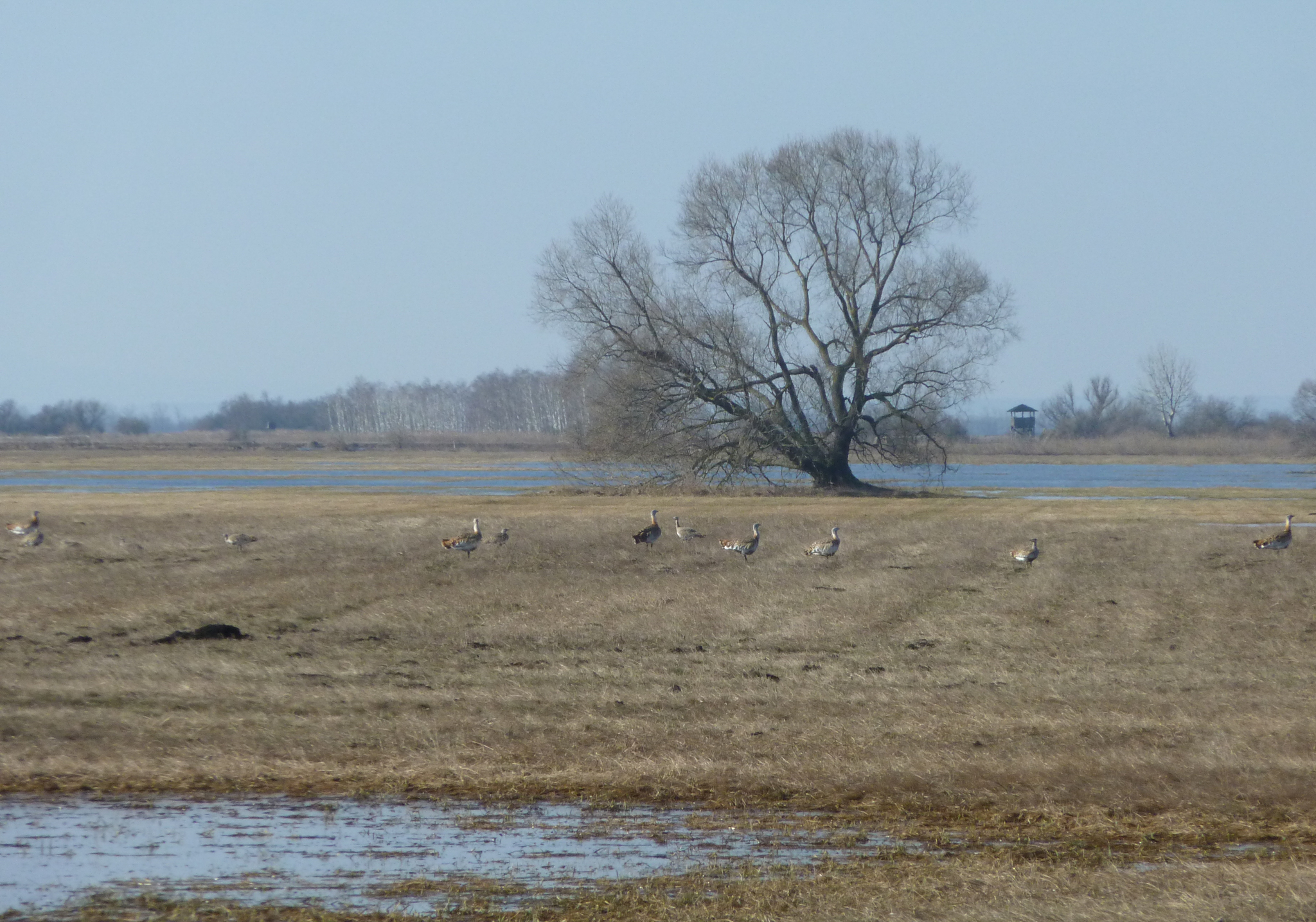
Gregarious in winter, forming groups of several dozen, though sexes separate outside breeding season. Omnivorous diet shifts seasonally: summer includes green plant material (48.4%), invertebrates (40.9%), and seeds (10.6%), while winter diet is almost entirely seeds and greens. Males may eat toxic blister beetles to self-medicate. Breeding occurs in March on leks where males perform flamboyant displays involving throat puffing and feather fanning. Females lay 1–3 eggs in shallow scrapes in May or June, incubating alone for 21–28 days. Chicks leave the nest immediately but stay near the mother for up to a year. Males reach maturity at 5–6 years; females at 2–3 years. Adults live around 10 years, with a maximum recorded lifespan of 28 years.
Conservation
Classified as Endangered on the IUCN Red List (2023), having been listed as Vulnerable since 1996. Global population estimated between 44,000 and 51,000 in 2008, with steep declines in eastern/central Europe and Asia. Major threats include habitat loss from agriculture and development, collision with power lines and automobiles, hunting, and predation. Conservation measures include burying or marking power lines in Austria and Hungary, agroenvironment schemes in Spain, and protected areas in Hungary. Reintroduction efforts in the UK have established a population exceeding 100 birds by 2020. Captive hatching occurred in Iran in 2024.
Culture
The national bird of Hungary. Formerly native to Great Britain, it appears in the Wiltshire Coat of Arms and as supporters for the Cambridgeshire arms. Historically valued as food in Britain, it was hunted to extinction there by the 1840s. Reintroduction projects in the UK began in 2004 using eggs from Russia.
Source: Wikipedia · CC BY-SA 3.0
Taxonomy
- Order
- Otidiformes
- Family
- Otididae
- Genus
- Otis
Subspecies (2)
-
Otis tarda dybowskii
Mongolia to southern Siberia and northeastern China
Data Sources
CBR Notes: IUCN红色名录等级由VU升为EN
Species description from Wikipedia, licensed under CC BY-SA 3.0.
Bird images and sounds sourced from GBIF, contributed by citizen scientists worldwide under Creative Commons licenses.
Taxonomy data from AviList 2025.