Passeriformes / Cisticolidae / Orthotomus
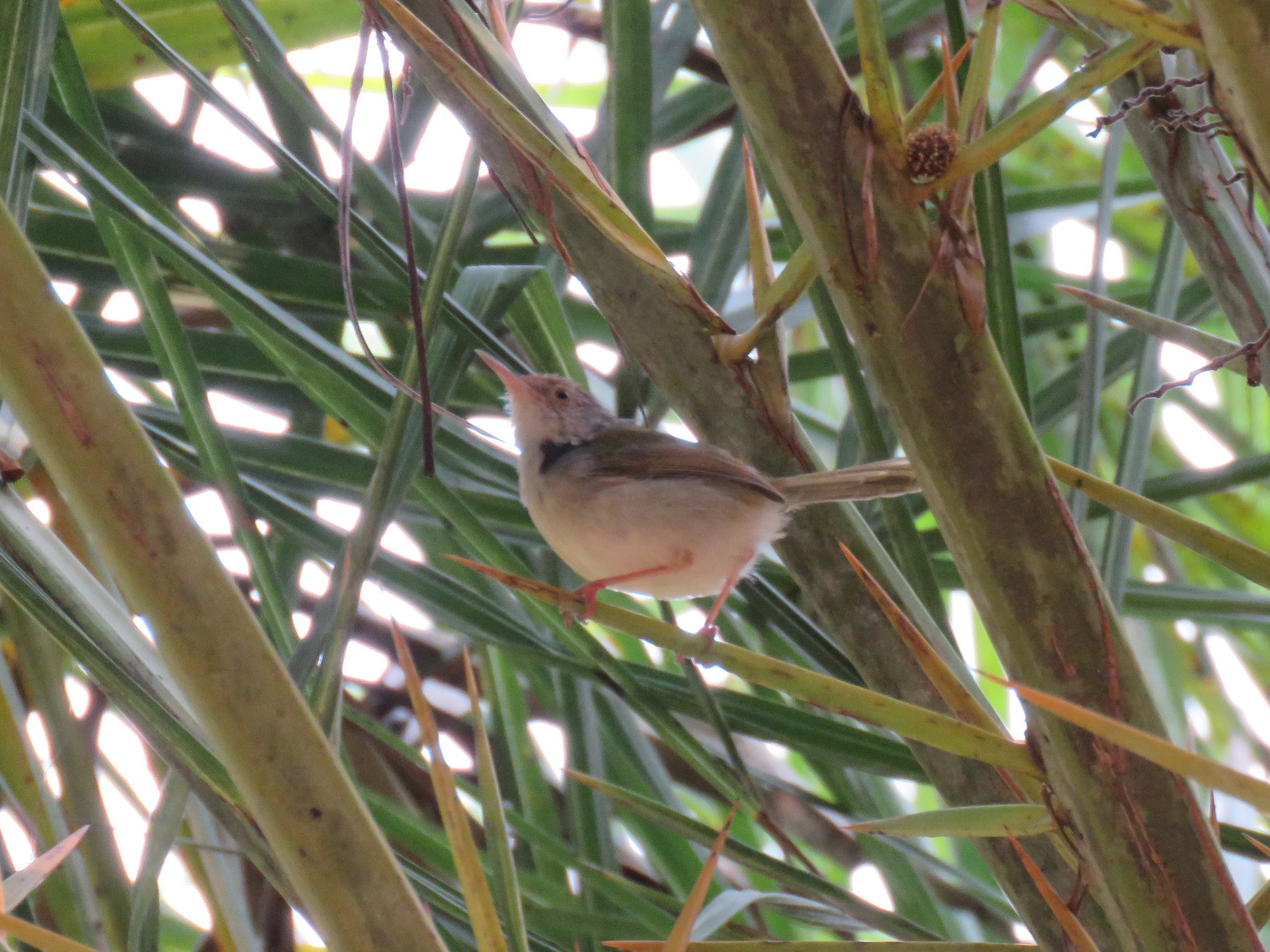
Common Tailorbird
Orthotomus sutorius · 长尾缝叶莺
Introduction
A passerine songbird in the family Cisticolidae, found across tropical Asia. It inhabits open farmland, scrub, forest edges, and gardens. Distinctive for constructing nests by sewing large leaves together with plant fiber or spider silk and for its loud, familiar calls despite shy behavior.
Description
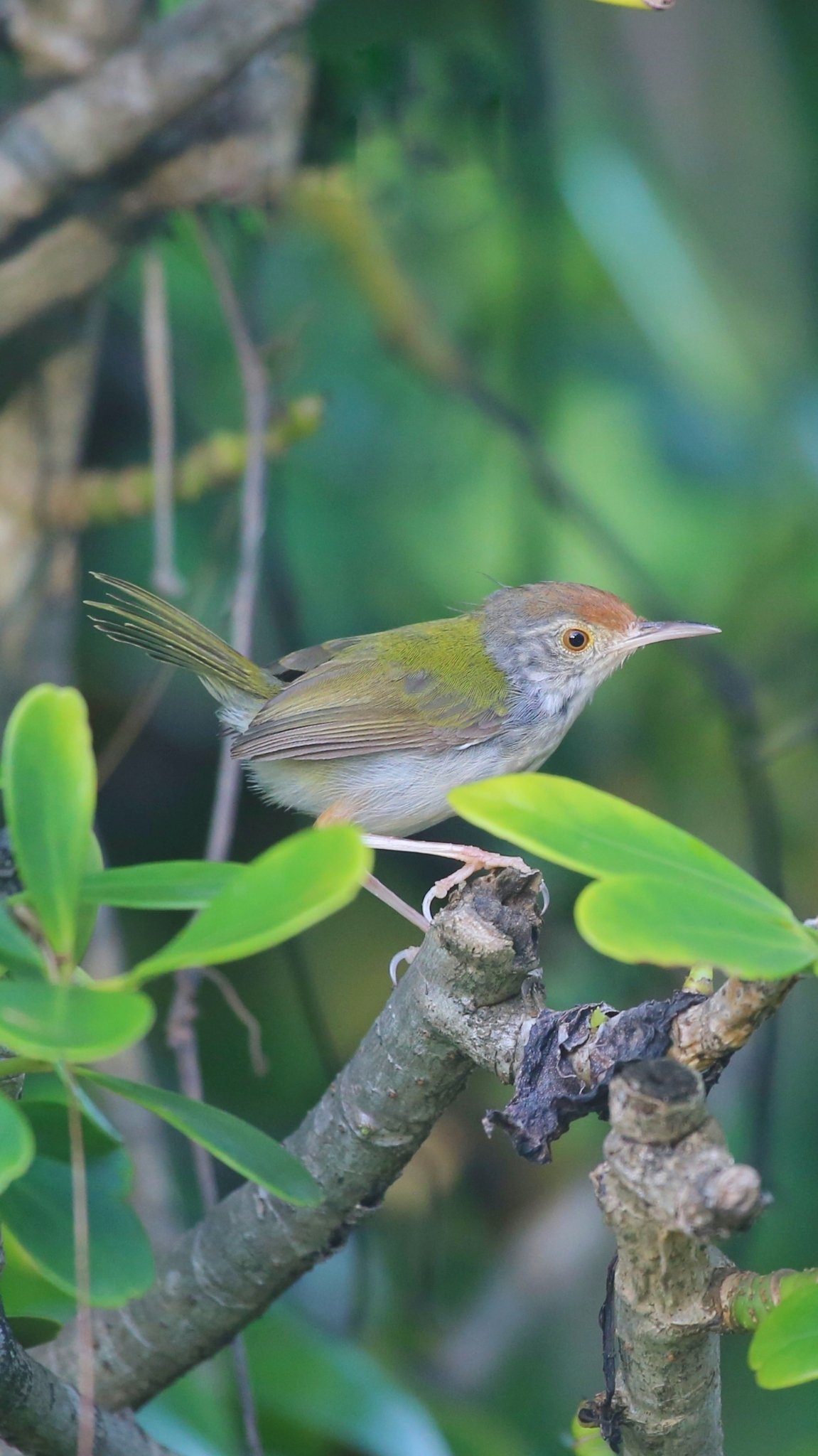
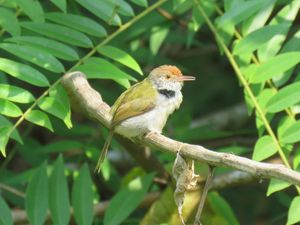
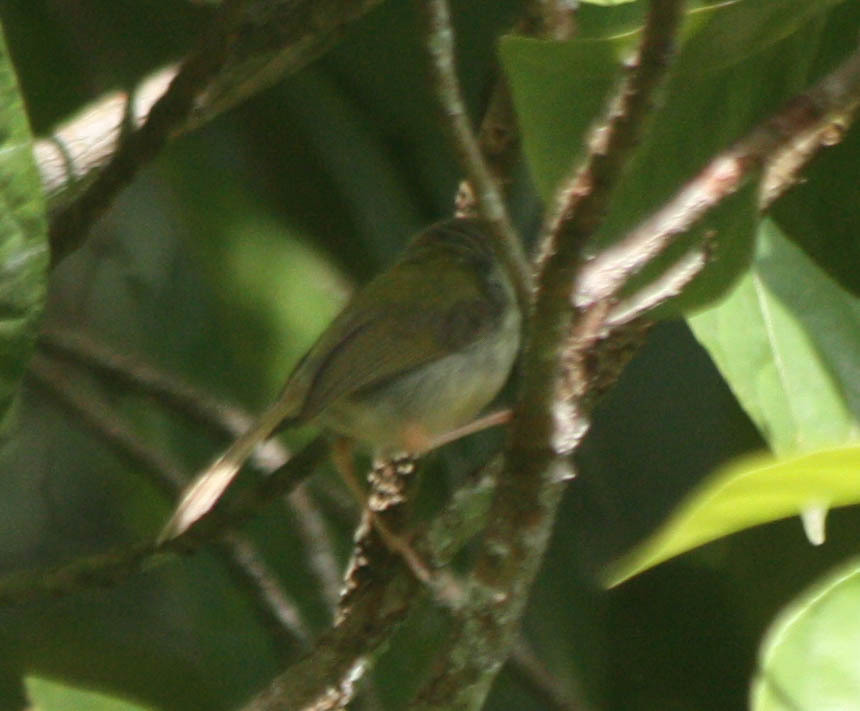
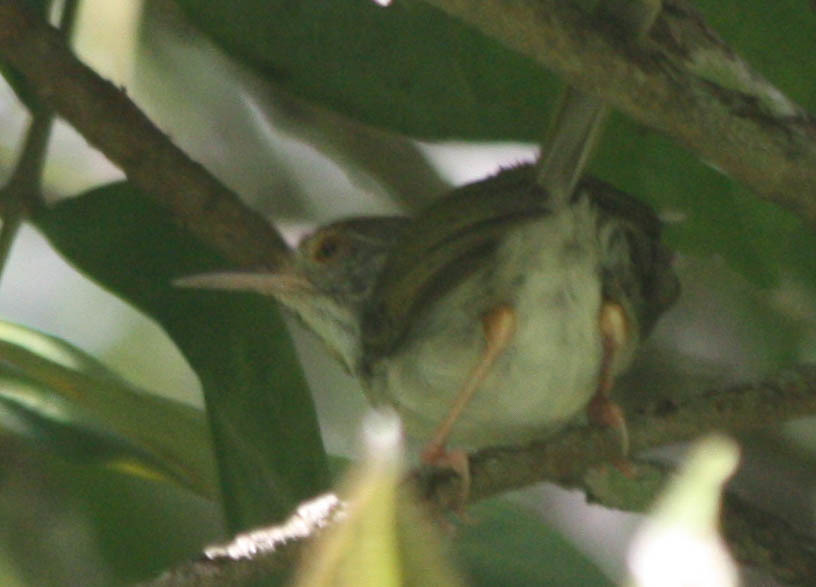
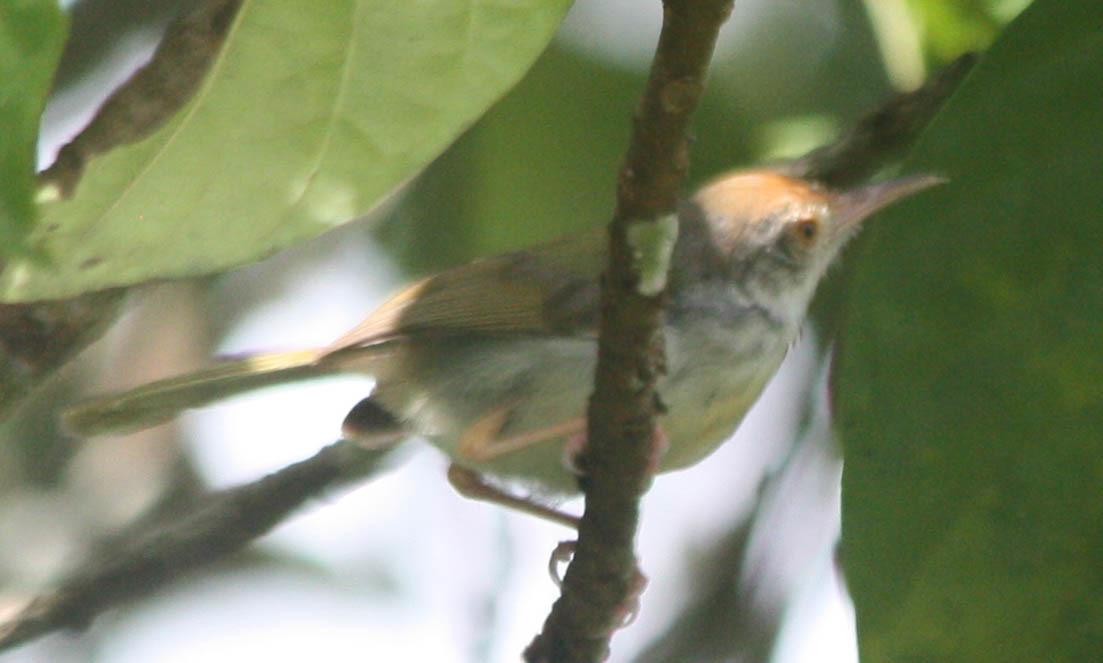
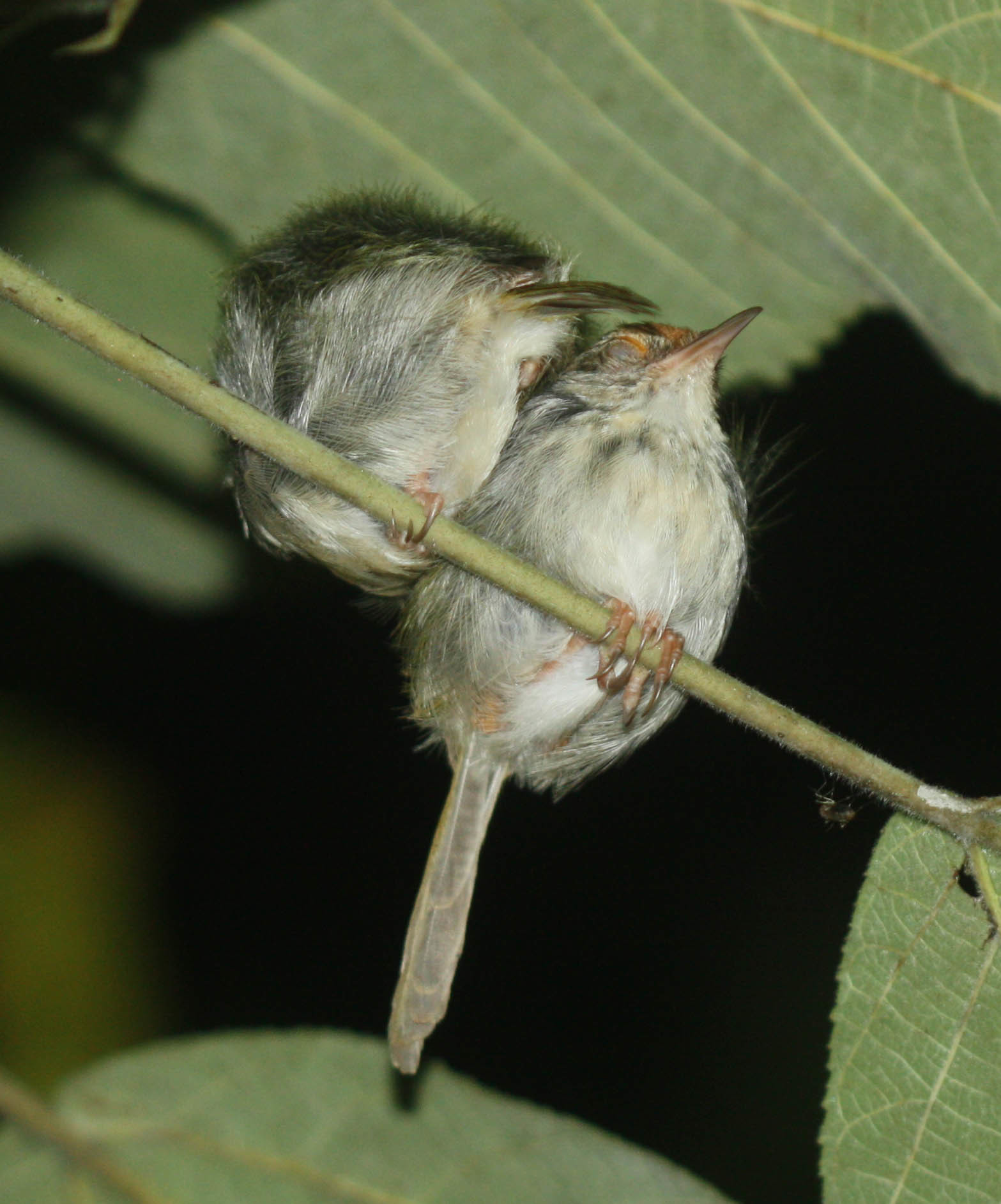
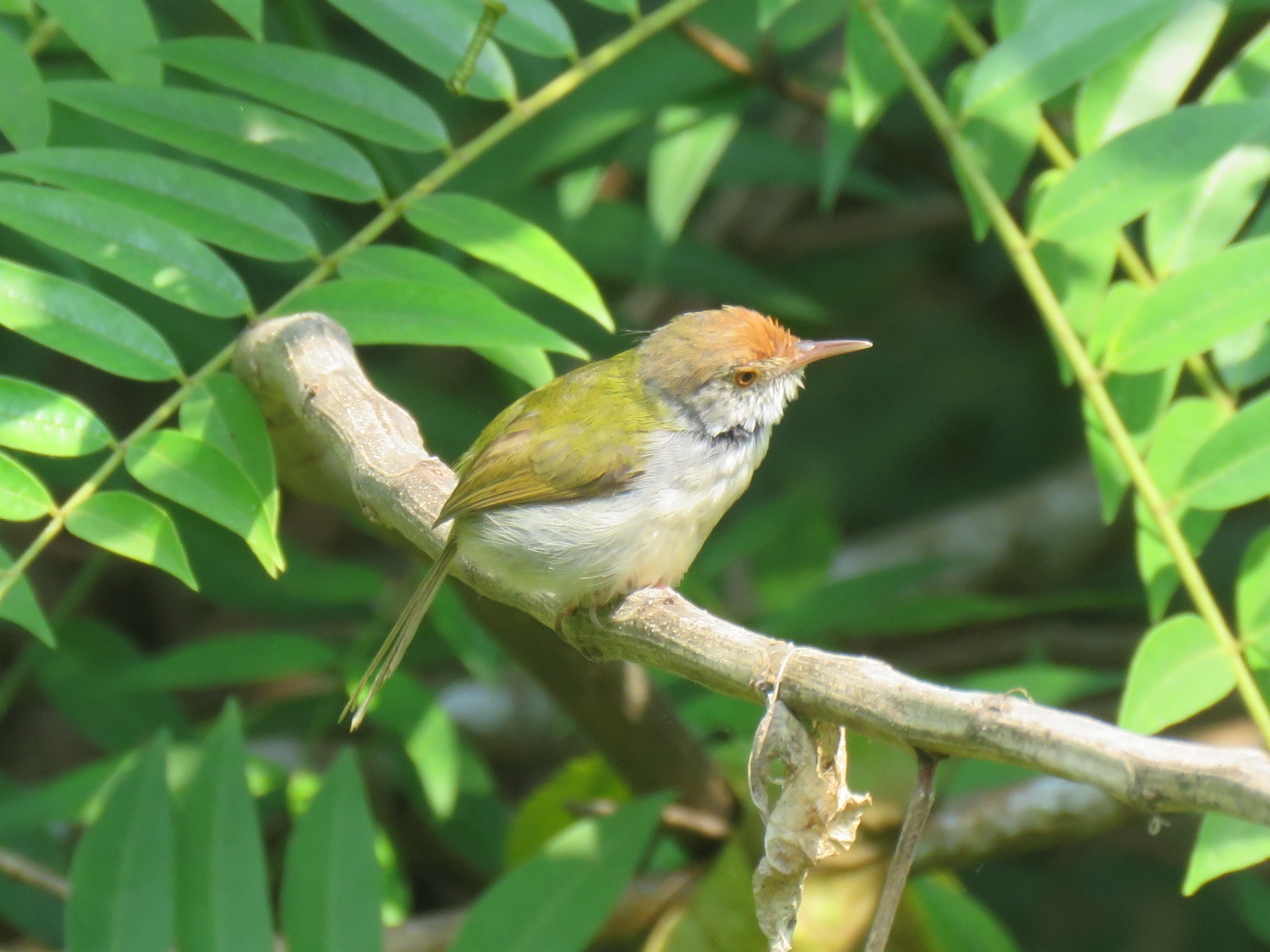
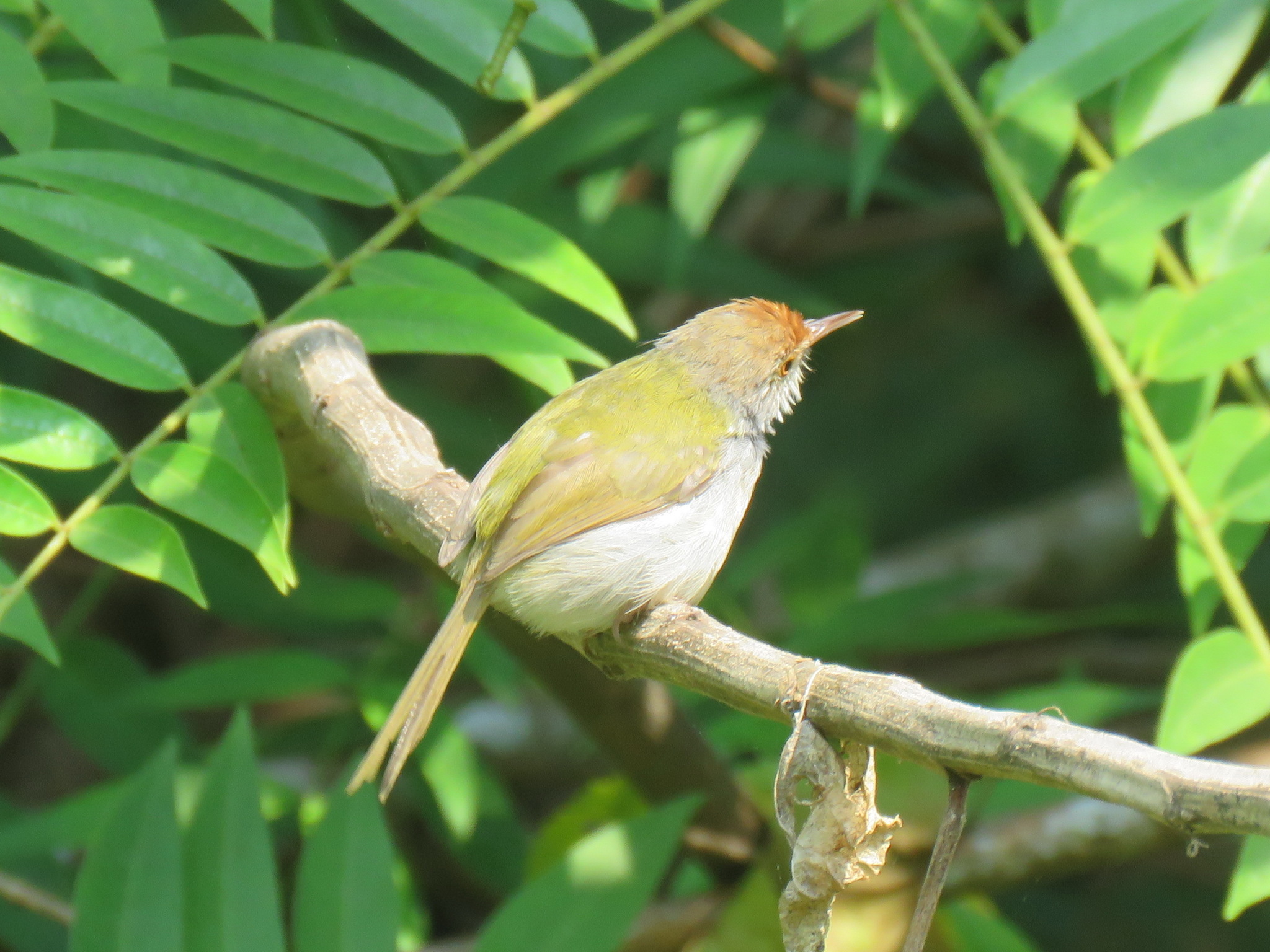
Brightly colored with bright green upperparts and creamy white underparts. Size ranges from 10 to 14 centimeters (3.9 to 5.5 in) and weight from 6 to 10 grams (0.21 to 0.35 oz). Features short rounded wings, strong legs, a sharp bill with a curved upper mandible tip, and a long upright tail often moved around. The crown is rufous. Sexes are identical, though males may develop long central tail feathers during the breeding season. Young birds are duller. Dark patches on the sides of the neck, caused by bare pigmented skin, become visible when calling.
Identification
Distinctive long upright tail, greenish upper body plumage, and rust-colored forehead and crown. Loud cheeup-cheeup-cheeup song gives away presence despite shy nature. Dark bare skin on the neck sides appears as a dark gorget when calling. Males may show elongated central tail feathers in breeding season.
Distribution & Habitat
Found across South Asia and Southeast Asia, including Sri Lanka, the Indian peninsula, Pakistan, Nepal, Myanmar, Northeast India, Thailand, Laos, Vietnam, Malaysia, Cambodia, southern China (including Hainan), and Java. Subspecies include O.s. sutorius and O.s. fernandonis in Sri Lanka; O.s. guzuratus in the Indian peninsula and Pakistan; O.s. patia in the Terai of Nepal and northern Eastern Ghats; O.s. luteus in Northeast India hills; O.s. inexpectatus and O.s. maculicollis in mainland Southeast Asia and southern China; O.s. longicauda in Tonkin; and O.s. edela in Java. Typically inhabits open farmland, scrub, forest edges, and urban gardens.
Behavior & Ecology
Insectivorous, feeding on beetles and bugs, often foraging low in undergrowth or trees, sometimes hopping on the ground. Also visits flowers like mango, Bombax, and Salmalia for nectar. Found singly or in pairs. Roosts alone in non-breeding season but side-by-side during breeding, often on thin twigs near human habitation. Breeding season peaks June to August in India and March to May/August to September in Sri Lanka. Nest is a deep cup lined with soft materials (e.g., lint from Euphorbia, Ceiba, Bombax) within a cradle of leaves sewn together using plant fiber or spider silk. Clutch size is usually three eggs. Incubation lasts about 12 days; fledging occurs in about 14 days. Both parents feed young; predation by rodents, cats, crow-pheasants, and lizards causes high mortality. Nests are sometimes parasitized by the Plaintive Cuckoo.
Culture
Immortalized as Darzee in Rudyard Kipling's Jungle Book stories, particularly Rikki-Tikki-Tavi. The name Darzee means tailor in Urdu. Featured in the Bengali children's folk tale book Tuntunir Boi, named after the local name tuntuni.
Source: Wikipedia · CC BY-SA 3.0
Taxonomy
- Order
- Passeriformes
- Family
- Cisticolidae
- Genus
- Orthotomus
Vocalizations
Subspecies (9)
-
Orthotomus sutorius edela
Java
Data Sources
Species description from Wikipedia, licensed under CC BY-SA 3.0.
Bird images and sounds sourced from GBIF, contributed by citizen scientists worldwide under Creative Commons licenses.
Taxonomy data from AviList 2025.