


Common Tailorbird
Orthotomus sutorius
长尾缝叶莺
Introduction
Orthotomus sutorius is a songbird in the family Cisticolidae, formerly placed in Sylviidae. It ranges across tropical South Asia and Southeast Asia, from Sri Lanka through the Indian subcontinent to Myanmar, Thailand, Laos, Vietnam, Malaysia, Cambodia, and China including Hainan and Java. Its preferred habitats include open farmland, scrub, forest edges, and gardens, including urban areas. Two distinctive traits are its unique nest construction method, using plant fiber or spider silk to sew together large leaves into cradles, and its loud disyllabic calls that give away its presence despite the bird's shy nature hidden in vegetation. The Punjab subspecies became extinct around 1975 due to agricultural practices.
Description
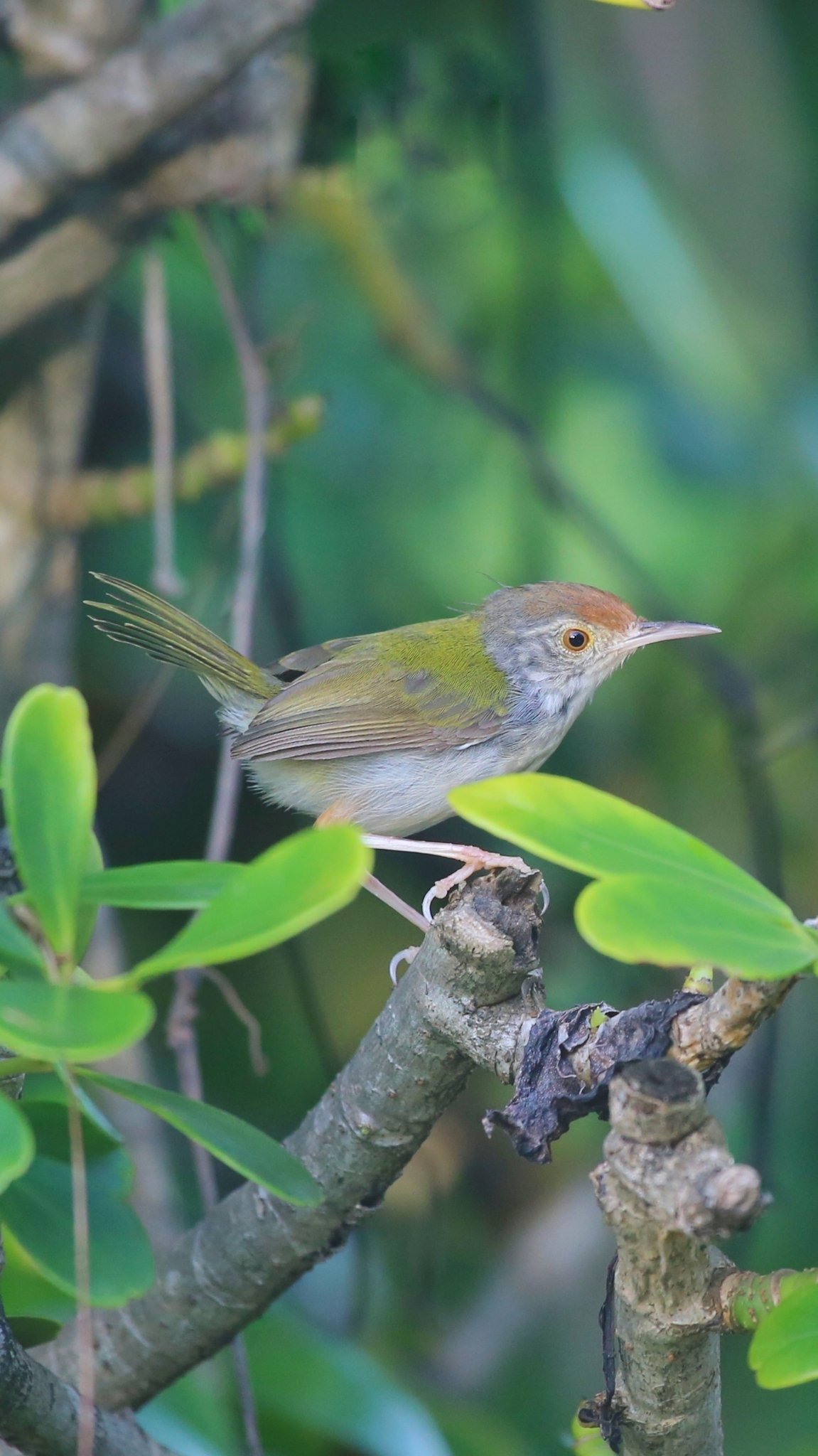
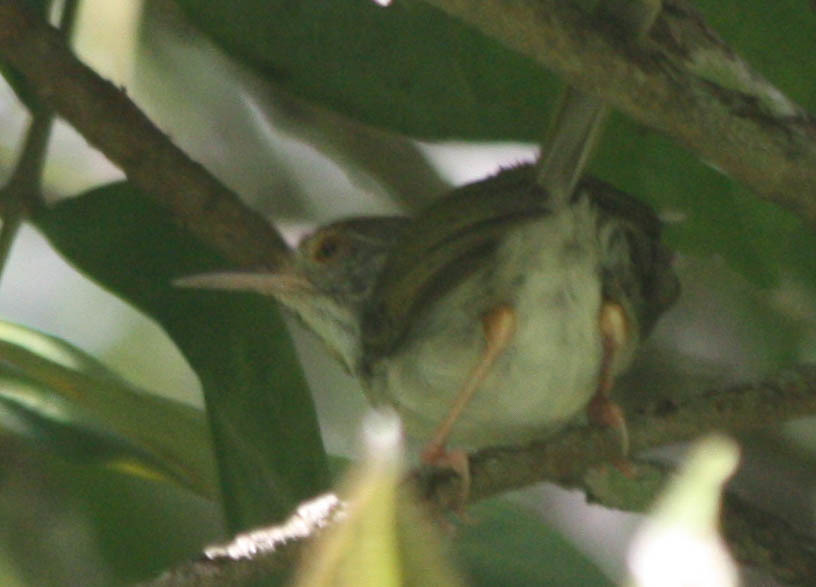
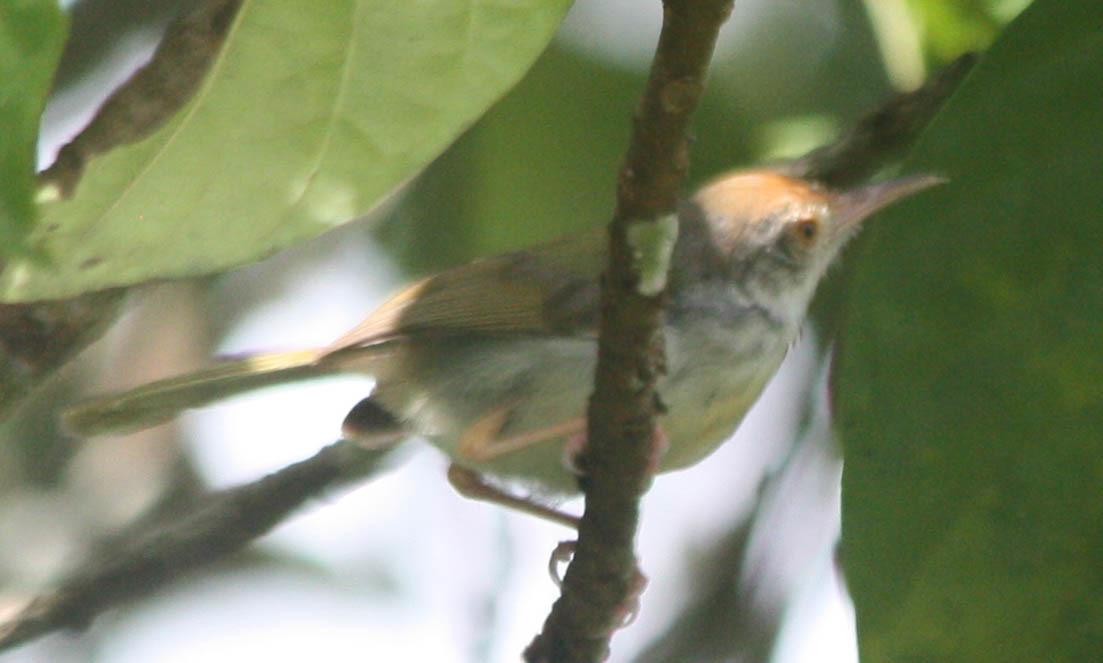
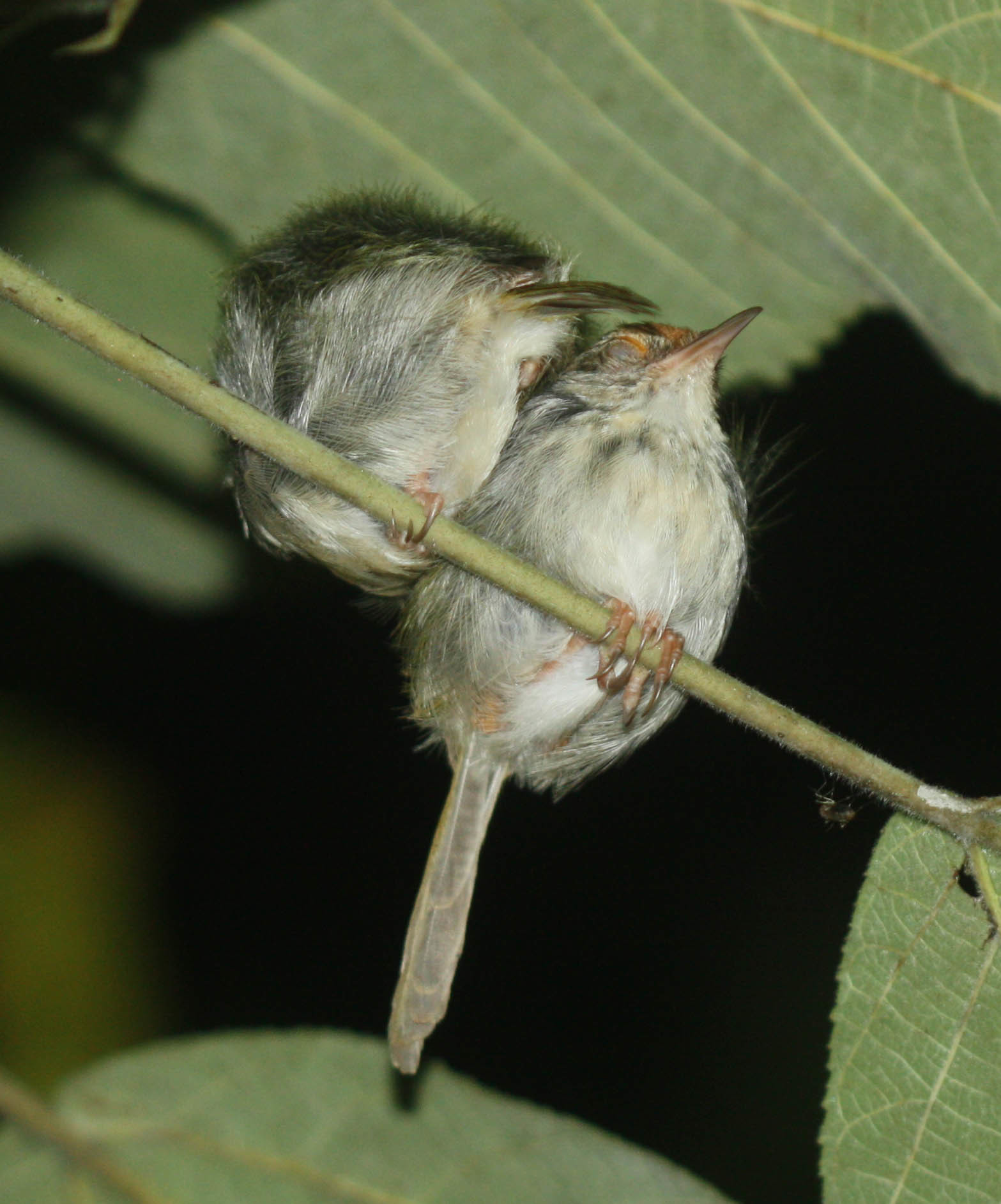
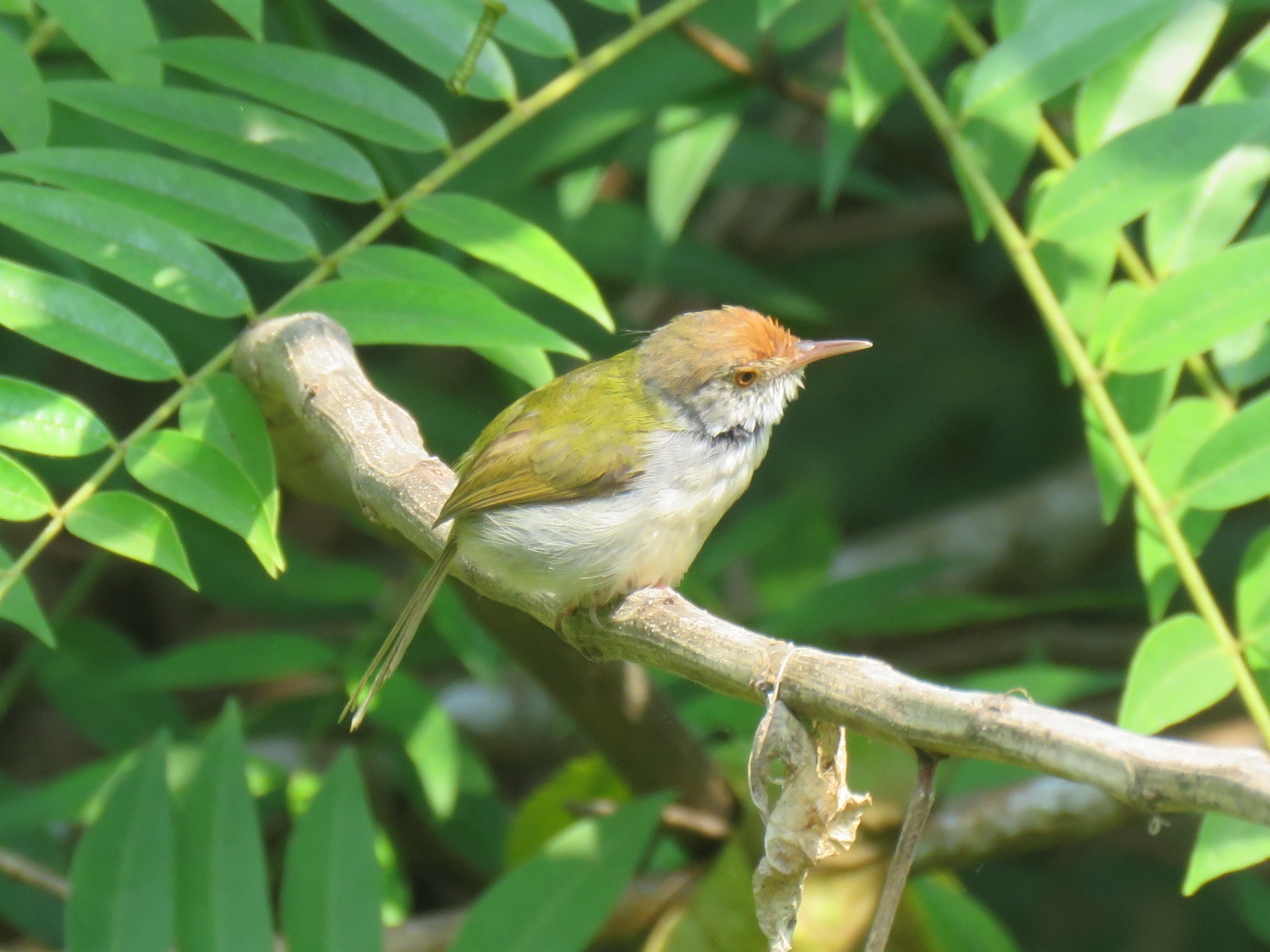
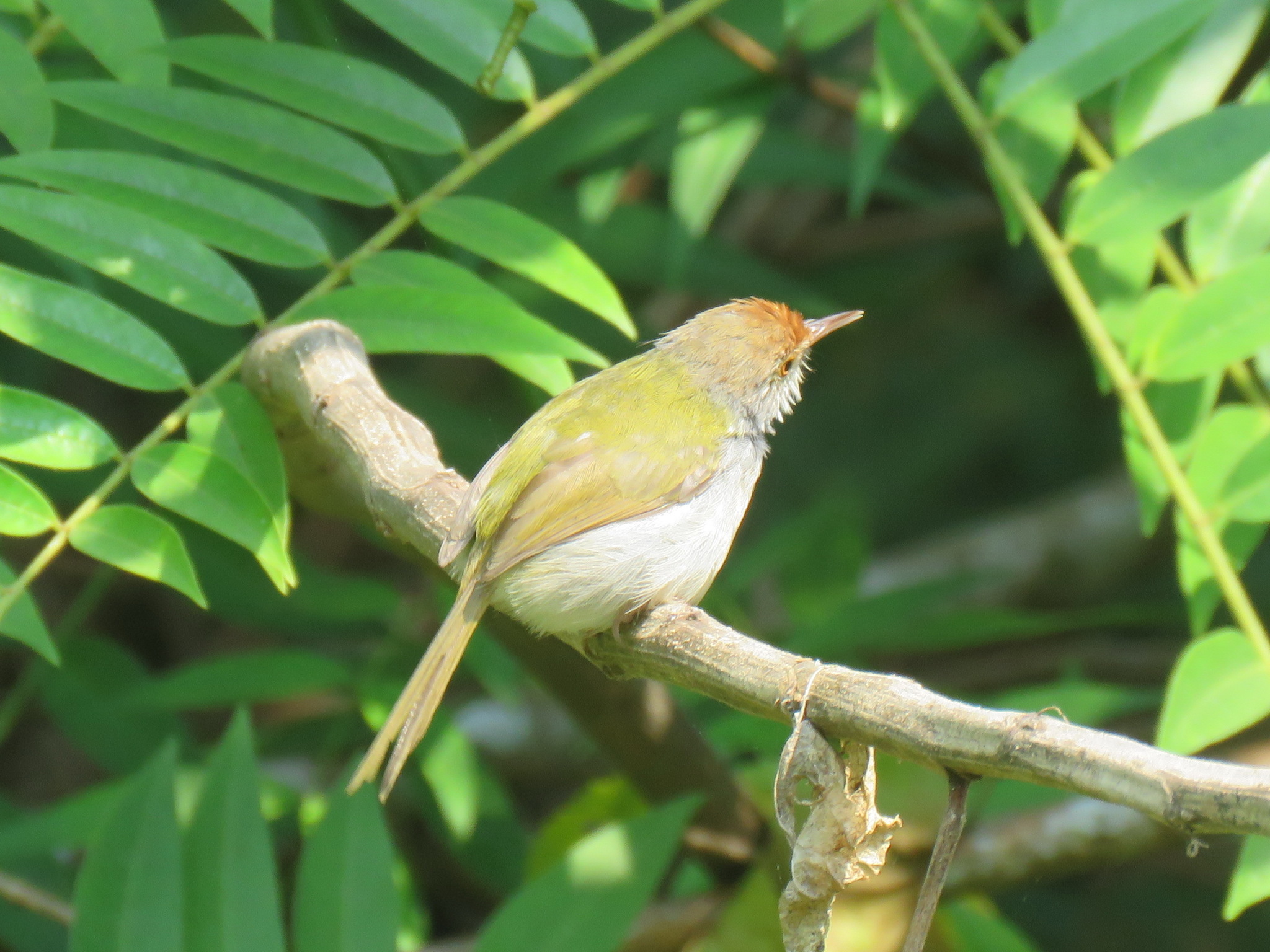
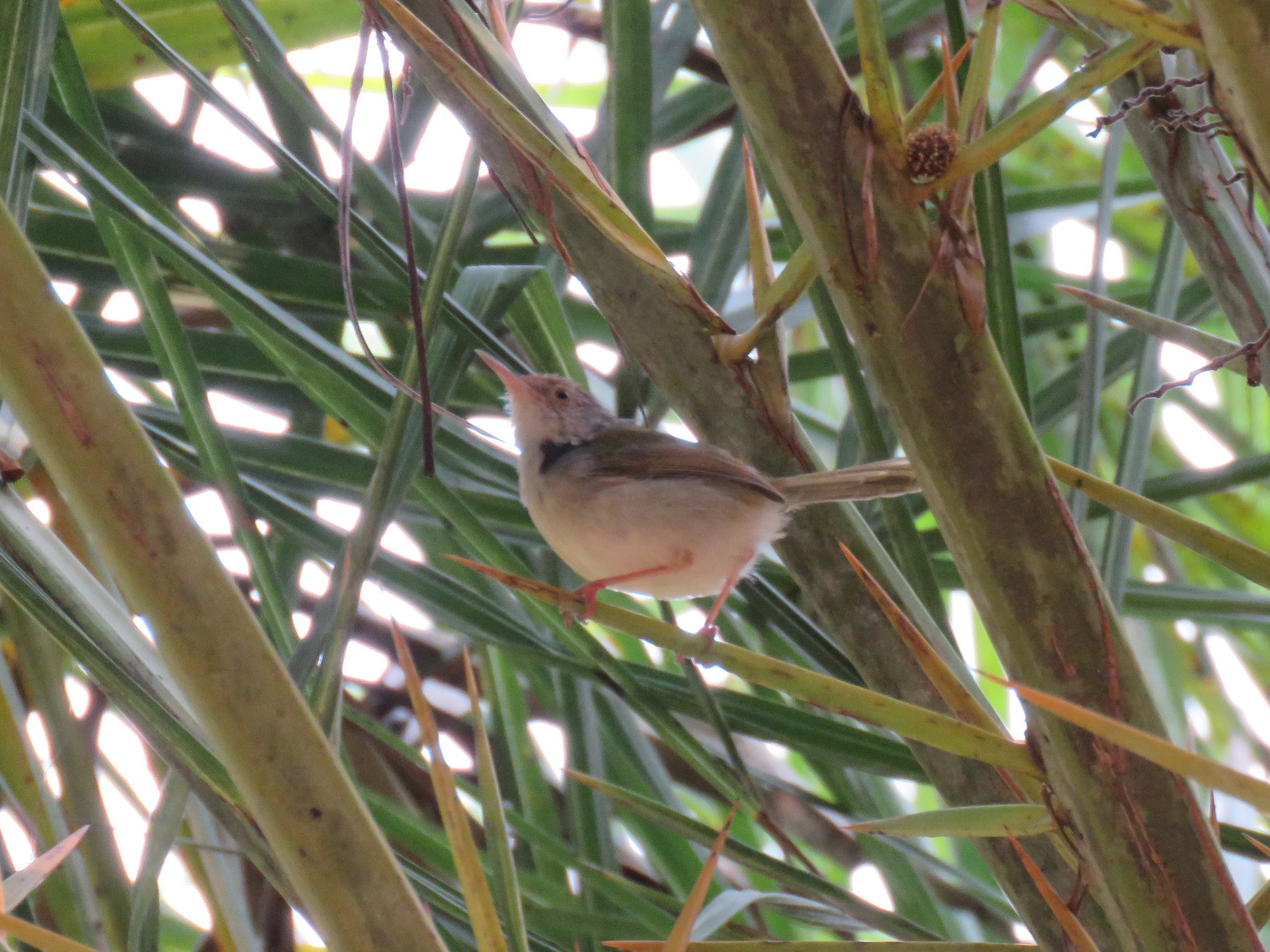
A small, brightly colored warbler measuring 10-14 cm in length and weighing 6-10 grams. The upperparts are bright olive green, while the underparts are creamy white. It has a rufous crown, short rounded wings, strong legs, and a sharp curved bill. The most distinctive feature is its long, upright tail that is frequently moved. Both sexes appear similar, though breeding males develop elongated central tail feathers. When calling, dark pigmented bare skin patches become visible on the sides of the neck, sometimes resembling a dark gorget. Juveniles are duller in coloration.
Identification
Recognizable by its combination of greenish upperparts, rufous crown, long upright tail, and creamy underparts. The wren-like appearance with tail frequently cocked is characteristic. When calling, the dark bare skin patches on the sides of the neck become visible, providing a useful field mark. Males in breeding season show elongated central tail feathers. The bird is more often heard than seen, with loud repeated disyllabic calls giving away its presence in dense vegetation.
Distribution & Habitat
Ranges across tropical South Asia and Southeast Asia, including Sri Lanka, the Indian subcontinent extending west to Pakistan, Nepal along the Himalayan foothills, Northeast India, the Eastern Ghats, Thailand, Laos, Vietnam, Malaysia, Cambodia, south east China, Hainan Island, and Java. It occupies open farmland, scrub, forest edges, and gardens, often near human habitation. It is a resident species throughout its range with no major migratory movements, though some seasonal movements may occur.
Behavior & Ecology
Primarily insectivorous, foraging for beetles, bugs, and other insects in the undergrowth, sometimes on the ground. Known to visit mango inflorescences and feed on nectar from Bombax and Salmalia flowers. The song is a loud cheeup-cheeup-cheeup with geographic variations. Found singly or in pairs, usually low in vegetation. Breeding season spans March to December in India, peaking June to August, with clutch size of three eggs. Incubation lasts about 12 days and both parents feed the young. Nests are constructed by sewing together large leaves using plant fibers or spider silk, with the actual nest built inside this cradle.
Conservation
The Punjab subspecies became extinct around 1975 due to agricultural practices where birds laid eggs in fields used for fodder crops. The overall species remains common across most of its range, though local populations face threats from predation by rodents, cats, crow-pheasants, and lizards. Nests are also parasitized by the Plaintive Cuckoo. Specific population trend data from IUCN assessment is not provided in the article.
Culture
Immortalized by Rudyard Kipling in The Jungle Book as the character Darzee, a tailorbird who appears in the Rikki-Tikki-Tavi story. Darzee means tailor in Urdu. The species is also featured in Bengali children's folklore, with Upendrakishore Ray's classic folk tale collection titled Tuntunir Boi after the local Bengali name tuntuni for this bird.
Source: Wikipedia · CC BY-SA 3.0
Taxonomy
- Order
- Passeriformes
- Family
- Cisticolidae
- Genus
- Orthotomus
- eBird Code
- comtai1
Vocalizations
Subspecies (9)
-
Orthotomus sutorius edela
Java
-
Orthotomus sutorius fernandonis
central highlands of Sri Lanka
-
Orthotomus sutorius guzuratus
Pakistan and peninsular India
-
Orthotomus sutorius inexpectatus
eastern Myanmar, Laos, Yunnan, and northern Thailand
-
Orthotomus sutorius longicauda
southeastern China, Hainan, and northeastern Indochina
-
Orthotomus sutorius luteus
northeastern India (northeastern Assam) to northern Myanmar
-
Orthotomus sutorius maculicollis
southeastern Myanmar to southern Malay Peninsula and southern Indochina
-
Orthotomus sutorius patia
terai of Nepal to northeastern India and Myanmar
-
Orthotomus sutorius sutorius
plains and foothills of Sri Lanka
Data Sources
Species description from Wikipedia, licensed under CC BY-SA 3.0.
Bird images and sounds sourced from GBIF, contributed by citizen scientists worldwide under Creative Commons licenses.
Taxonomy data from AviList 2025.