Passeriformes / Oriolidae / Oriolus
Black-naped Oriole
Oriolus chinensis · 黑枕黄鹂
Introduction
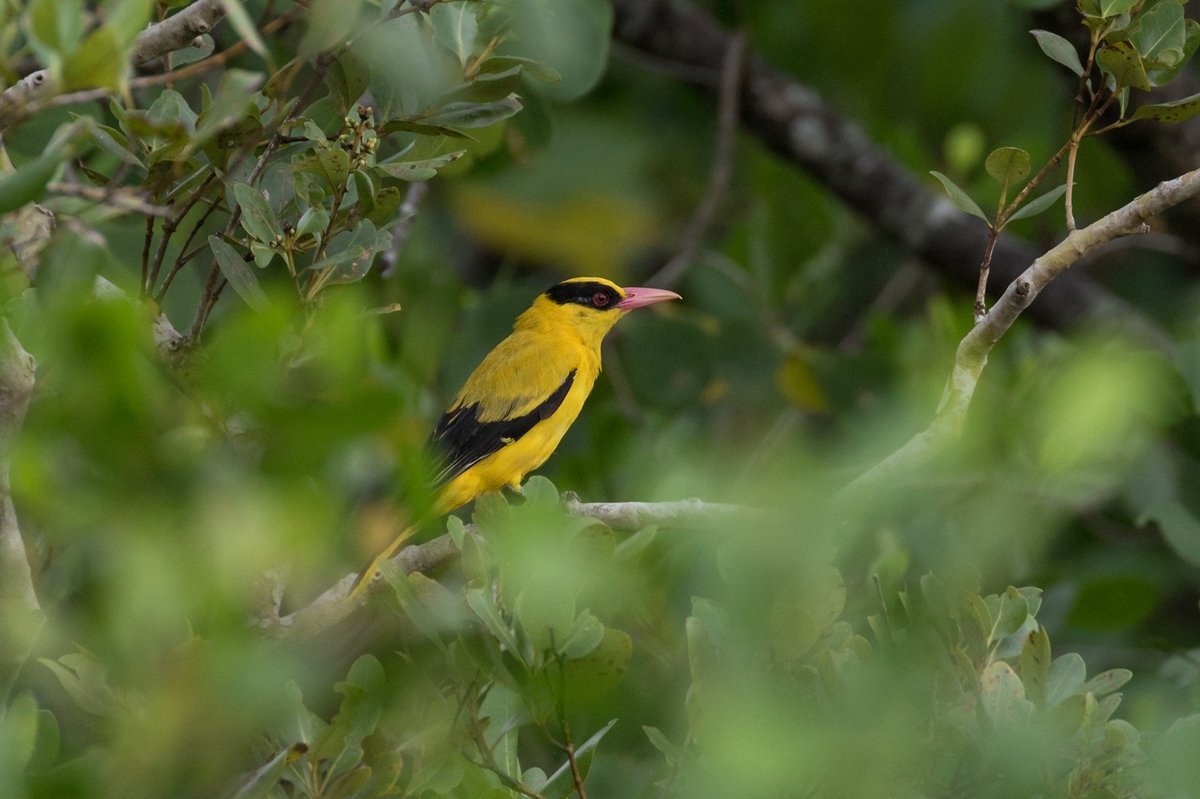
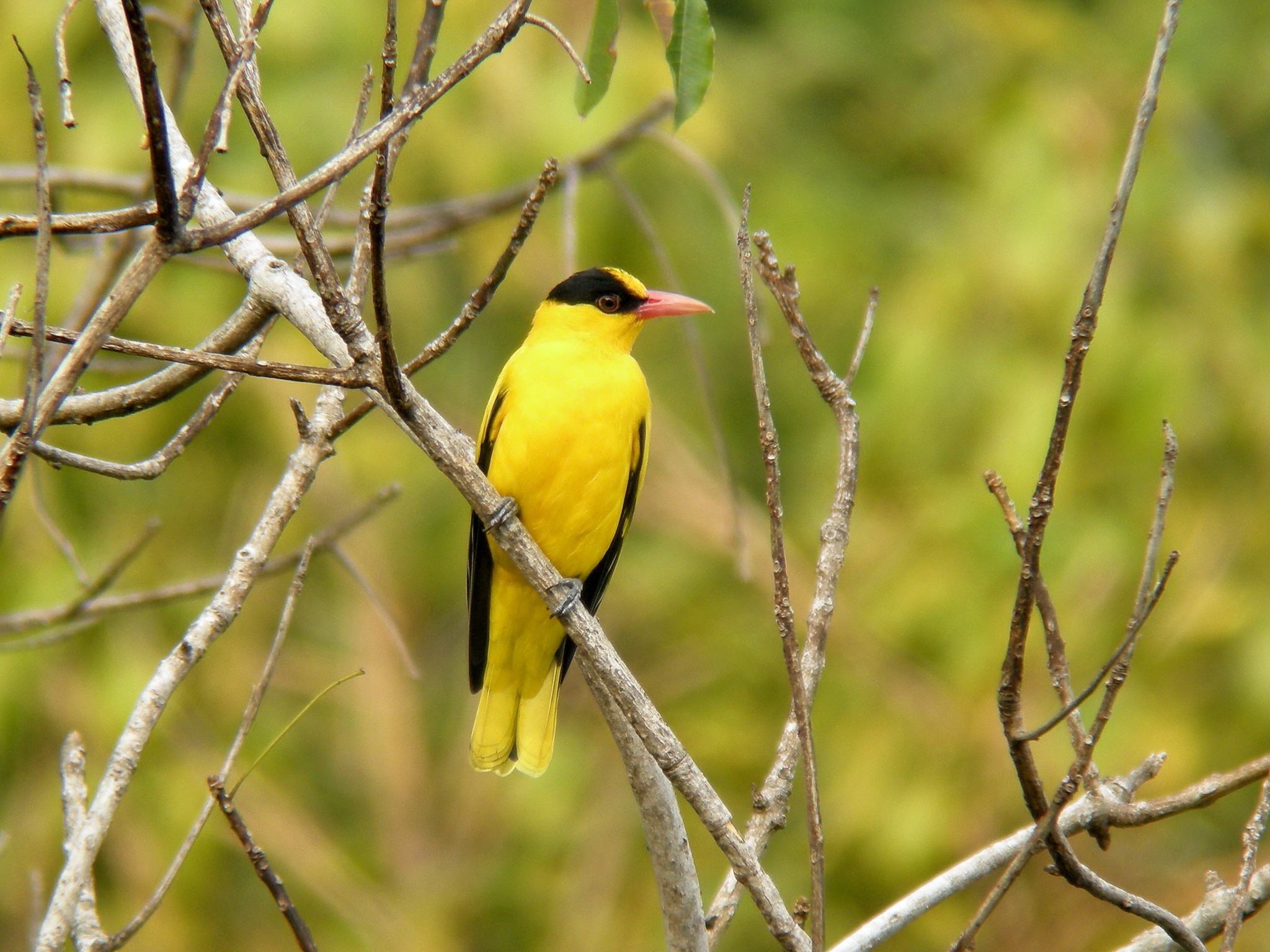
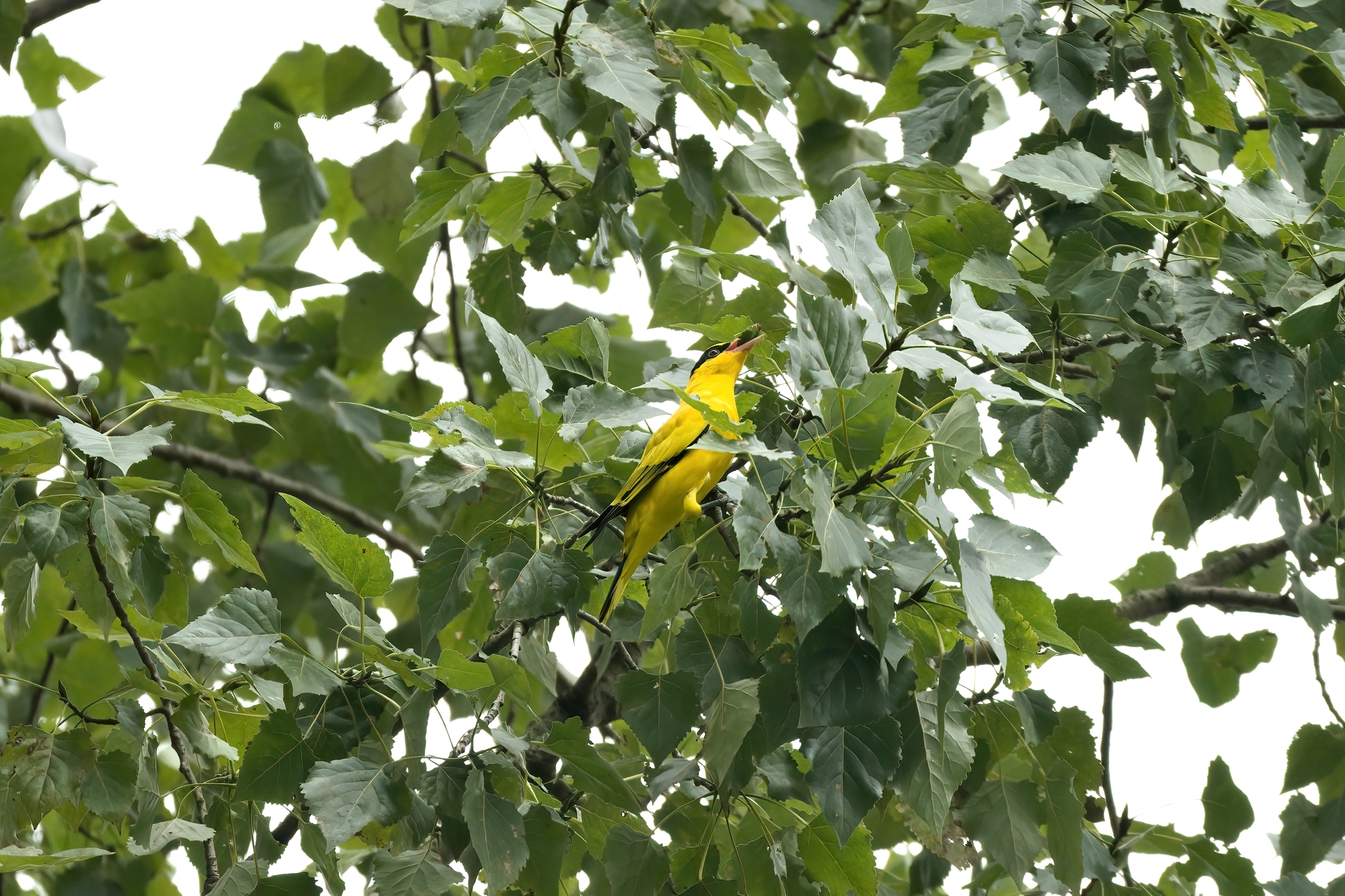
A passerine bird in the oriole family found across many parts of Asia. It is characterized by a broad black mask and nape stripe that joins at the back of the neck, distinguishing it from similar species with narrower eye-stripes. The species exhibits complex evolutionary history with twenty recognized subspecies.
Description
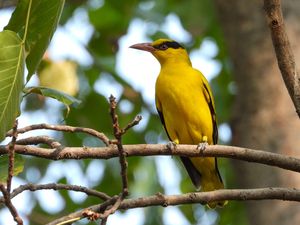
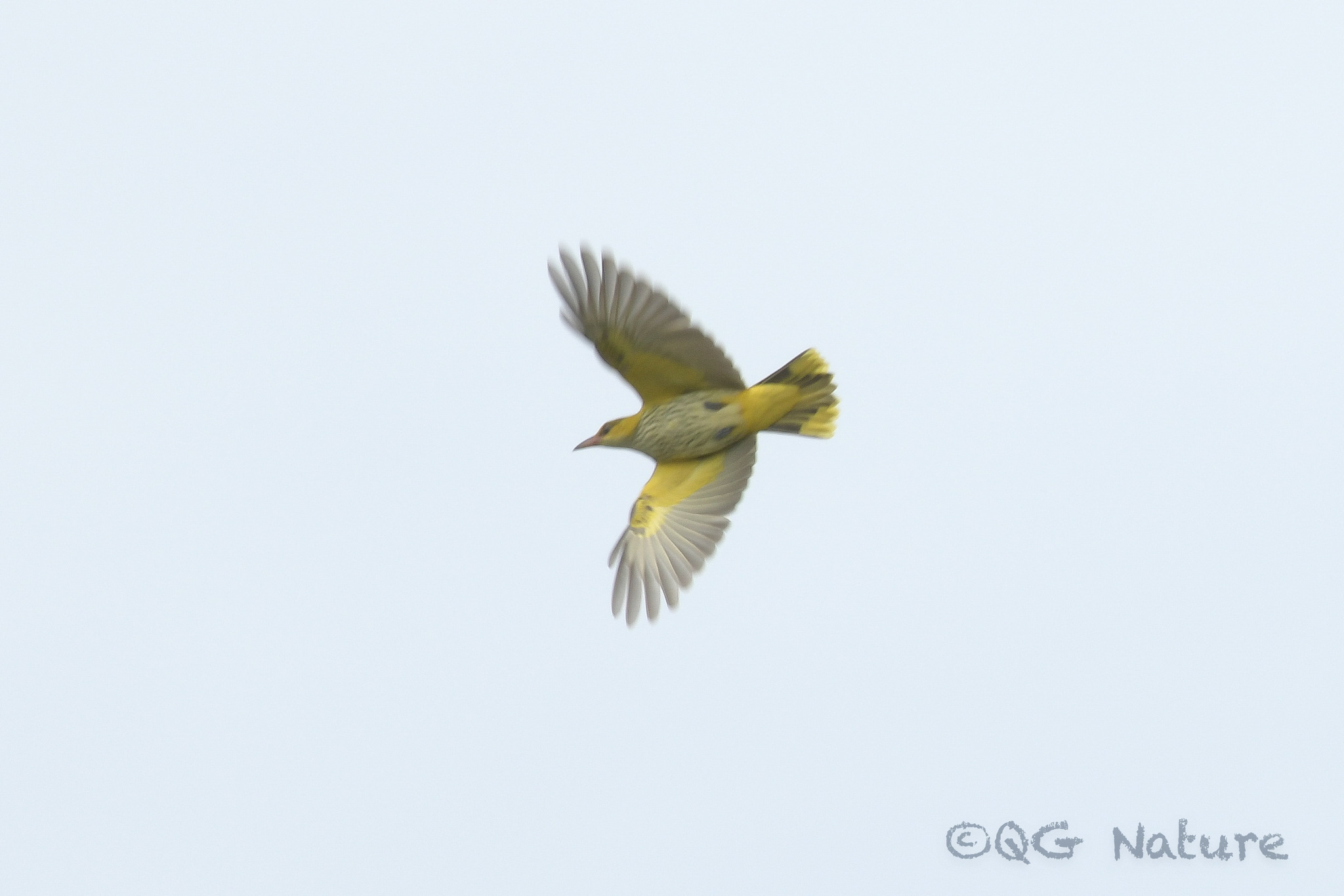
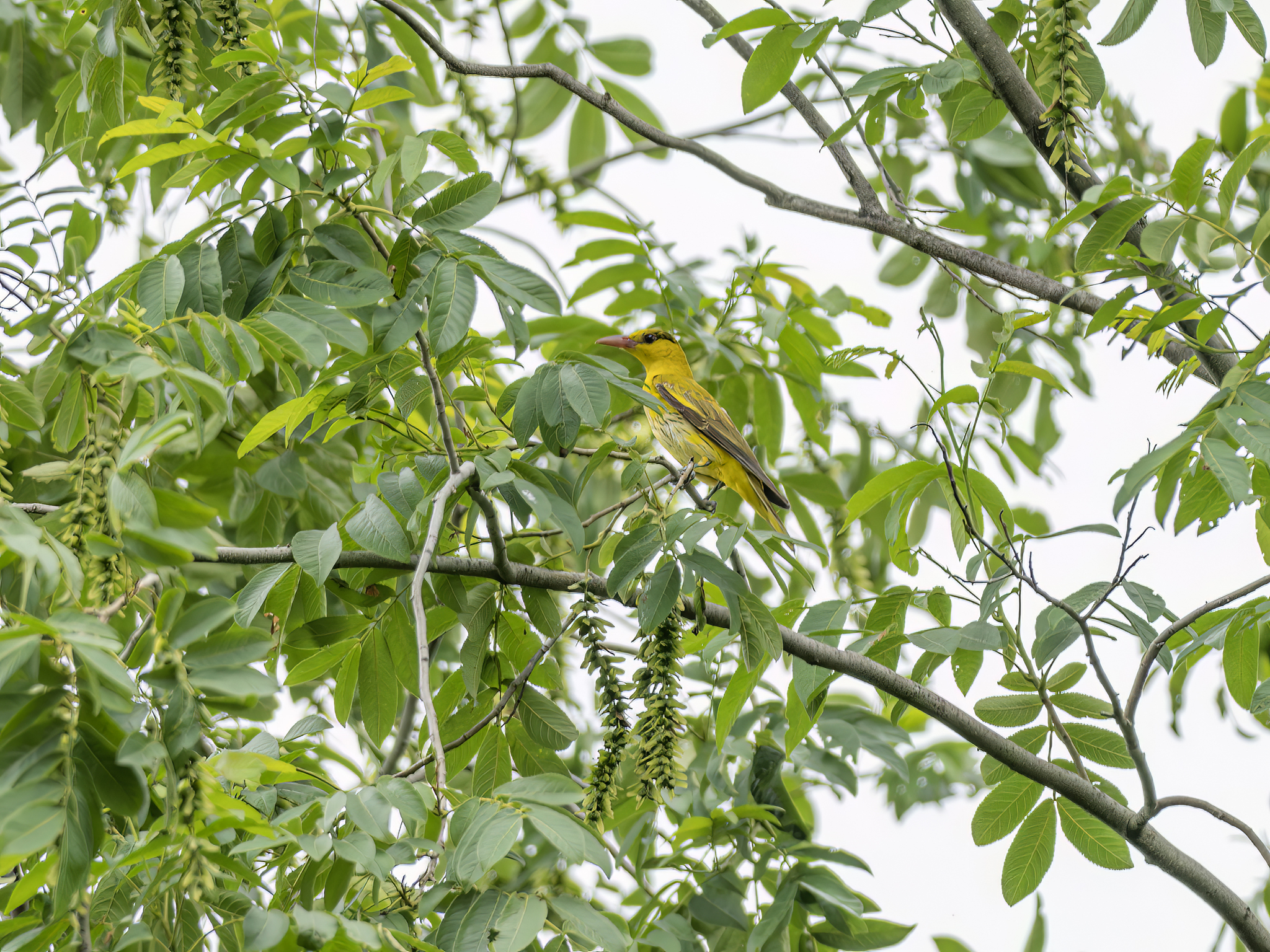
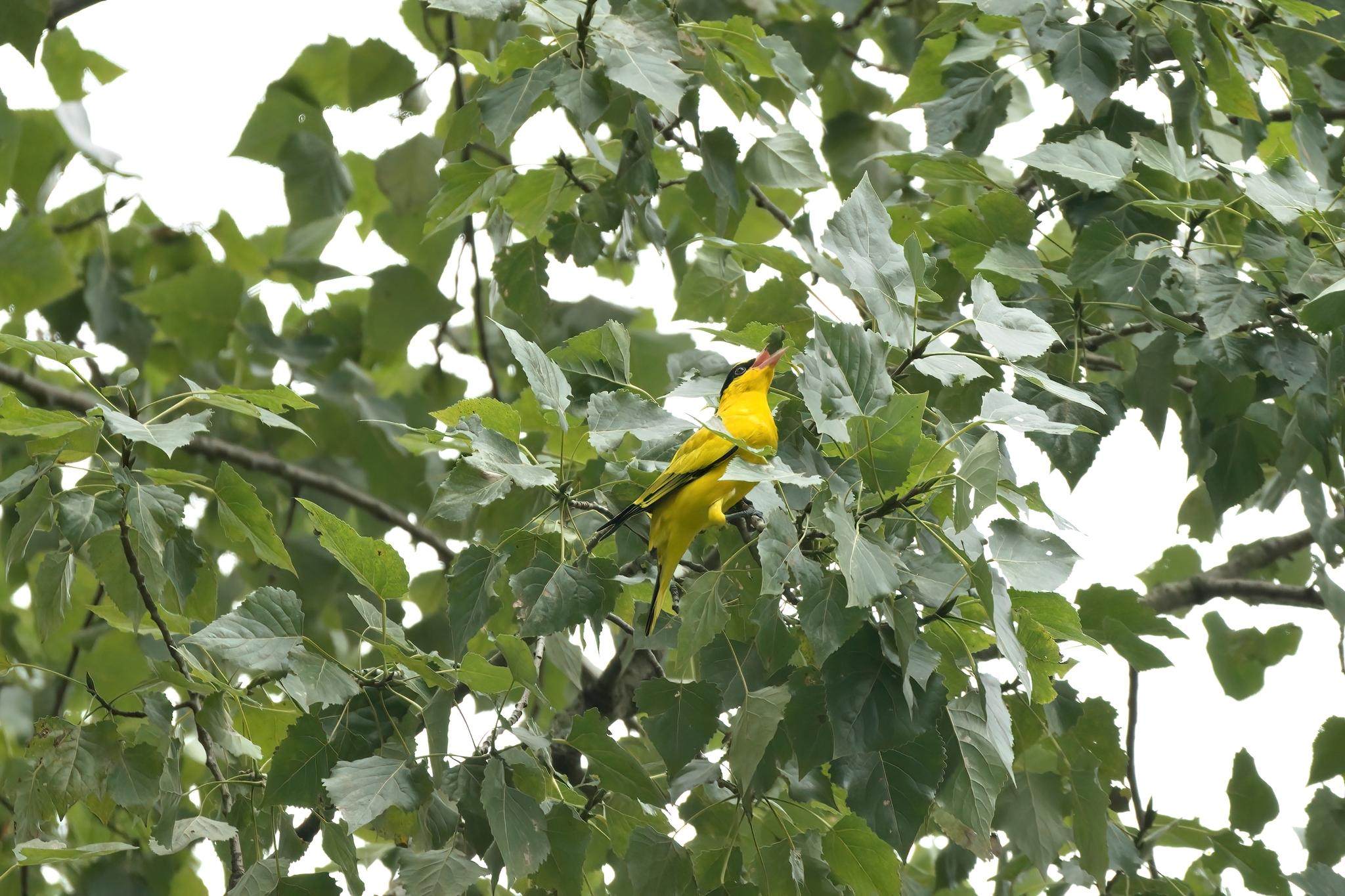
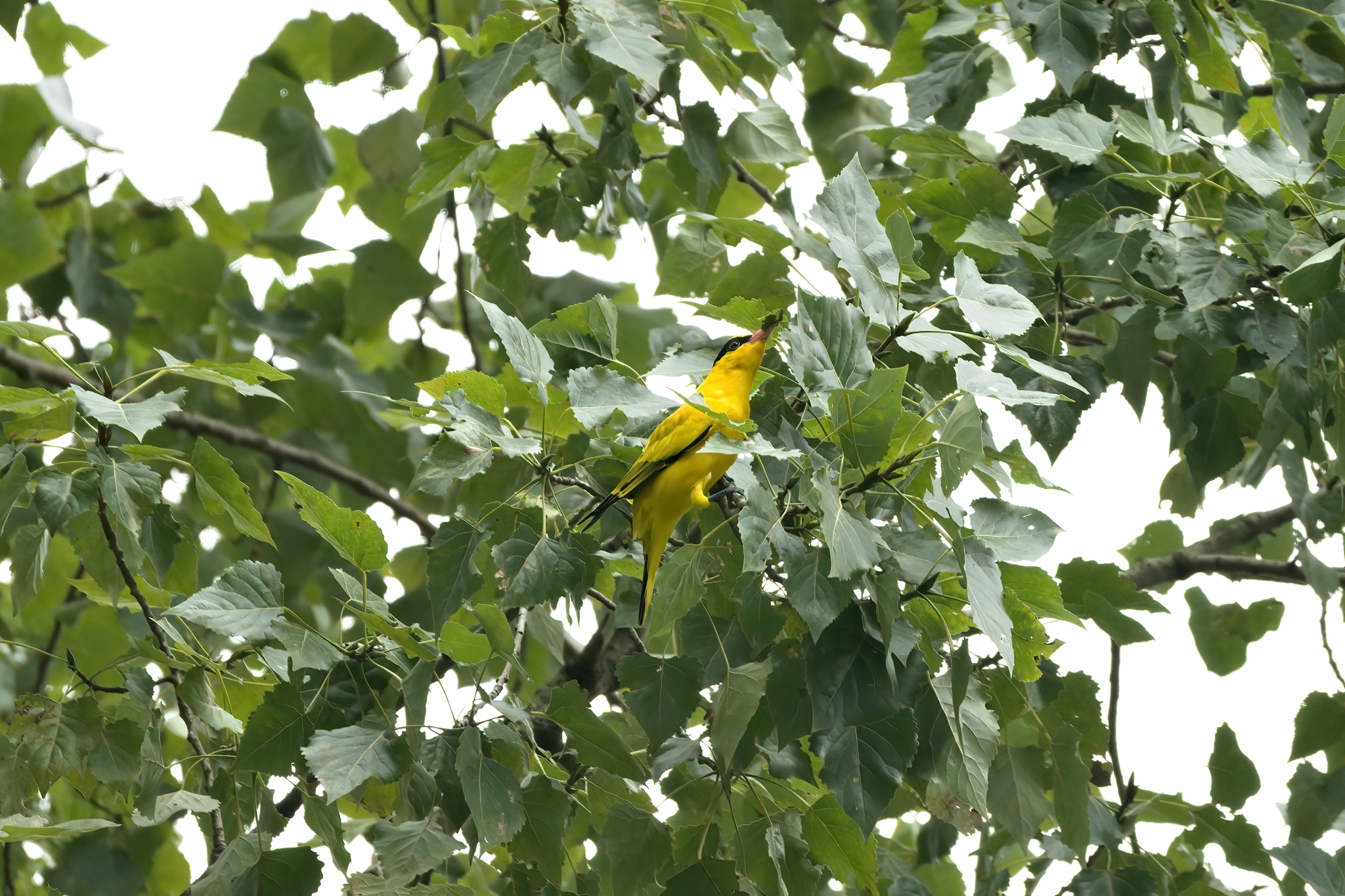
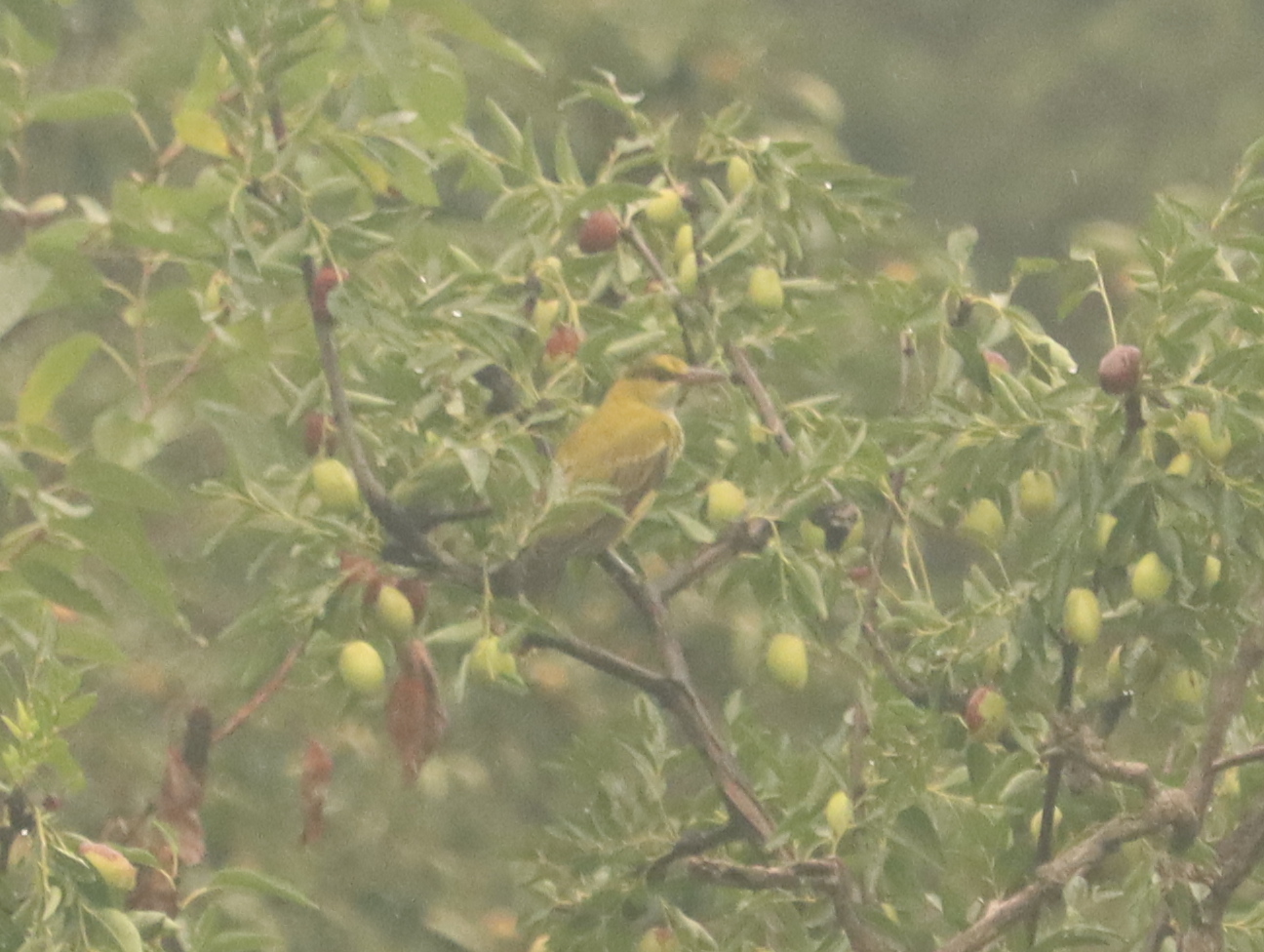
Medium-sized with overall golden plumage, a strong pinkish bill, and a broad black mask and nape. Adult males have central tail feathers tipped yellow and lateral ones more broadly yellow. Females are similar but have a more greenish or olive mantle and greenish wing linings. Juveniles have streaked undersides, while nestlings are dull greenish with brown streaks, yellowish heads and napes, and yellow undertail coverts. Geographic variations include reduced forehead yellow and decreased brightness from north to south; southern females are greener on the back and tail without yellow spots on secondary tips.
Identification
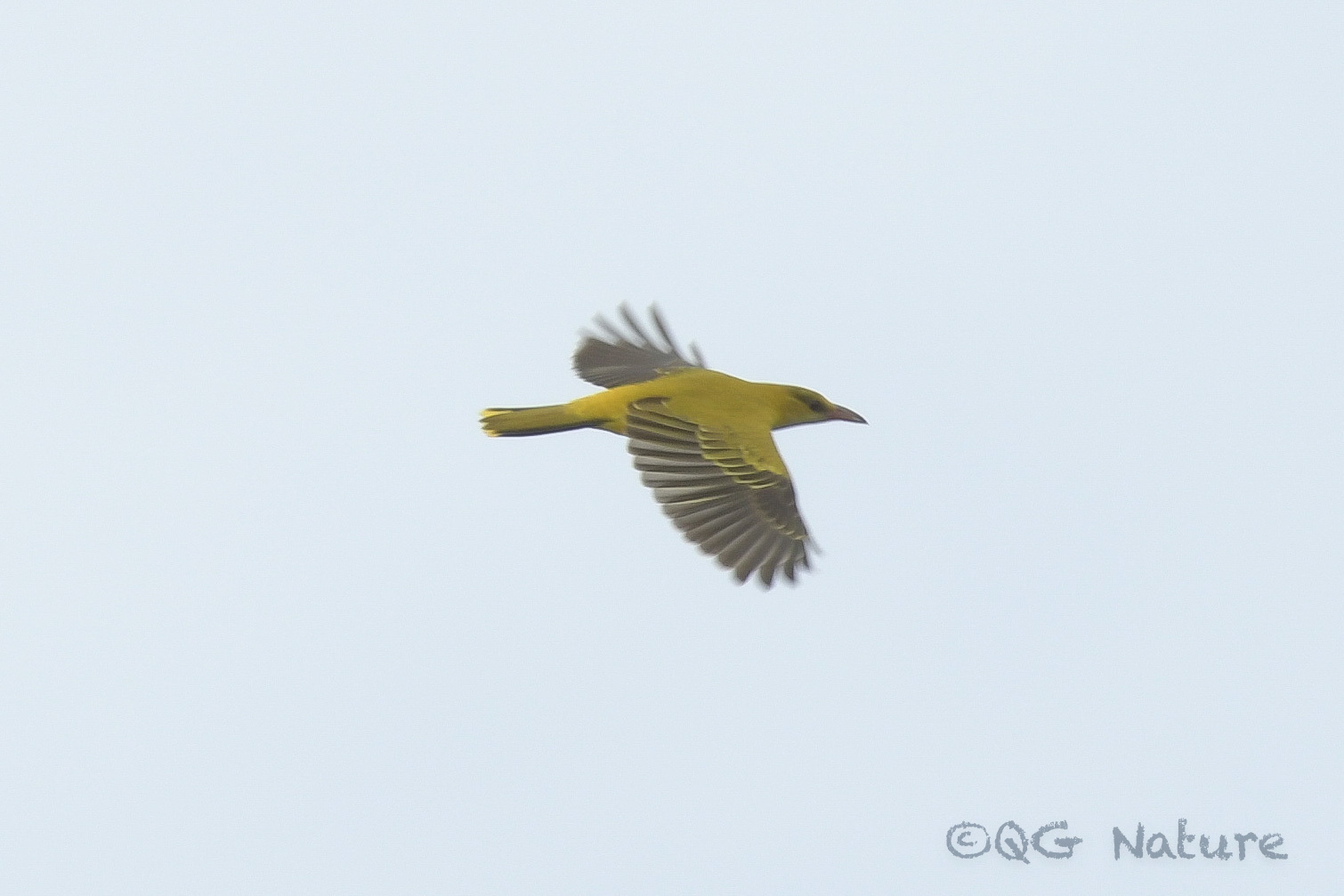
Distinguished from the Indian golden oriole by a broad black stripe that widens and joins at the nape, whereas the latter has only a short, narrow eye-stripe. The bill is pink and stouter than that of the golden oriole. Subspecies O. c. andamanensis has all-black wings, while O. c. macrourus has a very broad nape band leaving only the top of the head yellow, with all-black wings except for a yellow primary covert patch. Flight style is dipping. Calls include a nasal niee or myaa, and the song of subspecies diffusus is a fluty iwee wee wee-leeow.
Distribution & Habitat
Found in forests, gardens, and plantations across Asia. Subspecies diffusus breeds in eastern Siberia, Ussuriland, northeastern China, Korea, Japan, and northern Vietnam, wintering in India, Bangladesh, Thailand, and Myanmar. Populations in the Andaman and Nicobar Islands are resident. In Singapore, it is now common in city gardens, having established as breeders in the 1920s. Twenty subspecies are recognized, ranging from the Palearctic through Southeast Asia to islands including Palawan, Luzon, Sulawesi, Java, Sumatra, and the Lesser Sunda Islands.
Behavior & Ecology
Feeds on berries (including Trema orientalis and Ficus) and insects in the canopy, and takes nectar from large flowers like Salmalia and Erythrina. May aid in Ficus dispersal. Breeding season is April to June (January–March in the Nicobars). The female builds two or three deep cup nests in tree forks, often near black drongo nests, choosing one for laying two to three salmon-pink eggs with reddish spots. Incubation lasts 14–16 days by the female alone; chicks fledge after two weeks. Females handle nest sanitation and predator defense, while males actively feed and guard. Nest predators include crows, treepies, and hawks. Sometimes acts as a nest predator on smaller birds.
Culture
In many parts of Southeast Asia, individuals are trapped and sold in the bird trade.
Source: Wikipedia · CC BY-SA 3.0
Taxonomy
- Order
- Passeriformes
- Family
- Oriolidae
- Genus
- Oriolus
Subspecies (20)
-
Oriolus chinensis andamanensis
Andaman Islands
Data Sources
Species description from Wikipedia, licensed under CC BY-SA 3.0.
Bird images and sounds sourced from GBIF, contributed by citizen scientists worldwide under Creative Commons licenses.
Taxonomy data from AviList 2025.