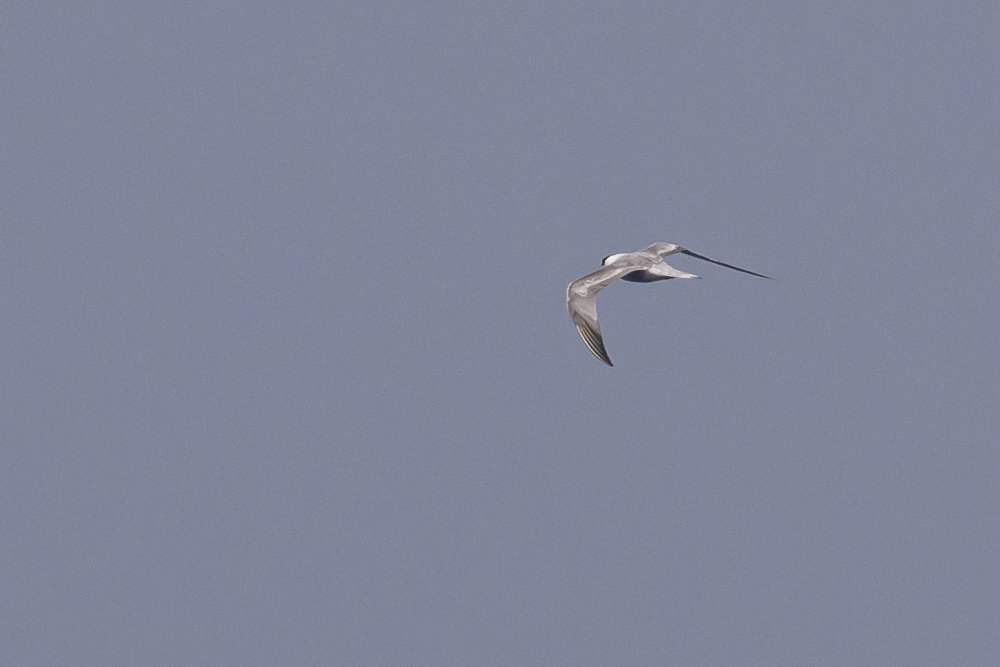
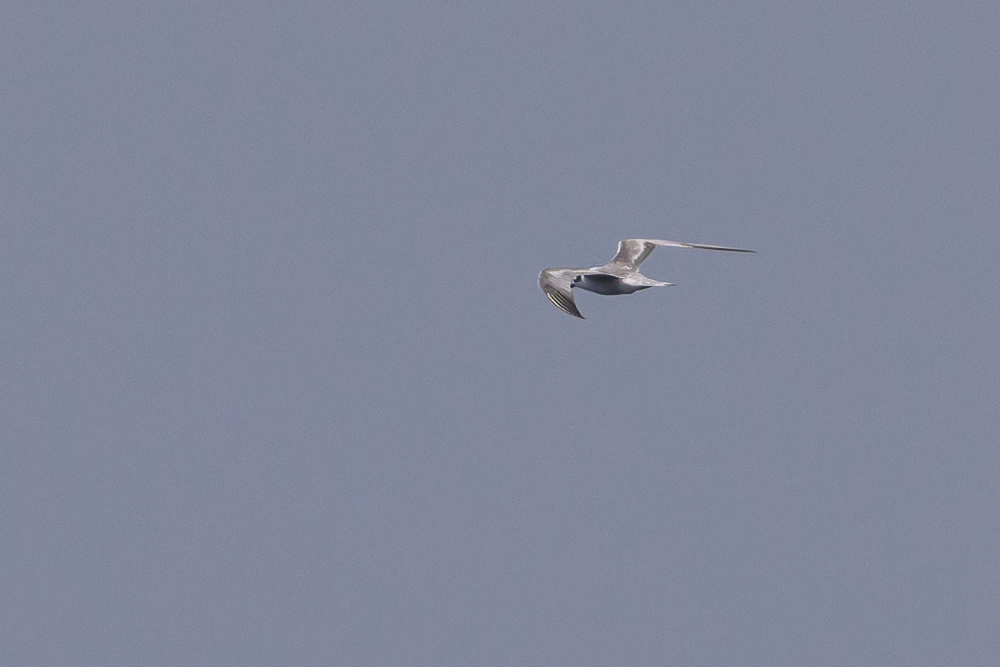
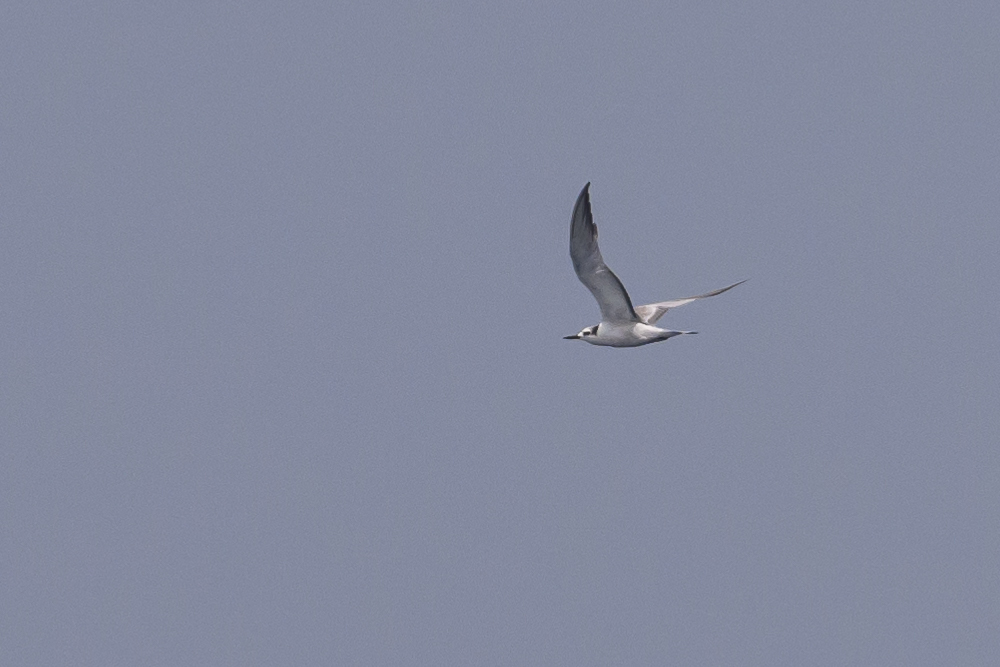
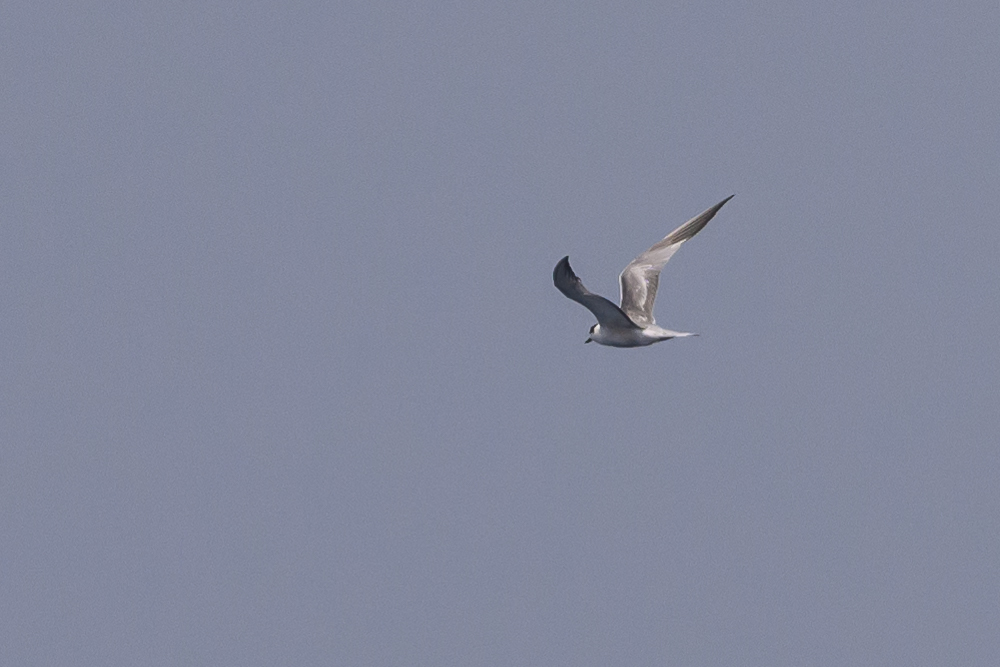
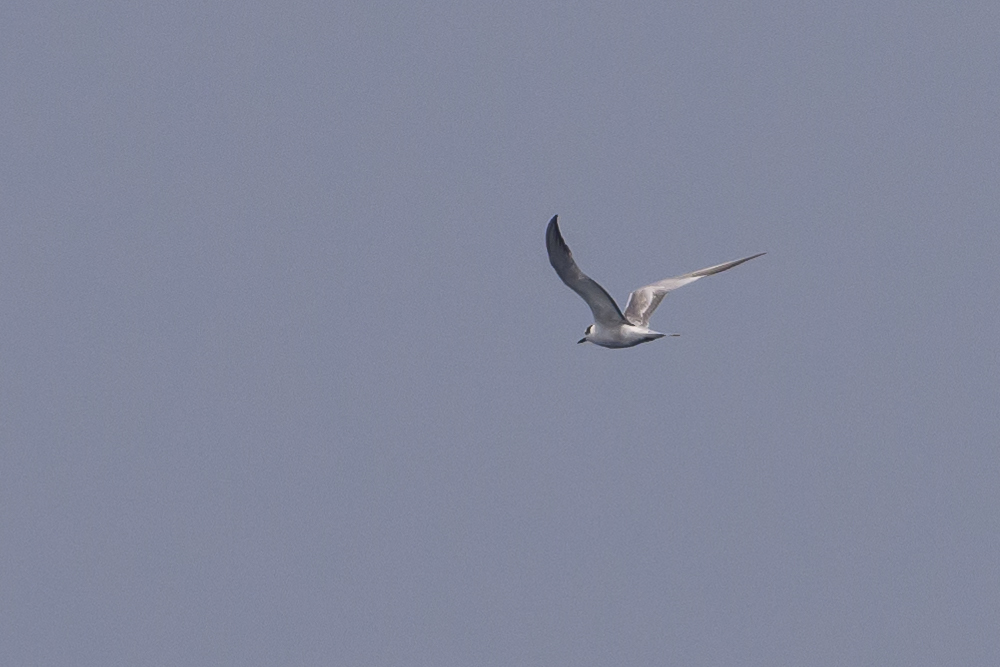
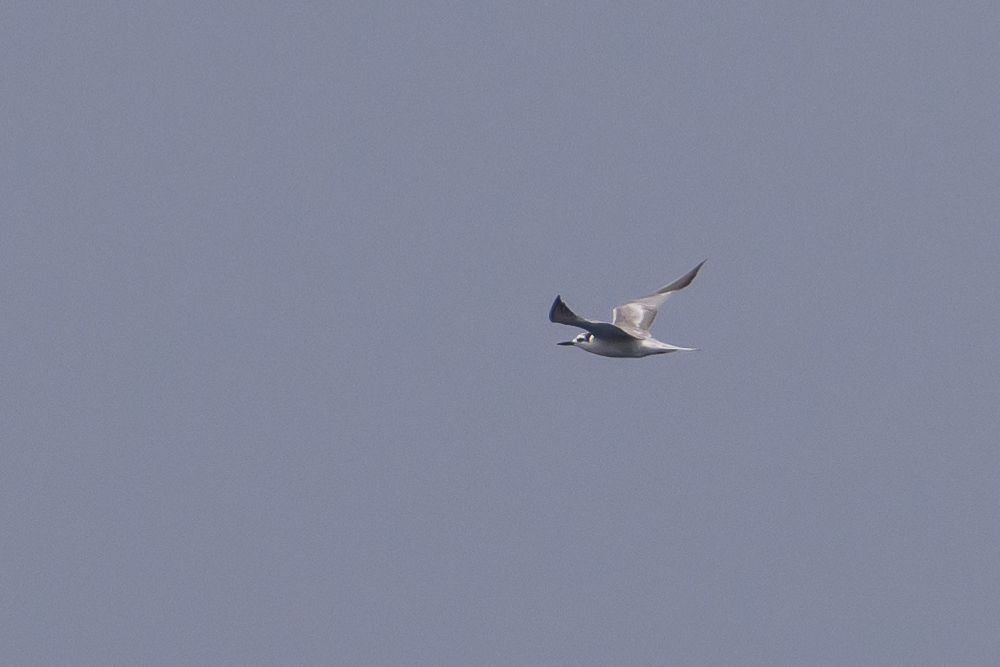
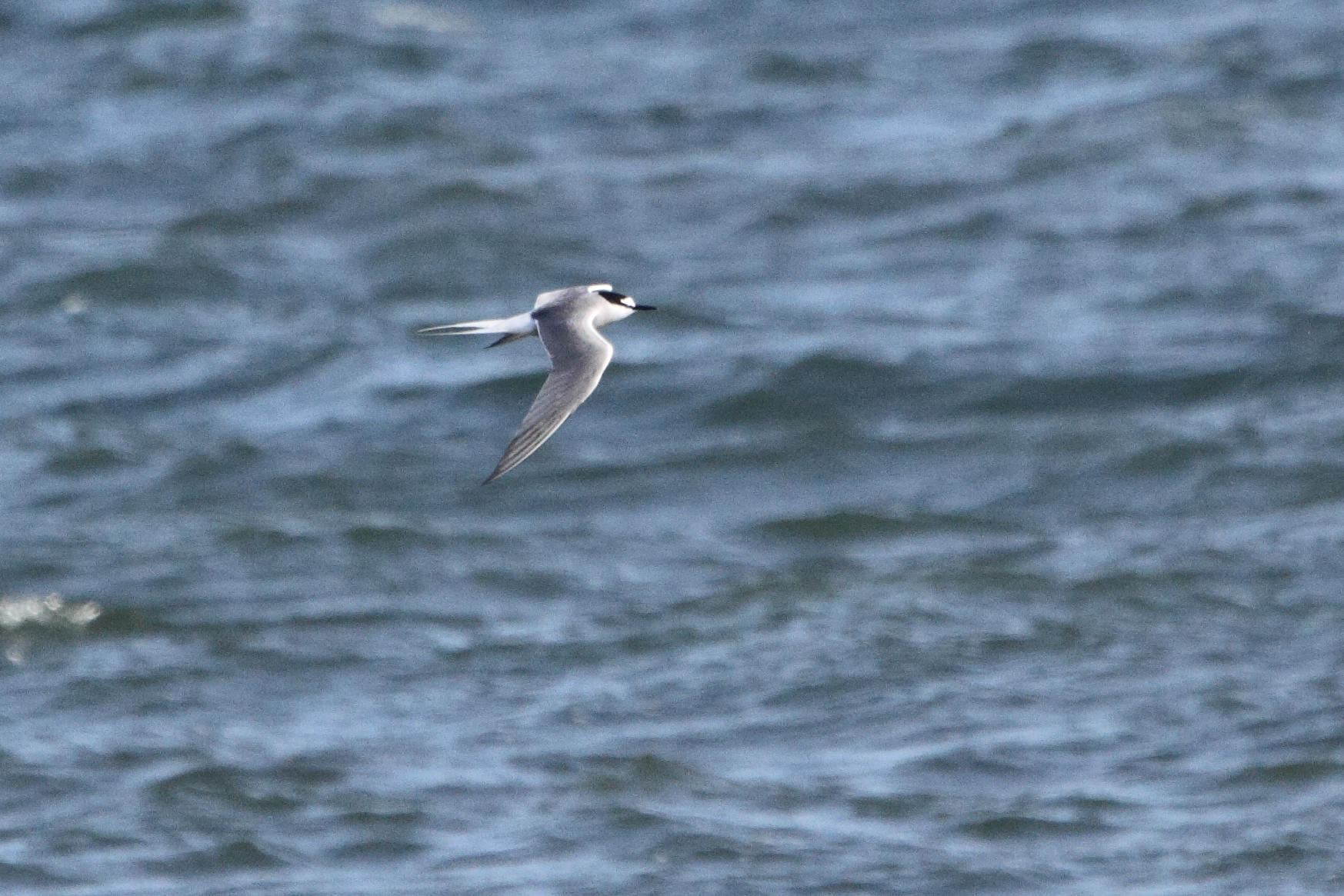
Charadriiformes / Laridae / Onychoprion
Aleutian Tern
Onychoprion aleuticus · 白腰燕鸥
Introduction
A migratory seabird in the family Laridae, order Charadriiformes. It breeds in coastal colonies in Alaska and eastern Siberia and winters in the western Pacific near the Equator. It is the only tern species exhibiting annual migration between subarctic breeding zones and tropical South Pacific wintering areas. The species is listed as Vulnerable due to rapid population declines.
Description
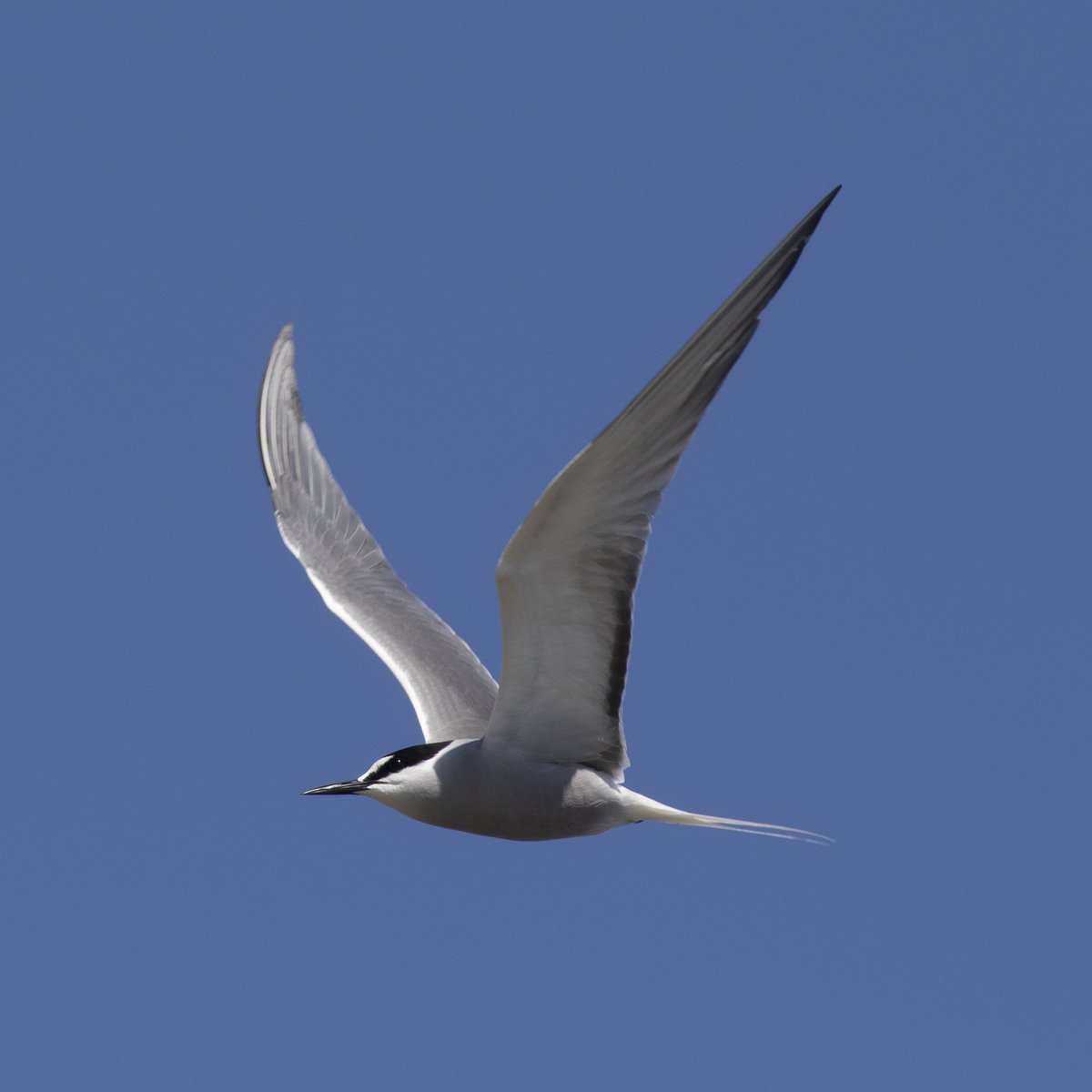
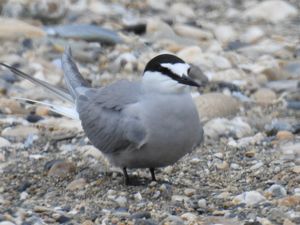
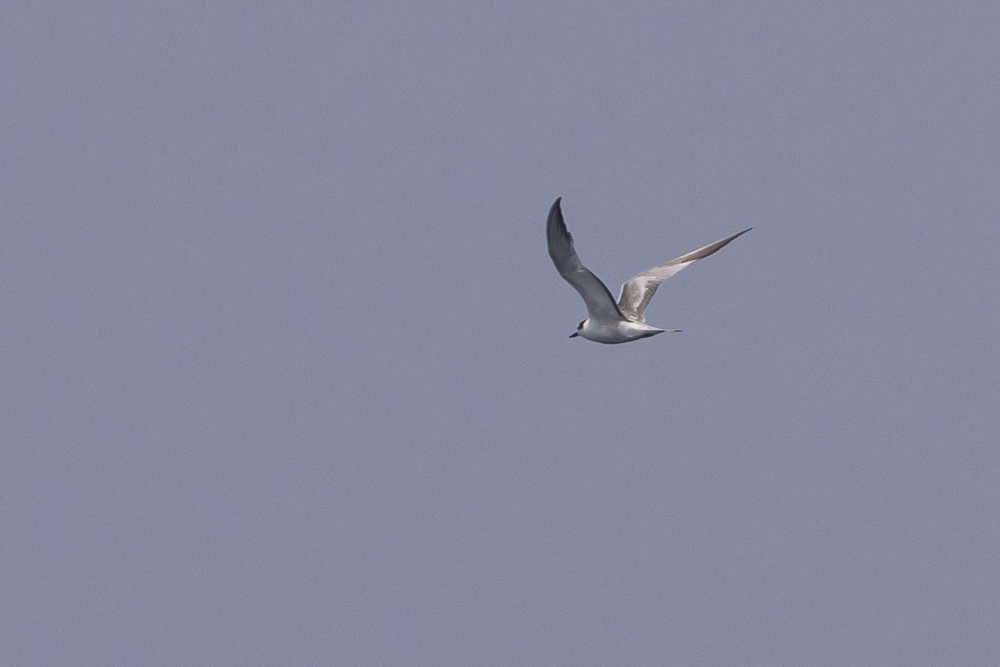
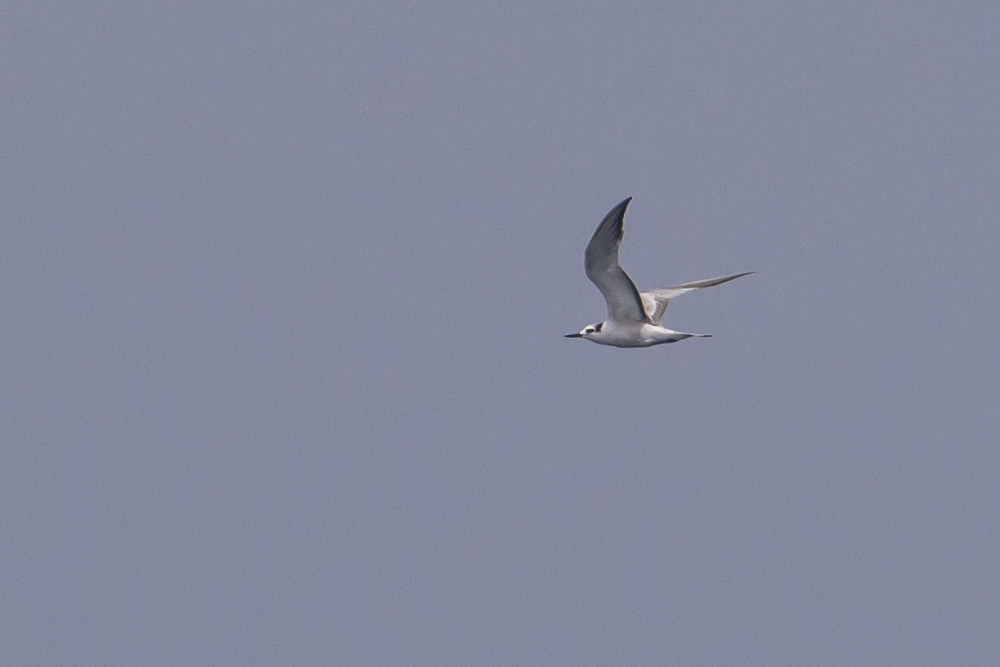
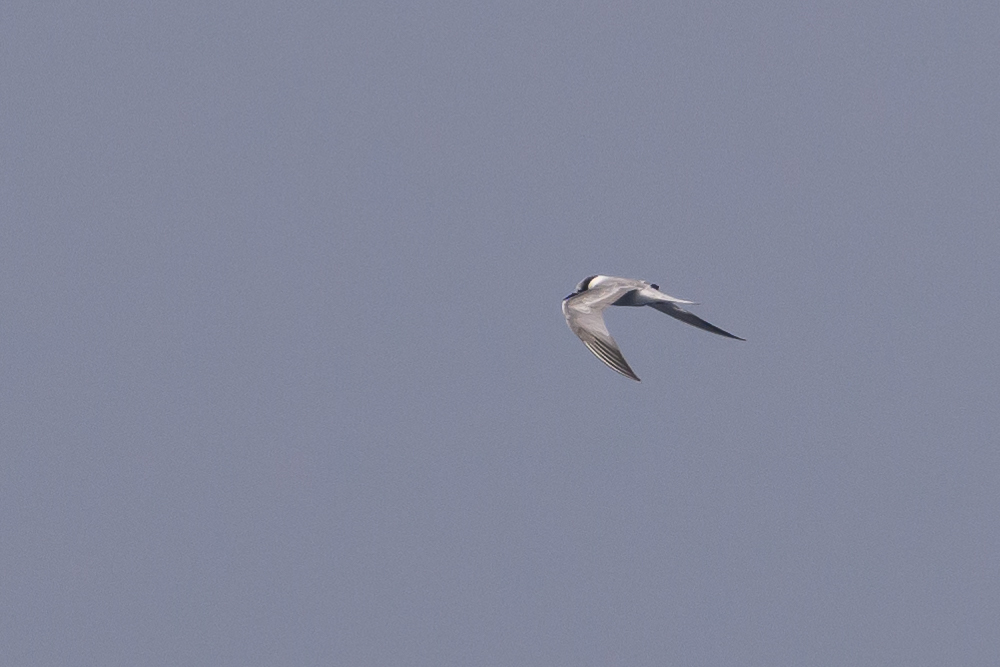
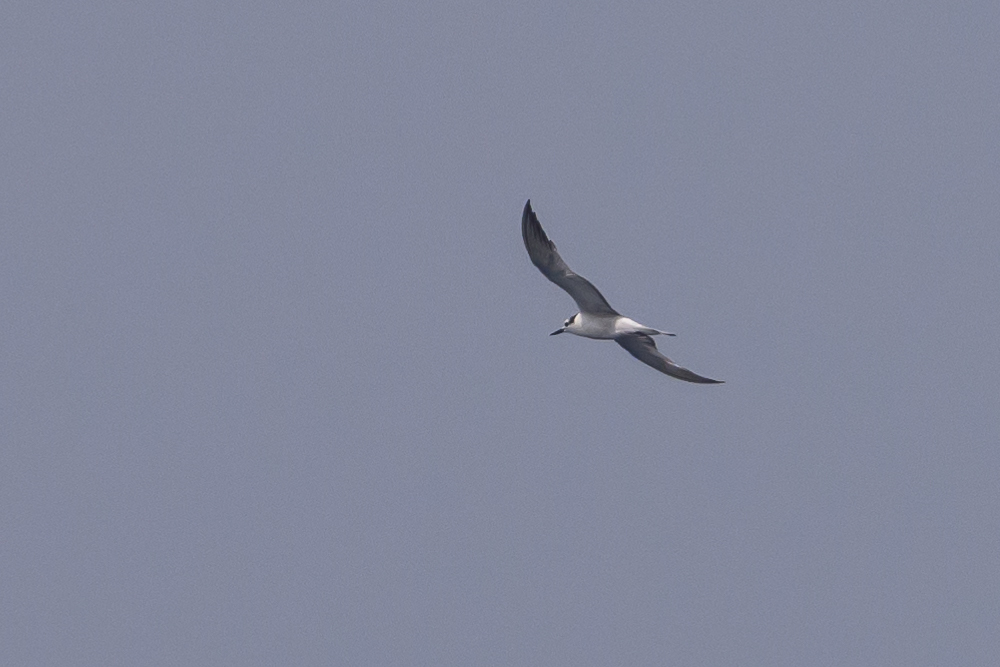
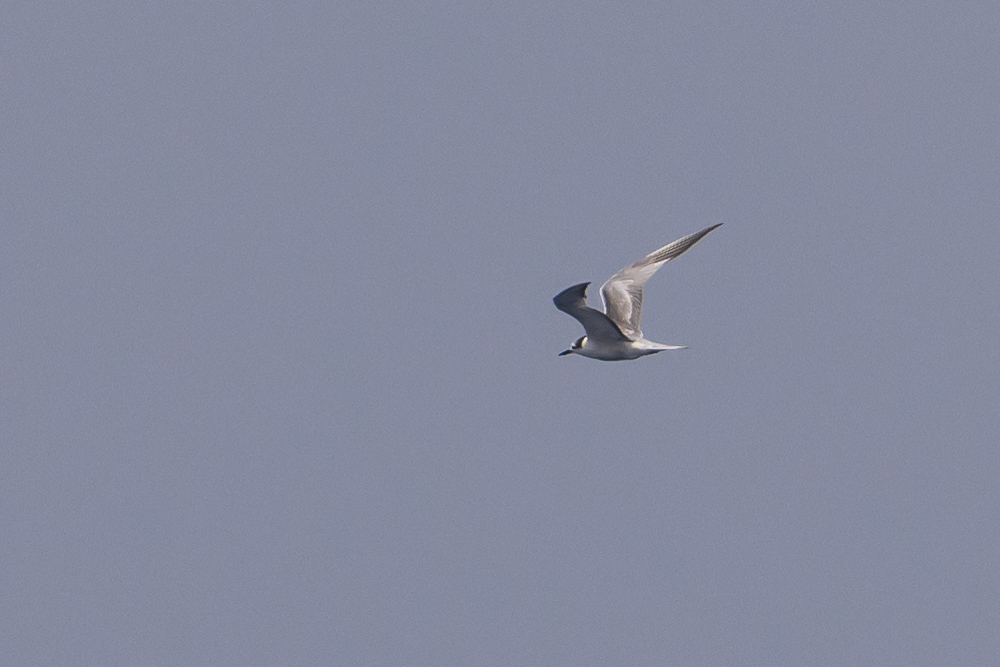
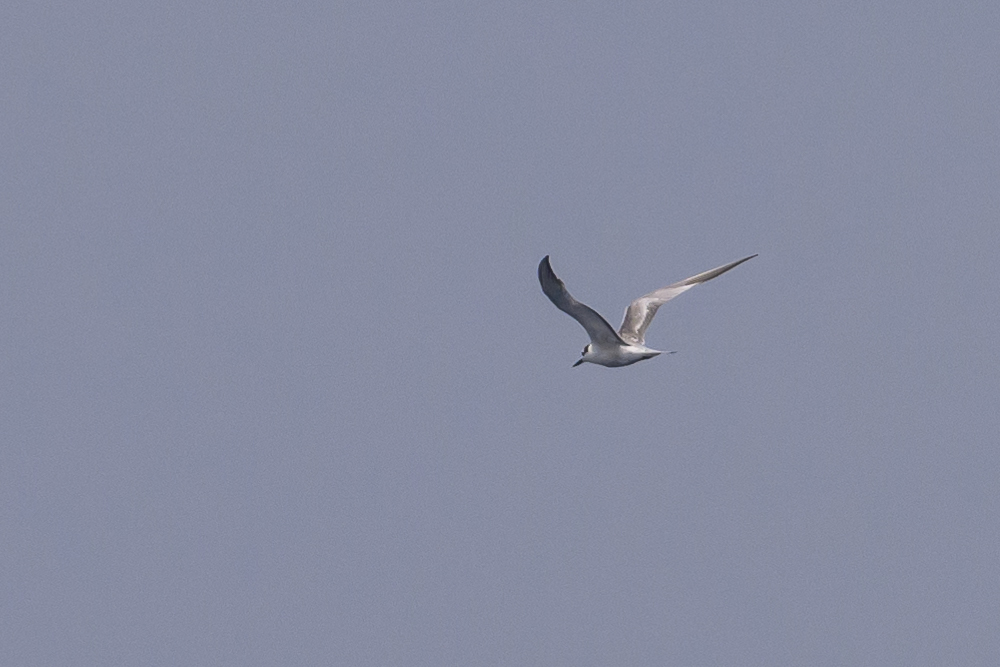
Medium-sized tern, 32–39 cm (13–15 in) long, with a 75–80 cm (30–31 in) wingspan. Weighs 84–140 g (2.9–5.0 oz). Features a short pointed bill, long deeply forked tail, black bill, and black legs. Breeding adults have a white forehead, black cap, mid-grey mantle, darkish grey underparts, and white rump and tail. Underwings are whitish with dark-tipped primaries and a diagnostic dark bar on the secondaries. No significant differences between sexes. Juveniles have a white collar, extensive white forehead, white underparts, and gray tail with white outer web of outer tail-feather; they usually lack the clear dark secondary bar.
Identification
Distinguished from the similar Arctic tern by a white forehead in breeding plumage (though juvenile Arctic terns also have white foreheads) and black bills, feet, and legs (Arctic terns have bright red). Flight features slower wing beats than Arctic and Common terns. Vocalizations include a choppy 'chif-chif-chu-ak' (less harsh than Arctic tern), a prolonged 'whee-hee-hee-hee', and a sharp 'chit'.
Distribution & Habitat
Breeds along Pacific coastlines of Alaska (Chukchi Sea, Seward Peninsula, Yukon-Kuskokwim Delta, Aleutian Islands, Kodiak Archipelago, Kenai Peninsula, Copper River delta, Gulf of Alaska) and eastern Siberia. Winters off Indonesia, Malaysia, Singapore, Java, Bali, and Sulawesi; occasionally sighted in Hong Kong and eastern Australia. Habitat includes partially vegetated sandy beaches, grassy meadows, mossy boglands, and marshes on isolated rocky islands or coasts. Pelagic when not breeding.
Behavior & Ecology
Breeds in loose mixed-species colonies, often with Arctic Terns in Alaska and Common Terns in Siberia. Nests are shallow depressions in low vegetation. Clutch size is typically 2 eggs. Both parents incubate and feed chicks, though females incubate more. Incubation lasts three weeks; chicks fledge after 4–5 weeks. Less aggressive than Arctic terns and relies on them for predator defense. Forages by hovering and surface-dipping for small fish, crustaceans, insects, and zooplankton in shallow waters up to 50 km offshore. Does not plunge-dive.
Conservation
Listed as Vulnerable. The Alaskan population has declined 8.1% annually since 1960 (92.9% over three generations). Threats include habitat modification, predation, egg harvesting, human disturbance, unregulated fishing, coastal development, and pollution in wintering areas. Highly sensitive to disturbance, often abandoning colonies. Designated as a species of concern by multiple agencies. Conservation efforts include geolocator deployment and population monitoring.
Culture
The specific epithet aleuticus refers to the Aleutian Islands.
Source: Wikipedia · CC BY-SA 3.0
Taxonomy
- Order
- Charadriiformes
- Family
- Laridae
- Genus
- Onychoprion
Distribution
breeds North Pacific coasts from Sakhalin, Sea of Okhotsk, and Kamchatka (eastern Russia) eastward through Aleutian Islands and to southwestern Alaska; winters coastal Thailand and Philippines eastward to New Guinea and east-central Australia; migrates along w North Pacific coast via Japan southward toTaiwan
Data Sources
Species description from Wikipedia, licensed under CC BY-SA 3.0.
Bird images and sounds sourced from GBIF, contributed by citizen scientists worldwide under Creative Commons licenses.
Taxonomy data from AviList 2025.