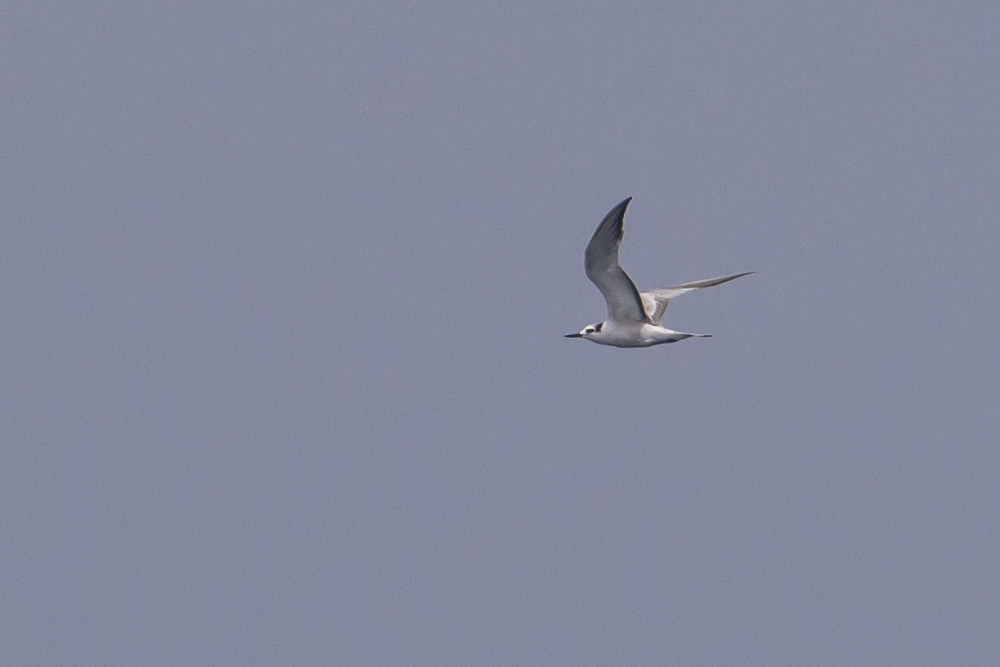
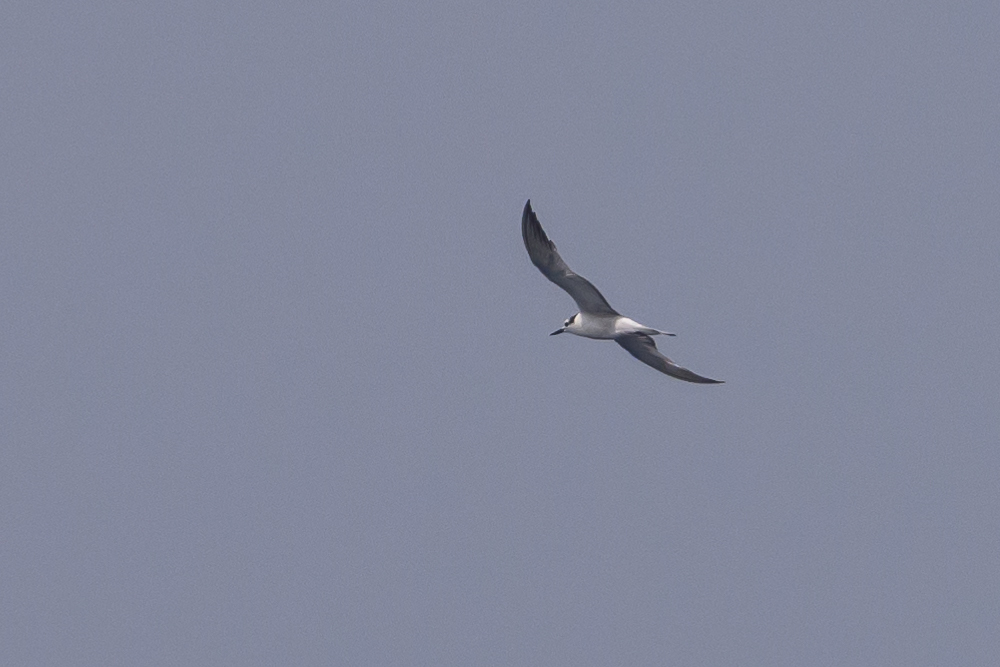

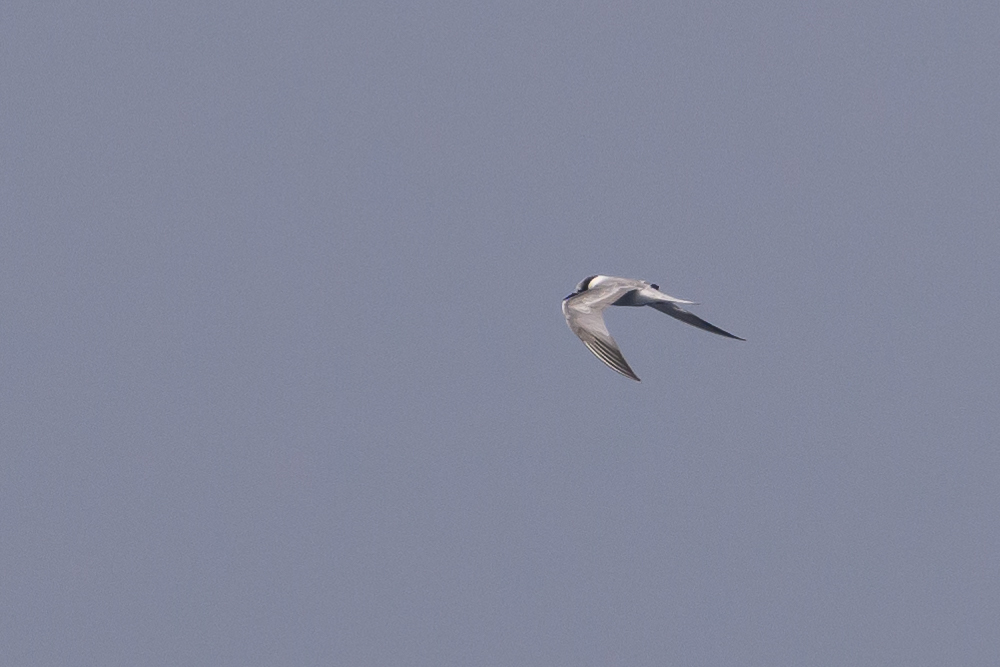
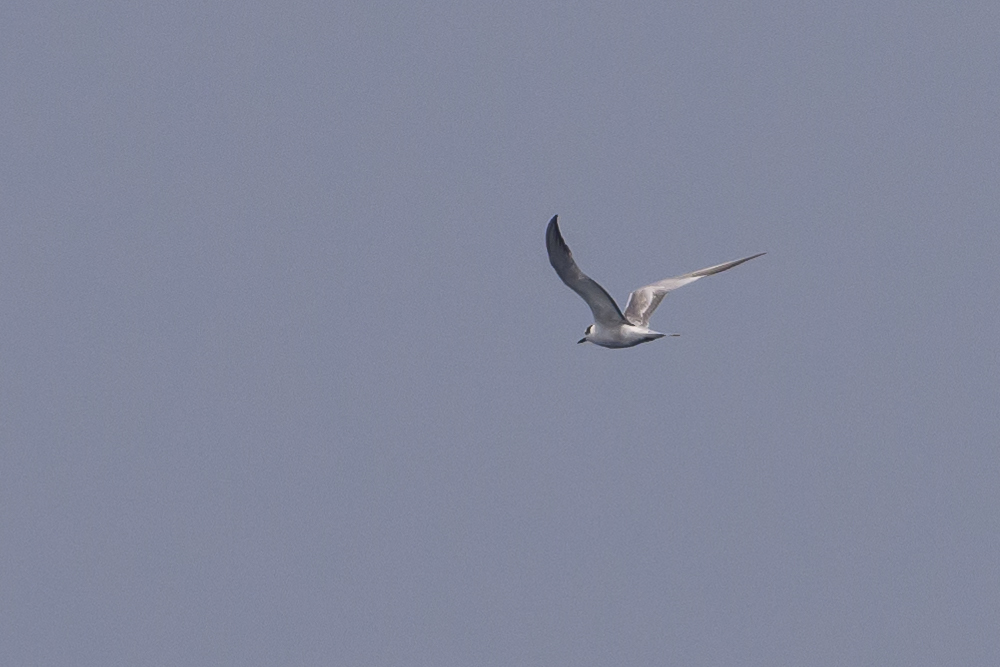
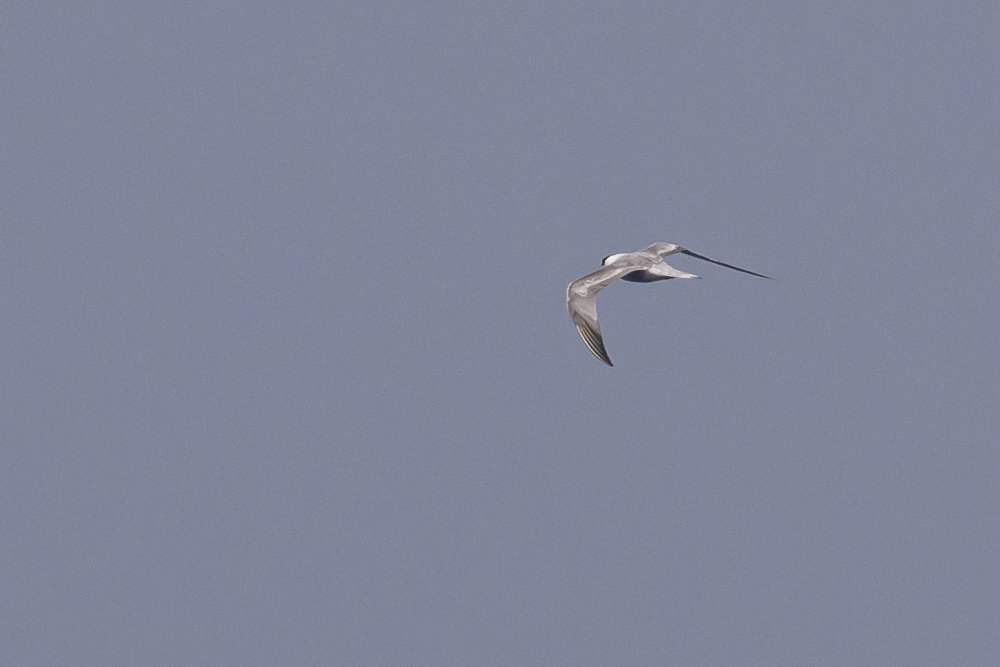
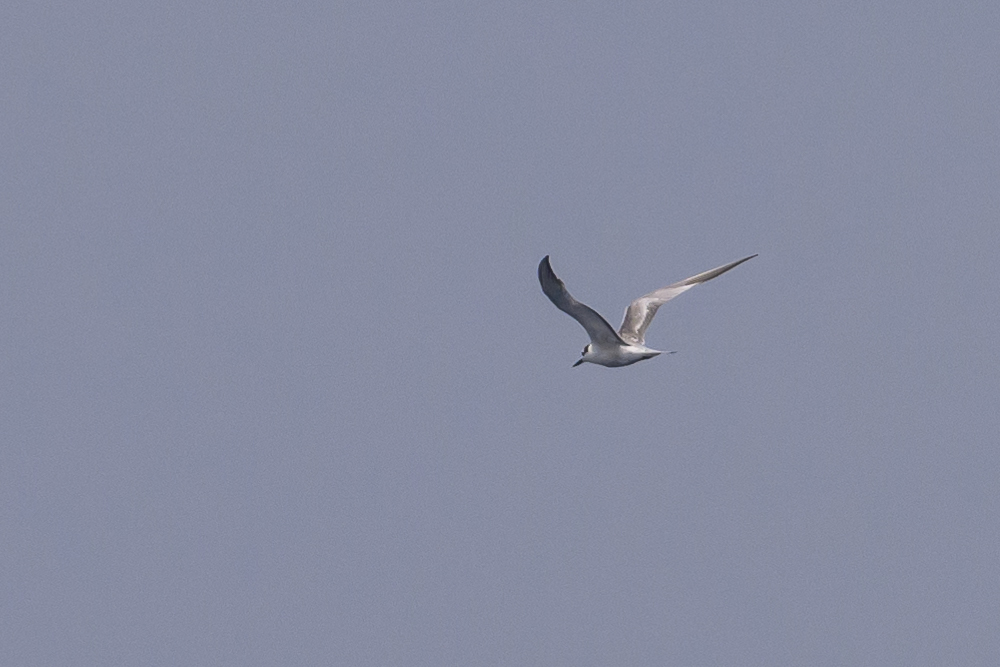
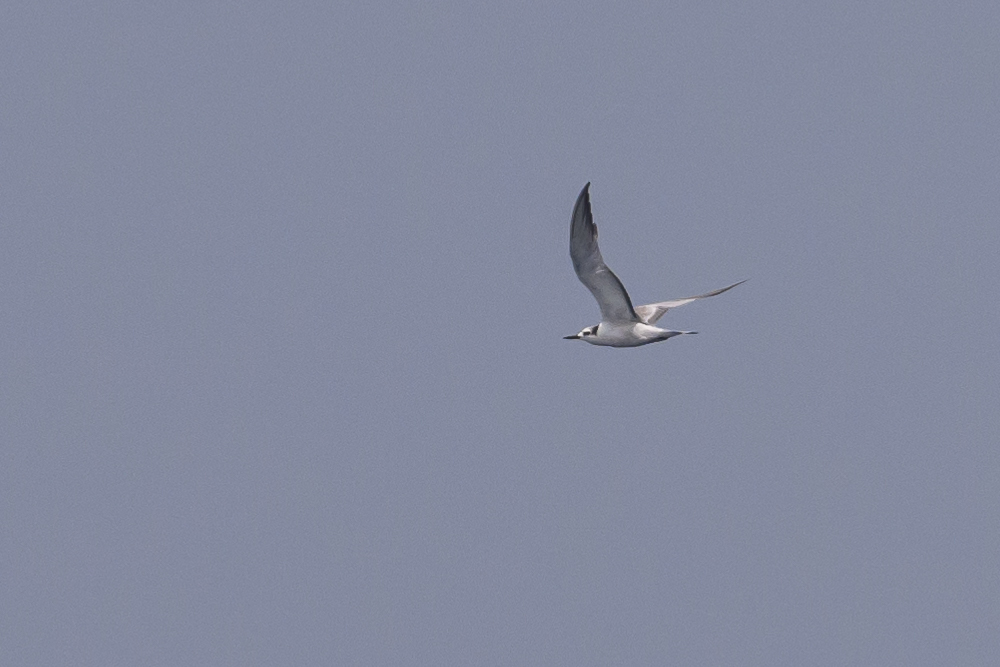
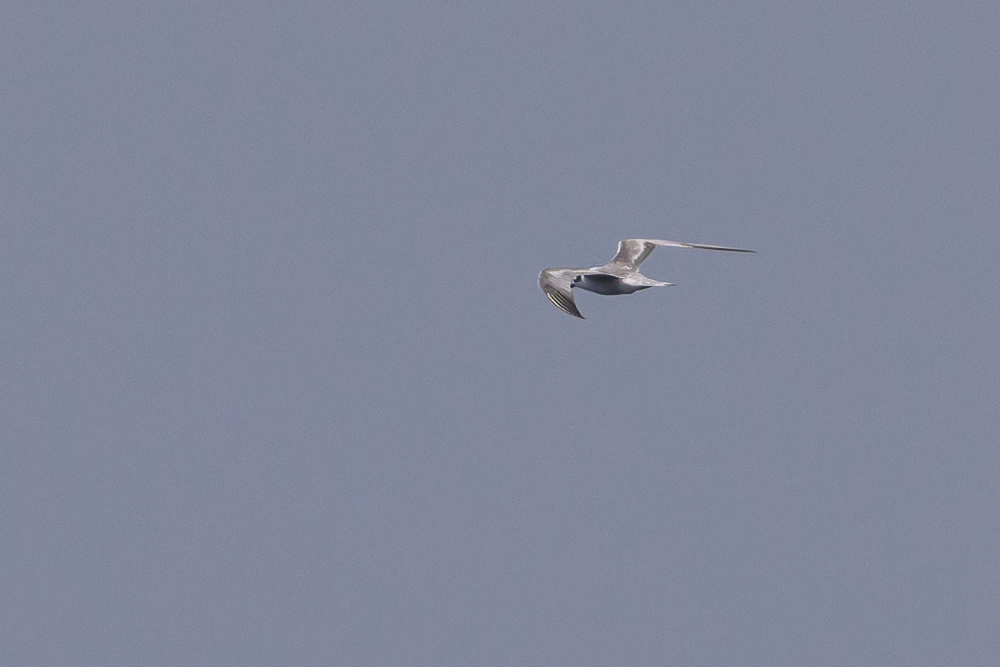
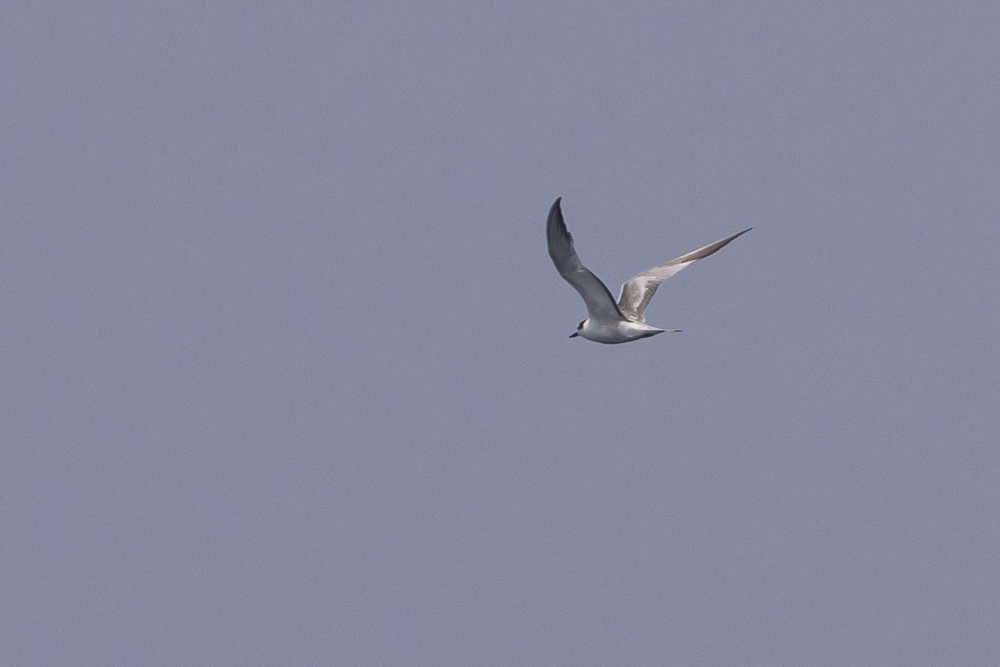
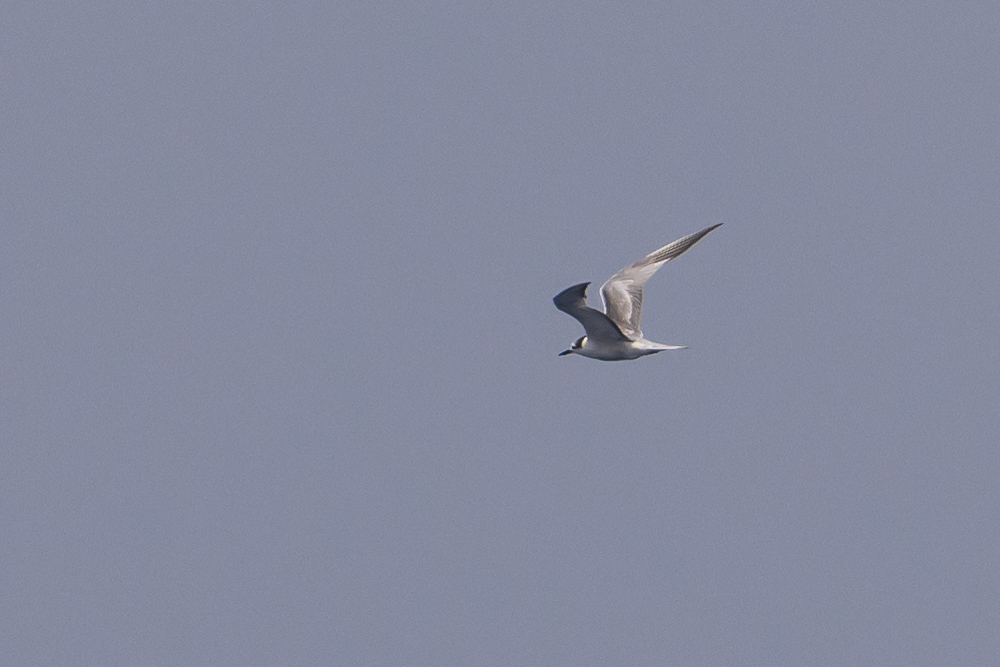
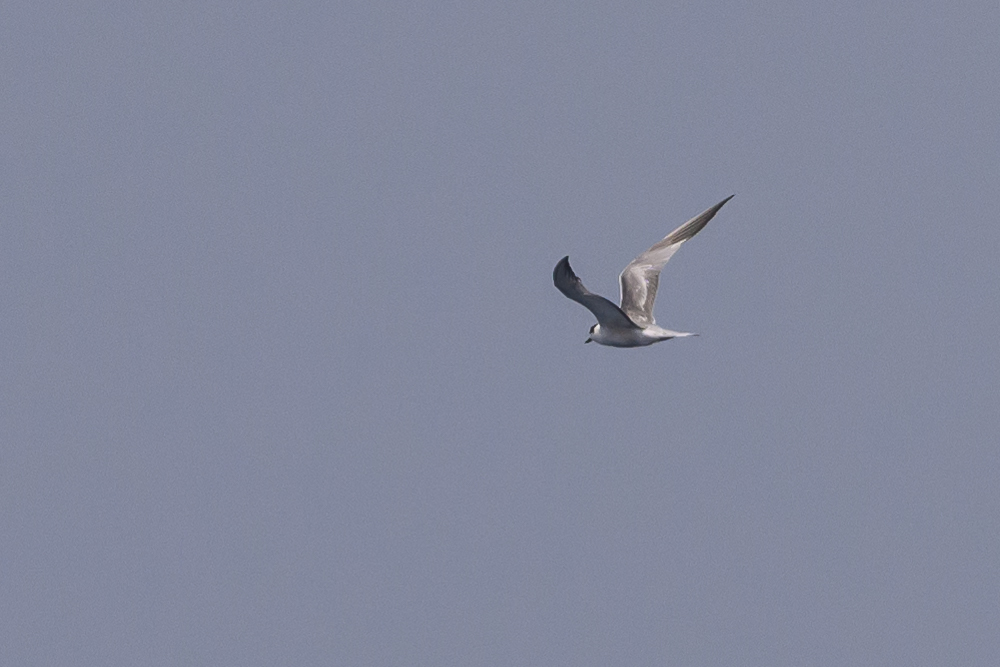
Aleutian Tern
Onychoprion aleuticus
白腰燕鸥
Introduction
A medium-sized tern of subarctic regions. Breeds in coastal colonies of Alaska and eastern Siberia, often associating with Arctic terns. Its wintering grounds in the tropical western Pacific were unknown until the late 1980s. It is one of few Charadriiformes breeding in Alaska with migratory connections to East Asia. Differs from Arctic tern in plumage and behavior. Classified as Vulnerable with declining populations.
Description
A medium-sized tern measuring 32-39 cm in length with a wingspan of 75-80 cm, this species weighs 84-140 g. It possesses a short pointed bill, black legs, and a long, deeply forked tail. Breeding adults display a white forehead contrasting with a black cap, mid-grey mantle, darkish grey underparts, and white rump and tail. The underwing is whitish with dark-tipped primaries and a diagnostic dark bar on the secondaries. Non-breeding adults show white underparts, a white speckled crown, and a gray tail with white sides. Juveniles feature a white collar, extensive white forehead, white underparts, and a gray tail with white outer webs on the outer tail-feathers. No significant sexual plumage differences exist between males and females.
Identification
This species closely resembles the Arctic tern but can be distinguished by its white forehead and entirely black bill, legs, and feet during breeding season. Juvenile Arctic terns also have white foreheads, making summer and fall identification more challenging. Unlike breeding Arctic terns with their bright red bills, feet, and legs, this species retains black coloration year-round on these parts. The dark secondary bar on the underwing remains visible even in winter plumage when the forehead mark disappears. Its flight is characterized by slower wing beats compared to Arctic and Common terns, appearing more graceful and undeviating.
Distribution & Habitat
Breeding colonies occur exclusively along the Pacific coastlines of Alaska and eastern Siberia, including the Chukord Sea coast, Seward Peninsula, Yukon-Kuskokwim River Delta, Aleutian Islands, Kodiak Archipelago, Kenai Peninsula, and Copper River delta. The worldwide breeding population is estimated at 31,000 birds, with approximately 25,600 in Siberian colonies and 5,500 in Alaska. The species is strongly migratory, wintering in tropical waters near Indonesia and Malaysia, with increasing sightings around Hong Kong, Singapore, Java, Bali, and Sulawesi. It was first recorded on Australia's eastern coast in December 2017. Habitat includes partially vegetated sandy beaches, grassy meadows, mossy boglands, and marshes near coasts or river mouths, becoming pelagic outside the breeding season.
Behavior & Ecology
This tern breeds in loose colonies of 4-150 pairs, occasionally reaching 700 pairs on Sakhalin Island. It frequently nests alongside Arctic terns in Alaska and Common terns in Siberia. Courtship displays include synchronous ascending spiral flights in May, followed by ceremonial fish flights and ground parades. The typical clutch contains two eggs, laid in shallow depressions lined with low vegetation. Both parents share incubation duties over a three-week period, though females do more incubating while males fish more. Eggs are elongate ovate, measuring 40-46 mm, with clay to olive-green coloration and irregular black spotting. Chicks fledge after 4-5 weeks. Diet consists primarily of small fish, supplemented by crustaceans, insects, and zooplankton, obtained by flying low over water and surface-dipping. Foraging occurs in shallow waters up to 50 km offshore. Vocalizations include a distinctive choppy 'chif-chif-chu-ak' call and a prolonged 'whee-hee-hee-hee', with a sharp 'chit' used for social contact.
Conservation
The species is classified as Vulnerable due to rapid population declines across its range. Alaskan colonies have declined by 8.1% annually since 1960, representing a 92.9% reduction over three generations, with larger colonies experiencing steeper declines. Threats include habitat modification, predation from foxes, coyotes, dogs, bears, gulls, and ravens, egg harvesting, and human disturbance. The species is highly sensitive to colony disturbance and may permanently abandon sites when threatened. Wintering areas in Southeast Asia face additional pressures from unregulated fishing, coastal development, and pollution. Multiple agencies including the Alaska Department of Fish and Game, Audubon Alaska, and the U.S. Fish and Wildlife Service have designated it as a species of concern. A working group established in 2007 has begun deploying geolocators to better understand migration pathways and inform conservation actions.
Source: Wikipedia · CC BY-SA 3.0
Taxonomy
- Order
- Charadriiformes
- Family
- Laridae
- Genus
- Onychoprion
- eBird Code
- aleter1
Distribution
breeds North Pacific coasts from Sakhalin, Sea of Okhotsk, and Kamchatka (eastern Russia) eastward through Aleutian Islands and to southwestern Alaska; winters coastal Thailand and Philippines eastward to New Guinea and east-central Australia; migrates along w North Pacific coast via Japan southward toTaiwan
Data Sources
Species description from Wikipedia, licensed under CC BY-SA 3.0.
Bird images and sounds sourced from GBIF, contributed by citizen scientists worldwide under Creative Commons licenses.
Taxonomy data from AviList 2025.