
Passeriformes / Muscicapidae / Oenanthe
Northern Wheatear
Oenanthe oenanthe · 穗䳭
Introduction
A small passerine in the Old World flycatcher family, this species is the most widespread member of its genus across Europe, North and Central Asia. It breeds in open stony country and migrates to Africa for winter. Notable for undertaking one of the longest migrations relative to body size among small birds, it nests in rock crevices and rabbit burrows. The IUCN evaluates it as Least Concern.
Description
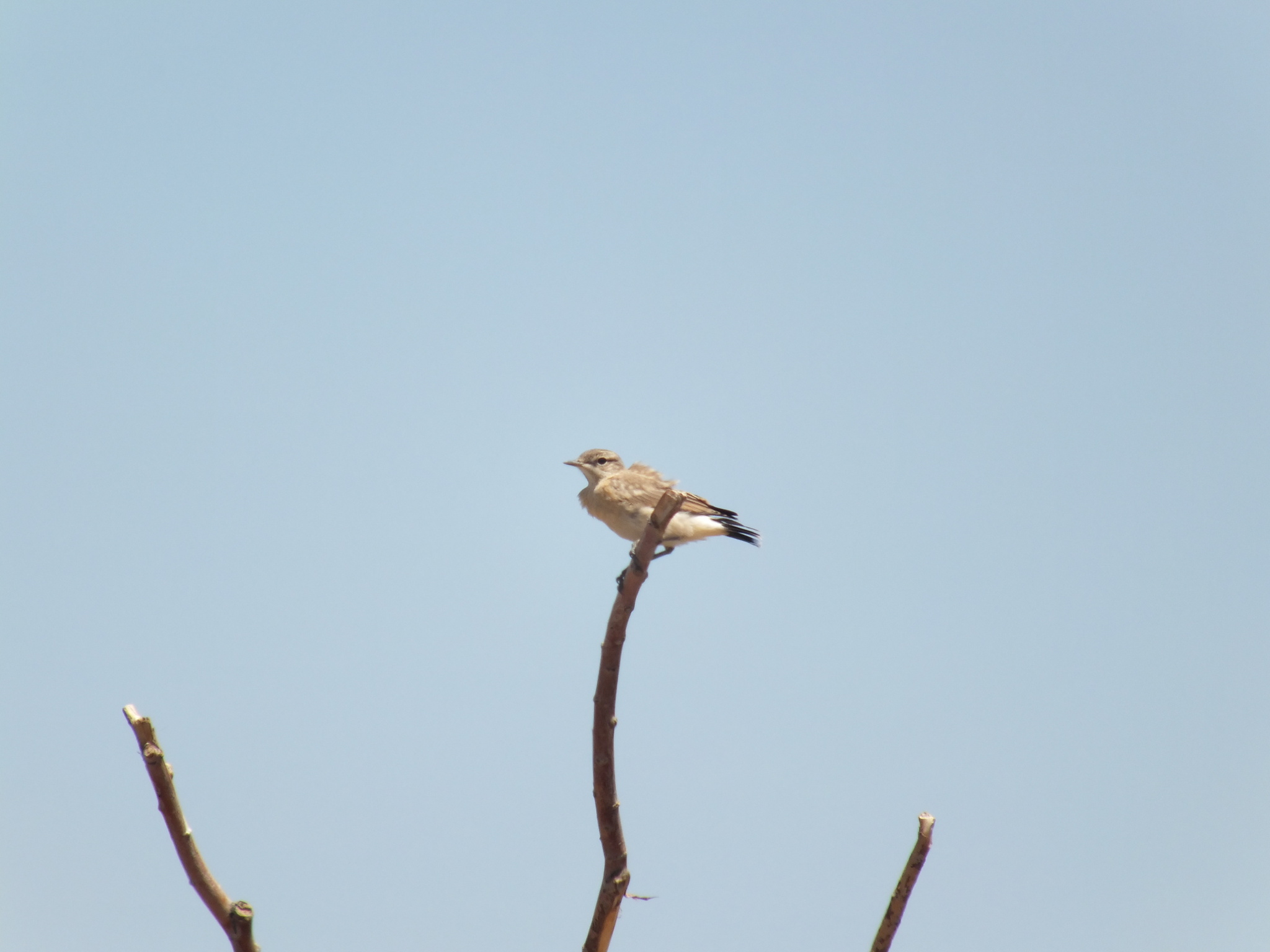
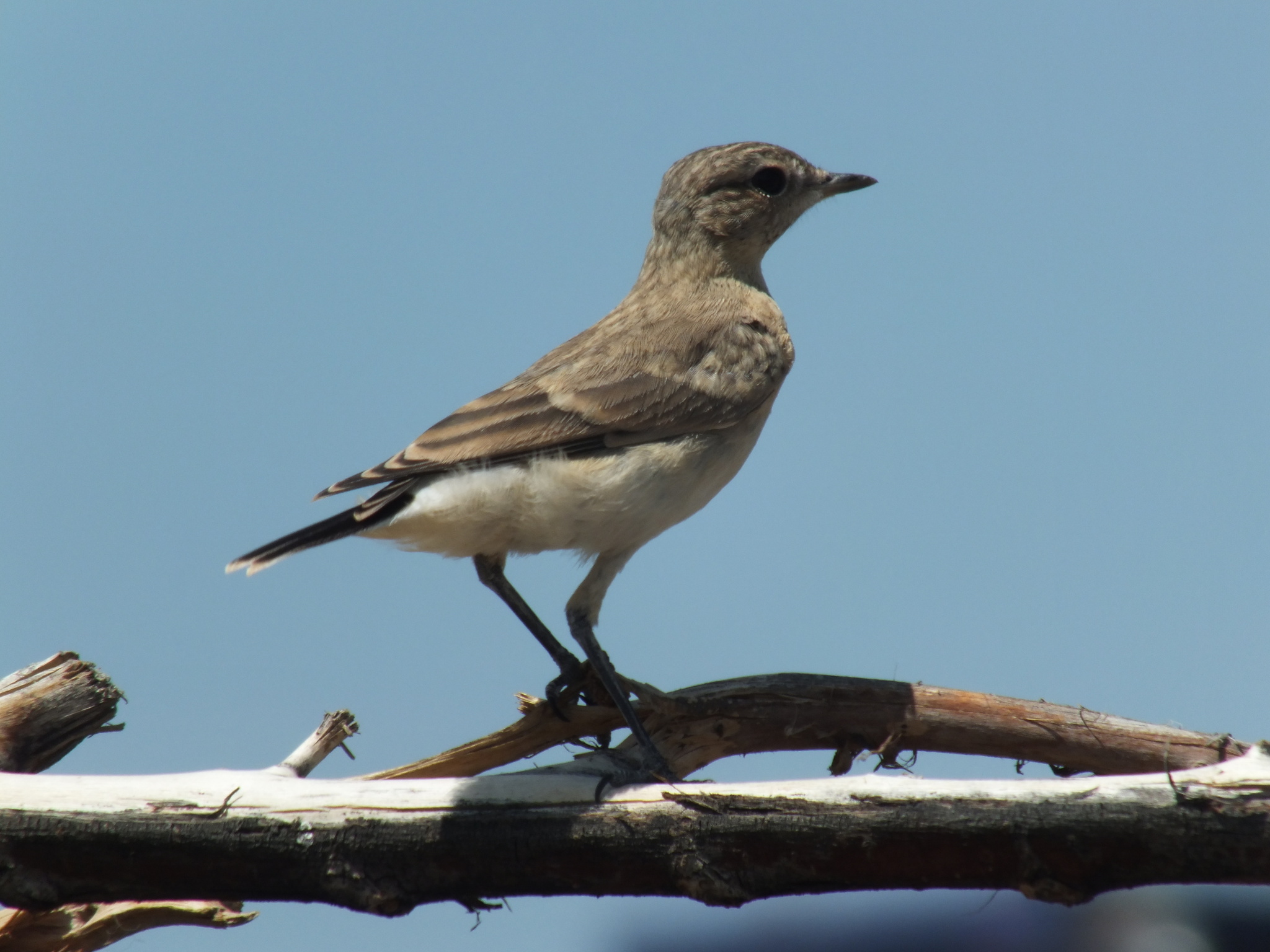
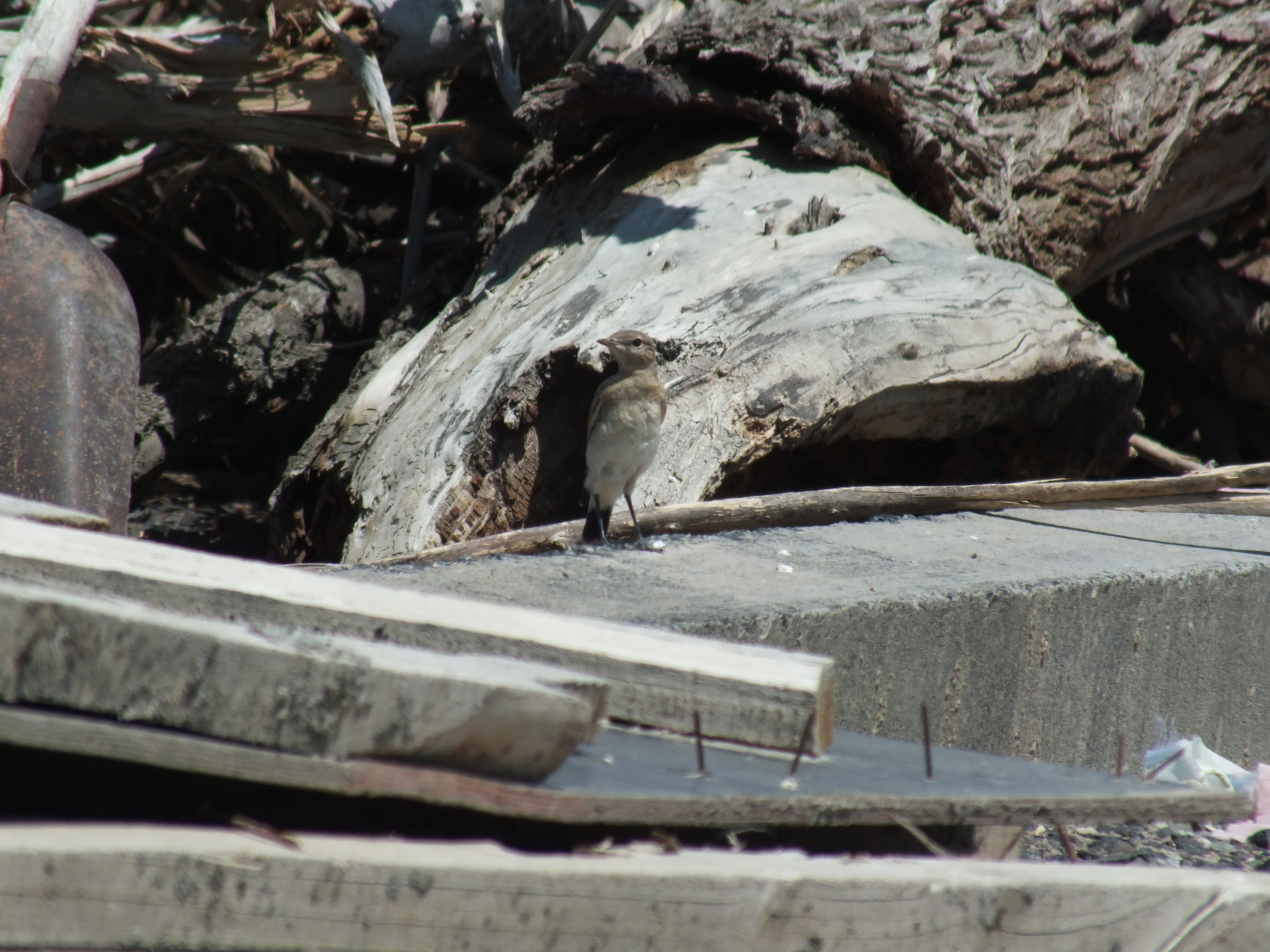
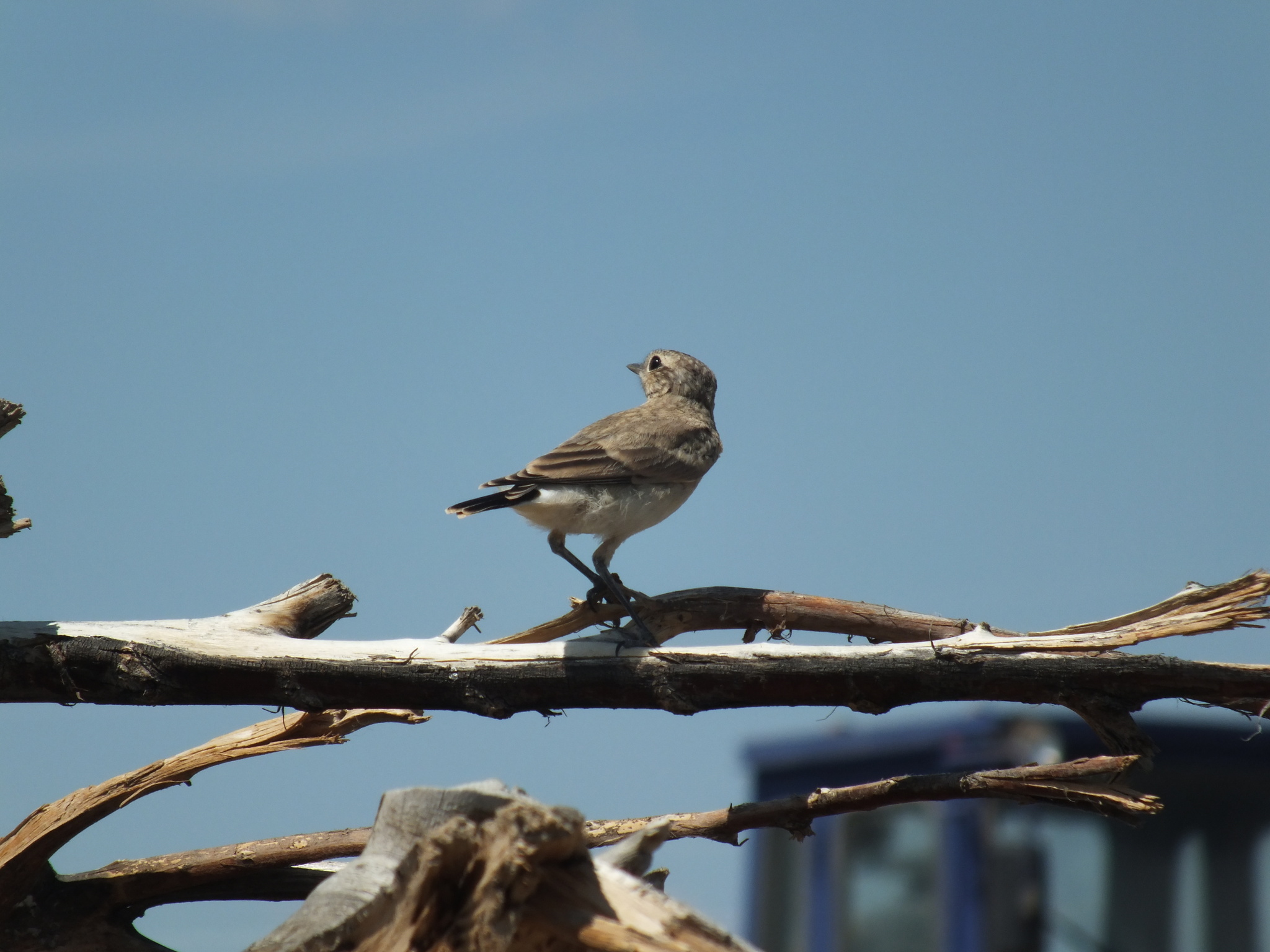
Length 14.5–16 cm (5.7–6.3 in), wingspan 26–32 cm, weight 17–30 g. Both sexes feature a white rump and tail with a black inverted T-pattern at the tail end. Summer males have grey upperparts, a buff throat, and black wings with a face mask. In autumn, males resemble females but retain black wings. Females are pale brown above and buff below with darker brown wings.
Identification
Key field marks include the prominent white rump and the black inverted T-pattern on the tail. Vocalizations include a whistling, crackly song from males and a typical chat 'chack' call used in flight and general communication.
Distribution & Habitat
Breeds in open stony country across Europe, east across the Palearctic to Siberia, with populations in northeastern Canada, Greenland, northwestern Canada, and Alaska. Four subspecies are recognized: O. o. leucorhoa (northeast Canada, Greenland, Iceland), O. o. oenanthe (north/central Europe, north Asia, northwest North America), O. o. libanotica (southern Europe, Middle East, southwest Asia to Mongolia and northwest China), and O. o. seebohmi (northwest Africa). All populations winter in Sub-Saharan Africa.
Behavior & Ecology
Migratory insectivore completing journeys up to 30,000 km annually. Greenland race crosses the North Atlantic directly (up to 2,500 km), while eastern Canadian populations cross 3,500 km of ocean. Breeding begins at one year old. Females build nests in cavities like rabbit burrows or rock crevices using plant material, grasses, moss, and lichen. Clutch size is 4–7 pale blue eggs, incubated by the female for ~13 days. Chicks fledge after 15 days and become independent at 28–32 days. Usually one brood per year, with replacement clutches if eggs are lost.
Conservation
Evaluated as Least Concern by the IUCN. The range is estimated at 2.3 million square kilometres, with a population of approximately 2.9 million individuals. The species does not approach thresholds for population decline criteria.
Culture
In the 18th and 19th centuries, it was considered a delicacy in England, known as 'the English ortolan,' and trapped by Sussex shepherds for income.
Source: Wikipedia · CC BY-SA 3.0
Taxonomy
- Order
- Passeriformes
- Family
- Muscicapidae
- Genus
- Oenanthe
Subspecies (3)
-
Oenanthe oenanthe leucorhoa
breeds northeastern Canada to Greenland and Iceland; winters to western Africa
Data Sources
Species description from Wikipedia, licensed under CC BY-SA 3.0.
Bird images and sounds sourced from GBIF, contributed by citizen scientists worldwide under Creative Commons licenses.
Taxonomy data from AviList 2025.