
Northern Wheatear
Oenanthe oenanthe
穗䳭
Introduction
A small passerine bird in the Old World flycatcher family (Muscicapidae). It is the most widespread member of the wheatear genus Oenanthe in Europe and North and Central Asia, with additional breeding populations in northeastern Canada, Greenland, northwestern Canada, and Alaska. The species inhabits open stony country and nests in rock crevices and rabbit burrows. It is insectivorous and makes one of the longest migrations of any small bird, with all populations spending the winter in sub-Saharan Africa despite the vast distance from their Northern Hemisphere breeding grounds.
Description
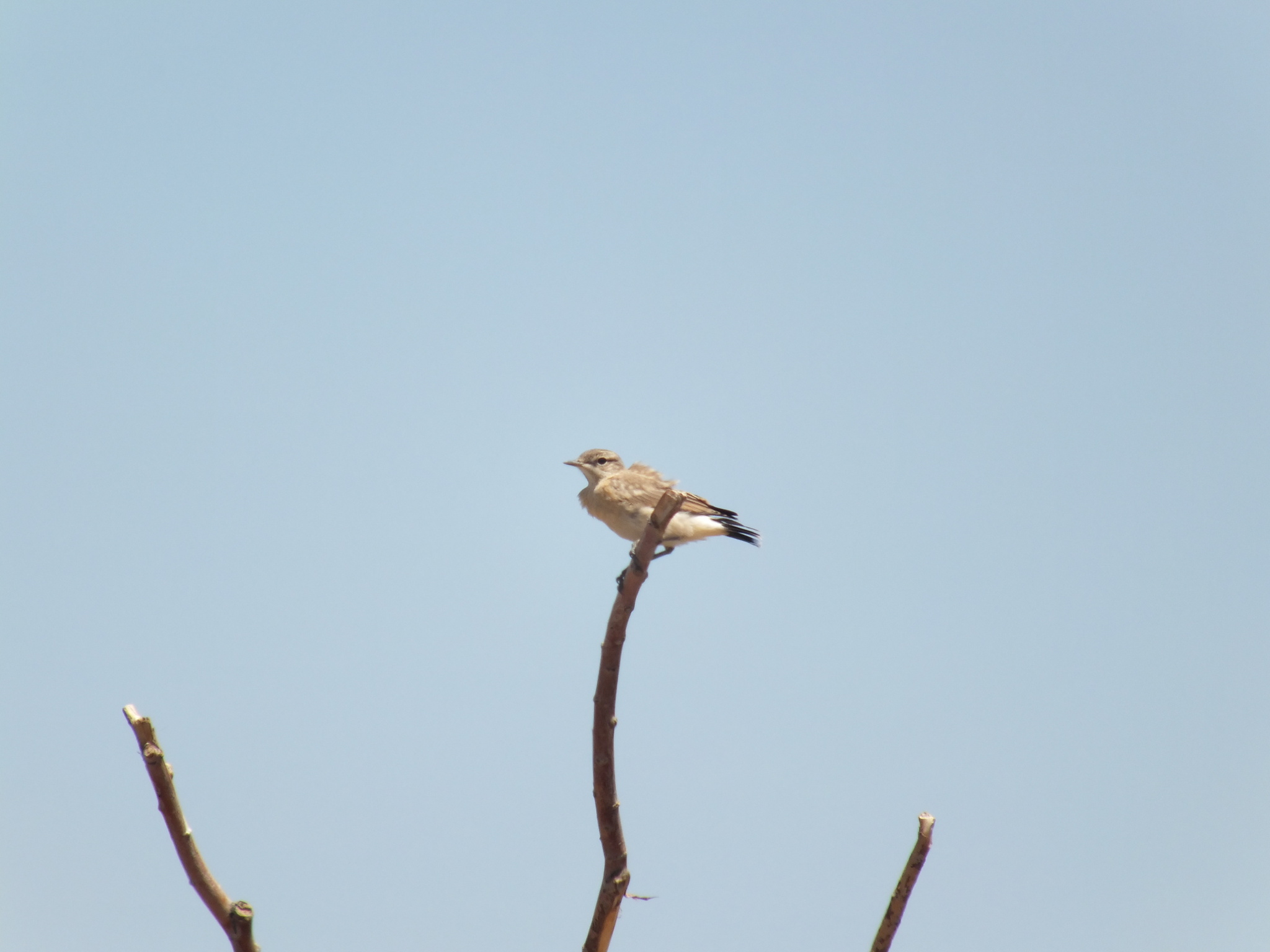
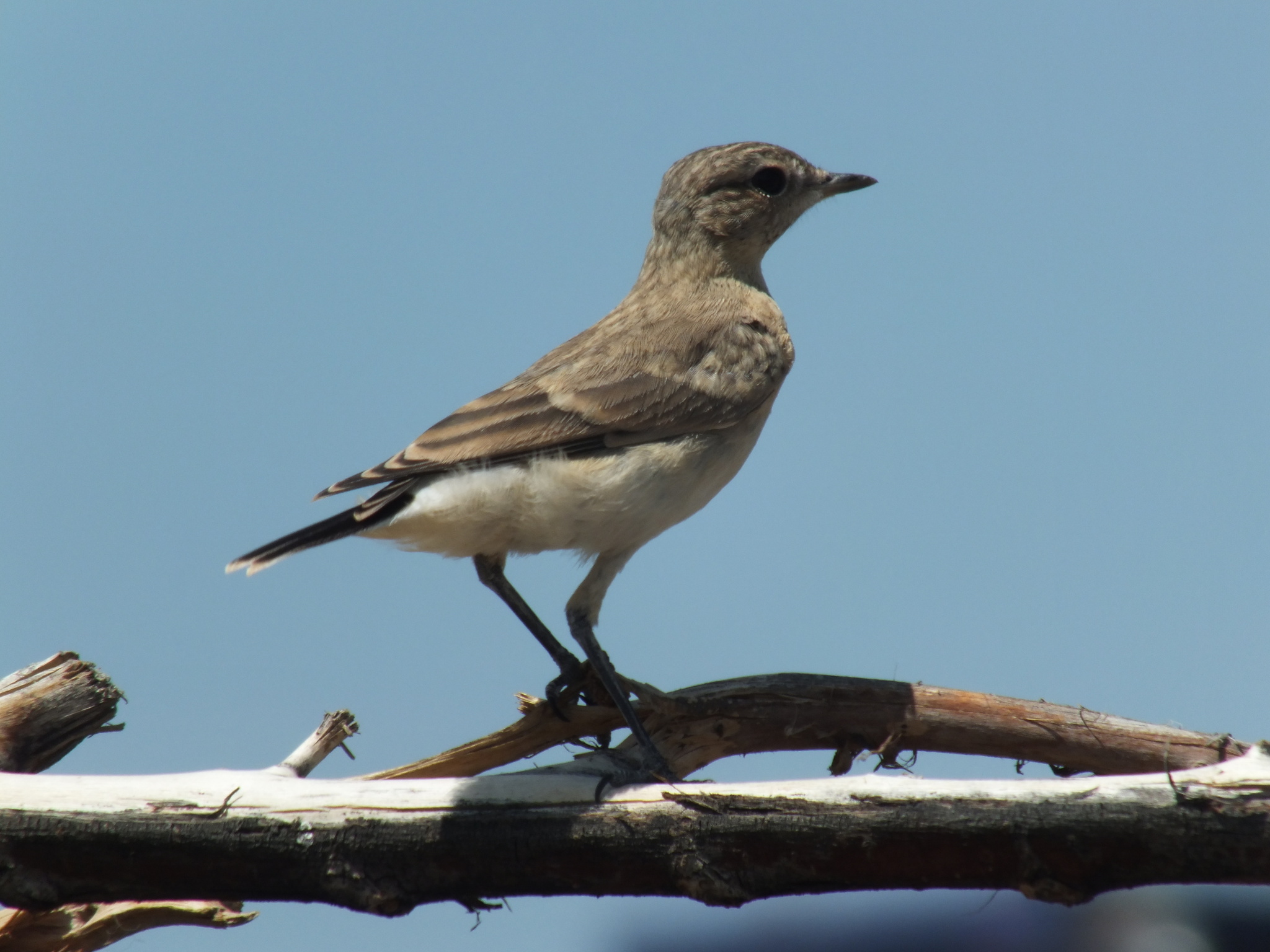
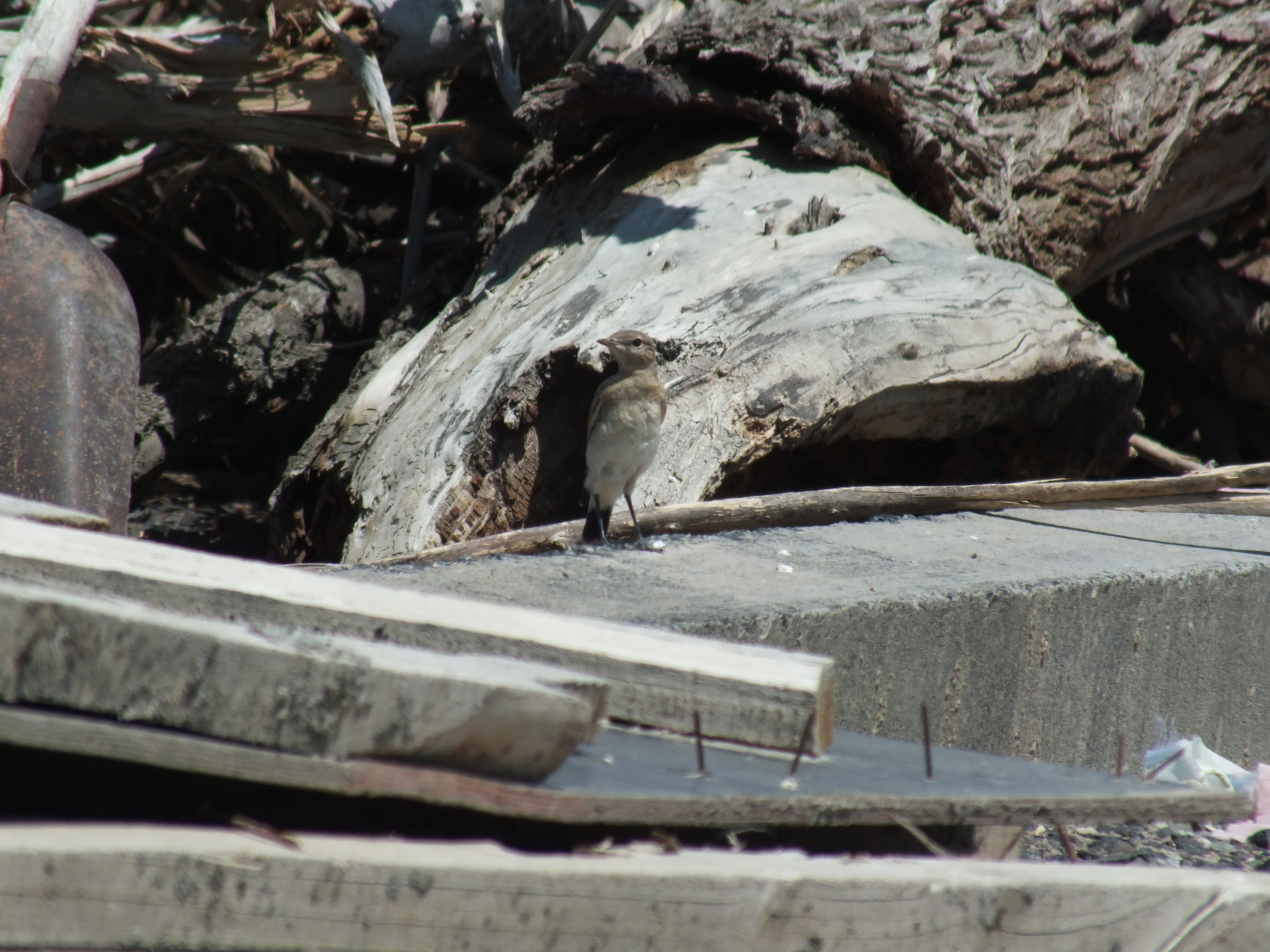
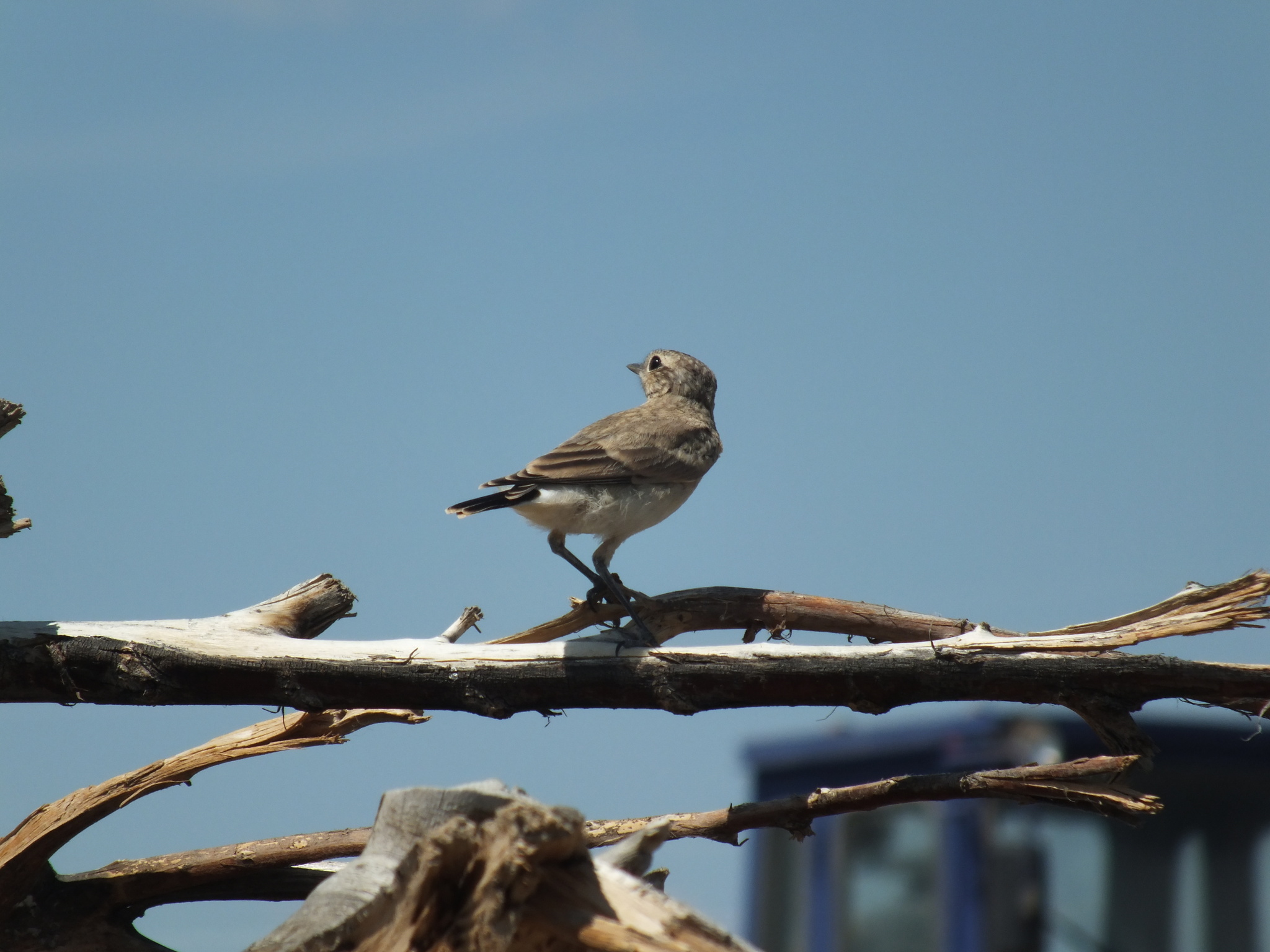
A small chat slightly larger than the European robin at 14.5-16 cm in length with a wingspan of 26-32 cm and weighing 17-30 g. The summer male has grey upperparts, a buff throat, and black wings and face mask; in autumn it resembles the female except for the black wings. The female is pale brown above and buff below with darker brown wings. Both sexes display a prominent white rump and tail with a distinctive black inverted T-pattern at the end of the tail.
Identification
Larger than the European robin with a conspicuous white rump and tail featuring a black inverted T-pattern at the tip. Males in breeding plumage show grey upperparts, black wings, and a dark face mask contrasting with a buff throat. Females are uniformly brownish above and buff below with darker brown wings. The call is a characteristic chat-like 'chack' sound. The combination of white tail pattern and habitat preference in open stony terrain aids identification.
Distribution & Habitat
Breeds across open stony habitats in Europe and east across the Palearctic to east Siberia, with isolated populations in northeastern Canada, Greenland, northwestern Canada, and Alaska. The species undertakes an extraordinary migration from sub-Saharan Africa to these northern breeding grounds, with some populations crossing the North Atlantic (3,500 km from eastern Canada via Greenland, Ireland, and Portugal to the Azores). Alaska populations travel approximately 15,000 km each way via Siberia and the Arabian Desert.
Behavior & Ecology
Insectivorous diet. Breeds at one year of age; the female builds the nest in cavities such as rabbit burrows, rock crevices, or man-made structures while the male guards and sings. Clutch size is 4-7 pale blue eggs measuring approximately 21.0 mm × 15.8 mm and weighing 2.83 g. Incubation lasts about 13 days by the female; both parents feed the young which fledge at 15 days and become independent at 28-32 days. Usually a single brood per year, though replacement clutches occur if the first is lost. Song is a whistling, crackly series; call is a sharp 'chack'.
Conservation
Rated as Least Concern on the IUCN Red List. The species has an extensive range of 2.3 million square kilometres and a large global population estimated at 2.9 million individuals across the Old World and the Americas. Population trends do not meet the criteria for decline (exceeding 30% over ten years or three generations), and numbers are considered stable.
Culture
In the 18th and 19th centuries, wheatears were considered a delicacy in England and were nicknamed the 'English ortolan'. Sussex shepherds supplemented their income by trapping and selling these birds, reflecting their historical culinary value in British rural culture.
Source: Wikipedia · CC BY-SA 3.0
Taxonomy
- Order
- Passeriformes
- Family
- Muscicapidae
- Genus
- Oenanthe
- eBird Code
- norwhe
Subspecies (3)
-
Oenanthe oenanthe leucorhoa
breeds northeastern Canada to Greenland and Iceland; winters to western Africa
-
Oenanthe oenanthe libanotica
southern Spain and Balearic Islands to Iran, Kazakhstan, and Mongolia
-
Oenanthe oenanthe oenanthe
breeds British Isles to Mediterranean and eastward to Siberia, Alaska, and northwestern Canada (Yukon); winters to central Africa
Data Sources
Species description from Wikipedia, licensed under CC BY-SA 3.0.
Bird images and sounds sourced from GBIF, contributed by citizen scientists worldwide under Creative Commons licenses.
Taxonomy data from AviList 2025.