Passeriformes / Muscicapidae / Oenanthe
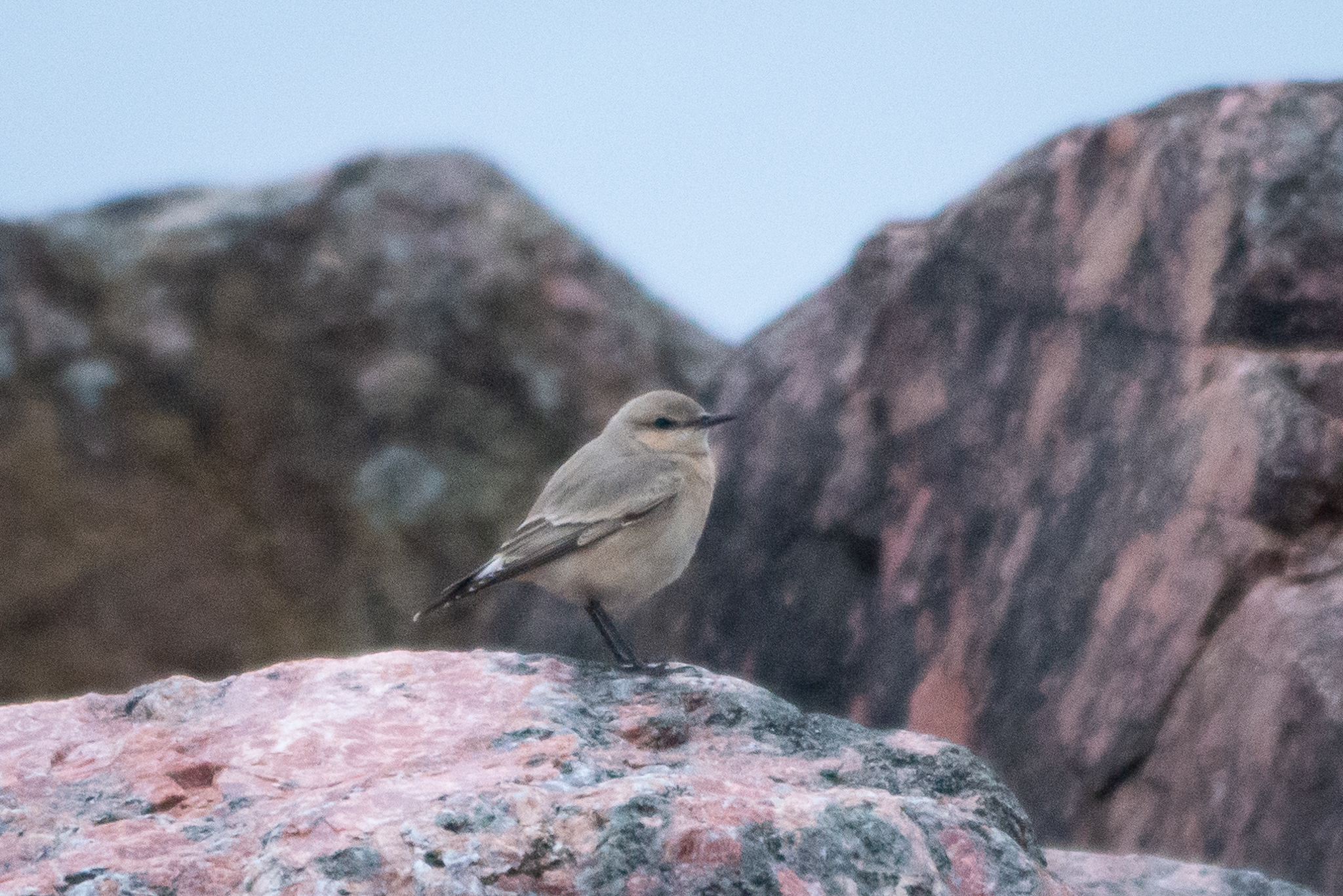
Isabelline Wheatear
Oenanthe isabellina · 沙䳭
Introduction
A small passerine bird in the family Muscicapidae, formerly classified in Turdidae. It is a migratory insectivore inhabiting steppe and open countryside. Breeding occurs from southern Russia and Central Asia to northern Pakistan, with wintering grounds in Africa and northwestern India. The IUCN evaluates the species as Least Concern.
Description
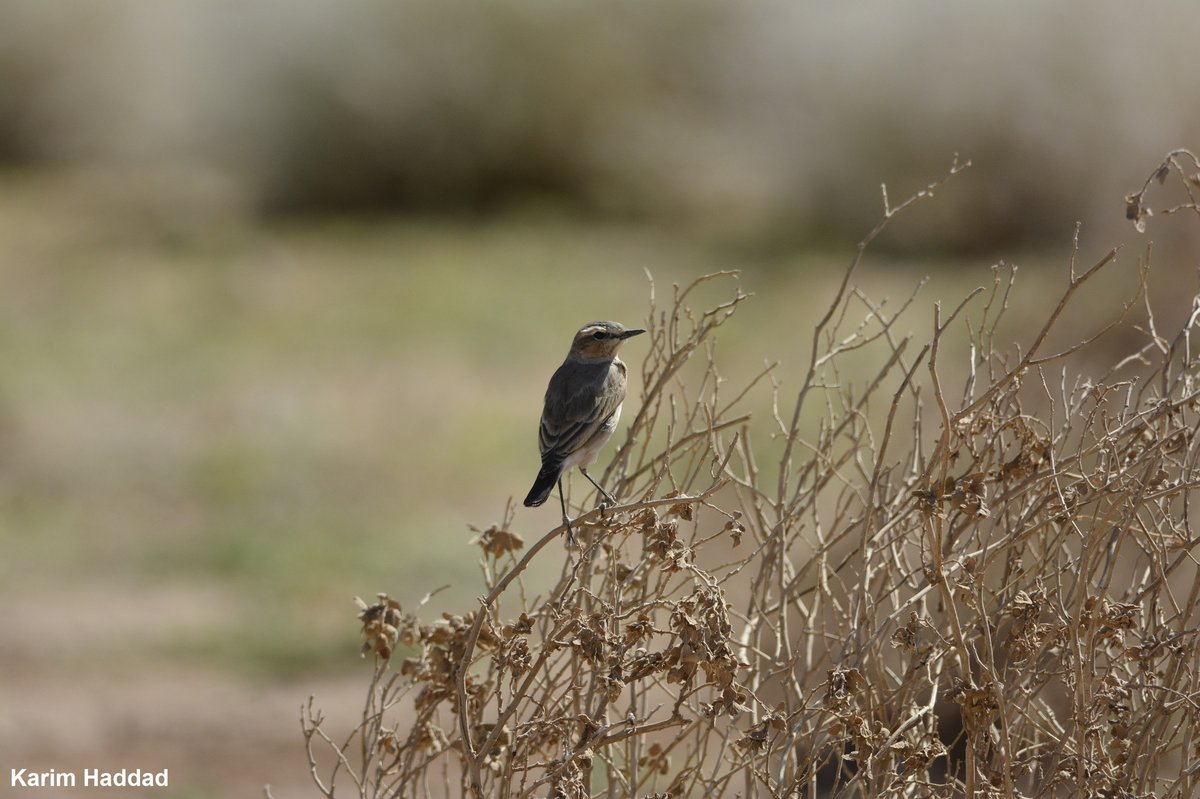
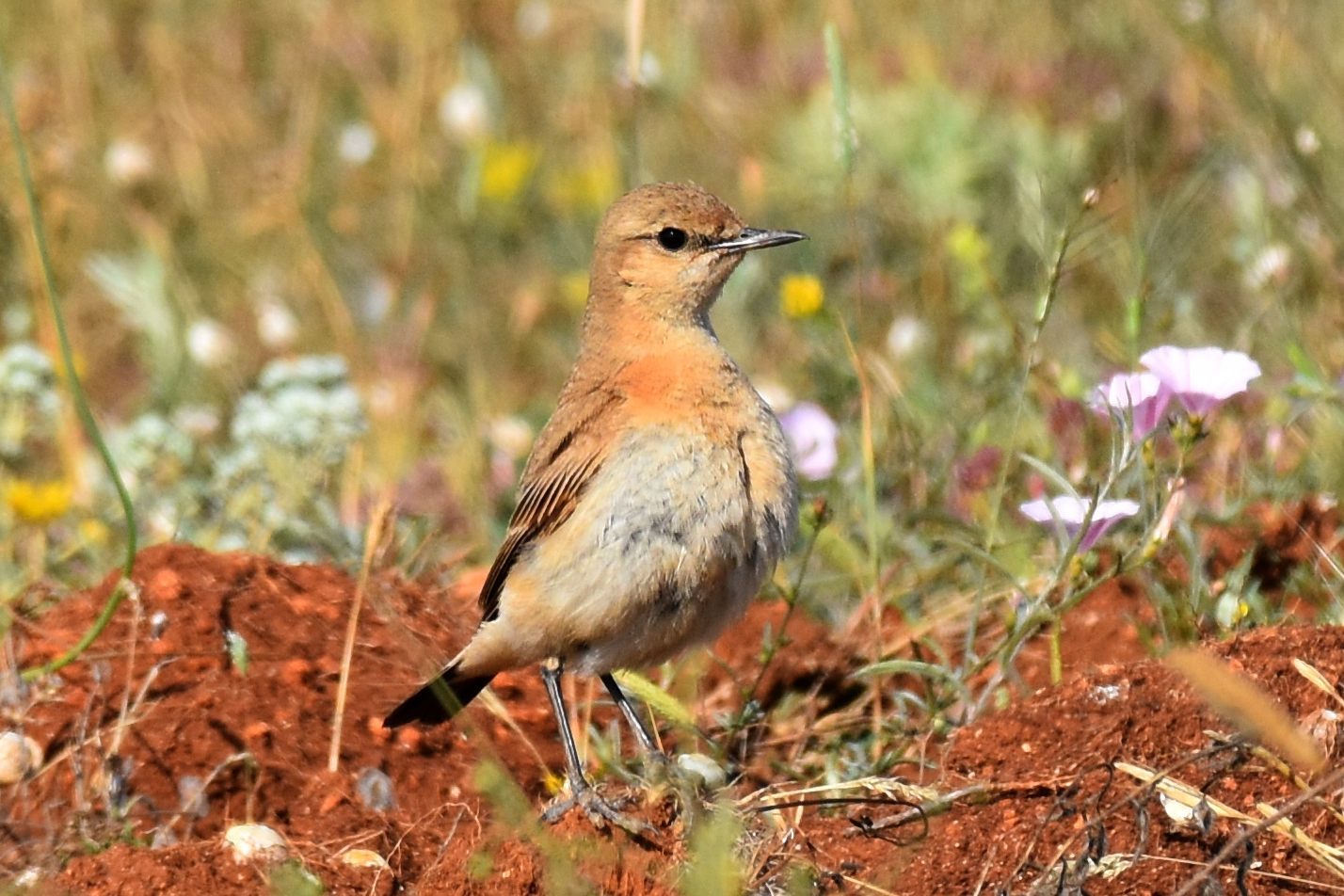
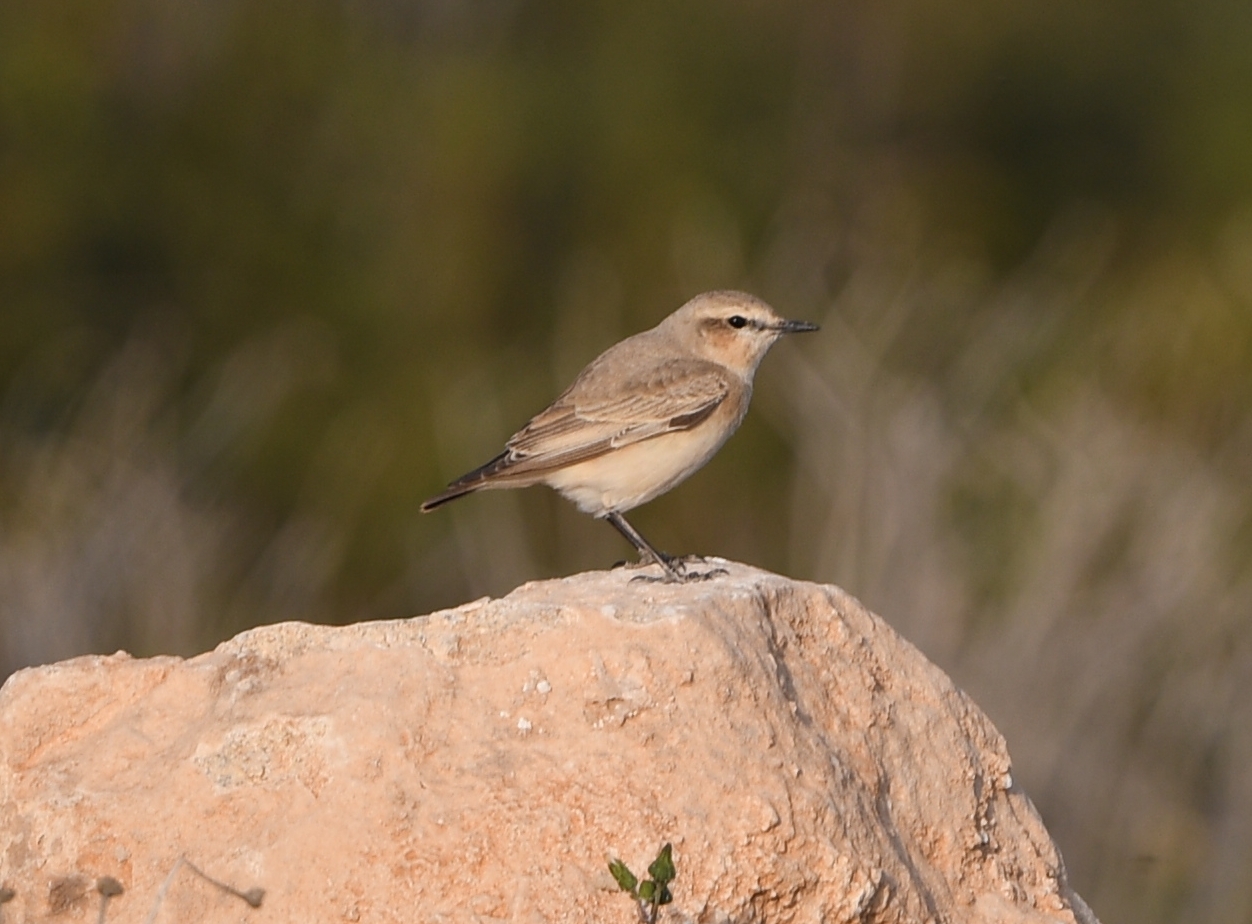
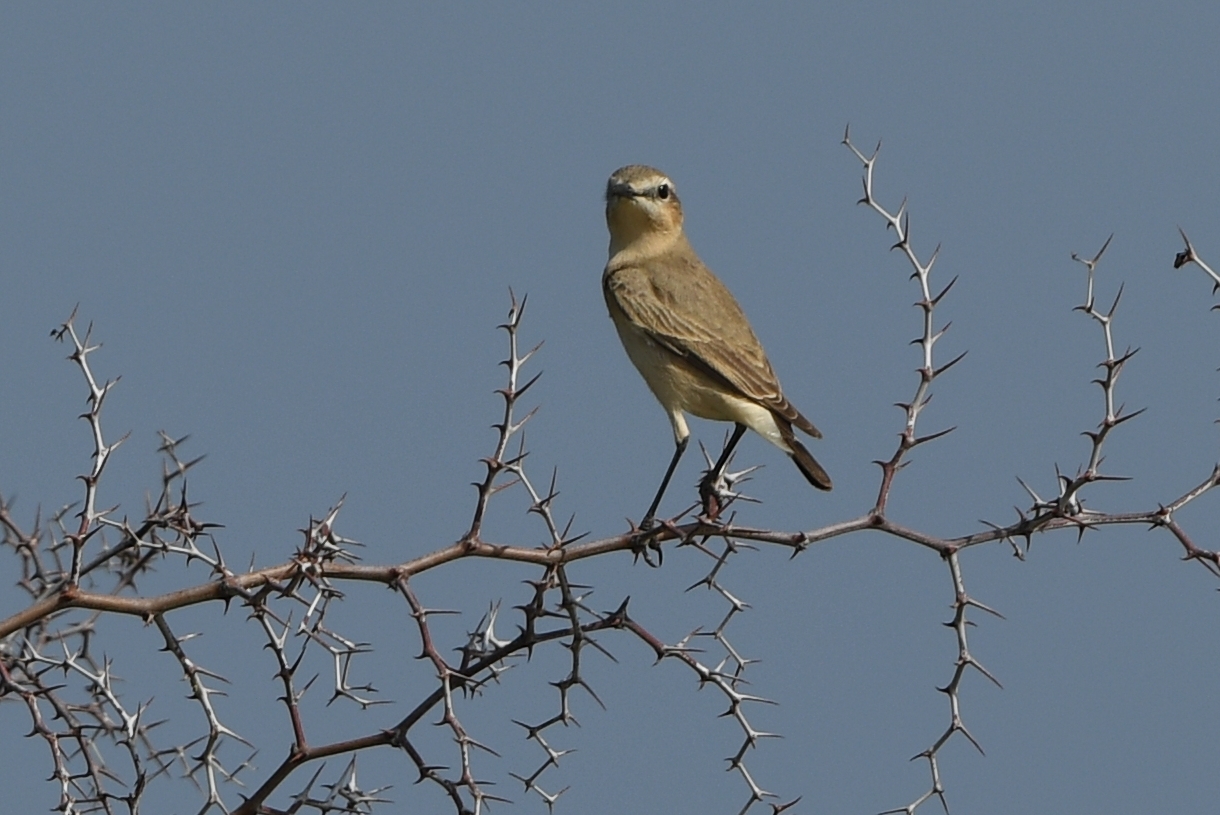
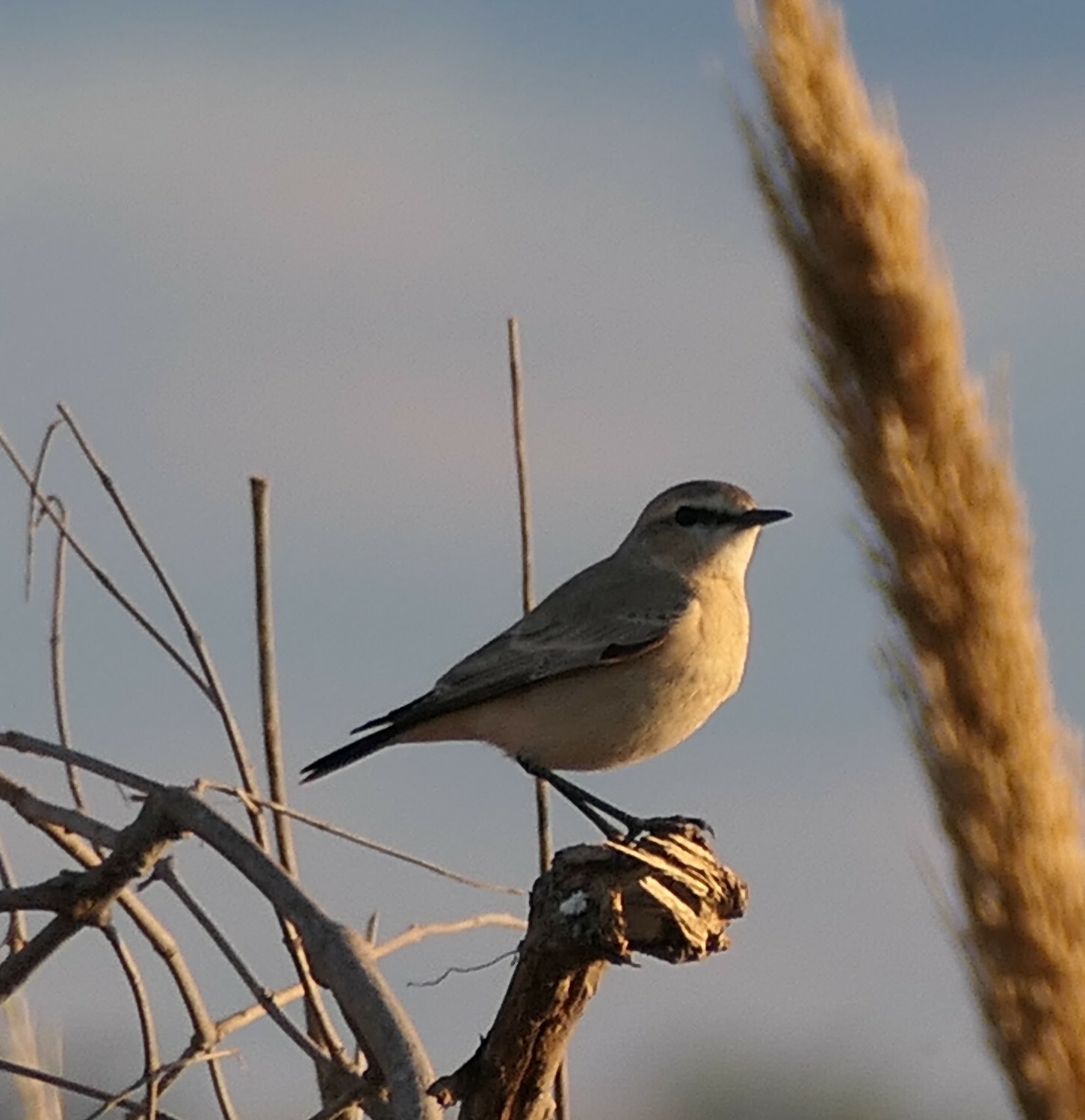
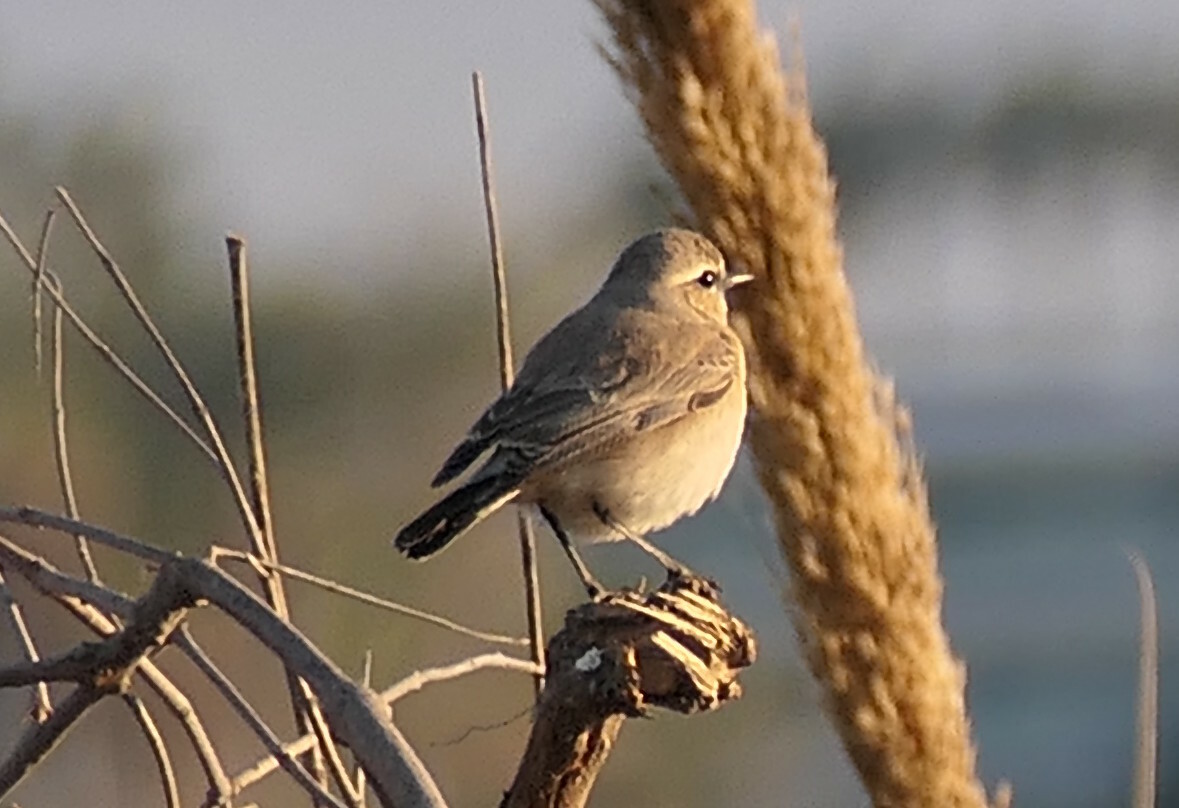
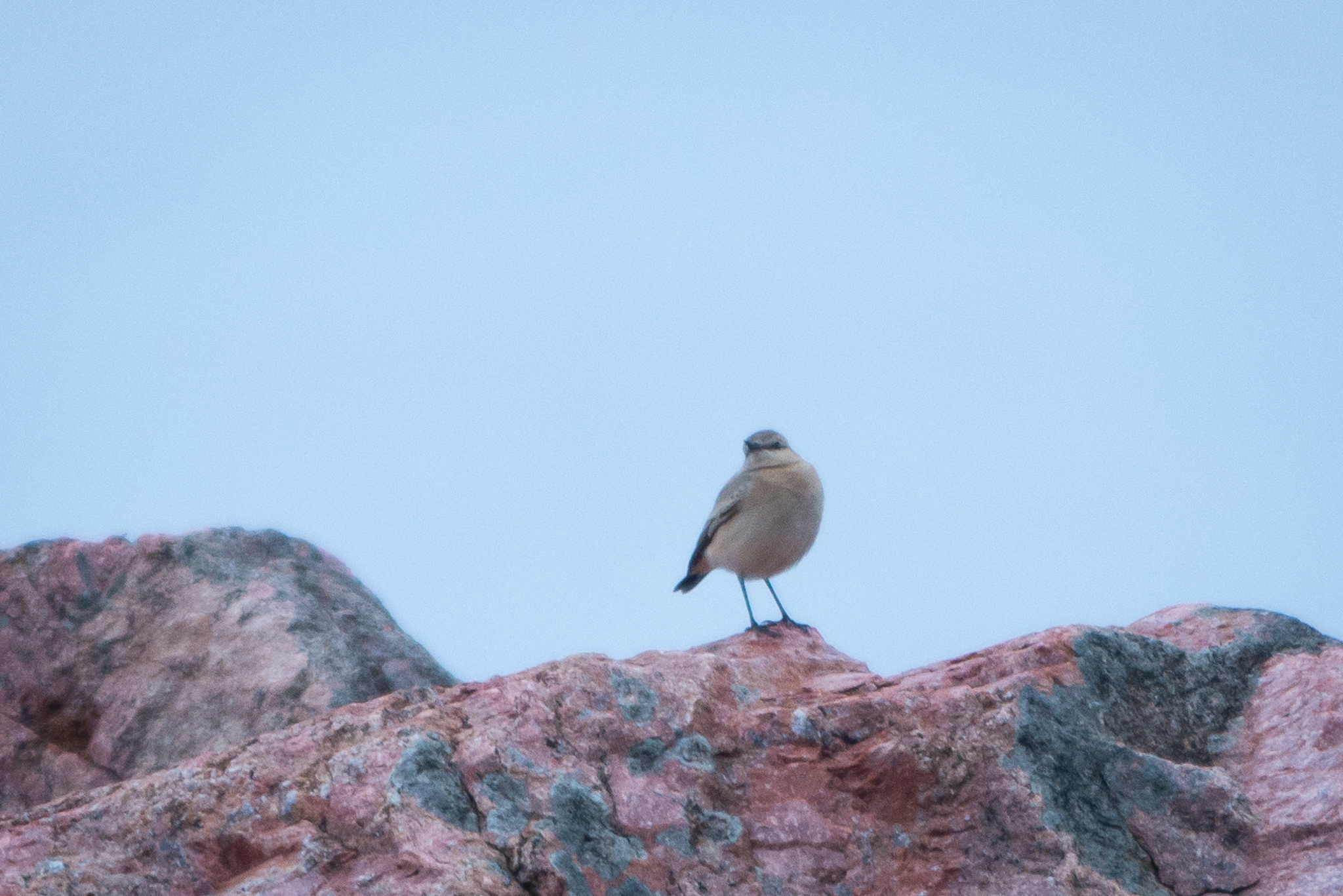
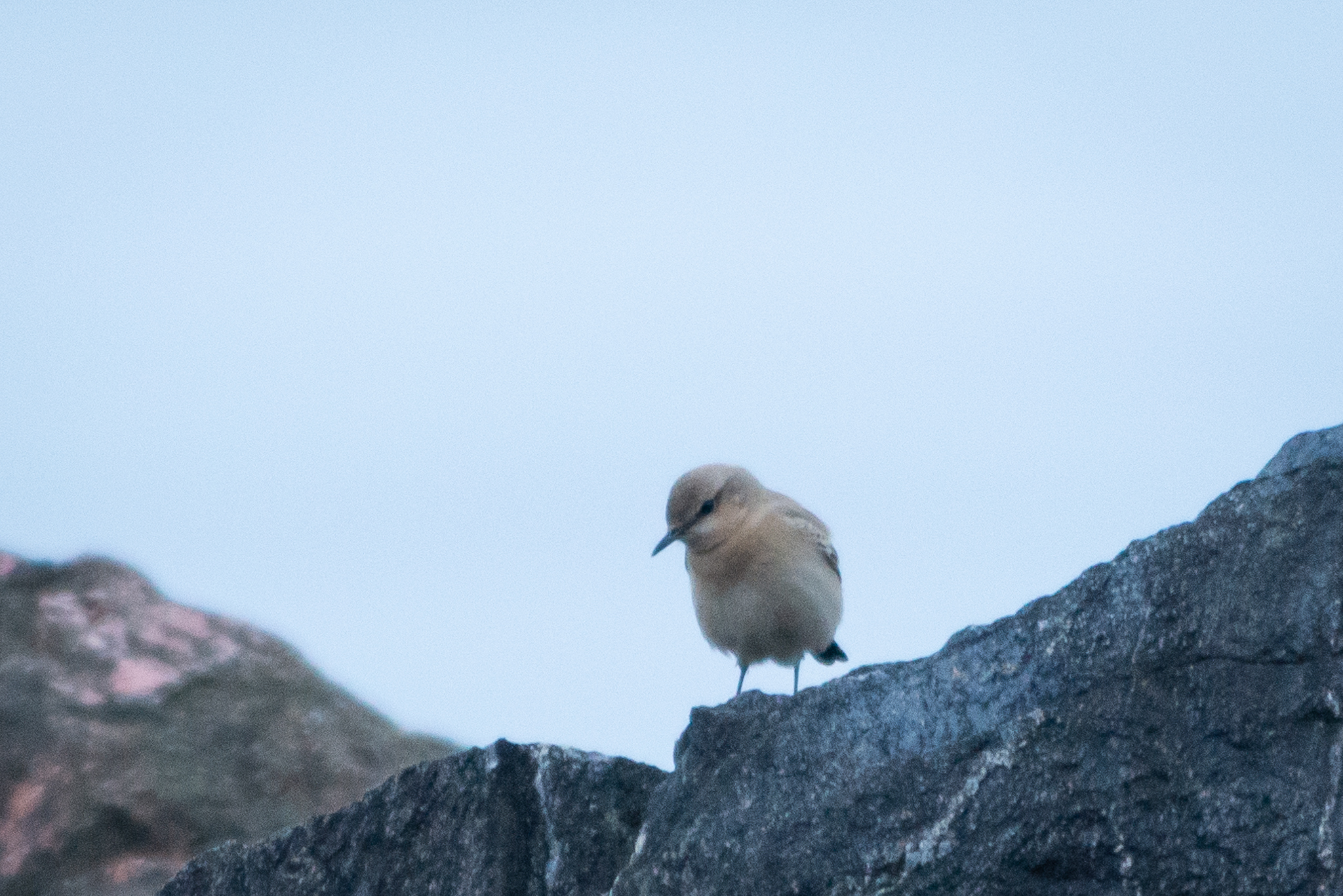
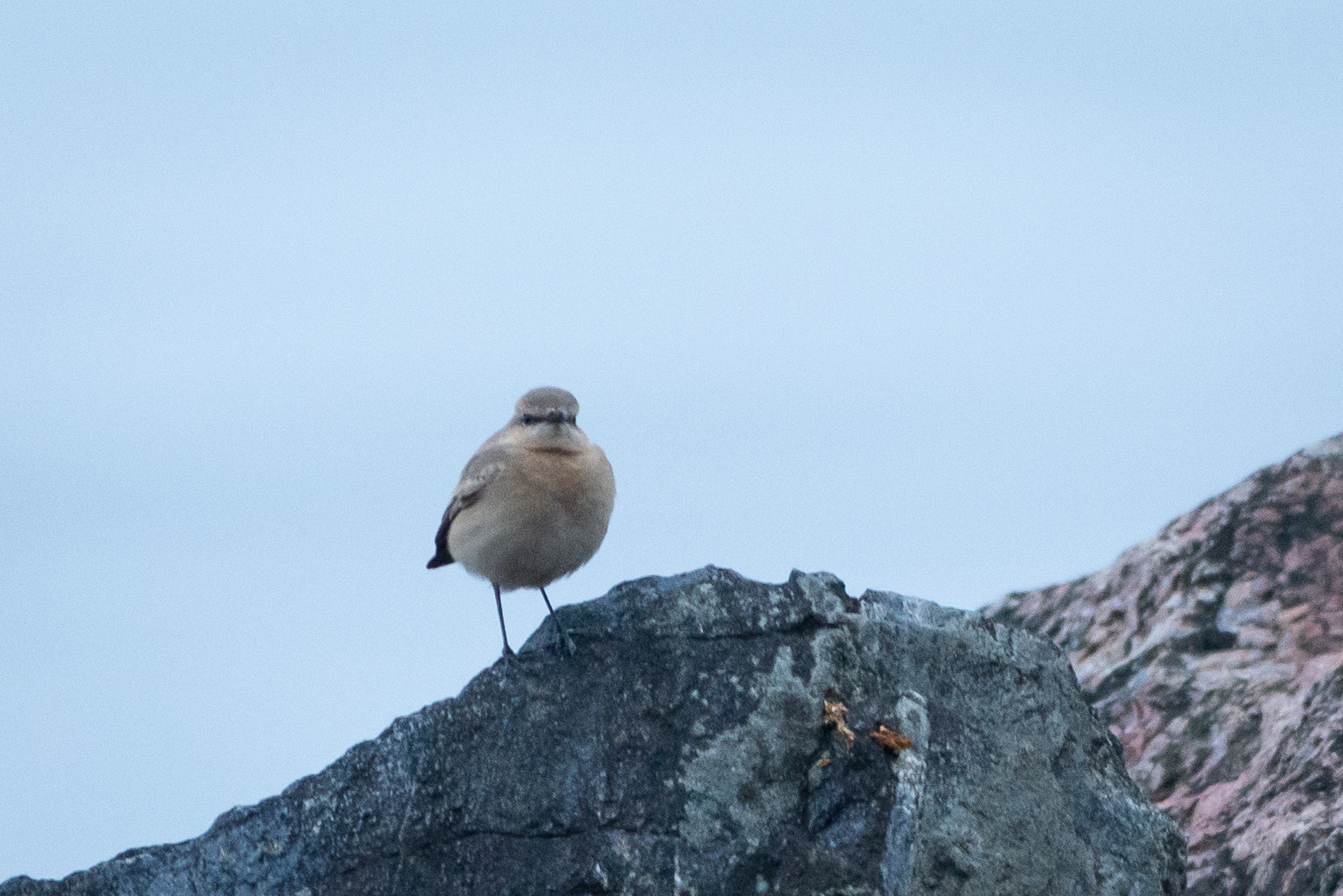
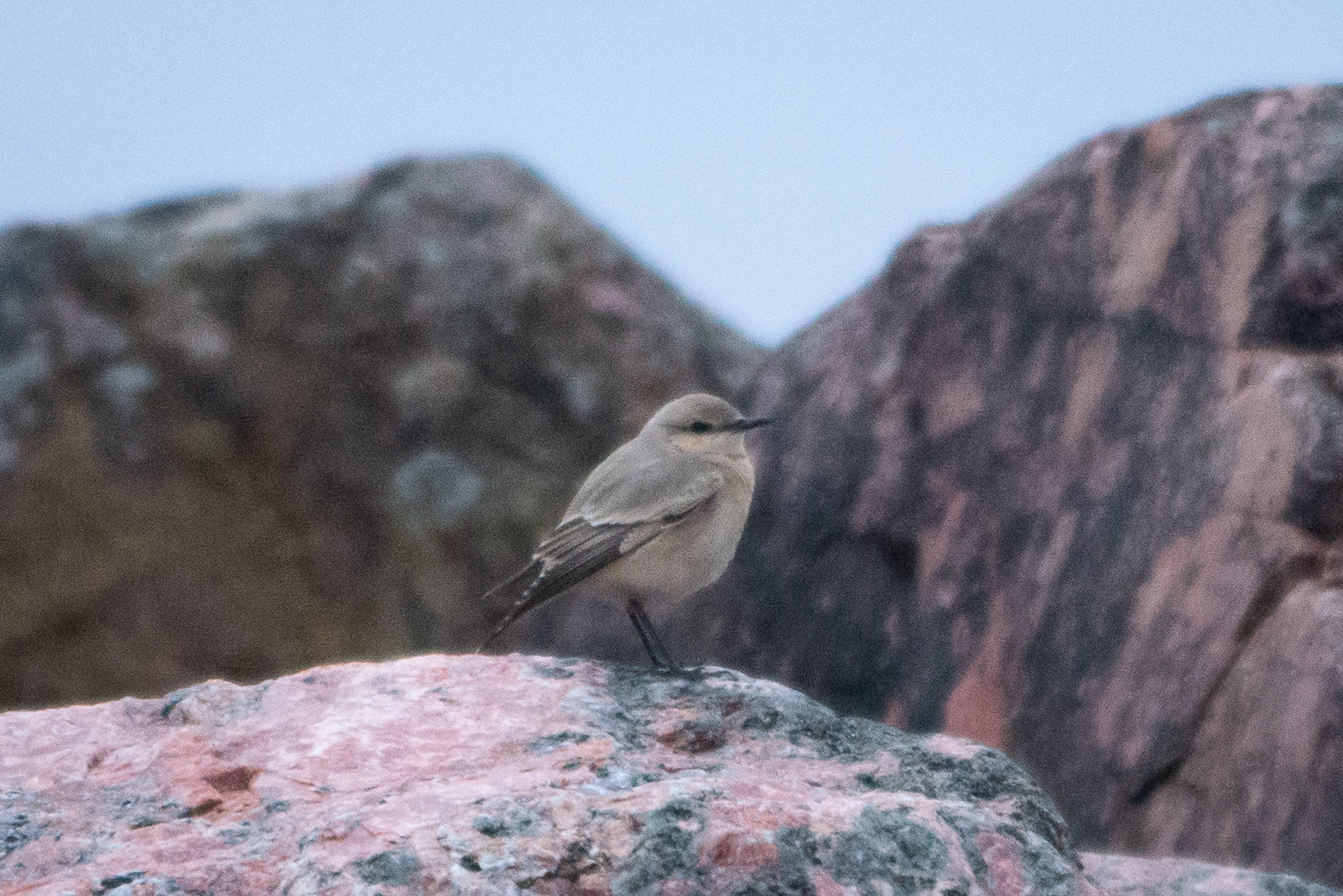
Length 15–16.5 cm (5.9–6.5 in). Sexes are similar. Upper-parts are pale sandy brown with an isabelline tinge. The lower back is isabelline; rump and upper tail-coverts are white. Tail feathers are brownish-black with buff edges and tips, and a large white base occupying more than half the length of outer feathers and about one-third of central feathers. An creamy white over-eye streak is present. Ear-coverts are pale brown. Chin is pale cream, throat pale buff, breast sandy or isabelline buff, and belly creamy white. Under tail-coverts are pale buff. Under wing-coverts and axillaries are white with dark bases. Wing feathers are brownish-black, tipped and edged with creamy buff. Beak, legs, and feet are black; irises are brown.
Identification
Larger, more upright, and paler than the northern wheatear, with a longer beak and paler ear-coverts. Resembles a female northern wheatear but has more black on the tail. Key distinction includes white axillaries and underwing coverts, whereas similar species have grey-mottled ones. Flight involves long hops and flitting; posture is upright with constant tail bobbing.
Distribution & Habitat
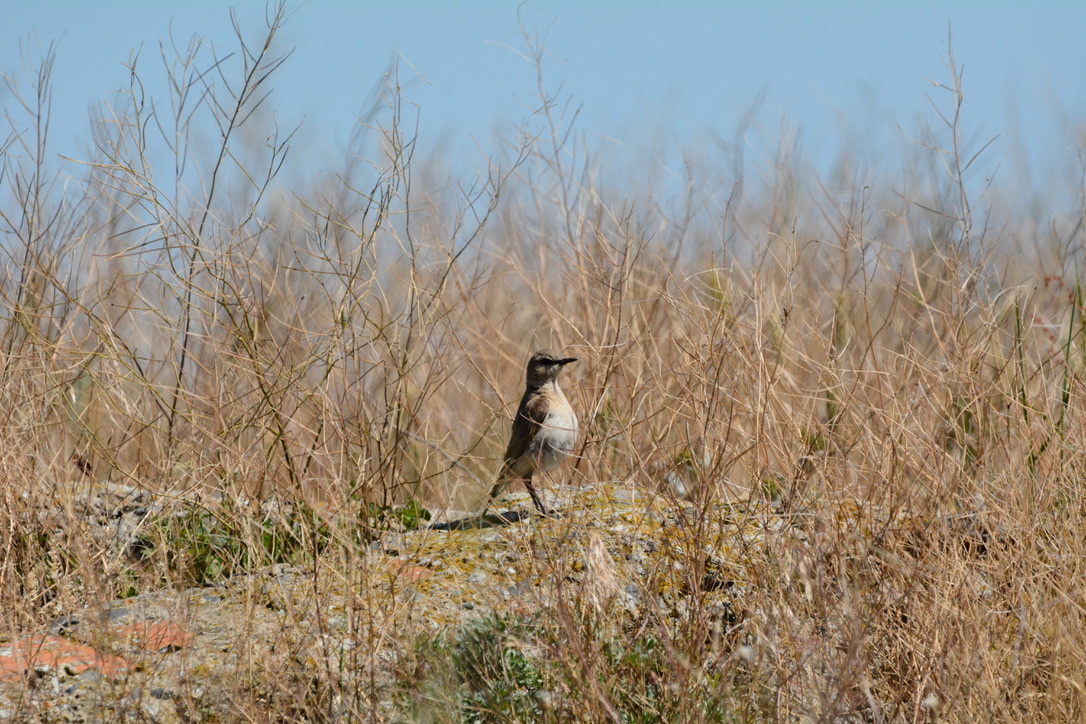
Breeding range extends across the eastern Palearctic from southern Russia, the Caspian region, Kyzyl Kum Desert, and Mongolia to Afghanistan, Iran, Iraq, Saudi Arabia, Syria, Jordan, and Israel. Winters in Africa and northwestern India. Rare vagrant to western Europe, Greece, Cyprus, Algeria, and Tunisia. Breeding habitats include open country, barren tracts, arid regions, steppes, high plateaux, and lower hill slopes. Winter habitats include semi-arid regions, open country with sparse scrub, cultivated area borders, and sandy ground.
Behavior & Ecology
Active and restless, foraging on the ground by probing soil or fluttering to catch insects. Diet consists of ants, grasshoppers, moths, flies, mites, spiders, insect larvae, and occasionally seeds. Solitary in winter; may associate with other Oenanthe species during migration. Males display by drooping and spreading wings, leaping, hovering up to 15 meters, and performing aerial stunts while singing. Nests are usually underground in empty burrows of pikas, ground squirrels, or mole rats, or in excavated burrows, lined with dried grasses. Clutch size is 4–6 pale blue eggs, sometimes with reddish speckles, averaging 22.16 by 16.6 mm. Both parents feed chicks. Breeding starts late March in Turkey and May in Central Asia, with likely two broods in southern ranges. Vocalizations include a chirp, loud whistle, and a lark-like song with croaking, whistles, and mimicry.
Conservation
IUCN Red List status is Least Concern. The population is estimated at 26 million to 378 million individuals with an extensive range of 11.7 million square kilometres. The population trend appears stable.
Source: Wikipedia · CC BY-SA 3.0
Taxonomy
- Order
- Passeriformes
- Family
- Muscicapidae
- Genus
- Oenanthe
Distribution
breeds south-central Eurasia; winters to northeastern Africa, Arabia, and India
Data Sources
Species description from Wikipedia, licensed under CC BY-SA 3.0.
Bird images and sounds sourced from GBIF, contributed by citizen scientists worldwide under Creative Commons licenses.
Taxonomy data from AviList 2025.