Passeriformes / Muscicapidae / Oenanthe
Desert Wheatear
Oenanthe deserti · 漠䳭
Introduction
A small passerine bird in the Old World flycatcher family (Muscicapidae), measuring 14.5 to 15 cm in length. It is a migratory insectivorous species inhabiting barren open countryside, steppes, deserts, and semi-arid plains up to 3,500 meters altitude. The population is stable with a breeding range of nearly 10 million square kilometers, and it is listed as Least Concern on the IUCN Red List.
Description
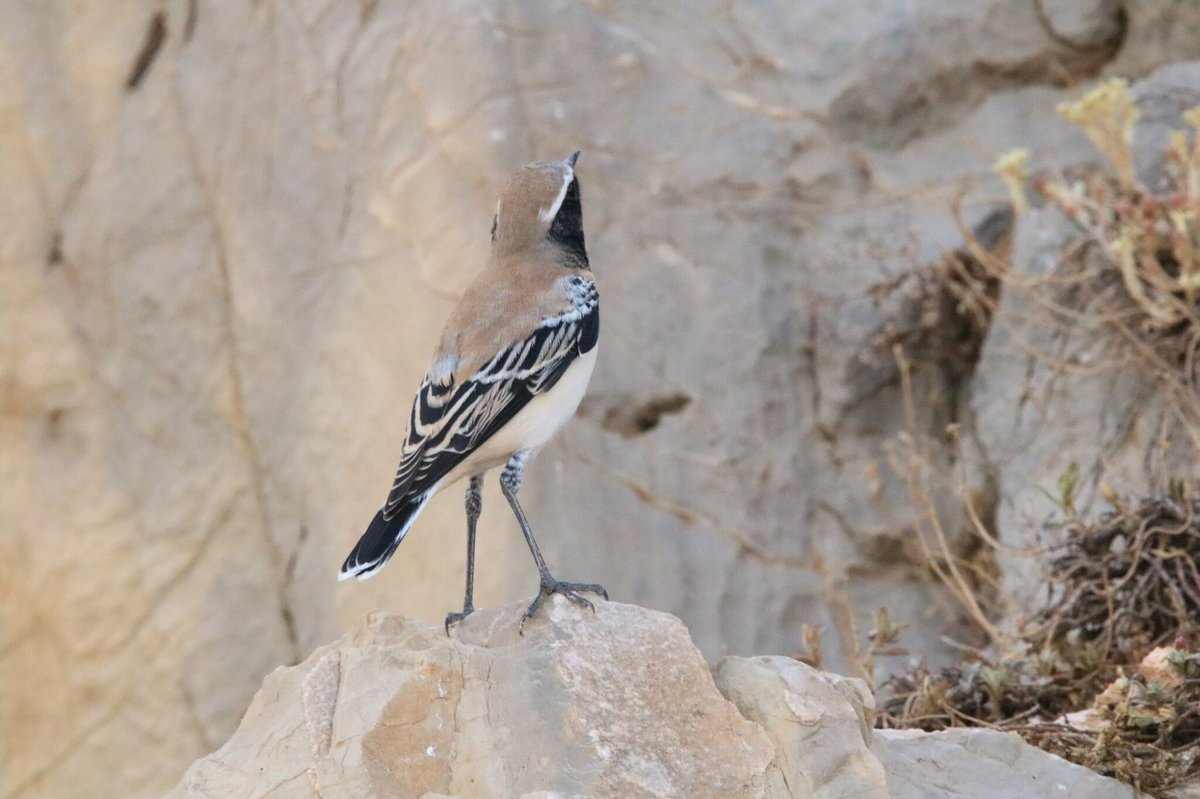
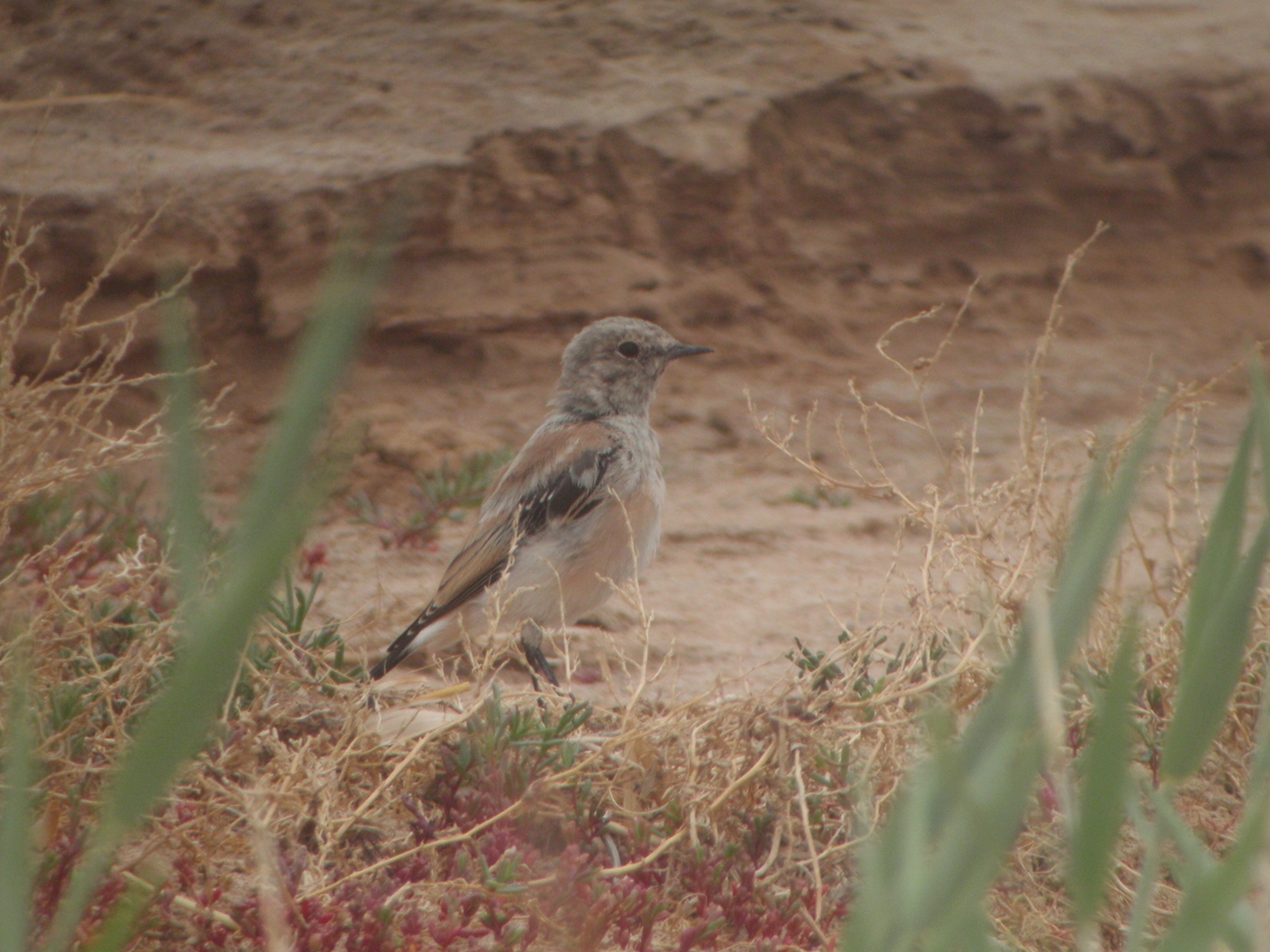
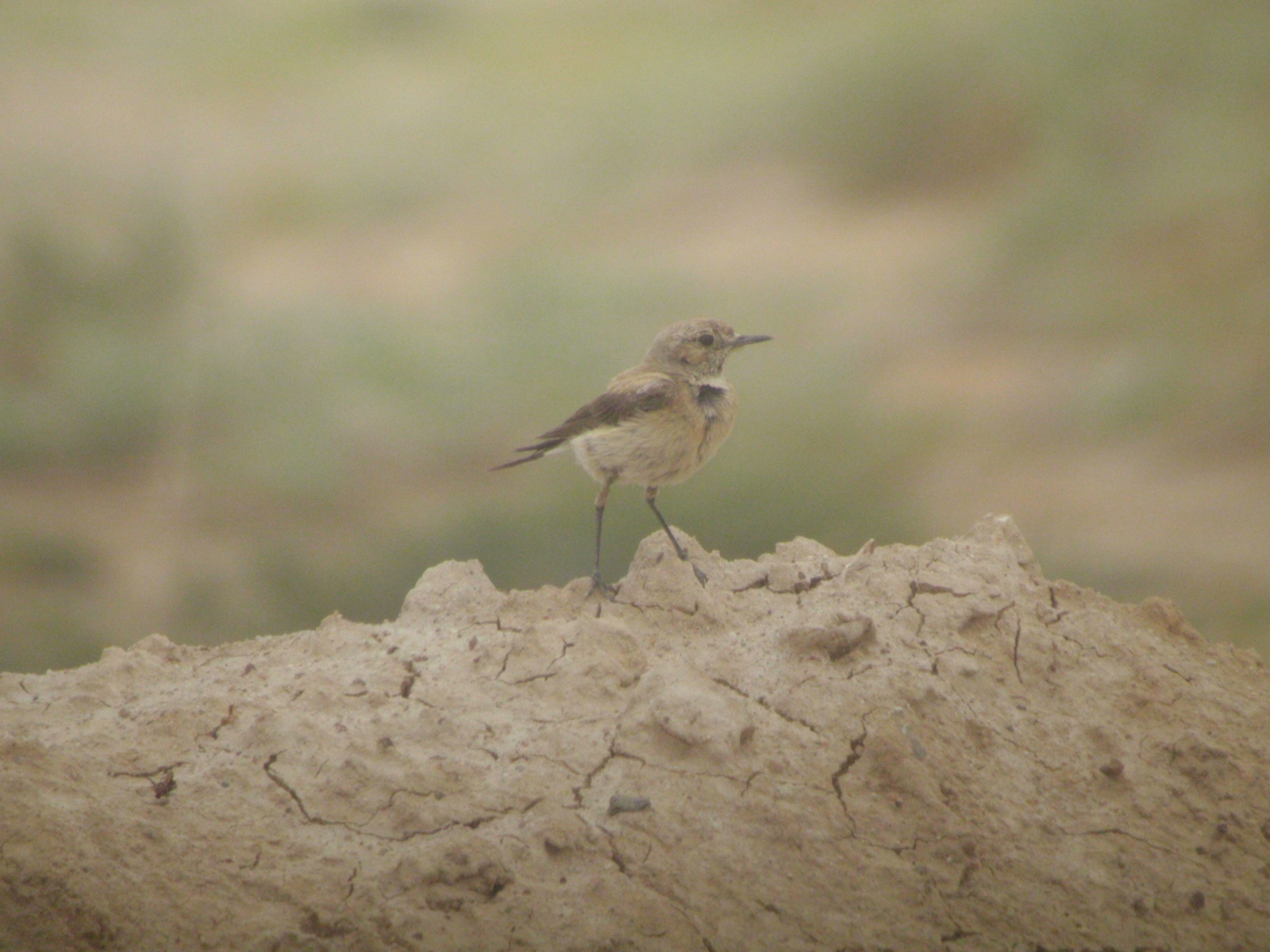
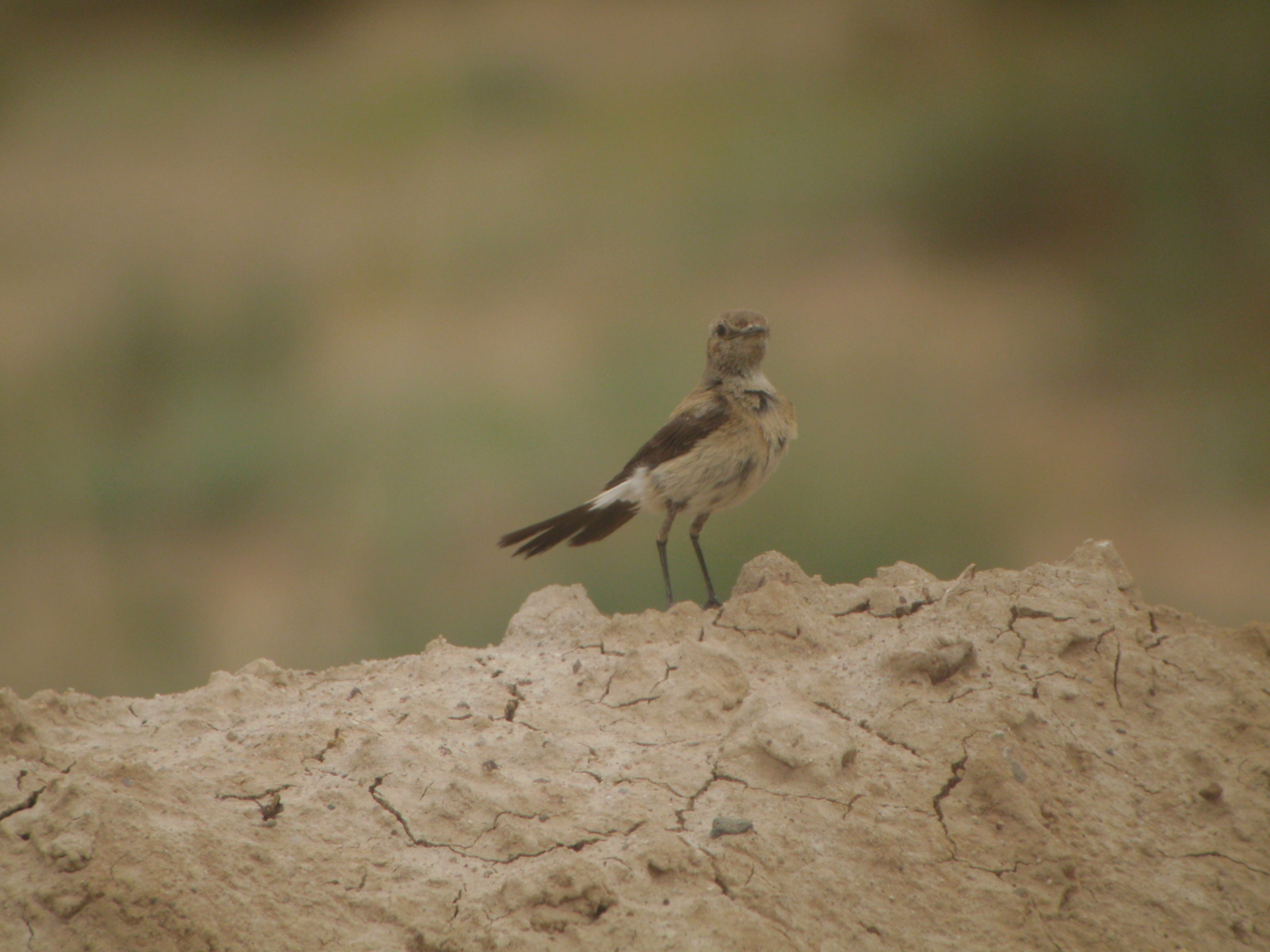
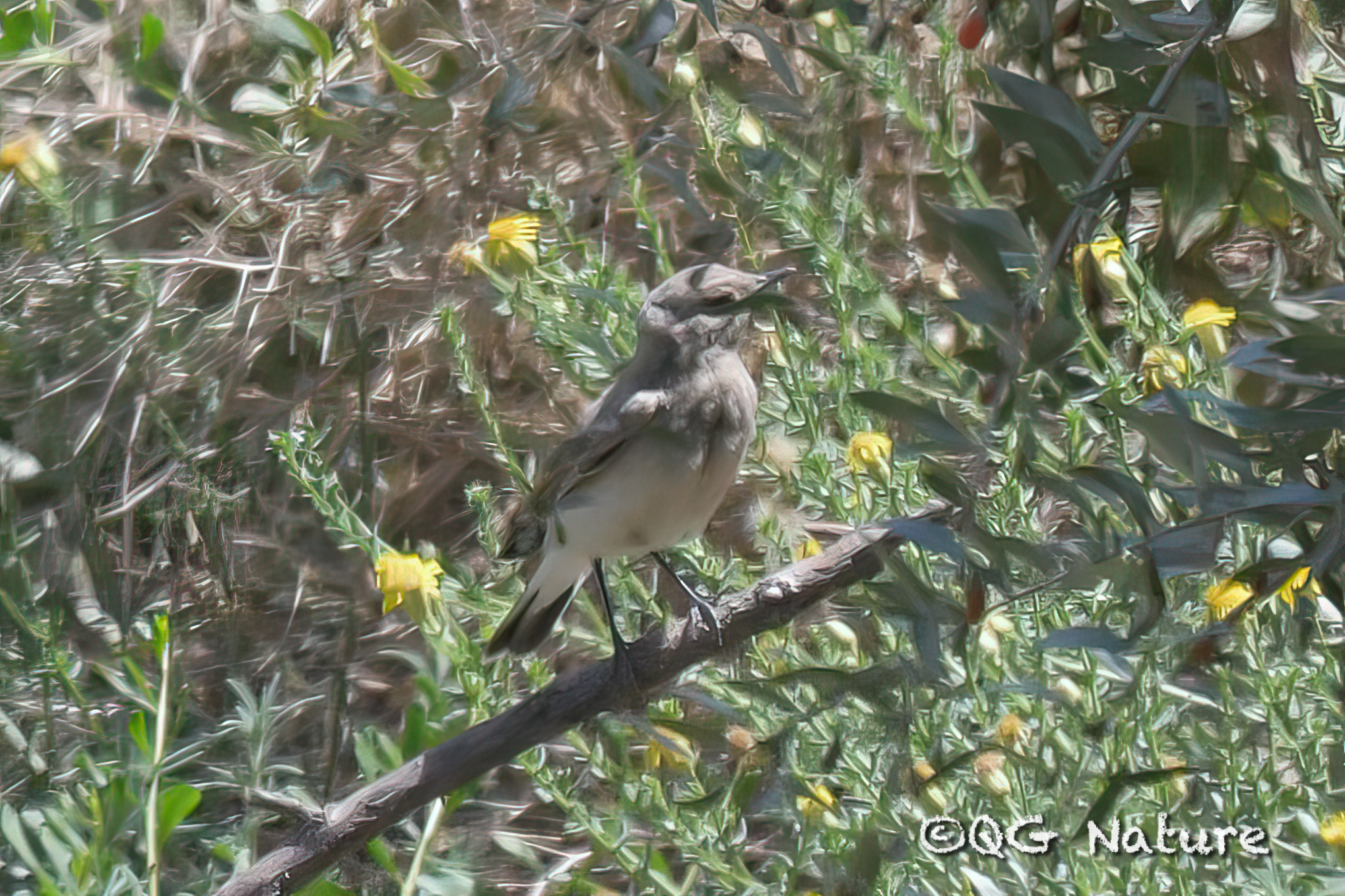
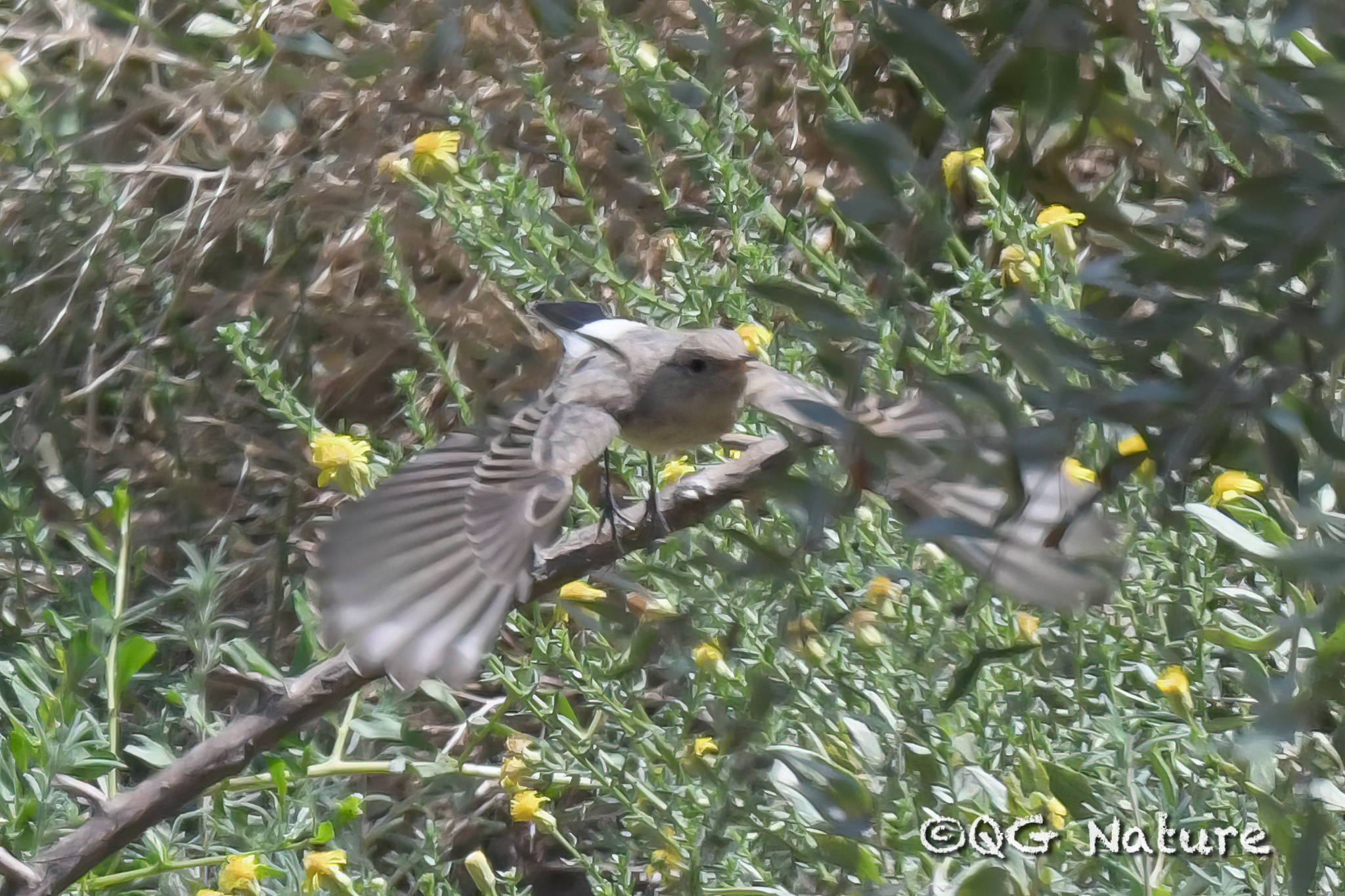
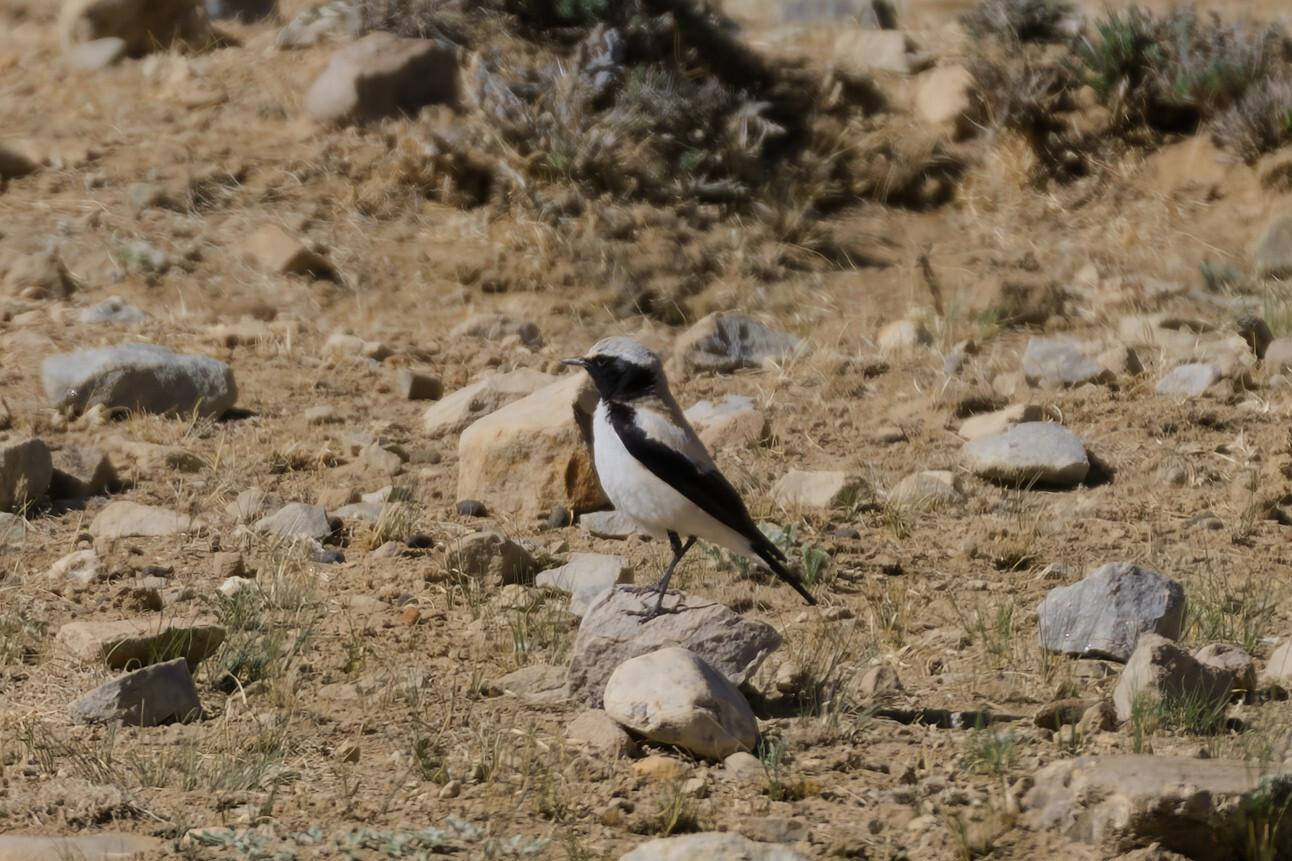
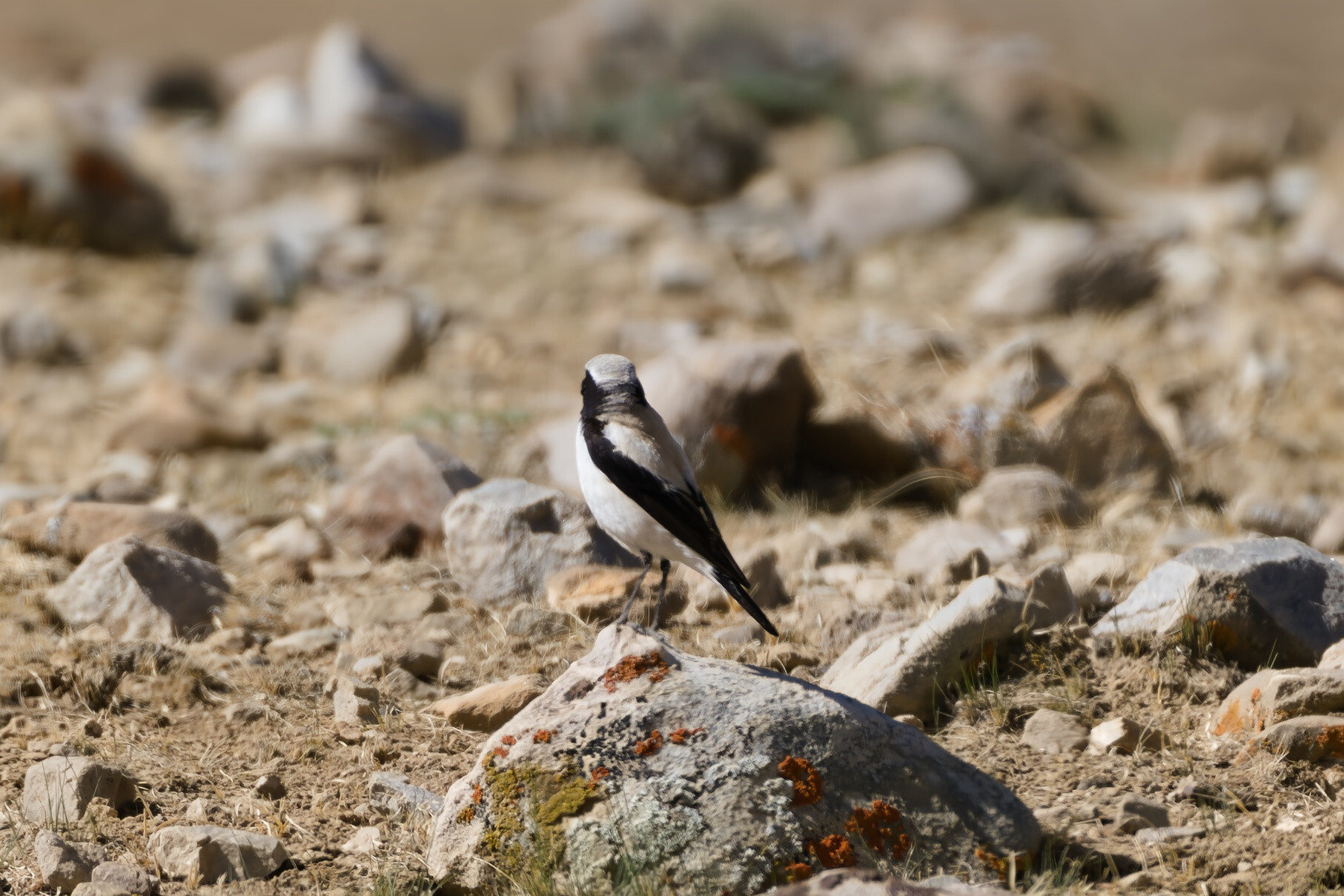
Length is about 15 cm; weight ranges from 15 to 34 grams. Adult males have pale sandy-grey heads and napes with grey-tipped feathers, richer mantle and back, and pale buff rump and upper tail-coverts. The basal third of tail feathers is white, the rest black with pale buff tips. A curved pale buff superciliary stripe extends backwards. Chin, throat, lores, and ear-coverts are black tipped with white. Breast and flanks are sandy-buff; belly and under tail-coverts are creamy-white tinged with buff. Axillaries and under wing-coverts are black tipped with white. Females are similar but have sandy brown rumps, pale buff lores/chin/throat, and brownish-black tail parts. Juveniles resemble females but have speckled upper parts due to pale-centred, brown-tipped feathers. Beak, legs, and feet are black; irises are dark brown.
Identification
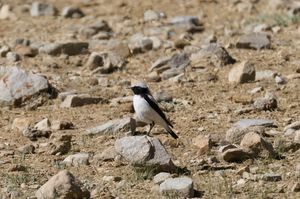
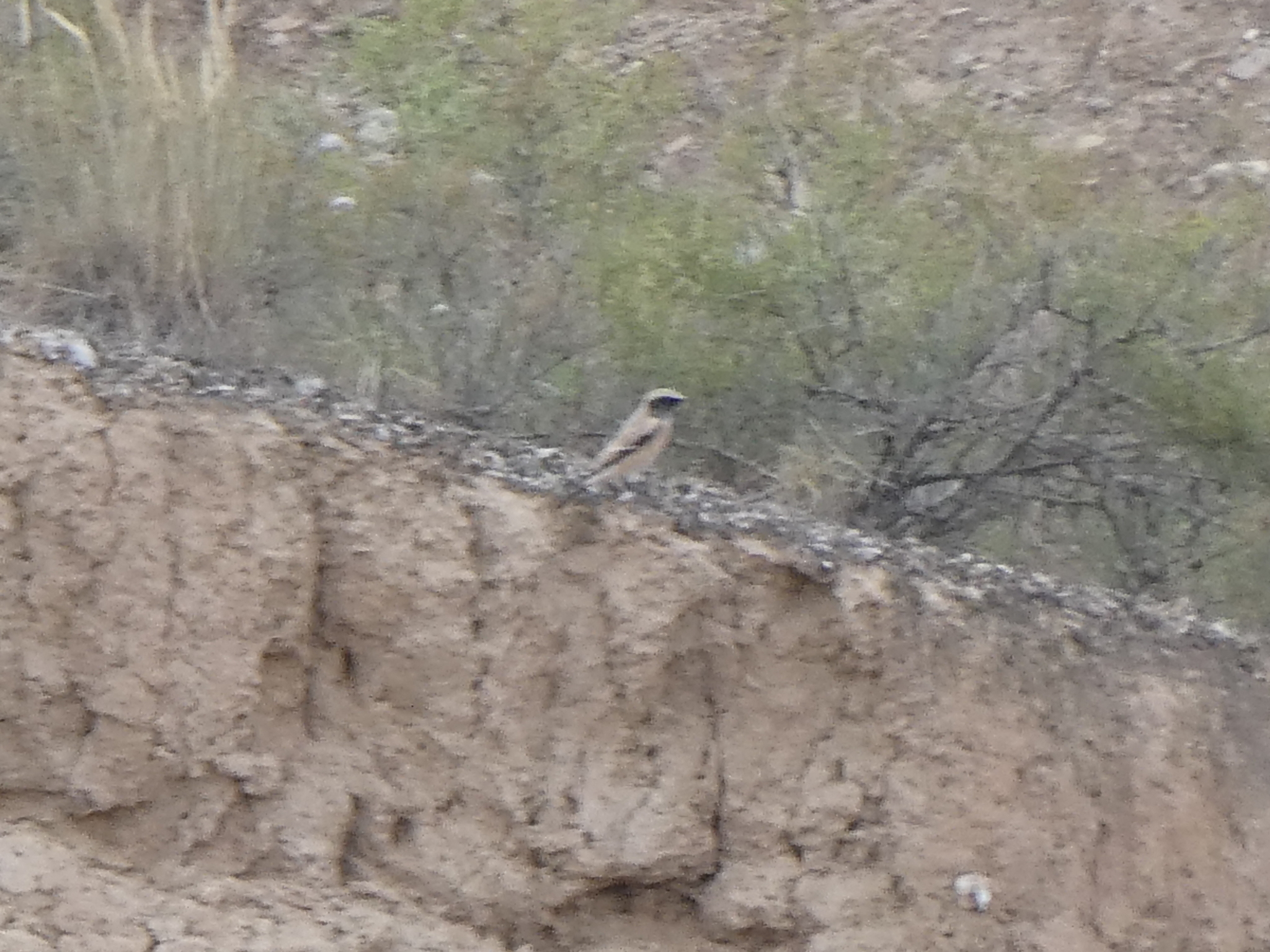
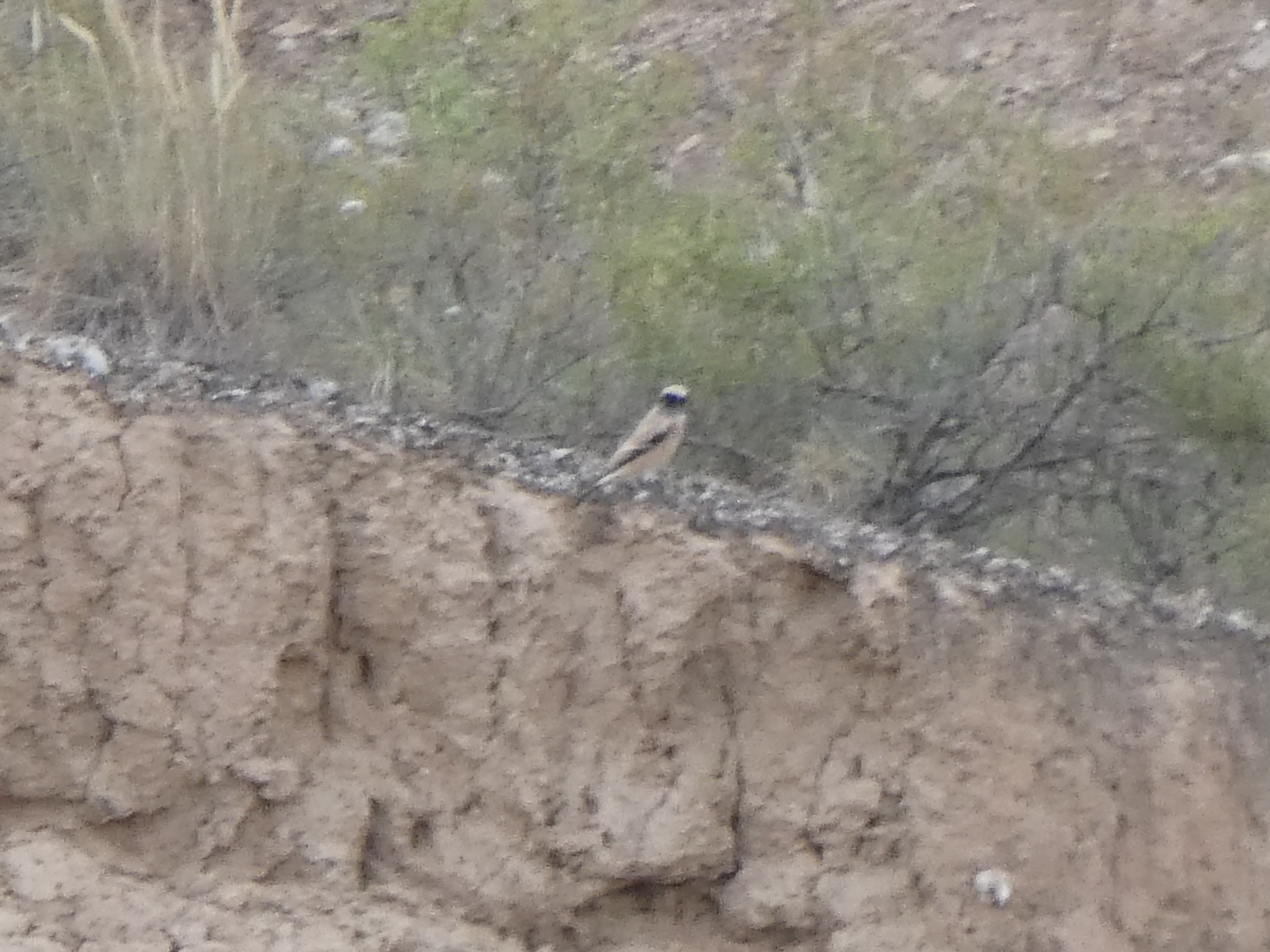
Distinguished by an entirely black tail to the level of the upper tail-coverts in both sexes and all ages. Males display black on the face and throat extending to shoulders with a distinct white superciliary stripe. Females lack black on the throat and are greyer above. In winter, male throat black is partially obscured by white feather tips.
Distribution & Habitat
Breeds in the Sahara, northern Arabian Peninsula, Levant, Transcaucasia, Iran, Afghanistan, Mongolia, Central Asia, West China, Kashmir, Tibet, and northeastern Africa. Eastern races migrate south to overwinter in Pakistan, Iraq, the Arabian Peninsula, and northeastern Africa. Western populations are largely resident, though some in Morocco migrate. Habitat includes deserts, steppes, saltpans, dried river beds, and rocky wastelands up to 3,500 meters. Rare vagrant to western Europe and the United Kingdom.
Behavior & Ecology
Feeds largely on insects such as ants, beetles, caterpillars, flies, and ant-lion larvae, picked from the ground or caught in air; seeds are also consumed. Perches on bushes or eminences before darting to prey; can hover briefly. Displays by fluttering wings when unable to cope with large prey. Breeds in late April or May. Nests in crevices, hollows under rocks, or concealed behind vegetation using grasses, mosses, stems, fine roots, hairs, and feathers. Clutch consists of four (occasionally five) pale bluish eggs with rusty speckles, measuring approximately 20.1 by 15 mm. Incubation is mainly by the female; both sexes care for young.
Conservation
Listed as Least Concern on the IUCN Red List of Threatened Species. The breeding range is estimated at nearly 10 million square kilometers, and the population appears to be stable.
Source: Wikipedia · CC BY-SA 3.0
Taxonomy
- Order
- Passeriformes
- Family
- Muscicapidae
- Genus
- Oenanthe
Subspecies (3)
-
Oenanthe deserti deserti
resident in northeastern Egypt (Sinai) and the Levant; breeding from southern Türkiye eastward, discontinuously, to Afghanistan, central and southern Kazakhstan, Mongolia, and northwestern and western China (northwestern Xinjiang, Gansu, Shaanxi, and central Inner Mongolia); wintering in northeastern Africa (including Socotra) and southwestern Asia
Data Sources
Species description from Wikipedia, licensed under CC BY-SA 3.0.
Bird images and sounds sourced from GBIF, contributed by citizen scientists worldwide under Creative Commons licenses.
Taxonomy data from AviList 2025.