Desert Wheatear
Oenanthe deserti
漠䳭
Introduction
The desert wheatear (Oenanthe deserti) is a small passerine bird formerly classified with thrushes but now placed in the family Muscicapidae (Old World flycatchers). It occurs in desert and semi-desert habitats across a range extending from North Africa to Central Asia. This species measures 14.5 to 15 centimetres in length and is insectivorous. It inhabits barren, open terrain where it typically perches on low vegetation to scan for prey, executing darting flights to capture ground-dwelling insects. It occurs as a rare vagrant in western Europe.
Description
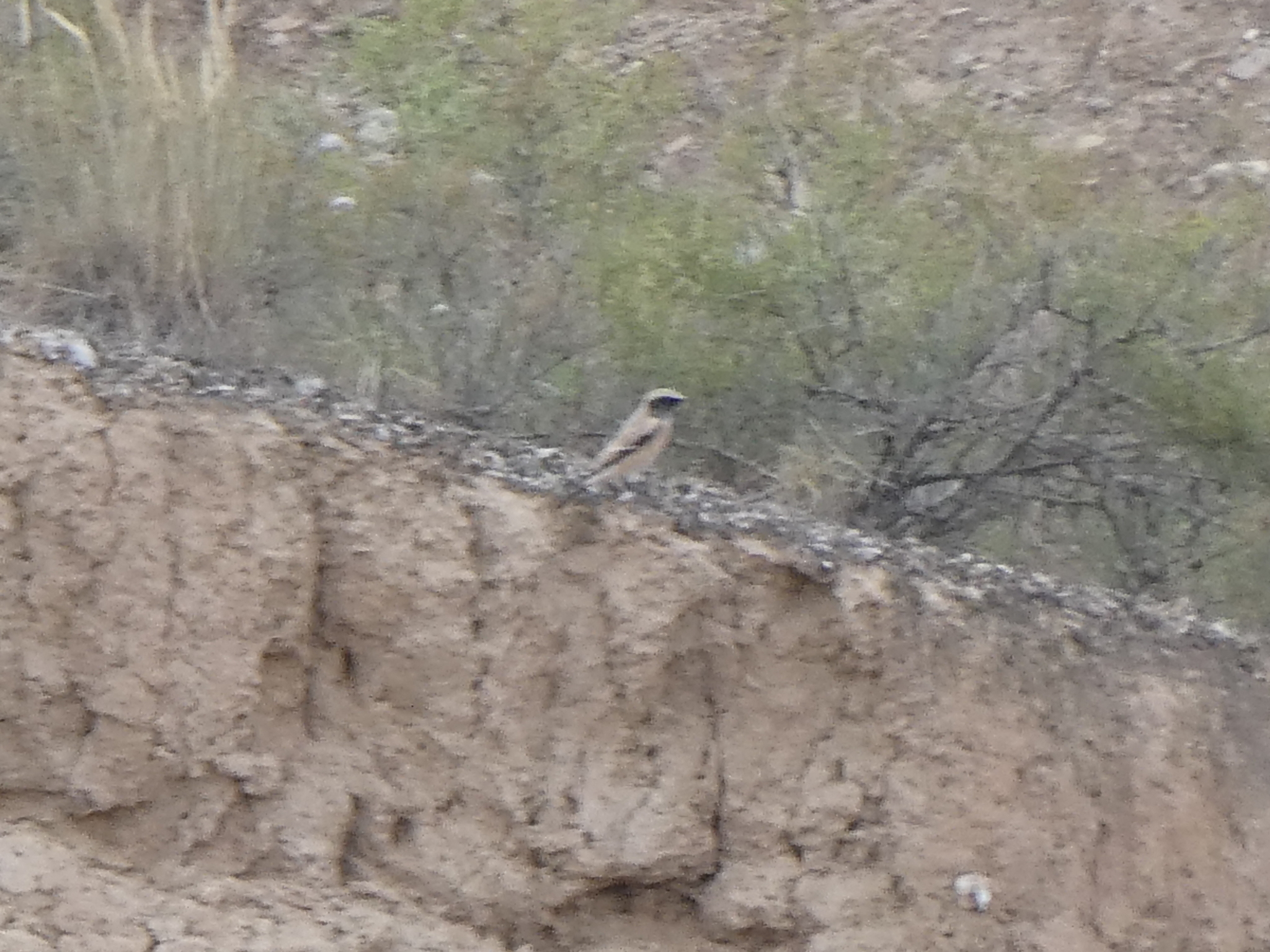
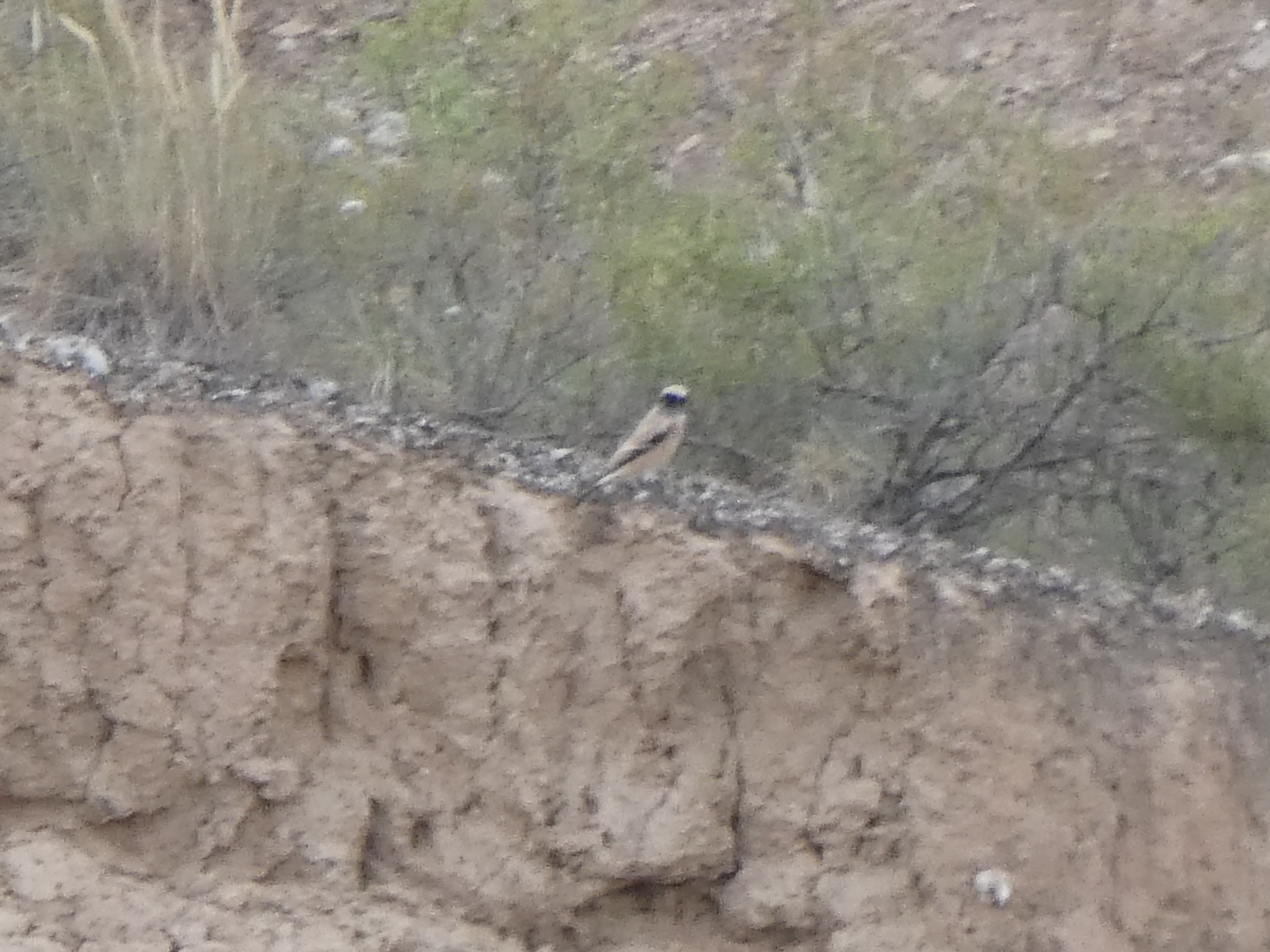
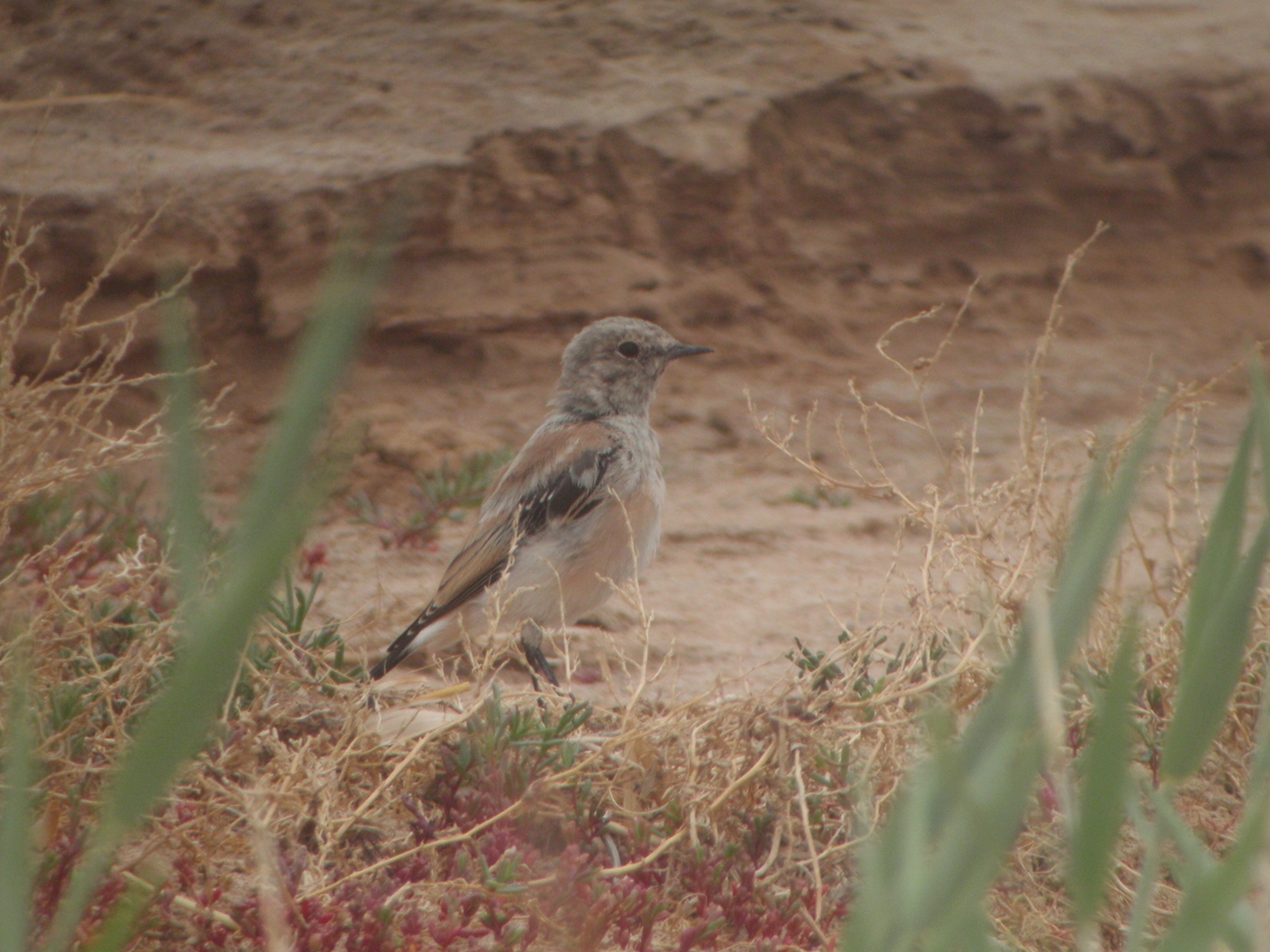
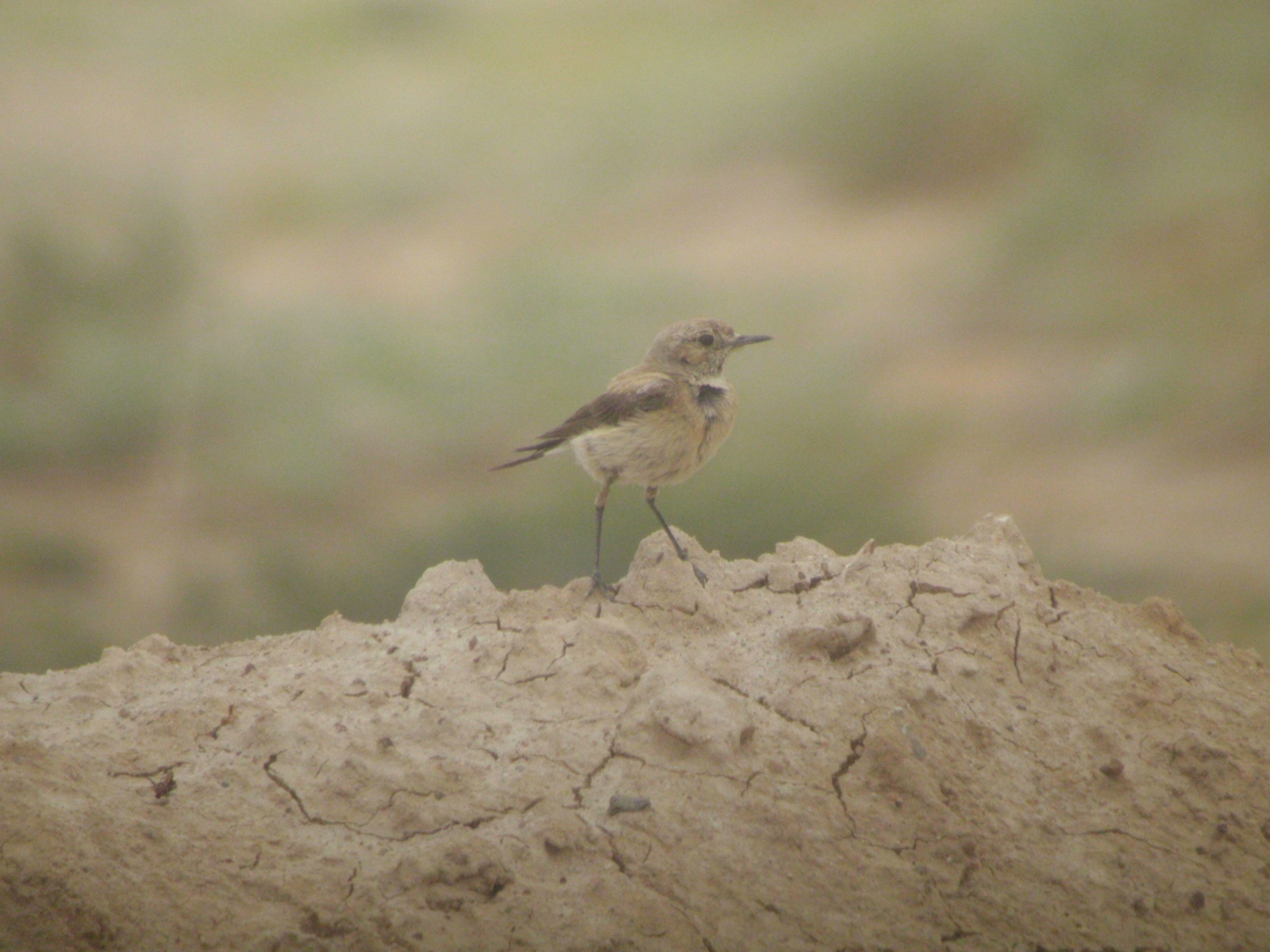
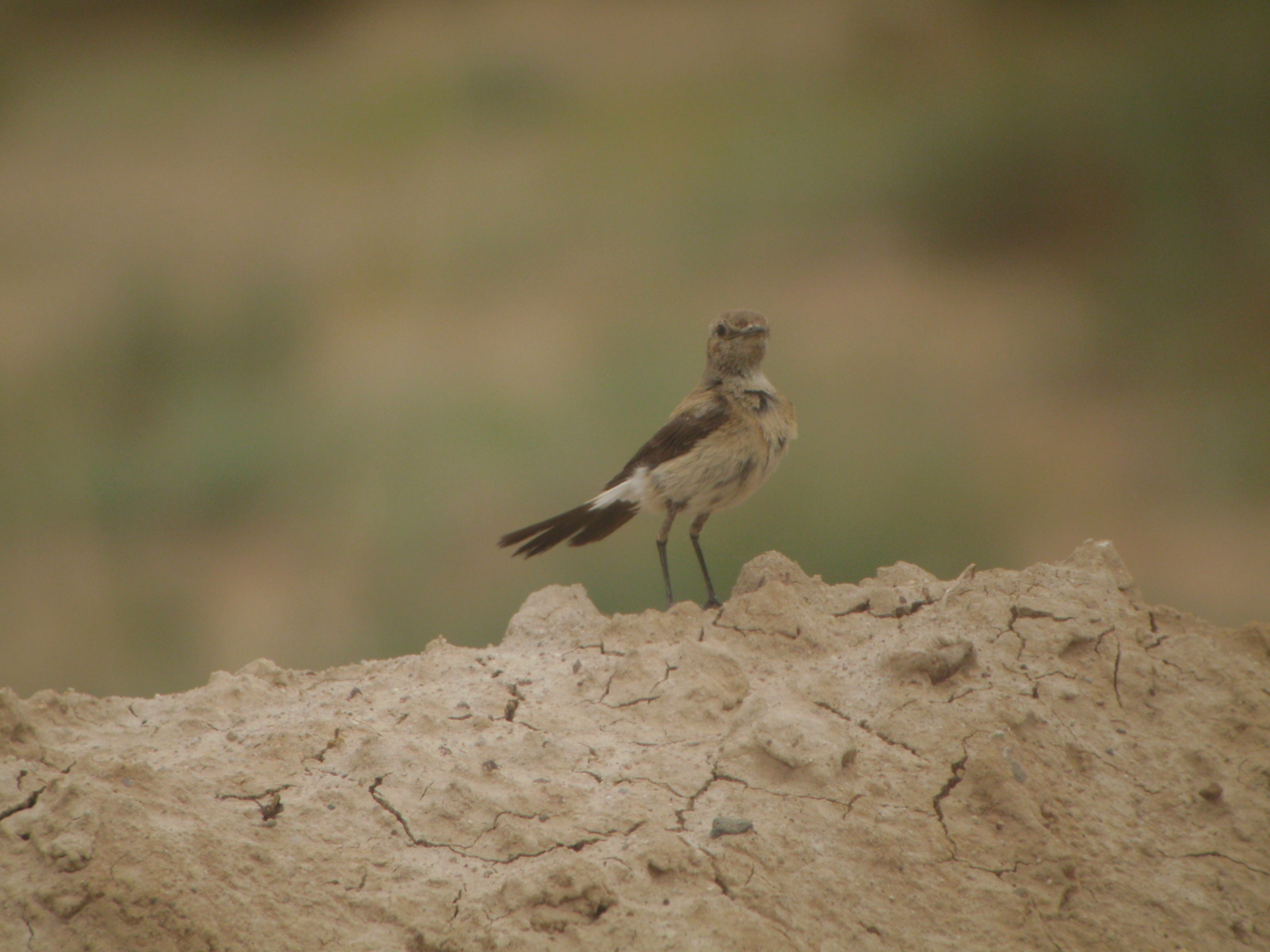
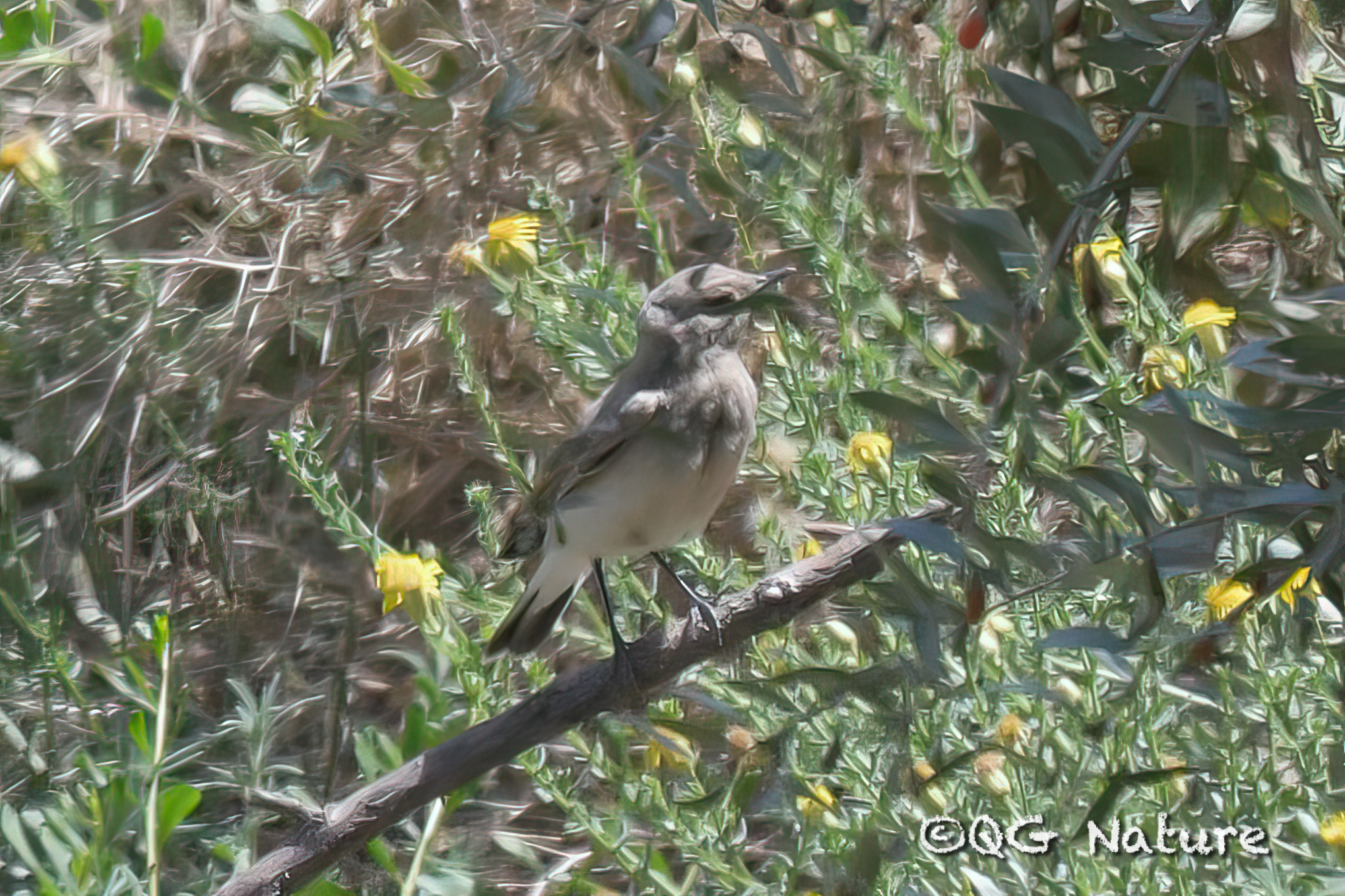
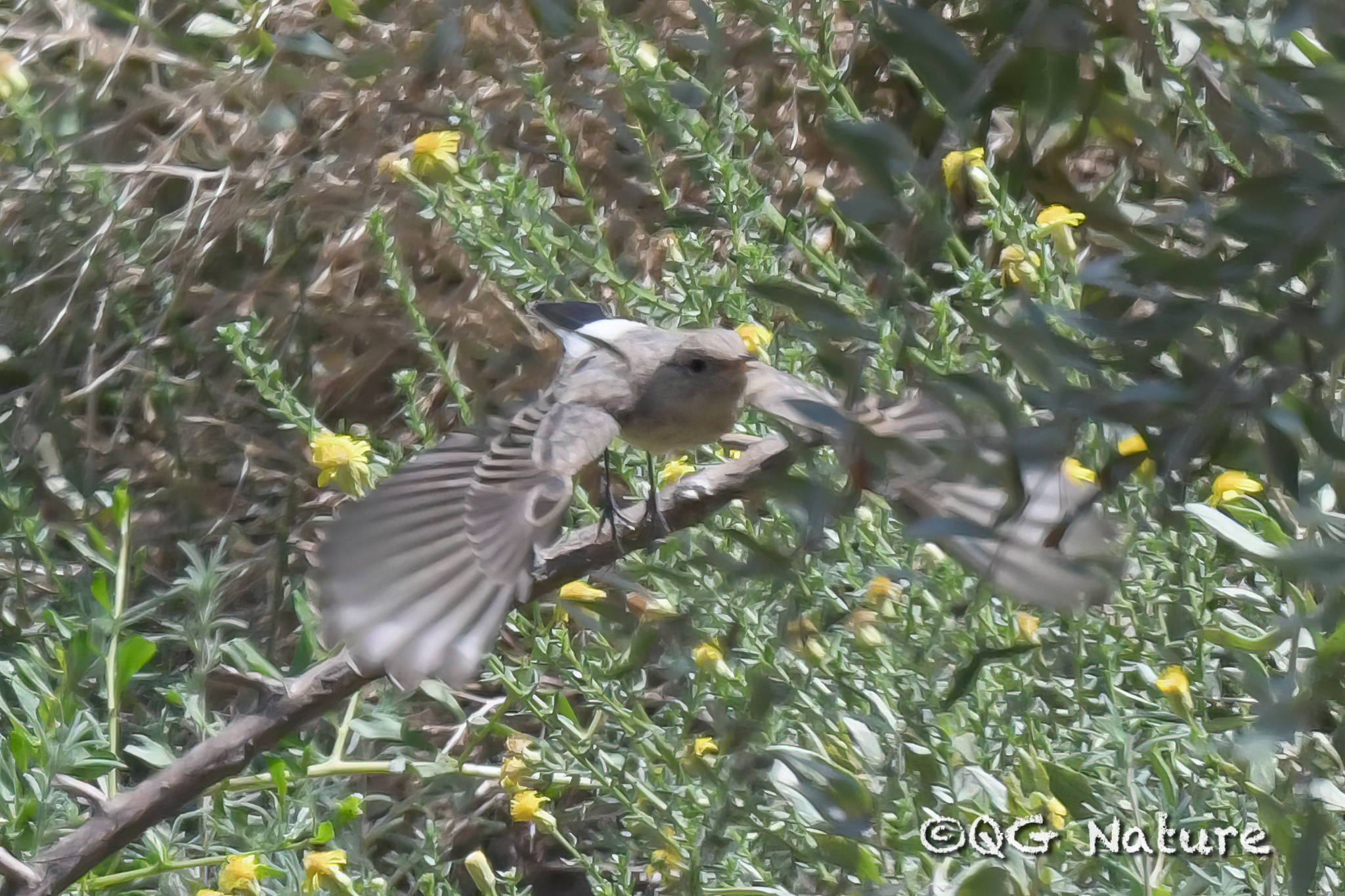
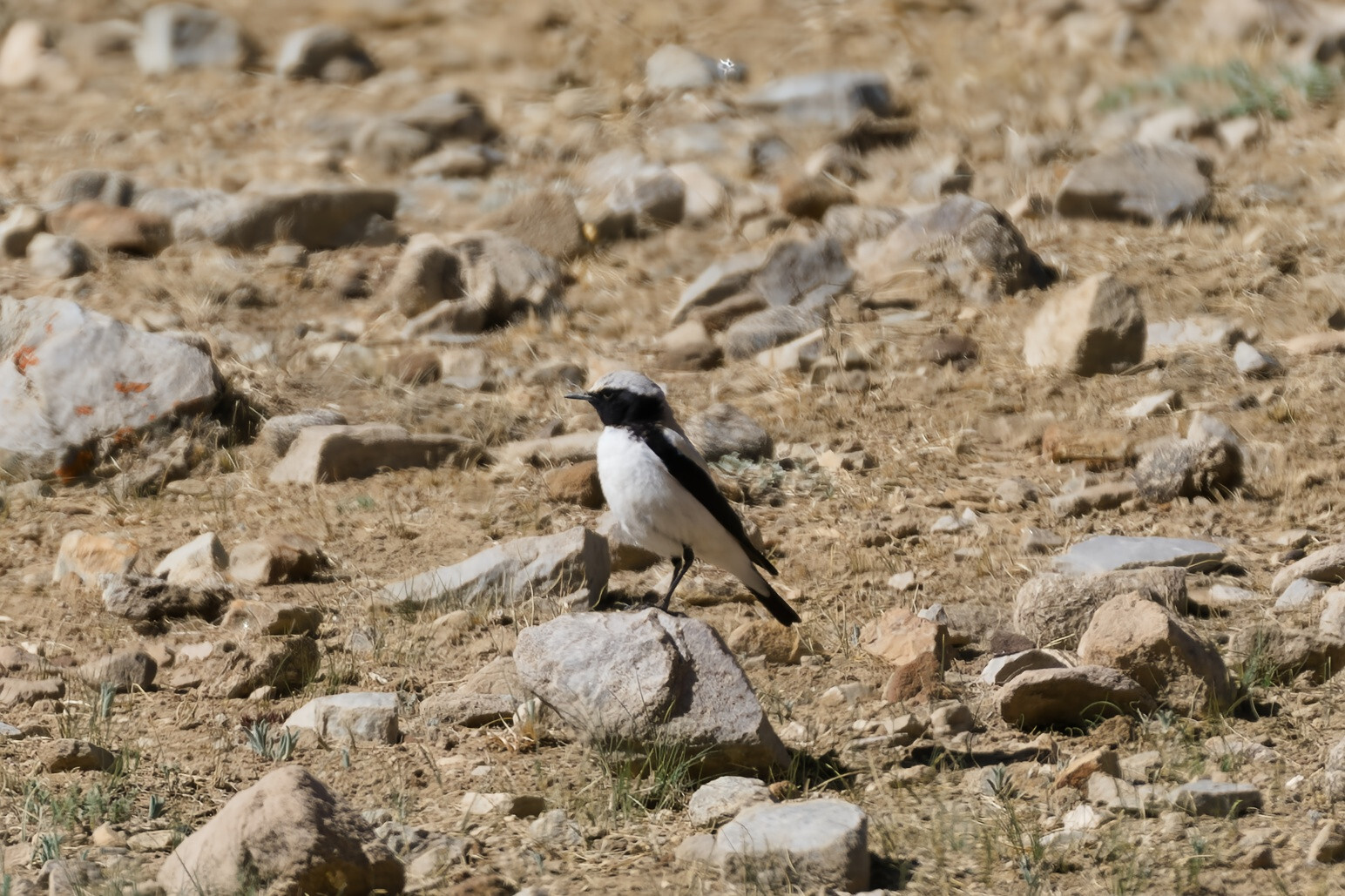
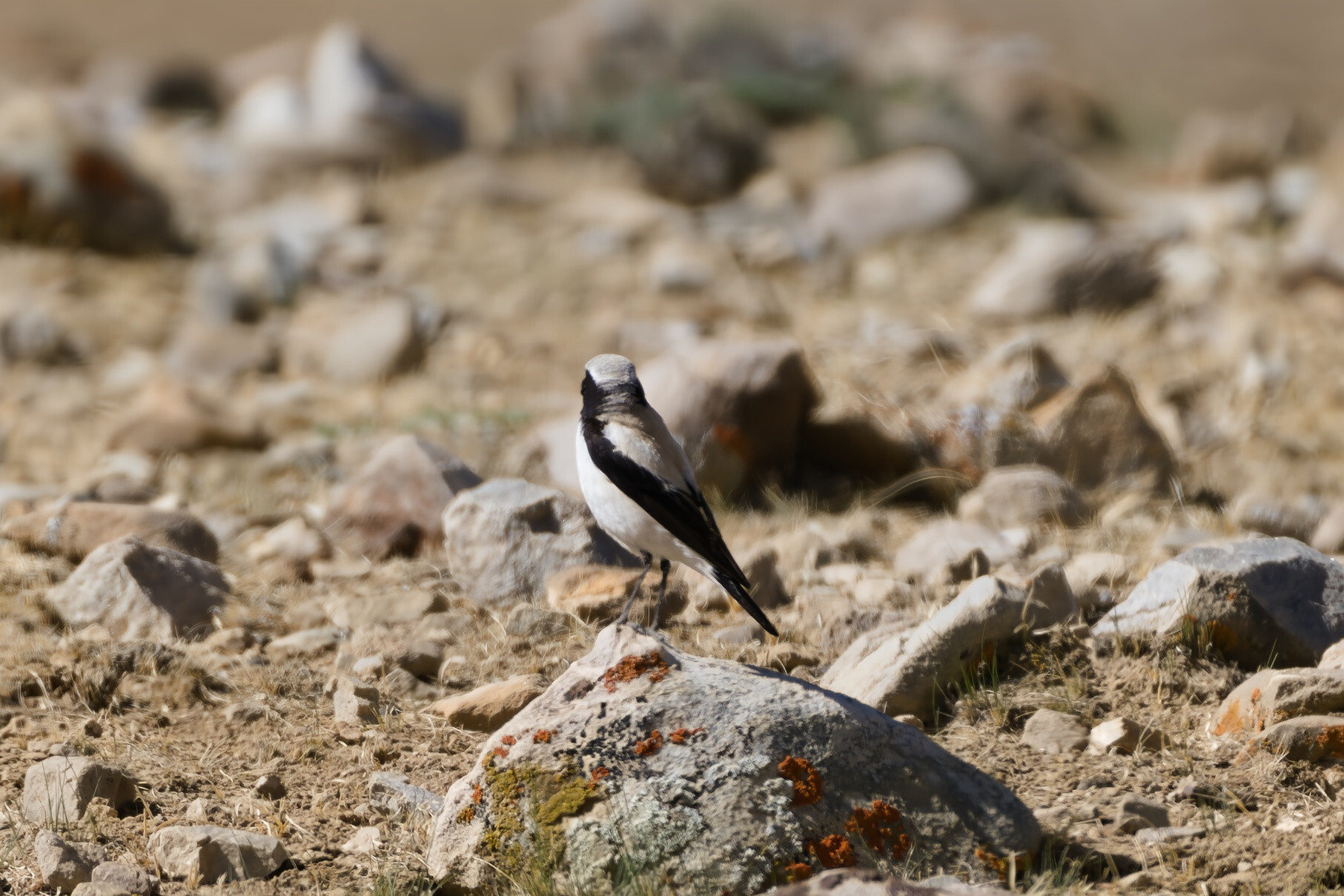
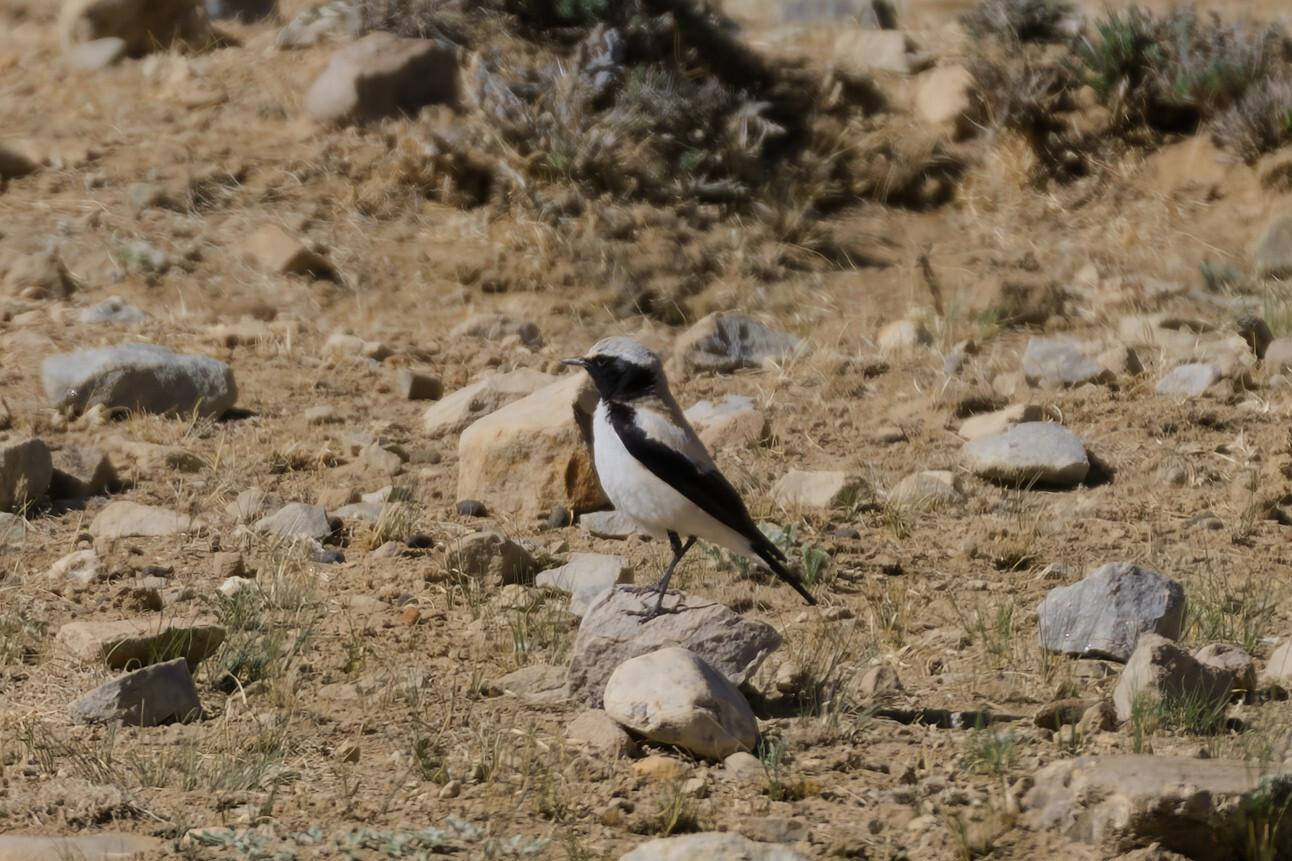
A small, compact wheatear measuring approximately 15 centimetres in length and weighing between 15 and 34 grams. The adult male in breeding plumage has a pale sandy-grey head and nape with grey-tipped feathers, while the mantle, scapulars and back share this sandy tone in a richer shade. The rump and upper tail-coverts are pale buff, contrasting with the distinctive tail pattern: basal third white, remaining portion black with pale buff tips. A pale buff superciliary stripe curves over the eye and extends backwards. The chin, throat, lores and ear-coverts are black tipped with white, with this black extending to the shoulders. The breast and flanks are sandy-buff, while the belly and under tail-coverts are creamy-white tinged with buff. The female is similar but overall greyer above and buffer below, with pale buff on the lores, chin and throat rather than black. The beak, legs and feet are black, and the irises are dark brown.
Identification
The most distinctive identification feature is the entirely black tail extending to the level of the upper tail-coverts, a characteristic shared by all ages and sexes. This separates it from many other wheatear species that show different tail patterns. The male's black face and throat extending to the shoulders, combined with the prominent white superciliary stripe, provide strong identification clues. In winter plumage, the male's black throat is partially obscured by white feather tips, giving a more subdued appearance. The female lacks the black throat of the male and appears overall duller and greyer. The combination of sandy-grey upperparts, buff underparts and the striking tail pattern makes confusion with similar species unlikely when these features are observed clearly.
Distribution & Habitat
The western race breeds from Morocco and Western Sahara eastwards across North Africa to western Egypt, while the eastern race occupies an extensive Asian breeding range from the Middle East and Saudi Arabia through Iran, Afghanistan, the south Caucasus, Turkestan and into northwestern Mongolia. The western population is largely resident, though some southern and eastern Moroccan birds migrate. Eastern populations migrate southward to winter in northeastern Africa, the Arabian peninsula, Iraq and Pakistan. The species inhabits barren open countryside including steppes, deserts, semi-arid plains, saltpans, dried river beds and sandy, stony and rocky wasteland, occurring up to 3,500 metres elevation. During winter, it may visit cultivated land interspersed with bare areas. Both races are rare but regular vagrants to western Europe.
Behavior & Ecology
This species typically perches on bushes, tussocks or other elevated points before darting to the ground to pounce on insects, though it also catches insects in flight and can hover briefly. The diet consists primarily of ants, beetles, caterpillars and flies, along with their larvae including ant-lions; seeds have also been recorded in stomach contents. When encountering large prey, it may perform a wing-fluttering display. Breeding occurs during late April or May across its range. Nests are built on rocky hillsides, steppes or sandy plains, in crevices, wall hollows or cavities under rocks, often concealed behind vegetation. The cup-shaped nest of grasses, mosses and stems is lined with fine roots, hairs and occasionally feathers. A clutch of four or five pale bluish eggs with fine rusty speckles is laid, with incubation primarily by the female. Both parents share care of the young.
Conservation
This species is listed as Least Concern on the IUCN Red List of Threatened Species. It has a very large breeding range estimated at nearly 10 million square kilometres, and the population appears to be stable with no significant declines noted. Its extensive range and presumably large total population mean it does not approach the thresholds for a threatened category. While specific population figures are not provided, the species is described as common to abundant throughout much of its range. No particular threats have been identified that would suggest the species is at risk, given its adaptation to desert and semi-desert habitats that remain relatively unmodified across most of its extensive distribution.
Culture
No specific cultural significance or folklore is documented for this particular species of wheatear.
Source: Wikipedia · CC BY-SA 3.0
Taxonomy
- Order
- Passeriformes
- Family
- Muscicapidae
- Genus
- Oenanthe
- eBird Code
- deswhe1
Subspecies (3)
-
Oenanthe deserti deserti
resident in northeastern Egypt (Sinai) and the Levant; breeding from southern Türkiye eastward, discontinuously, to Afghanistan, central and southern Kazakhstan, Mongolia, and northwestern and western China (northwestern Xinjiang, Gansu, Shaanxi, and central Inner Mongolia); wintering in northeastern Africa (including Socotra) and southwestern Asia
-
Oenanthe deserti homochroa
desert of North Africa (Western Sahara to western Egypt)
-
Oenanthe deserti oreophila
breeds western China to Kashmir and Tibet; winters to Pakistan and northeastern Africa
Data Sources
Species description from Wikipedia, licensed under CC BY-SA 3.0.
Bird images and sounds sourced from GBIF, contributed by citizen scientists worldwide under Creative Commons licenses.
Taxonomy data from AviList 2025.