Psittaciformes / Cacatuidae / Nymphicus
Cockatiel
Nymphicus hollandicus · 鸡尾鹦鹉
Introduction
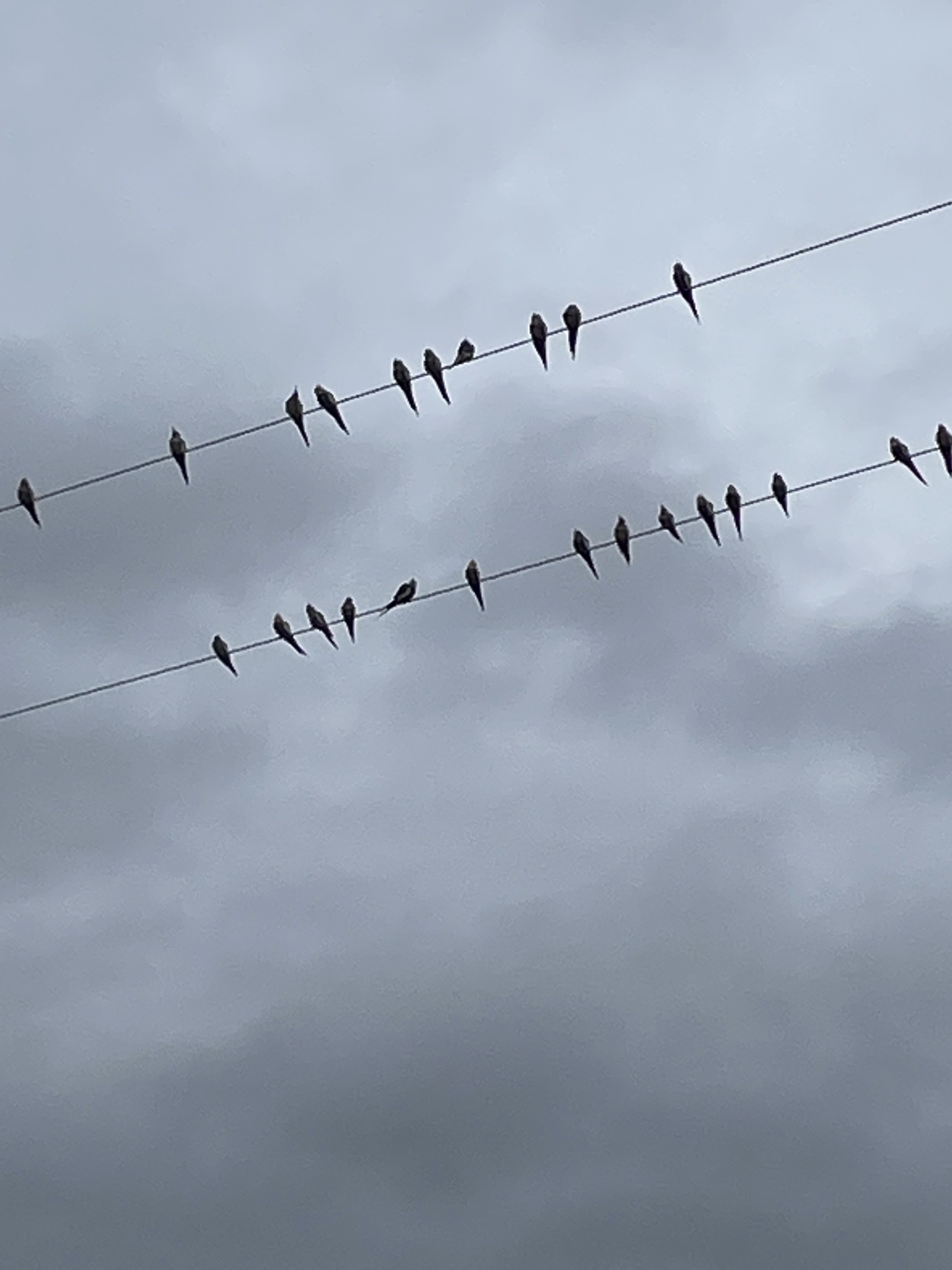
A small parrot endemic to Australia, classified as the sole member of the genus Nymphicus within the cockatoo family Cacatuidae. It inhabits arid and semi-arid wetlands, scrublands, and bushlands, always near water. The species is largely nomadic, moving in response to food and water availability, and is typically observed in pairs or small flocks.
Description
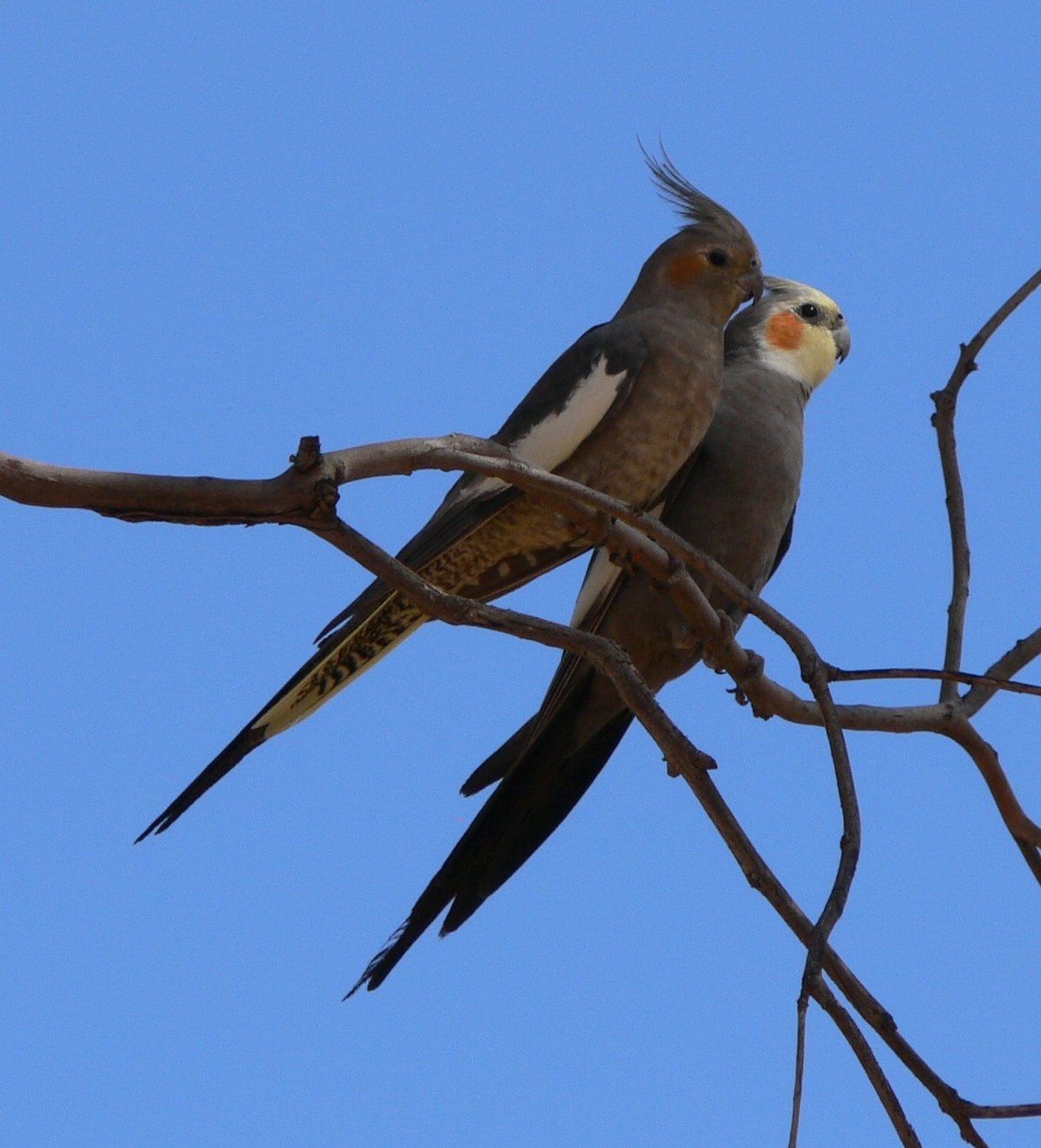
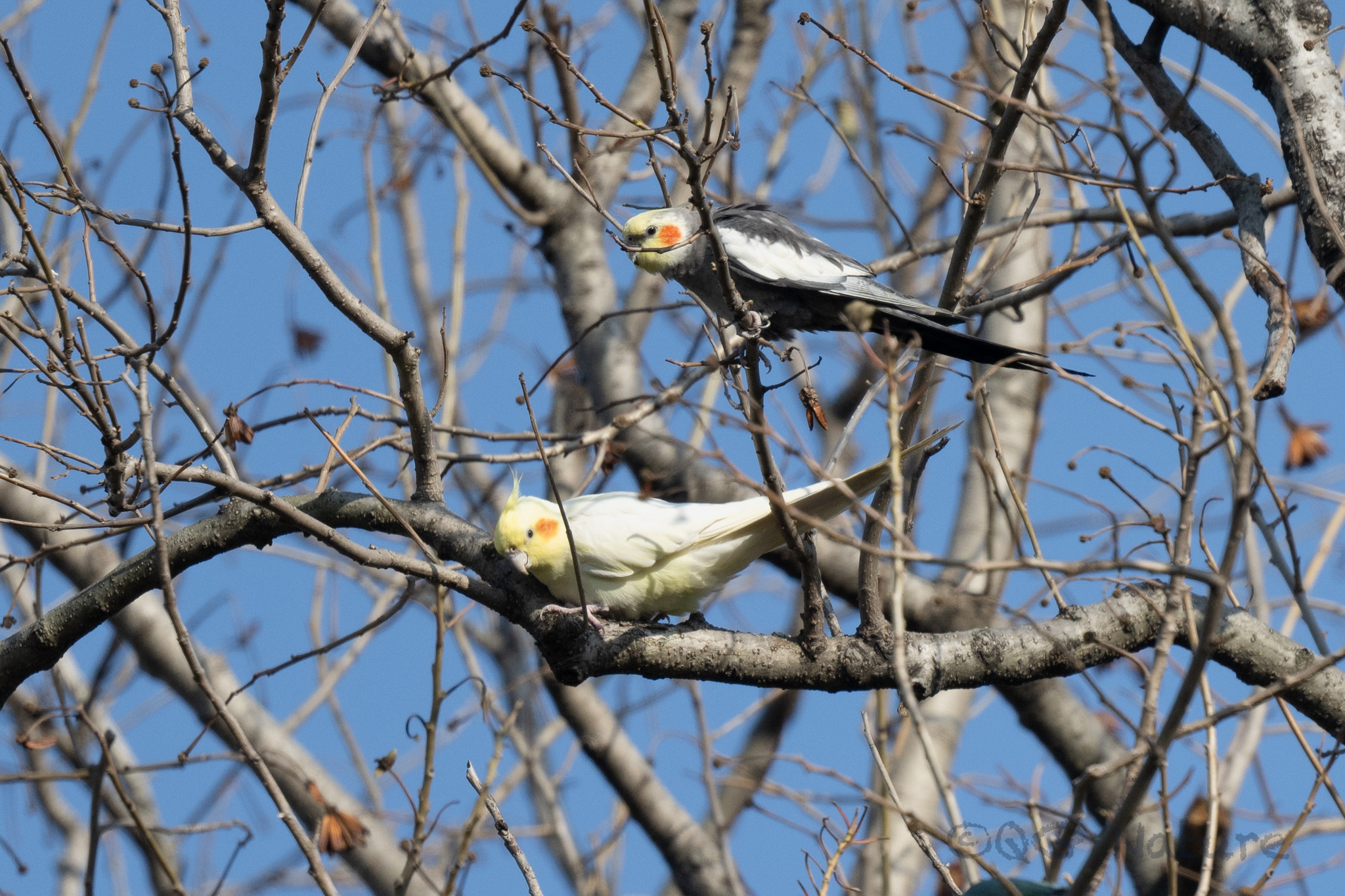
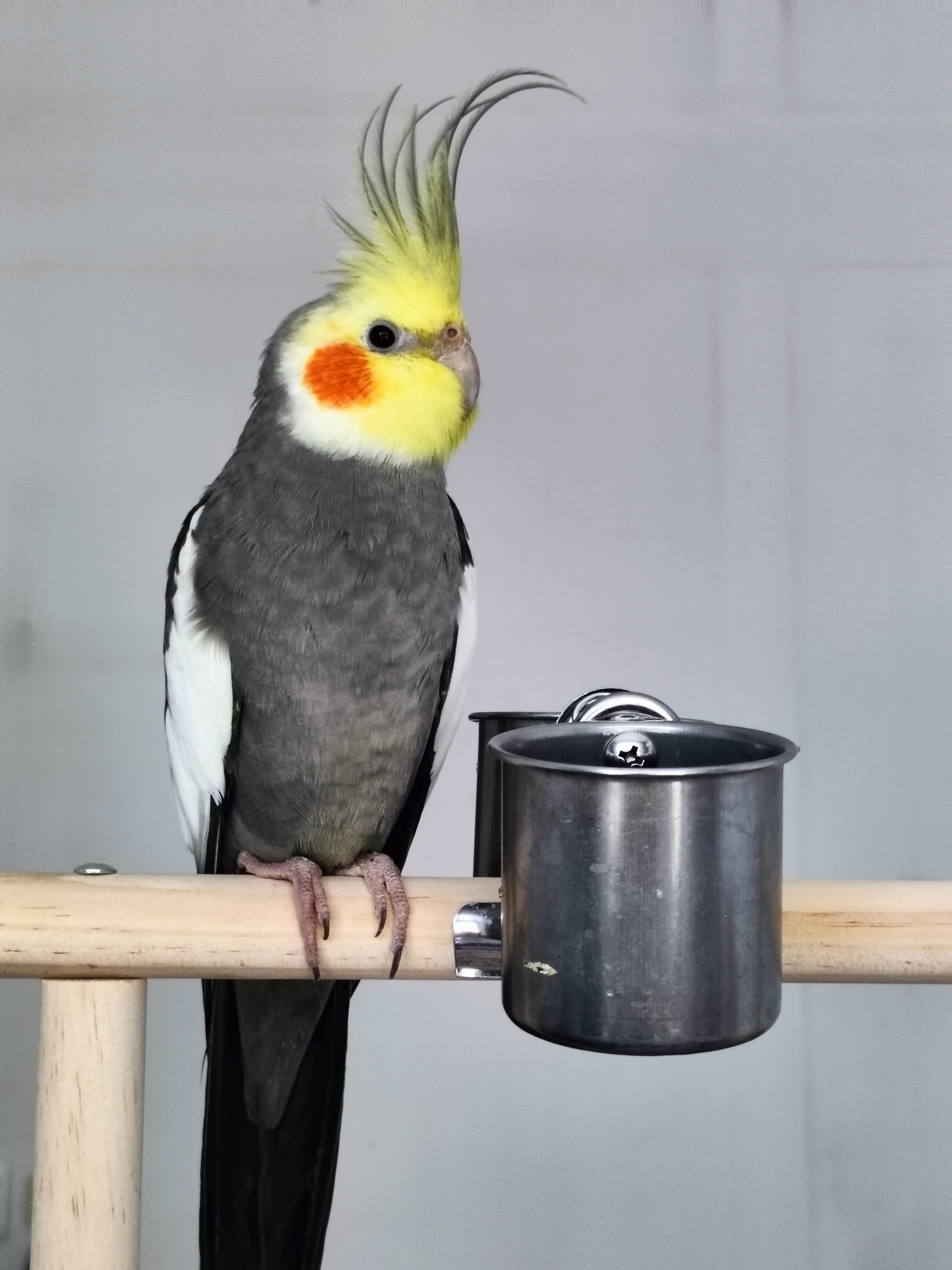
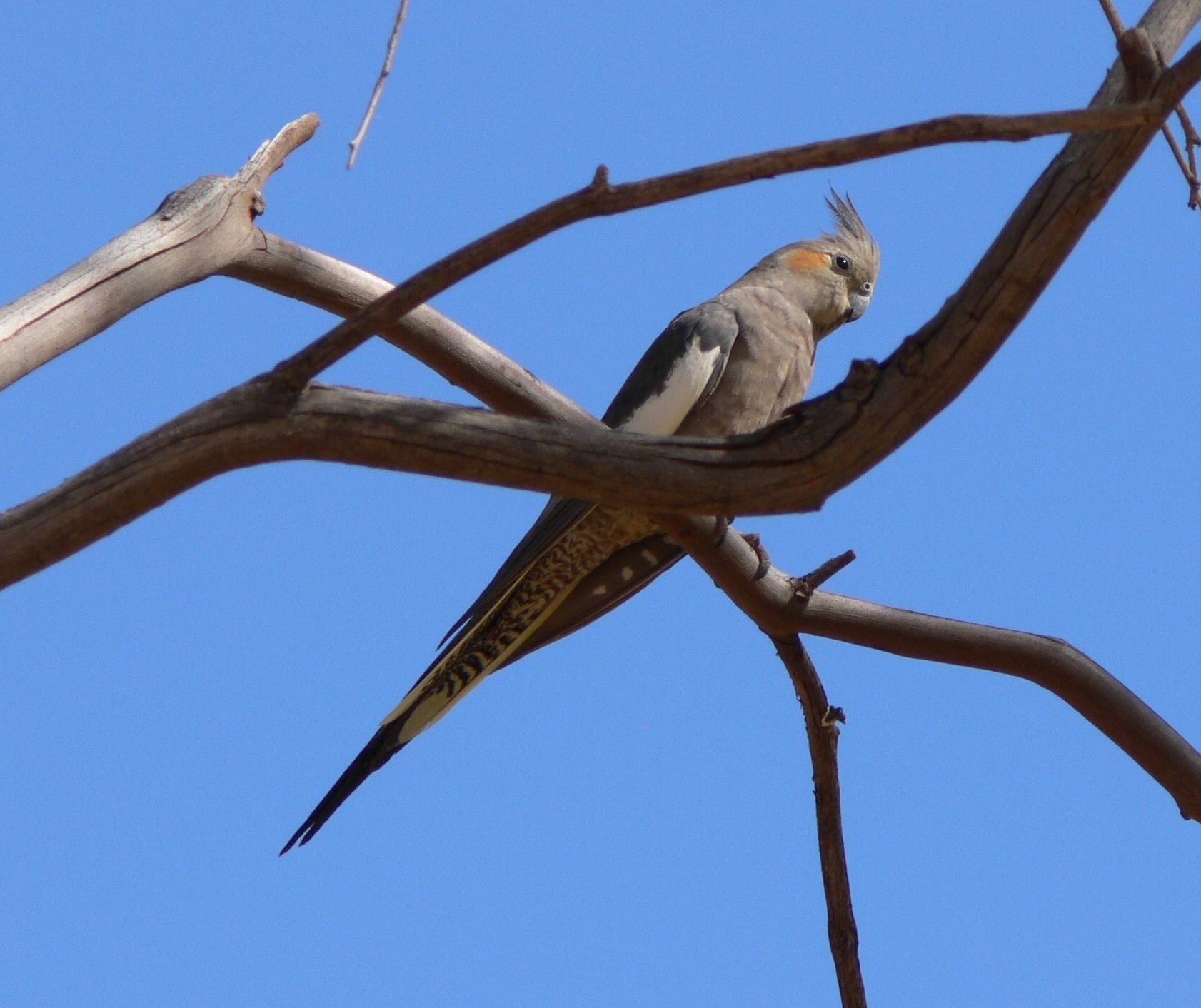
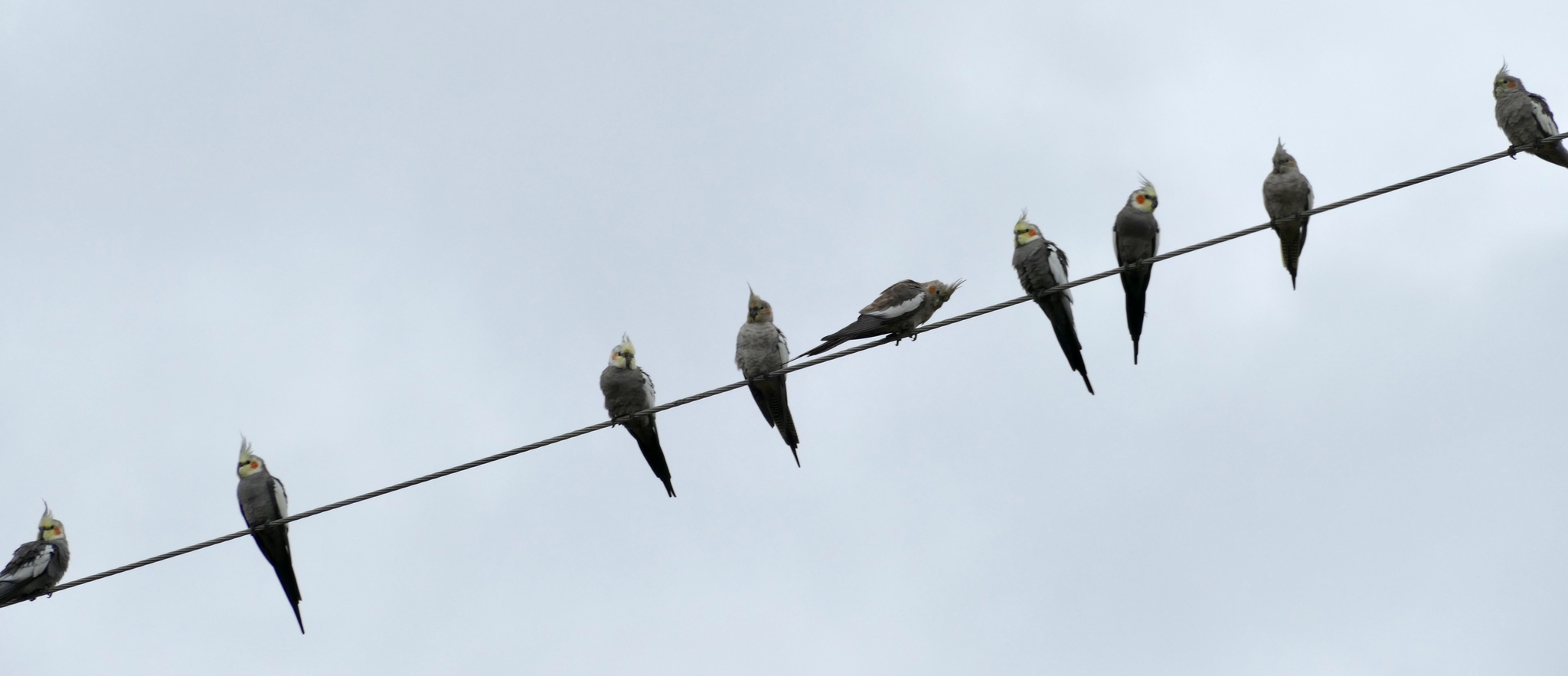
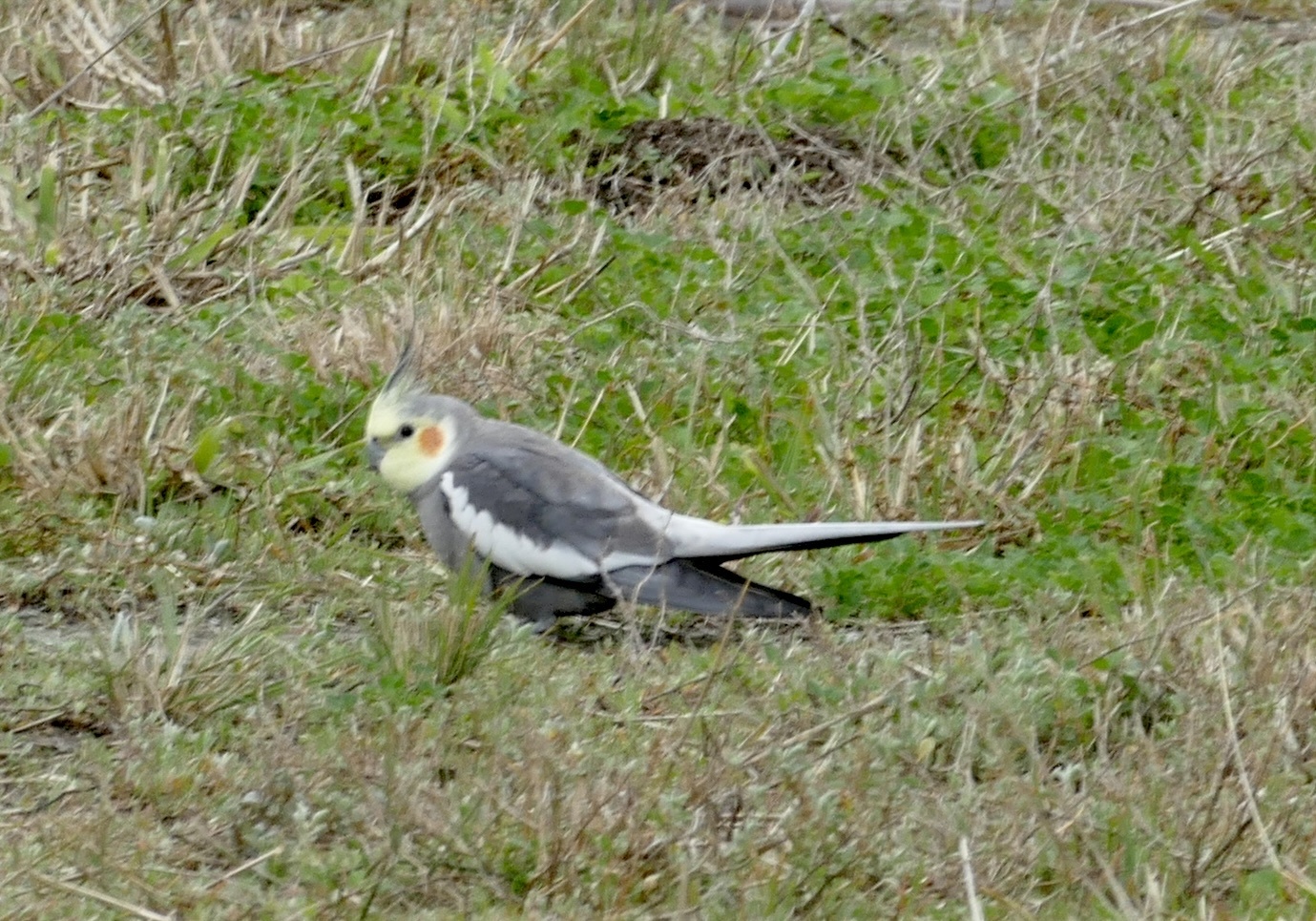
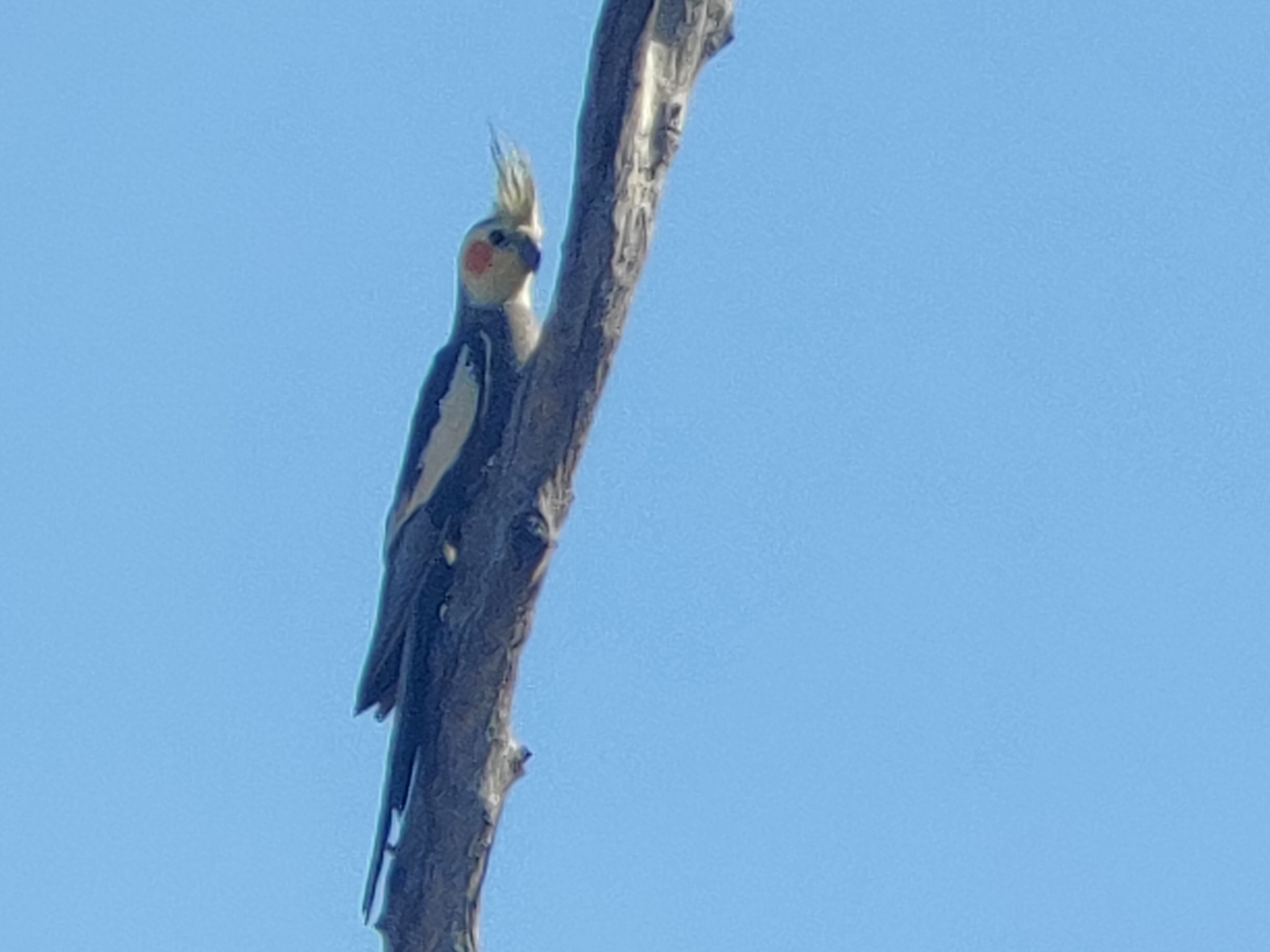
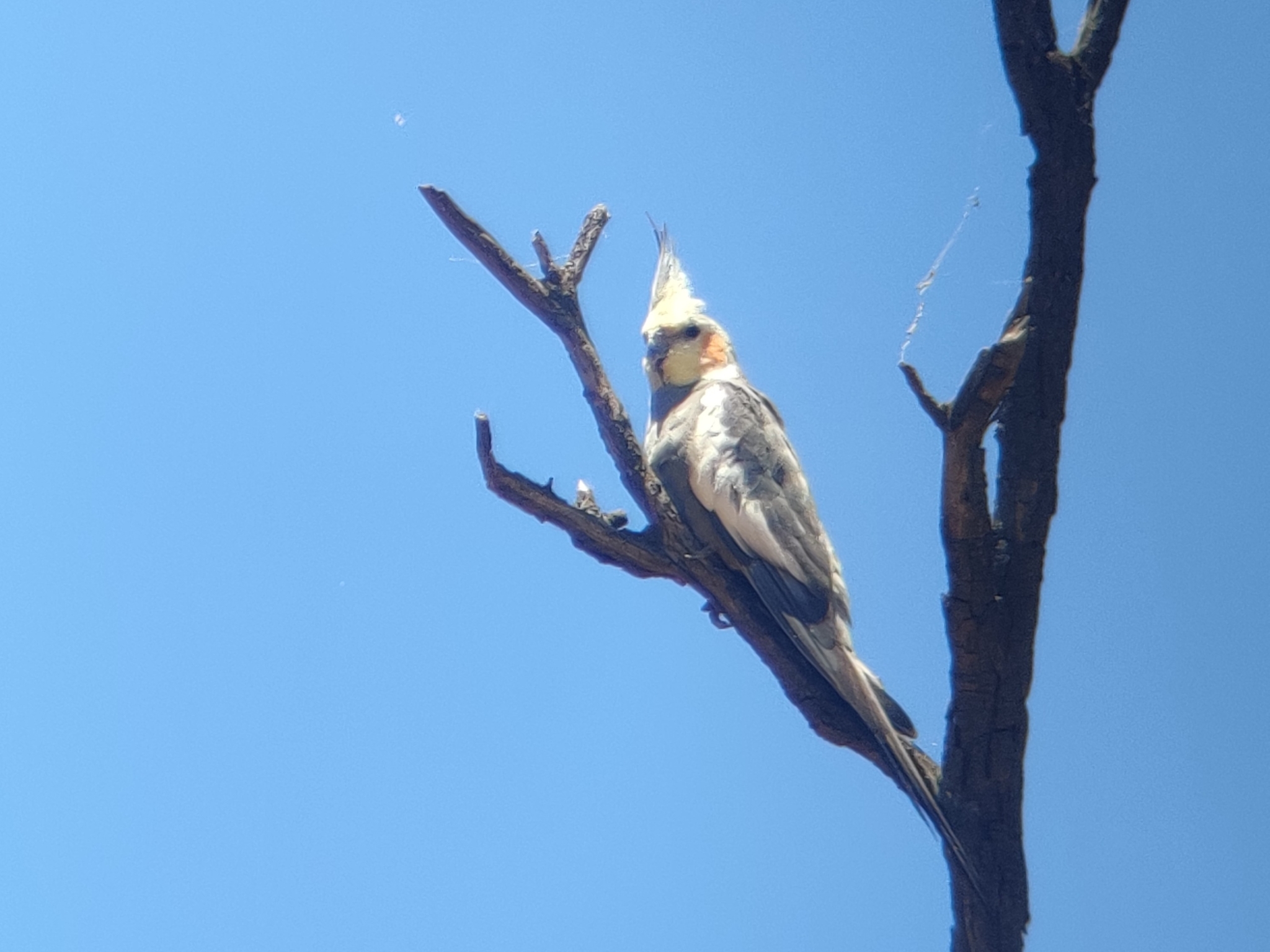
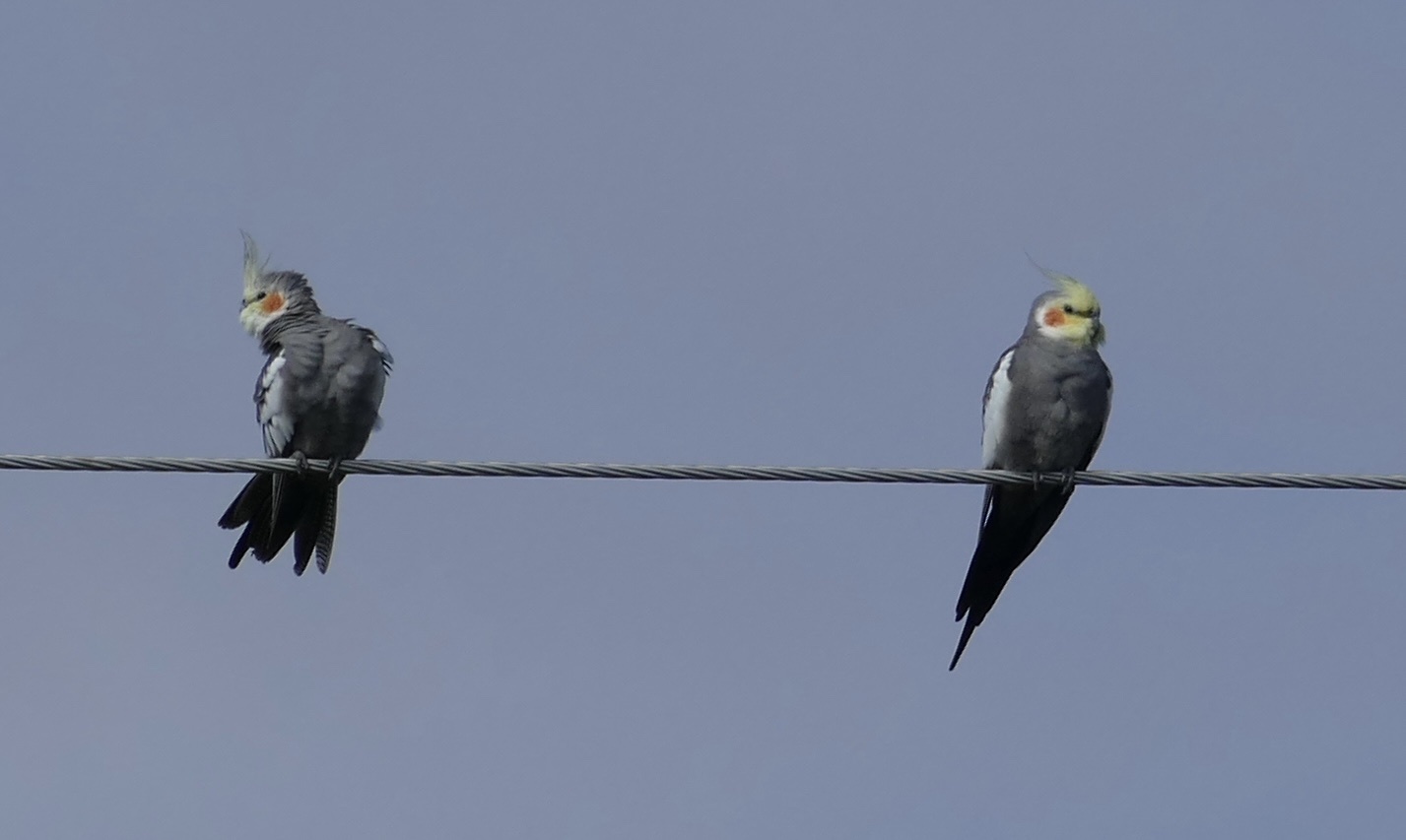
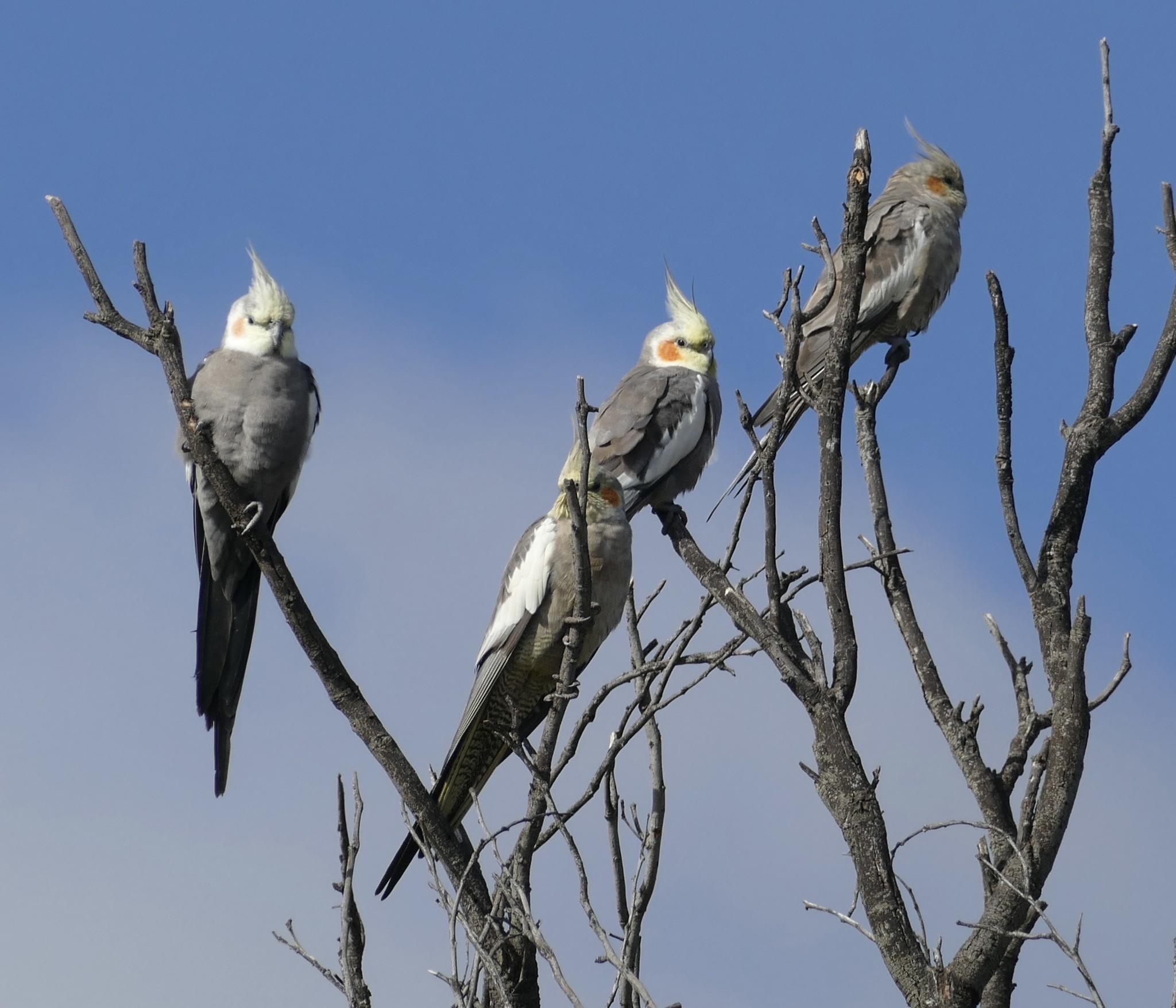
Measuring 30 to 33 cm (12 to 13 in), it is the smallest cockatoo, with long tail feathers comprising roughly half its total length. Wild-type plumage is primarily grey with prominent white wing flashes. Males have yellow or white faces with vibrant orange cheek patches, while females retain grey faces with muted orange cheeks. Juveniles resemble females, displaying horizontal yellow bars on the ventral tail surface and yellow spots on primary flight feathers. The erectile crest indicates emotional state: vertical when excited, oblique when relaxed, and flattened when angry or defensive. Captive mutations include lutino, cinnamon, pied, and pearling.
Identification
Distinguished from other cockatoos by its smaller size and long tail. Key field marks include the round orange ear patches ('cheddar cheeks') and white wing flashes. Sexual dimorphism is visible in adults after the first moult (6–9 months): males develop bright yellow heads and lose tail barring, while females retain greyish heads and horizontal tail bars. The crest position provides behavioral cues, standing vertical when startled and flattening when defensive.
Distribution & Habitat
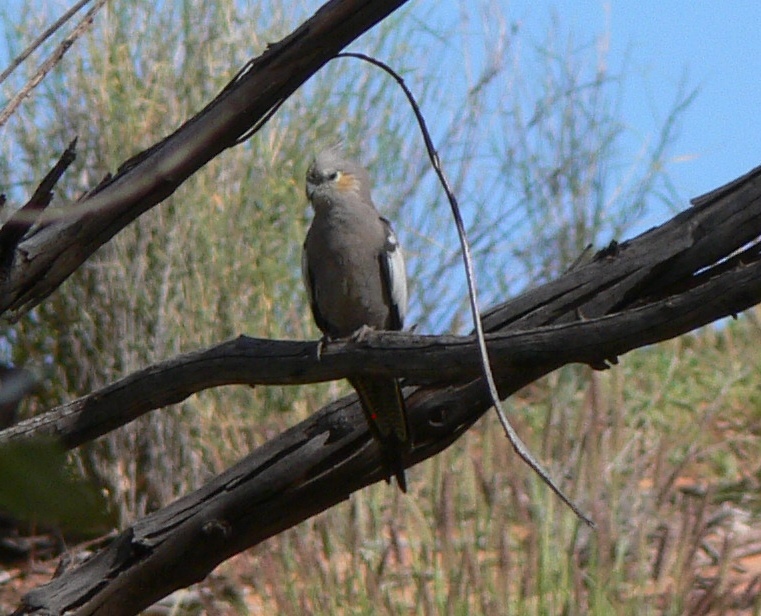
Native to Australia, found largely in arid or semi-arid regions but always close to water. Range includes western New South Wales, Queensland, Alice Springs, the Kimberley region, and northwestern Western Australia. Absent from the fertile southwest and southeast corners, deep Western Australian deserts, and Cape York Peninsula. Largely nomadic, flocks move to locate food and water sources.
Behavior & Ecology
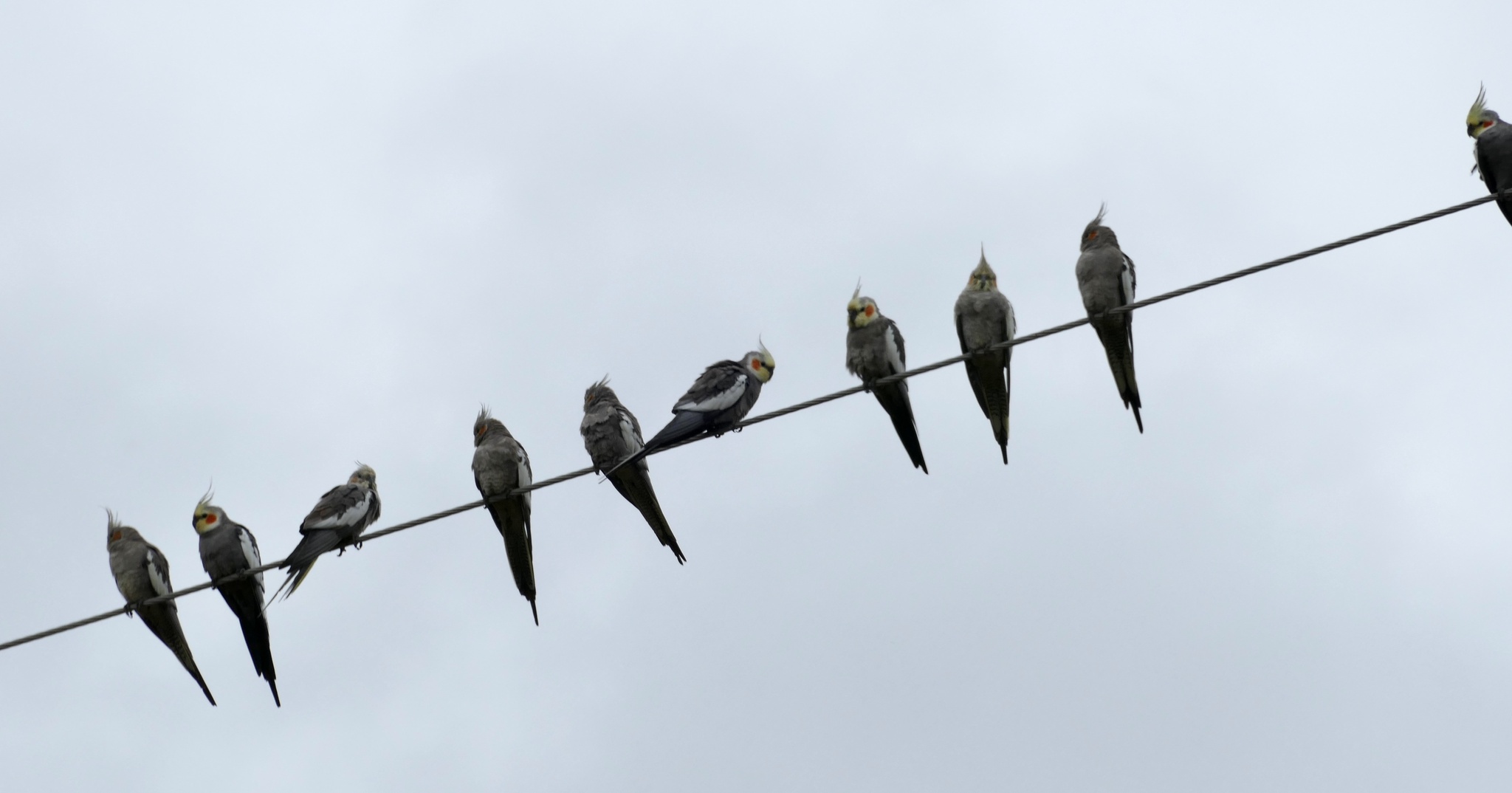
Typically seen in pairs or small flocks, though hundreds may gather at water sources. Diet consists mainly of seeds, including Acacia, wheat, sunflower, and Sorghum; they often consume cultivated crops. Breeding is triggered by seasonal rainfall, with nesting in tree hollows, often eucalyptus. The hen lays 4–7 eggs, incubating them for 17–23 days; chicks fledge after 5 weeks. Vocalizations are complex, with males capable of mimicking speech, melodies, and household sounds.
Source: Wikipedia · CC BY-SA 3.0
Taxonomy
- Order
- Psittaciformes
- Family
- Cacatuidae
- Genus
- Nymphicus
Distribution
Australia (except Cape York Peninsula, coastal southeastern and southwestern Australia, and Tasmania)
Vocalizations
Data Sources
Species description from Wikipedia, licensed under CC BY-SA 3.0.
Bird images and sounds sourced from GBIF, contributed by citizen scientists worldwide under Creative Commons licenses.
Taxonomy data from AviList 2025.