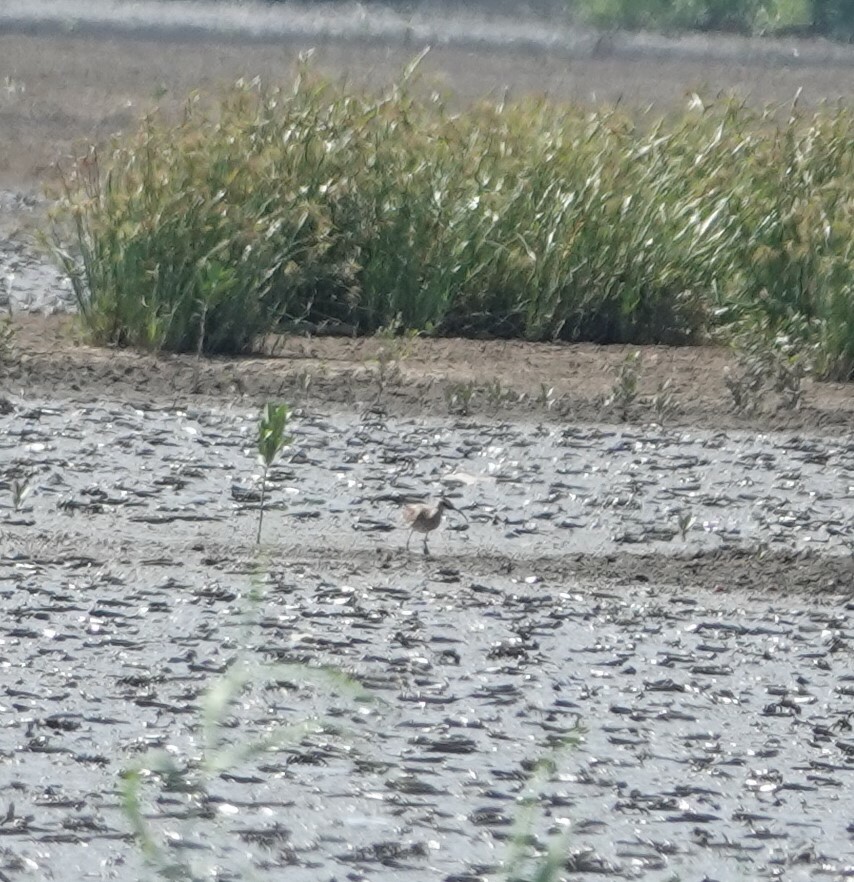
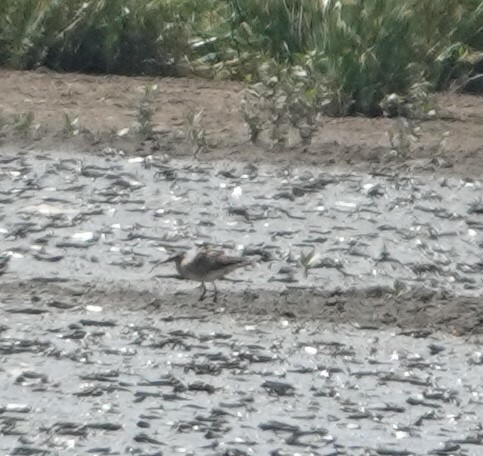
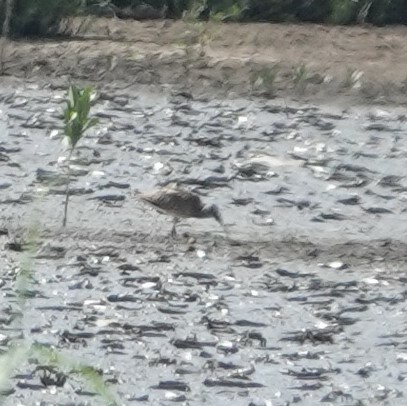
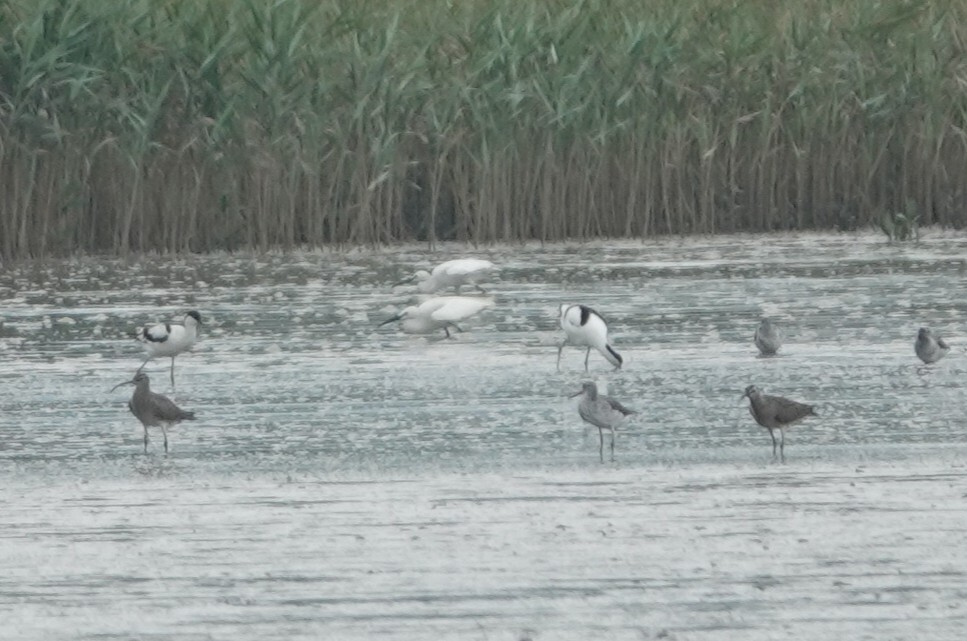
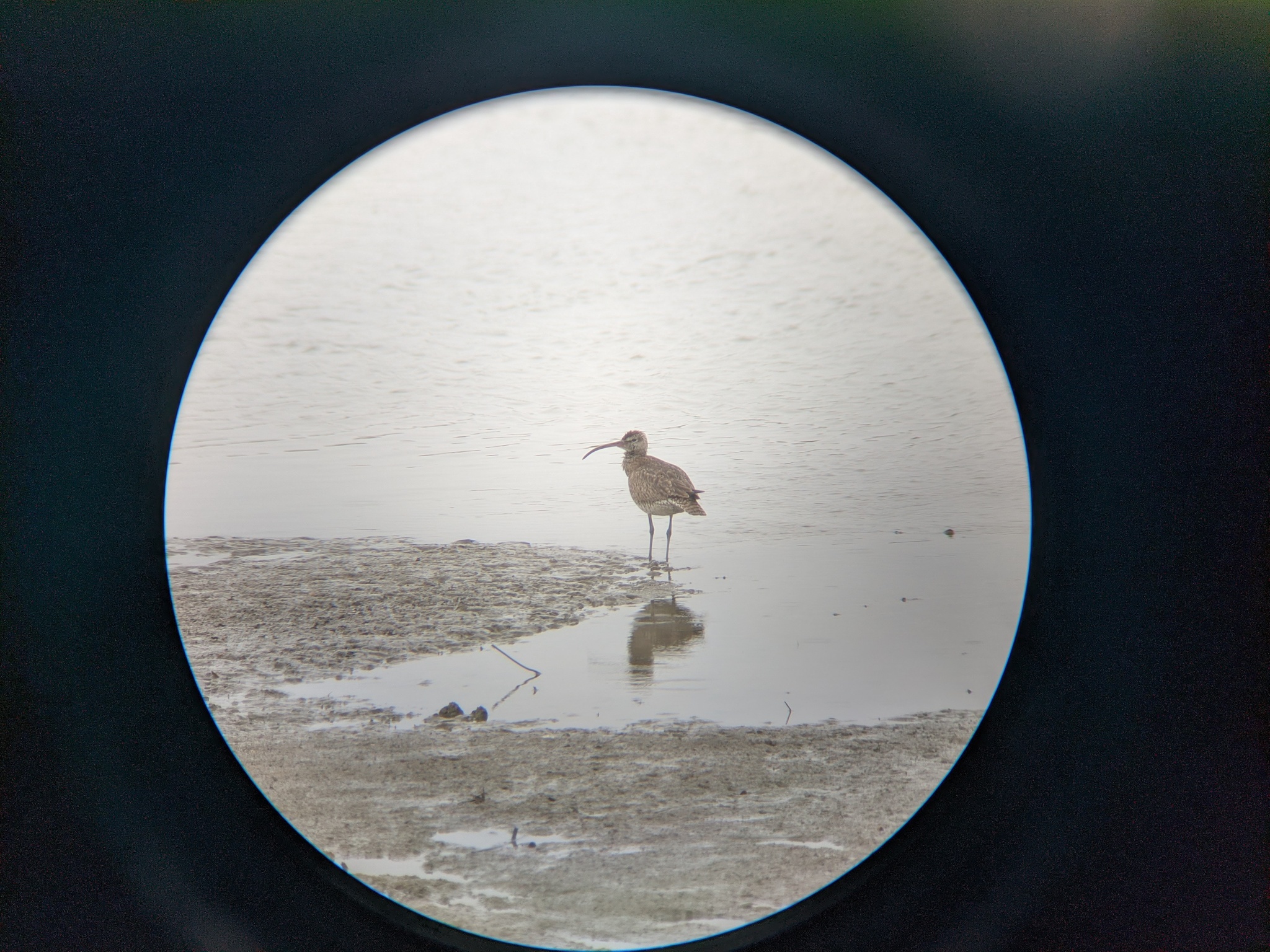
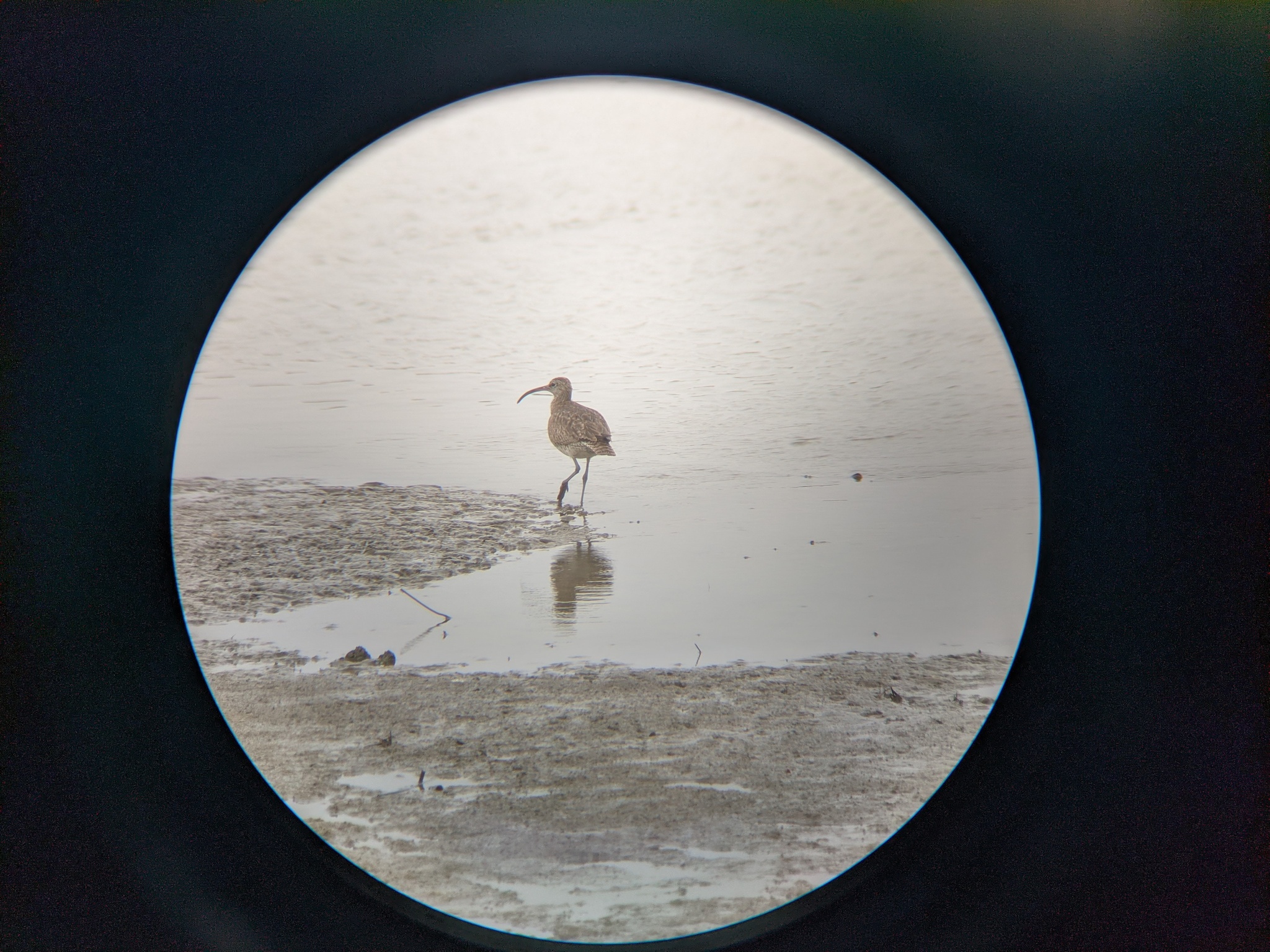
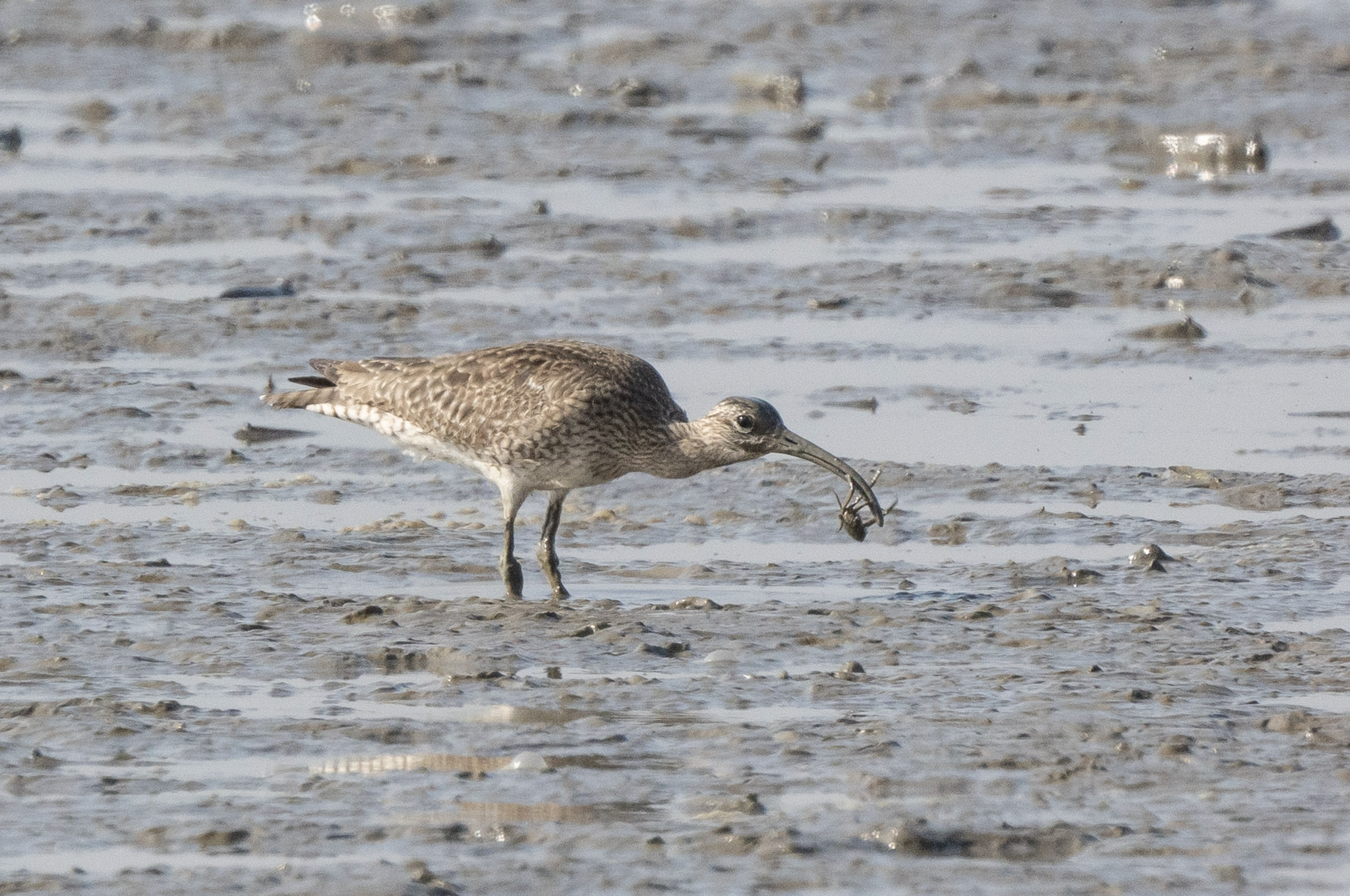
Charadriiformes / Scolopacidae / Numenius
Eurasian Whimbrel
Numenius phaeopus · 中杓鹬
Introduction
A wader in the family Scolopacidae and one of the most widespread curlews. It breeds across much of the subarctic Palearctic region and Europe, as far south as Scotland. The species is migratory, wintering on coasts in Africa, South Asia, and Australasia. It is listed as Least Concern on the IUCN Red List.
Description
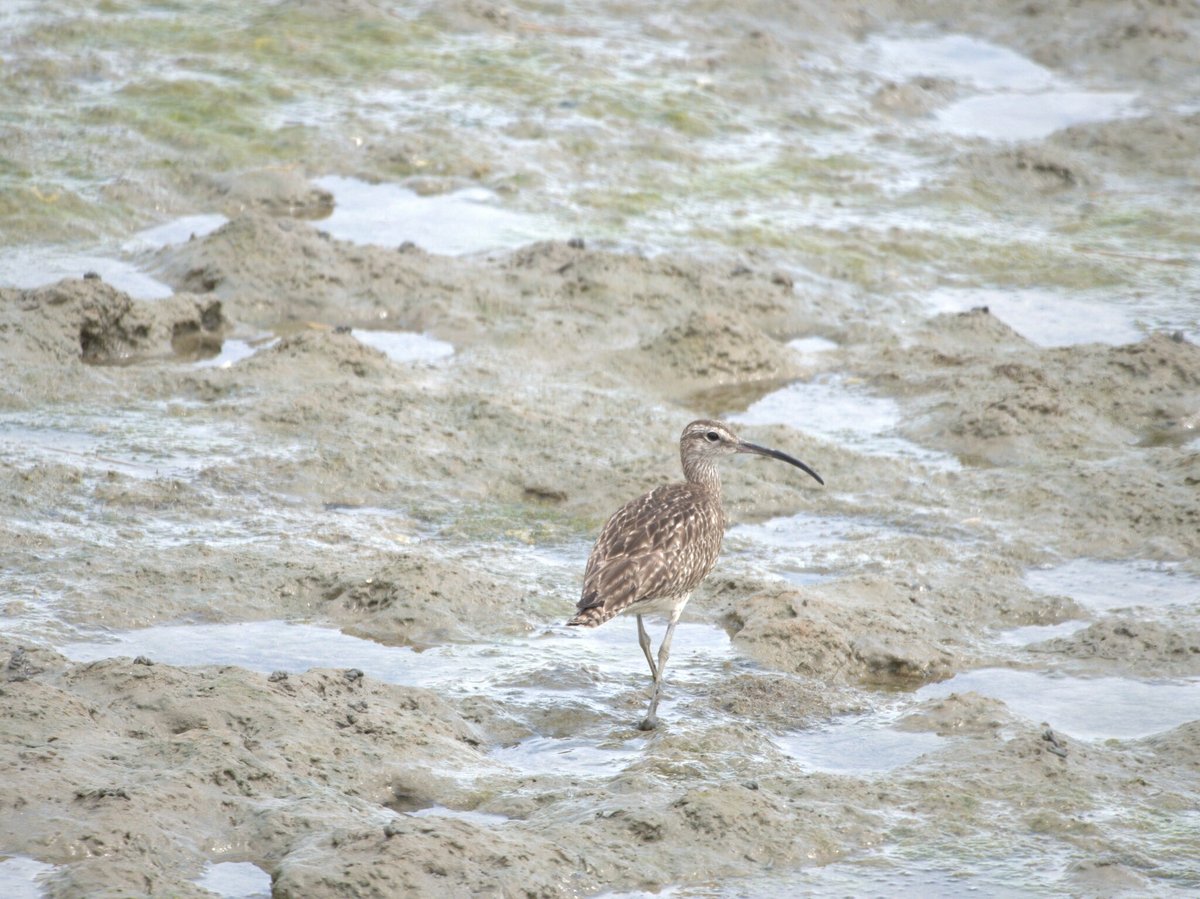
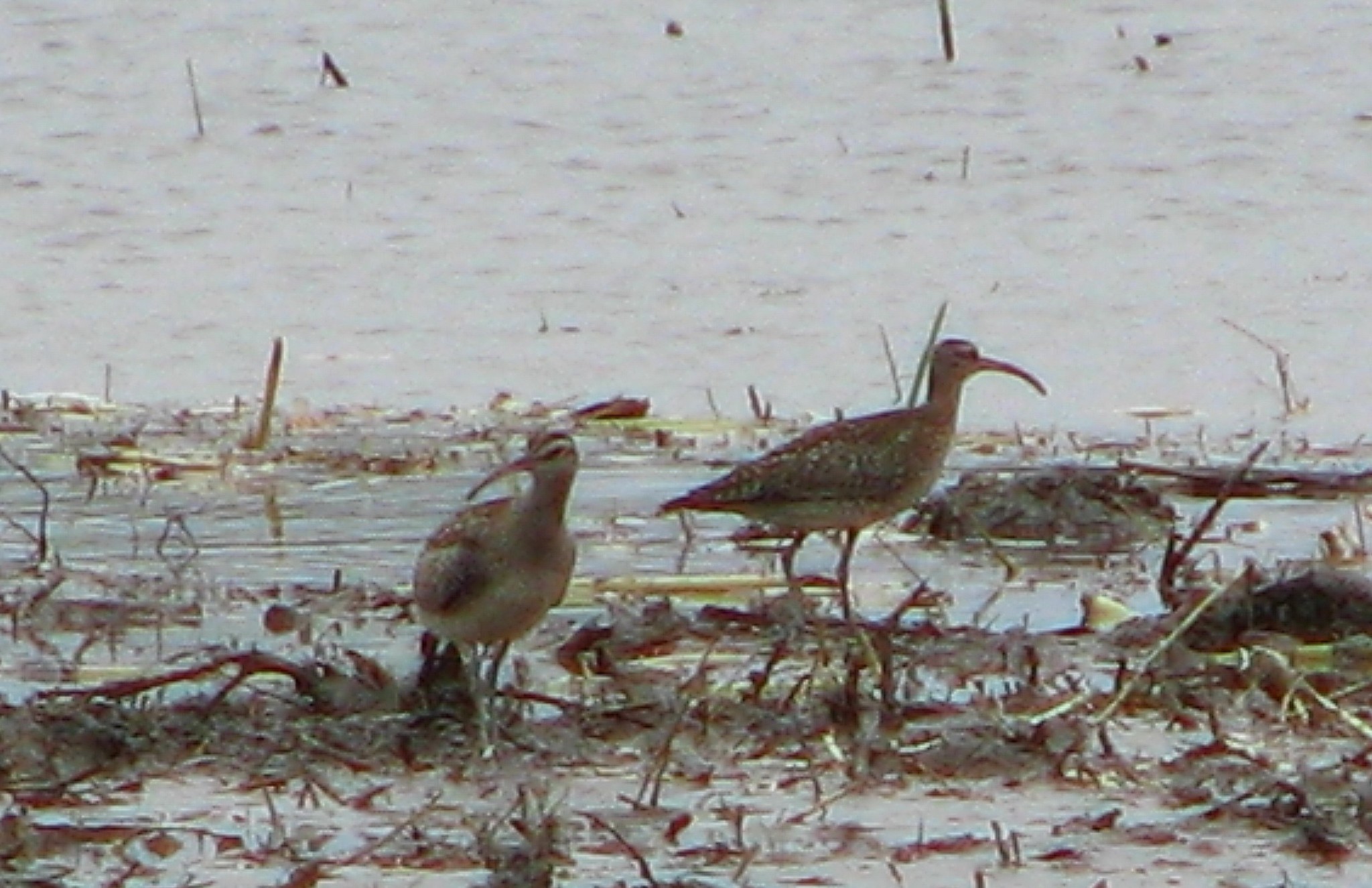
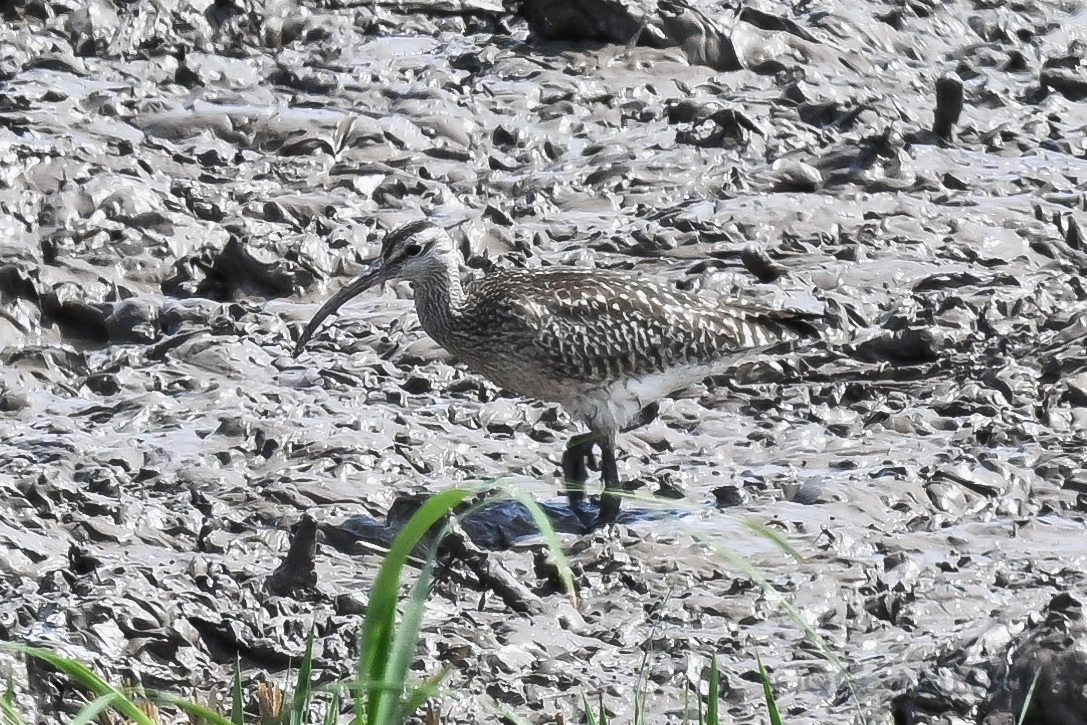
Length 37–47 cm (15–19 in), wingspan 75–90 cm (30–35 in), weight 270–493 g (9.5–17.4 oz). Mainly greyish brown with a long curved beak featuring a kink rather than a smooth curve. Subspecies N. p. phaeopus and N. p. alboaxillaris have a white back and rump. Smaller than similar curlews, with a shorter decurved bill, a central crown stripe, and strong supercilia.
Identification
Distinguished from larger curlews by smaller size, shorter decurved bill, central crown stripe, and strong supercilia. In flight, subspecies N. p. phaeopus and N. p. alboaxillaris show a distinctive white rump, unlike the drab brown, dark-streaked rump of the Hudsonian whimbrel. The usual call is a rippling whistle, prolonged into a trill for the song.
Distribution & Habitat
Breeds in Iceland, Greenland, Faroe Islands, Scotland (particularly Shetland, Orkney, Outer Hebrides, Sutherland, Caithness), Norway to north central Siberia, western Kazakhstan to southwestern Siberia, and north-eastern Siberia. Winters mainly in West Africa (ranging from southwestern Europe to Benin and Togo), Africa, south and southeast Asia, east Africa, west India, and Australia. Migrates along coasts and is fairly gregarious outside the breeding season. In Iceland, inhabits lowland plains, grasslands, and wetlands.
Behavior & Ecology
Nests in a bare scrape on tundra or Arctic moorland, often in low vegetation or moss. Lays three to five eggs. The female remains motionless until threatened, then lures predators away by flying off a short distance and making noises. Chicks are fluffy, yellow and black, with short beaks and strong scaly grey legs; they become mobile within weeks. Feeds by probing soft mud for small invertebrates and picking small crabs off the surface. Before migration, berries become an important part of the diet. Also observed taking insects, specifically blue tiger butterflies.
Conservation
Listed as Least Concern on the IUCN Red List and included in the Agreement on the Conservation of African-Eurasian Migratory Waterbirds. Populations recovered after heavy hunting tolls near the end of the 19th century. Currently negatively impacted by climate change, habitat destruction, and outbreaks of avian flu. In Iceland, which holds one-third of the world's breeding population, numbers are crashing in most areas, likely due to development.
Source: Wikipedia · CC BY-SA 3.0
Taxonomy
- Order
- Charadriiformes
- Family
- Scolopacidae
- Genus
- Numenius
Subspecies (5)
-
Numenius phaeopus alboaxillaris
breeds steppes of Kazakhstan? and southwestern Siberia; winters islands and coasts of western Indian Ocean
Data Sources
Species description from Wikipedia, licensed under CC BY-SA 3.0.
Bird images and sounds sourced from GBIF, contributed by citizen scientists worldwide under Creative Commons licenses.
Taxonomy data from AviList 2025.