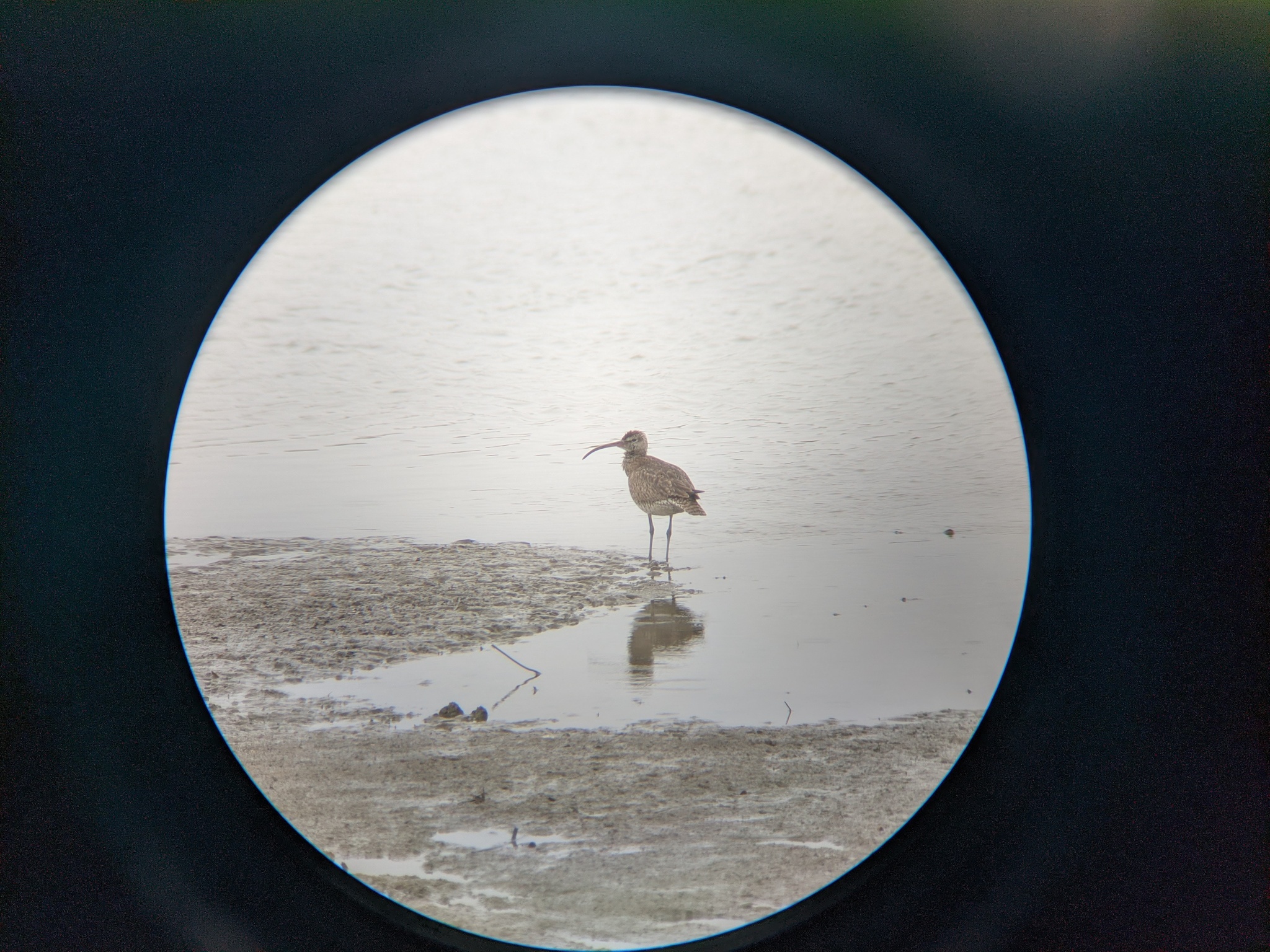
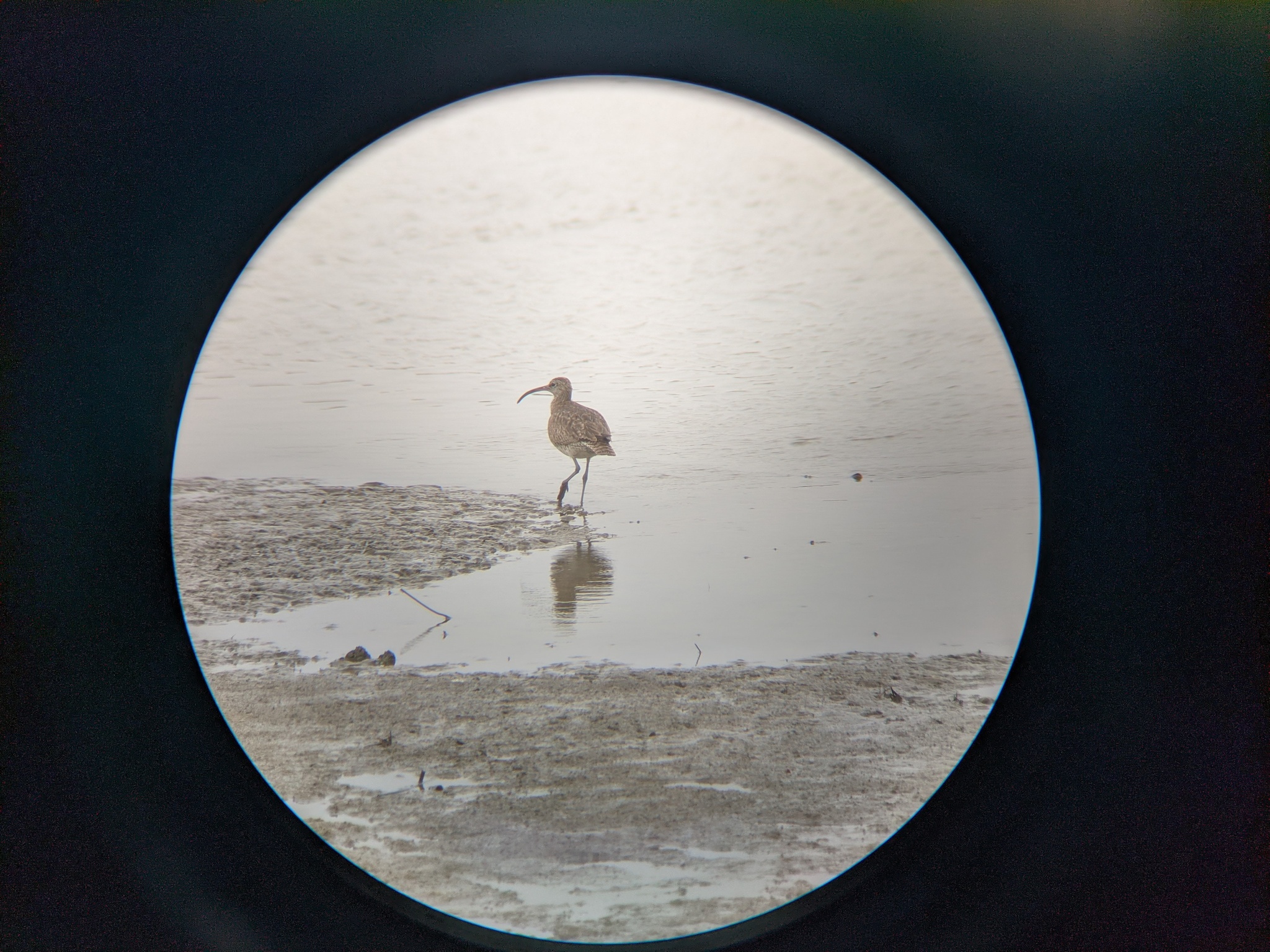
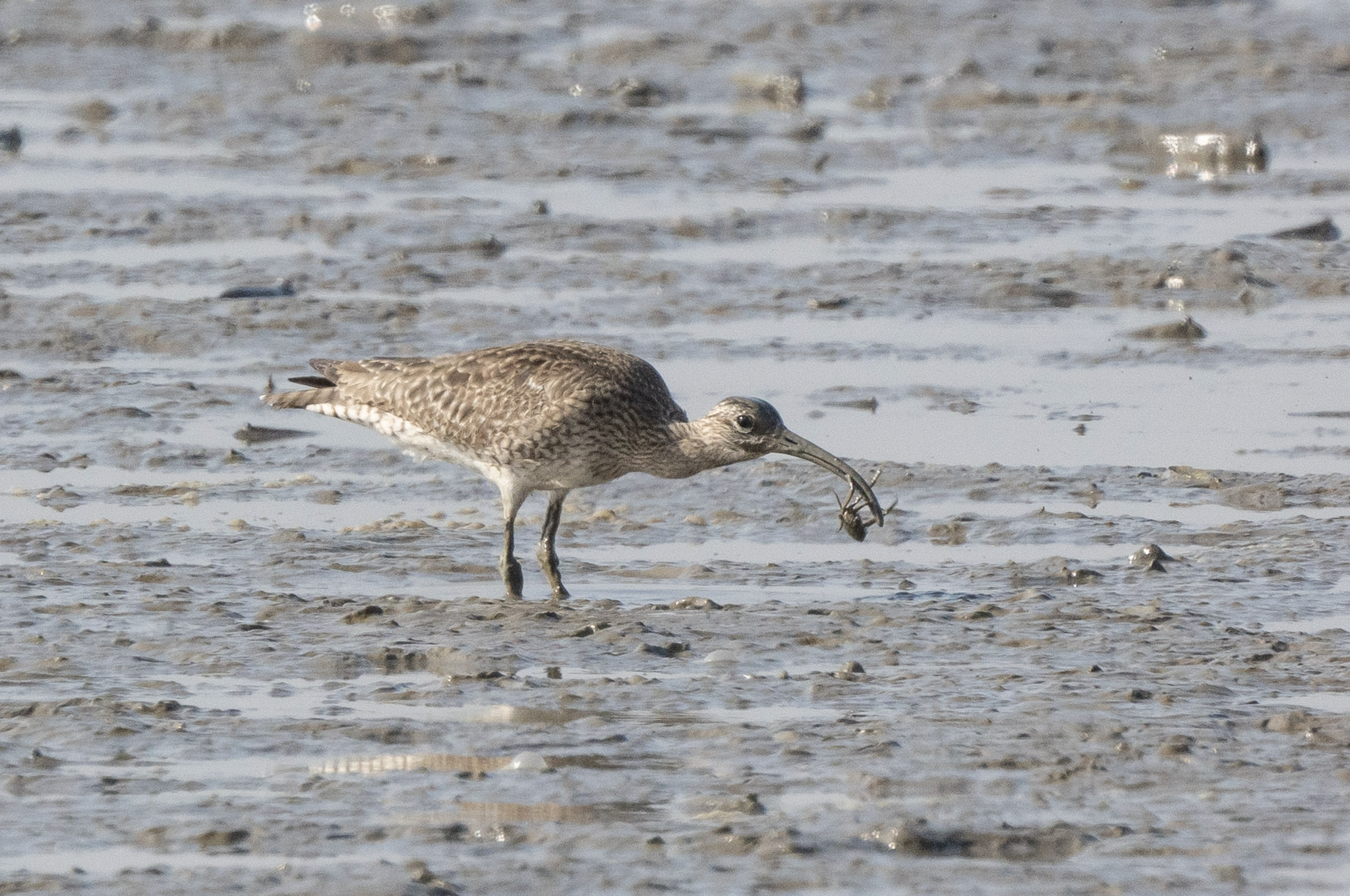
Eurasian Whimbrel
Numenius phaeopus
中杓鹬
Introduction
The Curlew Sandpiper is a medium-sized wader in the sandpiper family. It breeds across the subarctic regions of the Palearctic, including northern Europe and Scotland. It inhabits coastal mudflats, estuaries, inland wetlands, and coastal meadows during migration and winter. It gathers in large flocks during migration and winter. The species has a distinctive long curved bill. It is found across three continents. Some populations face local declines.
Description
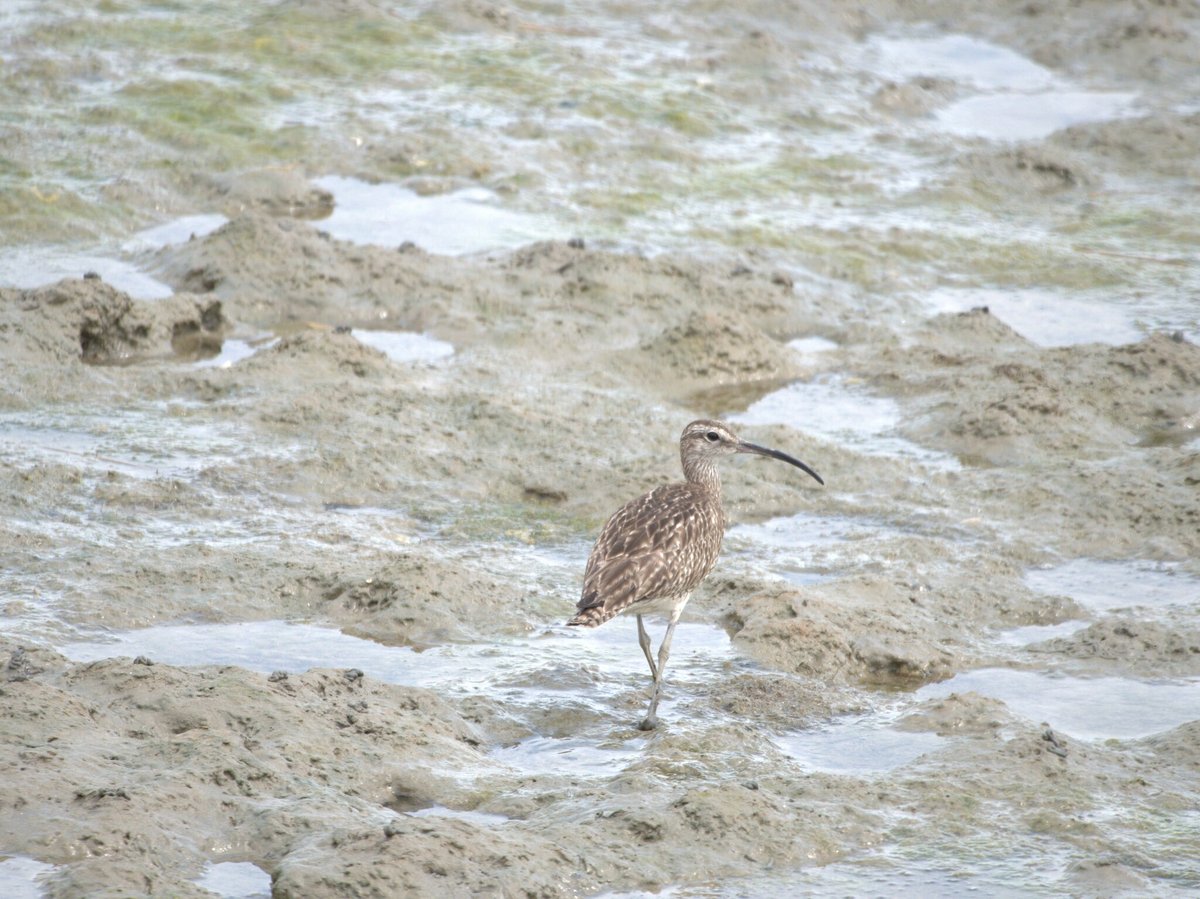
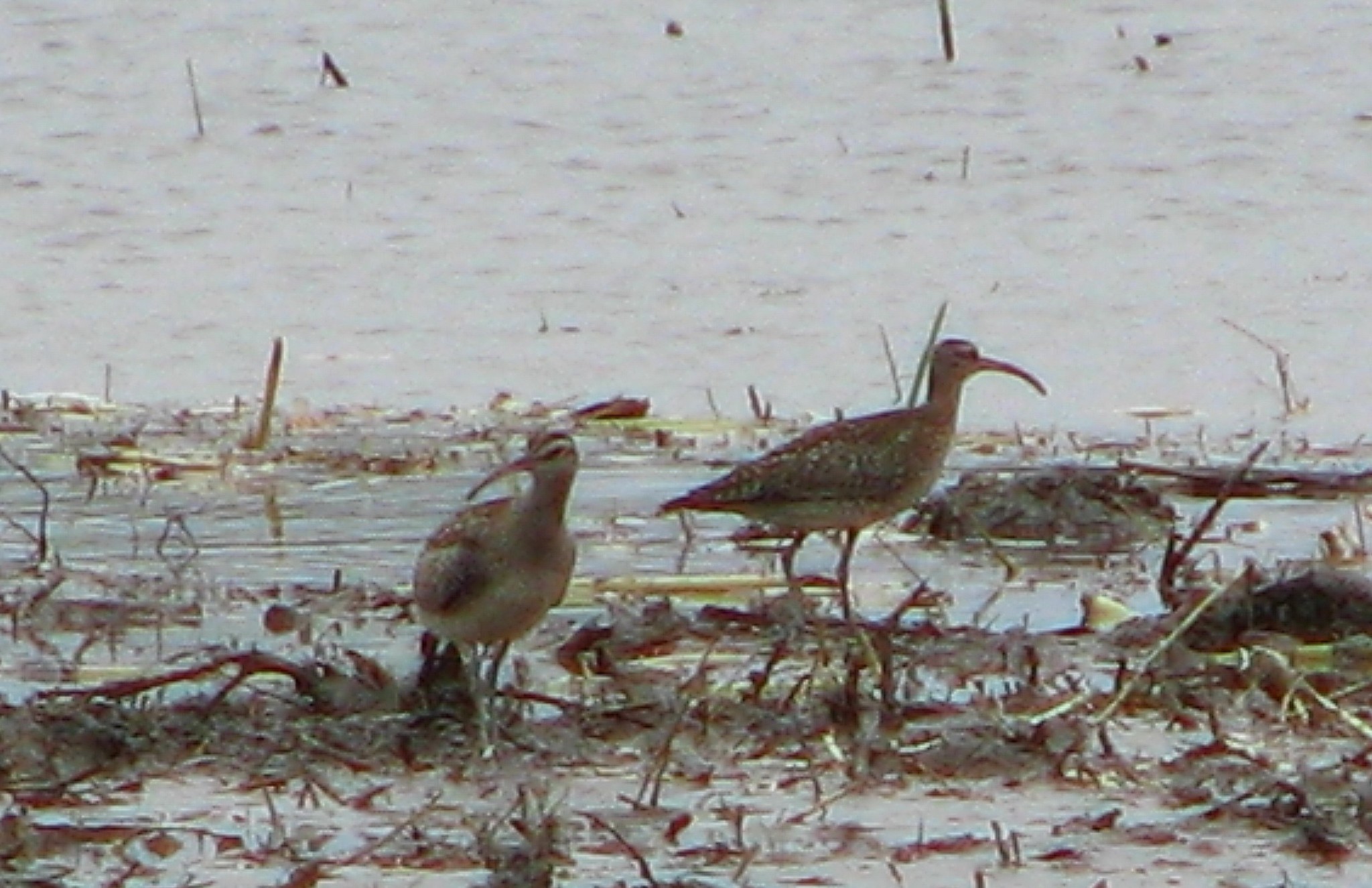
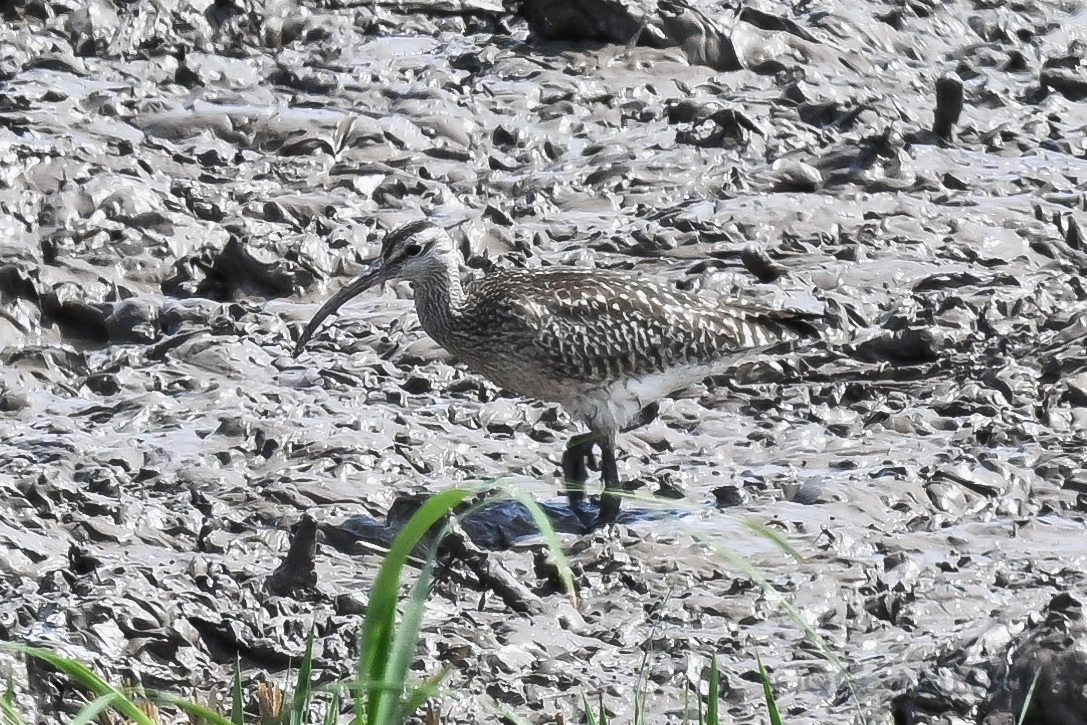
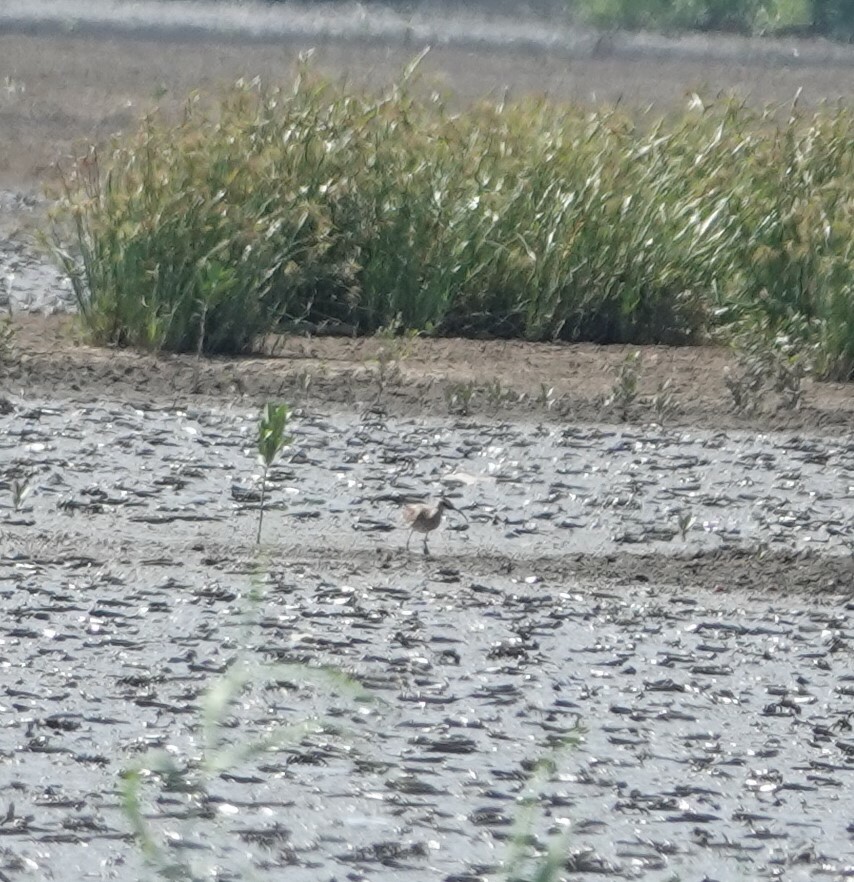
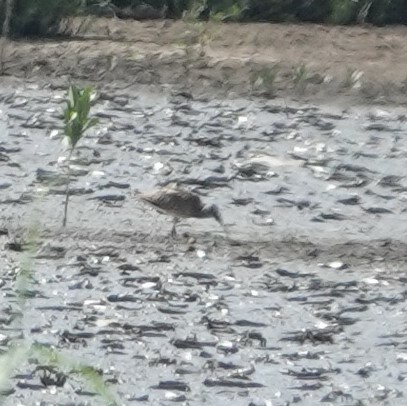
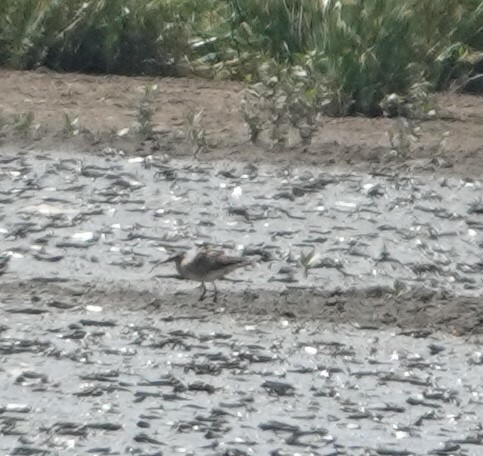
A medium-sized curlew with a distinctive appearance among waders. Adults measure 37-47 cm in length with a wingspan of 75-90 cm and weigh 270-493 g. The plumage is predominantly greyish-brown overall, though two subspecies display a white back and rump visible in flight. The most striking feature is the long, decurved bill, which unlike the smooth curve of larger curlews, possesses a noticeable kink. The head pattern is distinctive, showing a central crown stripe bordered by strong supercilia (eyebrow stripes), creating a masked appearance that helps distinguish it from similar species.
Identification
Birdwatchers can separate this species from larger curlews by its smaller size and shorter, kinked bill. The head pattern provides the most reliable field mark: the combination of a central crown stripe and prominent supercilia is distinctive. In flight, the white rump and lower back of European and Asian populations provide the best identification clue, contrasting with the dark, streaked rump of the North American species. When comparing with Eurasian curlew, the whimbrel's more compact size and different head marking are diagnostic. During winter, the greyish plumage with reduced streaking compared to breeding season can aid identification.
Distribution & Habitat
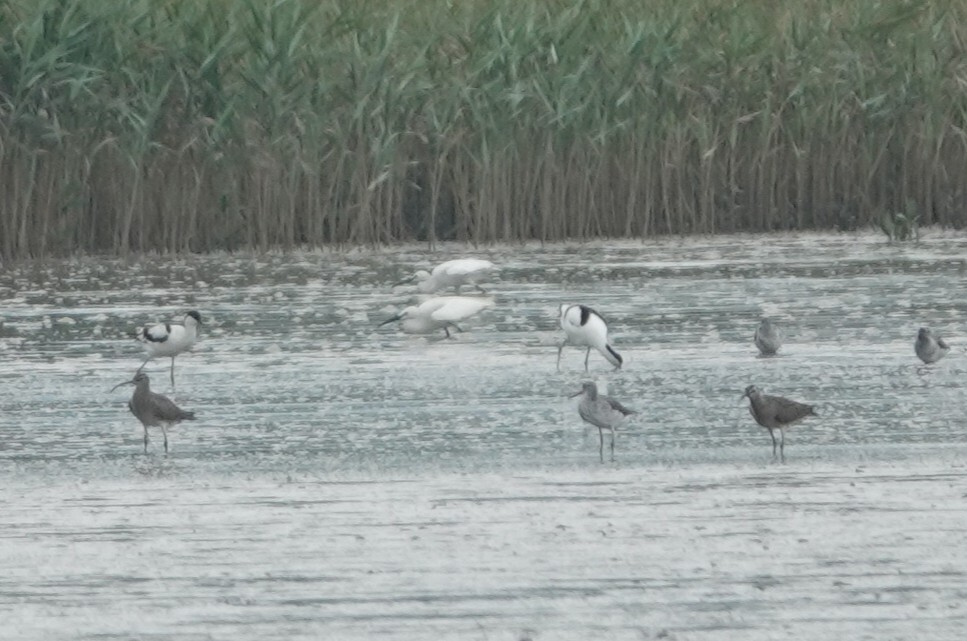
Breeding occurs across Scotland, particularly in Shetland, Orkney, the Outer Hebrides, Sutherland, and Caithness, as well as throughout the subarctic Palearctic. The species also breeds in Iceland, where it favors lowland plains, grasslands, and wetlands with low vegetation. As a long-distance migrant, it winters along coastlines from western Europe through Africa to south and southeast Asia, extending to Australia. During migration, it remains coastal and gathers in gregarious flocks, often mixing with other wader species at traditional stopover sites.
Behavior & Ecology
Breeding behavior centers on a simple scrape nest on tundra or Arctic moorland, usually positioned near low vegetation. Females lay three to five eggs and employ a clever distraction display when threatened, moving away from the nest while vocalizing to draw predators off. Chicks are precocial, emerging covered in yellow and black down with short bills and robust grey legs, becoming mobile within weeks. Feeding involves probing soft mud for invertebrates and picking crabs and other prey from the surface. Before migration, berries become an important dietary component, and insects including butterflies are also taken. The typical call is a rippling whistle, which develops into a prolonged trill during territorial singing.
Conservation
Classified as Least Concern on the IUCN Red List, though populations face significant pressures. Historical hunting along migration routes during the late 19th century caused severe declines, with numbers subsequently recovering. Current threats include climate change, habitat destruction, and susceptibility to avian flu outbreaks. Iceland supports approximately one-third of the world's breeding population, and here the situation is most alarming, with numbers crashing across most areas. Development is considered the primary driver of these local declines. The species receives protection through its listing on the Agreement on the Conservation of African-Eurasian Migratory Waterbirds.
Culture
The English name 'whimbrel' derives directly from the bird's distinctive call, making it one of several bird species named for its vocalizations. This onomatopoeic naming reflects how deeply birdsong has influenced human perception of wildlife. While specific folklore traditions are not prominent in the article, the bird's presence across multiple continents has made it a familiar sight to coastal communities worldwide, particularly among fishing and hunting cultures where waders have historically been observed as seasonal markers and indicators of coastal health.
Source: Wikipedia · CC BY-SA 3.0
Taxonomy
- Order
- Charadriiformes
- Family
- Scolopacidae
- Genus
- Numenius
- eBird Code
- whimbr5
Subspecies (5)
-
Numenius phaeopus alboaxillaris
breeds steppes of Kazakhstan? and southwestern Siberia; winters islands and coasts of western Indian Ocean
-
Numenius phaeopus islandicus
breeds northeastern Greenland, Iceland, Faroe Islands, and northern Scotland; winters to western Africa
-
Numenius phaeopus phaeopus
breeds Norway to north-central Siberia; winters to Africa and southern and southeastern Asia
-
Numenius phaeopus rogachevae
breeds north-central Siberia; winters presumably to Indian Ocean coasts
-
Numenius phaeopus variegatus
breeds northeastern Siberia; winters eastern India eastward to Taiwan, southward through Philippines and Indonesia to Australia
Data Sources
Species description from Wikipedia, licensed under CC BY-SA 3.0.
Bird images and sounds sourced from GBIF, contributed by citizen scientists worldwide under Creative Commons licenses.
Taxonomy data from AviList 2025.