

Little Curlew
Numenius minutus
小杓鹬
Introduction
The little curlew (Numenius minutus) is the smallest member of the curlew family (Numeniidae). It breeds in northern Siberia and migrates to wintering areas across Australasia, particularly northern Australia. This species is closely related to the North American Eskimo curlew (Numenius borealis). It has a compact build, a relatively short curved bill, and distinctive head patterning. During winter, it forms large flocks and feeds on small invertebrates by probing soft mud.
Description
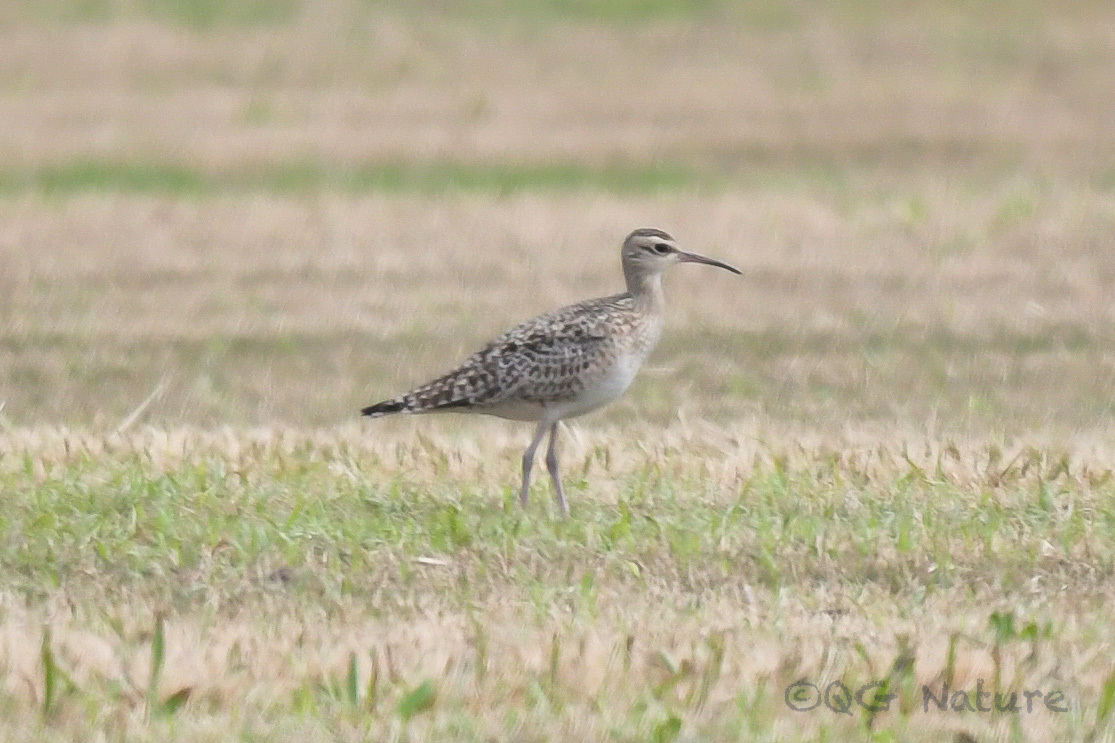
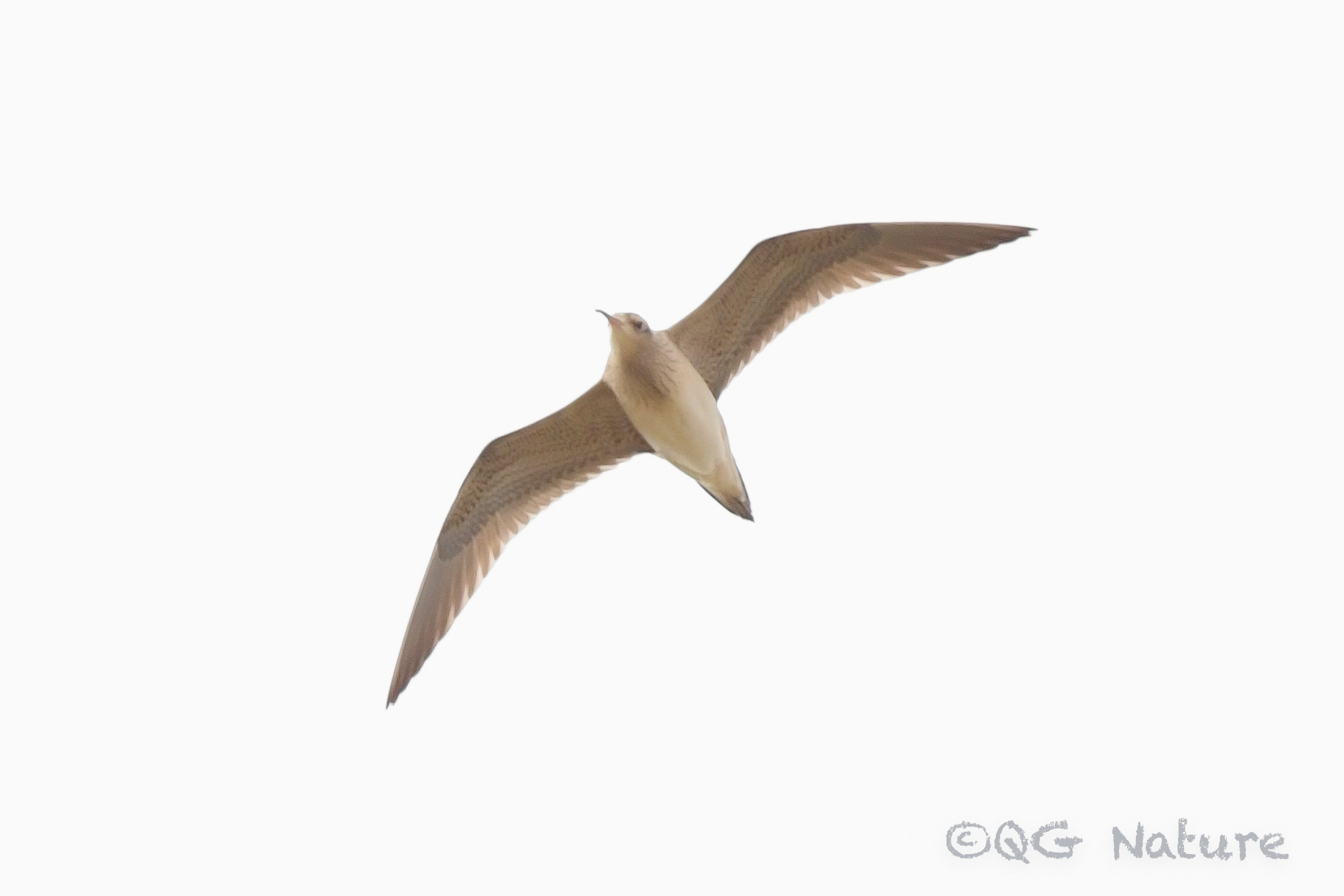
This diminutive wader displays predominantly greyish-brown plumage across its upperparts and underwings, contrasting with a clean white belly. Its most distinguishing feature is its relatively short, curved bill - notably brief compared to other curlew species. The head pattern closely resembles that of the Eurasian whimbrel, characterized by distinctive crown and superciliary stripes that create an easily recognizable facial profile. As the smallest curlew species worldwide, it measures 28-31 cm in length with a wingspan of 68-71 cm and typically weighs around 175 grams.
Identification
The combination of small size, greyish-brown plumage with white belly, and relatively short curved bill immediately distinguishes this species from larger curlews. The head pattern with crown and superciliary stripes mirrors that of the Eurasian whimbrel, though the little curlew's more compact build and notably reduced bill length provide key distinguishing features. Its repetitive whistle call can also aid identification when encountered in its wintering grounds or as a rare vagrant.
Distribution & Habitat
This strongly migratory species breeds in the far northern regions of Siberia, where it occupies forest clearings in river valleys. It winters extensively across Australasia, primarily in northern Australia, though individuals have been recorded as far south as St Kilda in South Australia. During winter, it inhabits inland grasslands, cultivation areas, and freshwater margins. The species is a very rare vagrant to western Europe, with documented sightings including a bird in Blankenberge, Belgium in September 2010 and another in the Netherlands during winter 2019/2020.
Behavior & Ecology
Breeding occurs in loose colonies within forest clearings situated in river valley systems, where the nest consists of a simple ground scrape. The species demonstrates highly gregarious behavior, forming sizeable flocks outside the breeding season. Its feeding strategy involves probing soft mud for small invertebrates. Vocalizations consist of a distinctive repetitive whistle, which serves as both a contact call and potential alarm signal.
Conservation
While specific population figures are not available, this species faces ongoing conservation concerns related to habitat degradation across its migratory range. Wetland drainage, agricultural intensification, and potential climate impacts on both breeding and wintering grounds represent primary threats. The species' dependence on specific wetland habitats during migration and winter makes it vulnerable to environmental changes. The International Union for Conservation of Nature assesses its conservation status, though precise category details would require current Red List consultation.
Culture
The little curlew does not feature prominently in cultural traditions, folklore, or mythology, though the genus name Numenius derives from Ancient Greek, referencing the crescent-shaped bill and its perceived connection to the moon. The word 'curlew' itself is imitative of the species' call and may have been influenced by Old French terminology.
Source: Wikipedia · CC BY-SA 3.0
Taxonomy
- Order
- Charadriiformes
- Family
- Scolopacidae
- Genus
- Numenius
- eBird Code
- litcur
Distribution
breeds patchily in subarctic taiga of west-central to east-central Siberia; winters coastal and inland south-central New Guinea, Port Moresby area (southeastern New Guinea), and northern Australia to west-central and east-central coasts
Data Sources
Species description from Wikipedia, licensed under CC BY-SA 3.0.
Bird images and sounds sourced from GBIF, contributed by citizen scientists worldwide under Creative Commons licenses.
Taxonomy data from AviList 2025.