Charadriiformes / Scolopacidae / Numenius
Far Eastern Curlew
Numenius madagascariensis · 大杓鹬
Introduction
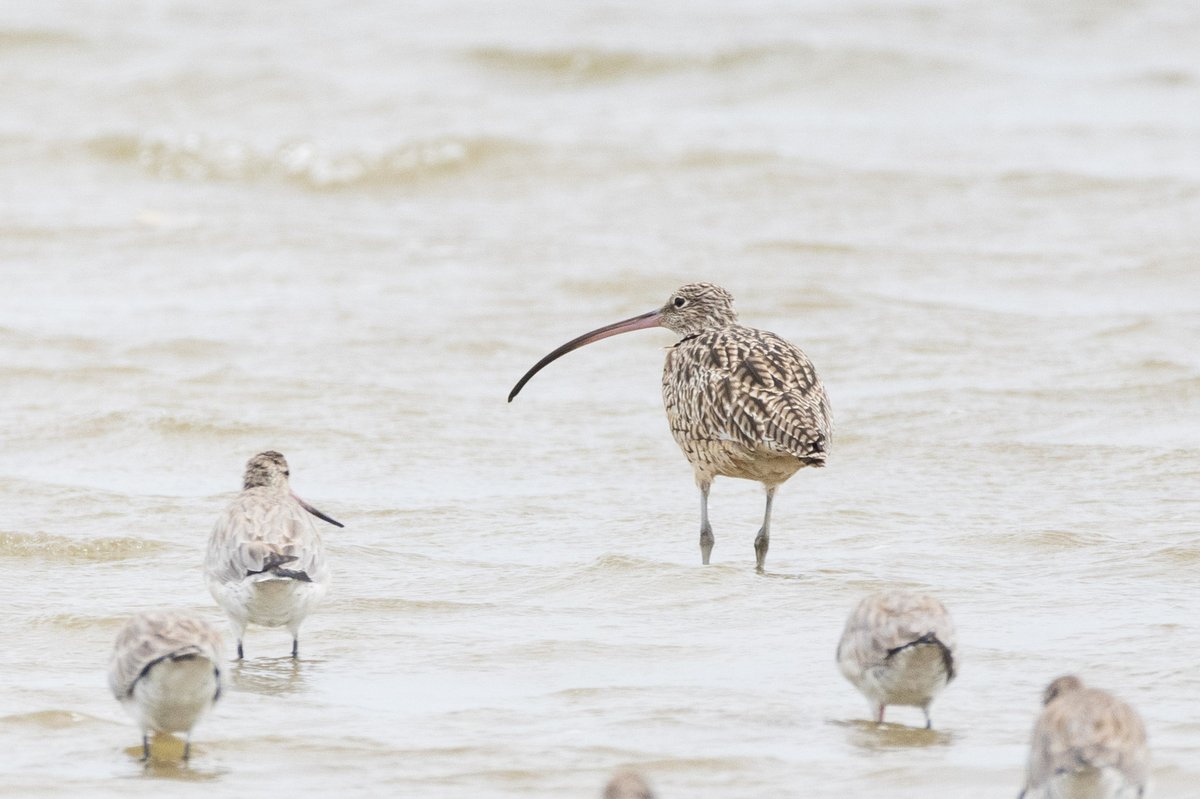
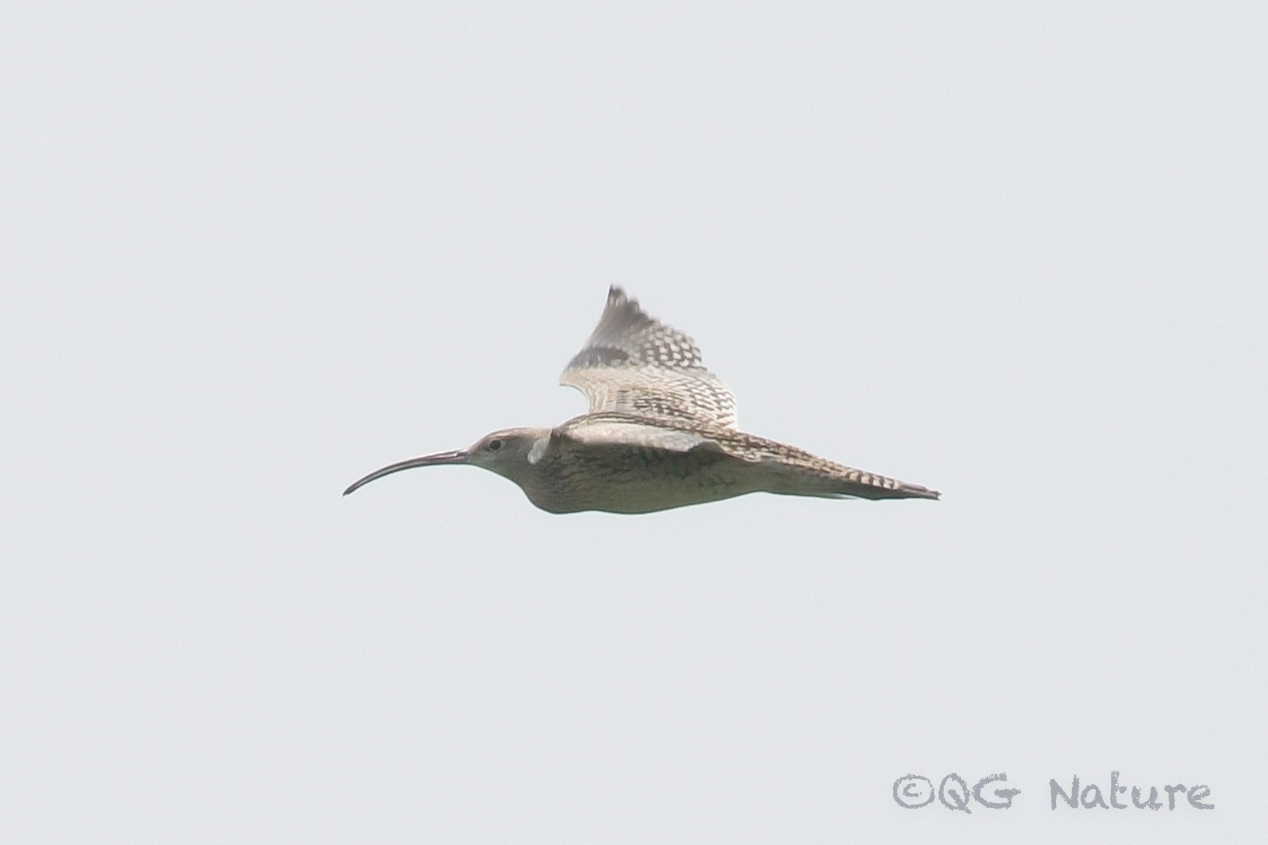
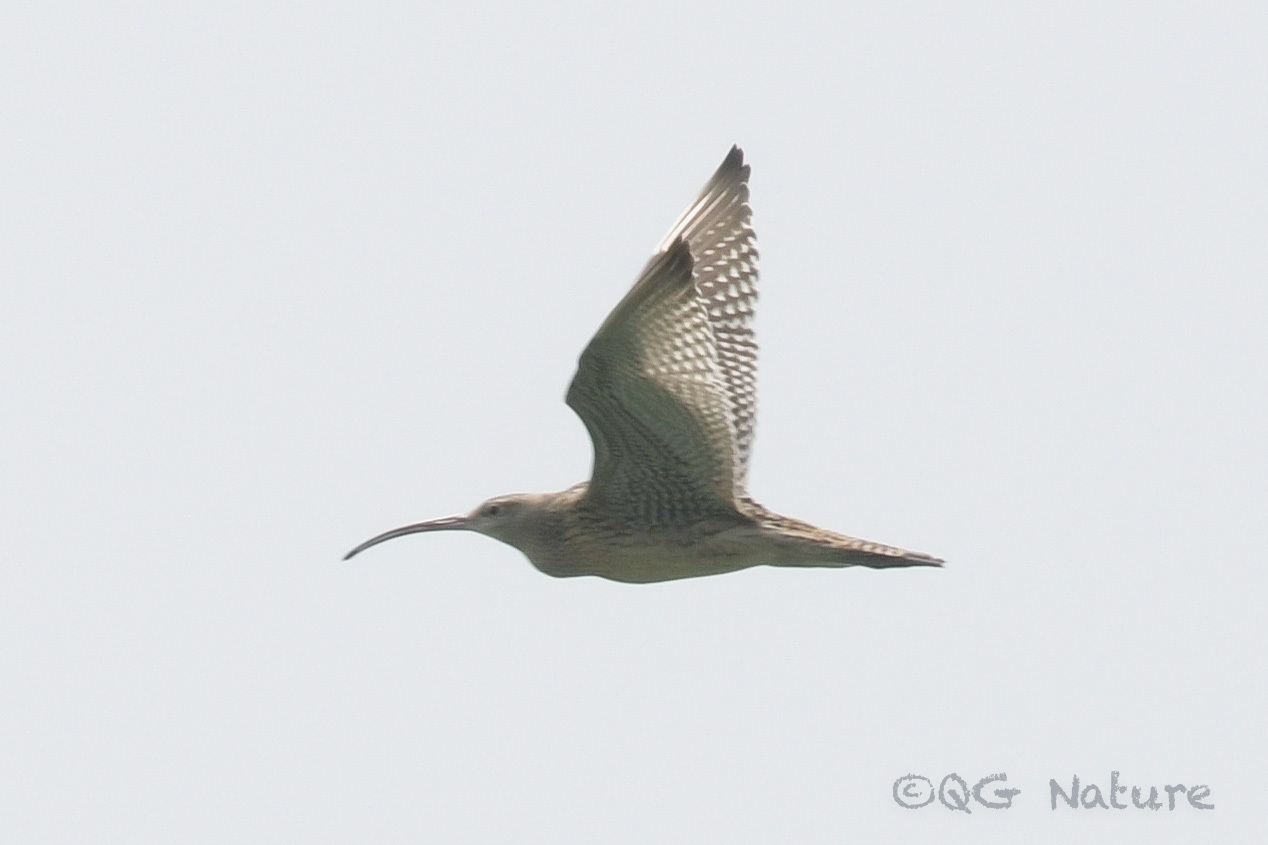
A large wader and the largest curlew, likely the world's largest sandpiper. Breeds in northeastern Asia and winters primarily in coastal Australia, with smaller populations in Southeast Asia and New Zealand. Distinctive for its plain brown underwing and extremely long decurved bill. Classified as Vulnerable on the IUCN Red List.
Description
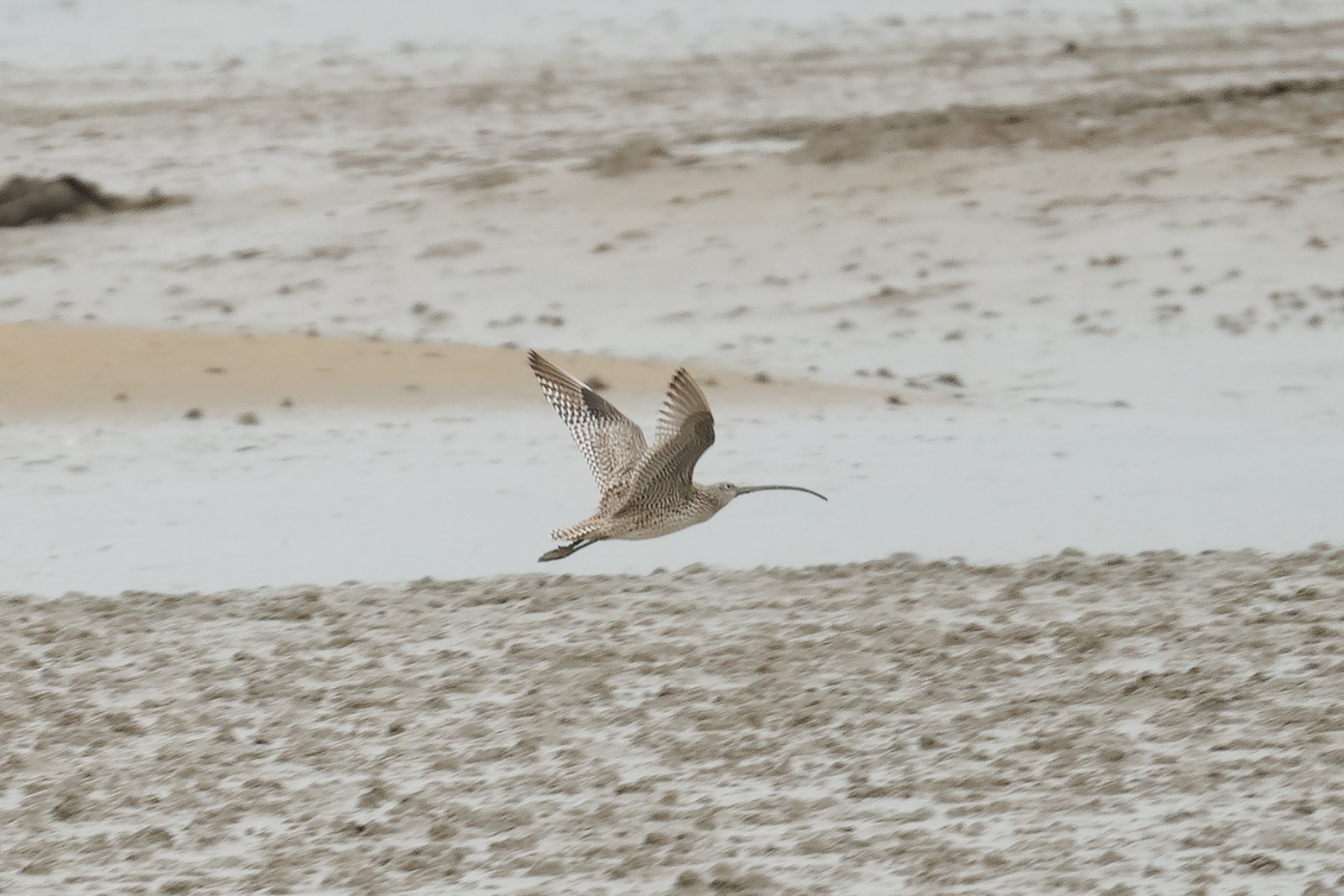
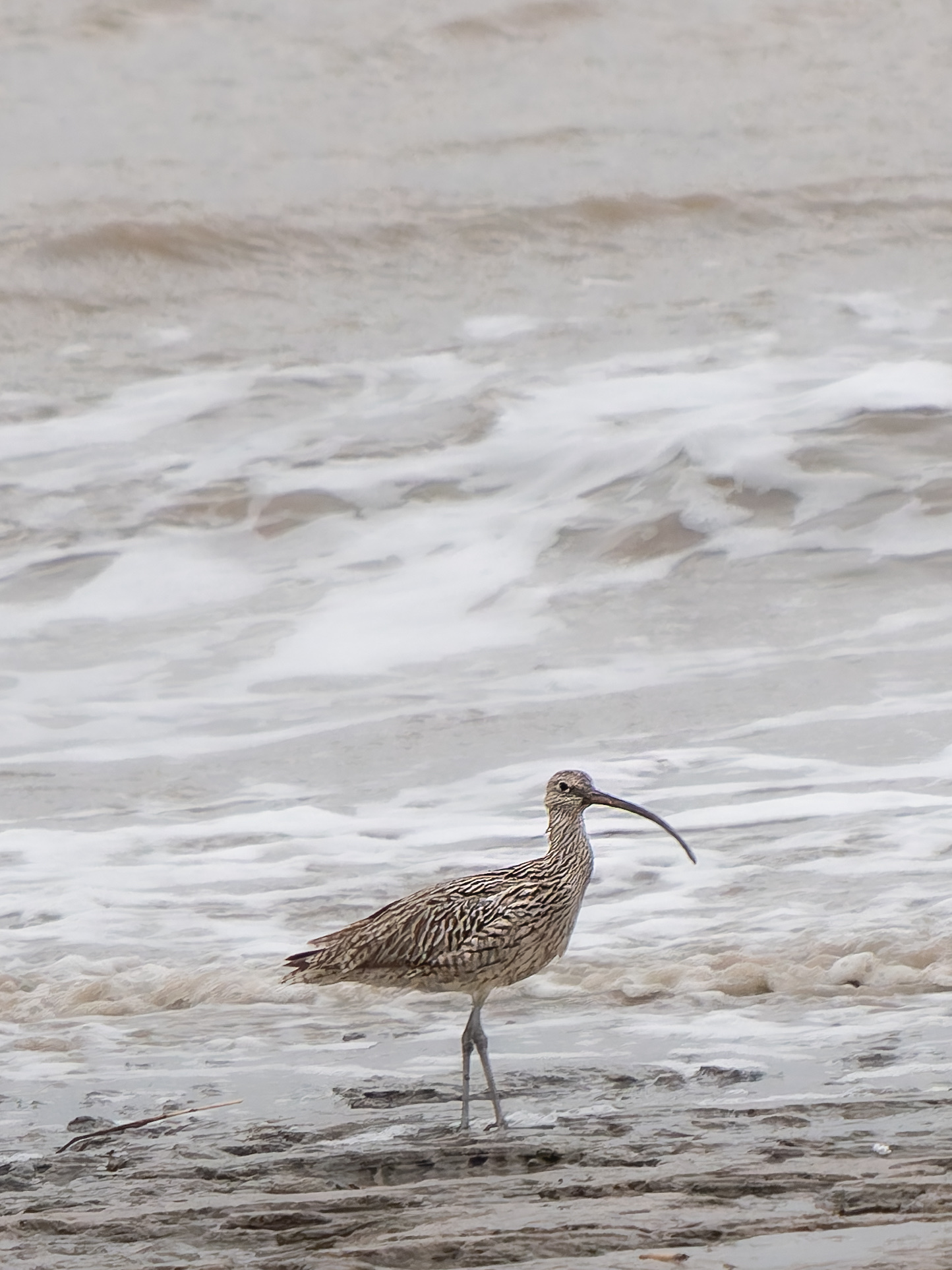
Length 60–66 cm (24–26 in), wingspan 110 cm (43 in). Weight 390–1,350 g (0.86–2.98 lb), with females averaging 100 g heavier than males. Plumage is mostly brown with a brown rump and lower back. The underwing is plain and unpatterned brown. The bill is extremely long, measuring 12.8–20.1 cm (5.0–7.9 in).
Identification
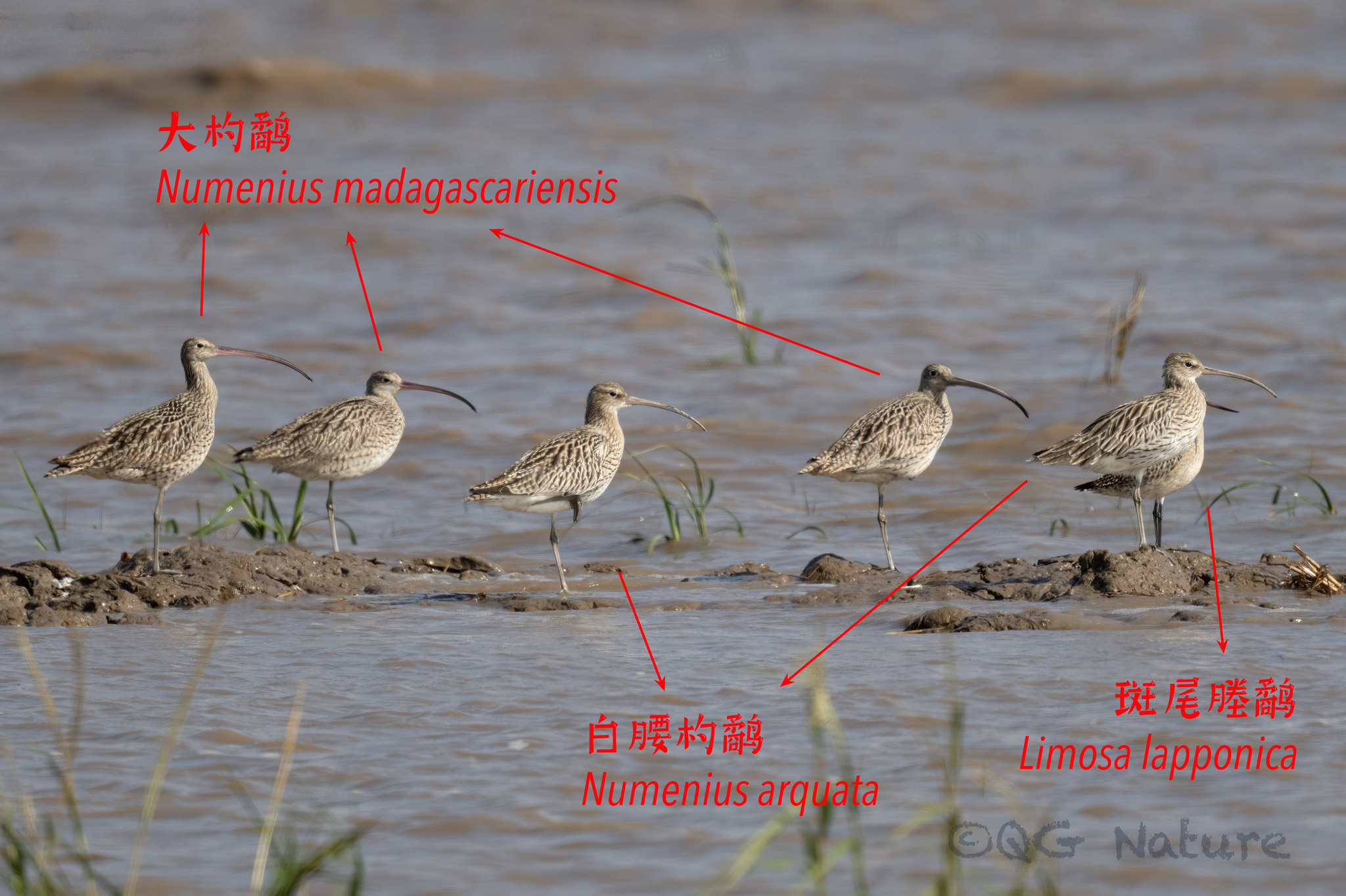
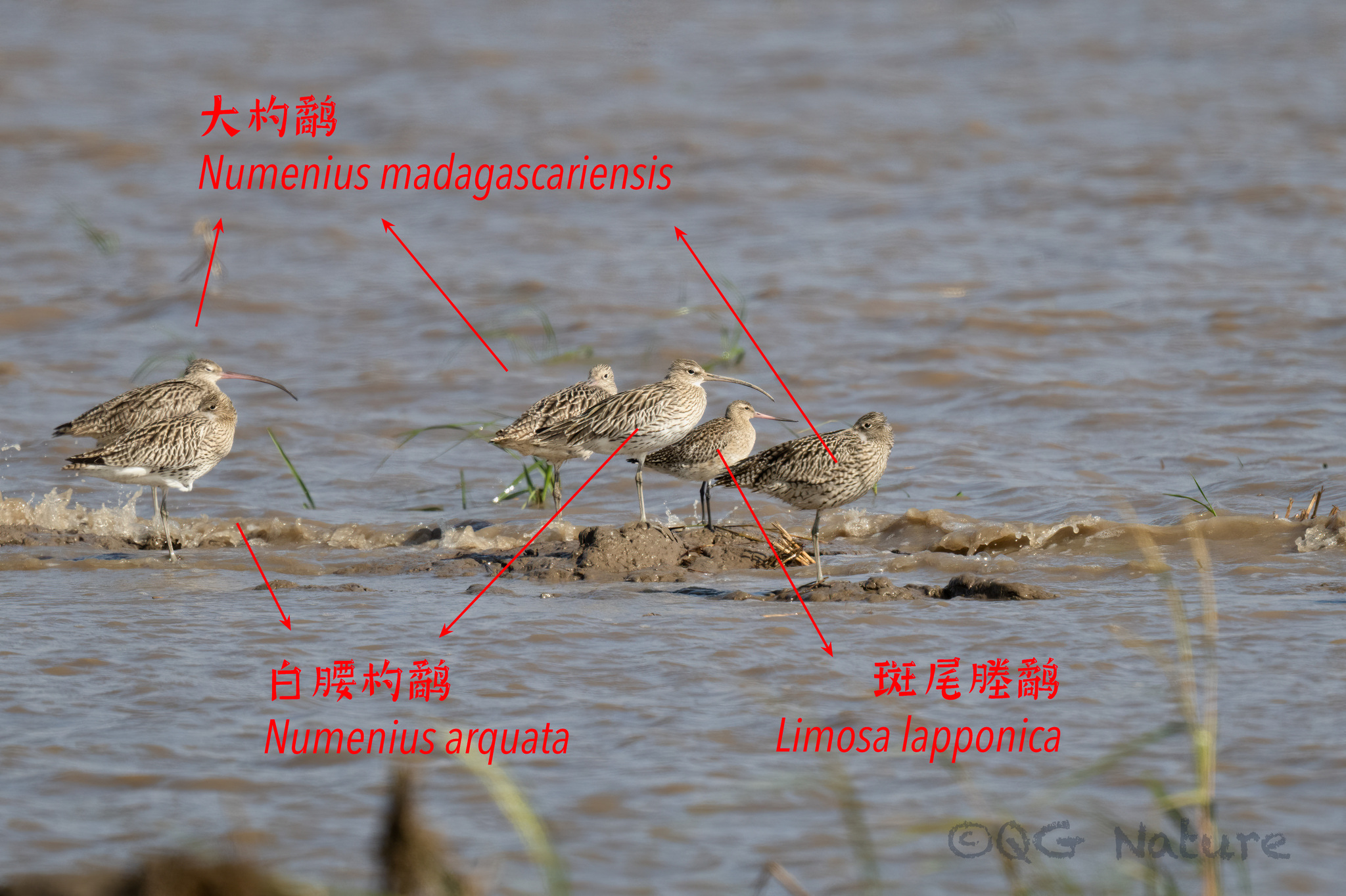
Differentiated from other curlews by its plain, unpatterned brown underwing and brown rump. Distinguished from the overlapping eastern subspecies of the Eurasian curlew by its brown rump and lower back, rather than white. Similar in appearance to the long-billed curlew but slightly larger.
Distribution & Habitat
Breeds in marshy wetlands and lakeshores in northeastern Asia, including Siberia, Kamchatka, and Mongolia. Migrates via stopovers on Yellow Sea mudflats and Japanese coasts. Winters mainly in coastal Australia, with some individuals in Indonesia, Thailand, Philippines, New Zealand, southern China, and Taiwan. Non-breeding habitats include estuaries, beaches, and salt marshes.
Behavior & Ecology
Uses its long, decurved bill to probe for invertebrates in mud. Generally congregates in large flocks for migration or roosting, though may feed solitarily. Call is a sharp, clear whistle, 'cuuue-reee', often repeated. Diet on breeding grounds includes beetle and fly larvae, amphipods, and berries. In non-breeding season, consumes marine invertebrates, preferring crabs and small molluscs, also taking other crustaceans and polychaetes.
Conservation
Estimated population of 38,000 individuals as of 2006. Uplisted to Vulnerable on the 2010 IUCN Red List. Classified as Critically Endangered in Australia under the Environment Protection and Biodiversity Conservation Act. Population decline linked to tidal flat reclamations in China, North Korea, and South Korea, causing over 65% loss of Yellow Sea mudflat stopover habitat.
Source: Wikipedia · CC BY-SA 3.0
Taxonomy
- Order
- Charadriiformes
- Family
- Scolopacidae
- Genus
- Numenius
Distribution
breeds inland wetlands from east-central Siberia to Kamchatka and Ussuriland (southeastern Russia) and Heilongjiang (northeastern China); winters to Philippines, Indonesia, Australia, and New Zealand (scarce)
Vocalizations
Data Sources
Species description from Wikipedia, licensed under CC BY-SA 3.0.
Bird images and sounds sourced from GBIF, contributed by citizen scientists worldwide under Creative Commons licenses.
Taxonomy data from AviList 2025.