Accipitriformes / Accipitridae / Nisaetus
Mountain Hawk-Eagle
Nisaetus nipalensis · 鹰雕
Introduction
A large bird of prey in the family Accipitridae and subfamily Aquilinae, native to Asia. It is a forest-dwelling opportunistic predator that varies its prey selection among birds, mammals, and reptiles. Classified as Least Concern due to a wide distribution, though populations are decreasing in response to habitat degradation.
Description
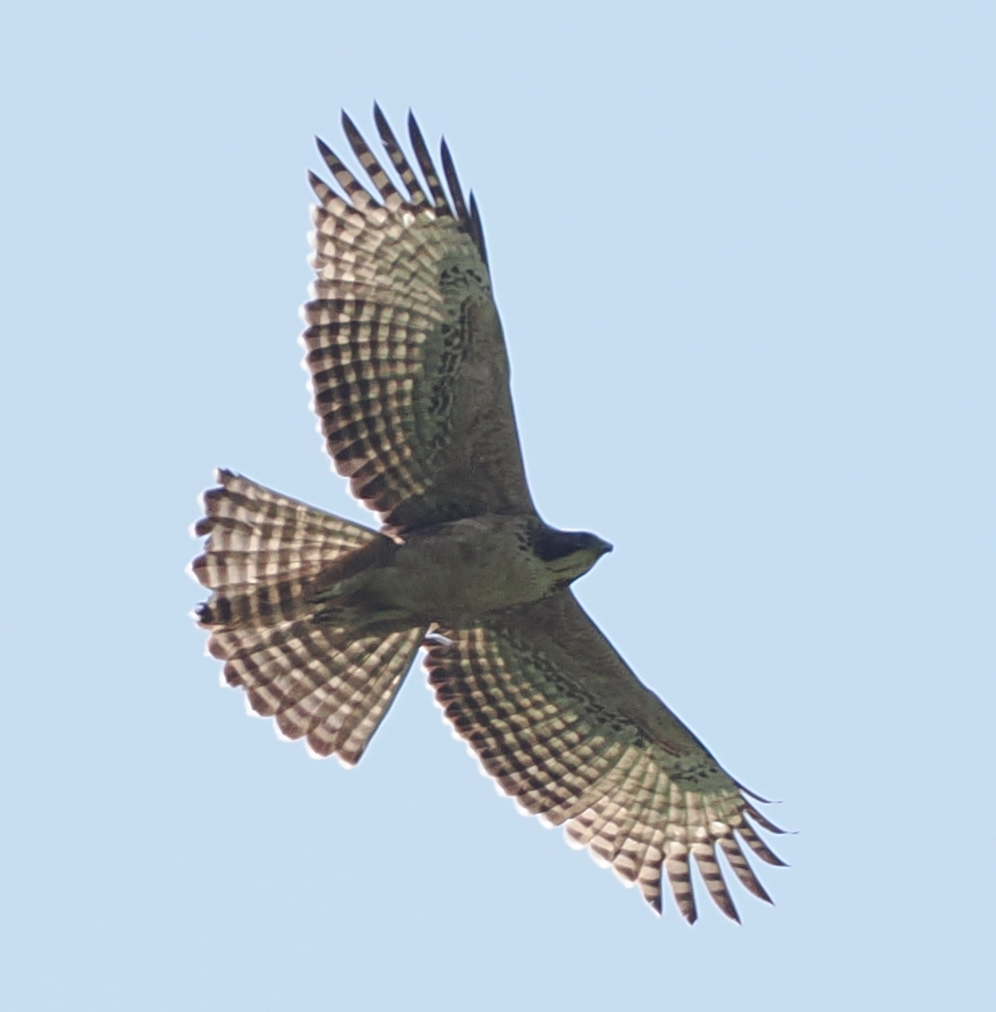
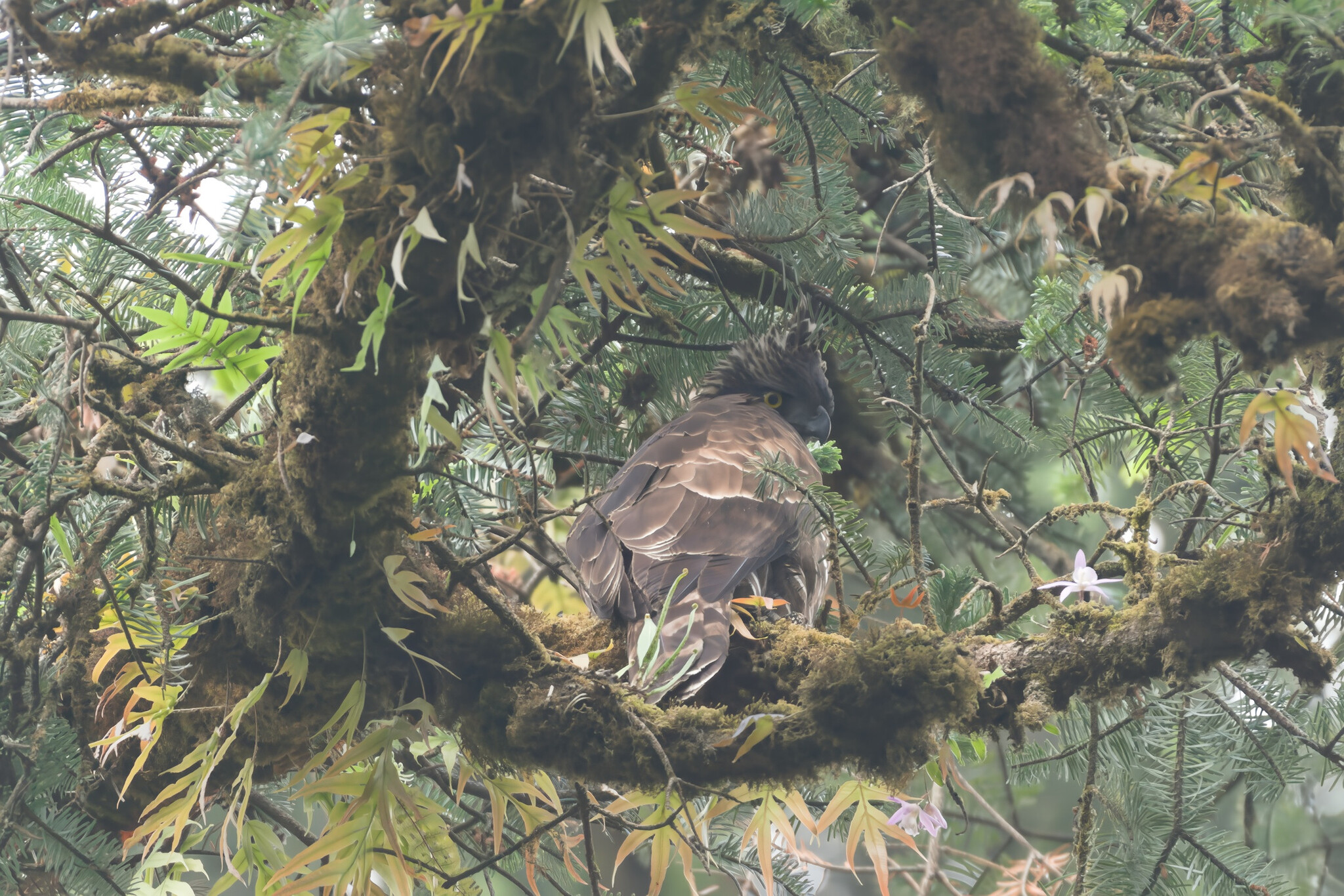
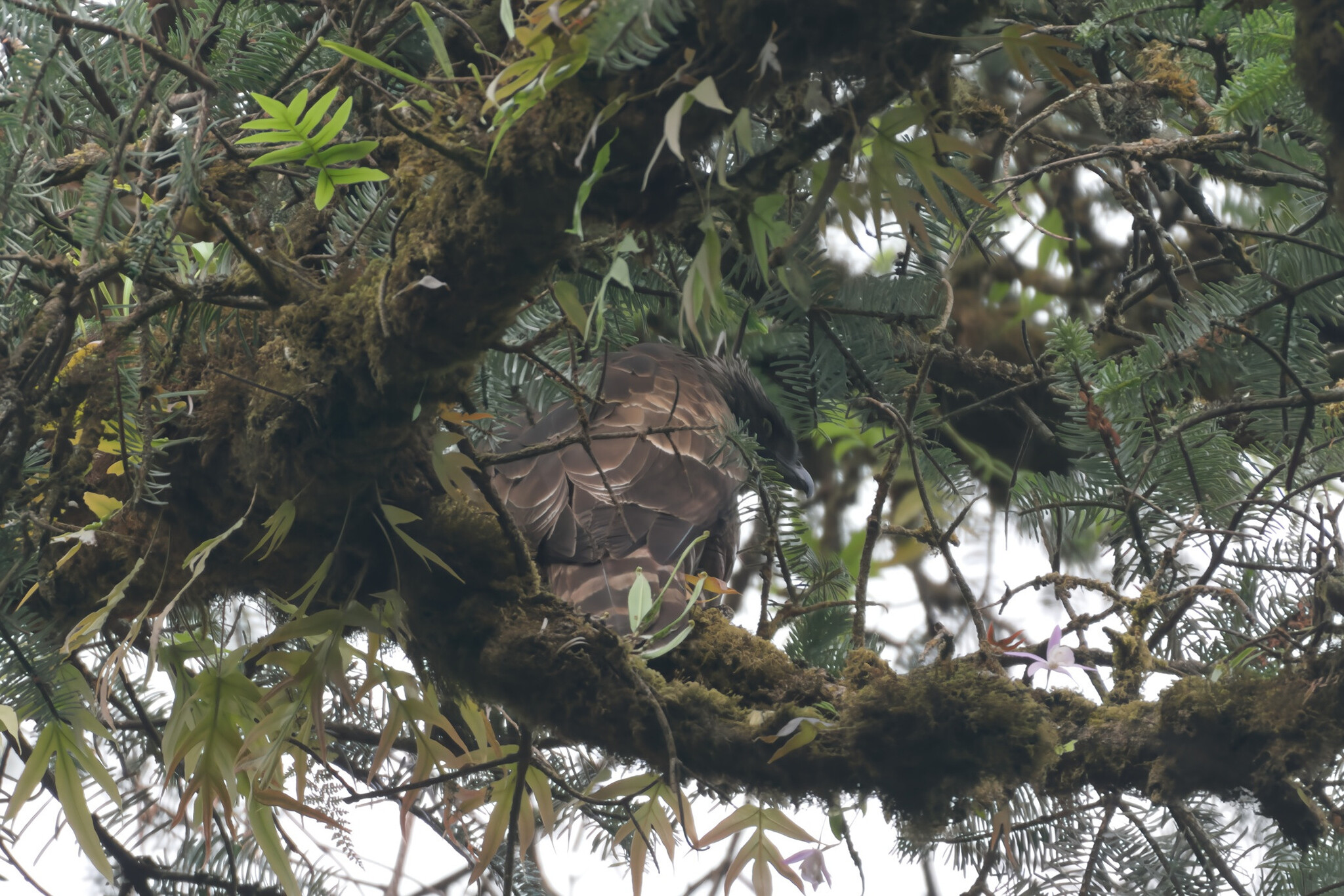
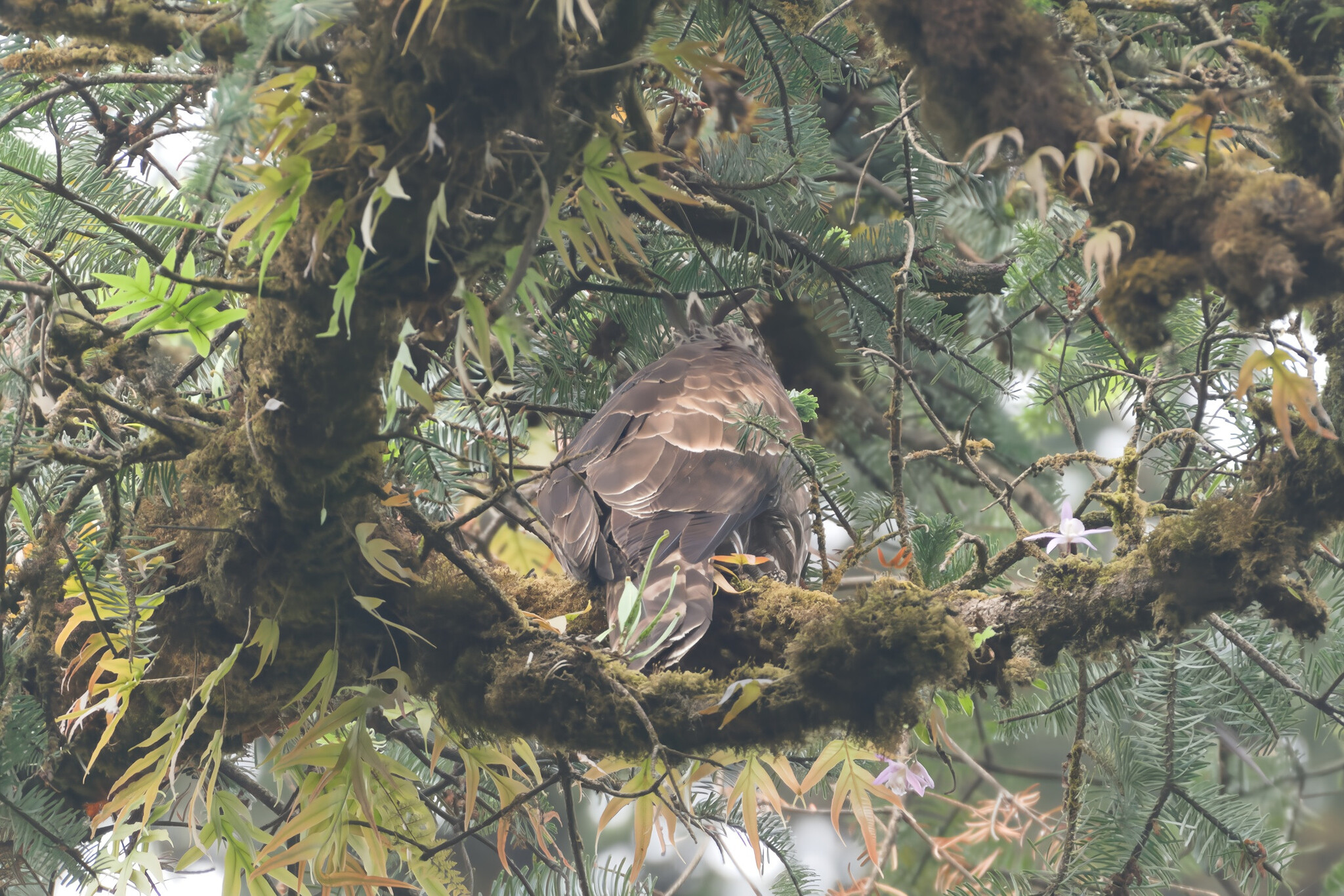
Total length 69–84 cm; wingspan 134–175 cm. Females are 3–8% larger than males on average. Features a short strong bill, long erect crest (vestigial in Japanese race), short wings, long three-banded tail, feathered legs, and powerful feet. Adults are dark brown above with rusty head streaks and a black-crested tip. Underside is whitish with bold rufous barring and blackish throat stripes. Juveniles are dark brown above with scaled wing coverts and plain buffy-tawny undersides. Eyes are golden-yellow in adults, pale bluish-grey to yellow in juveniles. The Japanese subspecies is paler with less heavy markings and a smaller crest.
Identification
Distinguished by prominent head, short rounded wings with broad hands and bulging secondaries, and long tail. Soars with wings in a shallow V. Differs from the changeable hawk-eagle by having heavier rusty barring (not streaking) on the underside, a more prominent crest, and broader wings. Juveniles are bulkier and warmer buffy-tawny compared to the paler changeable hawk-eagle. Lacks the bare legs of honey buzzards and bazas.
Distribution & Habitat
Range extends from northeastern Pakistan, through the Himalayas (India, Nepal, Bhutan), Bangladesh, Myanmar, Thailand, Laos, Vietnam, and southeastern China (including Hainan), to Taiwan and Japan. Also recorded as a rare breeder in far eastern Mongolia and Primorsky Krai, Russia. Inhabits dense hill and montane forests, primarily primary evergreen or mixed forests, from 600 to 2,800 m in the Himalayas and 250 to 1,500 m in Japan. Partially migratory, with some altitudinal movements in winter.
Behavior & Ecology
Hunts by still-hunting from concealed perches or chasing prey on the wing. Diet includes mammals (giant flying squirrels, hares, squirrels, primates), birds (pheasants, waterfowl), and reptiles. Prey size ranges from small lizards to adult red pandas (4.5 kg) and Japanese macaques (up to 10 kg). Breeding season is February–June in the Himalayas and April–July in Japan. Builds large stick nests 12–30 m high in forest trees. Clutch size is usually 1–2 eggs. Female incubates and broods; male provides food. Females are highly aggressive in nest defense.
Conservation
Classified as Least Concern, but populations are decreasing due to large-scale habitat degradation and deforestation. Threats include persecution for killing poultry, lead poisoning from scavenging hunter-killed deer, and potential disease. The Japanese population is declining, estimated at 900–1,000 individuals in the 1990s, raising concerns about genetic diversity.
Culture
Feathers are coveted by indigenous Paiwan and Rukai peoples of Taiwan. The Rukai regard the species as sacred, believing it to be a reincarnation of the sharp-nosed viper that guided their ancestors.
Source: Wikipedia · CC BY-SA 3.0
Taxonomy
- Order
- Accipitriformes
- Family
- Accipitridae
- Genus
- Nisaetus
Vocalizations
Subspecies (2)
-
Nisaetus nipalensis nipalensis
India to eastern China, Taiwan, Indochina, and Malay Peninsula
Data Sources
Species description from Wikipedia, licensed under CC BY-SA 3.0.
Bird images and sounds sourced from GBIF, contributed by citizen scientists worldwide under Creative Commons licenses.
Taxonomy data from AviList 2025.