


Crested Ibis
Nipponia nippon
朱鹮
Introduction
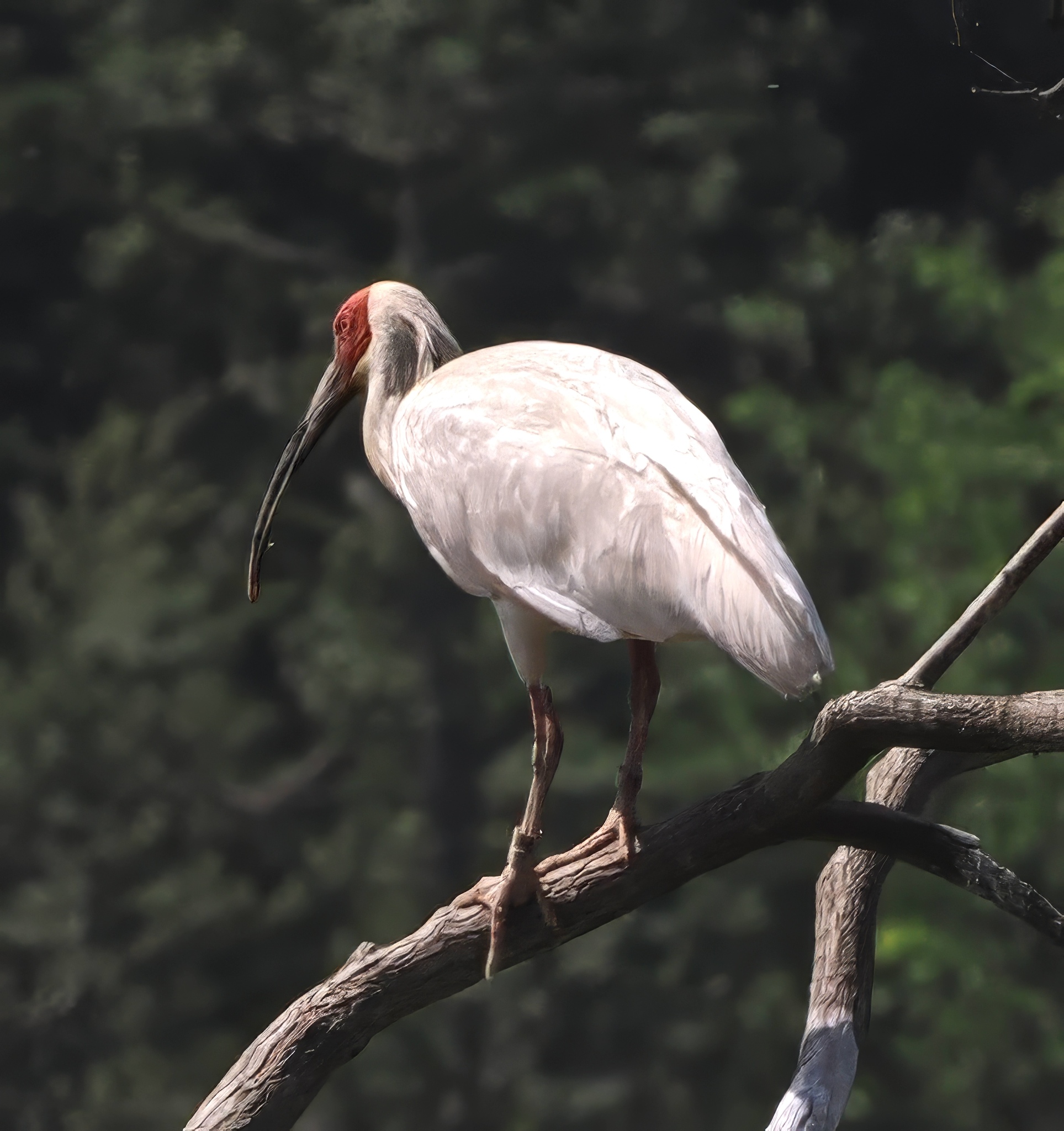
Species of ibis (family Threskiornithidae), the only member of the genus Nipponia. Native to eastern Asia. Inhabits temperate mountain forests and hilly regions, frequently active near rice paddies, riverbanks, ponds, marshes, and mountain streams. Nests in tall trees close to wetlands. Distinguished by bare red face and dense crest of plumes on the nape. Was once widely distributed across China, Russian Far East, Japan, and Korean Peninsula; now restricted primarily to Shaanxi Province, China. Classified as endangered following severe population decline from overhunting, pesticide use, habitat loss, and starvation. Last wild bird in Japan died in 2003; thought extinct in China until 1981 rediscovery.
Description
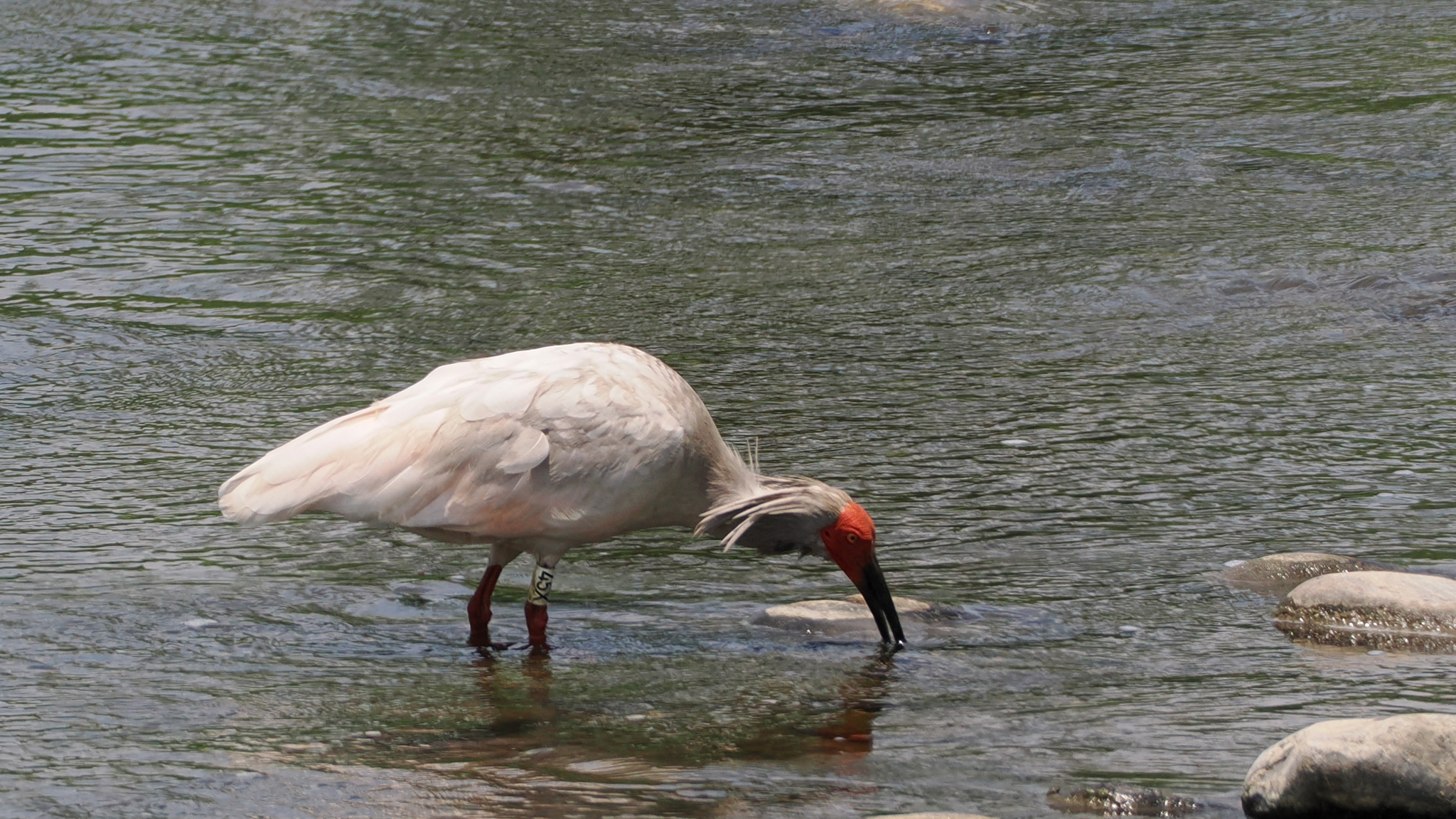
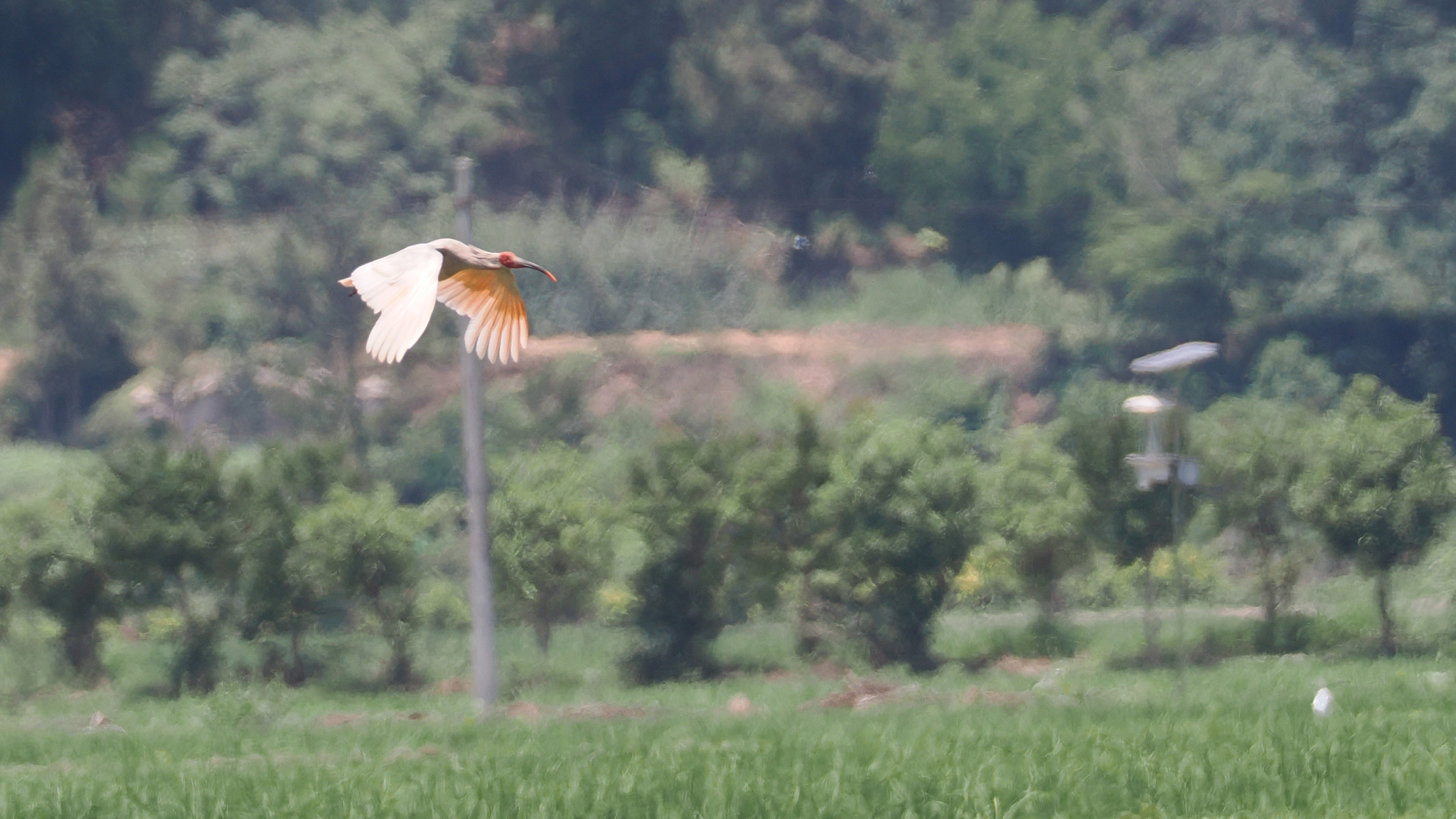
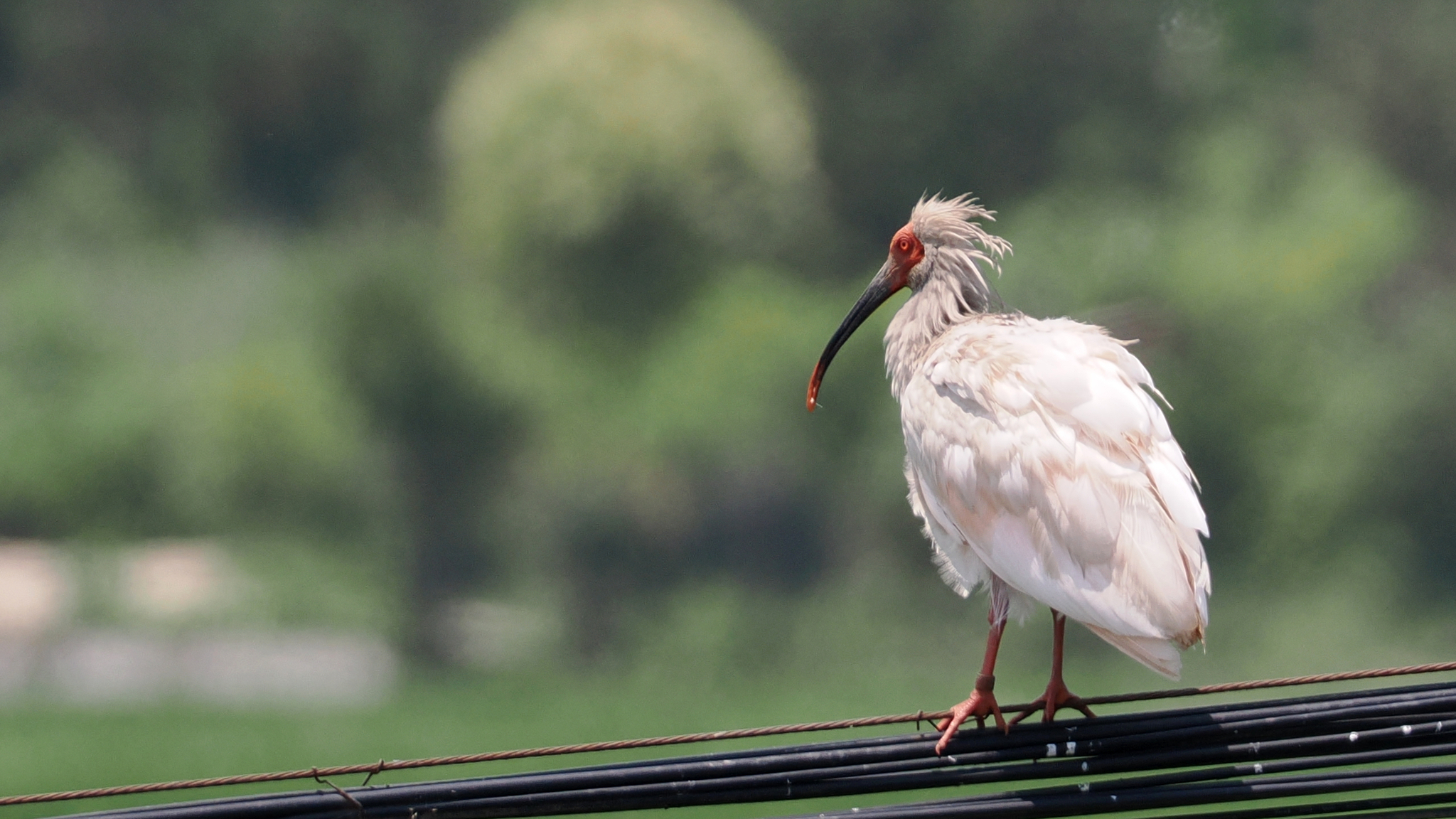
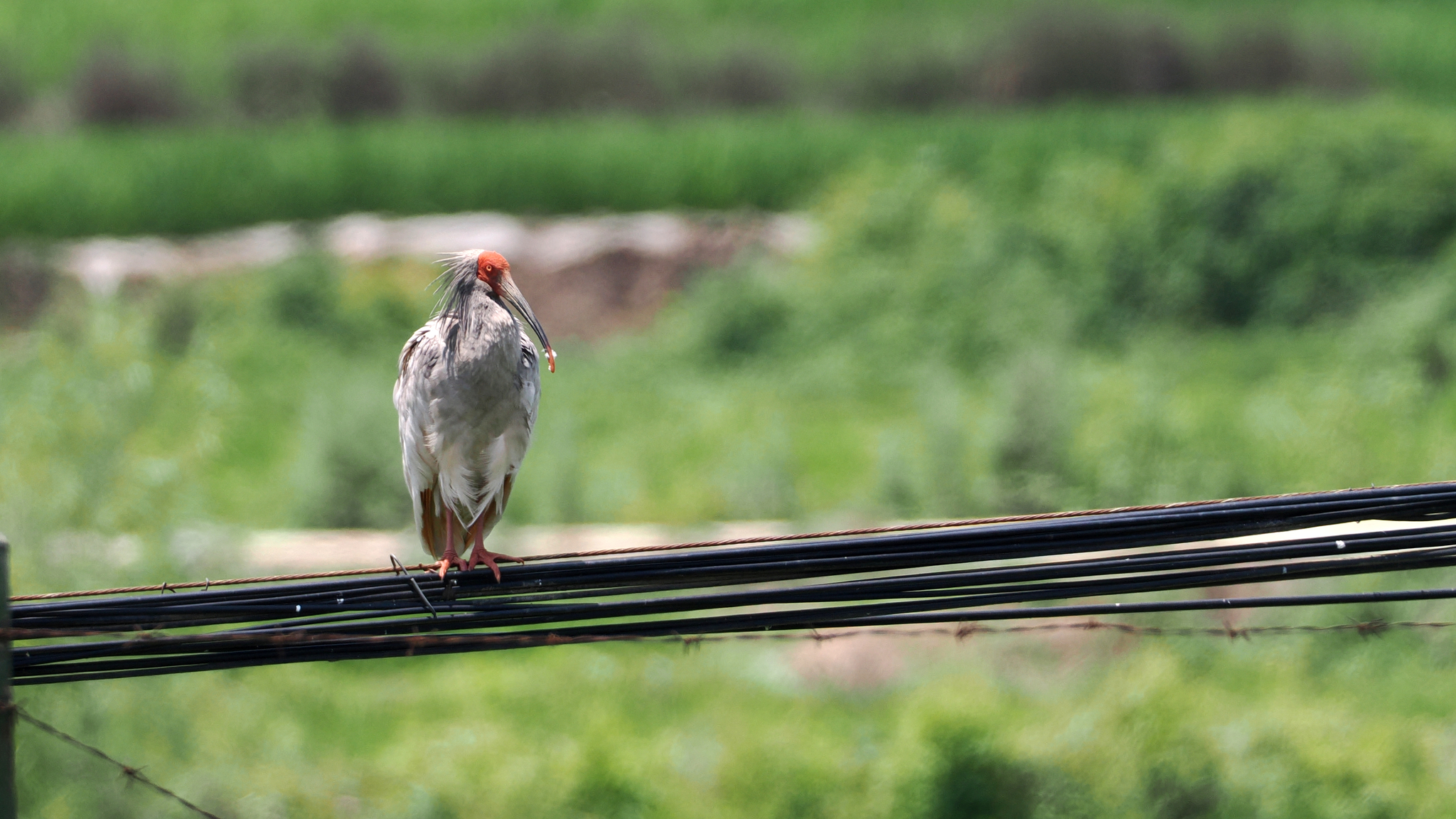
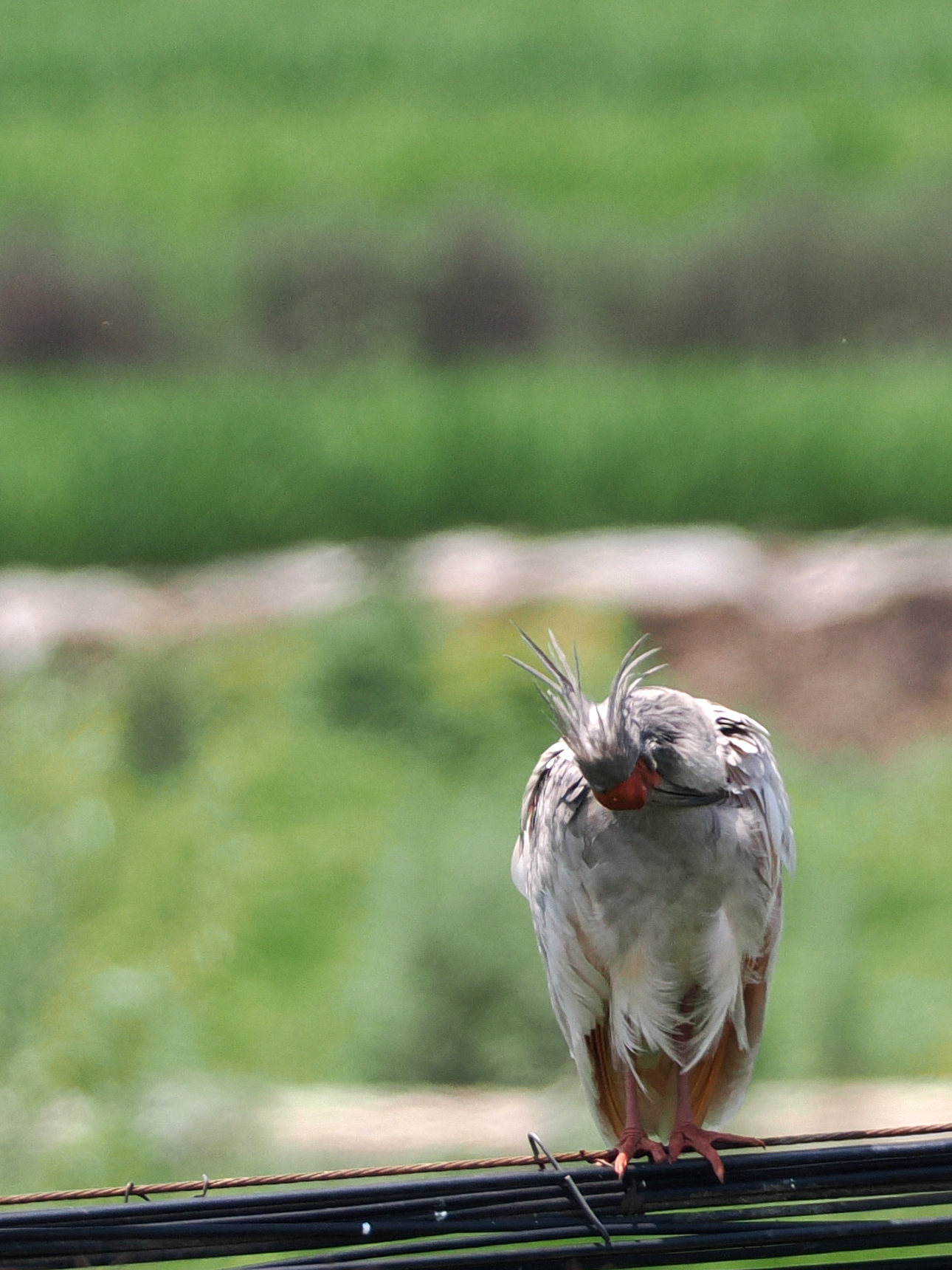
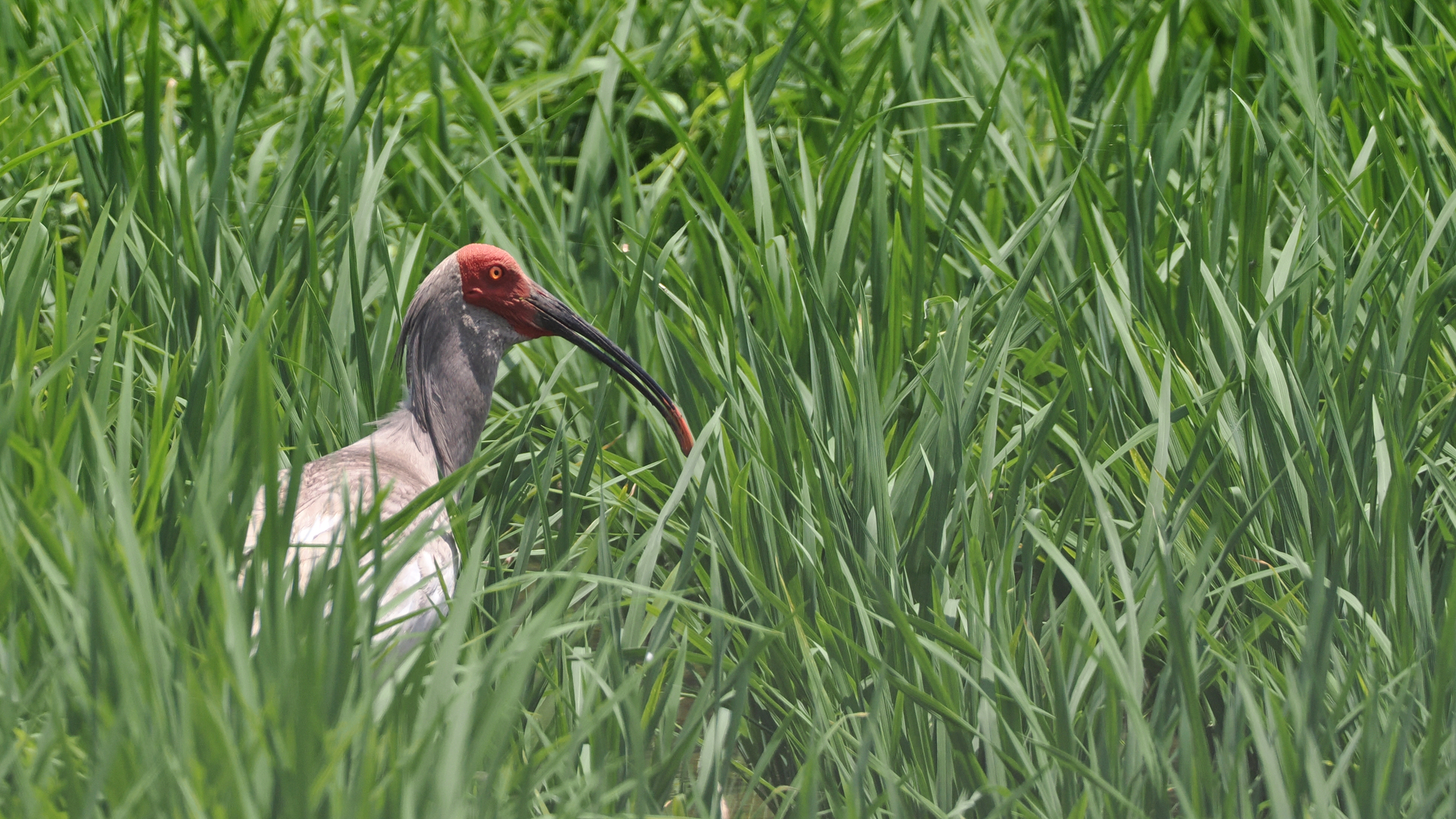
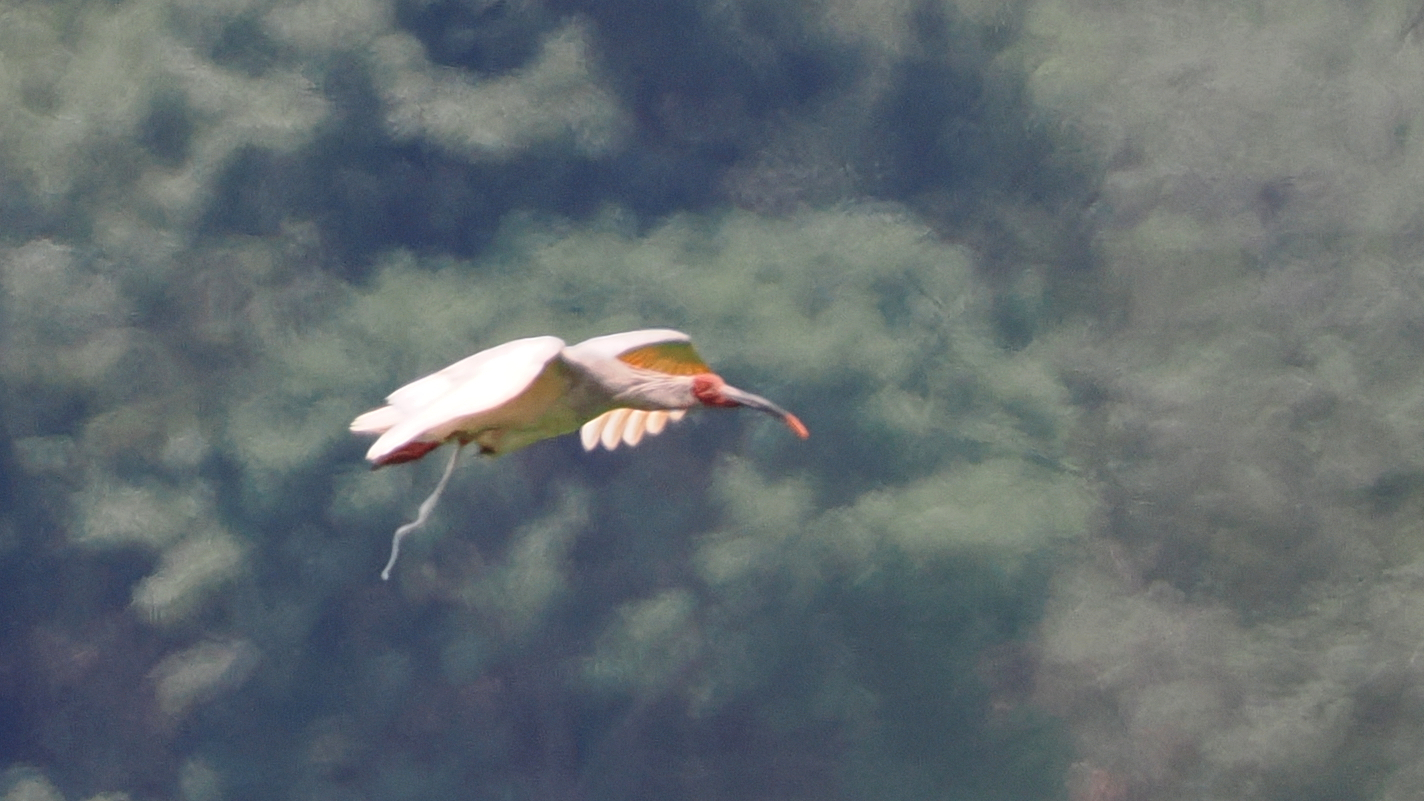
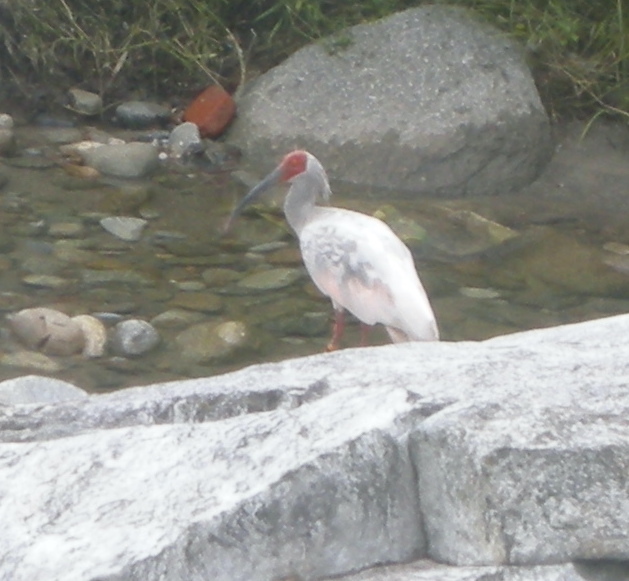
Medium-sized to large ibis measuring 55–78.5 cm (21.7–30.9 in) in length. Characterized by bare red face and dense crest of plumes on the nape. Seasonal plumage variation: winter plumage is largely white with salmon-pink tones on wings and tail; summer plumage shows pale grey upperparts and breast with darker grey shawl across back, and white underparts with salmon-pink tinge. Wing and tail appear white from above in flight, with pink-flushed flight feathers beneath. Long, strongly downcurved bill is black with red tip. Legs and feet are red. Juveniles have downy feathers on cheeks, bare orange-yellow face, smoky gray plumage with rosy sheen, pale brown legs, and light yellowish-brown iris.
Distribution & Habitat
Historically bred across northeastern, eastern, central, and western China, Russian Far East, Japan, and was a non-breeding visitor to Korean Peninsula and Taiwan. Current wild population confined to Yangxian County, Shaanxi Province, China. Migratory populations from eastern Russia, North Korea, northern Japan, and northern China move southward in autumn to overwinter in southern Japan, areas south of Yellow River, lower Yangtze River, Fujian, Taiwan, and Hainan Island. Some remain in North Korea. Southern China and Japanese populations are non-migratory residents. Inhabits temperate mountain forests and hilly regions, typically near wetlands including rice paddies, riverbanks, ponds, marshes, and mountain streams.
Behavior & Ecology
Generally solitary and quiet, vocalizing mainly when taking flight. Observed alone, in pairs, or small groups, rarely associating with other species. Slow and deliberate movements; flight characterized by steady wingbeats with head and neck extended forward and legs stretched backward. Diurnal, foraging in wetlands during day and roosting in tall trees at night. Diet consists of small fish, loaches, frogs, crabs, shrimp, snails, crickets, earthworms, beetles, hemipteran insects, crustaceans, and other invertebrates. Forages in shallow water near edges or in rice paddies, probing soil and water with long curved beak, or slowly on land scanning ground. Breeding season March to May; nests built in tall trees near water from dead branches, lined with grass and moss. Clutch of 2–5 eggs (typically 3), bluish-gray with brown spots. Incubation 28–30 days, shared by both parents. Chicks fledge at 45–50 days. Sexual maturity at 3 years; lifespan over 17 years in captivity.
Conservation
IUCN status: endangered. Last wild bird in Japan died in October 2003; population thought extinct in China until 1981 rediscovery. Major threats include overhunting, pesticide use, habitat loss, small population size, limited range, winter starvation, and persecution. Conservation measures include extensive captive breeding programs in China and Japan, CITES Appendix I listing, and China's State Protection List. Reintroduction to Japan began in 2008; by 2022, nearly 500 individuals returned to Sado Island. South Korea has bred over 360 crested ibises at restoration center in Changnyeong and released dozens into the wild. Conservation success story demonstrating effective intervention for a species once facing imminent extinction.
Culture
Known as toki (トキ) in Japan, where it holds special cultural significance. The successful conservation and return of the species to Sado Island has become a symbol of ecological recovery, drawing tourists who come to observe its distinctive pink plumage and curved beak. The reintroduction effort involved international diplomacy and agricultural changes on the island. Represents one of the rare conservation success stories among globally threatened bird species, transforming from a species on the brink of extinction to a celebrated emblem of environmental restoration.
Source: Wikipedia · CC BY-SA 3.0
Taxonomy
- Order
- Pelecaniformes
- Family
- Threskiornithidae
- Genus
- Nipponia
- eBird Code
- creibi1
Distribution
China (mainly Shaanxi, in north-central China); reintroduced into southern South Korea (Upo Wetlands) and Sado Island, northwestern Japan
Data Sources
Species description from Wikipedia, licensed under CC BY-SA 3.0.
Bird images and sounds sourced from GBIF, contributed by citizen scientists worldwide under Creative Commons licenses.
Taxonomy data from AviList 2025.