Strigiformes / Strigidae / Ninox
Northern Boobook
Ninox japonica · 日本鹰鸮
Introduction
Member of the family Strigidae, endemic to eastern and southern Asia. Recently separated from Ninox scutulata. Includes two subspecies: migratory N. j. japonica and non-migrant N. j. totogo. Classified as Least Concern by the IUCN Red List.
Description
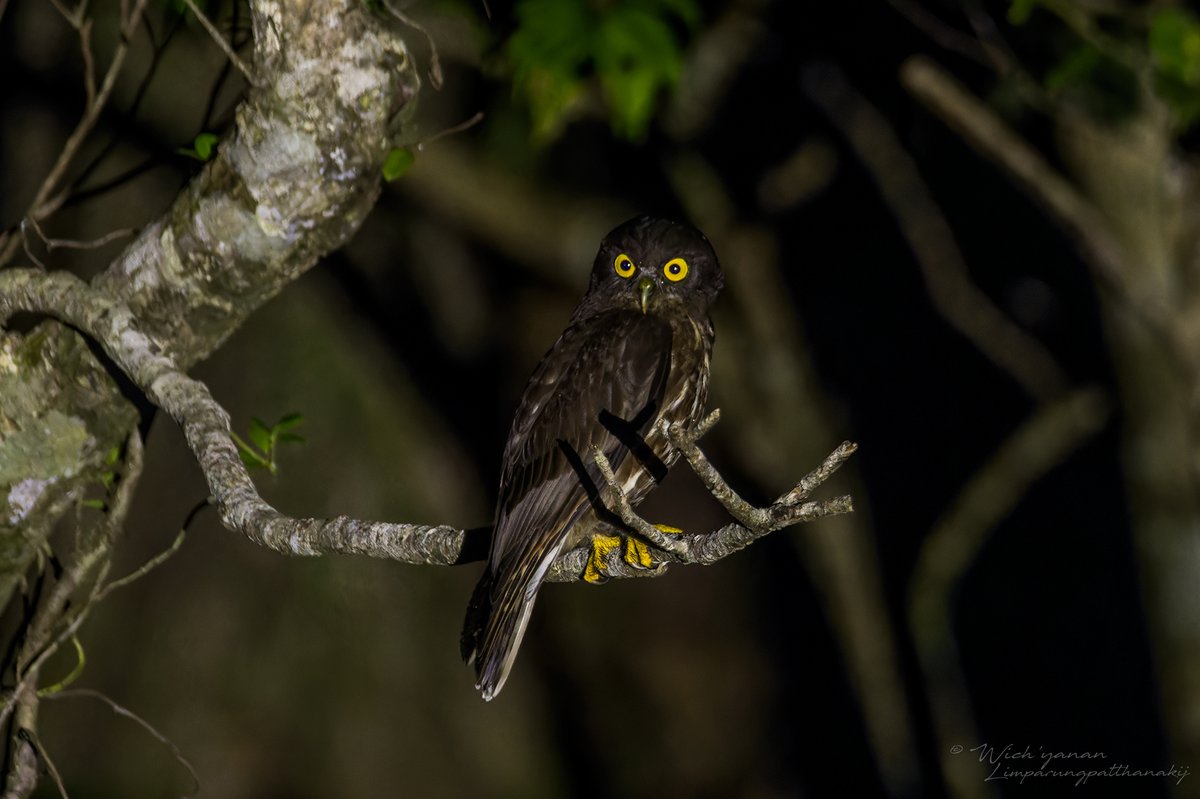
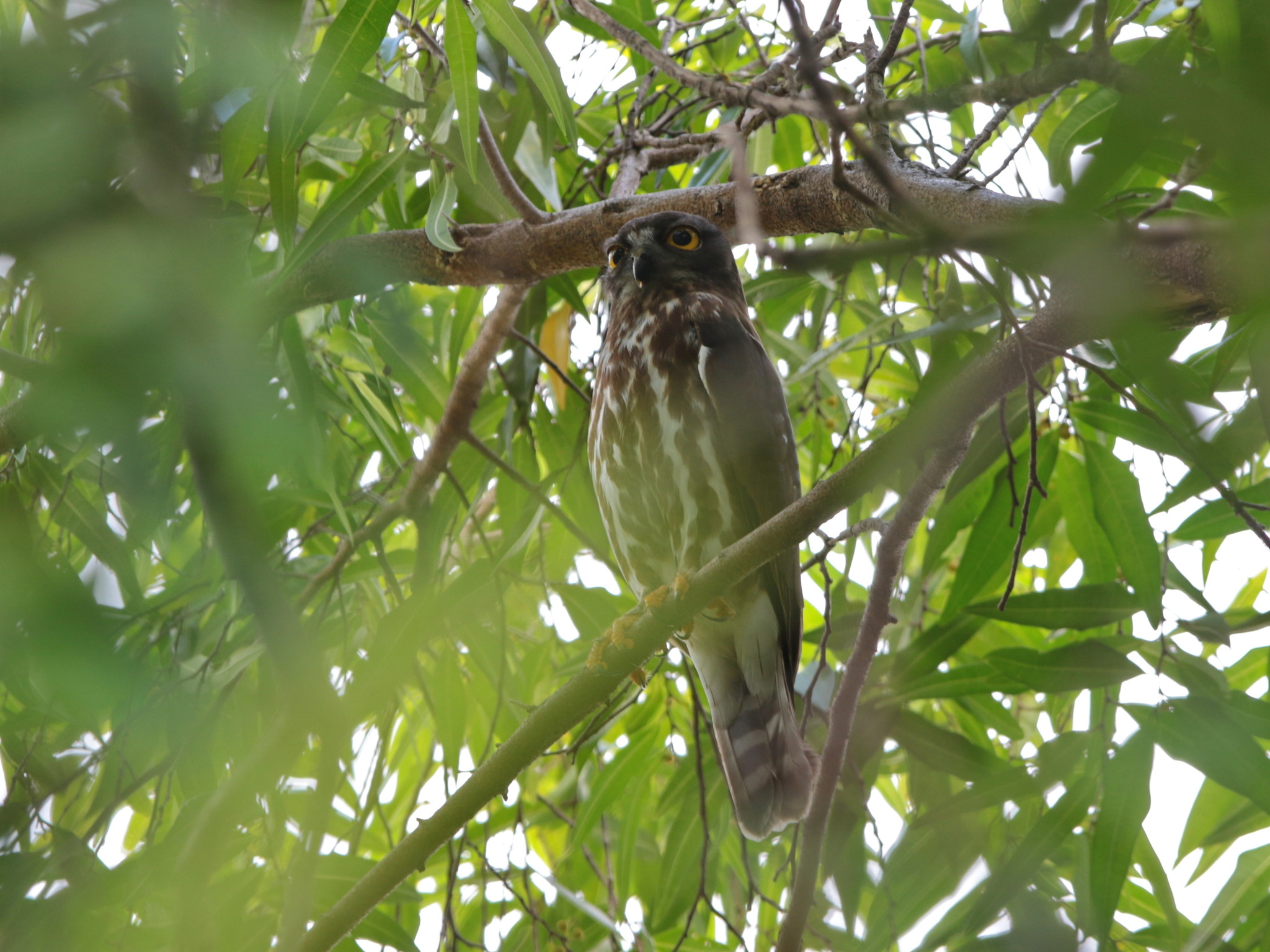
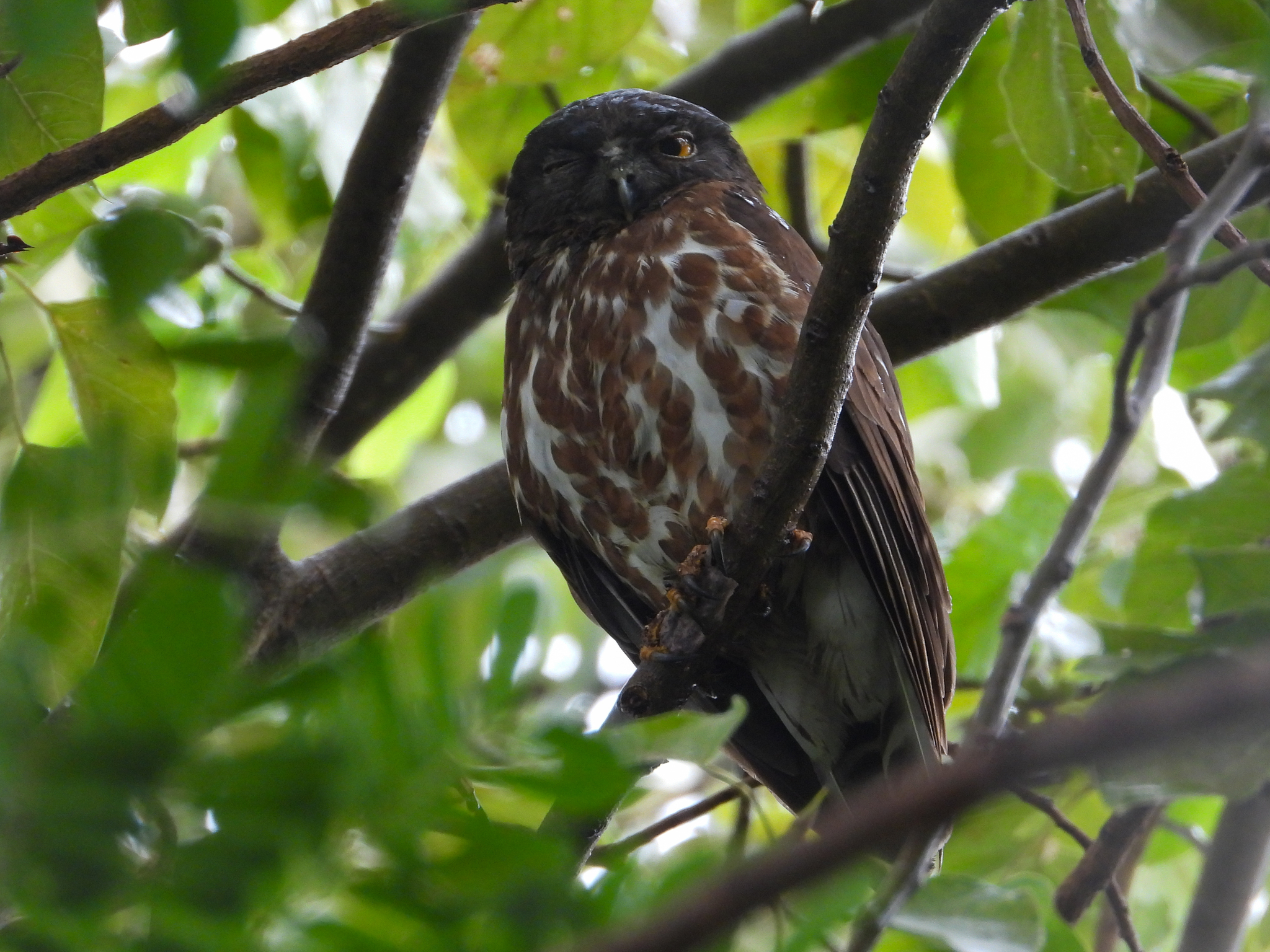
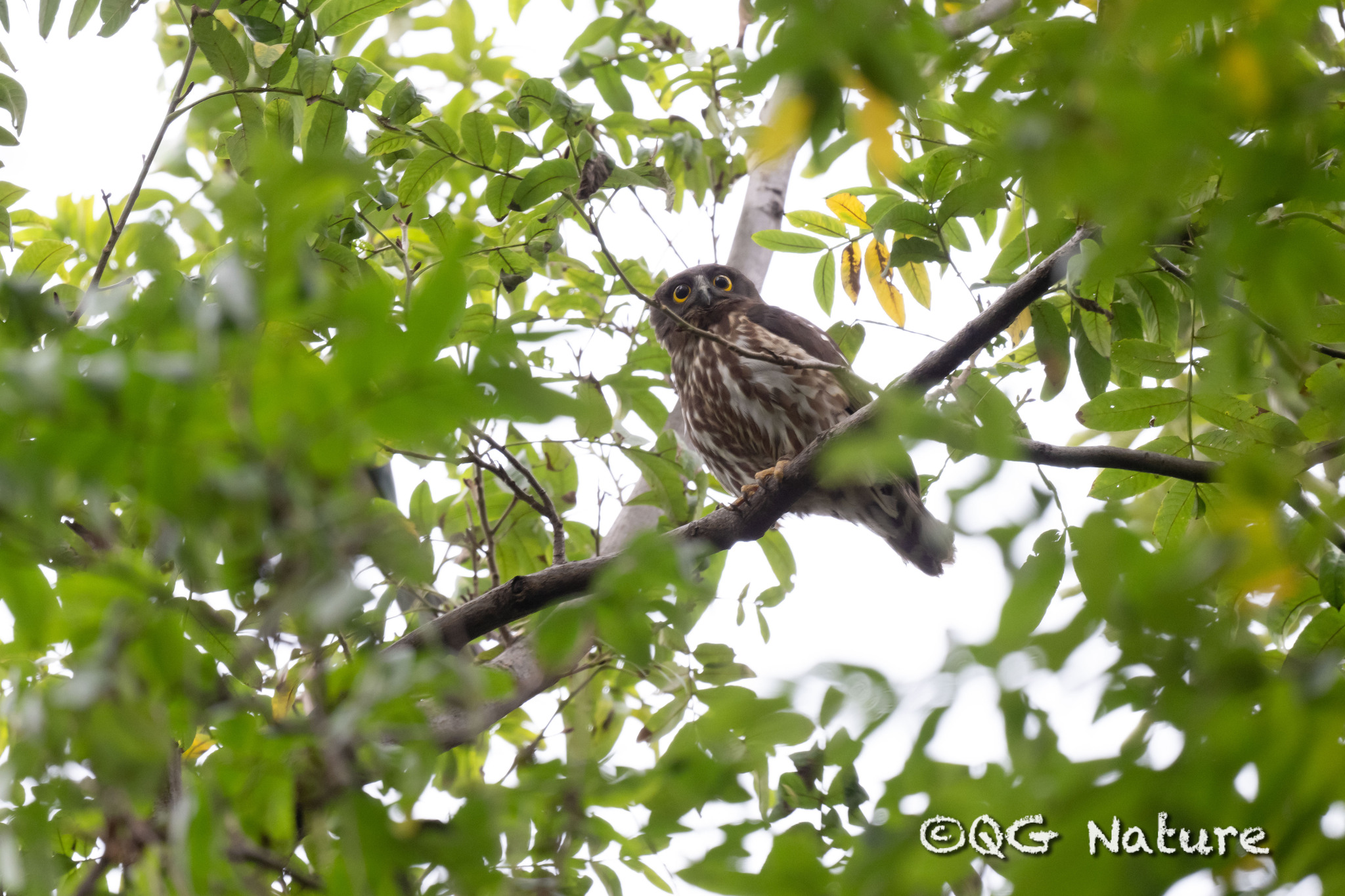
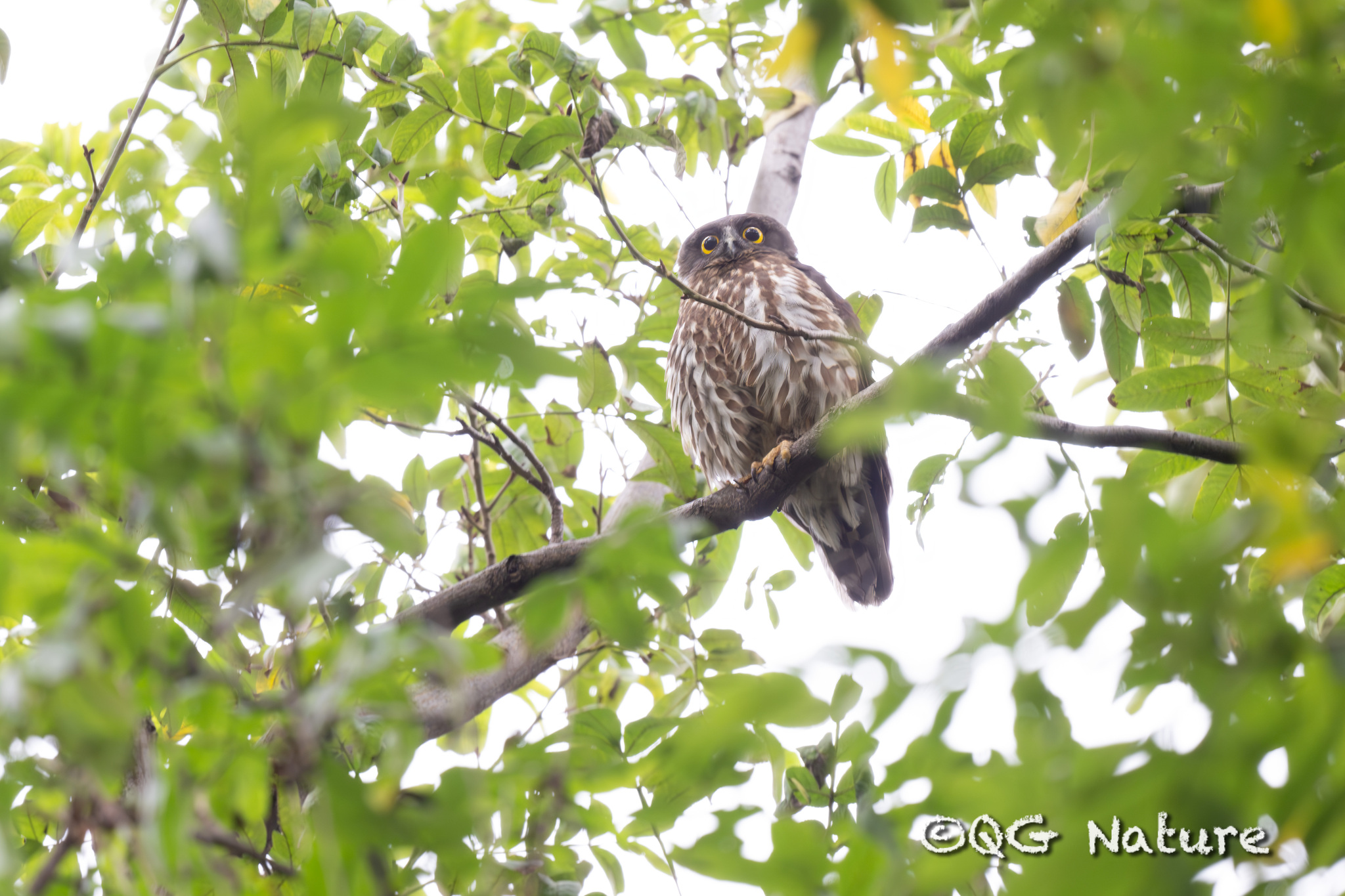
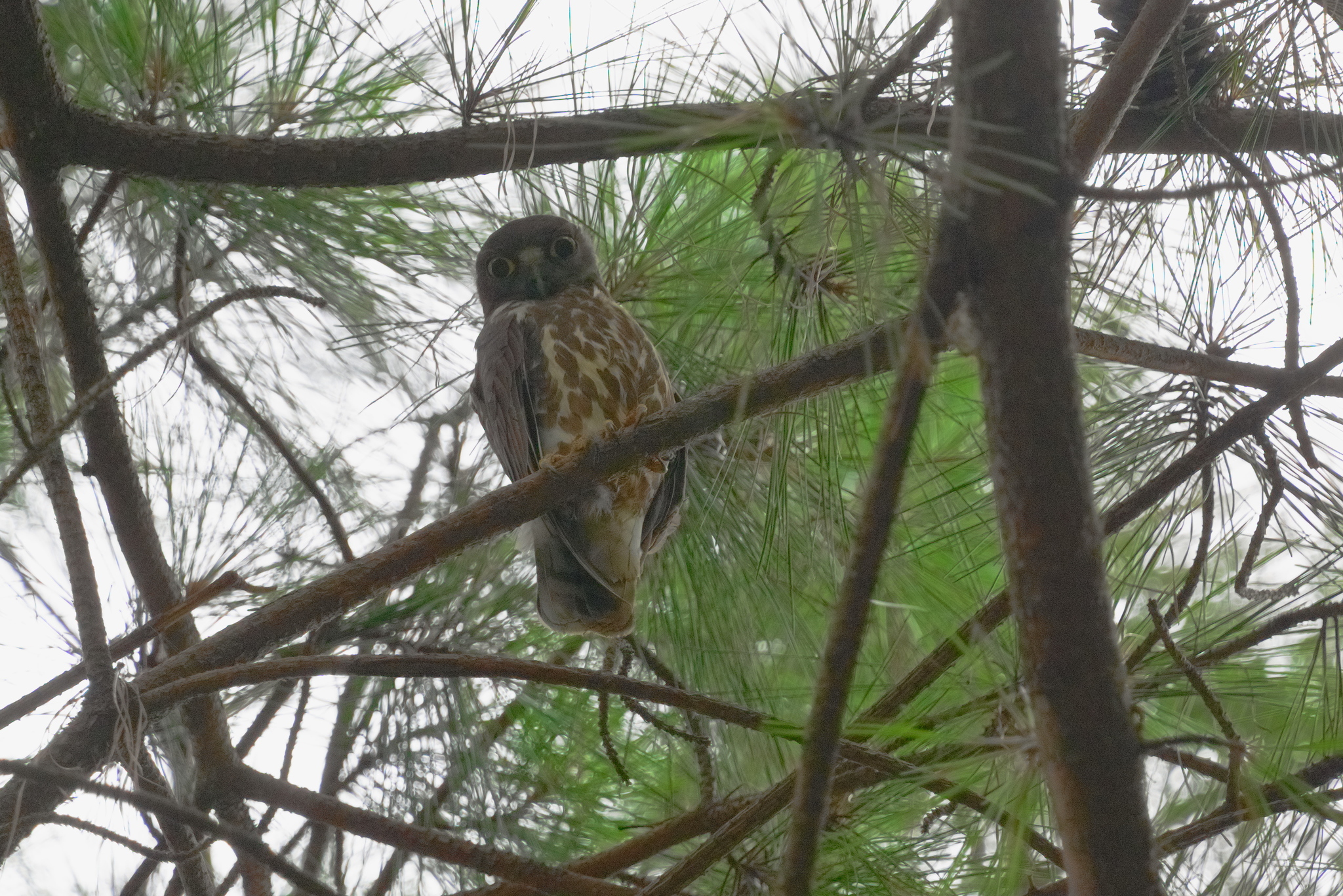
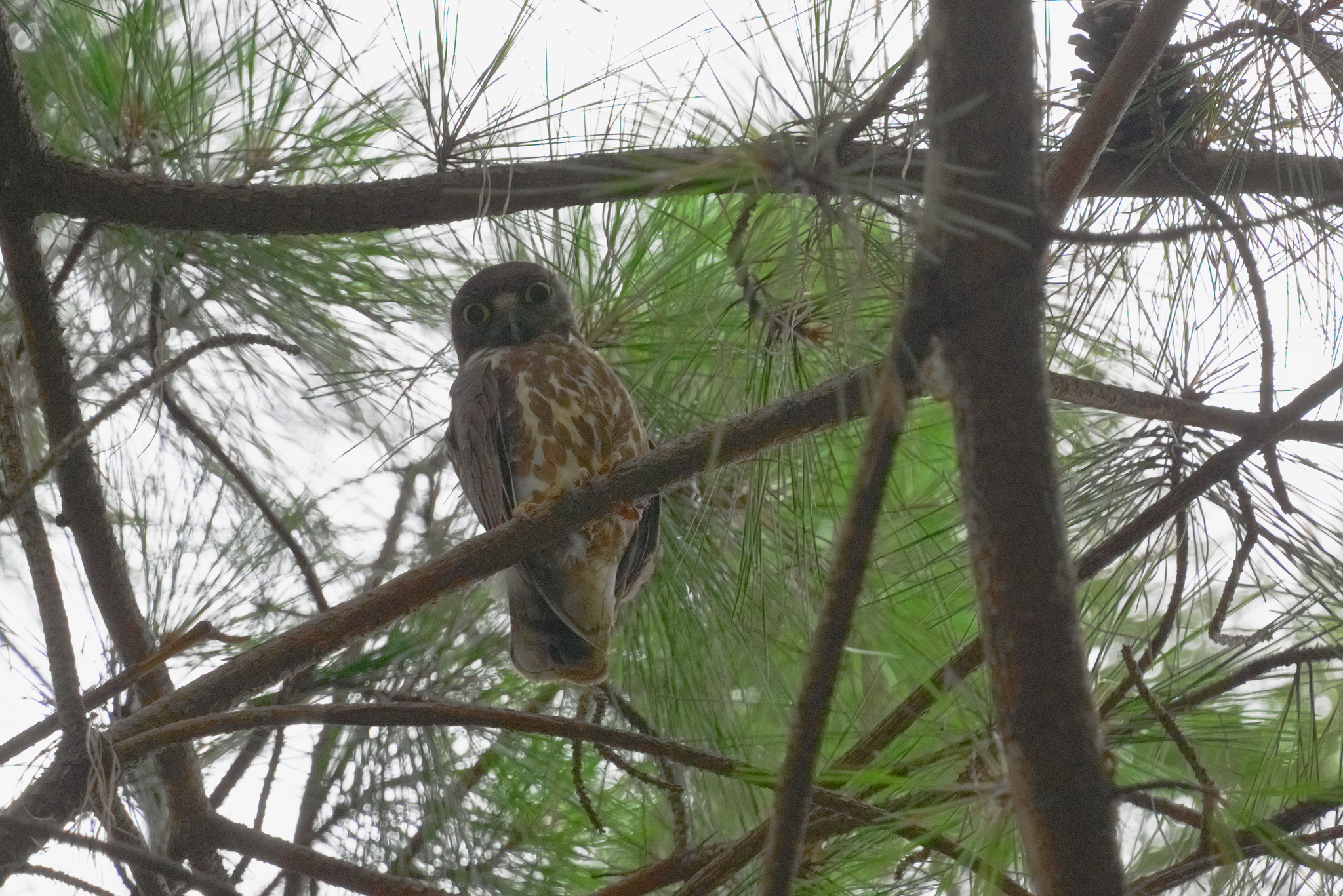
Body length averages 29–33 cm; wingspan approximately 60–70 cm; average weight approximately 168 g. No sexual dimorphism. Hawk-like appearance with brown back and wings, lighter brown horizontal streaks on tail feathers. Neck, crown, and face are greyish brown with a small white patch above the beak. Eyes are striking yellow-gold; beak is black; talons are yellow. Belly is almost completely white with rust-colored specks. Subspecies N. j. totogo has a shorter wing chord (214–217 mm) and longer tail (118 mm) compared to N. j. japonica.
Identification
Subspecies are practically indistinguishable in the field except for morphological measurements. Differentiated from sister species N. scutulata by specific vocal characters and rust-colored belly specks. Key identification features include yellow-gold eyes, black beak, and hawk-like silhouette.
Distribution & Habitat
Range spans Siberia, East Asia, South-East Siberia, North Korea, Taiwan, Japan, and the Philippines. Habitat includes low altitude deciduous forests with thick vegetation, wooded parks, gardens, residential areas, and occasionally mixed or coniferous forests. Migratory subspecies N. j. japonica breeds in southern and central China, Korea, Japan, and Siberia, wintering in rainforests in Vietnam, Malaysia, Thailand, and the Philippines. Non-migrant subspecies N. j. totogo resides year-round in the Ryukyu Islands and Taiwan. Both subspecies occasionally coexist in Taiwan.
Behavior & Ecology
Nocturnal generalist hunter preying mainly on insects and smaller birds, rarely lizards and bats. Hunts by spotting prey from a perch and swooping to capture it in midair or from the ground. Nests in trees, rarely reusing sites. Breeding behavior varies by subspecies: N. j. totogo males occupy territories in January, bonding by February; incubation lasts ~28 days (early March to early April) by the female alone; 3–4 eggs laid; juveniles fledge in May after ~26 days in the nest. Breeding season lasts ~5 months for N. j. totogo and 4 months for N. j. japonica, which occupies breeding sites no earlier than April. Vocalizations consist of deep 'ho-hos' specific to breeding individuals during reproductive periods.
Conservation
Classified as Least Concern by the IUCN Red List. No global trends of population declines indicated, though little information is available on population size across the geographic range.
Source: Wikipedia · CC BY-SA 3.0
Taxonomy
- Order
- Strigiformes
- Family
- Strigidae
- Genus
- Ninox
Vocalizations
Subspecies (3)
-
Ninox japonica florensis
breeds southeastern Siberia, northeastern China (southeastern Heilongjiang to Hebei), and northern Korea; winters in Greater and Lesser Sundas
Data Sources
Species description from Wikipedia, licensed under CC BY-SA 3.0.
Bird images and sounds sourced from GBIF, contributed by citizen scientists worldwide under Creative Commons licenses.
Taxonomy data from AviList 2025.