Northern Boobook
Ninox japonica
日本鹰鸮
Introduction
The Northern Boobook (Ninox japonica) is a small hawk owl endemic to East Asian forests. It is the most common breeding owl in Japan. Formerly considered conspecific with the Brown Boobook complex, it was recognized as a distinct species in the early 2000s. Two subspecies are recognized: the migratory N. j. japonica, which breeds in Japan and eastern China, and the sedentary N. j. totogo, resident in Taiwan and the Ryukyu Islands. The species inhabits forest habitats and is nocturnal. During the breeding season, it is identifiable by its distinctive vocalizations.
Description
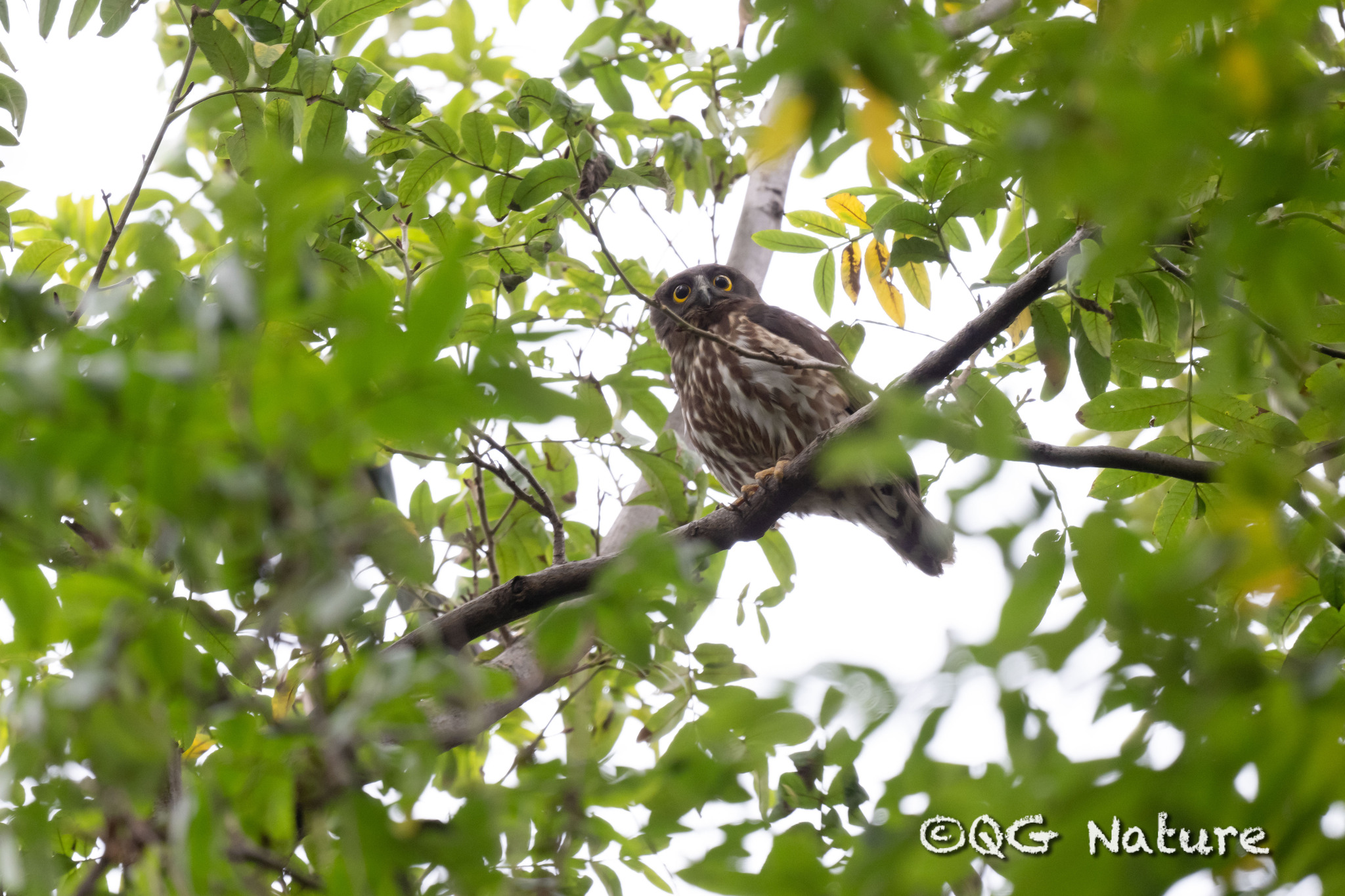
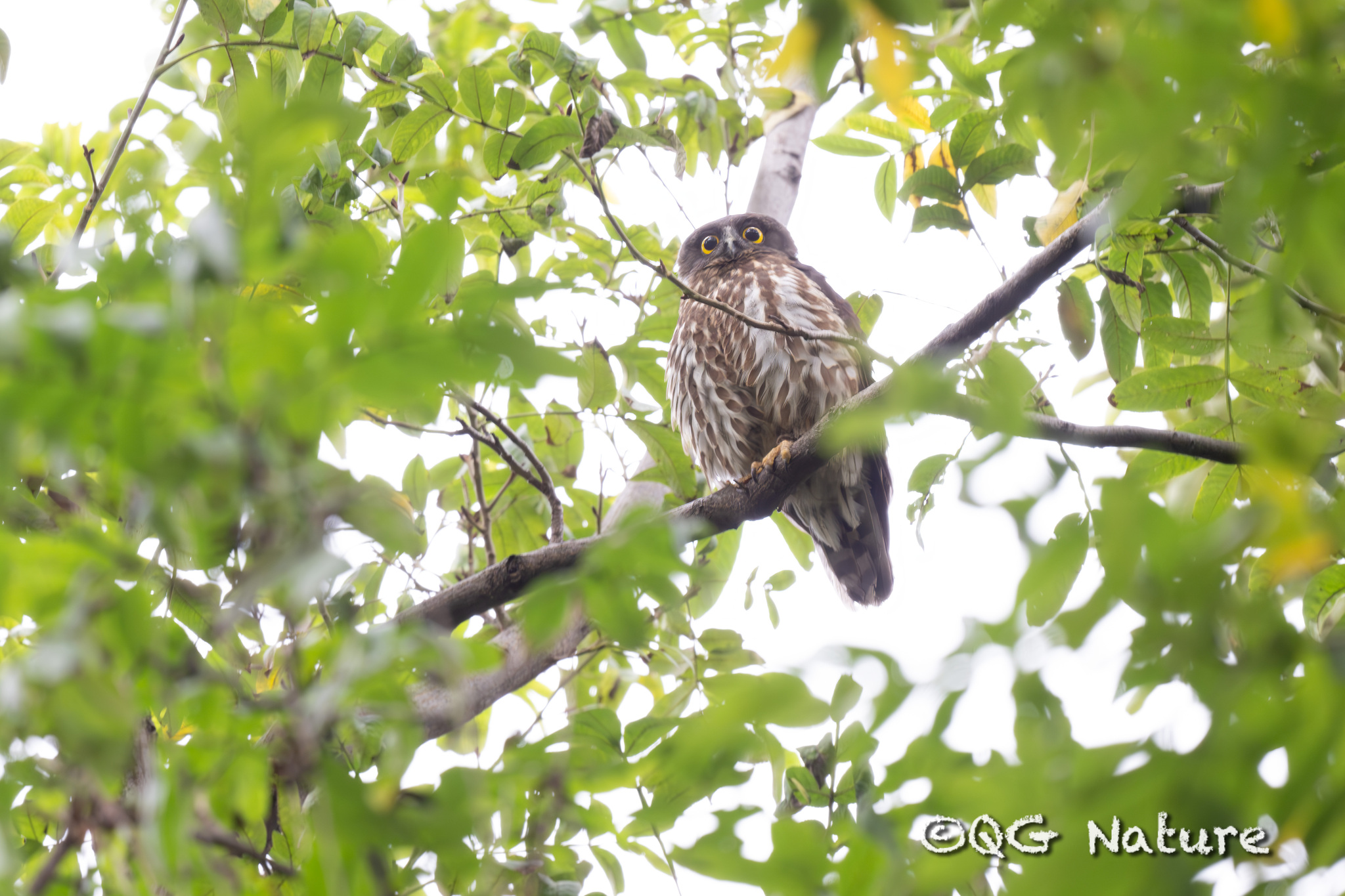
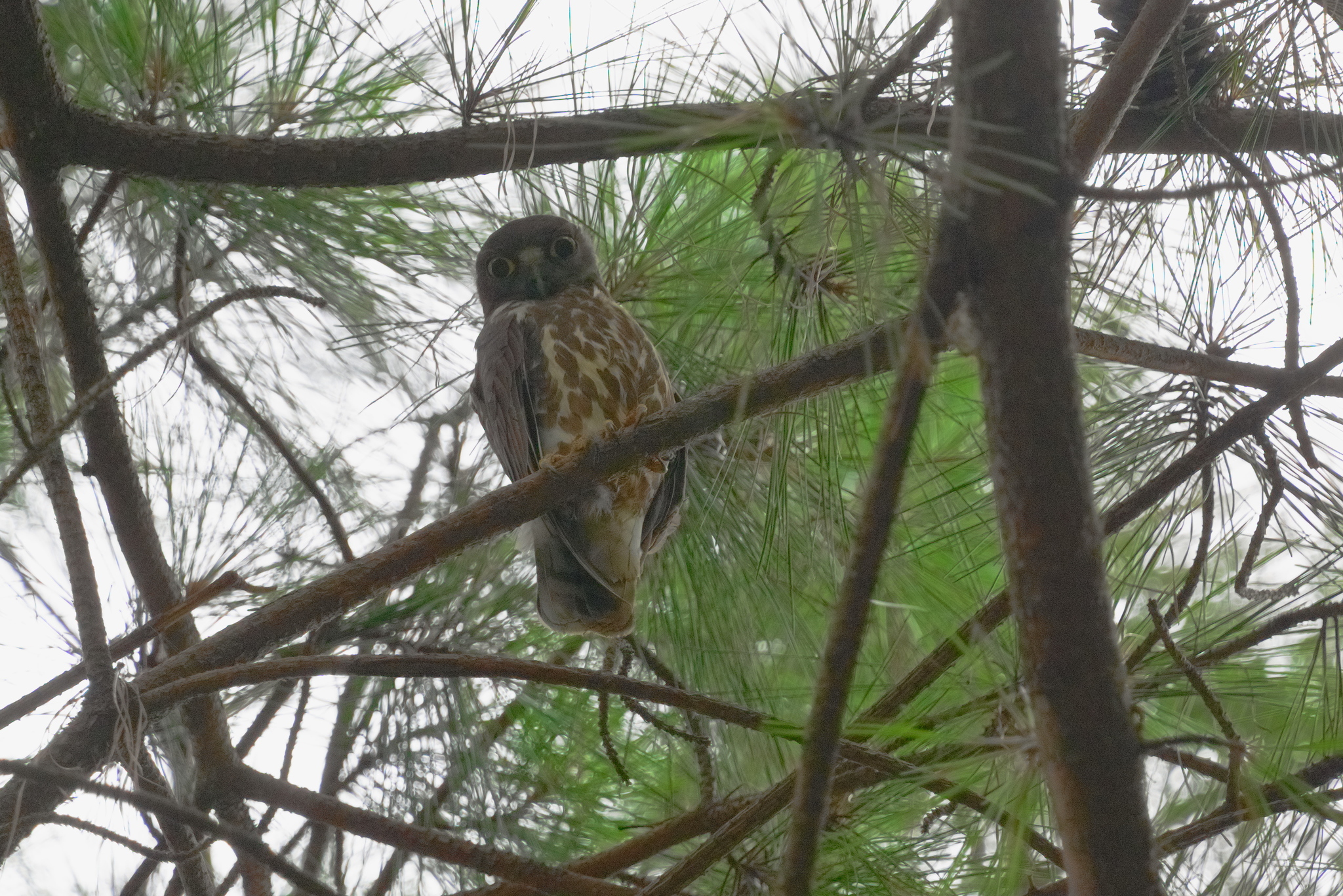
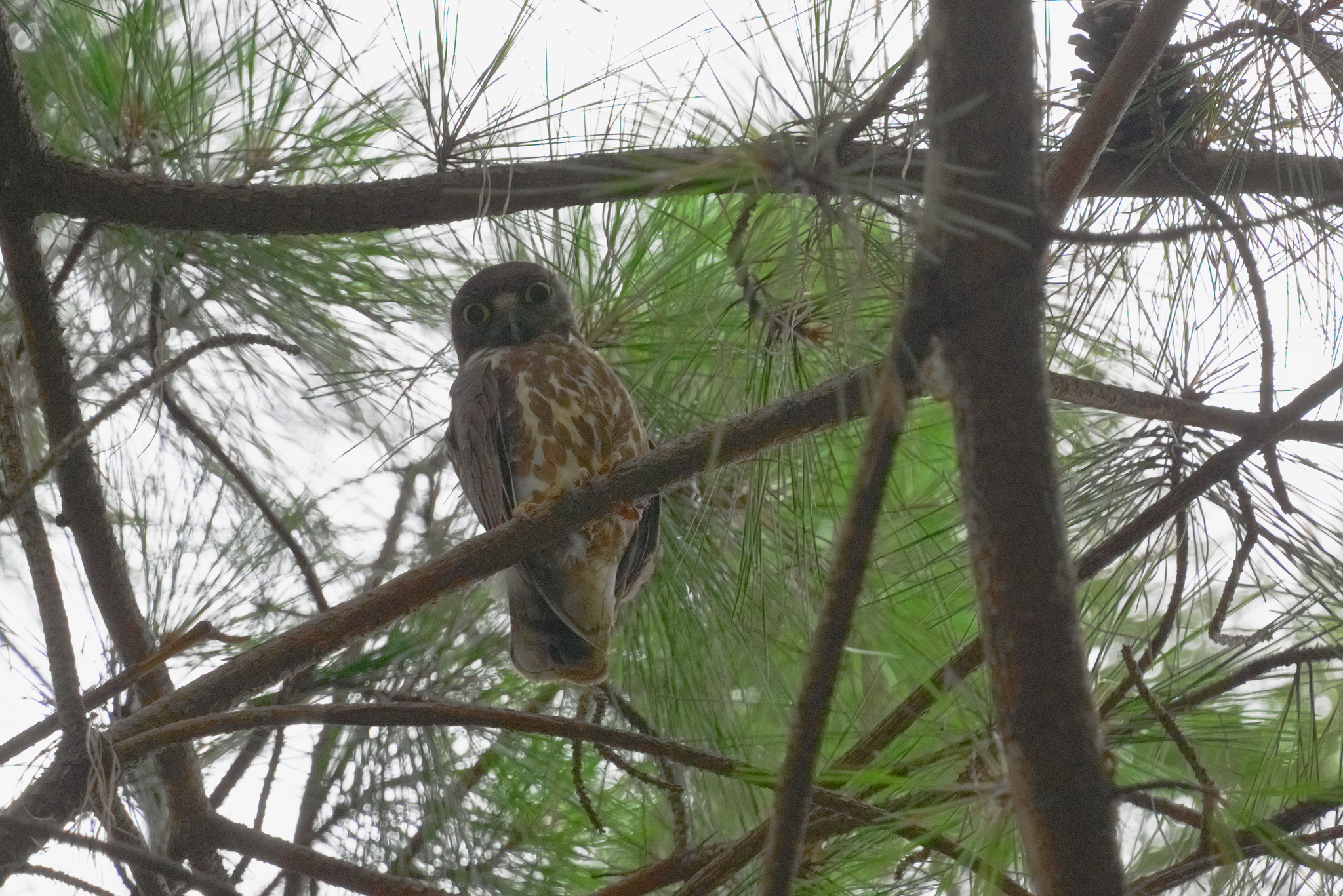
This is a compact hawk owl measuring 29 to 33 centimeters in length with a wingspan of approximately 60 to 70 centimeters. Adults weigh around 168 grams and show no sexual dimorphism in plumage or size. The overall appearance is hawk-like, with brown upperparts and wings marked with lighter brown horizontal streaks on the tail feathers. The head, neck and crown display a greyish-brown tone, accented by a small white patch above the beak. The most striking features are its brilliant yellow-gold eyes, contrasting with a black beak and yellow talons. The underparts are predominantly white, scattered with rust-colored specks that closely resemble the pattern found in its close relative, the brown boobook. The two subspecies are practically indistinguishable in the field, though the resident N.j.totogo has slightly shorter wing chords measuring 214-217 millimeters and a longer tail of approximately 118 millimeters.
Identification
This species can be identified by its compact, hawk-like silhouette and bright yellow eyes, which distinguish it from many other owls in its range. The rusty-spotted white belly is a key field mark, though this pattern is very similar to that of the brown boobook, from which this species was only recently split. The greyish-brown head and face, combined with the white supraloral patch, help separate it from other hawk owl species. Due to the subtle differences between subspecies and the lack of pronounced field marks, positive identification to species level often requires vocal confirmation or close examination in the hand.
Distribution & Habitat
This species occupies a broad range across eastern Asia, with breeding populations in Siberia, southern and central China, Korea, and Japan, while wintering in Vietnam, Malaysia, Thailand, and the Philippines. The resident subspecies inhabits the Ryukyu Islands and Taiwan year-round, with both subspecies occasionally overlapping in Taiwan. It primarily inhabits low-altitude deciduous forests with thick understory vegetation, though it also occurs in mixed and coniferous forests, wooded parks, gardens, and residential areas. During winter months, migrants typically move to rainforest habitats south of their breeding territories.
Behavior & Ecology
As a nocturnal hunter, this owl perches quietly before swooping down to capture prey in midair or from the ground. Its diet consists primarily of invertebrates, especially insects, with occasional vertebrate prey including smaller birds, lizards and bats. The breeding season begins in January when males establish territories, with pairs bonding and vocalizing frequently throughout February. Egg-laying occurs from early March, with females incubating a clutch of 3-4 eggs for approximately 28 days. Juveniles fledge after roughly 26 days in the nest. The breeding season lasts 5 months for the resident subspecies but only 4 months for migratory populations. Vocalizations consist of a distinctive series of deep ho-ho notes, primarily heard during the breeding season.
Conservation
This species is classified as Least Concern on the IUCN Red List, with no evidence of significant population declines across its range. Despite being common in parts of its distribution, particularly Japan, very little data exists on population sizes throughout its geographic range. The lack of comprehensive population monitoring means that potential localized declines may have gone undetected. Habitat loss and degradation in some parts of its range could pose future concerns, though current populations appear stable.
Culture
No specific cultural significance, folklore or traditional references to this species were documented in available sources.
Source: Wikipedia · CC BY-SA 3.0
Taxonomy
- Order
- Strigiformes
- Family
- Strigidae
- Genus
- Ninox
- eBird Code
- norboo1
Vocalizations
Subspecies (3)
-
Ninox japonica florensis
breeds southeastern Siberia, northeastern China (southeastern Heilongjiang to Hebei), and northern Korea; winters in Greater and Lesser Sundas
-
Ninox japonica japonica
breeds southern Korean Peninsula and Japan; winters to Philippines and Indonesia
-
Ninox japonica totogo
Ryukyu Islands (Japan) and Taiwan
Data Sources
Species description from Wikipedia, licensed under CC BY-SA 3.0.
Bird images and sounds sourced from GBIF, contributed by citizen scientists worldwide under Creative Commons licenses.
Taxonomy data from AviList 2025.