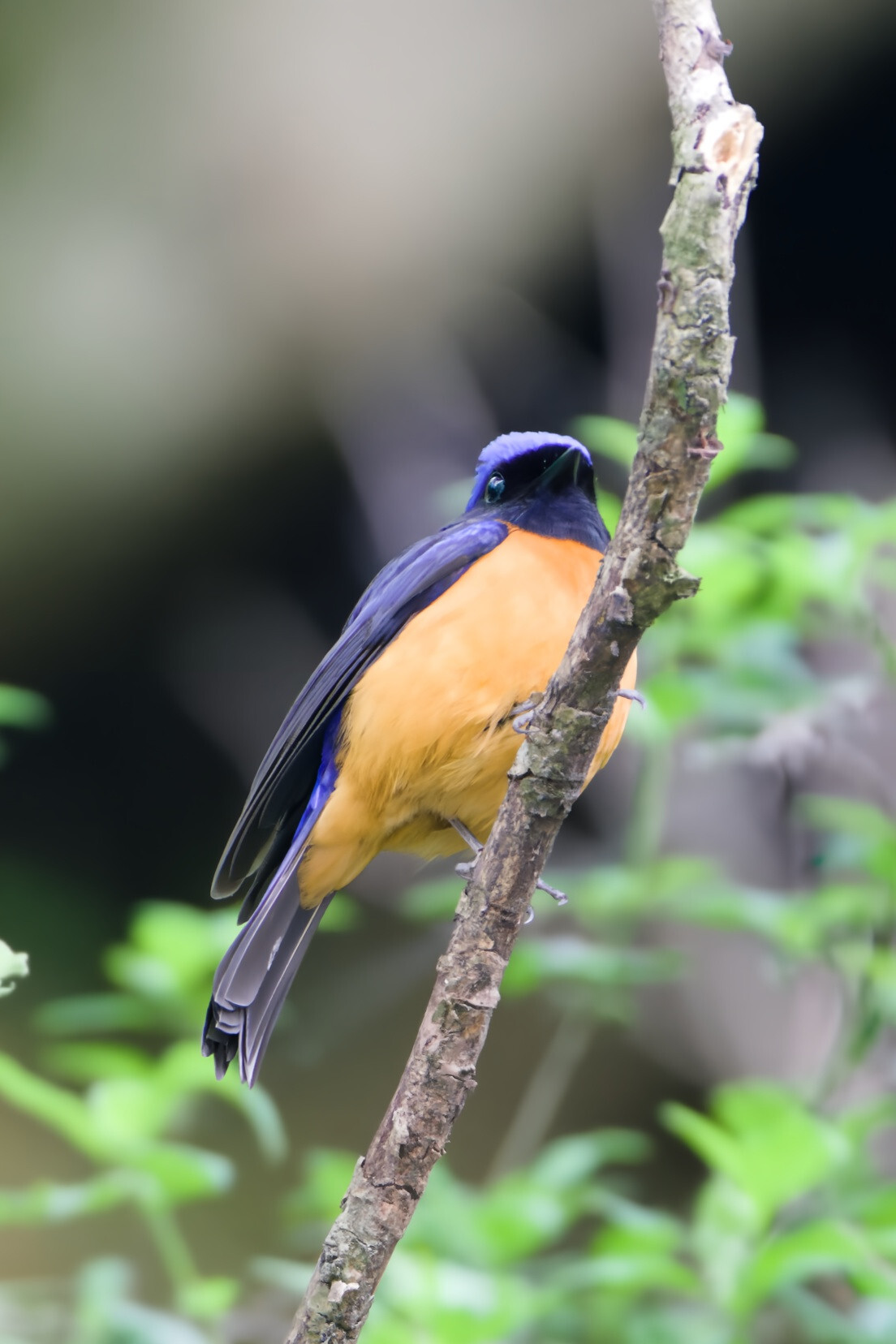
Rufous-bellied Niltava
Niltava sundara
棕腹仙鹟
Introduction
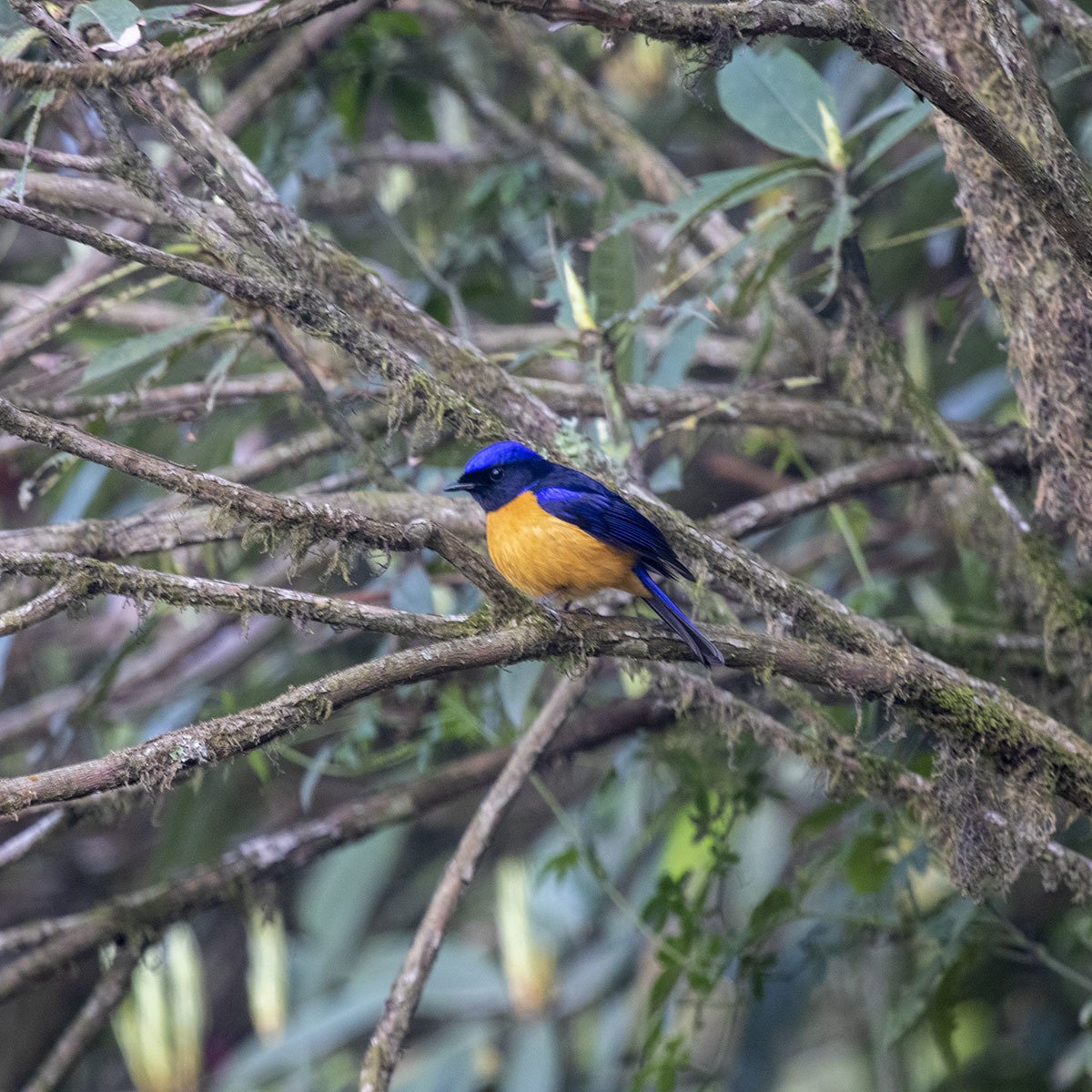
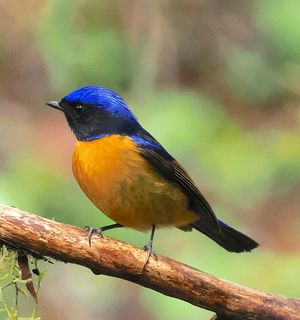
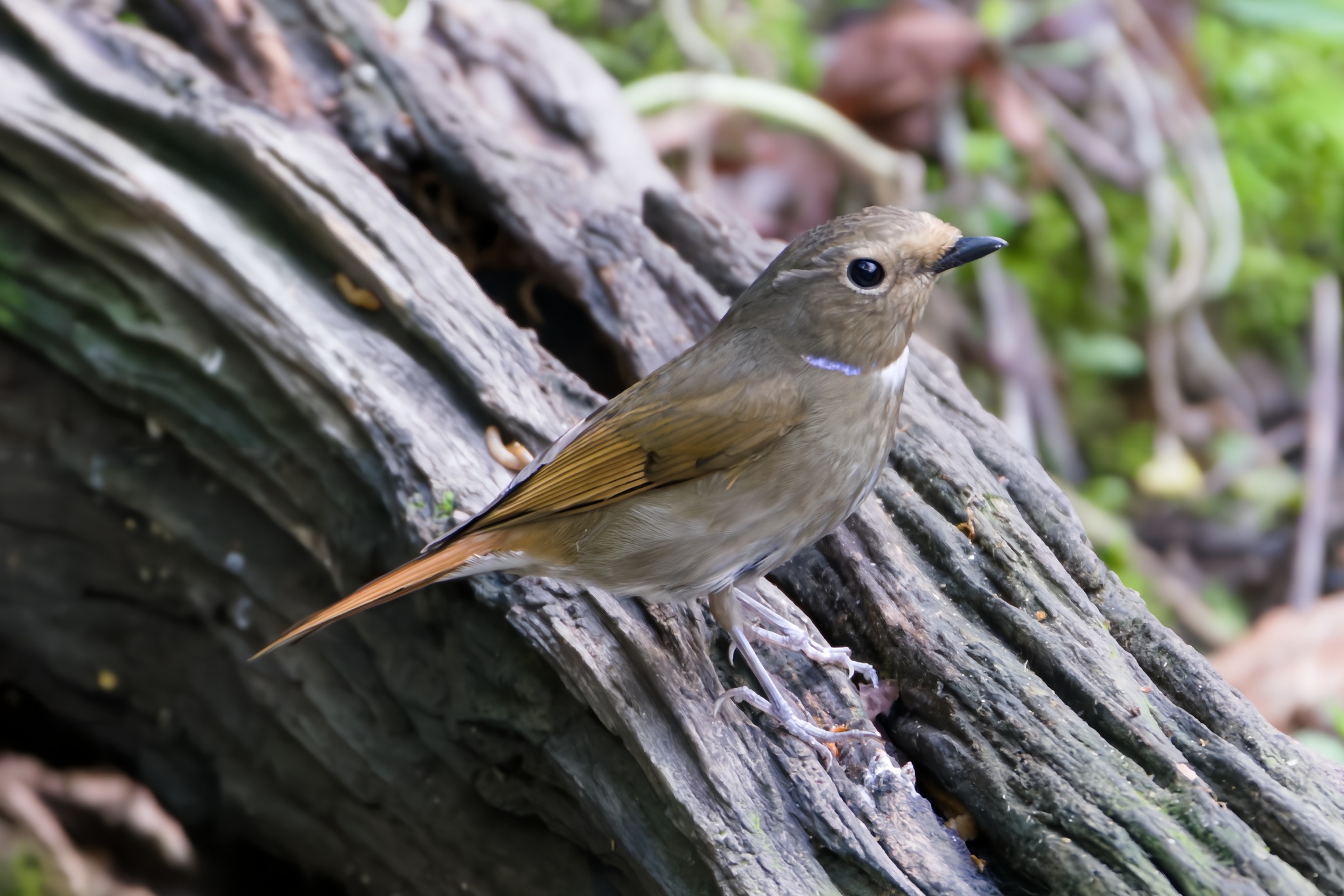
The rufous-bellied niltava (Niltava sundara) is a species of flycatcher in the genus Niltava. It occurs in the Himalayan foothills and montane forests of South and Southeast Asia. This species inhabits the middle to lower levels of evergreen forests, where it perches and sallies out to catch insects. Males have blue upperparts and rufous underparts; females are olive-brown.
Description
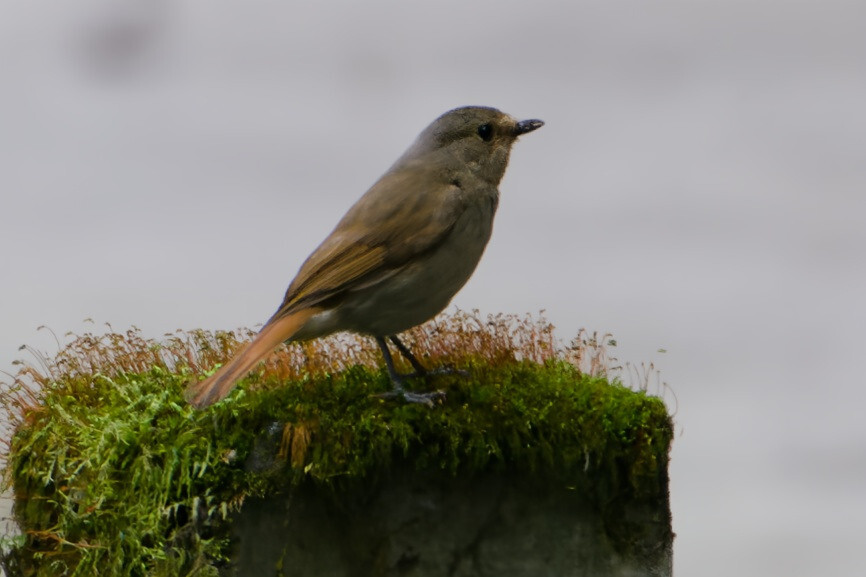
This is a large, robust flycatcher measuring 15-18 cm in length with a weight of 19-24 g. It possesses a rounded head shape, a fairly short tail, and a broad-based bill typical of insectivorous flycatchers. The male displays bright blue upperparts that may appear black in poor light, contrasting with rufous-orange underparts. The female has more subdued plumage with olive-brown tones on the upperparts and warmer rufous hues below, though the specific coloration varies somewhat across the three recognized subspecies.
Identification
The rufous-bellied niltava is most easily identified by its combination of size, stocky build, and the male's distinctive blue and rufous plumage pattern. In good lighting, the male's blue upperparts separate it from superficially similar species. It has historically been considered conspecific with the Fujian niltava and rufous-vented niltava, so careful attention to range and subtle plumage differences is important. The broad-based bill and rounded head help distinguish it from more slender flycatcher species. Females can be separated from other niltavas by their overall olive-brown coloration with rufous tinges.
Distribution & Habitat
This species occurs across a wide range from Pakistan and northern India through Nepal, Bhutan, Bangladesh, and into southern China, with populations extending through Myanmar, Thailand, Laos, and Vietnam. It inhabits subtropical and tropical moist lowland forests as well as subtropical and tropical moist montane forests, typically occurring at middle elevations. Some populations make seasonal movements, with non-breeding birds found in northeastern Bangladesh, northern Thailand, and Indochina.
Behavior & Ecology
The rufous-bellied niltava is predominantly insectivorous, feeding mainly on small invertebrates and larvae, particularly ants and beetles, with occasional fruit consumption. It hunts by perching quietly in the undergrowth and then darting out or dropping to the ground to capture prey. This species typically feeds solitarily or in pairs, sometimes joining mixed-species flocks, though it becomes more solitary during winter. While the article notes its diet and foraging behavior, specific details about breeding season, nest structure, and vocalizations are not provided.
Conservation
The article does not provide specific information about the conservation status, population trends, or threats facing this species.
Culture
The article does not provide information about cultural significance or folklore related to this species.
Source: Wikipedia · CC BY-SA 3.0
Taxonomy
- Order
- Passeriformes
- Family
- Muscicapidae
- Genus
- Niltava
- eBird Code
- rubnil1
Vocalizations
Subspecies (3)
-
Niltava sundara denotata
southwestern China to northern Myanmar; winters to northern Thailand and northern Laos
-
Niltava sundara sundara
eastern Himalayas to southeastern Tibet, southern China (northern Yunnan), and northern Laos
-
Niltava sundara whistleri
western Himalayas from Pakistan to northern India (Kumaon)
Data Sources
Species description from Wikipedia, licensed under CC BY-SA 3.0.
Bird images and sounds sourced from GBIF, contributed by citizen scientists worldwide under Creative Commons licenses.
Taxonomy data from AviList 2025.