Anseriformes / Anatidae / Nettapus
Cotton Pygmy Goose
Nettapus coromandelianus · 棉凫
Introduction
A small perching duck in the genus Nettapus, breeding across Asia and Southeast Asia to Queensland. It inhabits waterbodies with aquatic vegetation, roosting and nesting in trees near water. Among the smallest waterfowl globally, it is a strong flier that disperses widely, particularly in winter, with breeding seasons coinciding with rains.
Description
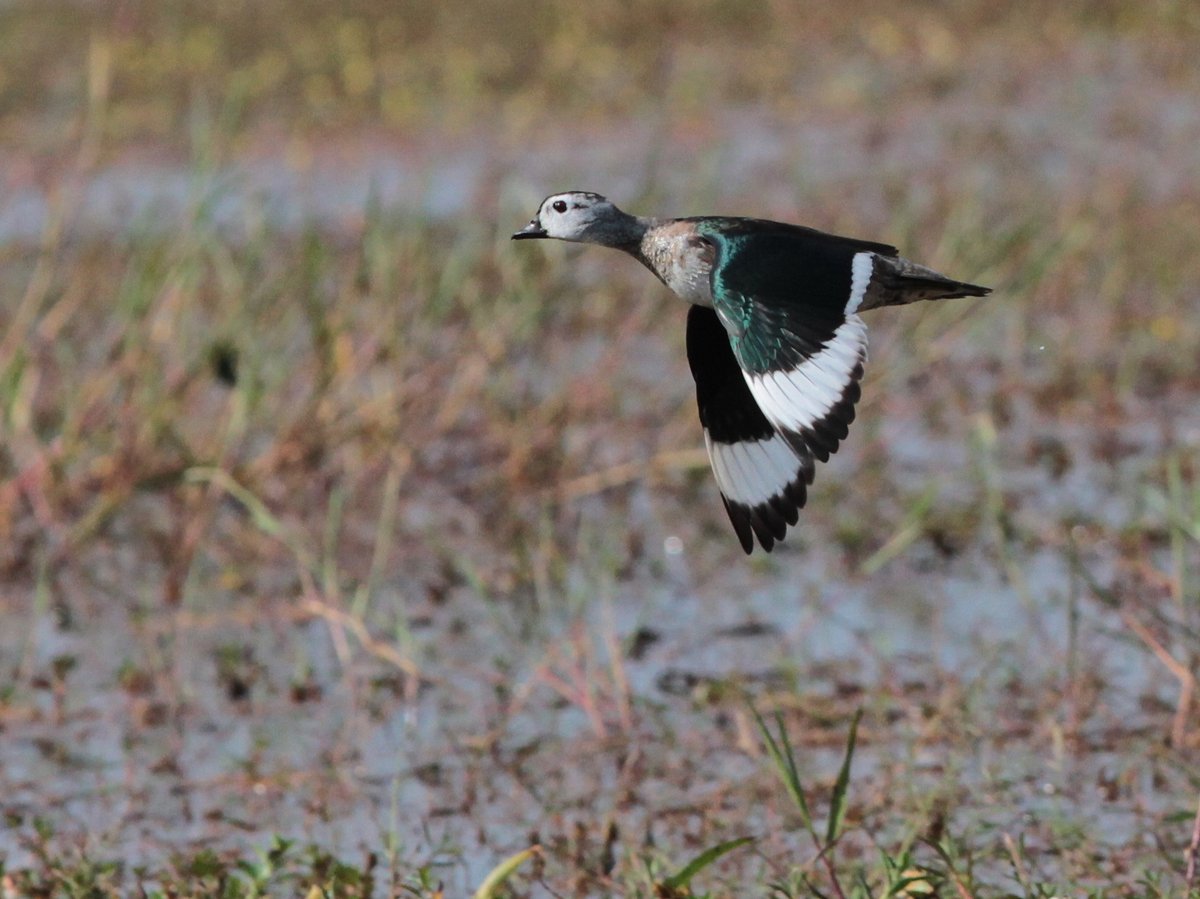
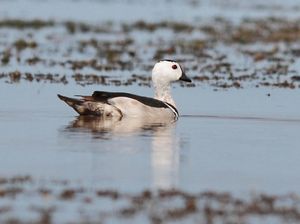
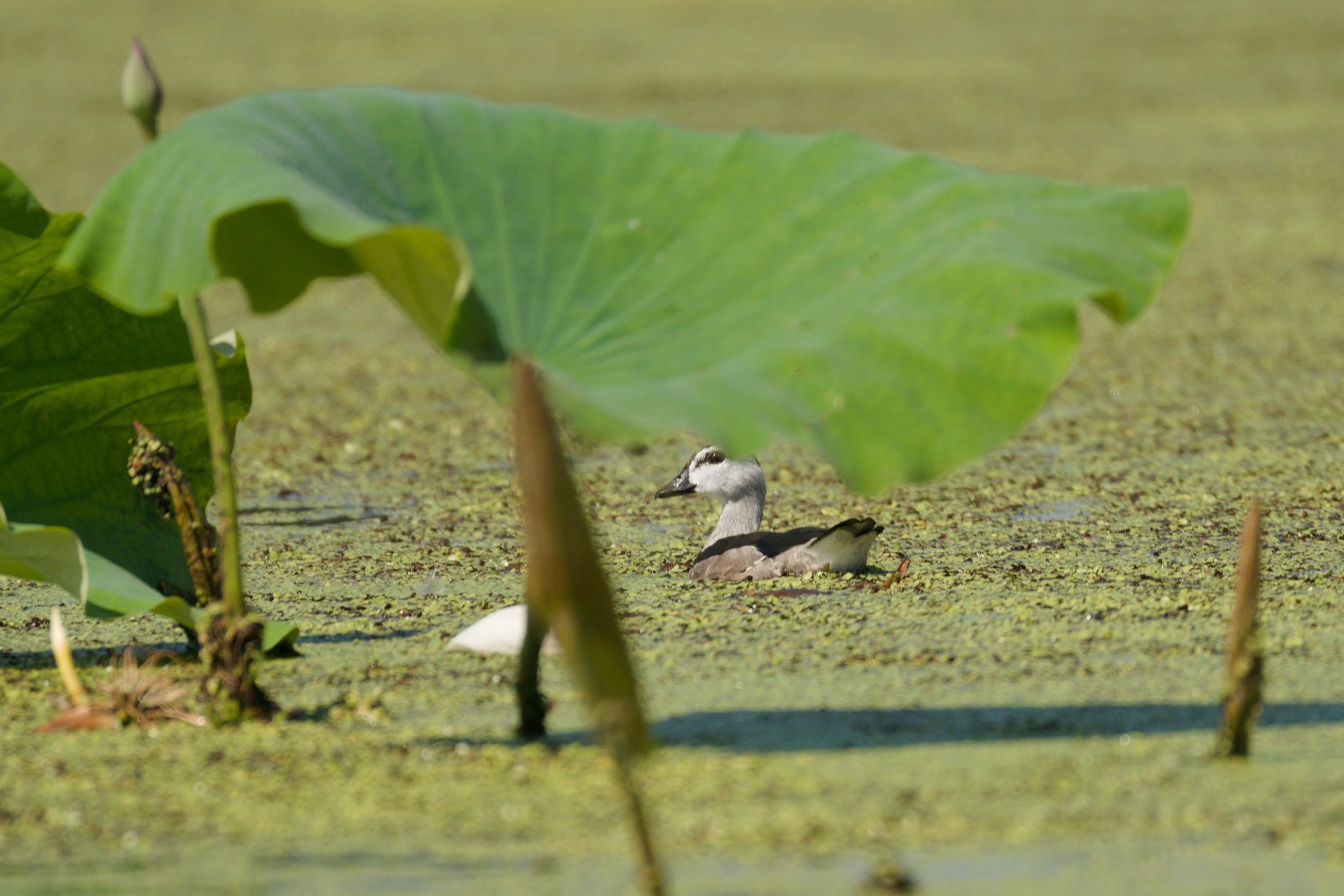
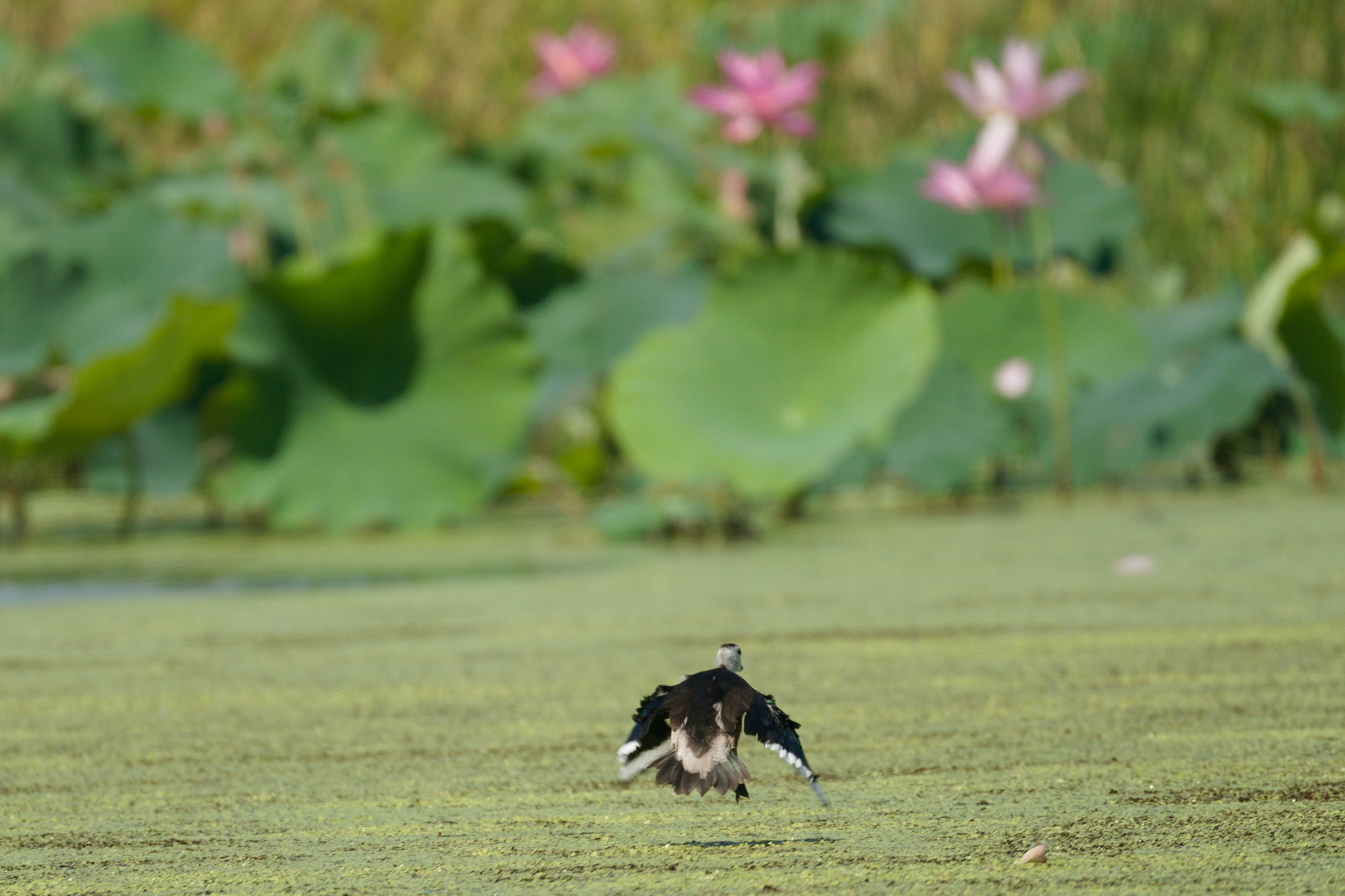
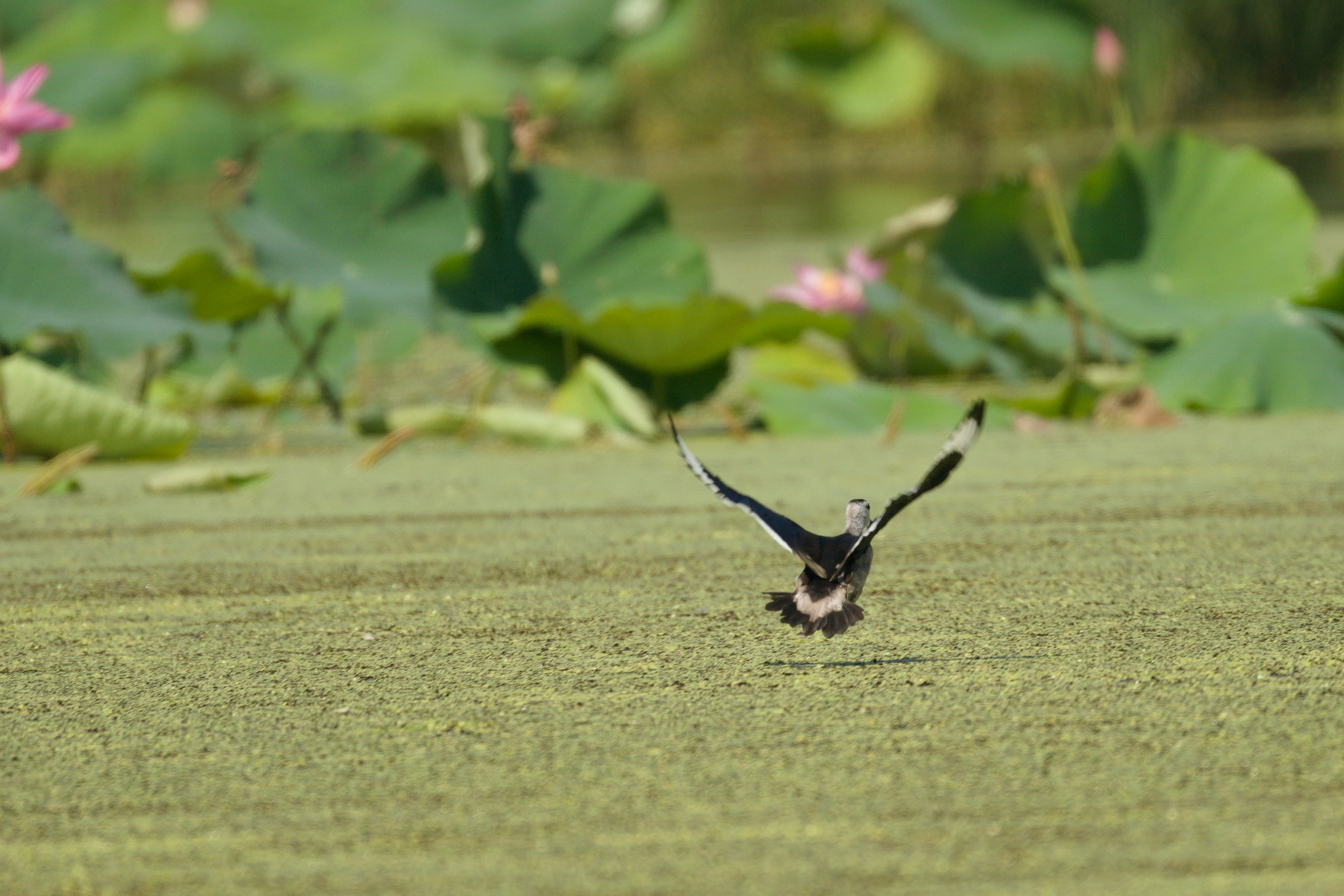
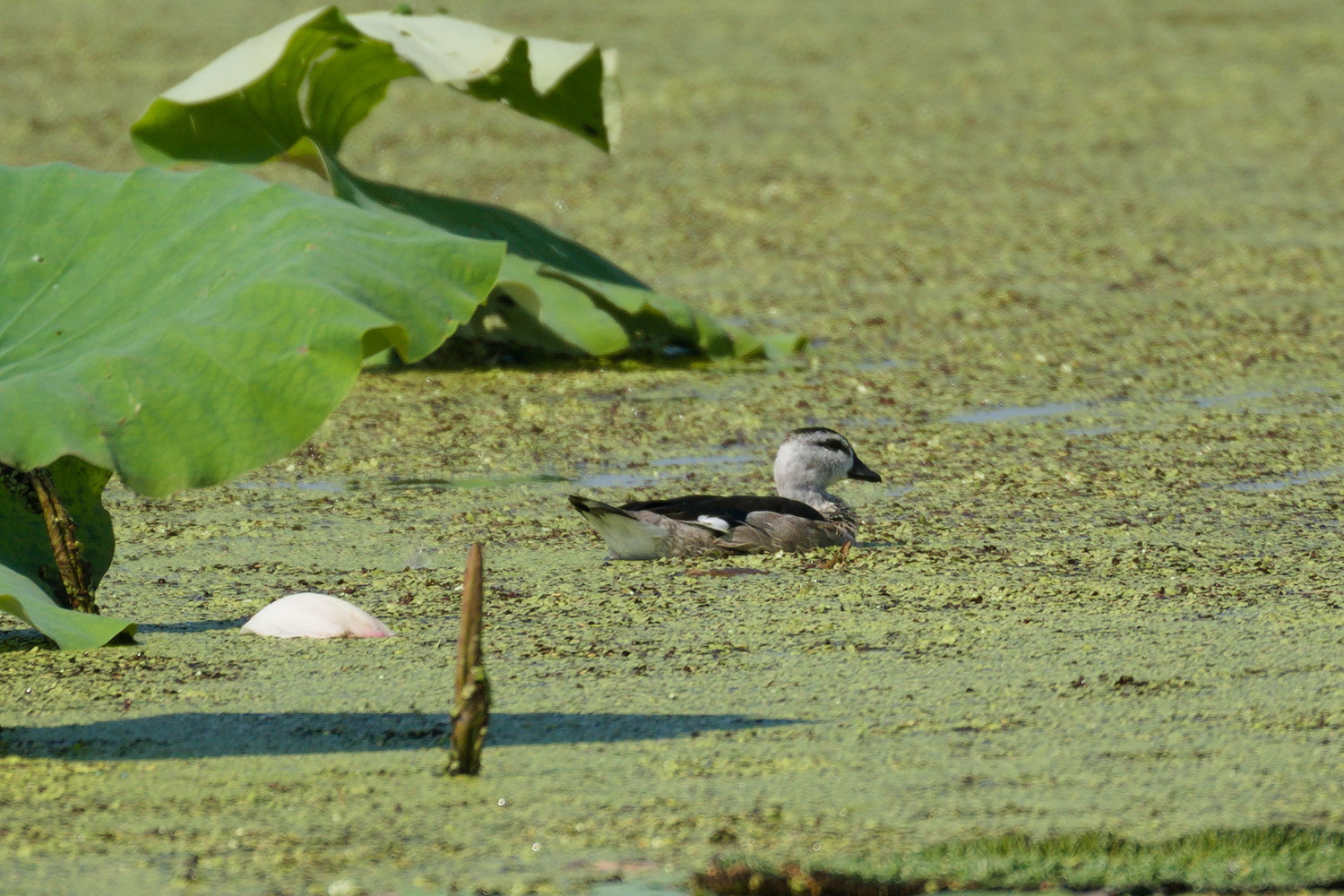
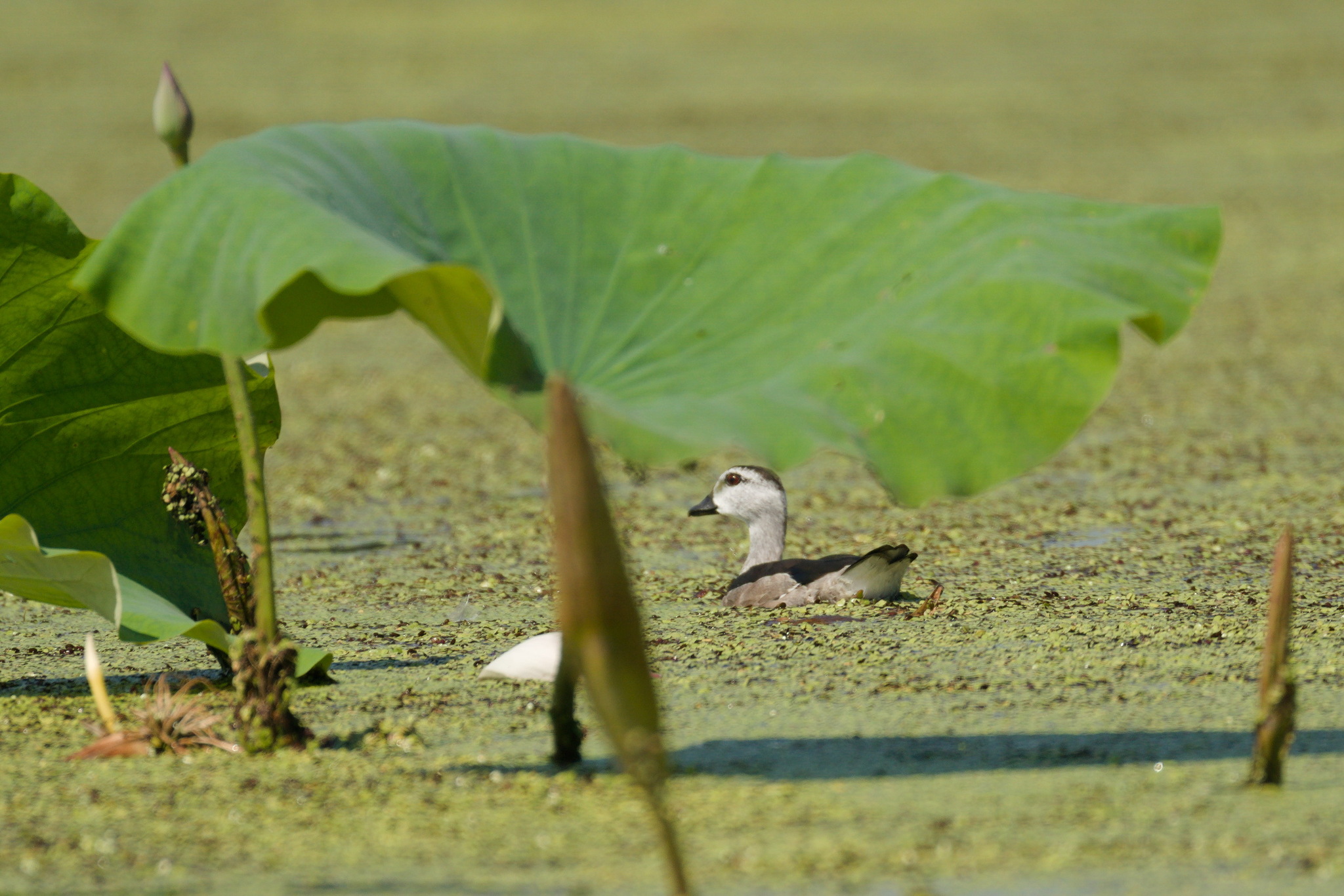
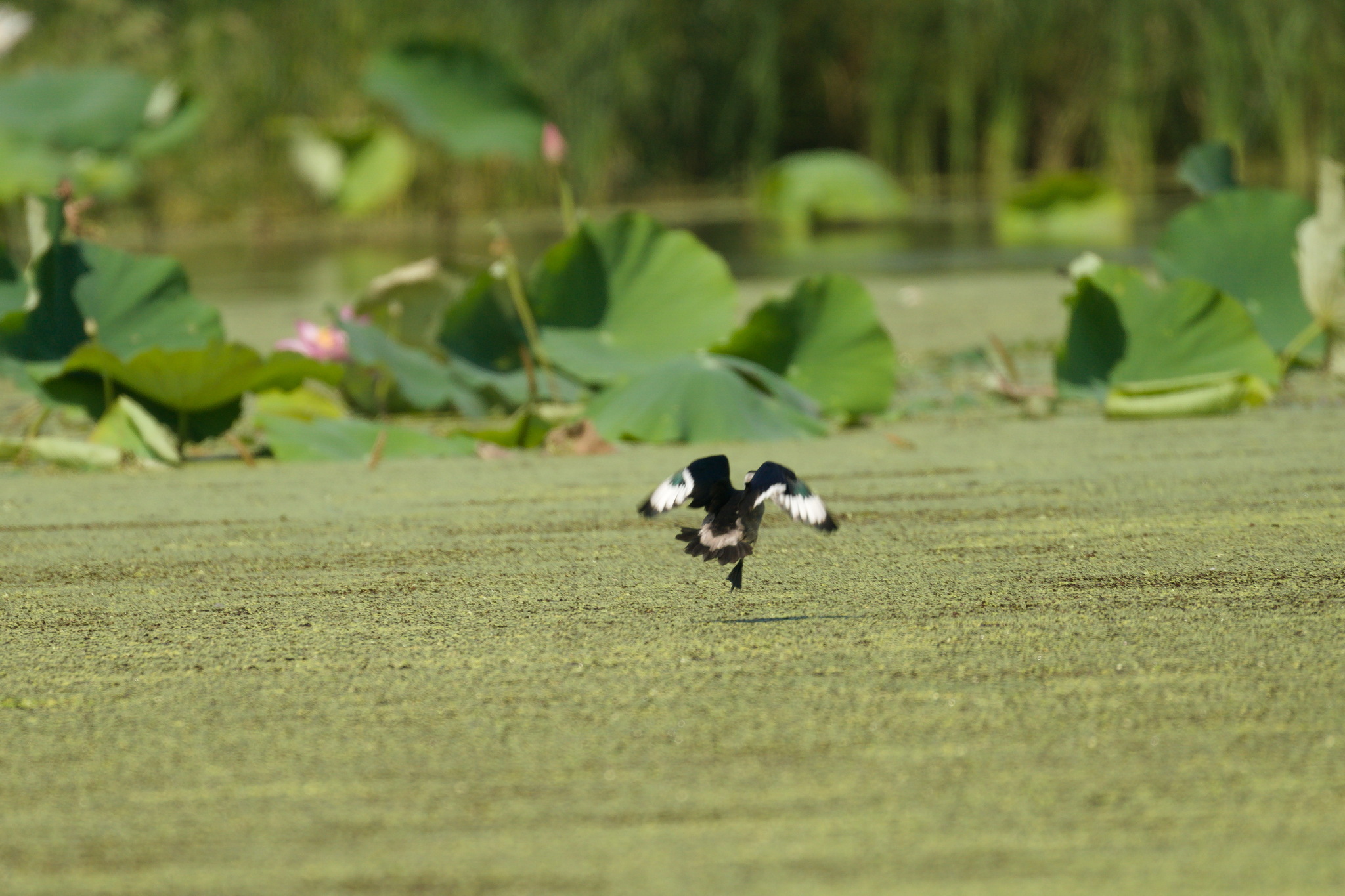
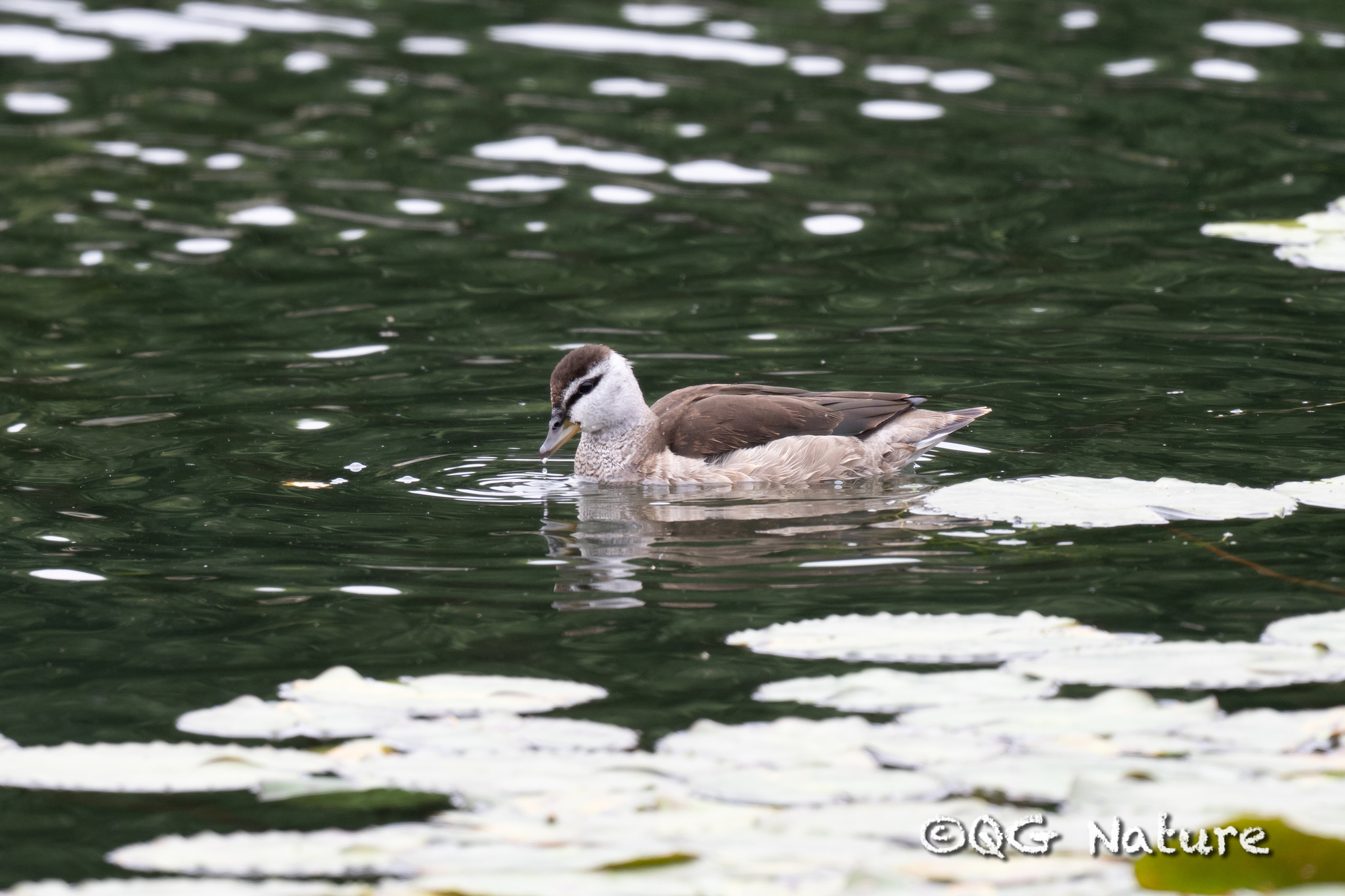
One of the smallest waterfowl, weighing as little as 160 g (5.6 oz) and measuring 26 cm (10 in). It has a short, deep-based goose-like bill, red iris, and black legs (greenish in breeding males). Males feature a dark brown forehead and crown, blackish-green neck collar, whitish head sides, and dark brown back with green and purple gloss. Females have a duller cap, brown eye line, spotted collar, and vermiculated neck. Non-breeding males resemble females but retain a broader white wing band. In flight, males show dark wings with white flight feathers tipped in black; females have dark wings with a white trailing edge on secondaries and inner primaries. Downy chicks have white superciliary stripes meeting at the black back of the head, a short dark eye stripe, grey-brown mantle with white scapular patches, and buff underside.
Identification
Key marks include the male's blackish-green neck collar and white wing patches, and the female's vermiculated neck and white trailing edge on wings. Non-breeding males are distinguished from females by a broader white wing band. Flight is swift and low over water. Vocalizations include a low quacky call likened to 'quacky duck' or 'fixed bayonets', and in Singhbum, a bleat-like call.
Distribution & Habitat
Widely distributed across Asia to Australia, including India, New Guinea, and eastern Australia (subspecies albipennis). Populations move in response to rain and water availability, dispersing to Afghanistan, Arabia, Jordan, Maldives, and Andamans. Habitats include lakes, ponds with emergent vegetation, village ponds in South Asia, and lagoons in Australia.
Behavior & Ecology
Forages at the water surface on small fishes (Puntius, Mystus, Oryzias), molluscs, crustaceans, insect larvae, and plant matter (Ipomoea, Hydrilla, Ruppia). Does not dive or up-end; takes flight directly from water. Forms large flocks in winter, up to 6000 individuals. Breeds during rains (June–August in India, January–March in Australia), nesting in tree hollows up to five meters high. Female incubates 6–12 ivory-colored eggs; chicks leap to water. Males assist in nest location and perform post-copulatory displays. Predated by rock pythons; hosts parasites including Plasmodium circumflexum and various cestodes and trematodes.
Culture
Historically hunted with shotguns in British India and sold in Calcutta markets; eggs collected for food. Fishermen in Sunderbans used high nets to catch them. Noted for tameness near villages. In Burma, nested in buildings, including under eaves at 21 m height. Sinhala name 'mal saar' means flower teal. Many native names are onomatopoeic. European name 'cotton teal' refers to abundant white feathers.
Source: Wikipedia · CC BY-SA 3.0
Taxonomy
- Order
- Anseriformes
- Family
- Anatidae
- Genus
- Nettapus
Vocalizations
Subspecies (2)
-
Nettapus coromandelianus albipennis
eastern Queensland (Australia) from southern Cape York Peninsula southwards to northeastern New South Wales
Data Sources
Species description from Wikipedia, licensed under CC BY-SA 3.0.
Bird images and sounds sourced from GBIF, contributed by citizen scientists worldwide under Creative Commons licenses.
Taxonomy data from AviList 2025.