Red-crested Pochard
Netta rufina
赤嘴潜鸭
Introduction
This diving duck occurs on wetlands throughout southern Europe and Central Asia. Its breeding range extends from the Mediterranean region, across steppes beyond the Black Sea, to the lakes of Central Asia and Mongolia. Winter populations migrate to the Indian subcontinent and Africa, with northern birds reaching North Africa. During winter, flocks congregate on open water and frequently mix with other diving duck species.
Description
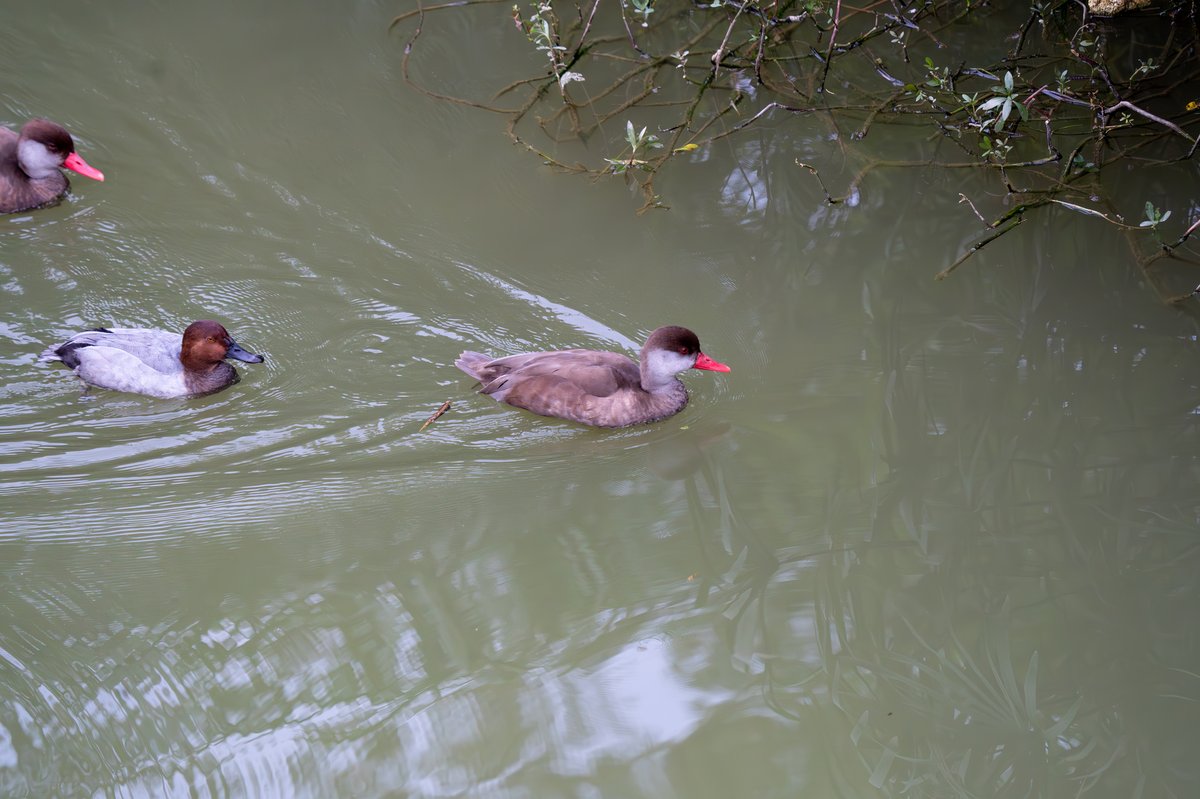
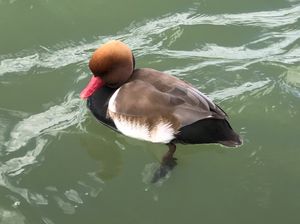
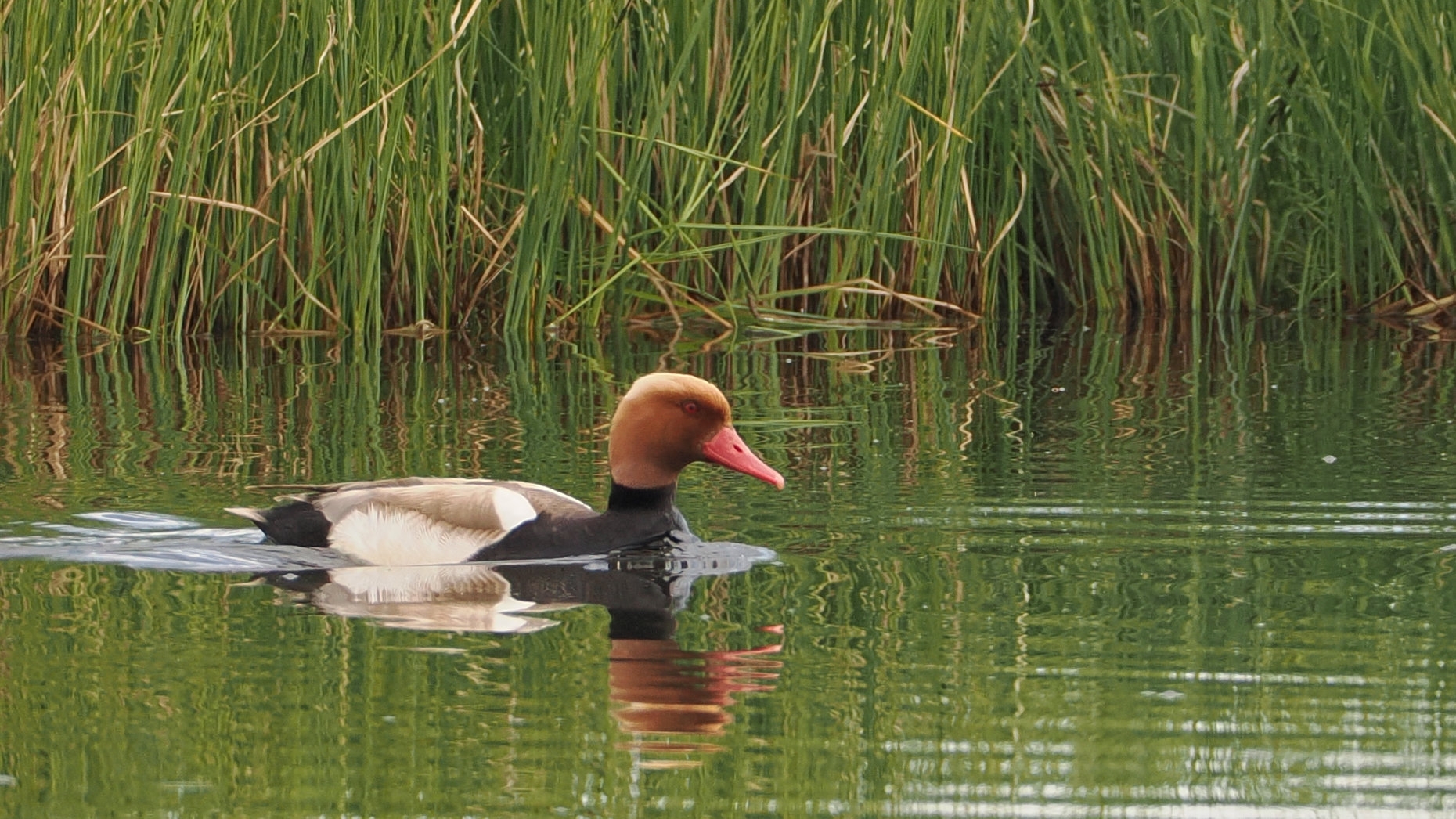
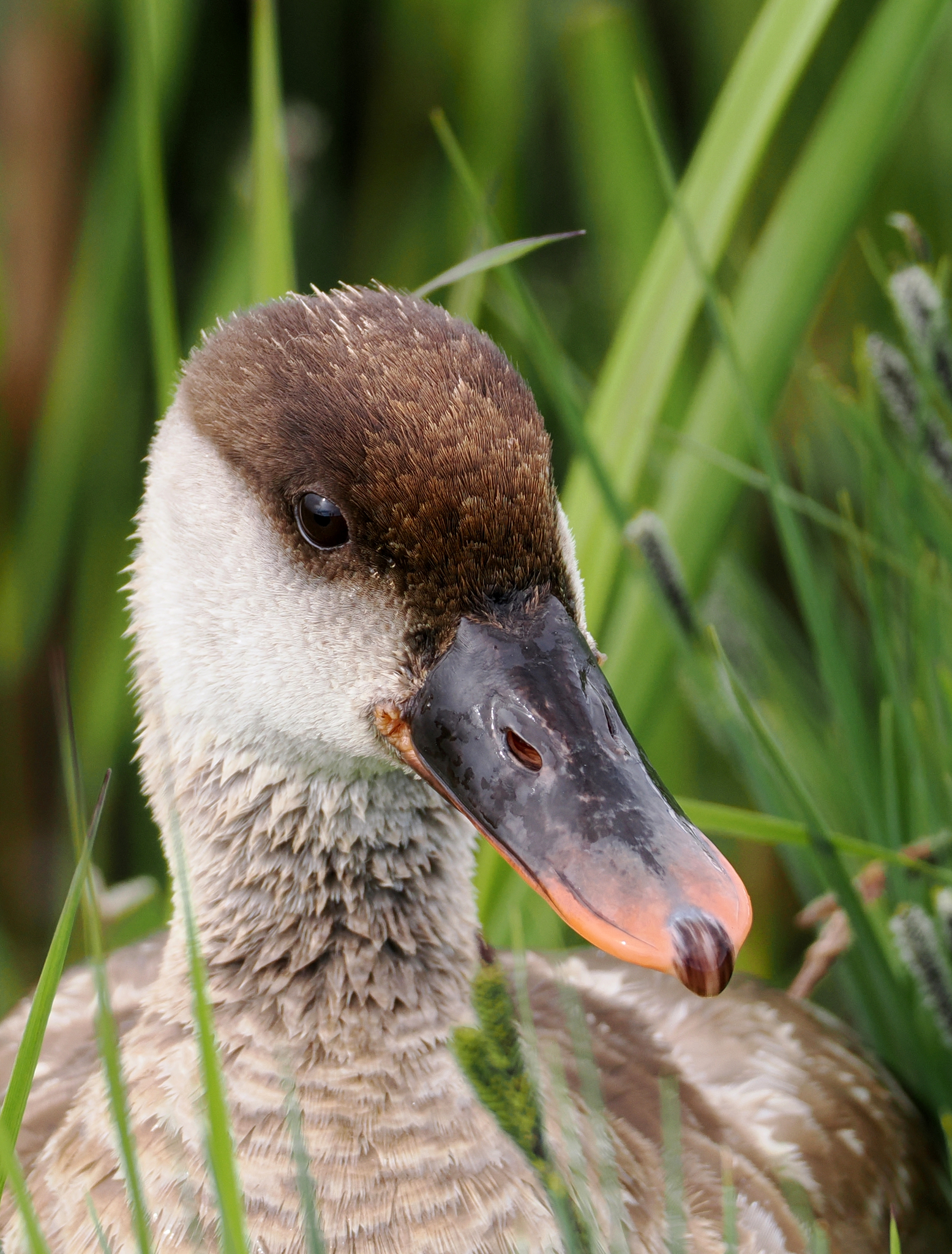
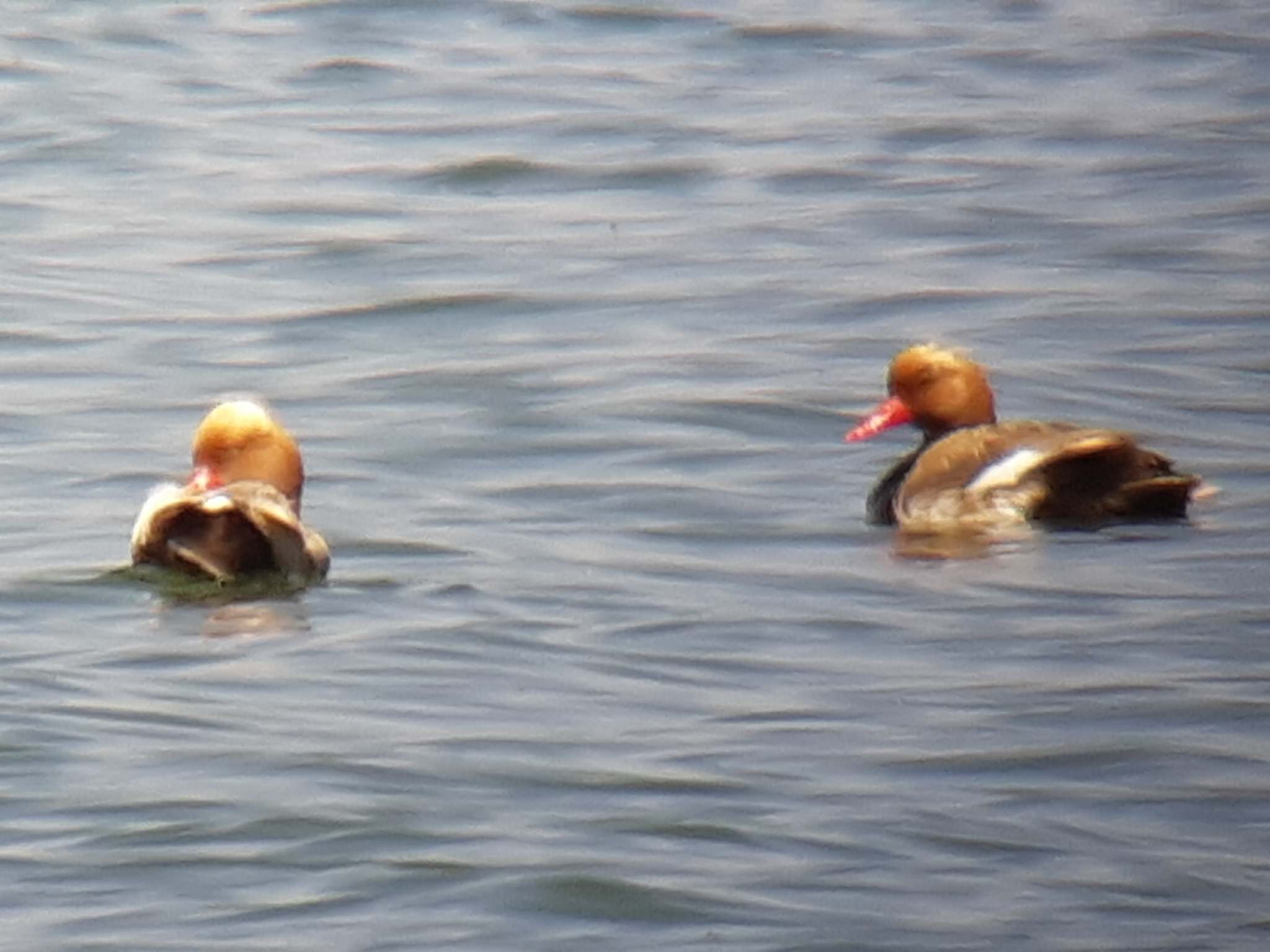
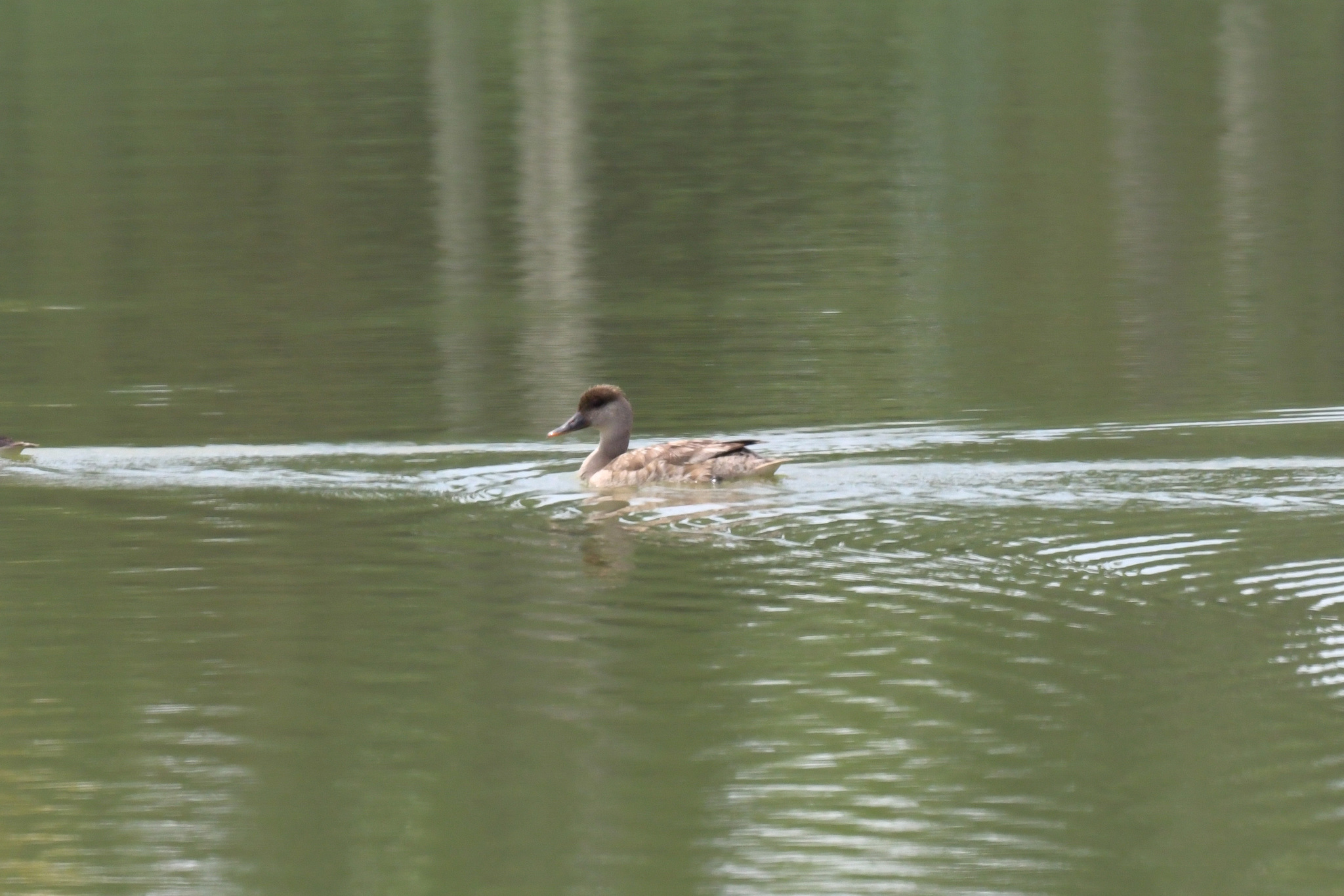
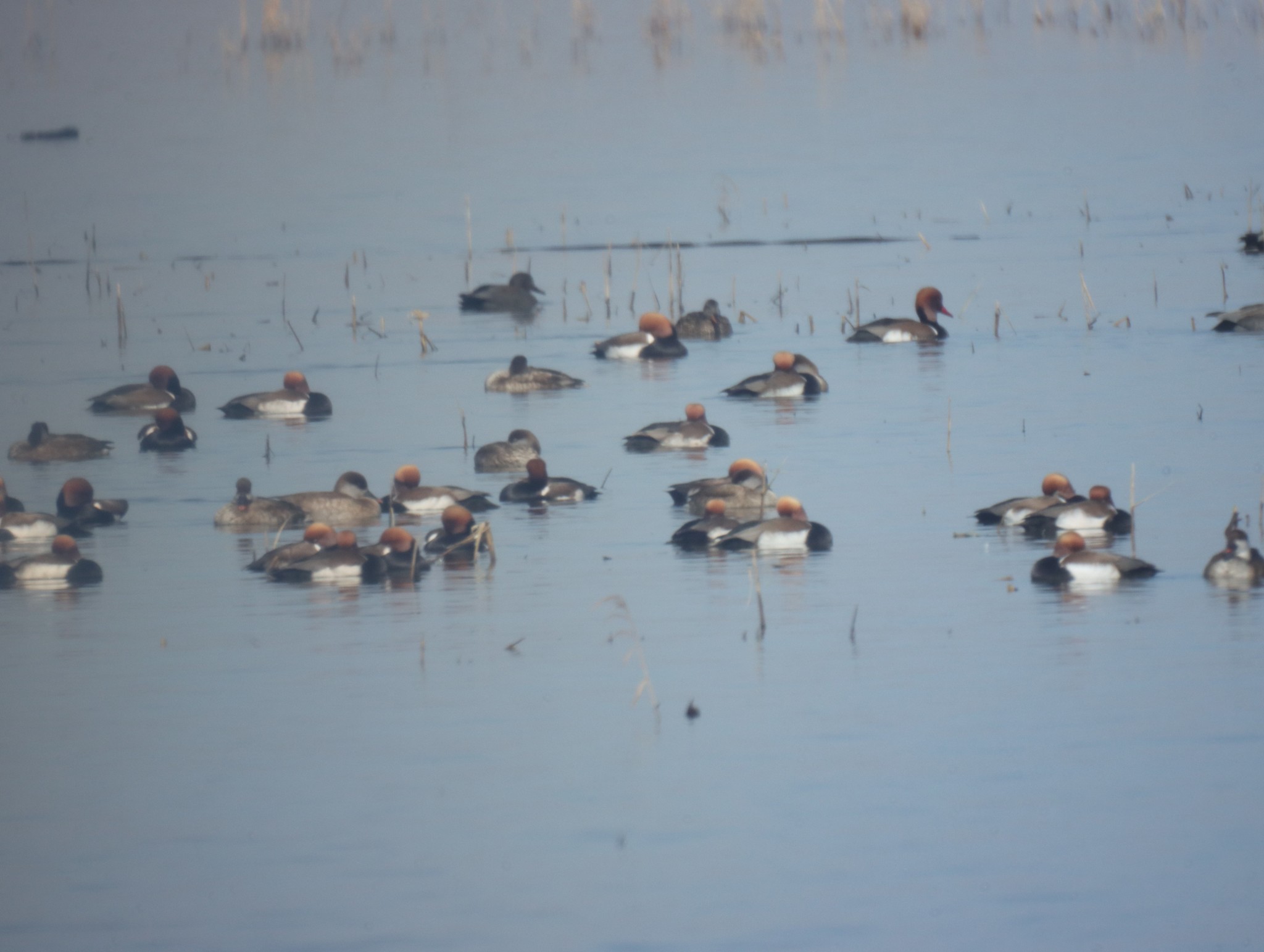
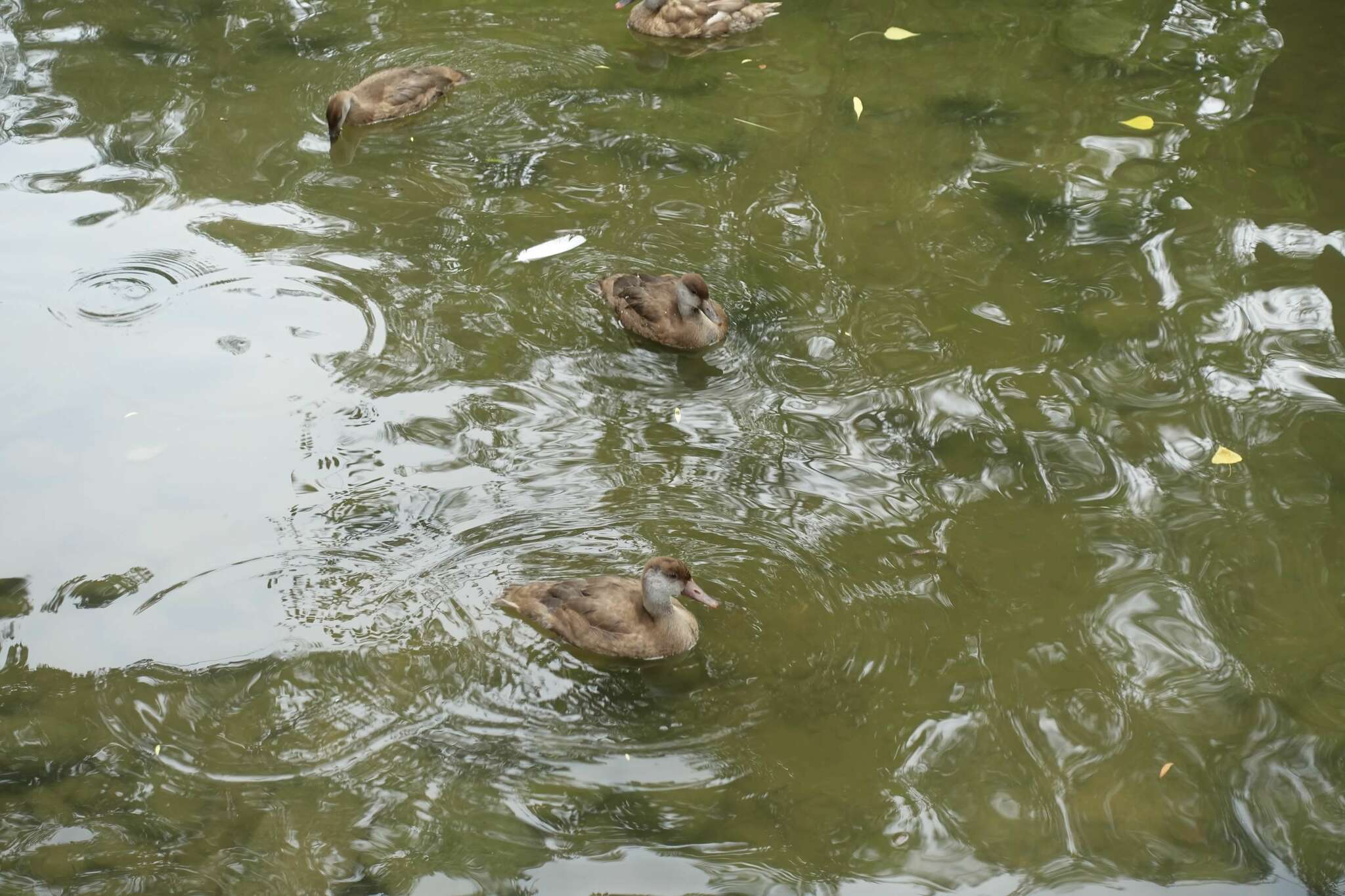
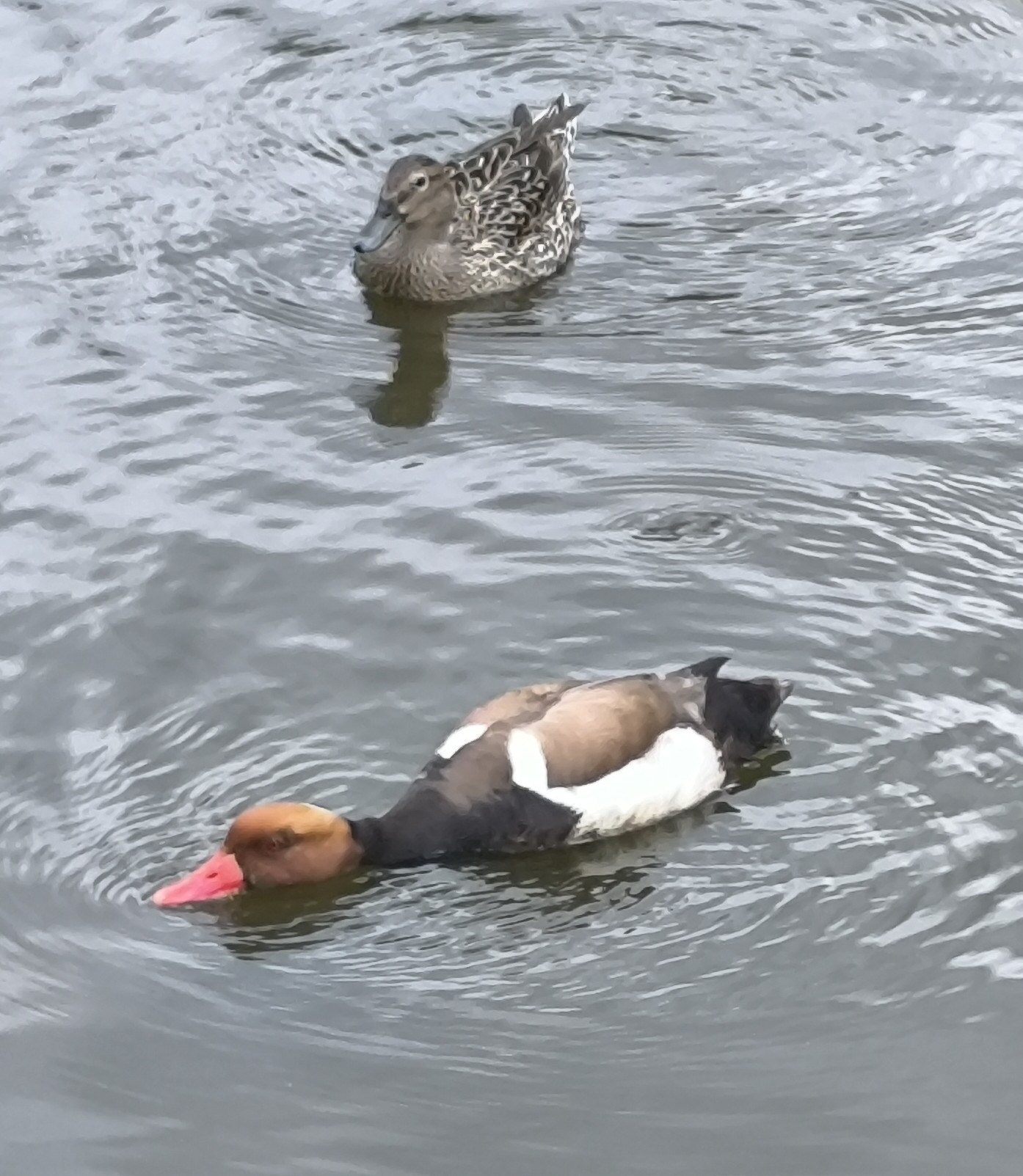
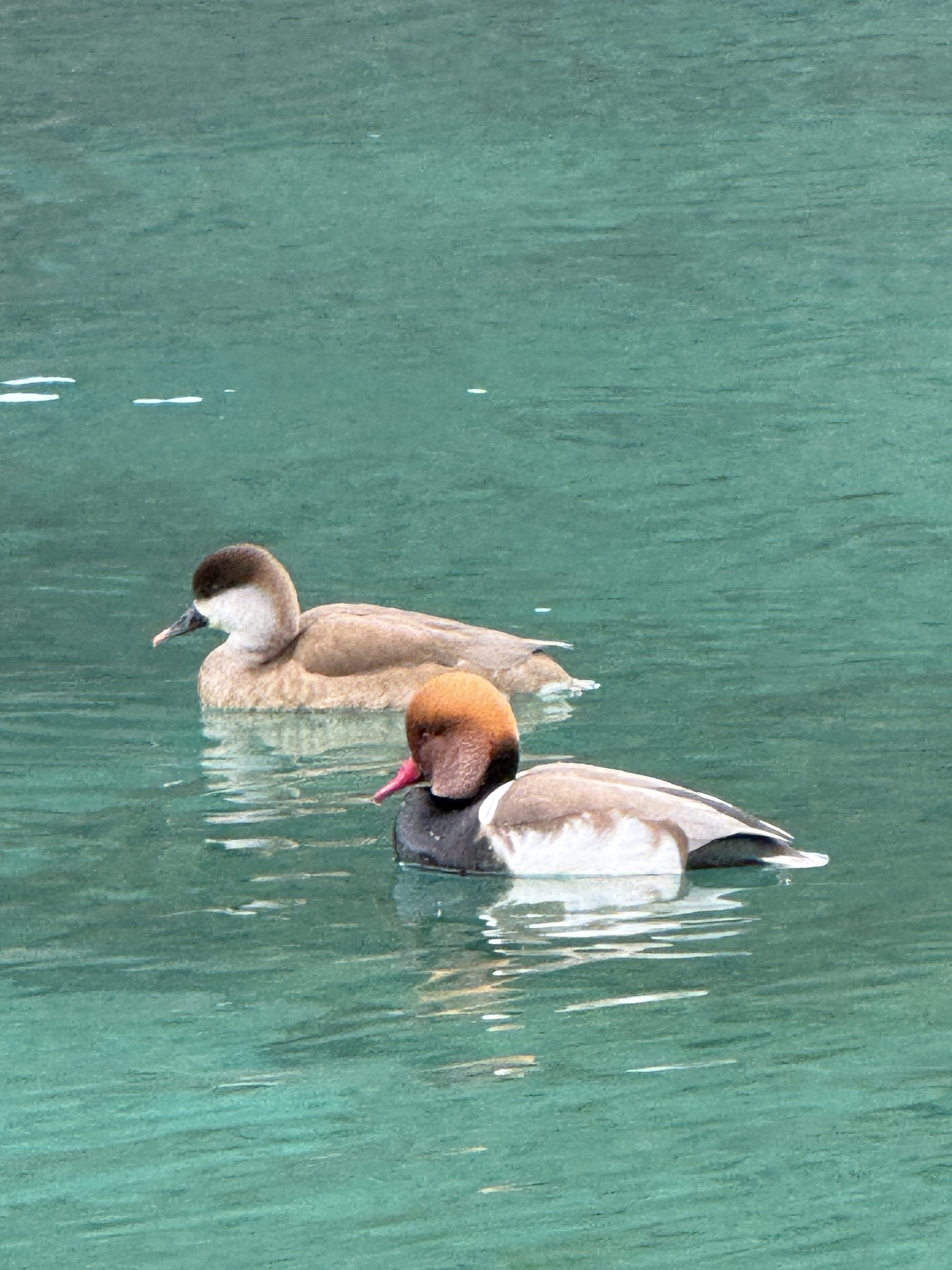
This is a substantially built diving duck, larger and more robust than many related species. The breeding male is absolutely unmistakable with its rounded, brilliant orange head contrasting sharply with a vivid red bill, black breast, and white flanks. The upperparts are a rich brown, while the tail appears black. Females present a much more subdued appearance, being predominantly pale brown overall with a darker back and crown and distinctive whitish face markings. The diagnostic red bill persists in eclipse males, which otherwise resemble females, providing a key identification feature during the non-breeding period. When observed in flight, the white wing speculum and overall shape help distinguish this species from similar diving ducks.
Identification
Adult males are instantly recognizable thanks to their unique combination of orange head, red bill, black breast and white flanks - no other European duck presents this colour pattern. Females require more careful attention and are best distinguished from similar pochards by their pale brown plumage, darker crown and back, and whitish face. The reddish bill retained by eclipse males is a crucial clue. In mixed winter flocks, which frequently include common pochards and other diving ducks, the species' larger size and distinctive colour scheme stand out. The habit of upending for food more frequently than most diving ducks can also aid identification when observing feeding behaviour.
Distribution & Habitat
The breeding range stretches across southern Europe and extends eastward through the steppe and semi-desert zones beyond the Black Sea to Central Asia and Mongolia. The species occupies lowland marshes and lakes within this broad corridor. Winter distribution includes the Indian subcontinent and Africa, with more northerly breeding populations moving further south to reach north Africa. The species is somewhat migratory, with the extent of movement varying between populations. In the British Isles, despite numerous records, the majority of individuals result from accidental or deliberate introductions rather than natural vagrancy, with established populations centred on central and southern England.
Behavior & Ecology
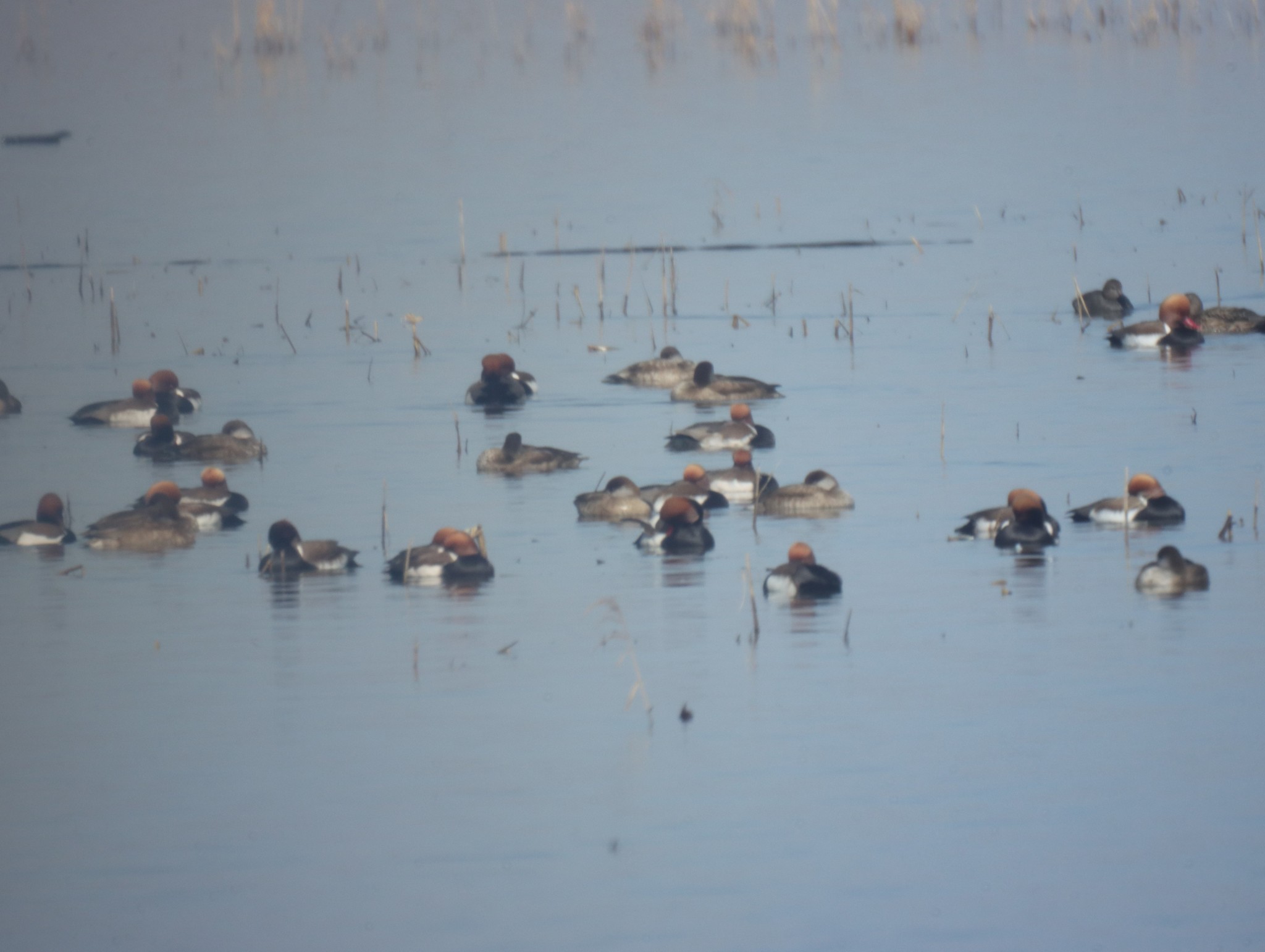
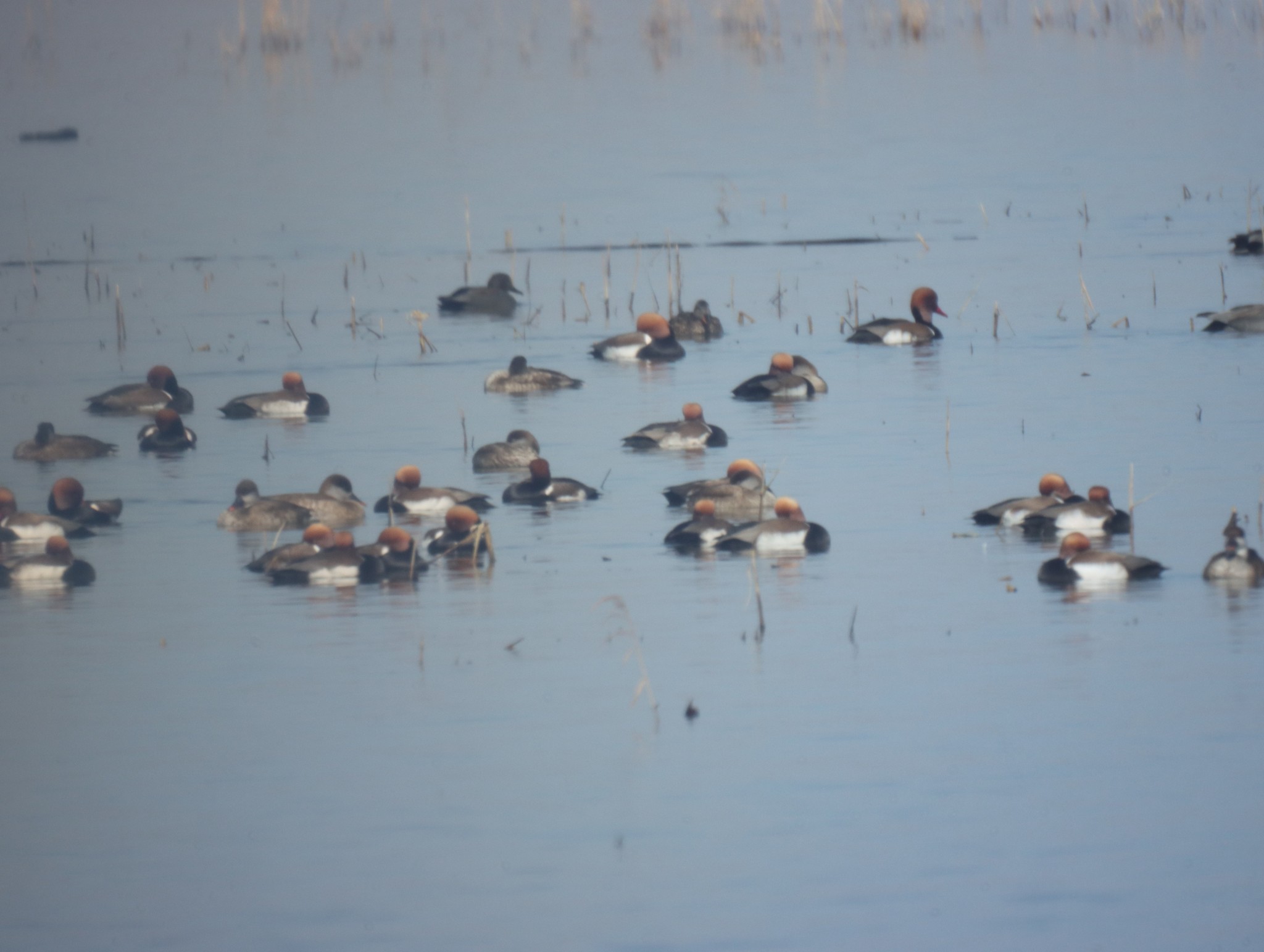
Highly gregarious outside the breeding season, this duck forms substantial flocks in winter that frequently mix with other diving duck species, especially common pochards. Feeding involves both diving and dabbling, though this species upends for food more regularly than most diving ducks, consuming aquatic plants extensively. The male produces a distinctive wheezing 'veht' call, while females emit a characteristic series of hoarse 'vrah-vrah-vrah' calls. Breeding begins with nest construction along lakesides among emergent vegetation, where females lay clutches of 8 to 12 pale green eggs. The species benefits from international protection under the AEWA agreement.
Conservation
Classified as a species to which the Agreement on the Conservation of African-Eurasian Migratory Waterbirds applies, indicating international cooperation on protection measures. The conservation status reflects the species' extensive range across multiple continents. However, the complicated history of introductions and escapes in the British Isles illustrates the challenges of maintaining accurate population data and understanding natural versus established populations in regions where deliberate releases have occurred.
Culture
The species holds no significant cultural or mythological associations beyond its scientific nomenclature, where the name derives from Greek 'Netta' meaning duck and Latin 'rufina' meaning golden-red, referencing the male's vivid head colouration.
Source: Wikipedia · CC BY-SA 3.0
Taxonomy
- Order
- Anseriformes
- Family
- Anatidae
- Genus
- Netta
- eBird Code
- recpoc
Distribution
breeds from Europe (Iberian Peninsula northward to southern Denmark and Poland) eastward to central Asia (northwestern China and western Mongolia); somewhat local in Europe, more widespread to east; resident in southwestern Europe; elsewhere, winters from eastern Mediterranean eastward to northern India, south-central China, and northern Myanmar
Vocalizations
Data Sources
Species description from Wikipedia, licensed under CC BY-SA 3.0.
Bird images and sounds sourced from GBIF, contributed by citizen scientists worldwide under Creative Commons licenses.
Taxonomy data from AviList 2025.