Passeriformes / Muscicapidae / Myophonus
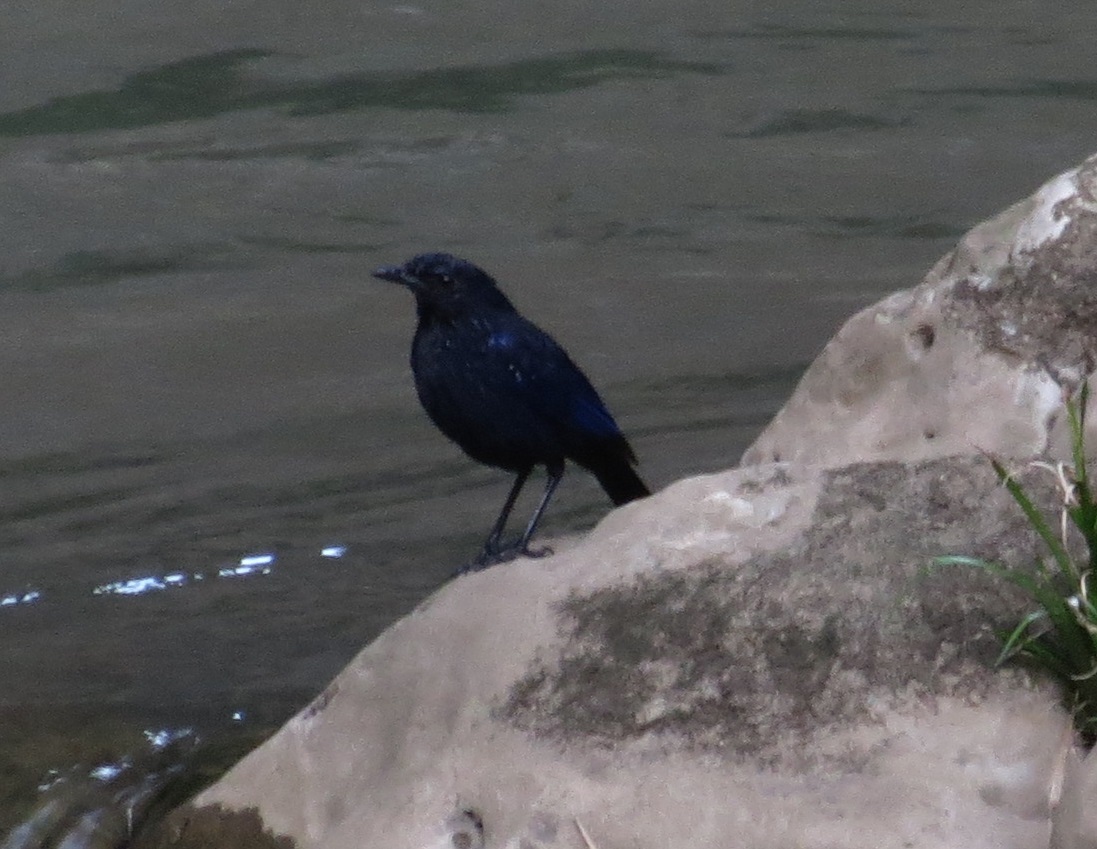
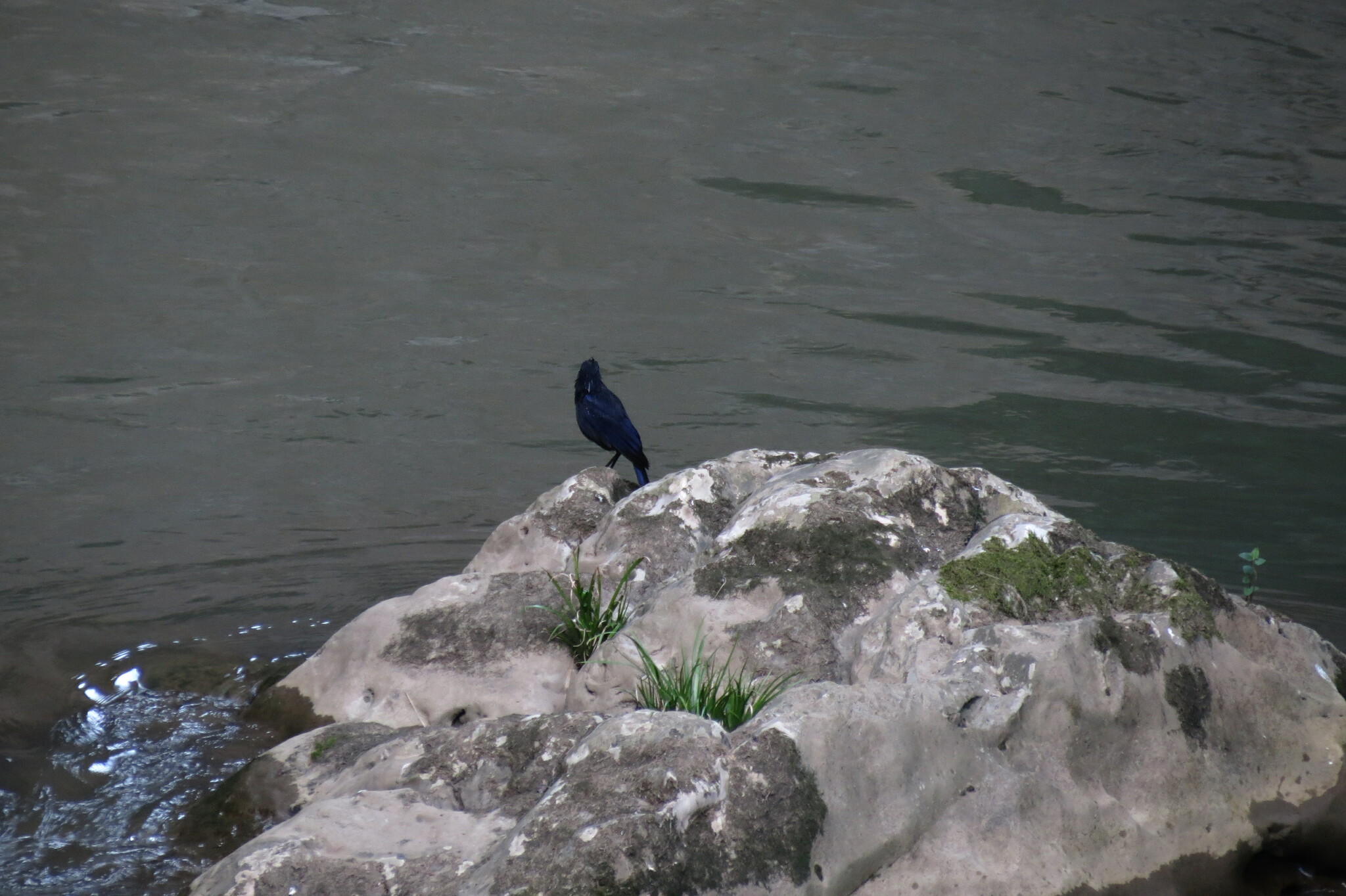
Blue Whistling Thrush
Myophonus caeruleus · 紫啸鸫
Introduction
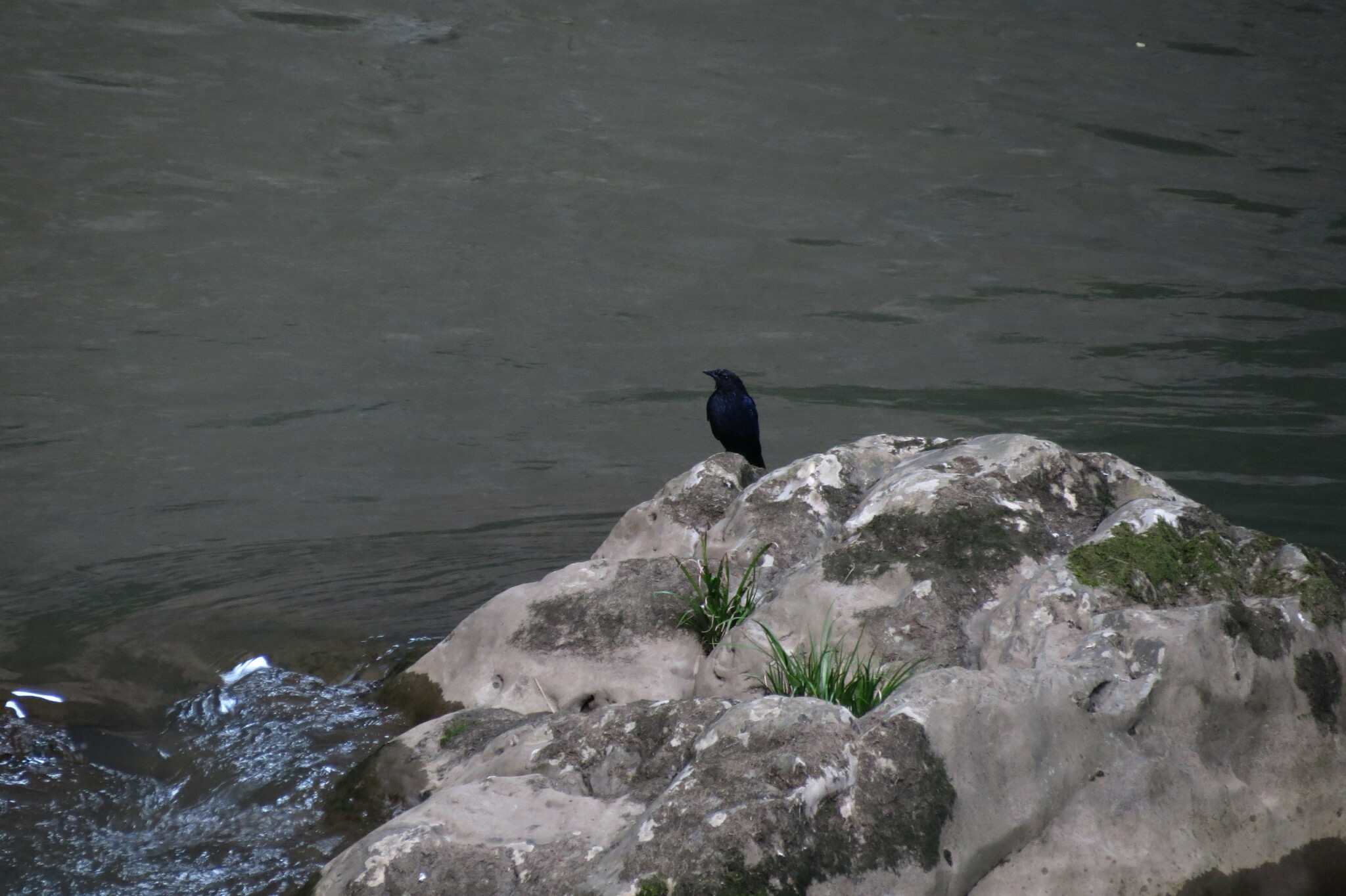
A member of the family Muscicapidae found in the mountains of Central Asia, South Asia, China, and Southeast Asia. It inhabits temperate forests and moist montane forests, often near streams. Distinctive for its loud, human-like whistling song at dawn and dusk, and for foraging on the ground for snails, crabs, fruits, and insects.
Description
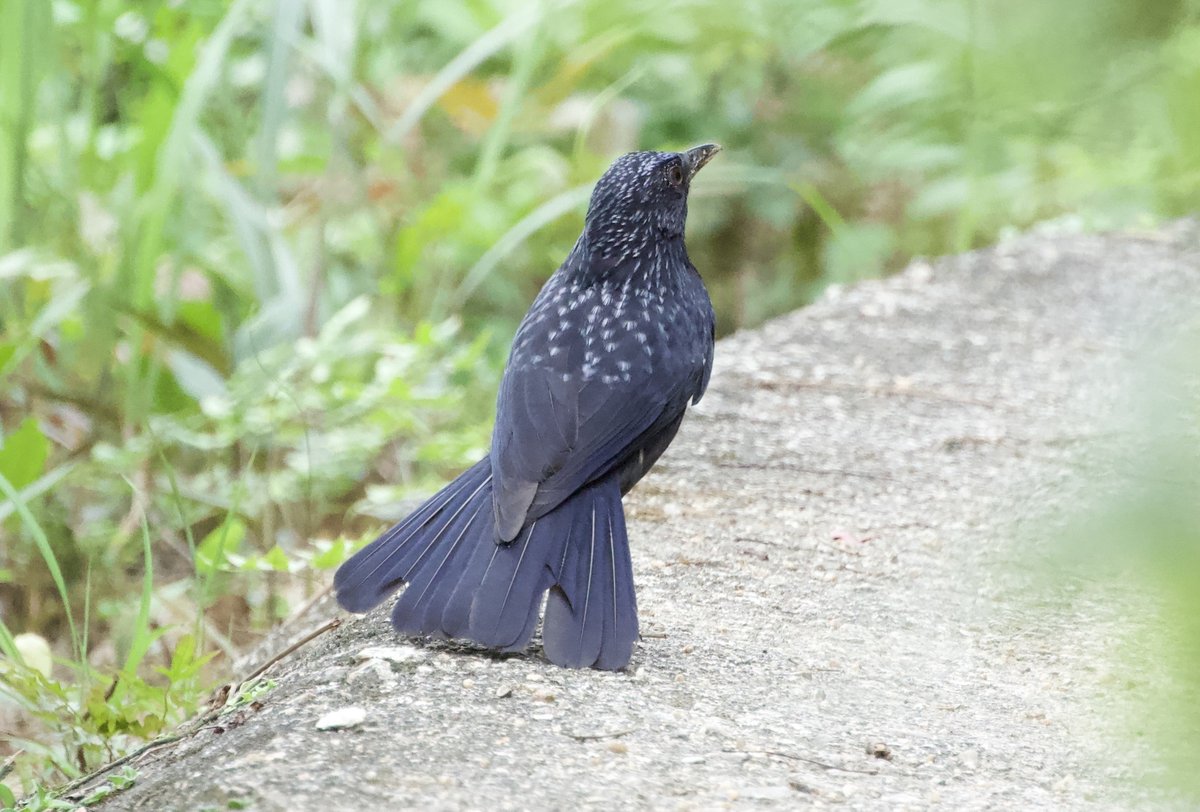
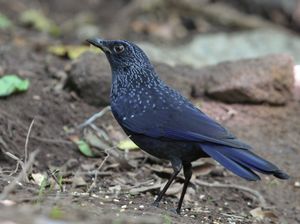
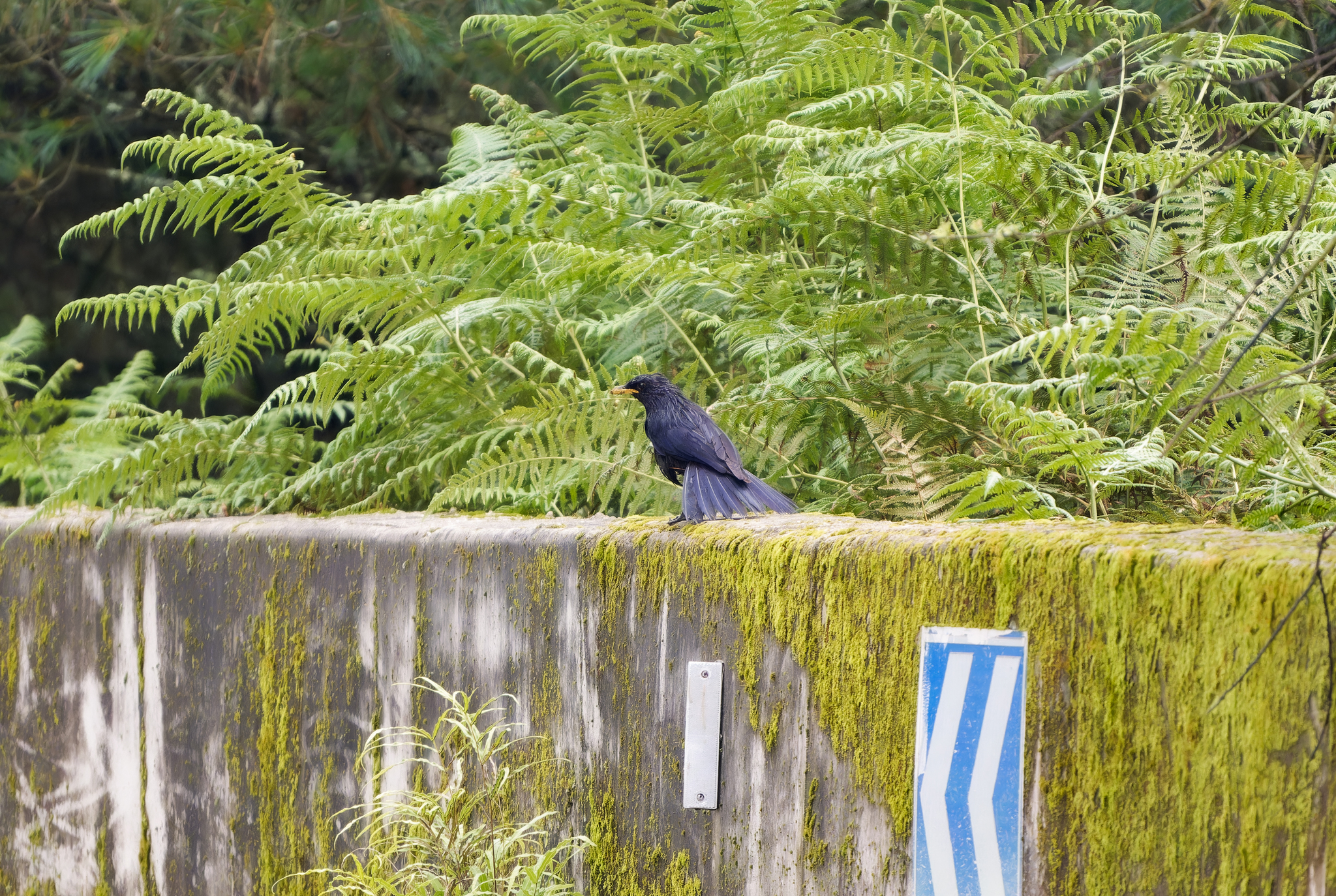
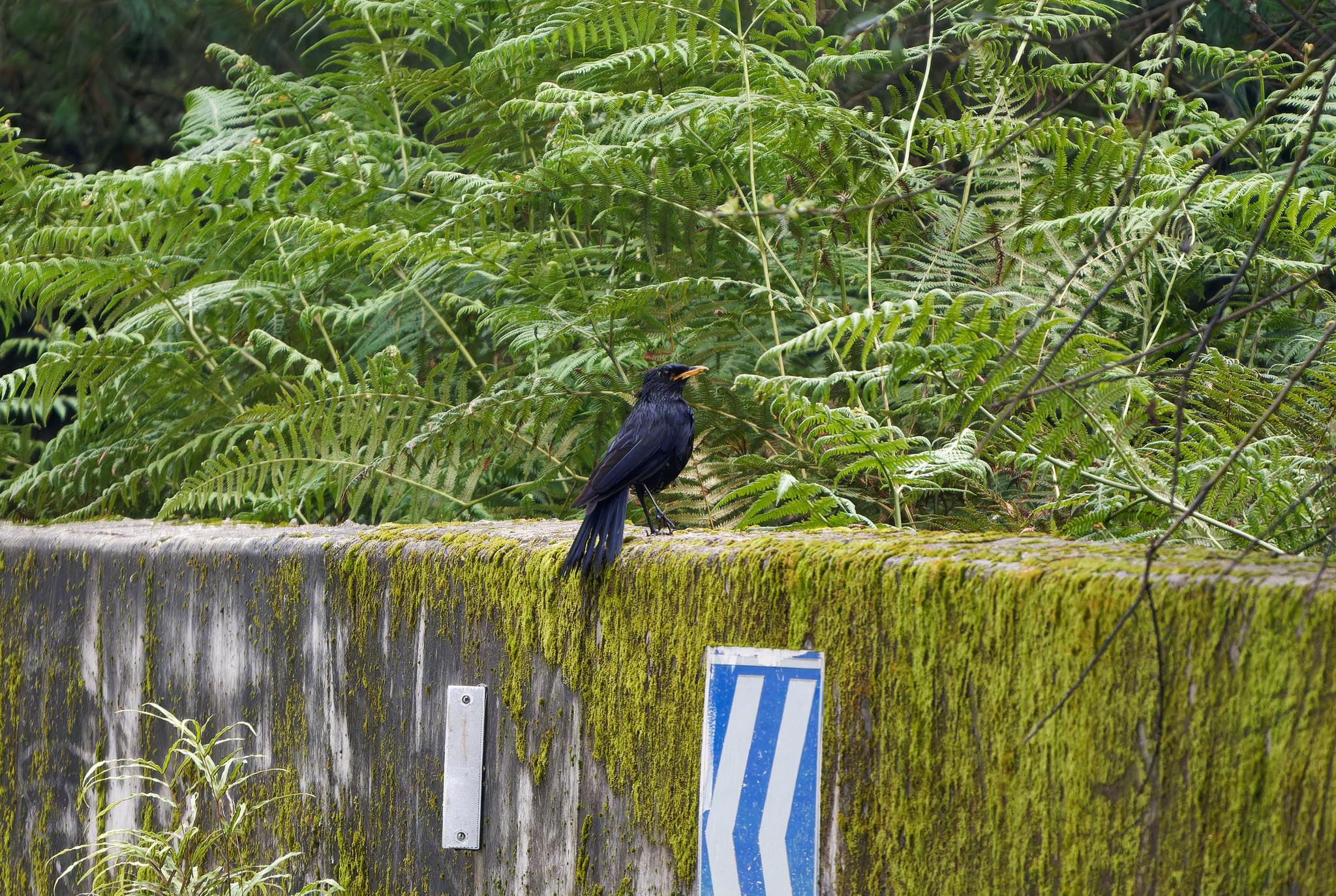
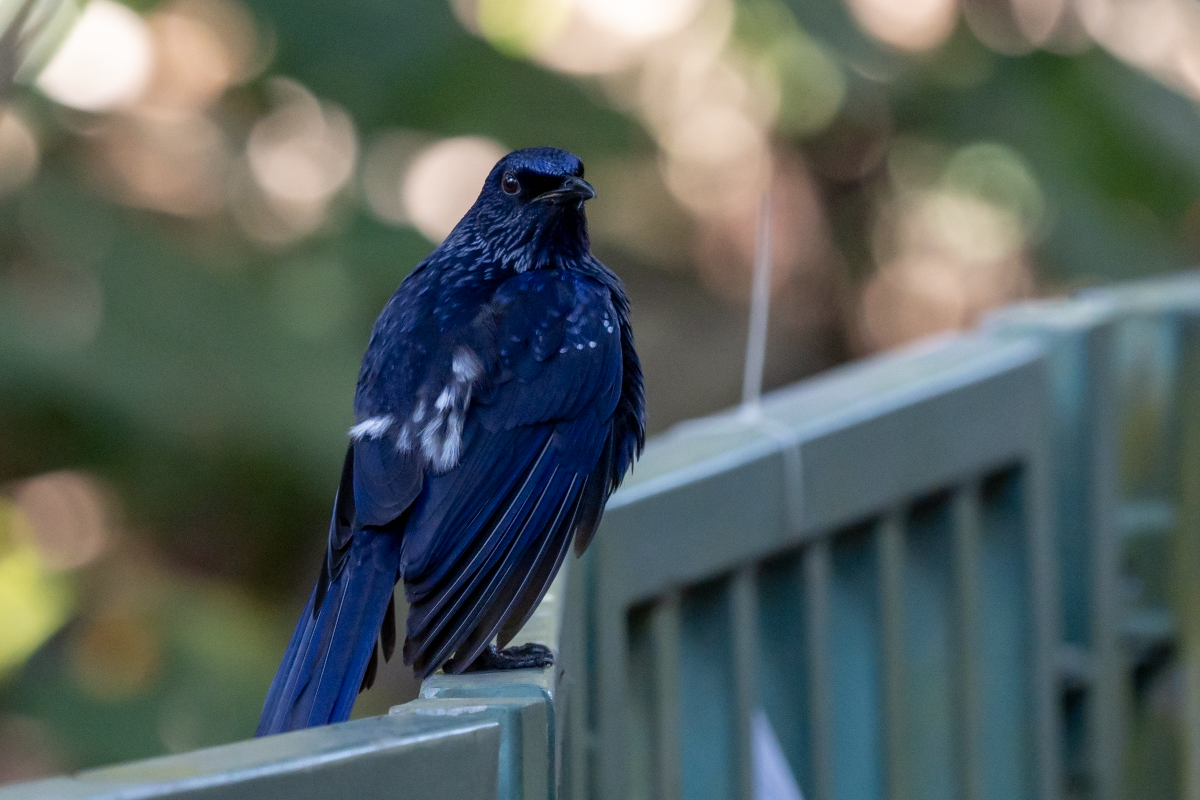
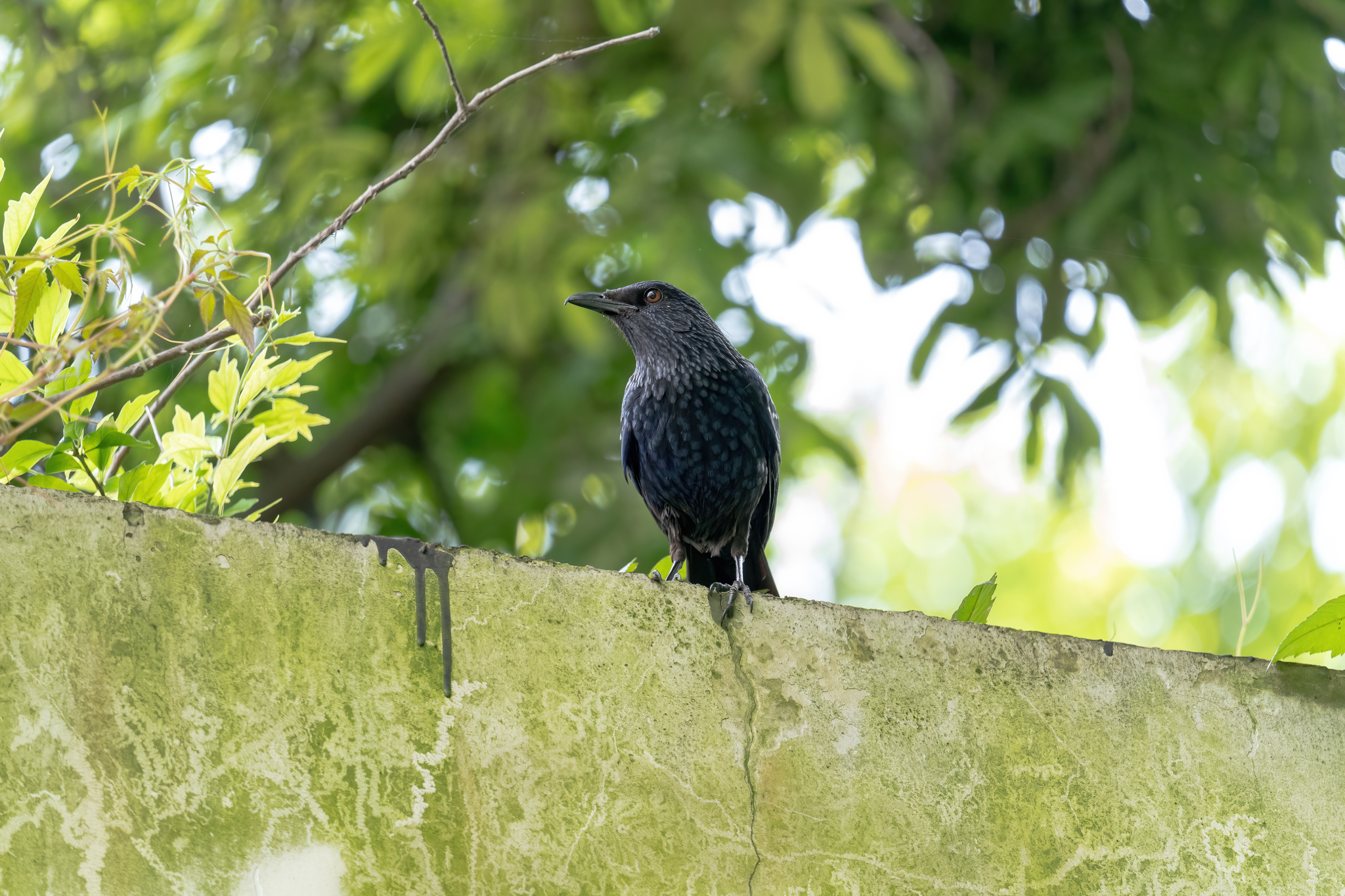
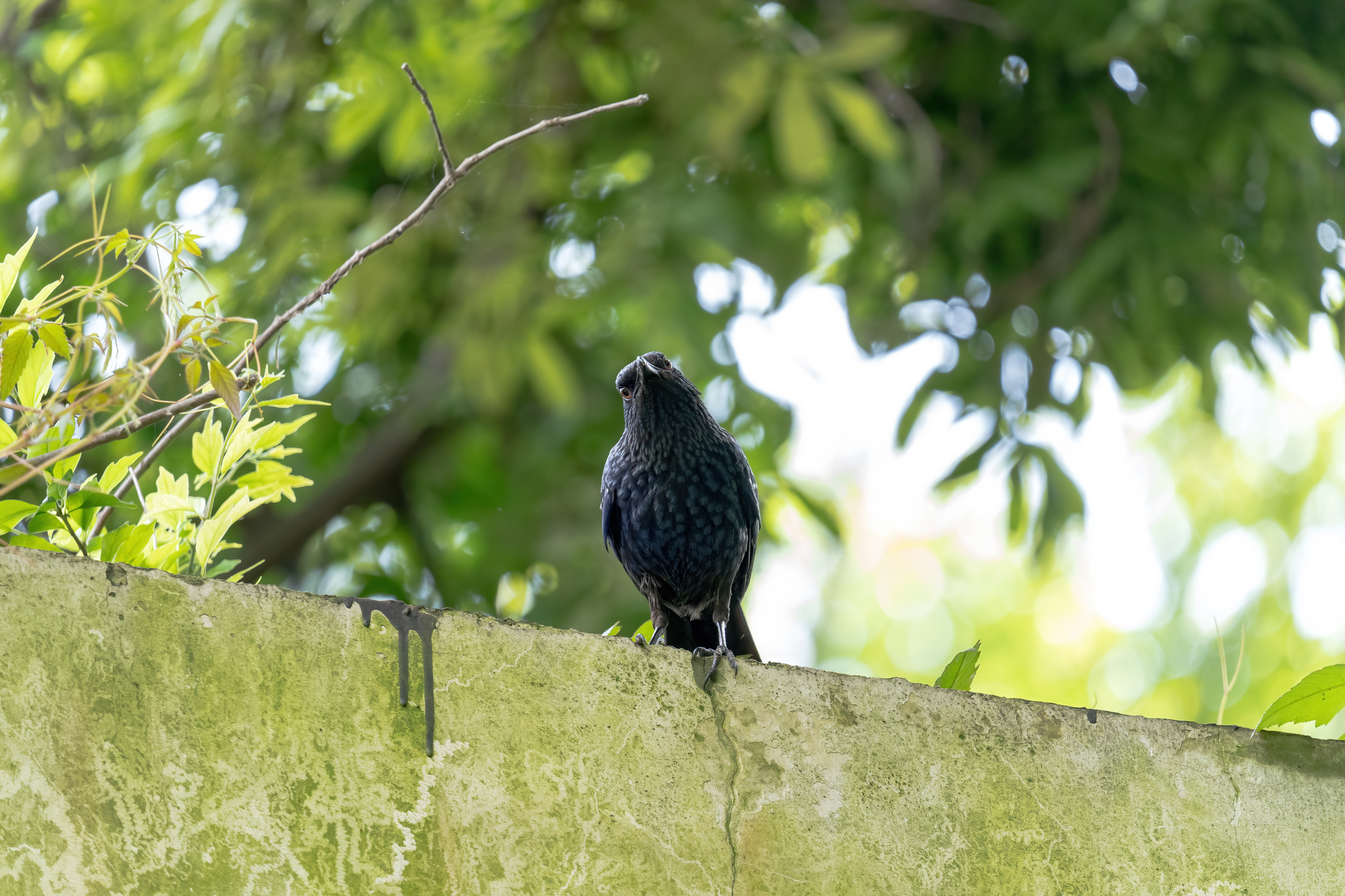
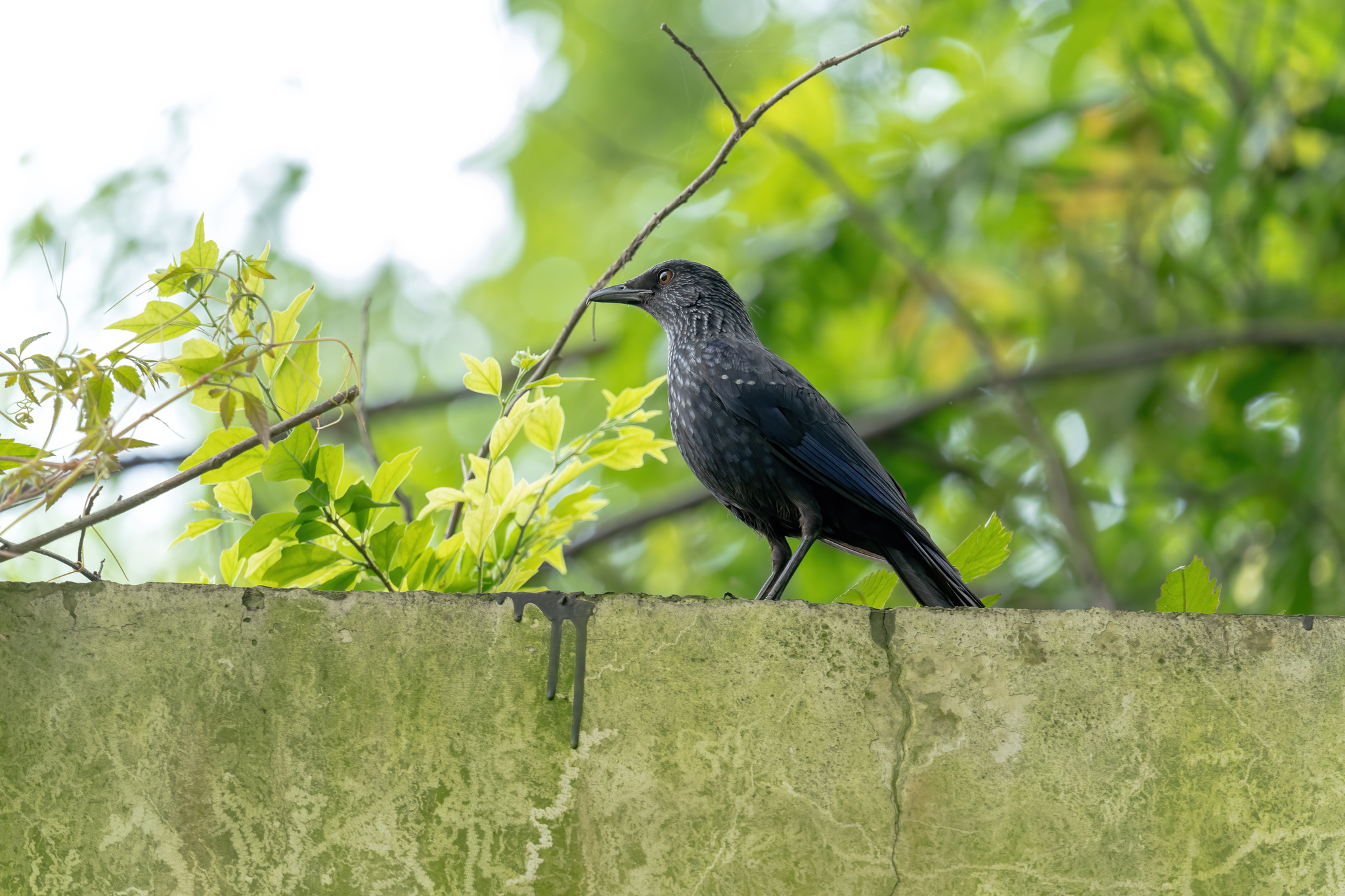
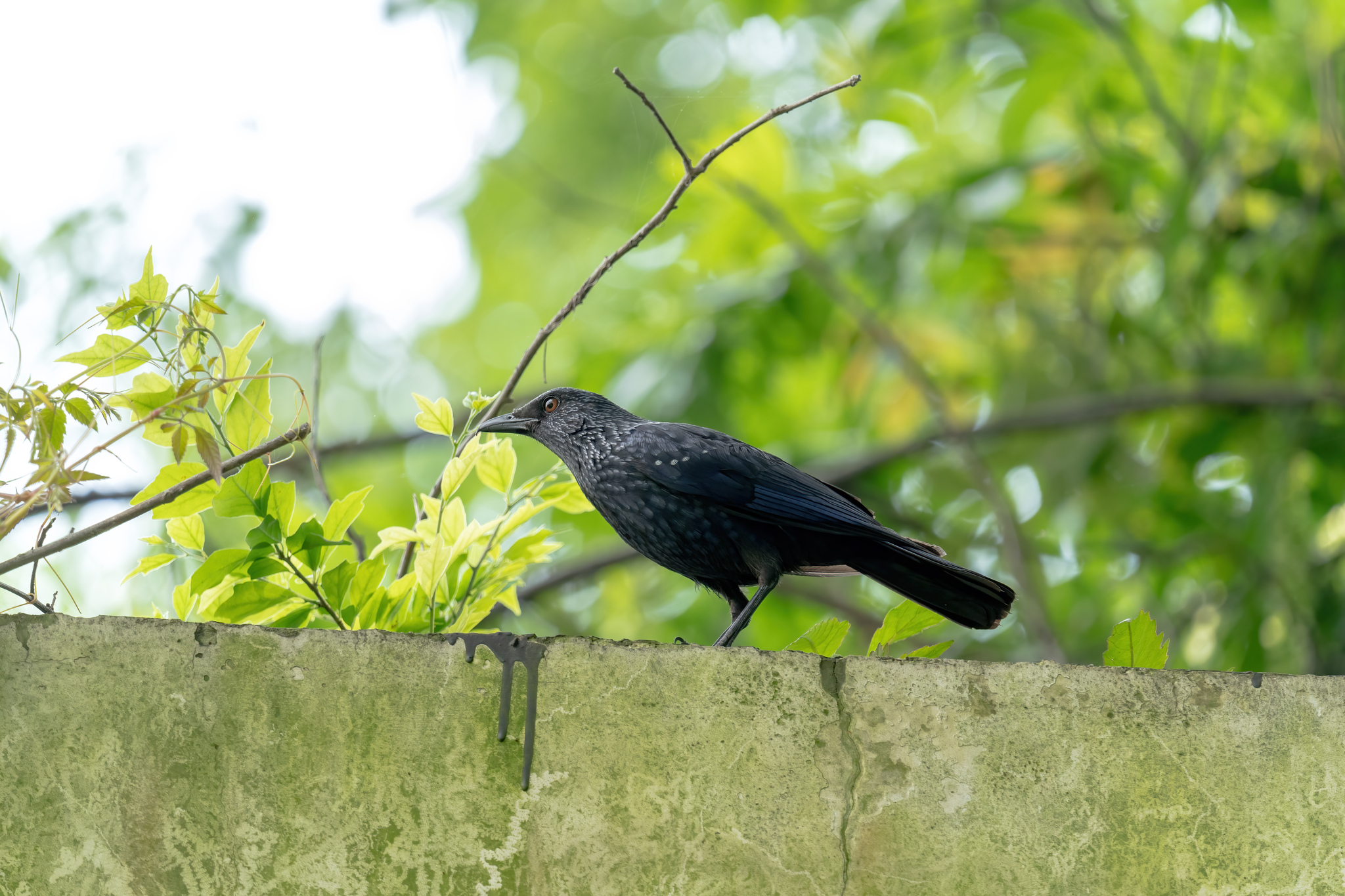
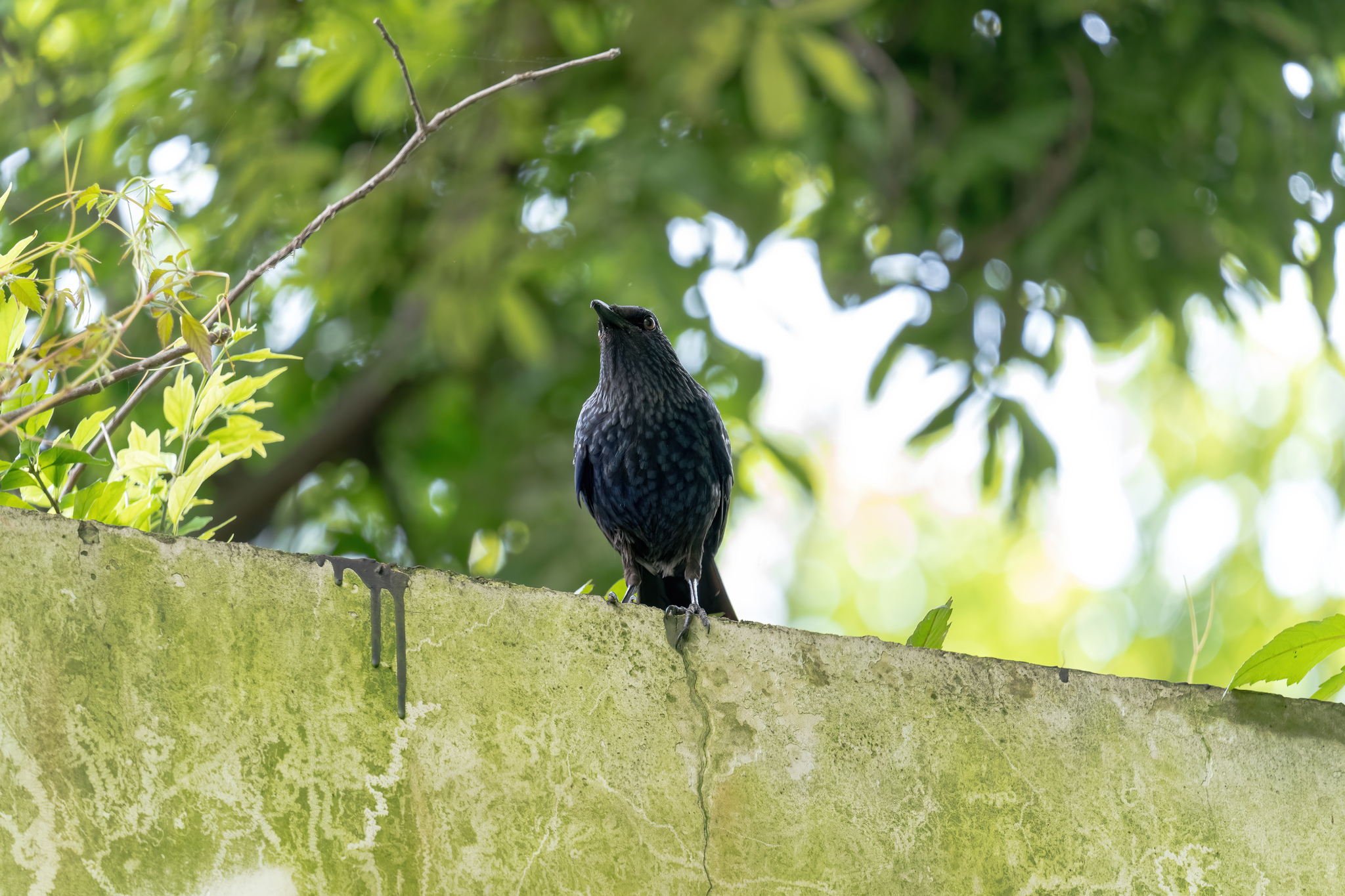
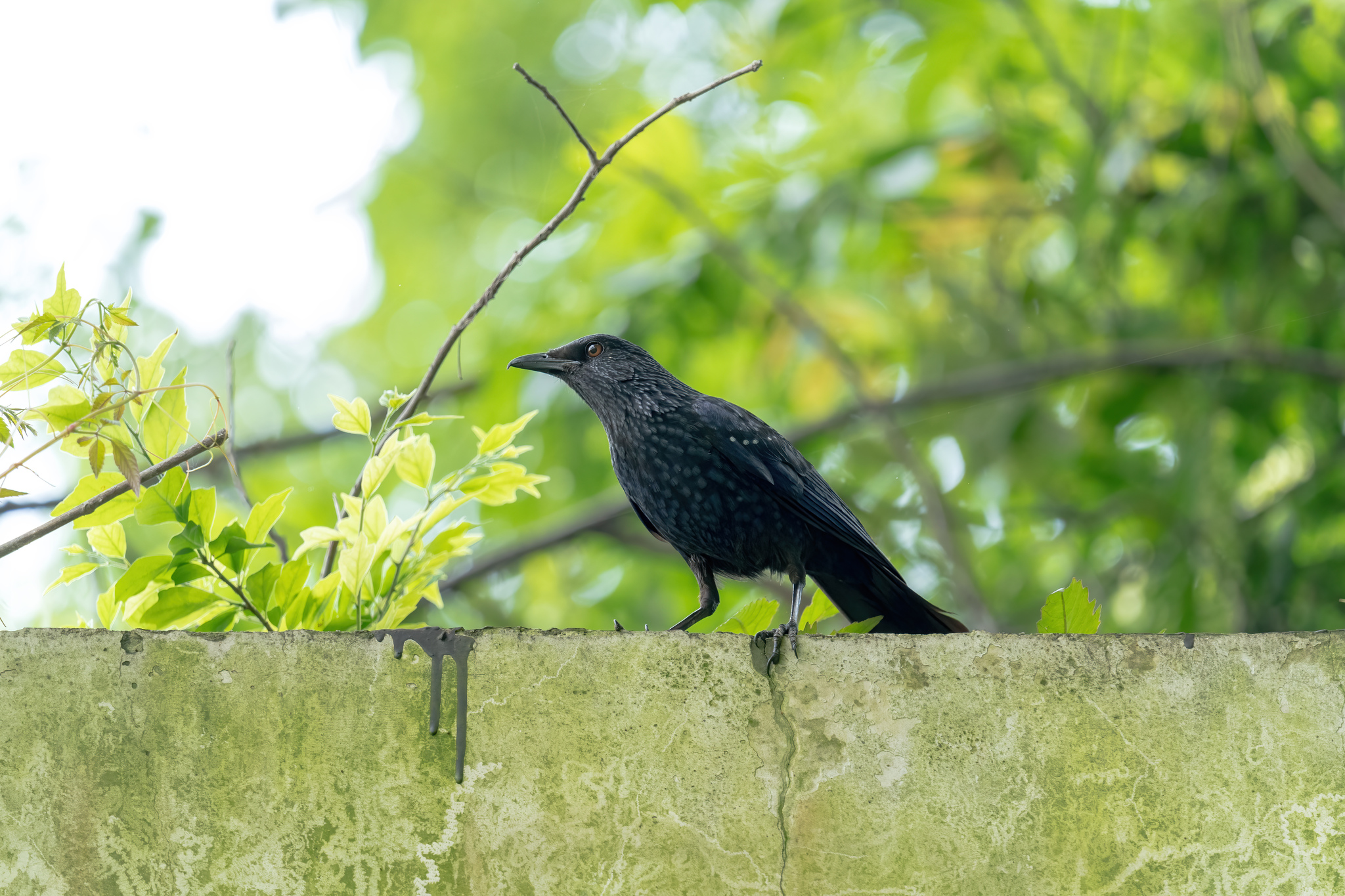
Measures 31–35 cm (12–14 in) in length with a weight range of 136 to 231 g (4.8 to 8.1 oz). Wing chord is 15.5–20 cm, tarsus 4.5–5.5 cm, and bill 2.9–4.6 cm. Plumage is dark violet blue with shiny spangling on feather tips, excluding lores, abdomen, and under-tail. Wing coverts are a slightly different blue shade; median coverts have white spots at tips in some subspecies. Inner webs of flight and tail feathers are black. The bill is yellow, contrasting with the plumage, though the nominate form has a black bill. Sexes are similar. Size varies geographically, with larger birds in the north.
Identification
Key marks include dark violet-blue plumage with shiny spangles, white spots on median wing coverts (variable by subspecies), and a contrasting yellow or black bill. Alarm call is a shrill 'kree'. Distinguished by loud whistling songs at dawn and dusk. Flight involves quick spurts; when alarmed, it spreads and droops its tail.
Distribution & Habitat
Ranges across Afghanistan, Bangladesh, Bhutan, Cambodia, China, Hong Kong, India, Indonesia, Kazakhstan, Laos, Macau, Malaysia, Myanmar, Nepal, Tajikistan, Thailand, Tibet, Turkmenistan, Pakistan, and Vietnam. Found along the Tian Shan and Himalayas in temperate and subtropical/tropical moist montane forests. Makes altitudinal movements in the Himalayas, descending in winter. Six subspecies are recognized with distributions from Central Asia to Java.
Behavior & Ecology
Usually found singly or in pairs. Forages on the ground along streams and damp places, turning over leaves and stones. Diet includes fruits, earthworms, insects, crabs, and snails; snails and crabs are battered on rocks before eating. Recorded preying on small birds and mice. Nests in a cup of moss and roots on ledges or hollows beside streams; nest diameter can reach 10.4 cm. Clutch size is 3 to 4 eggs, with sometimes a second brood. Breeding season is April to August. Active after dusk; sings during darkness of dawn and dusk.
Source: Wikipedia · CC BY-SA 3.0
Taxonomy
- Order
- Passeriformes
- Family
- Muscicapidae
- Genus
- Myophonus
Vocalizations
Subspecies (6)
-
Myophonus caeruleus caeruleus
western China (Sichuan); winters to southern China and northern Indochina
Data Sources
Species description from Wikipedia, licensed under CC BY-SA 3.0.
Bird images and sounds sourced from GBIF, contributed by citizen scientists worldwide under Creative Commons licenses.
Taxonomy data from AviList 2025.