Passeriformes / Muscicapidae / Muscicapa
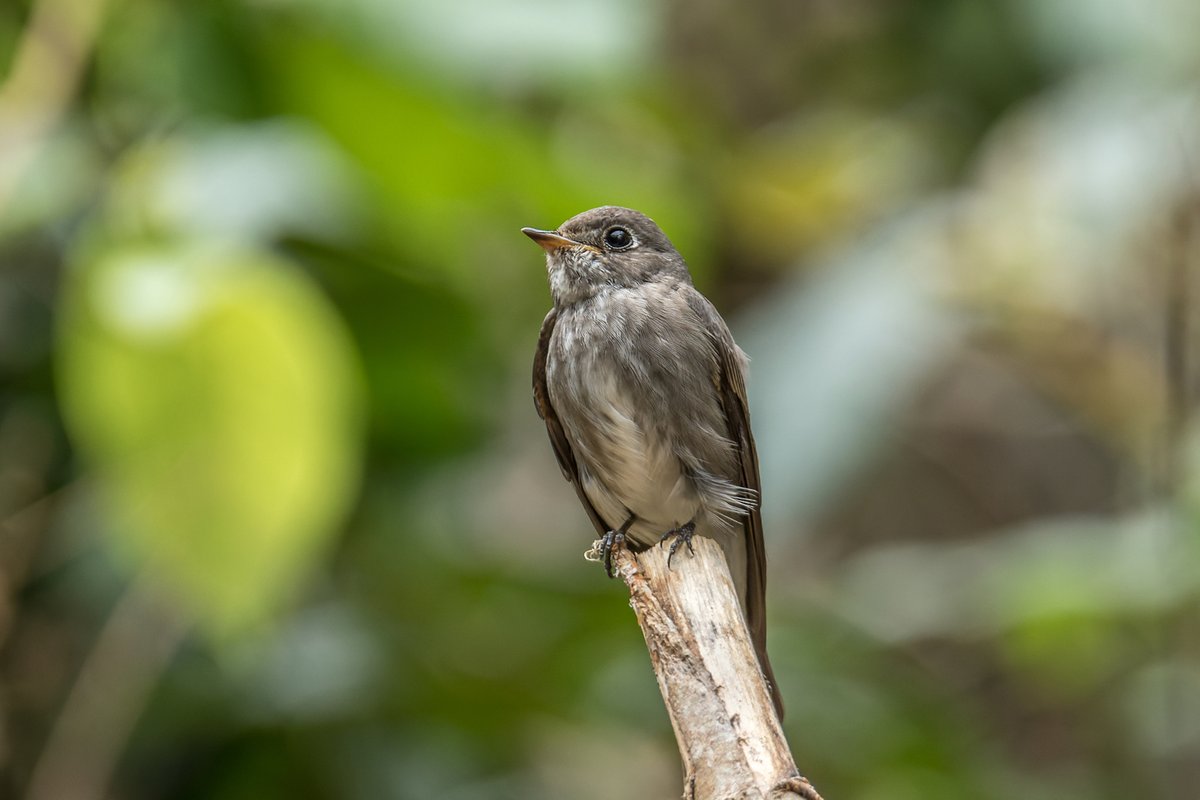
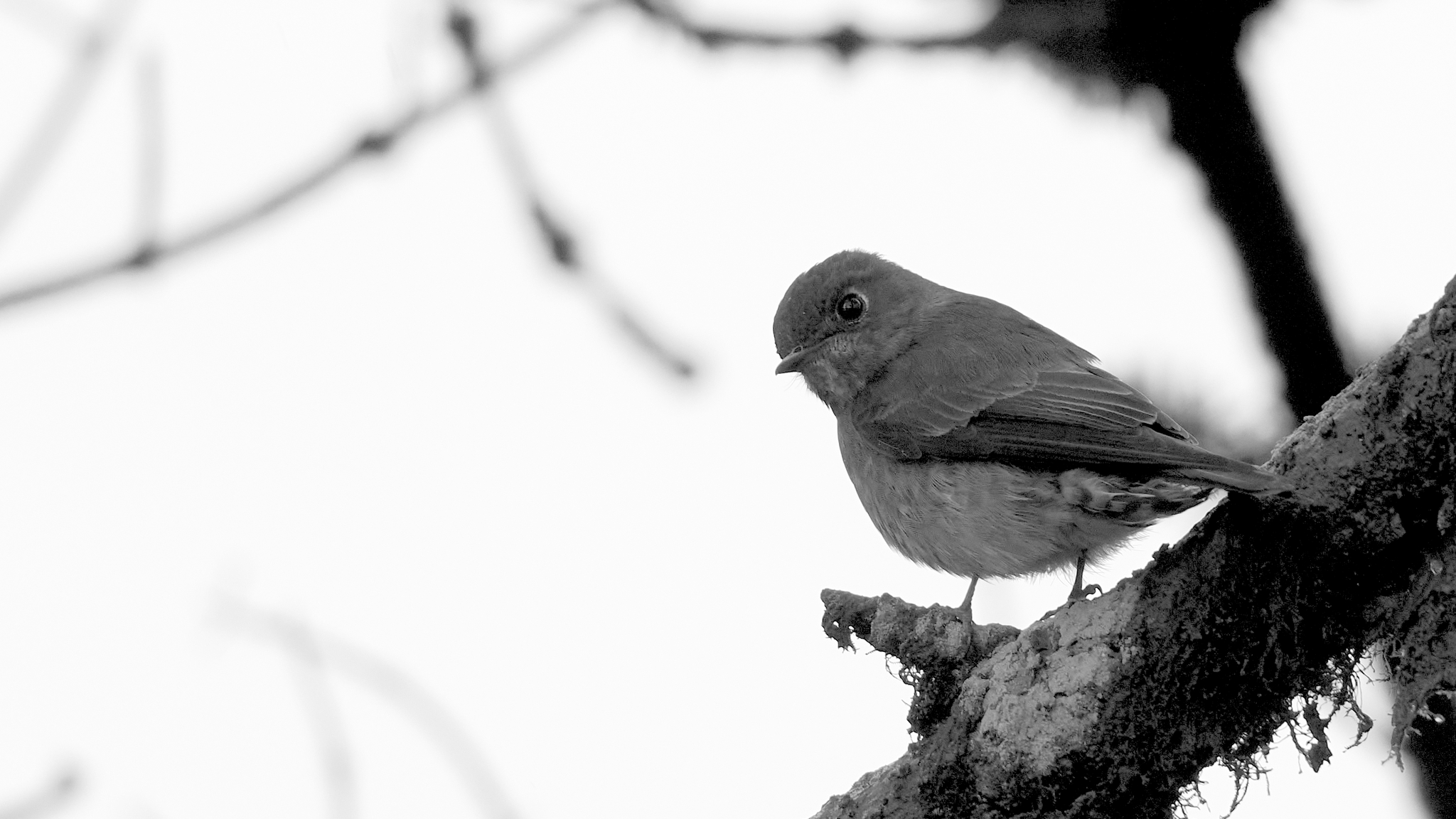
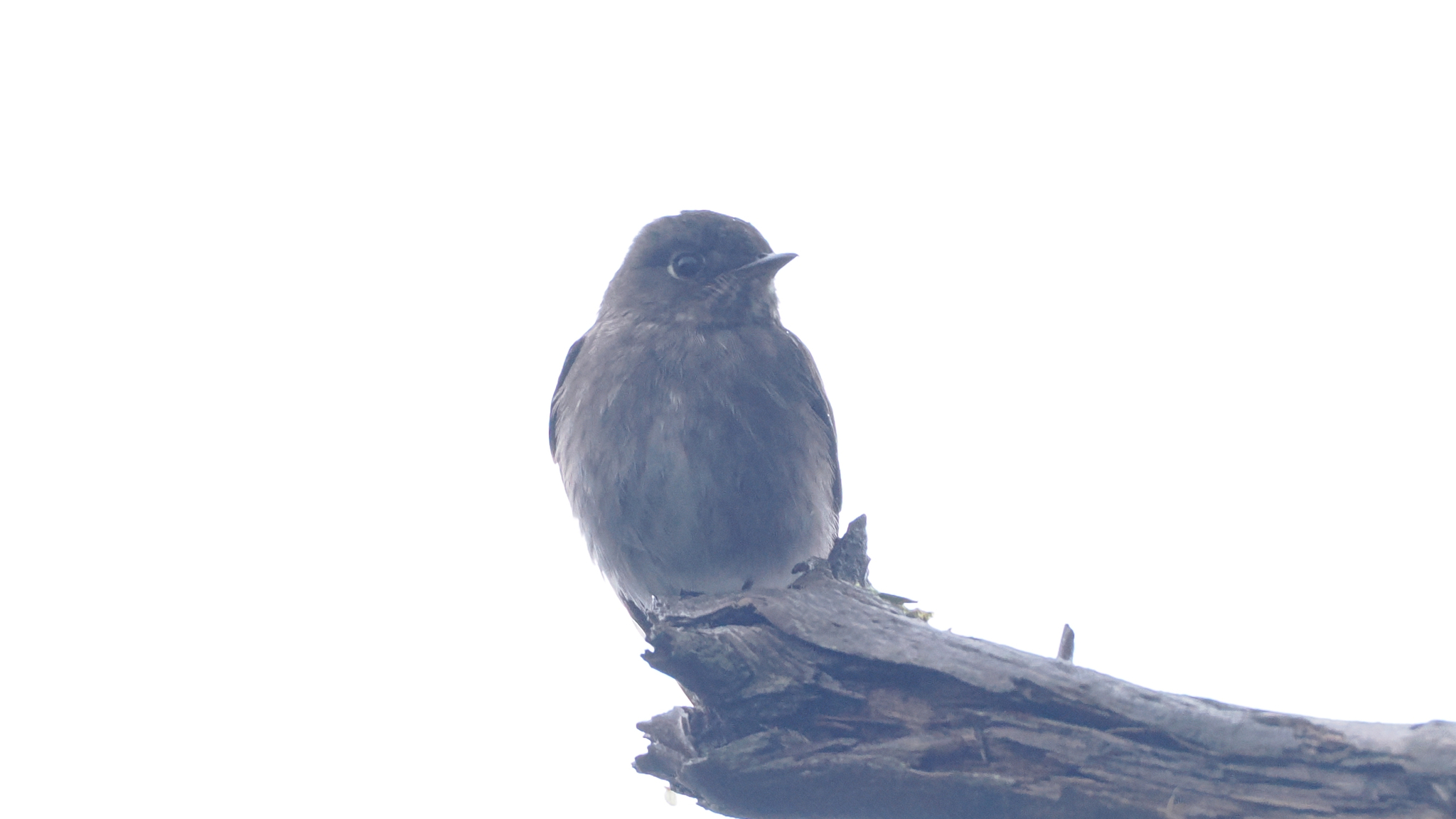
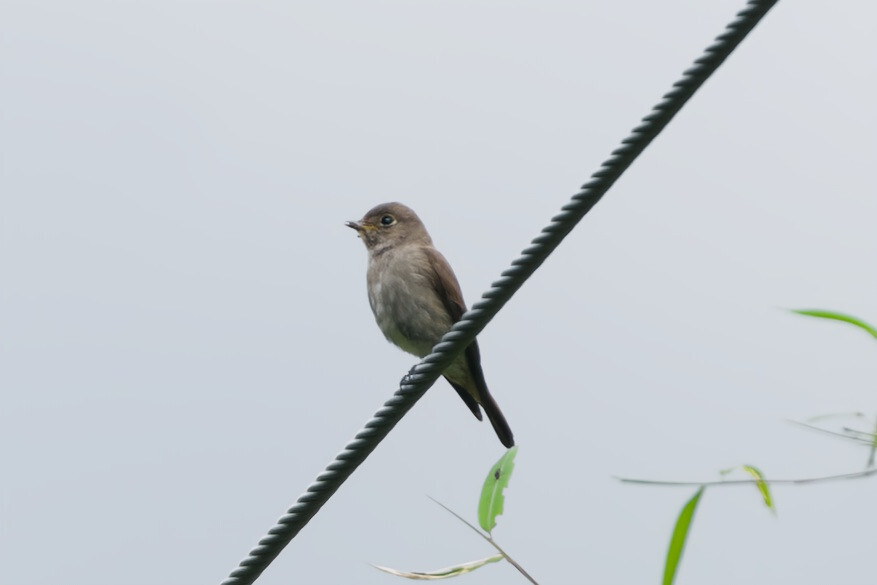
Dark-sided Flycatcher
Muscicapa sibirica · 乌鹟
Introduction
A small passerine bird in the genus Muscicapa of the family Muscicapidae. It has a wide breeding distribution in the East Palearctic, with northern populations migrating south for the winter. It inhabits coniferous and mixed forests, woodlands, plantations, parks, and gardens, often in mountainous regions up to 4000 metres.
Description
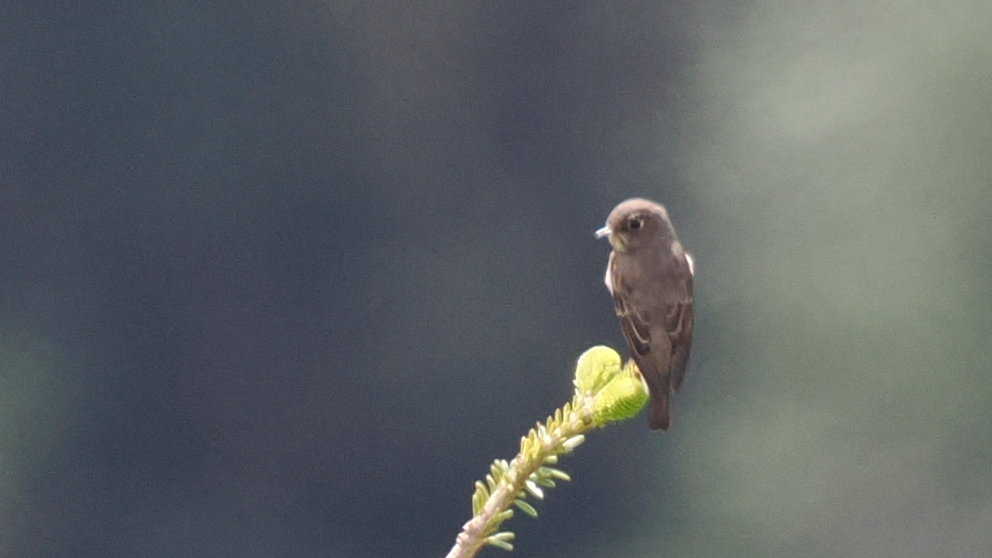
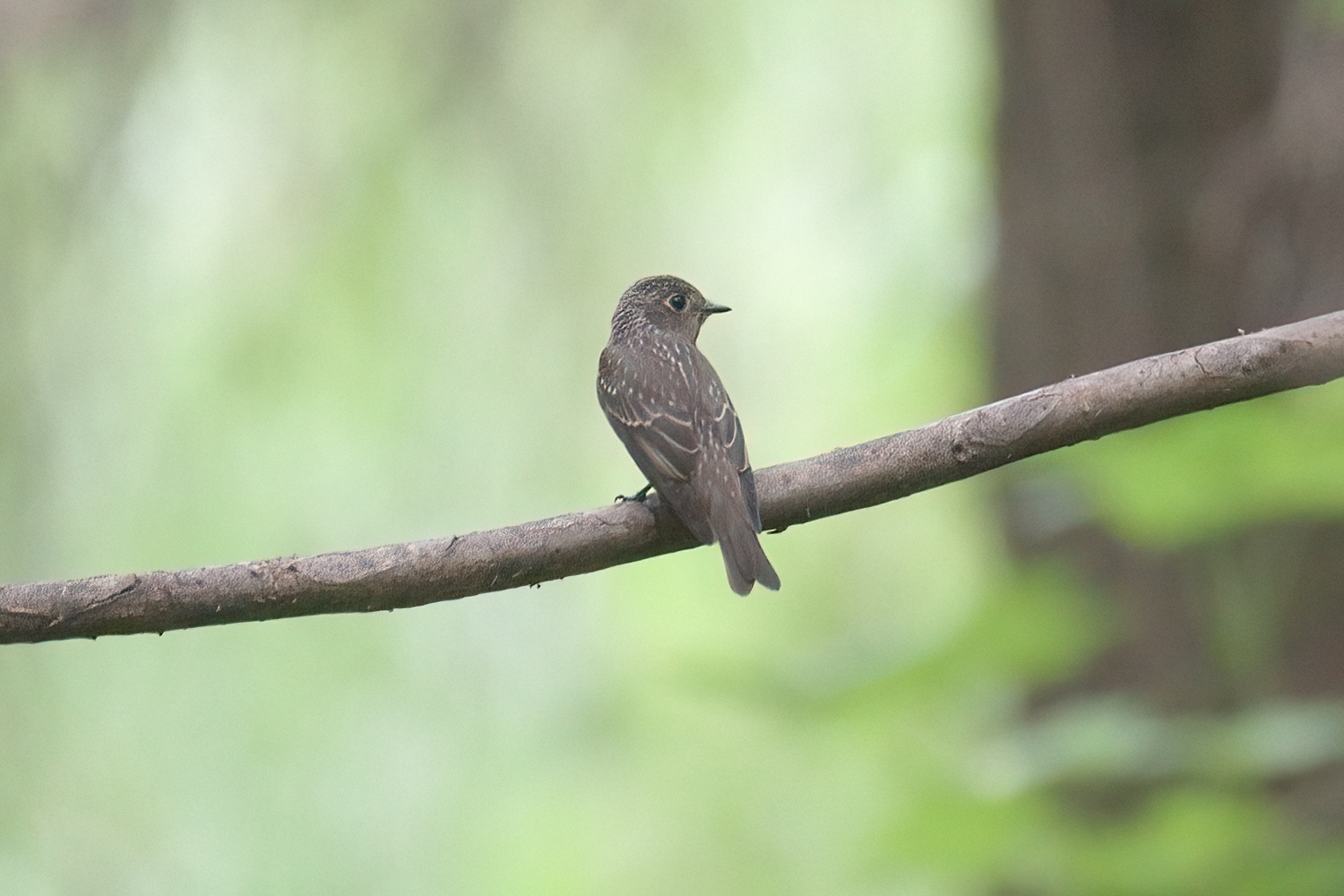
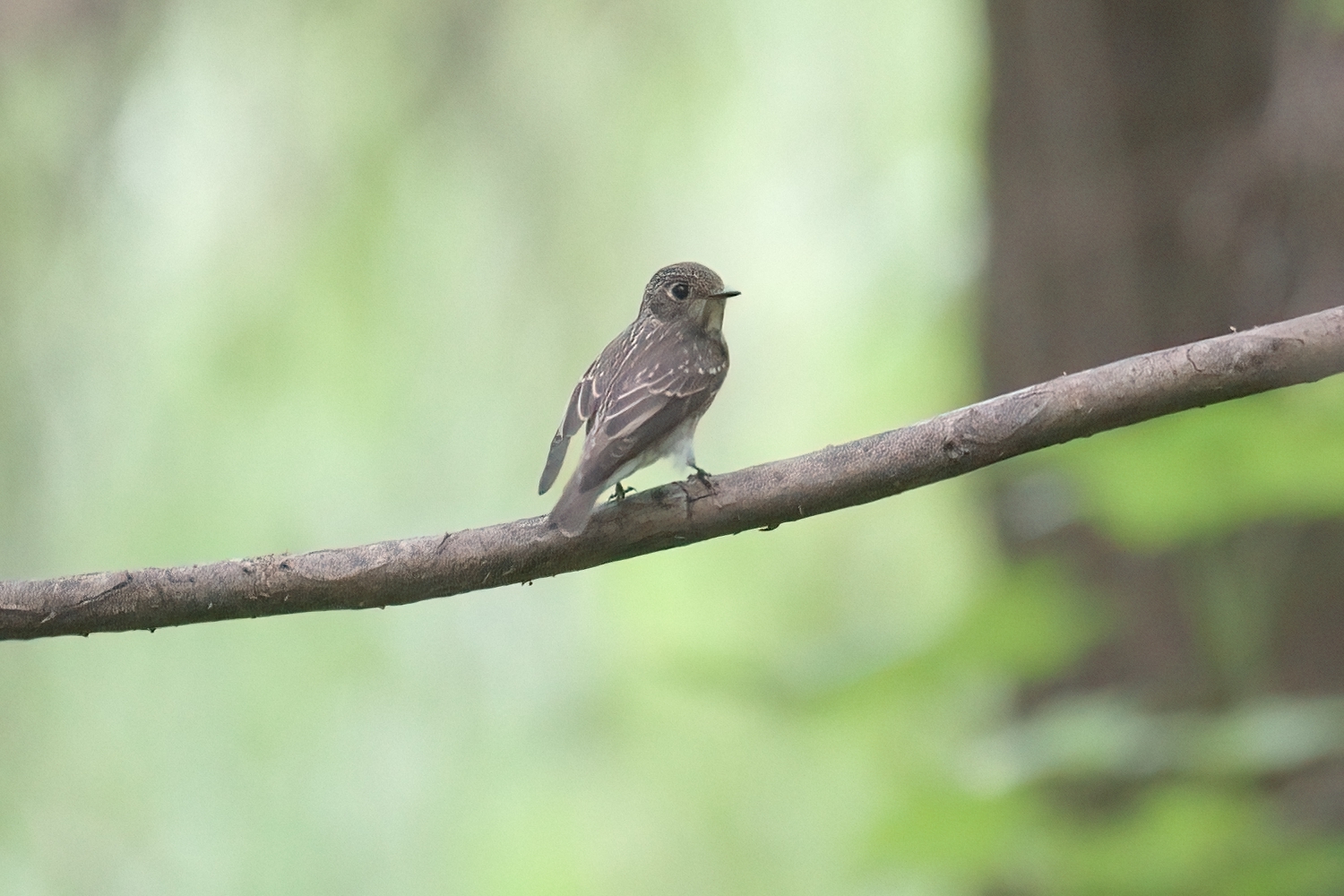
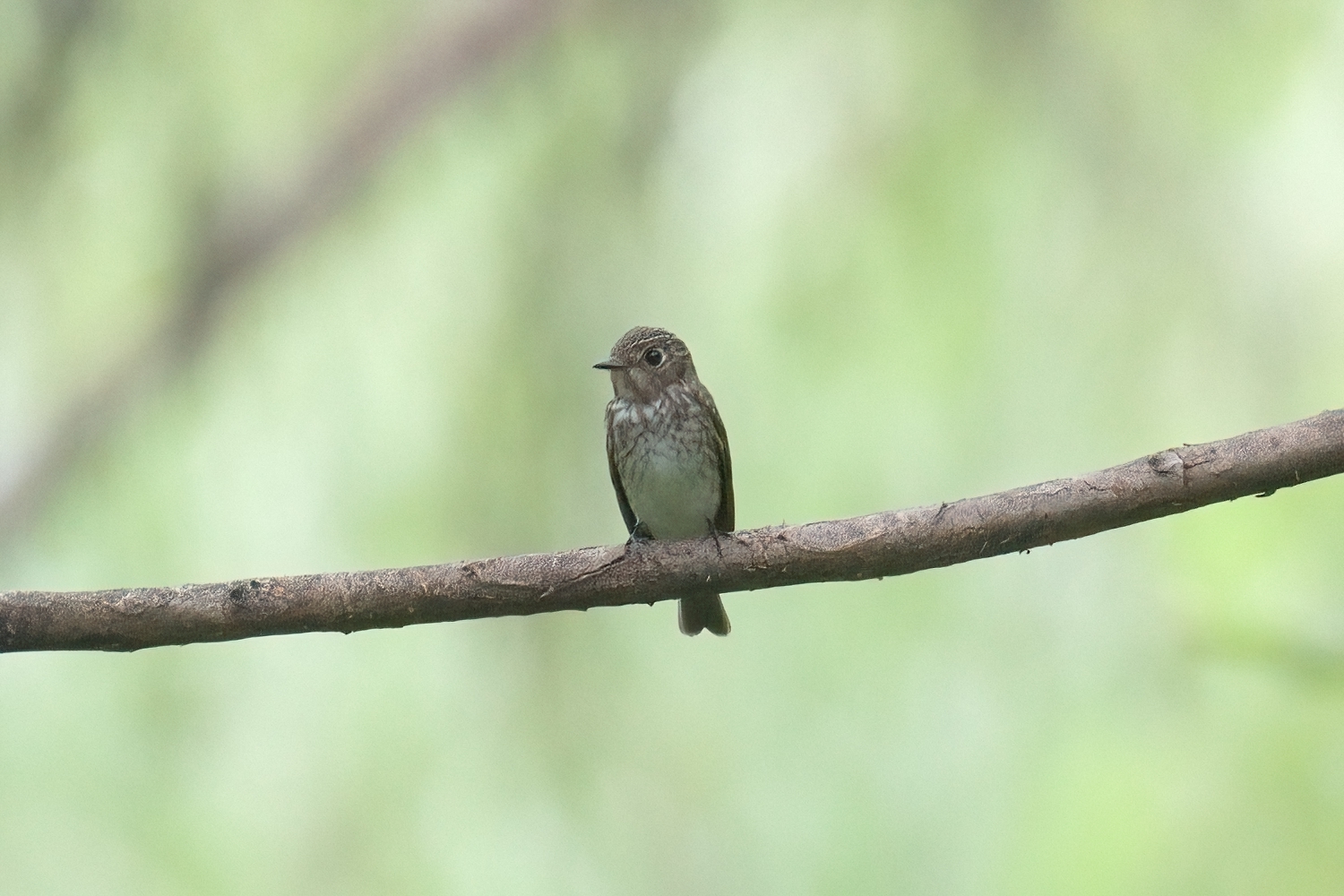
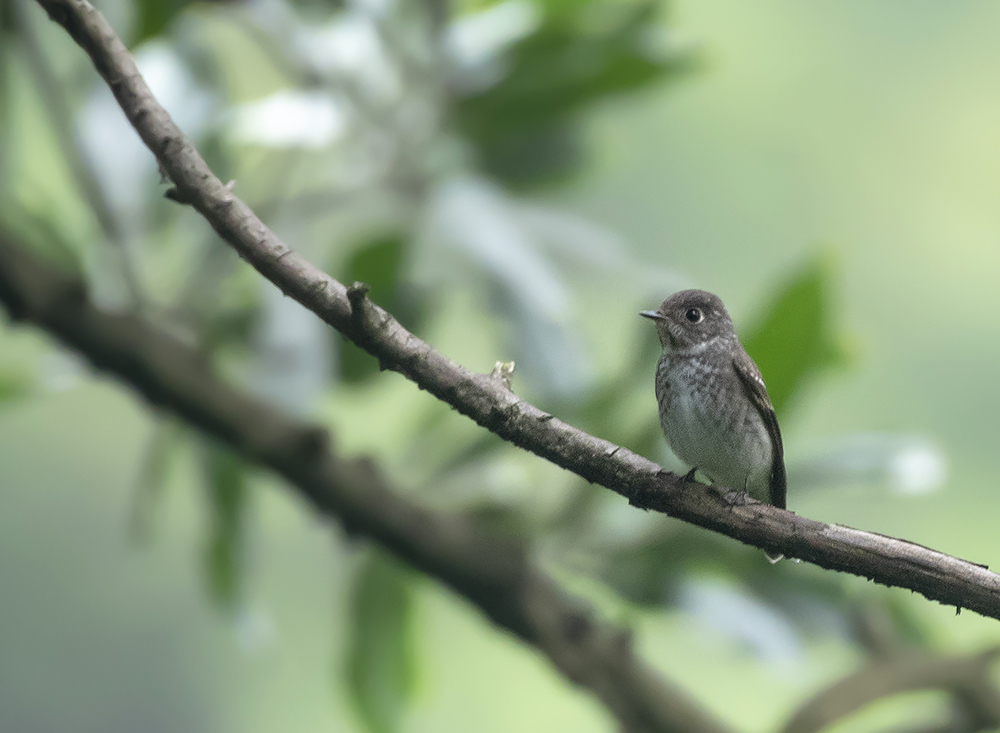
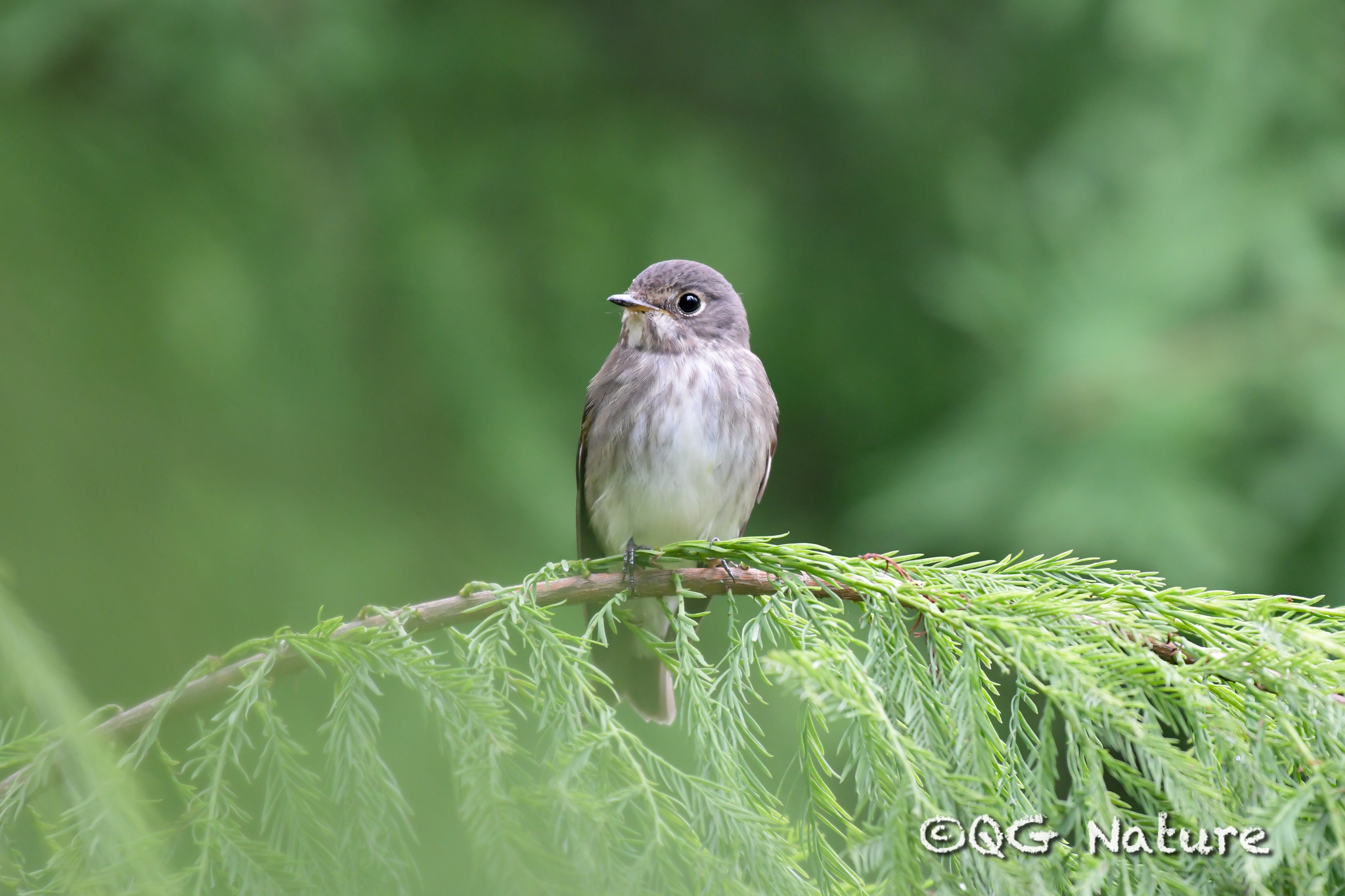
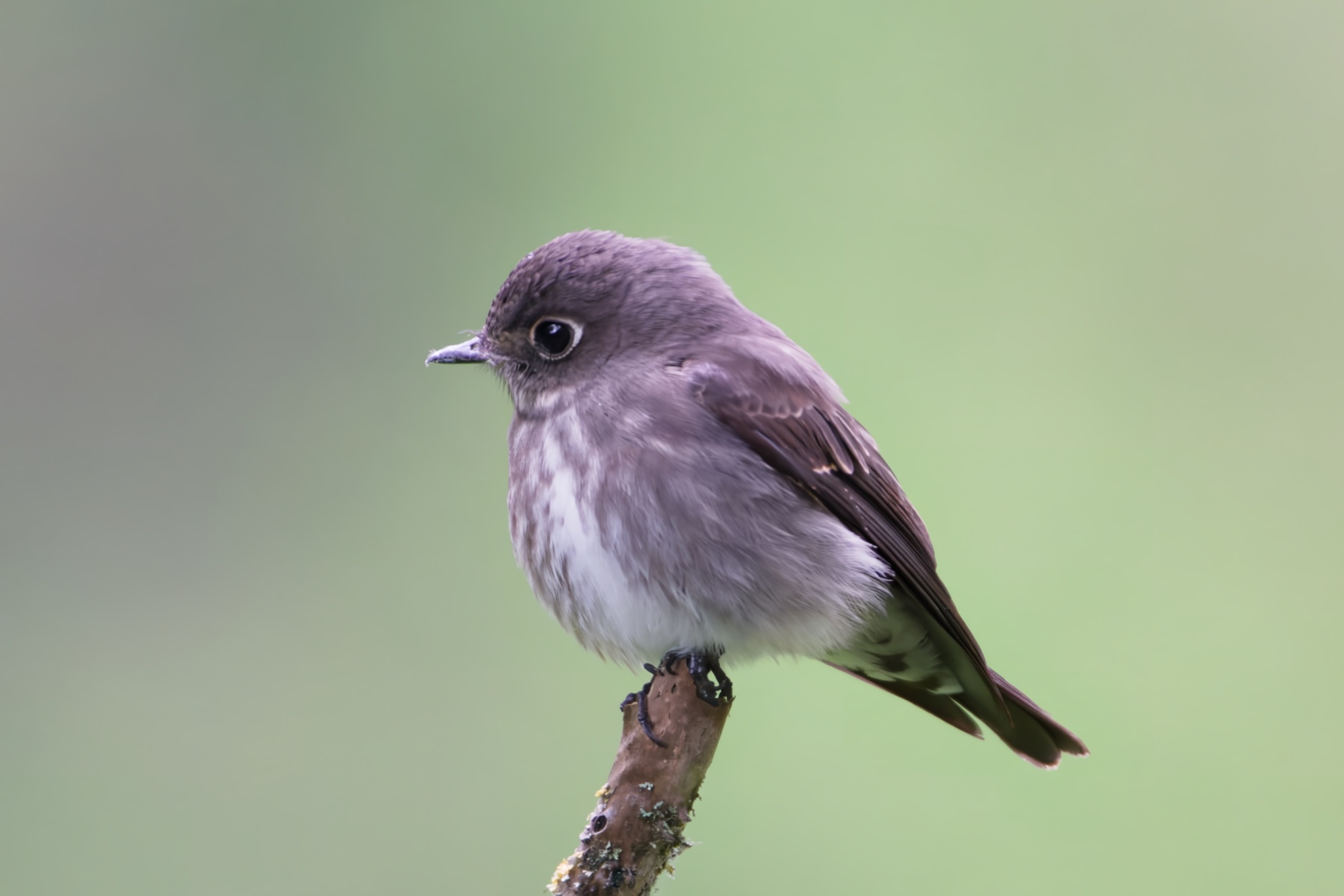
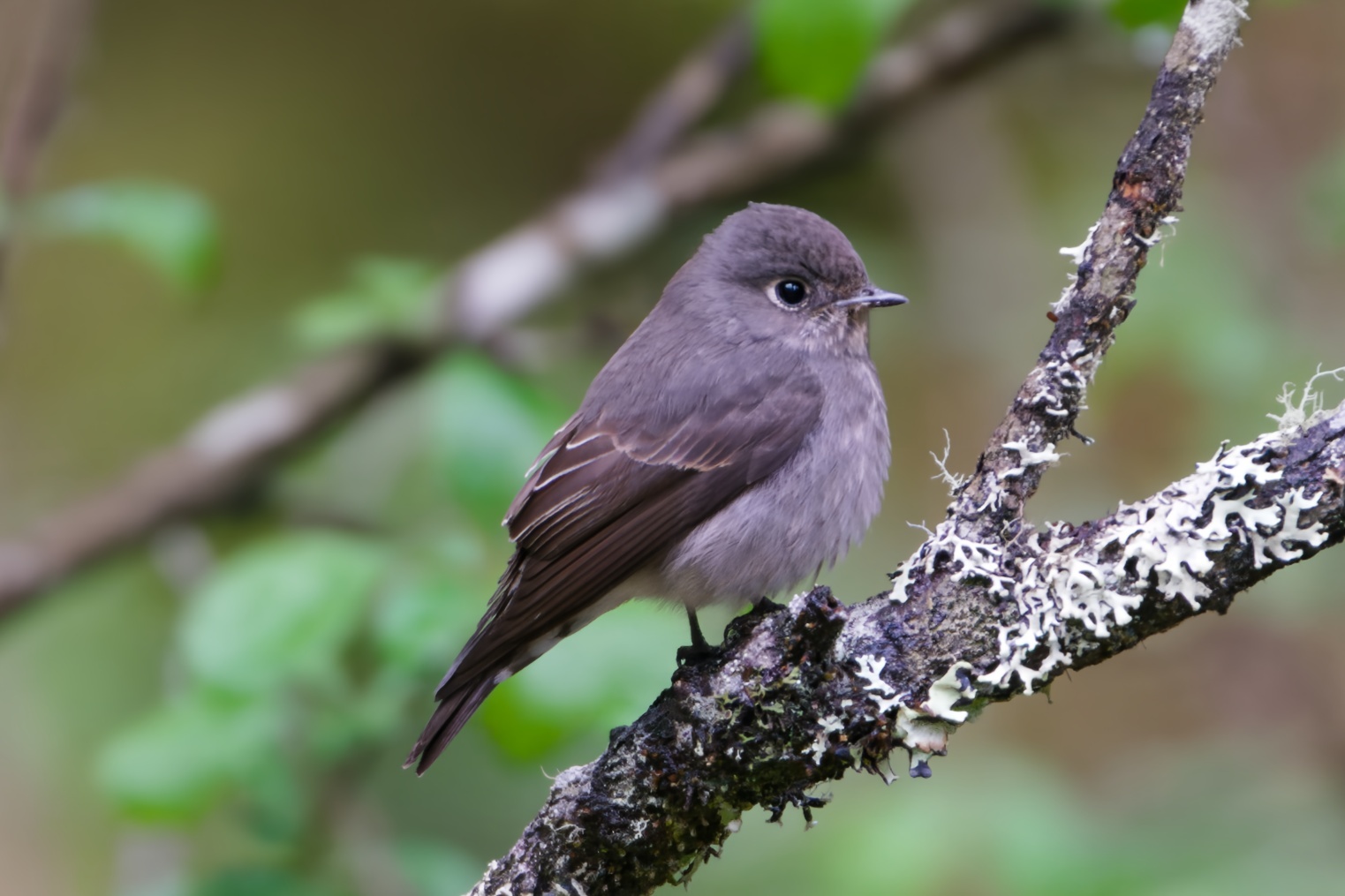
Overall length is 13 to 14 cm (5.1 to 5.5 in). Upperparts are plain dark grey-brown with a pale wingbar and pale edging to the tertial feathers. The breast and flanks show variable streaky dark grey-brown markings. A pale submoustachial stripe and dark malar stripe outline the white throat and half-collar. The centre of the lower breast and belly is white, and undertail-coverts are white with dark centres. The bill is short and dark, feet are black, and the large eye has a whitish ring. Adults of both sexes are alike. Juveniles have pale spots on the upperparts, a mottled breast, and buff tips to the wing-coverts.
Identification
Differs from the Asian brown flycatcher by having streaked rather than plain pale underparts and a longer primary projection on the wings. Distinct from the grey-streaked flycatcher, which is white below with distinct grey streaks. Vocalizations include a song of thin, high-pitched notes with trills and whistles, and a metallic tinkling call.
Distribution & Habitat
Four subspecies are recognized. M. s. sibirica breeds in south-east Siberia westward to beyond Lake Baikal, Mongolia, north-east China, North Korea, and Japan (Hokkaidō and northern Honshū). M. s. rothschildi breeds in western China and Myanmar. M. s. gulmergi occurs from Afghanistan to Kashmir. M. s. cacabata ranges from the eastern Himalayas to south-east Tibet and perhaps Myanmar. The wintering range includes north-east India, Bangladesh, southern China, Taiwan, and South-east Asia as far as Sumatra, Java, Borneo, and the Philippines (Palawan and Culion). Vagrants have been recorded in Alaska, Iceland, and Bermuda.
Behavior & Ecology
Feeds by perching on an exposed branch and dashing out to snatch flying insects. The female builds a cup-shaped nest up to 8 metres above the ground on a tree branch or sometimes in a hole. She lays three to four eggs, which she incubates while being fed by the male.
Source: Wikipedia · CC BY-SA 3.0
Taxonomy
- Order
- Passeriformes
- Family
- Muscicapidae
- Genus
- Muscicapa
Subspecies (4)
-
Muscicapa sibirica cacabata
breeds eastern Himalayas to southeastern Tibet and northeastern India; winters to southern Thailand
Data Sources
Species description from Wikipedia, licensed under CC BY-SA 3.0.
Bird images and sounds sourced from GBIF, contributed by citizen scientists worldwide under Creative Commons licenses.
Taxonomy data from AviList 2025.