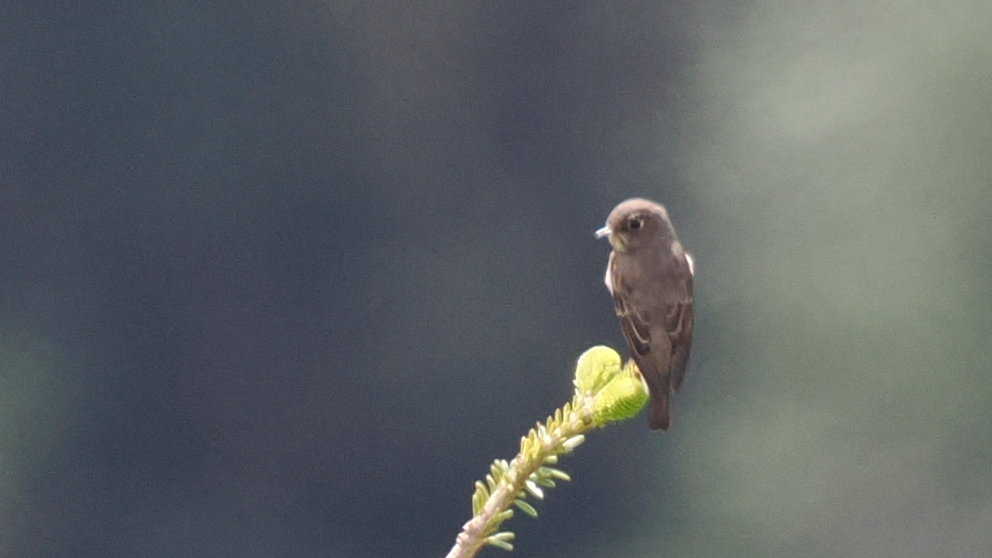
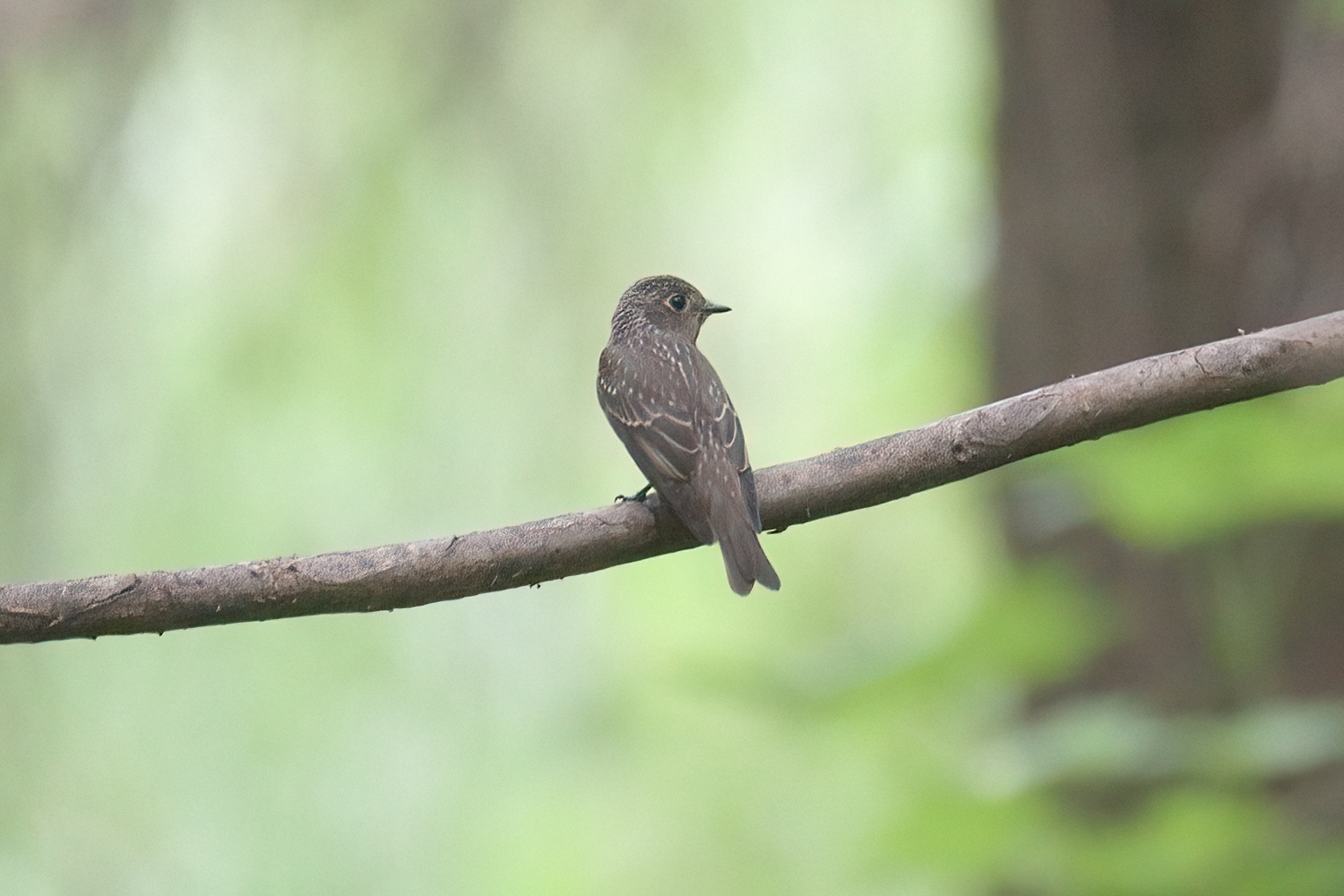
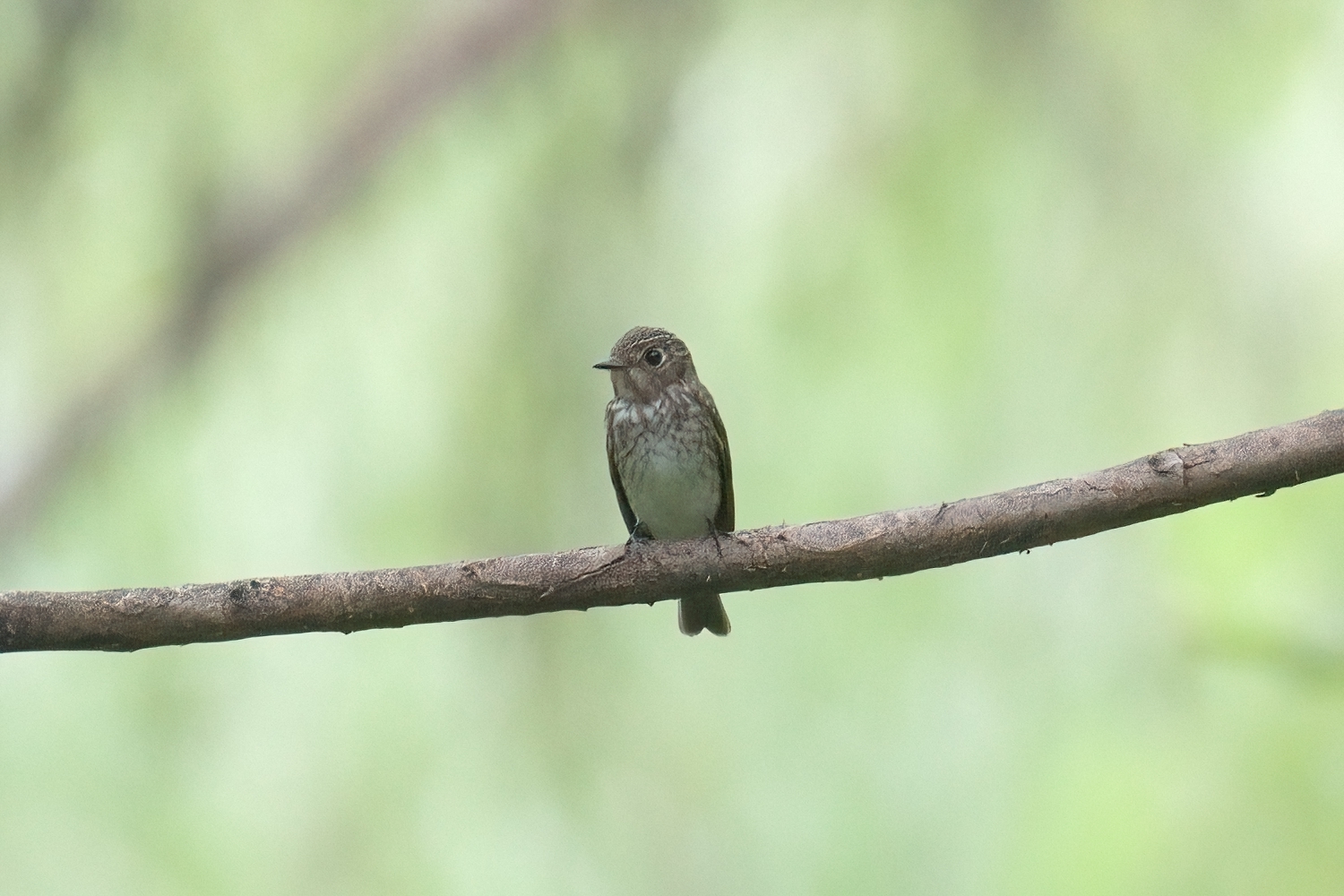
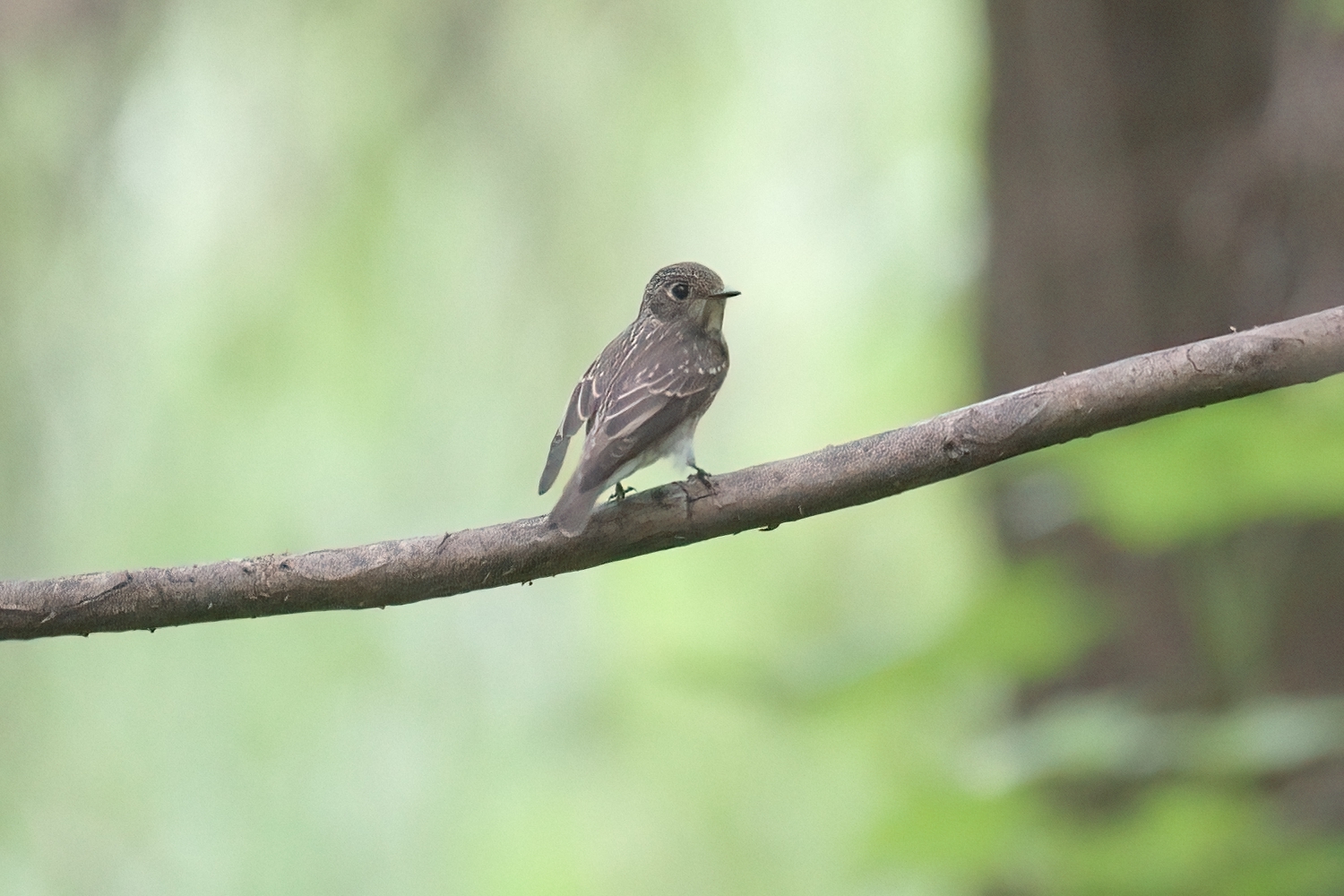
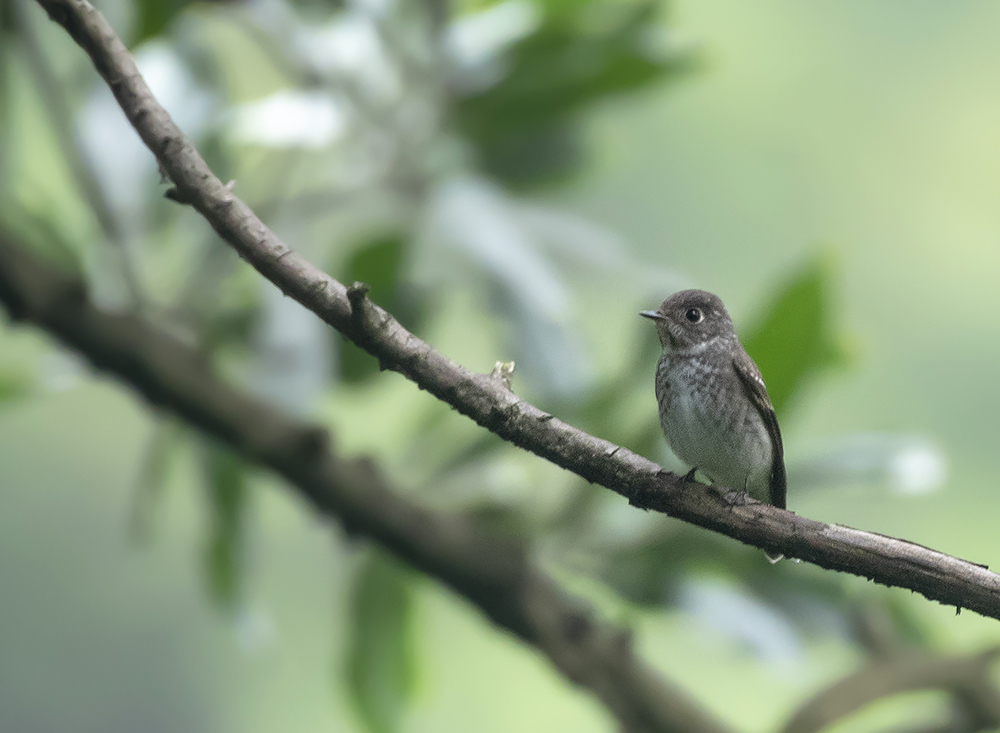
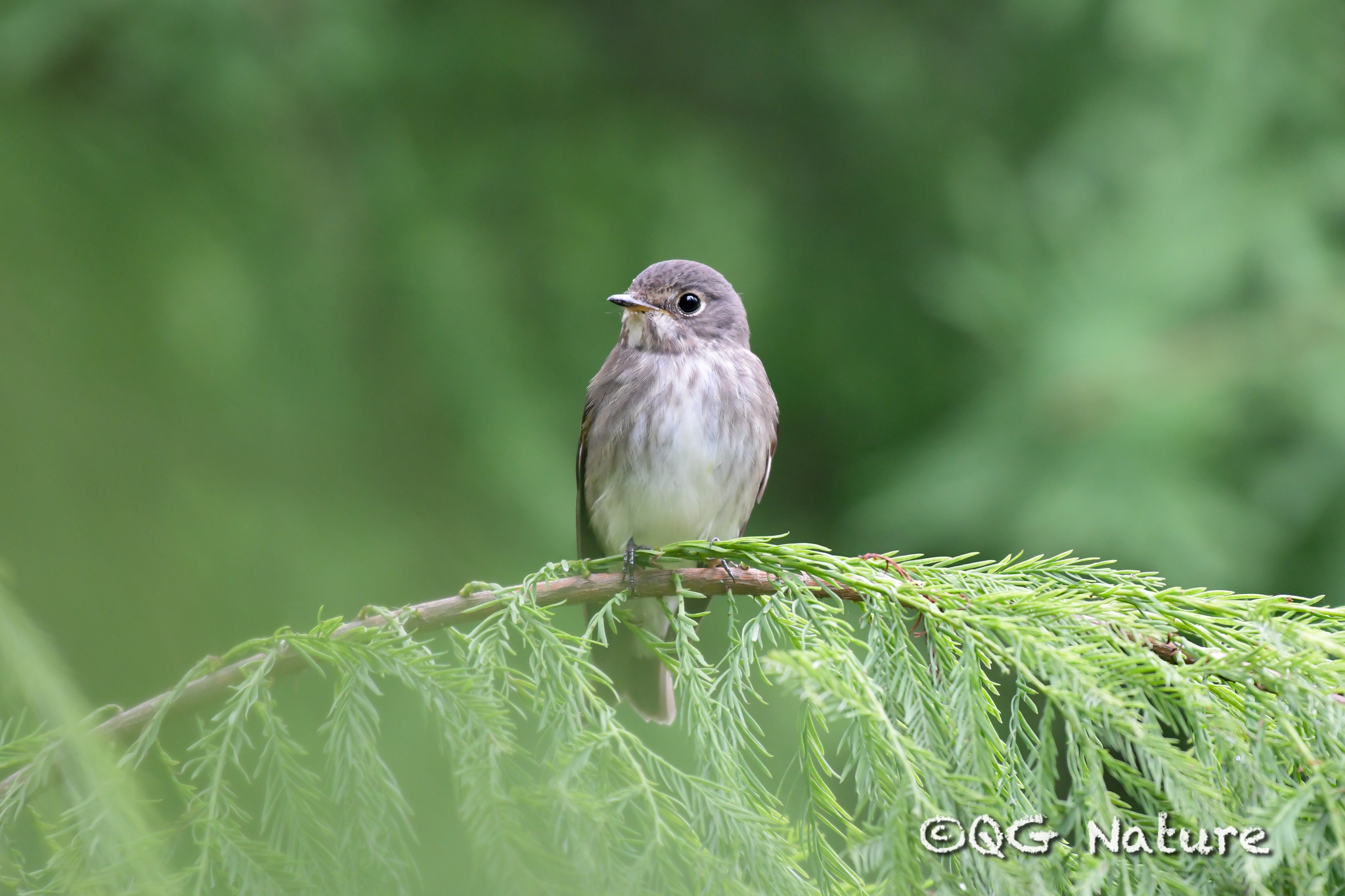
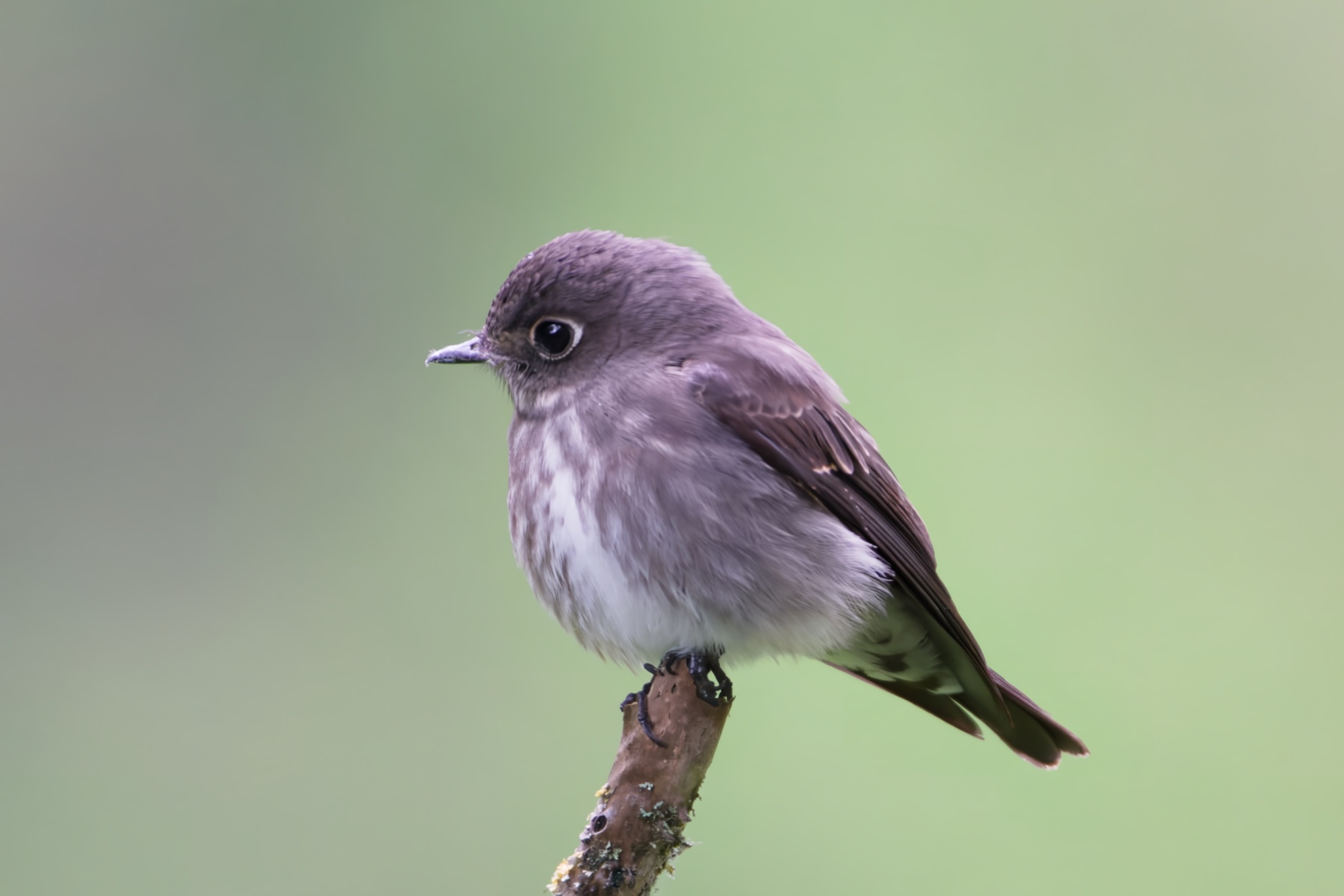
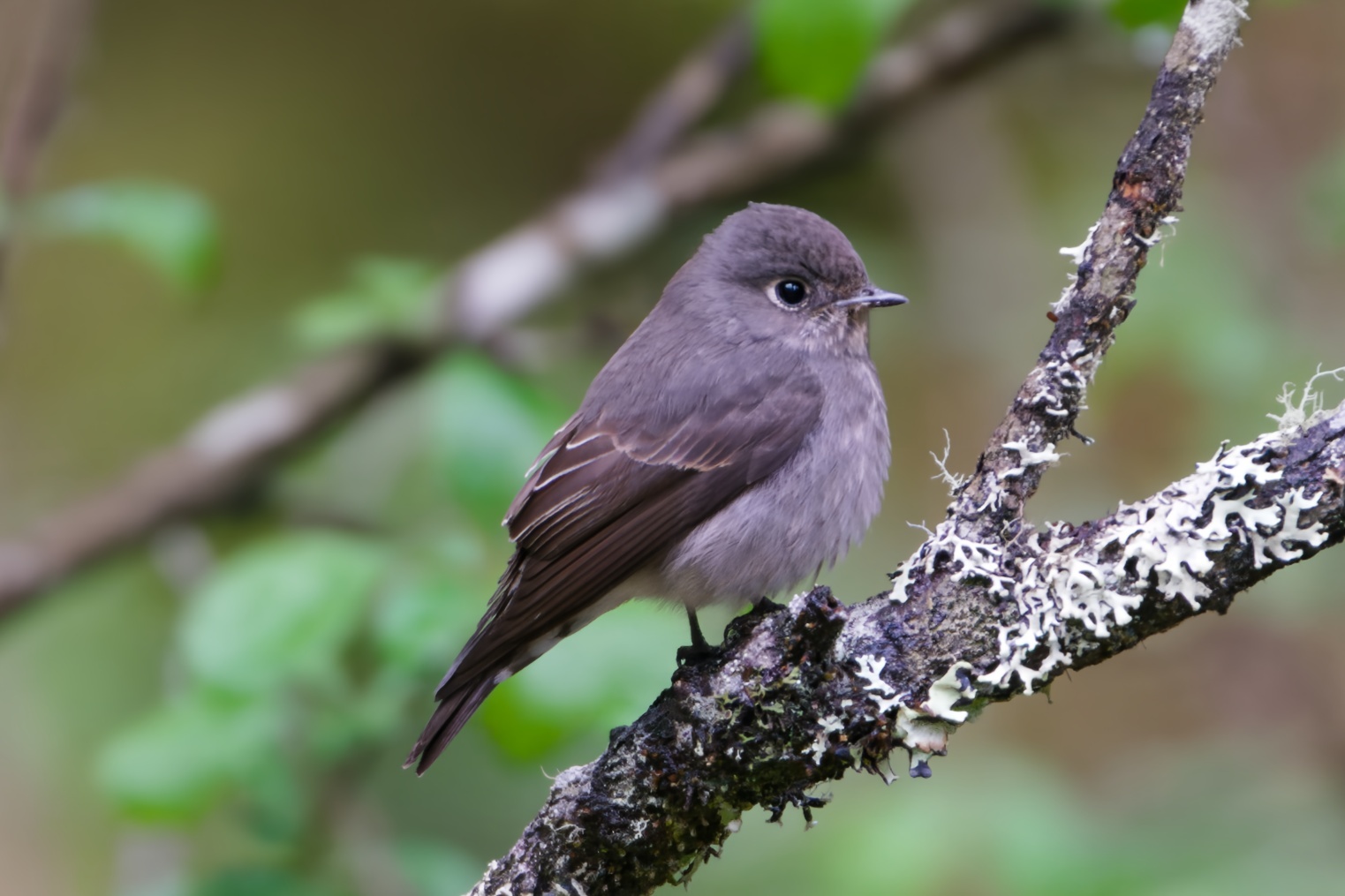
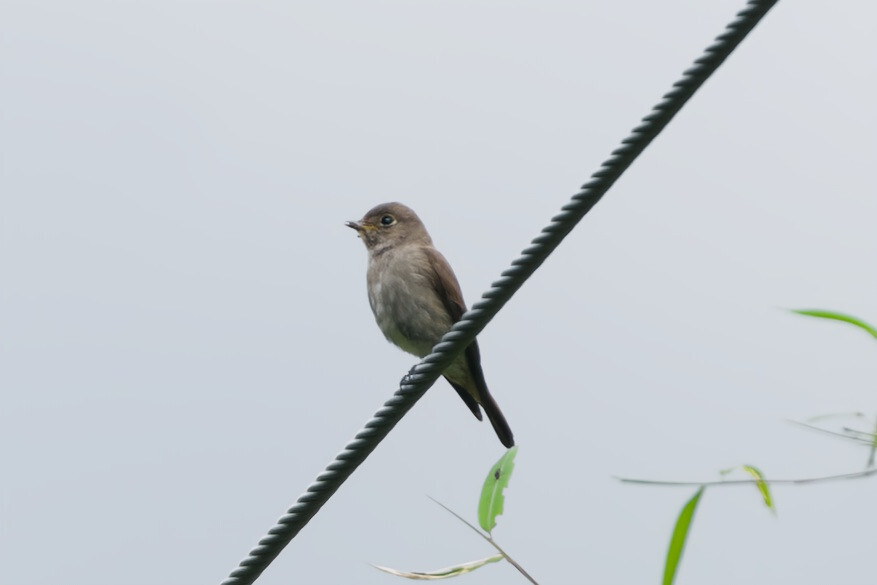
Dark-sided Flycatcher
Muscicapa sibirica
乌鹟
Introduction
The species breeds across the East Palearctic from Siberia to Japan, wintering throughout South-east Asia. It inhabits coniferous and mixed woodlands in mountainous regions up to 4,000 metres elevation. During migration it occurs in parks and gardens. It employs the typical flycatcher strategy of perching on exposed branches and sallying out to catch flying insects. Vagrant individuals have been recorded in Alaska, Iceland, and Bermuda.
Description
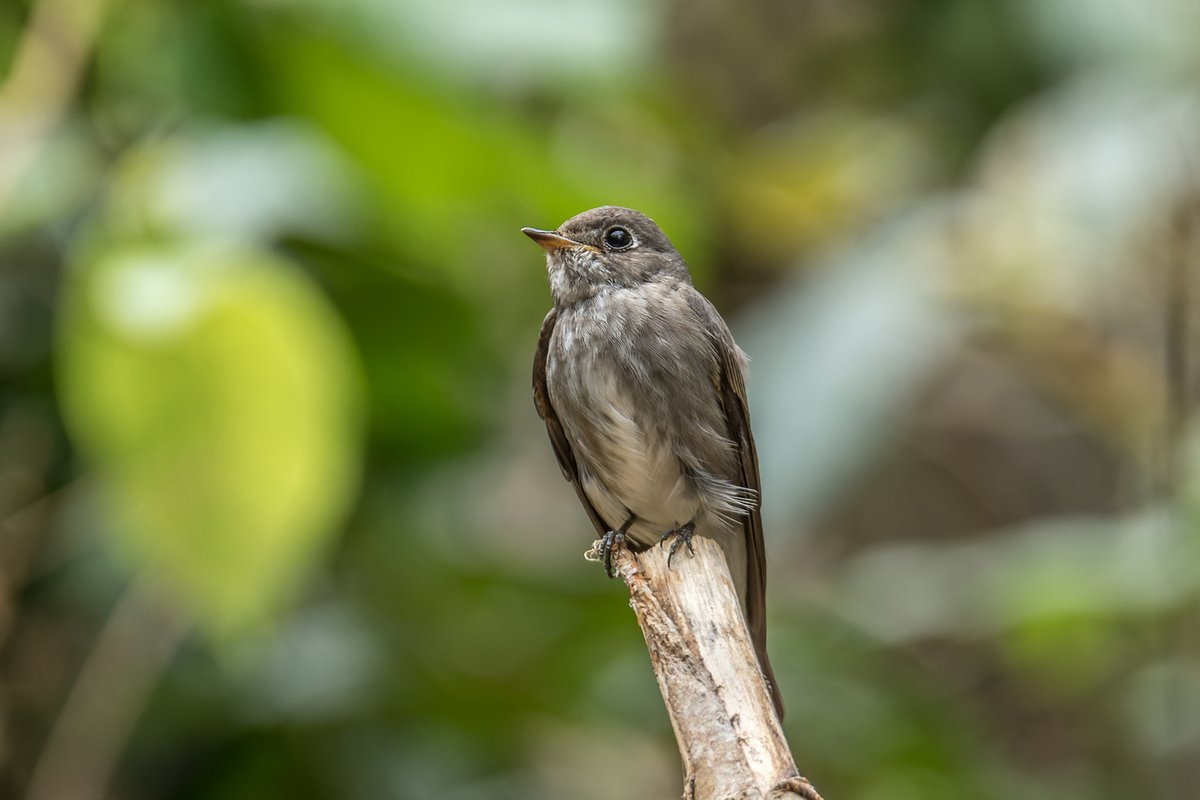
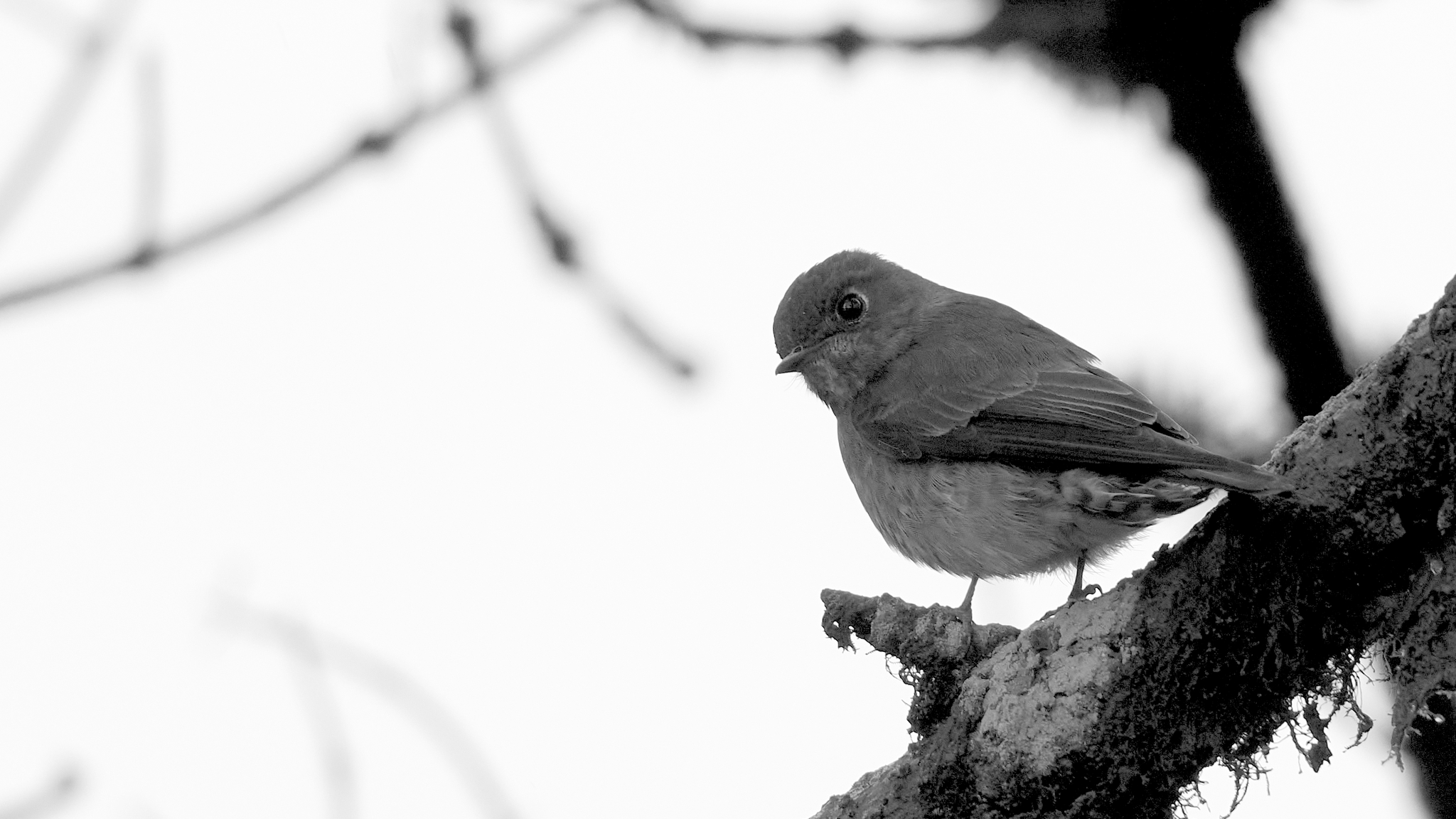
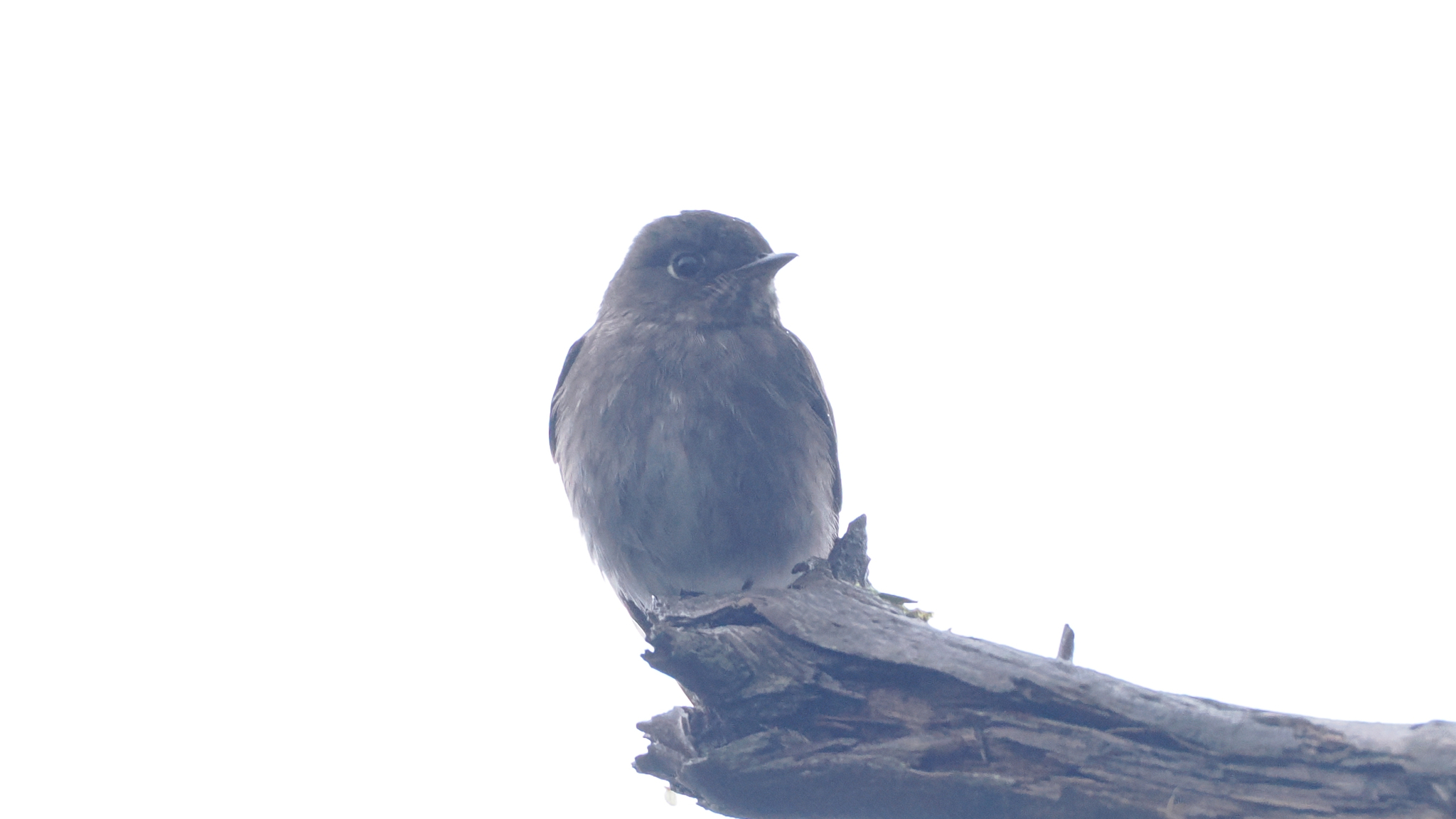
A small passerine measuring 13 to 14 centimetres in length. The plumage is dominated by dark grey-brown tones on the upperparts, with a distinctive pale wingbar and pale edges to the tertial feathers. The underparts show variable streaking on the breast and flanks against a white belly, while the undertail-coverts are white with dark centres. A pale submoustachial stripe and darker malar stripe frame the white throat. The head features a large eye with a conspicuous whitish eye-ring. The bill is short and dark, and the legs are black. Sexes are identical in appearance, though juveniles display pale spots on the upperparts, a mottled breast, and buff-tipped wing-coverts.
Identification
The most reliable distinguishing feature is the combination of dark streaky underparts and the pale eye-ring. It differs from the Asian brown flycatcher, which has much plainer and paler underparts throughout. Compared to the grey-streaked flycatcher, which is white below with distinct grey streaks, this species shows a darker overall appearance with more extensive streaking. The wing structure also provides a clue: this species has a longer primary projection than the Asian brown flycatcher. The pale wingbar and tertial edging help separate it from similarly-sized brown warblers and other small insectivores.
Distribution & Habitat
Four subspecies cover an extensive breeding range across the East Palearctic. The nominate subspecies breeds from south-east Siberia westward beyond Lake Baikal through Mongolia, north-east China, North Korea, and Japan. Other subspecies occupy western China and Myanmar, Afghanistan to Kashmir, and the eastern Himalayas to south-east Tibet. The wintering range stretches from north-east India and Bangladesh through southern China and Taiwan to South-east Asia, including Sumatra, Java, Borneo, and the Philippines. The species inhabits coniferous and mixed forests and woodland, occasionally appearing in plantations, parks, and gardens, typically in mountainous terrain.
Behavior & Ecology
Like other flycatchers, it hunts by perching on exposed branches and flying out to capture passing insects in mid-air. The female constructs a cup-shaped nest positioned up to eight metres above ground, either on a tree branch or sometimes within a tree hole. Clutches consist of three to four eggs, incubated solely by the female while the male provides food. The song comprises a series of thin, high-pitched notes incorporating trills and whistles. The call is described as a metallic tinkling sound.
Source: Wikipedia · CC BY-SA 3.0
Taxonomy
- Order
- Passeriformes
- Family
- Muscicapidae
- Genus
- Muscicapa
- eBird Code
- dasfly
Subspecies (4)
-
Muscicapa sibirica cacabata
breeds eastern Himalayas to southeastern Tibet and northeastern India; winters to southern Thailand
-
Muscicapa sibirica gulmergi
breeds western Himalayas (eastern Afghanistan to Kashmir and Garhwal); non-breeding range unknown
-
Muscicapa sibirica rothschildi
breeds in mountains of western China and northern Myanmar; winters in southern China, Indochina, and the Thai-Malay Peninsula
-
Muscicapa sibirica sibirica
breeds southeastern Siberia to Japan; winters to Indochina and Greater Sundas
Data Sources
Species description from Wikipedia, licensed under CC BY-SA 3.0.
Bird images and sounds sourced from GBIF, contributed by citizen scientists worldwide under Creative Commons licenses.
Taxonomy data from AviList 2025.