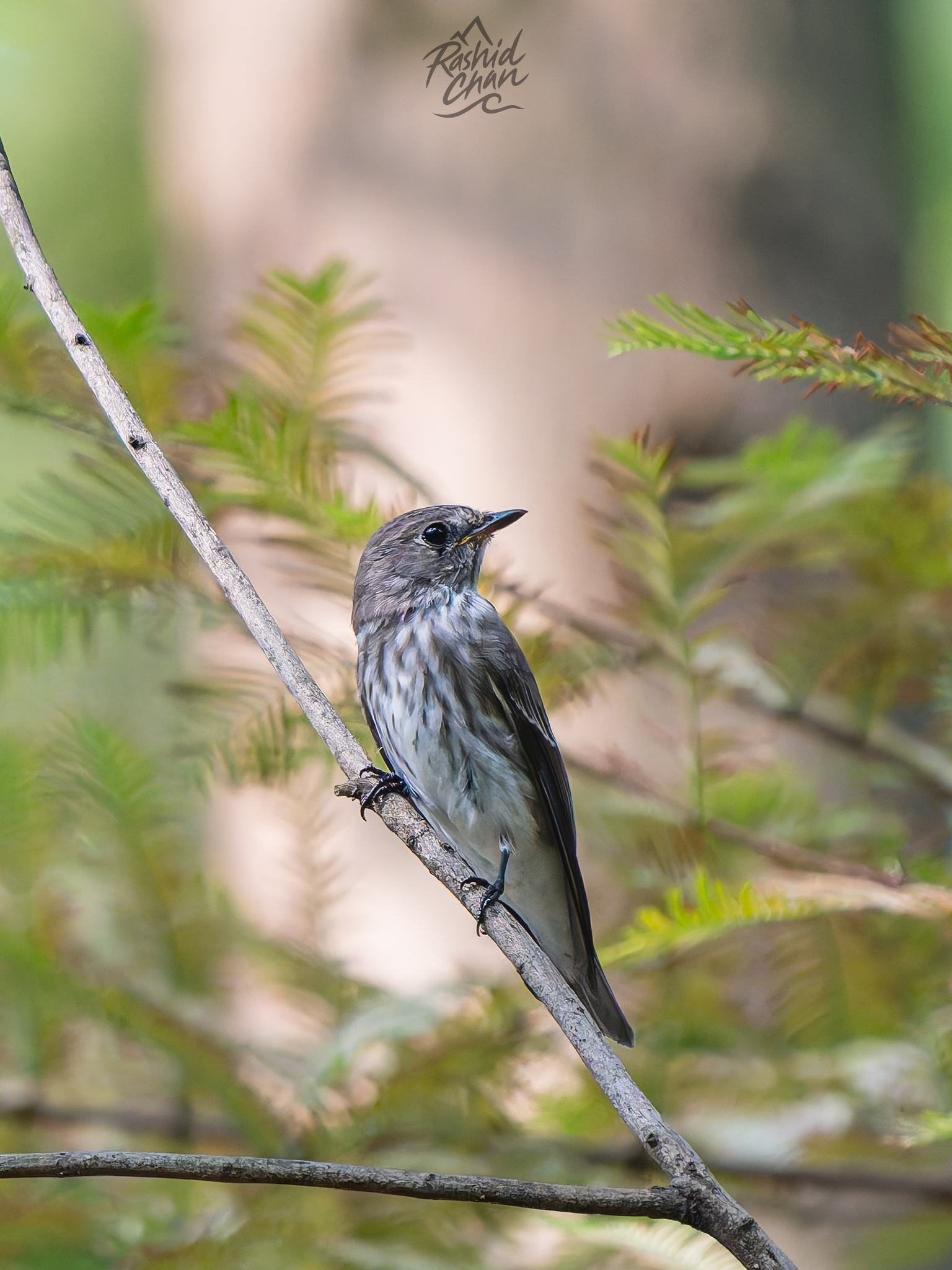
Grey-streaked Flycatcher
Muscicapa griseisticta
灰纹鹟
Introduction
Small flycatcher of the genus Muscicapa, breeding in coniferous forests of the eastern Palearctic, including northeast China, North Korea, and southeast Siberia. Long-distance migrant occurring in eastern and southern China, South Korea, Japan, and Taiwan during spring and autumn migrations. Winters in Southeast Asia and Wallacea, where it inhabits forest edges, open woodland, and areas with scattered trees. Characterized by distinctive streaking and graceful hunting flight.
Description
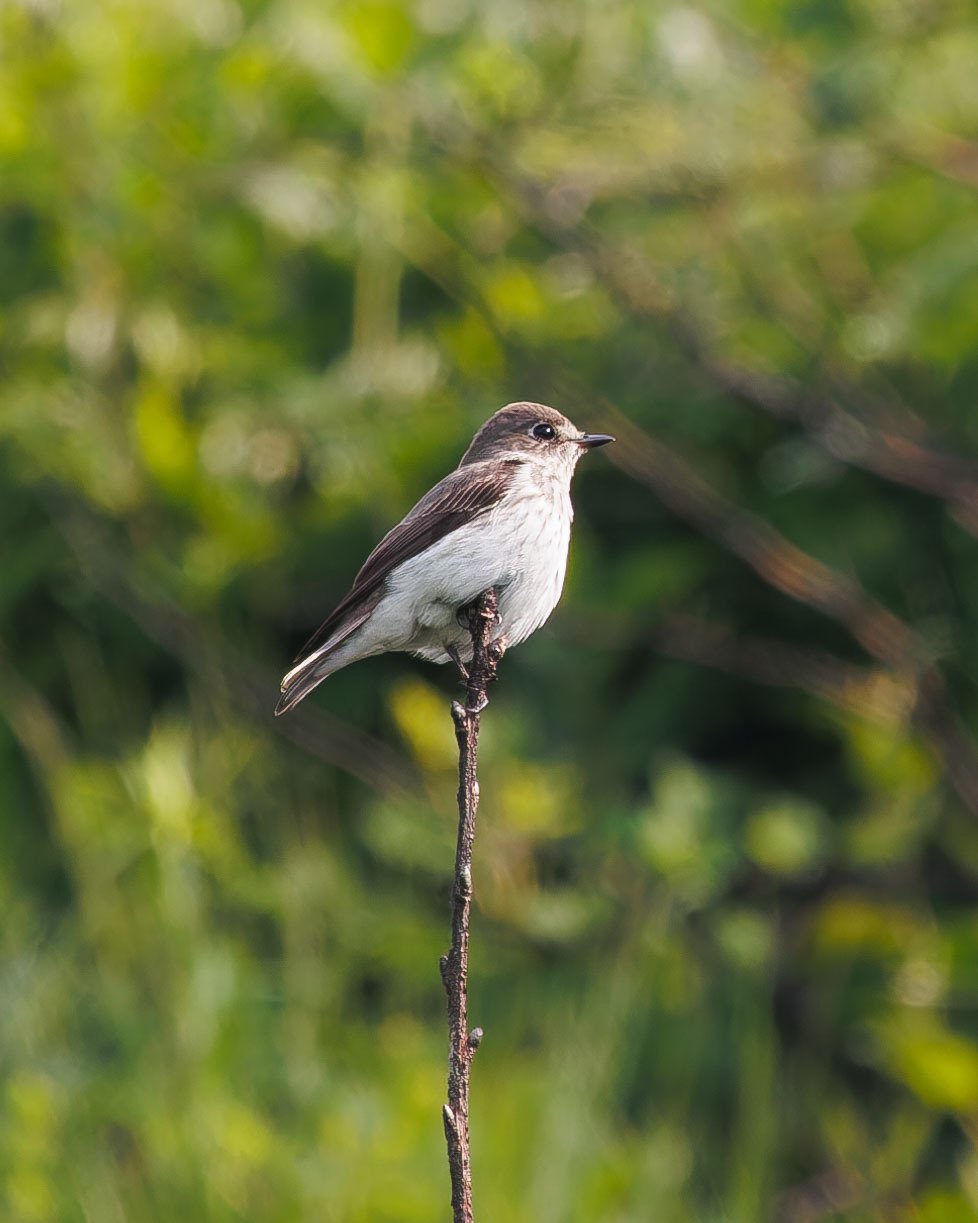
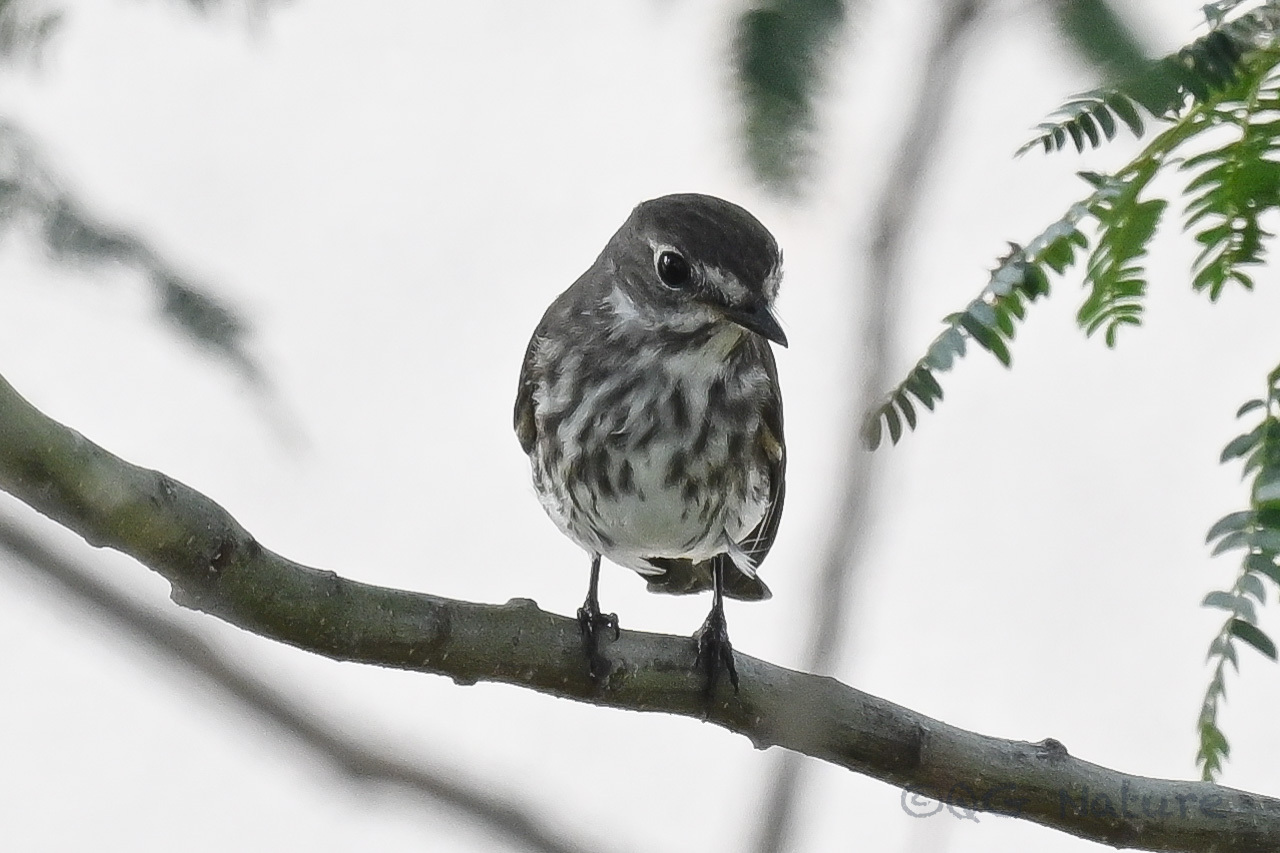
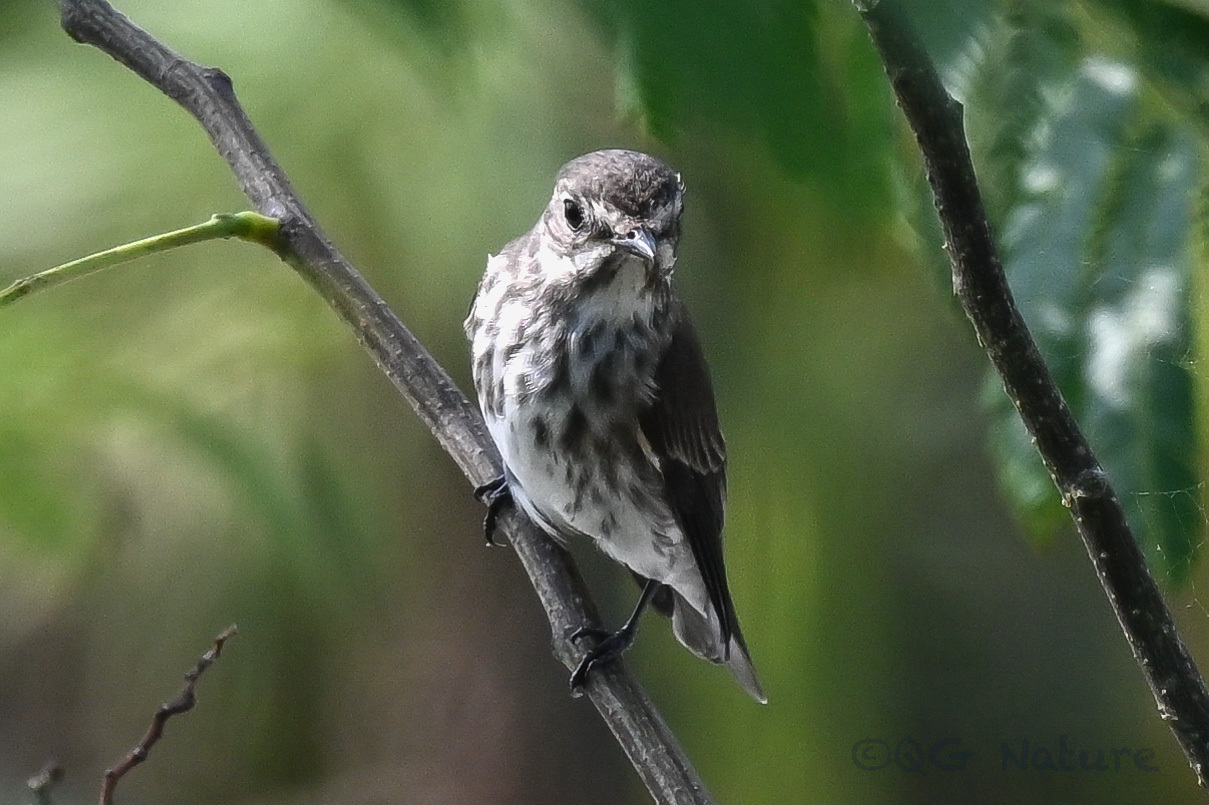
A small, slender flycatcher measuring 13 to 15 centimeters in length with notably long wings. The upperparts are grey-brown, while the underparts are white with heavy grey streaking concentrated on the breast and flanks. A narrow white bar decorates the wing, and a pale patch sits between the bill and eye. The bill and feet are black, contrasting with the otherwise muted plumage. The species possesses a large eye and a conspicuous white eye-ring. Males and females are similar in appearance, though juveniles can be distinguished by their white spots and dark scaling on the upperparts.
Identification
The heavily streaked breast and flanks are the most diagnostic field marks, setting this species apart from other brownish flycatchers in its range. The combination of grey-brown upperparts, white underparts with grey streaking, white wing bar, and white eye-ring creates a distinctive profile. The long-winged silhouette and habit of sallying from exposed perches also aid identification. Compared to the similarly sized Asian brown flycatcher, this species shows much more pronounced streaking on the underparts.
Distribution & Habitat
Breeds in the coniferous forests of northeast China, North Korea, and southeast Siberia, including Sakhalin and Kamchatka. During migration in spring and autumn, it passes through eastern and southern China, South Korea, Japan, and Taiwan. The winter range extends through Borneo, the Philippines, Palau, eastern Indonesia, and New Guinea, where it occupies forests, forest edges, and open country with scattered trees. Recorded as a vagrant in Singapore, Vietnam, Alaska, and Australia.
Behavior & Ecology
This species employs a classic flycatcher hunting strategy, perching in open locations and watching for passing insects before launching aerial sallies to capture prey. It can fly out up to 20 meters from its perch to catch insects in flight, then returns to its perch to consume the catch. This patient, sit-and-wait foraging approach is typical of the genus. No detailed information on breeding behavior or vocalizations is provided in available sources.
Source: Wikipedia · CC BY-SA 3.0
Taxonomy
- Order
- Passeriformes
- Family
- Muscicapidae
- Genus
- Muscicapa
- eBird Code
- gysfly1
Distribution
breeds southeastern Siberia to northeastern China; winters to New Guinea and Philippines
Data Sources
Species description from Wikipedia, licensed under CC BY-SA 3.0.
Bird images and sounds sourced from GBIF, contributed by citizen scientists worldwide under Creative Commons licenses.
Taxonomy data from AviList 2025.