Accipitriformes / Accipitridae / Milvus
Black Kite
Milvus migrans · 黑鸢
Introduction
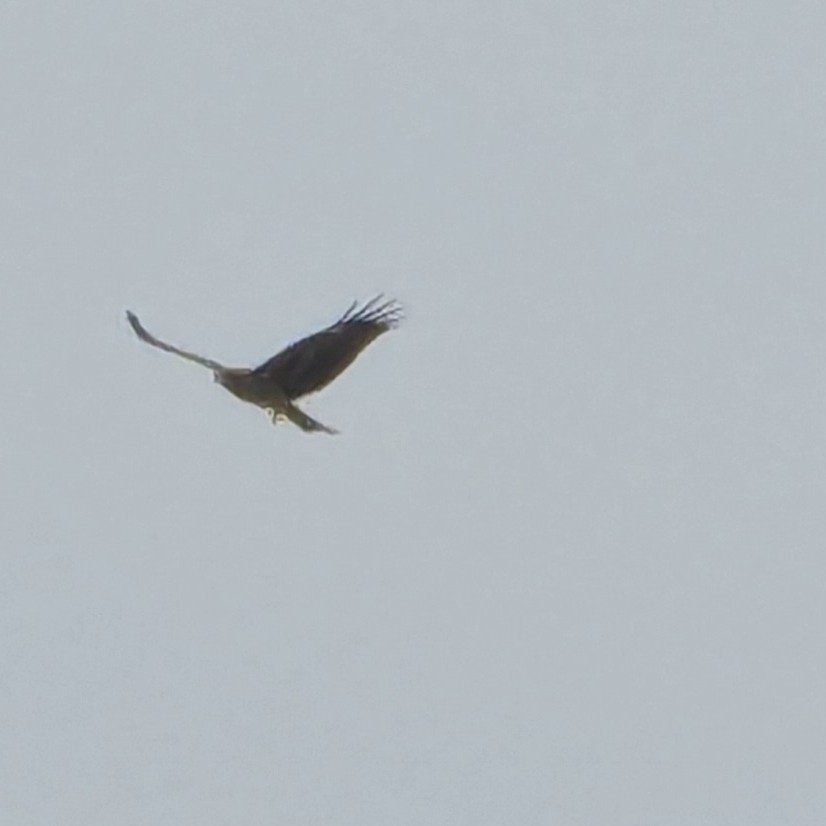
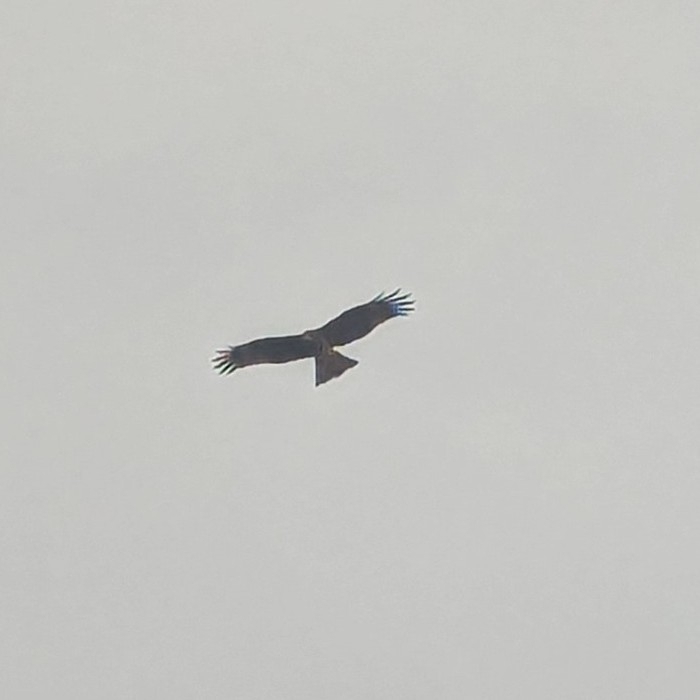
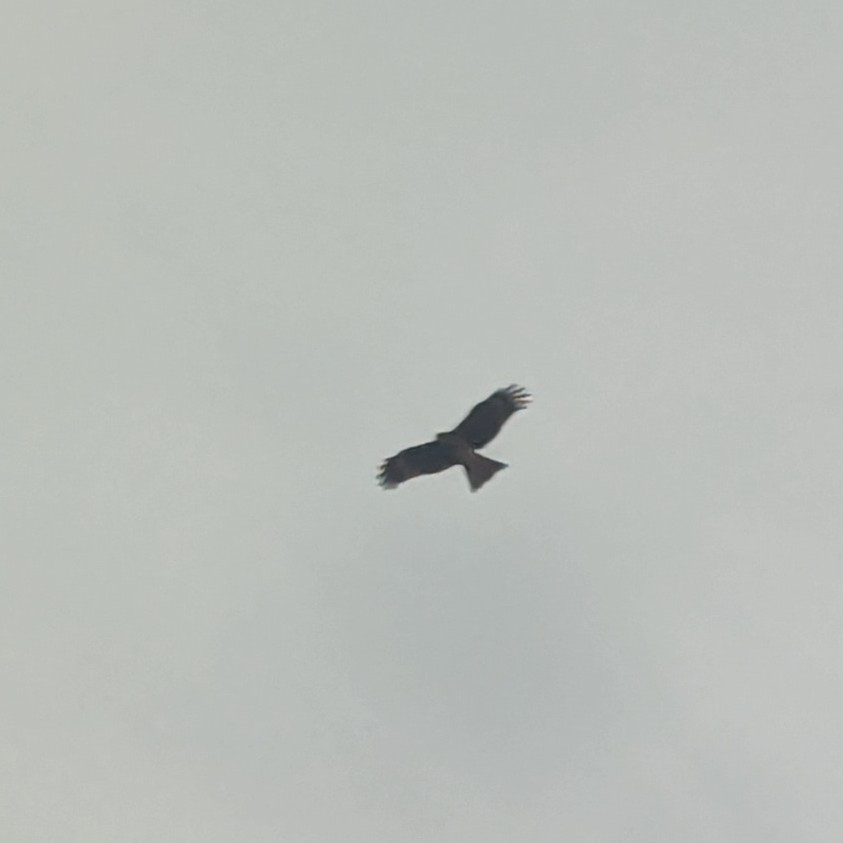
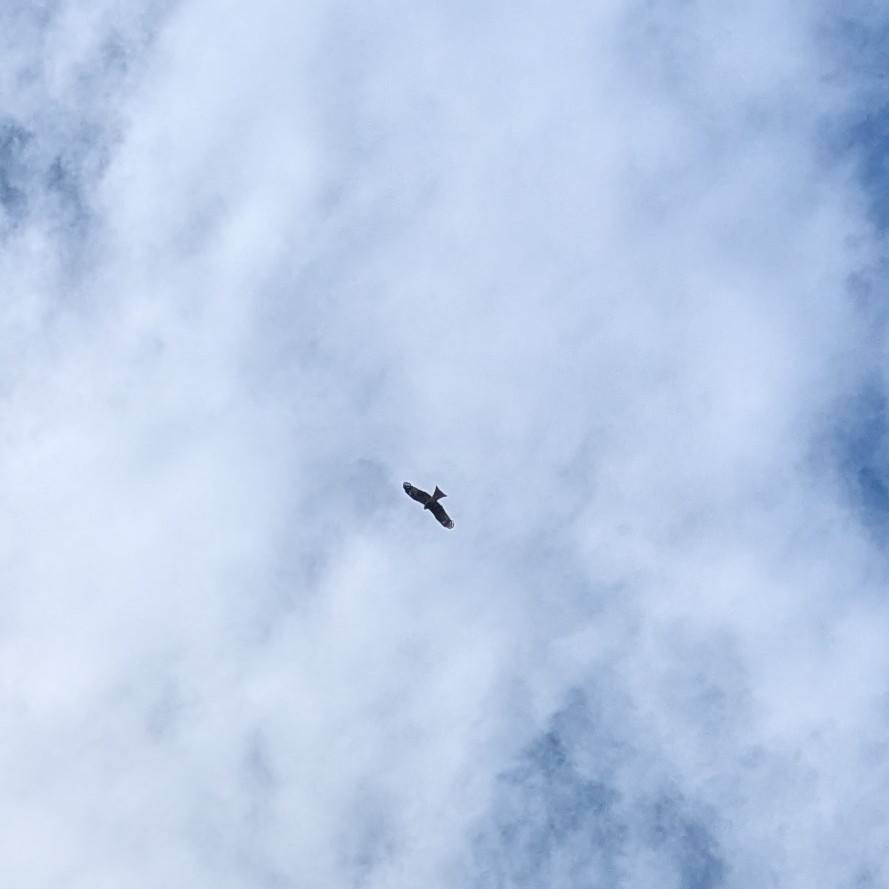
Medium-sized bird of prey in the family Accipitridae. Thought to be the world's most abundant species of Accipitridae, with global population estimates up to 6.7 million individuals. Opportunistic hunter and scavenger that spends much time soaring and gliding in thermals. Widely distributed through temperate and tropical parts of Eurasia, Australasia, and Oceania.
Description
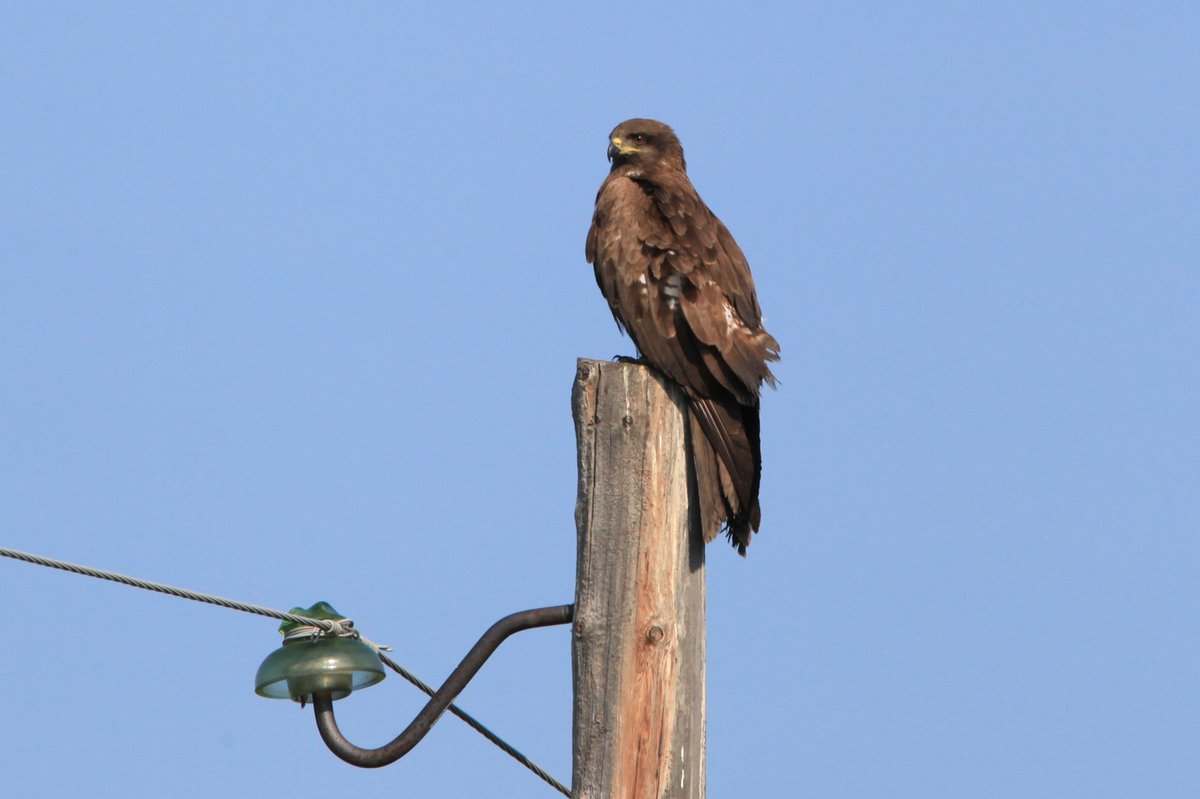
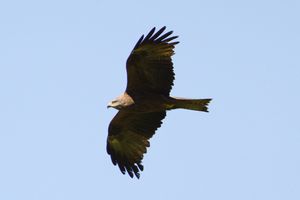
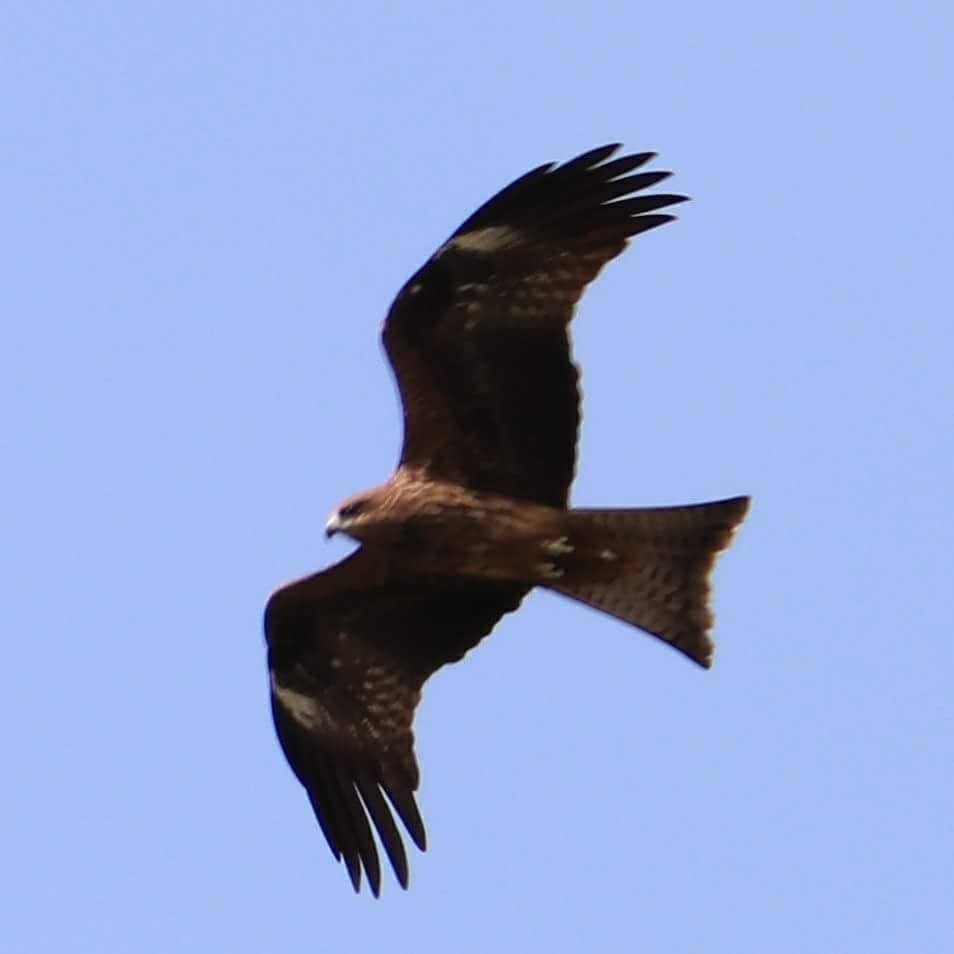
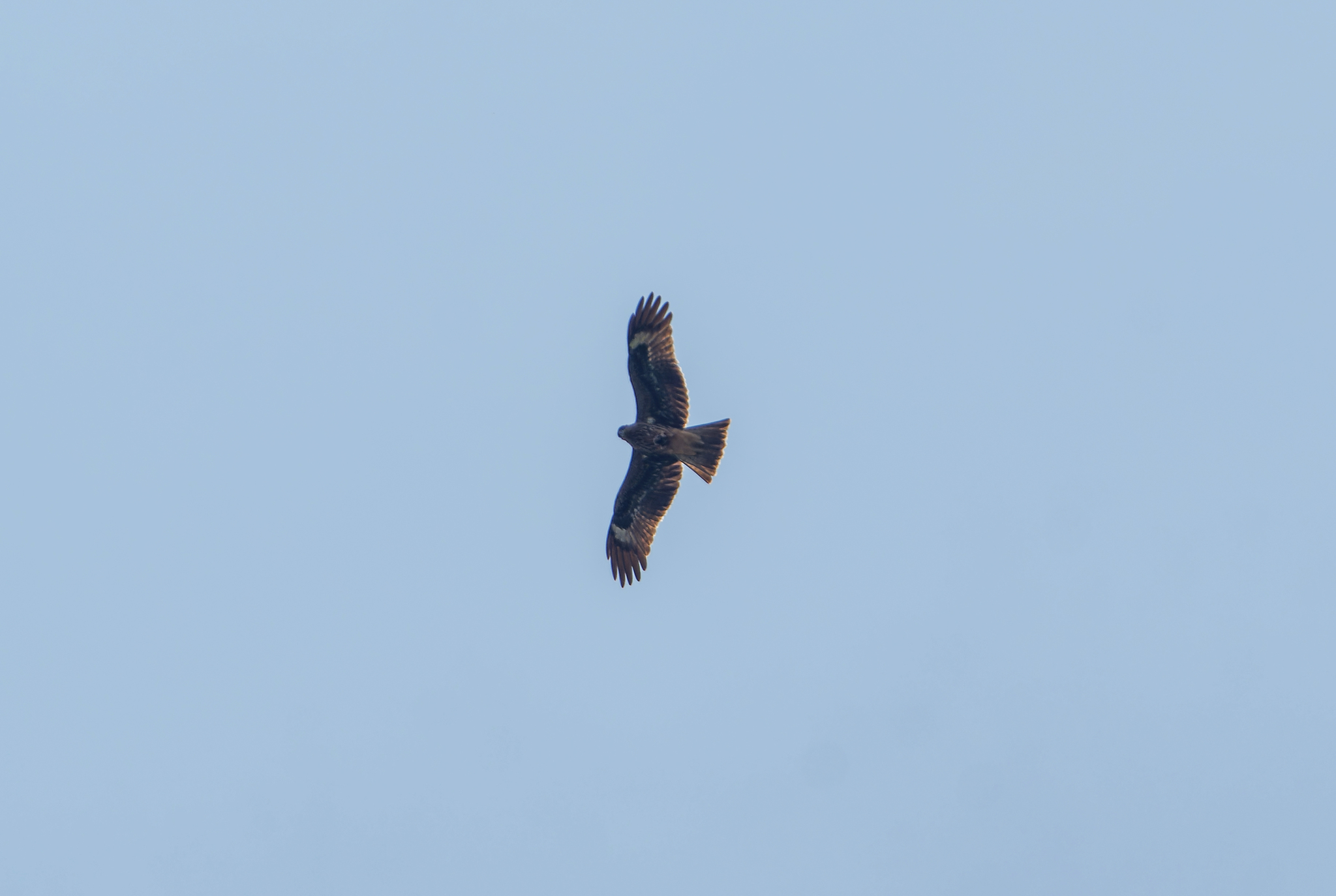
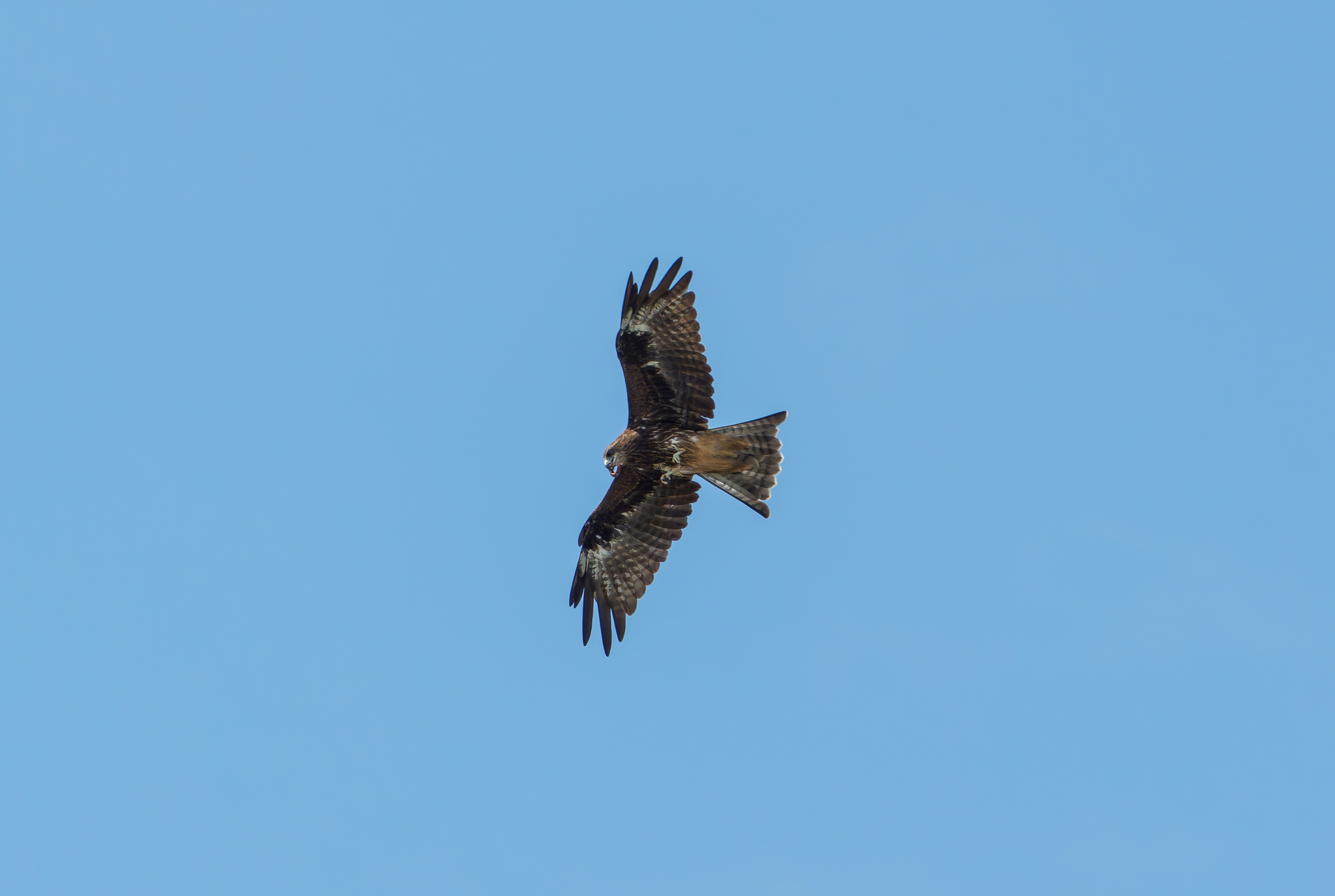
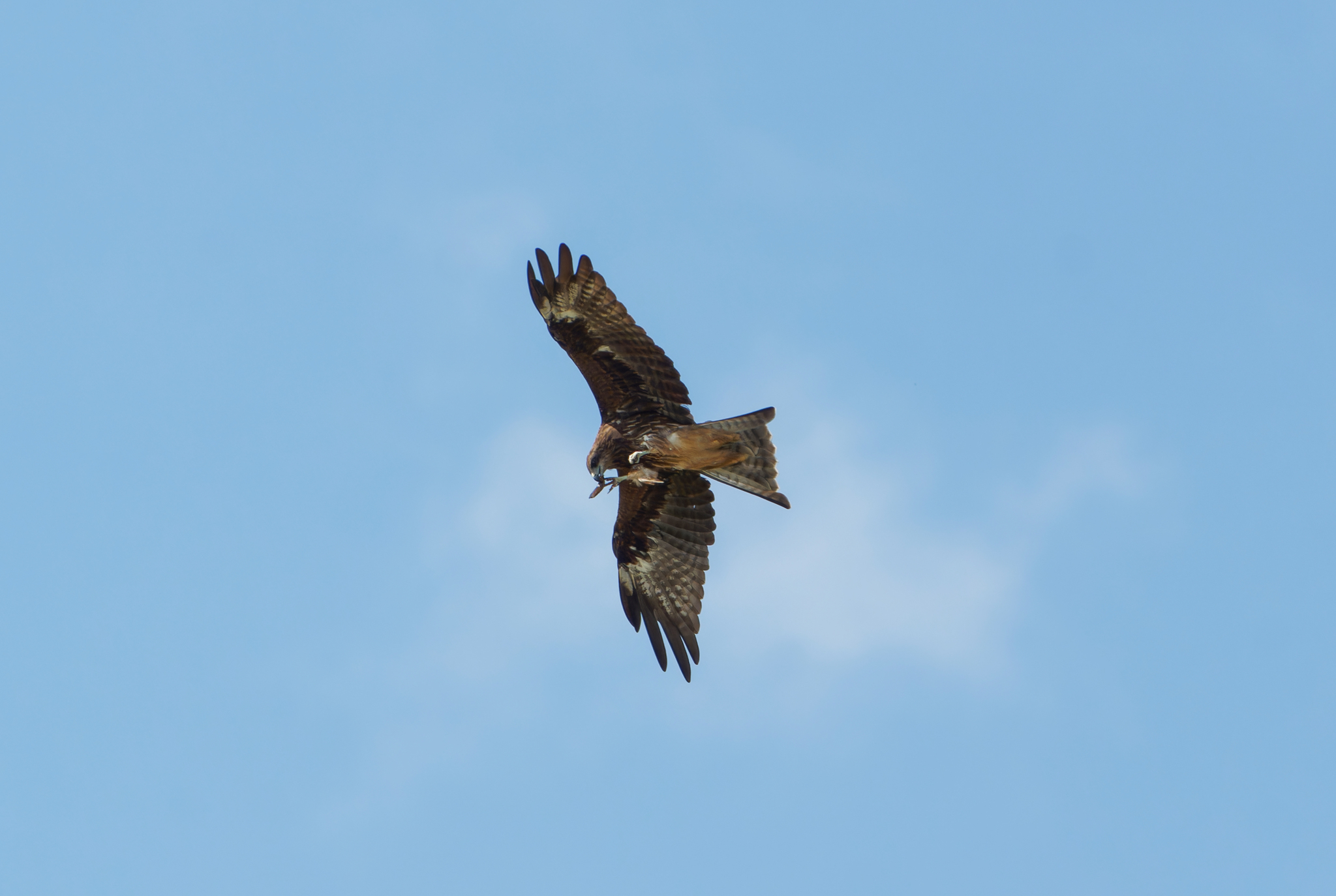
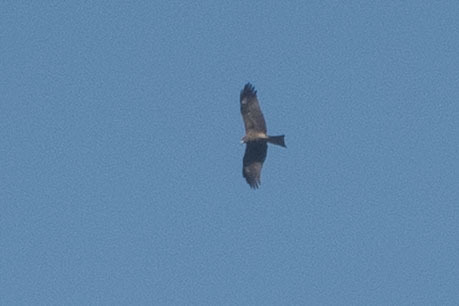
Weighs on average 735 grams (25.9 oz) with a wingspan around 150 cm (5 ft). Upper plumage is brown; head and neck tend to be paler with a darker patch behind the eye. Outer flight feathers are black with dark cross bars and mottled bases. Lower body is pale brown, becoming lighter towards the chin, with dark shafts giving a streaked appearance. Cere and gape are yellow; bill is black. Legs are yellow; claws are black. Sexes have similar plumage, though females are longer with a larger wingspan.
Identification
Distinguished from red kites by slightly smaller size, generally dark plumage without rufous, and a less forked tail visible in flight. Angled wings and distinctive forked tail aid identification. Bill is black, unlike the yellow-billed kite. Vocalizations include a distinctive shrill whistle followed by a rapid whinnying call.
Distribution & Habitat
Found in Europe, Asia, Africa, and Australia. Temperate populations (subspecies M. m. migrans and M. m. lineatus) are migratory, wintering in the tropics. Tropical races (M. m. govinda and M. m. affinis) are resident. Absent from the Indonesian archipelago between the Southeast Asian mainland and the Wallace Line. Vagrants reach the Hawaiian Islands and occasionally New Zealand. In India, populations are large in urban areas but avoid heavily forested regions.
Behavior & Ecology
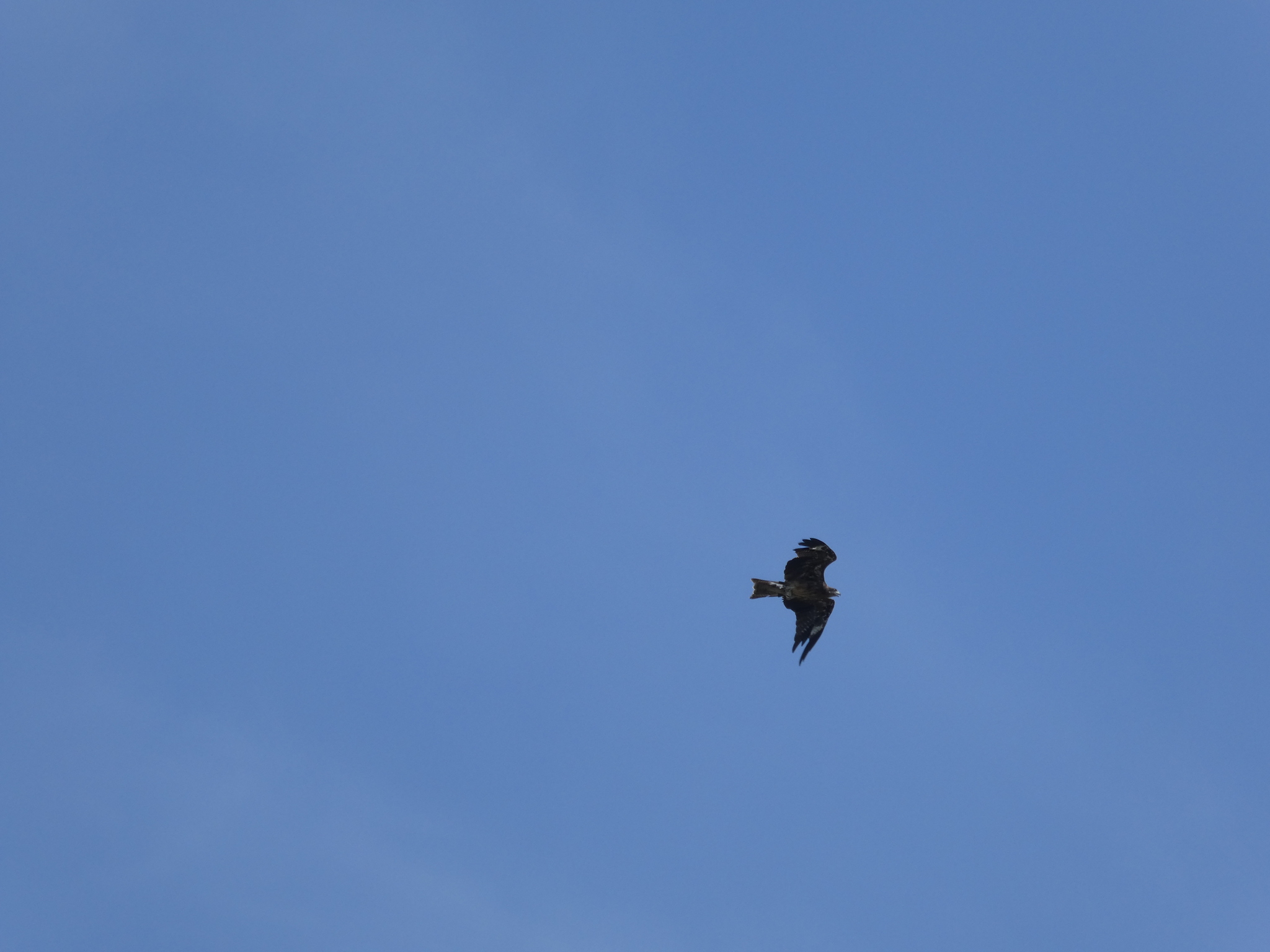
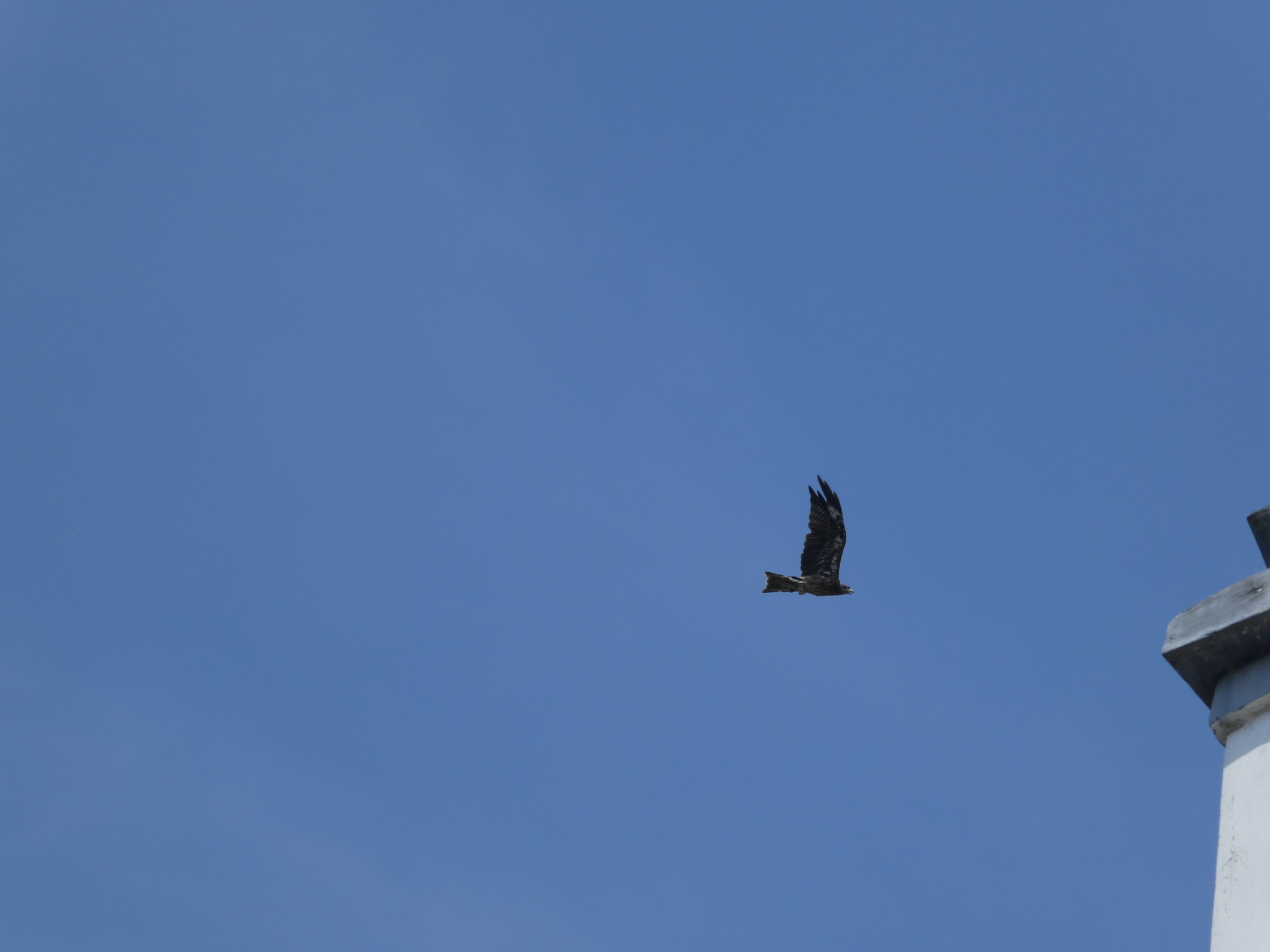
Soars and glides on thermals to search for food. Opportunistic feeder taking small live prey, fish, household refuse, and carrion. Attracted to smoke and fires; known to spread wildfires in northern Australia by dropping burning twigs to flush prey. Indian populations are adapted to cities, sometimes snatching food from humans. Breeding season varies: winter in India, summer in Europe. Nest is a rough platform of twigs in trees or cliffs. Clutch size is typically 2–3 eggs. Incubation lasts 30–34 days. Both parents care for young. Siblings may show aggression. Birds breed after their second year.
Conservation
Global population estimates run up to 6.7 million individuals. Some populations have experienced dramatic declines or fluctuations. Threats include electrocution on power lines, vehicle collisions while scavenging roadkill, mass poisoning from agricultural pesticides, and predation by Eurasian eagle-owls. Accumulation of mercury from polluted food has been noted in Japanese populations.
Source: Wikipedia · CC BY-SA 3.0
Taxonomy
- Order
- Accipitriformes
- Family
- Accipitridae
- Genus
- Milvus
Vocalizations
Subspecies (7)
-
Milvus migrans aegyptius
Egypt, southwestern Arabia, and coastal northeastern Africa
Data Sources
Species description from Wikipedia, licensed under CC BY-SA 3.0.
Bird images and sounds sourced from GBIF, contributed by citizen scientists worldwide under Creative Commons licenses.
Taxonomy data from AviList 2025.