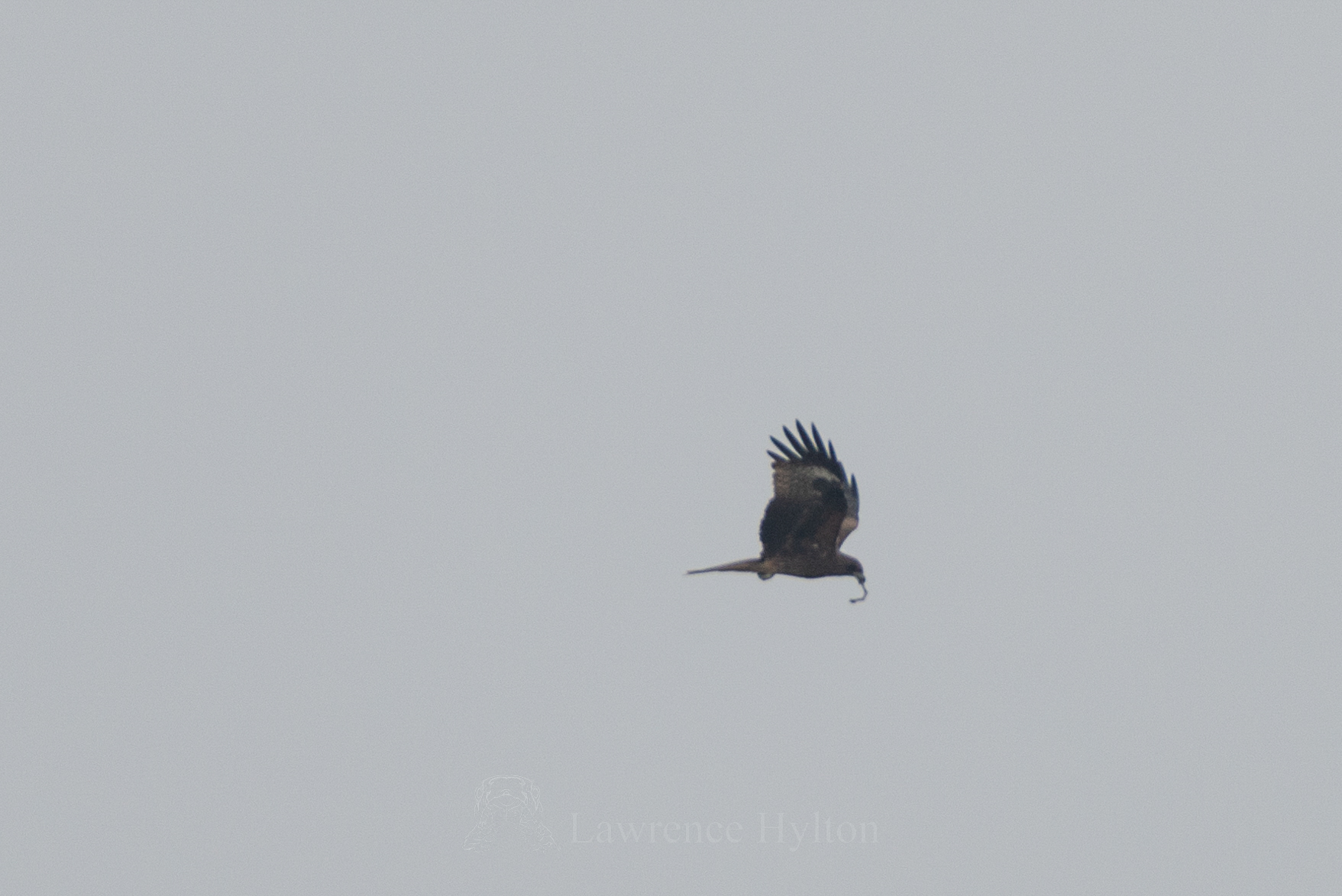
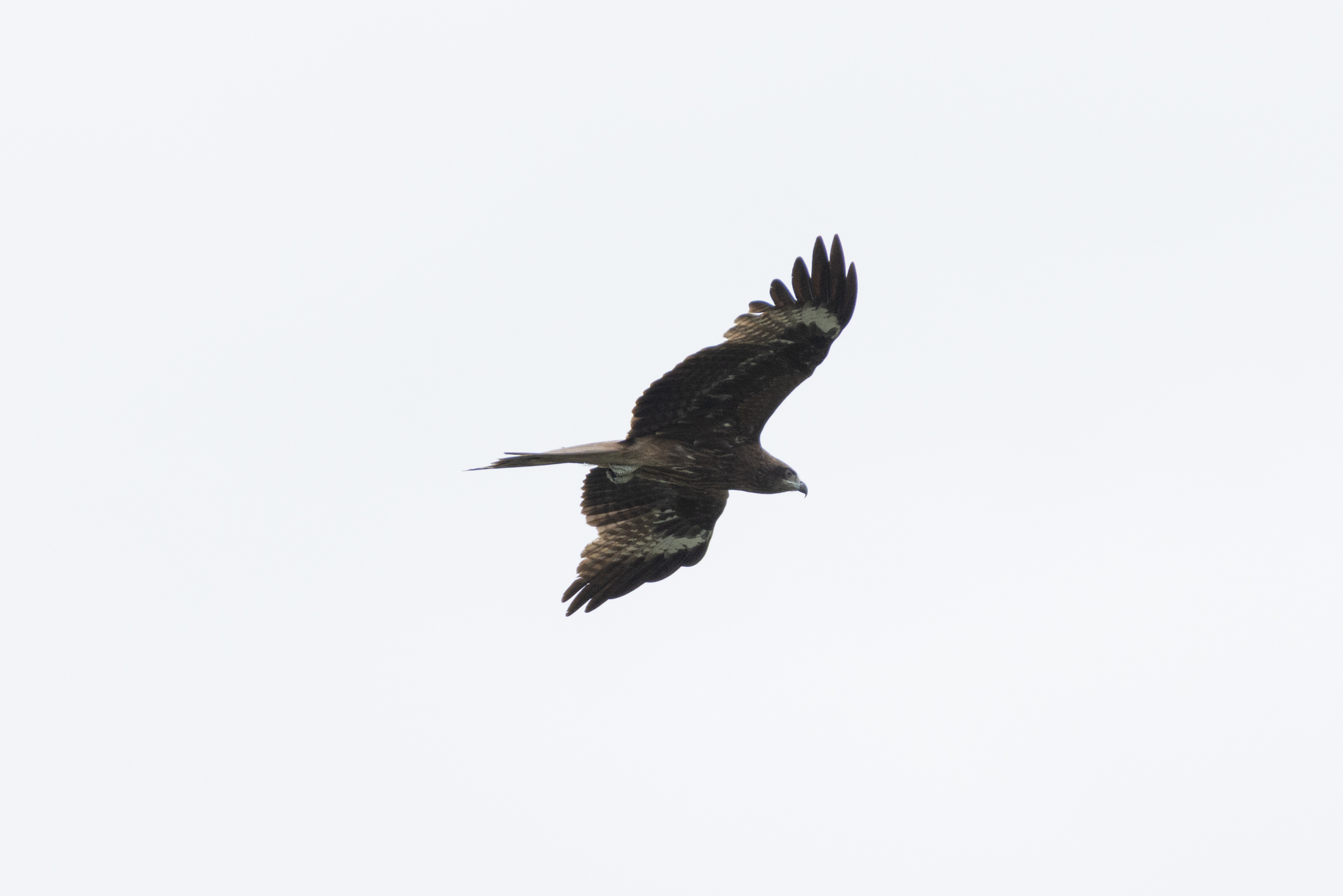
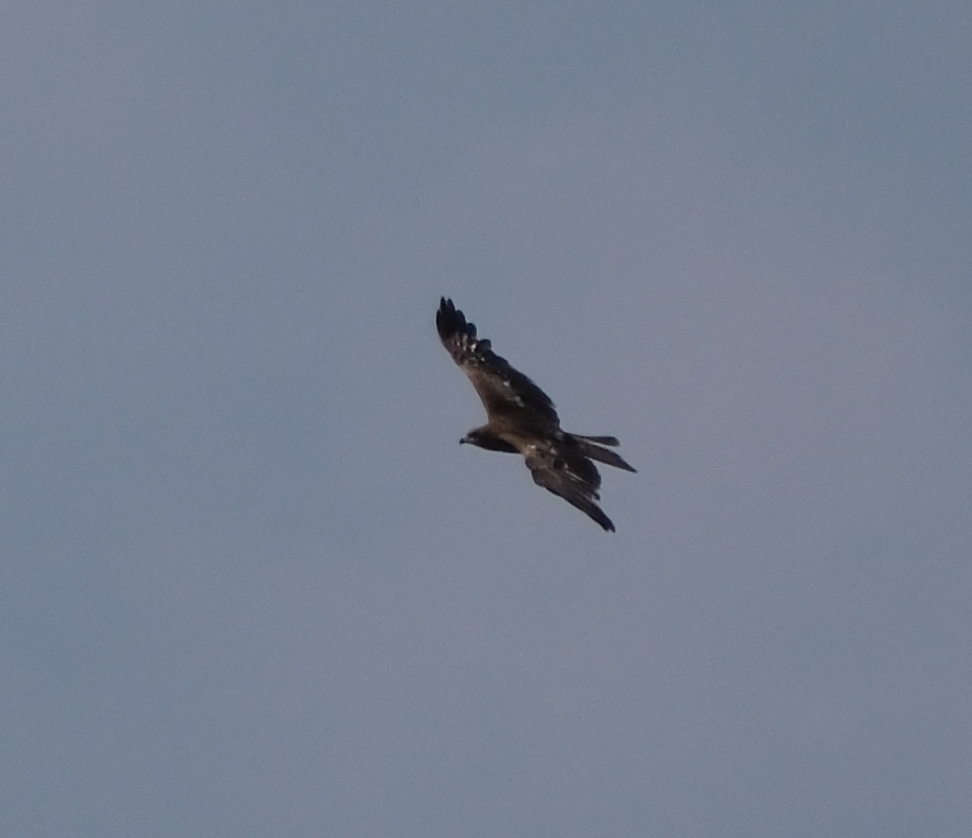
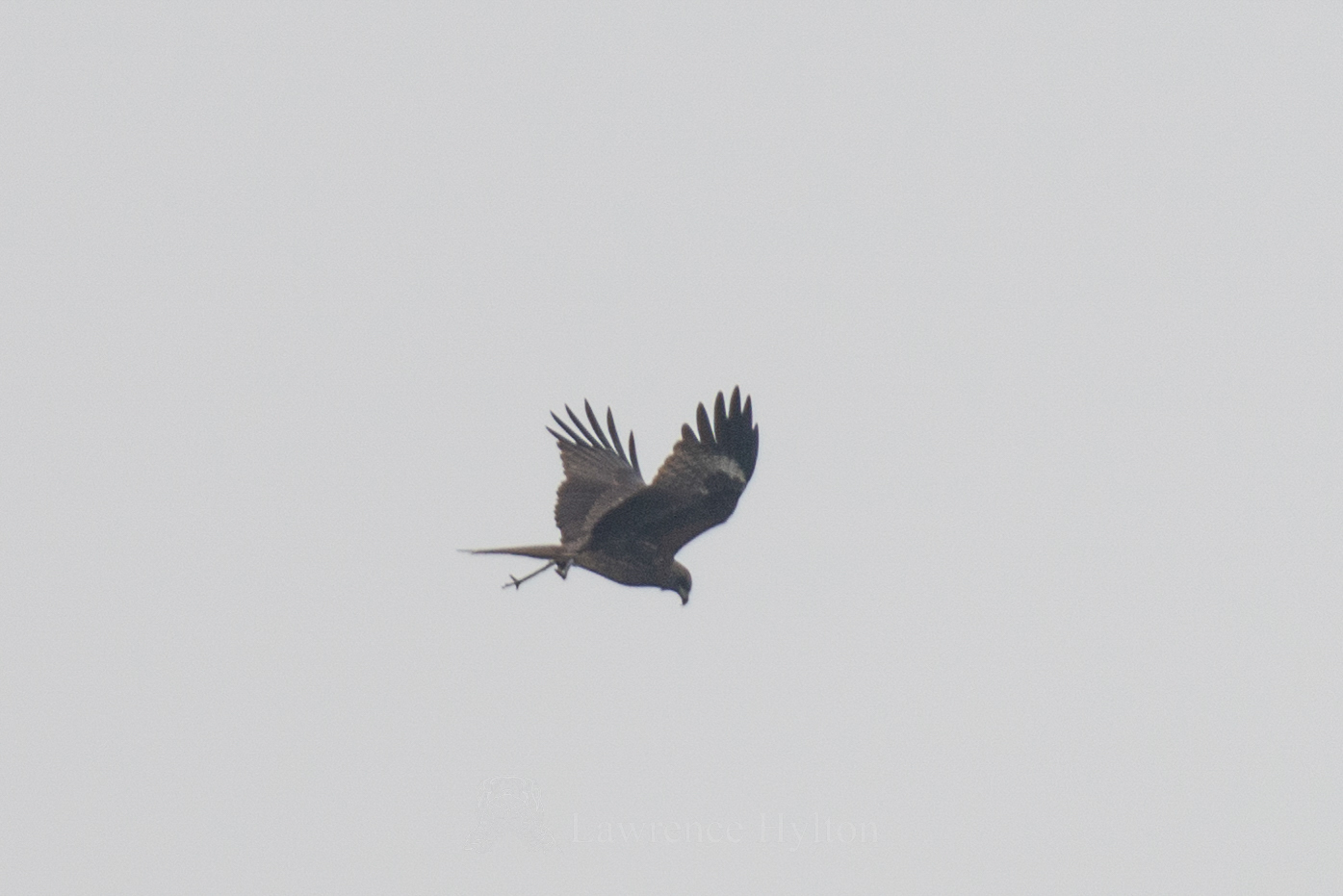
Black Kite
Milvus migrans
黑鸢
Introduction
This medium-sized raptor has a global population of up to 6.7 million individuals. Its range extends across the Old World. It exhibits opportunistic feeding behavior, frequently scavenging and utilizing human-provided food sources. Flight identification relies on angled wings and a deeply forked tail. The species is vocal, producing a shrill whistling call followed by a rapid whinnying sound. In urban areas of the Indian subcontinent, hundreds of individuals may congregate over cities at dusk.
Description
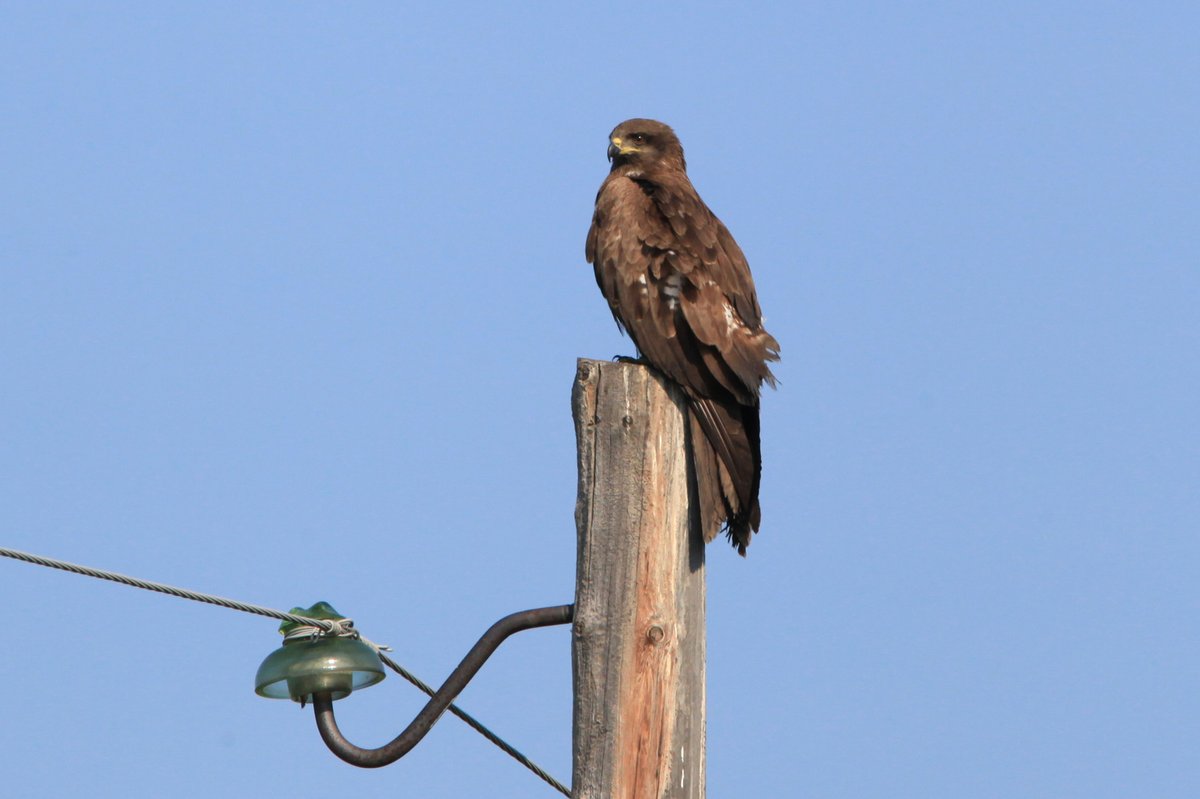
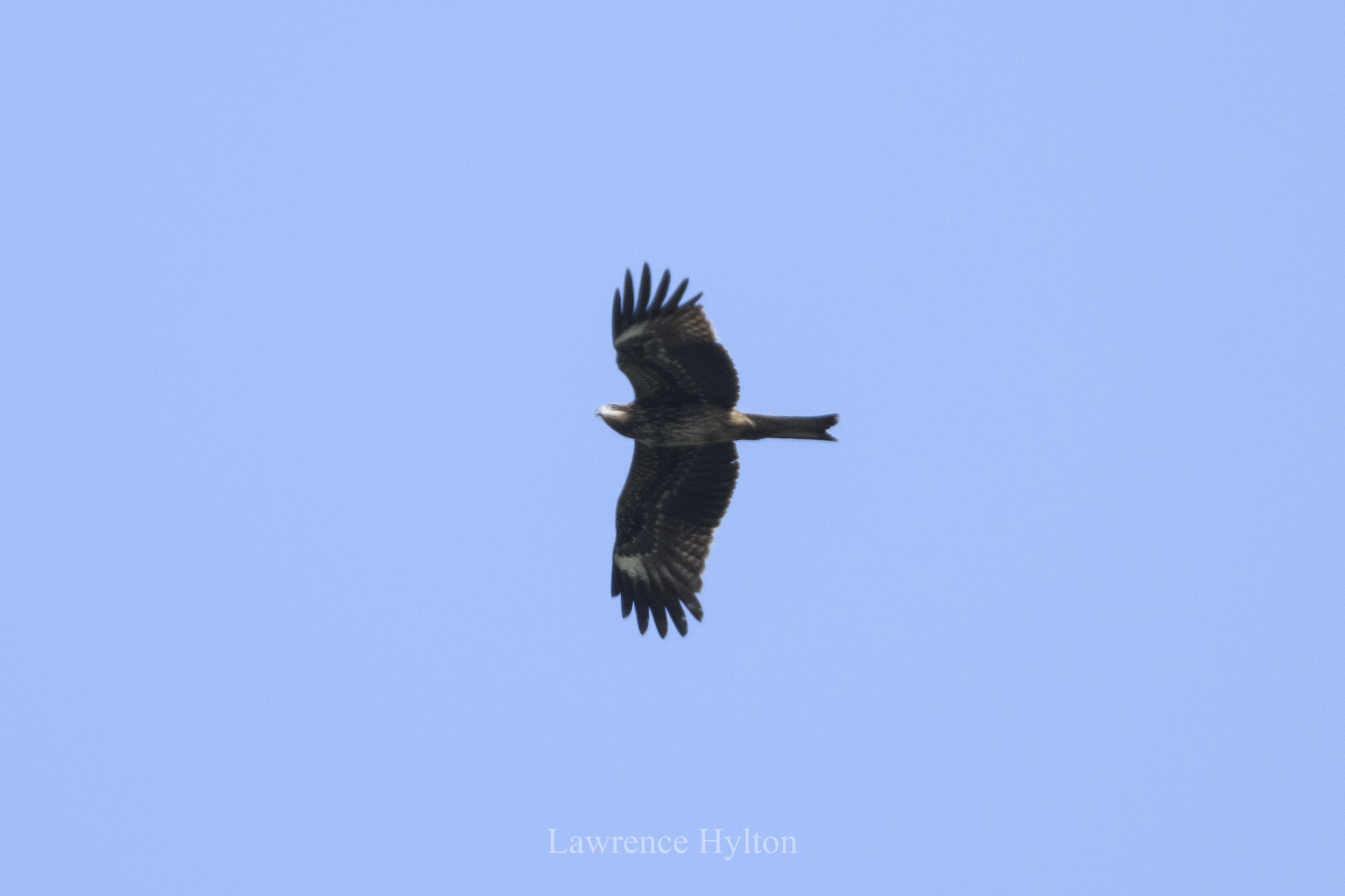
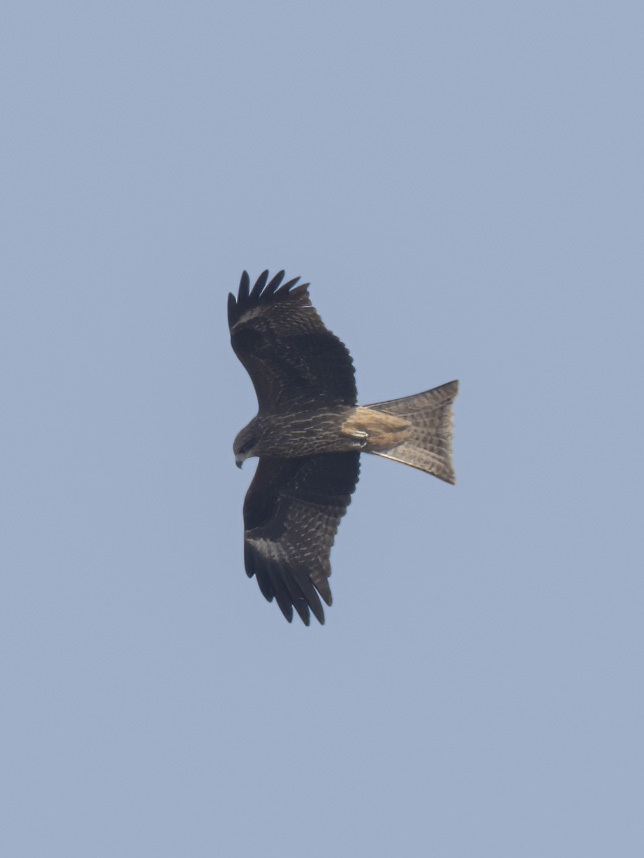
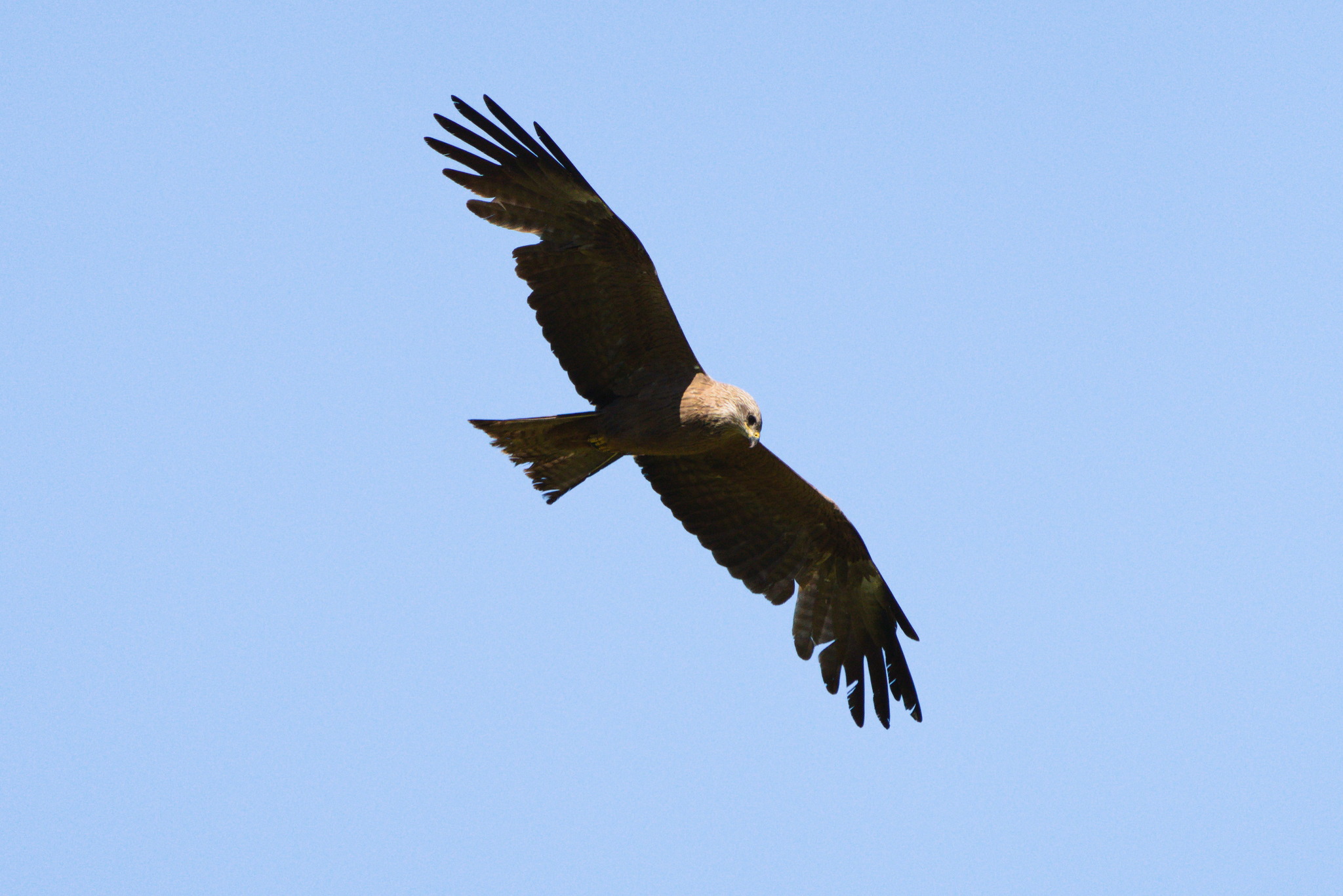
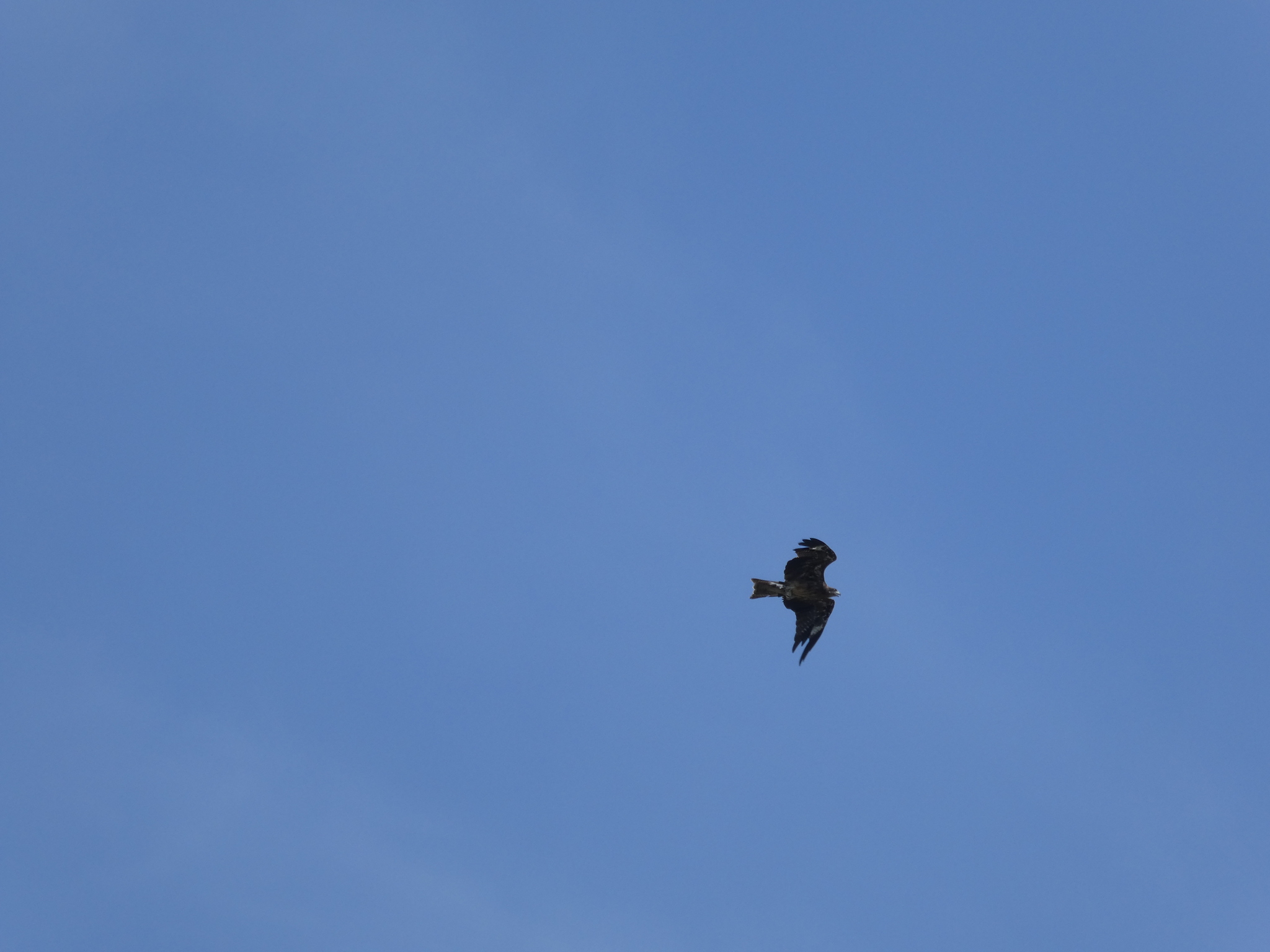
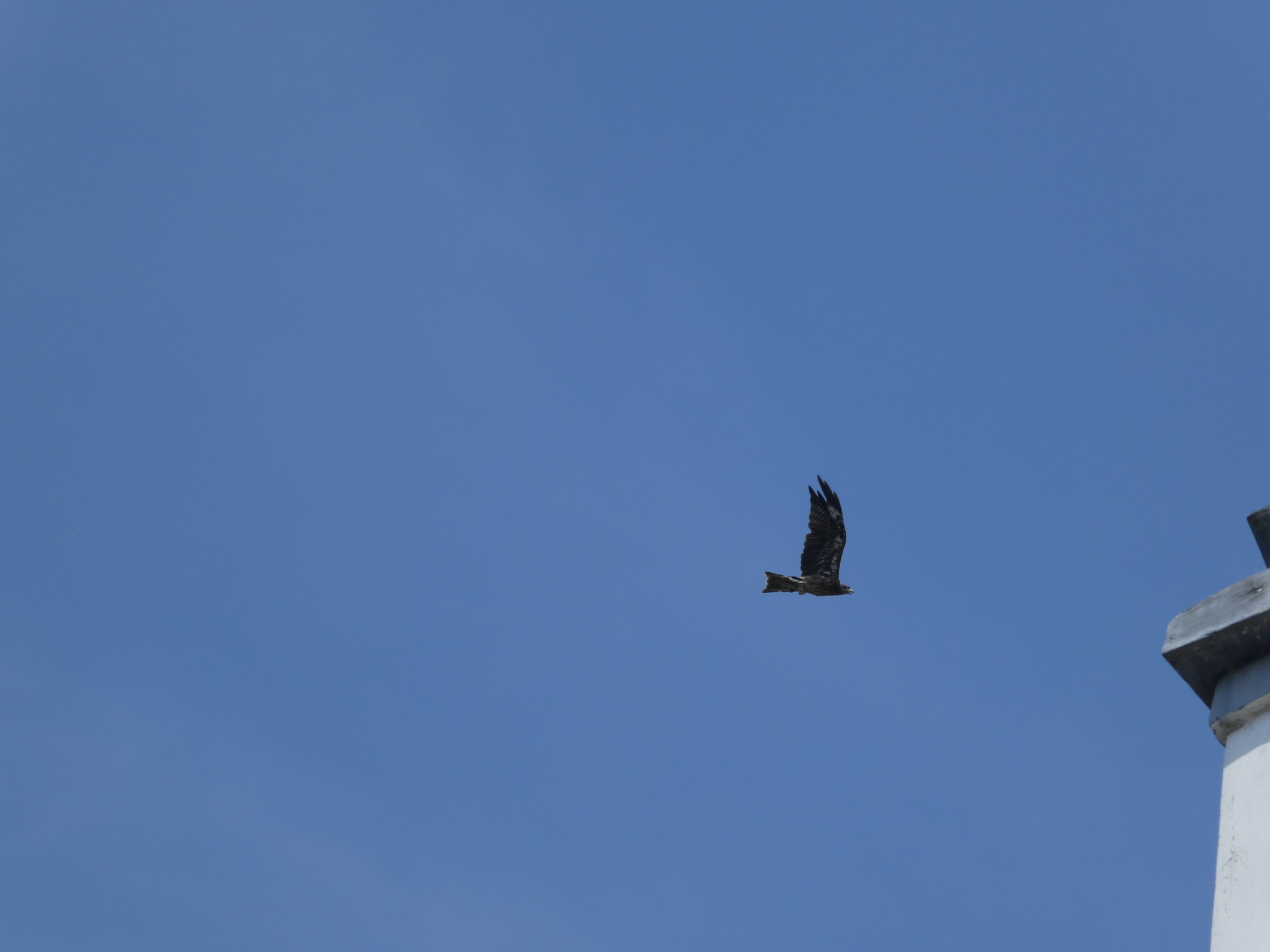
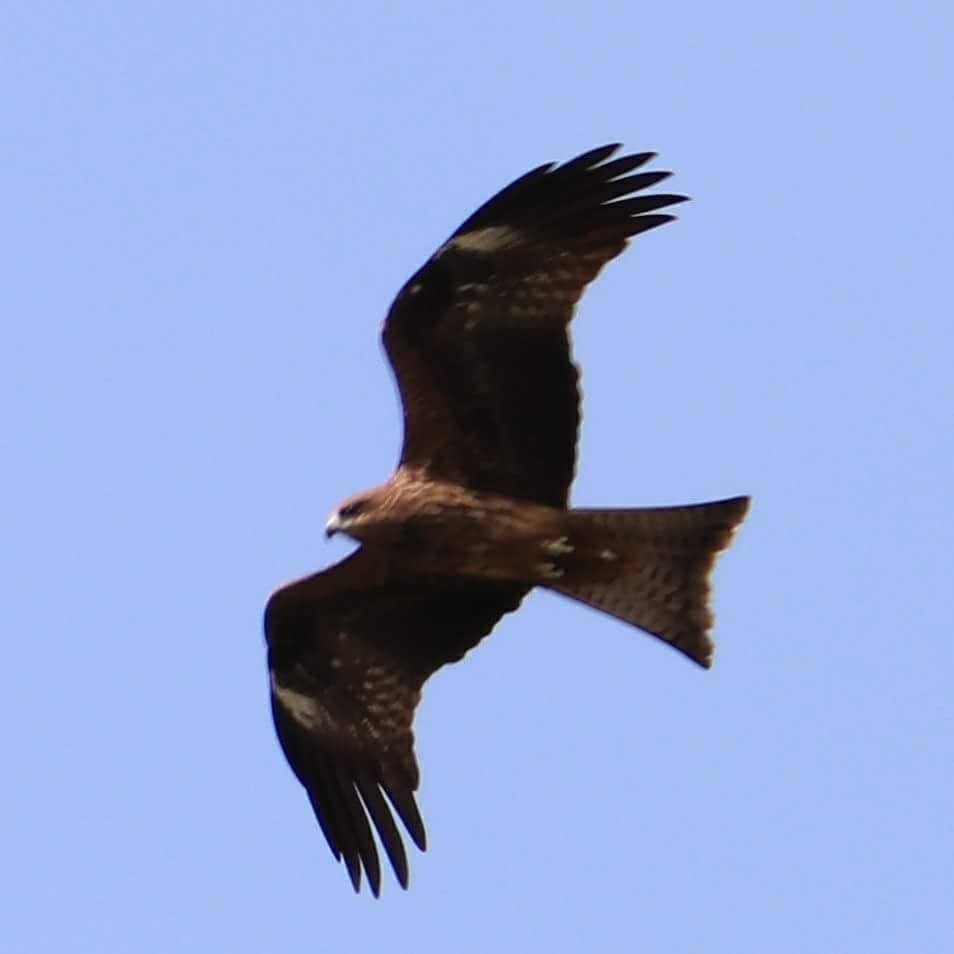
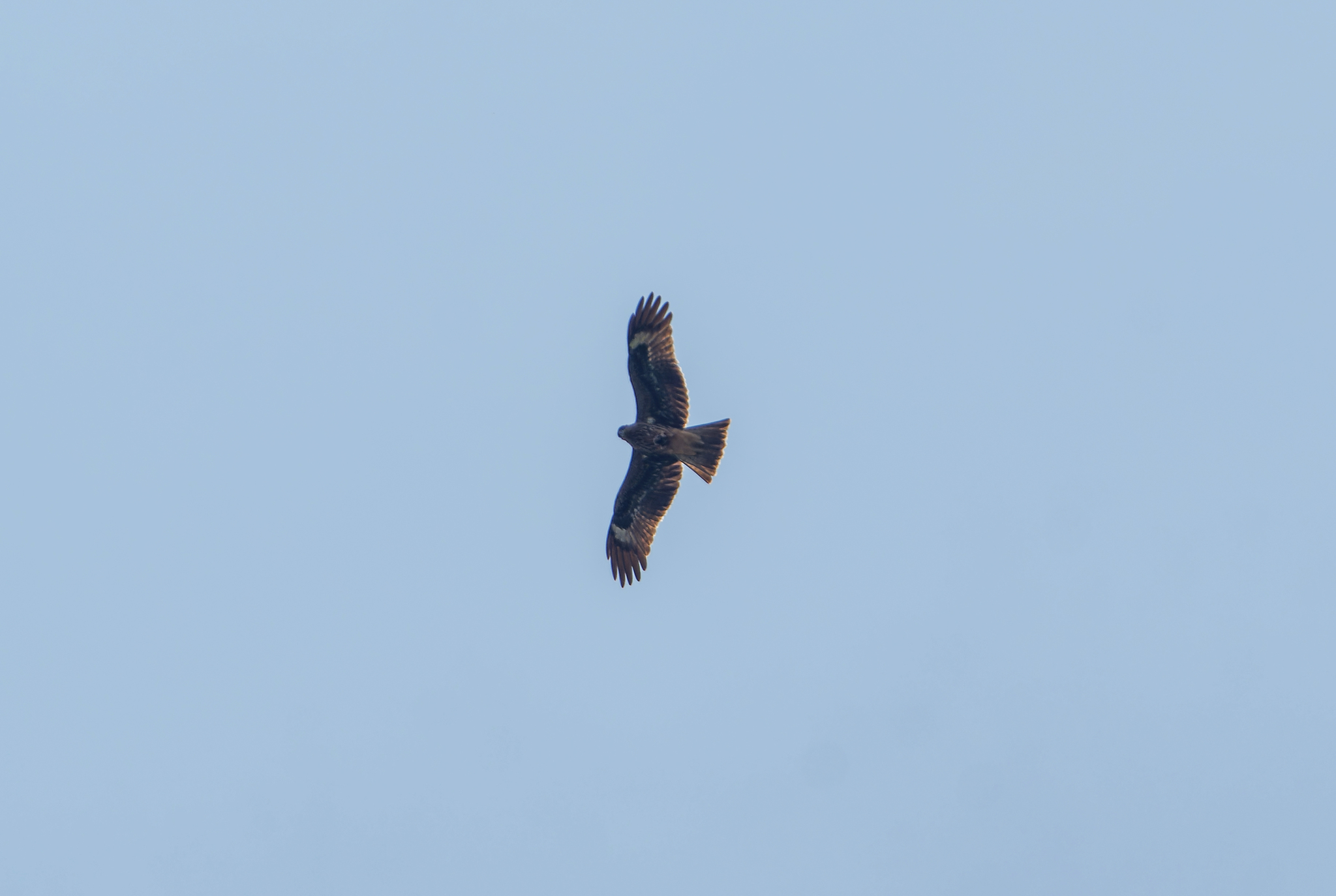
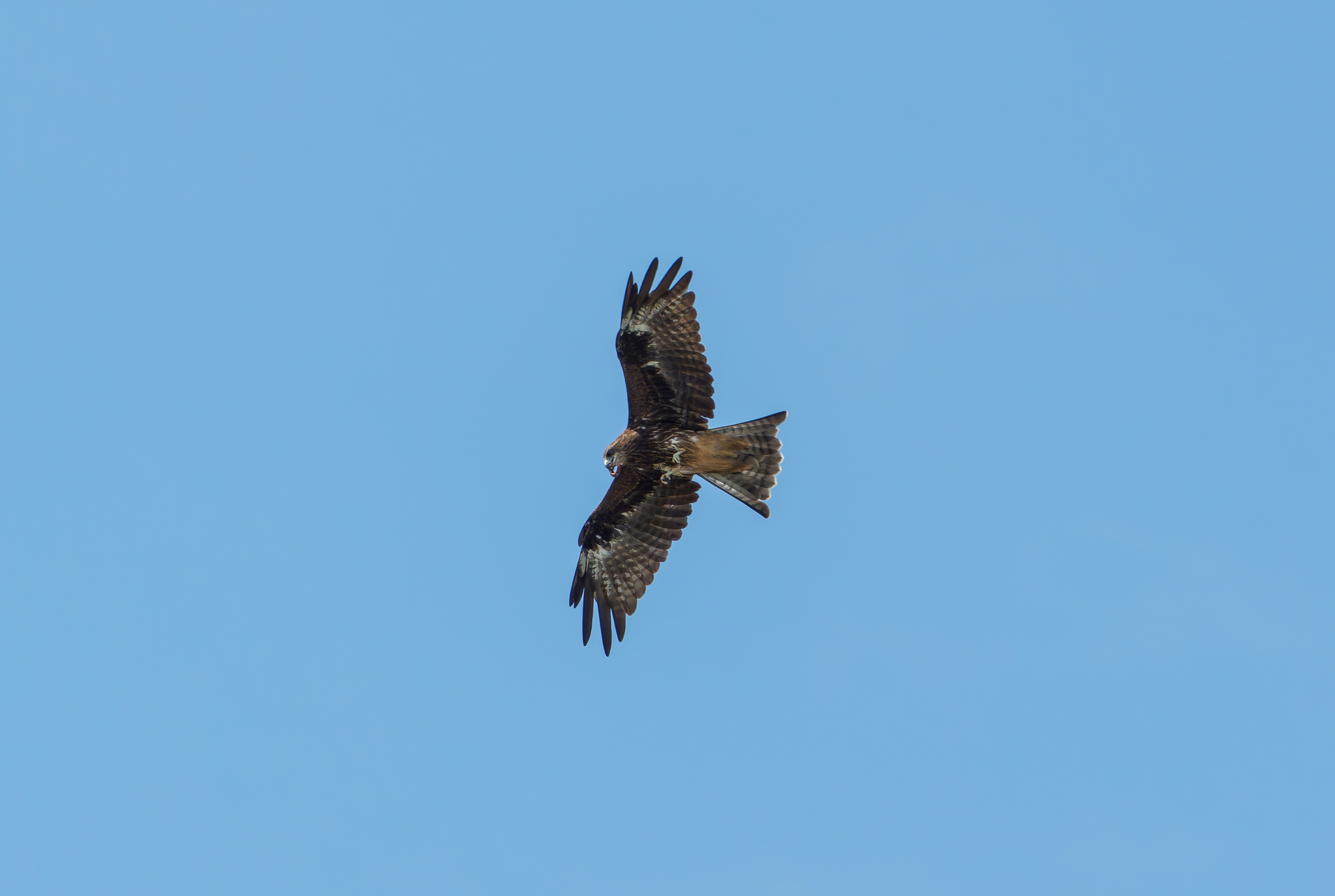
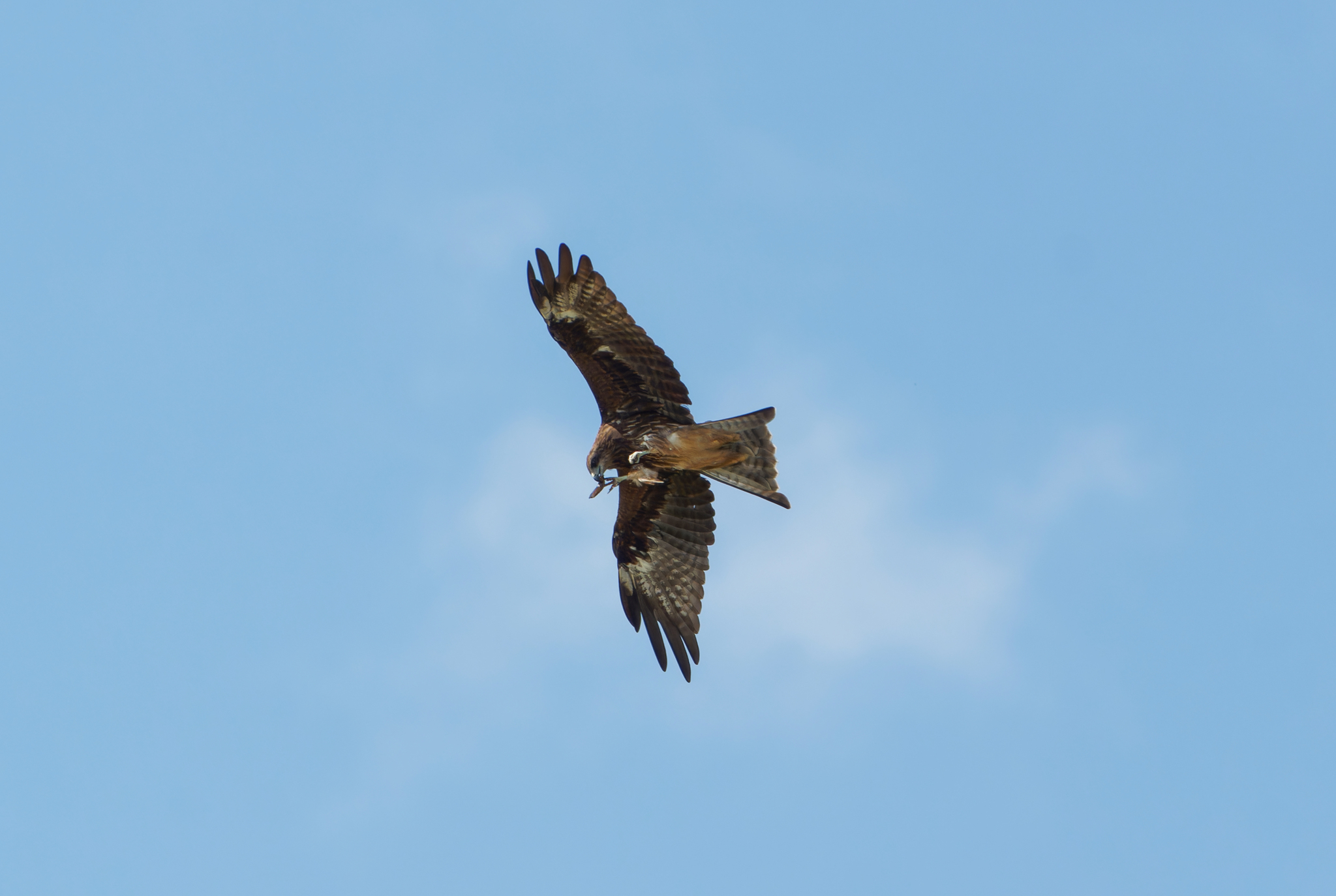
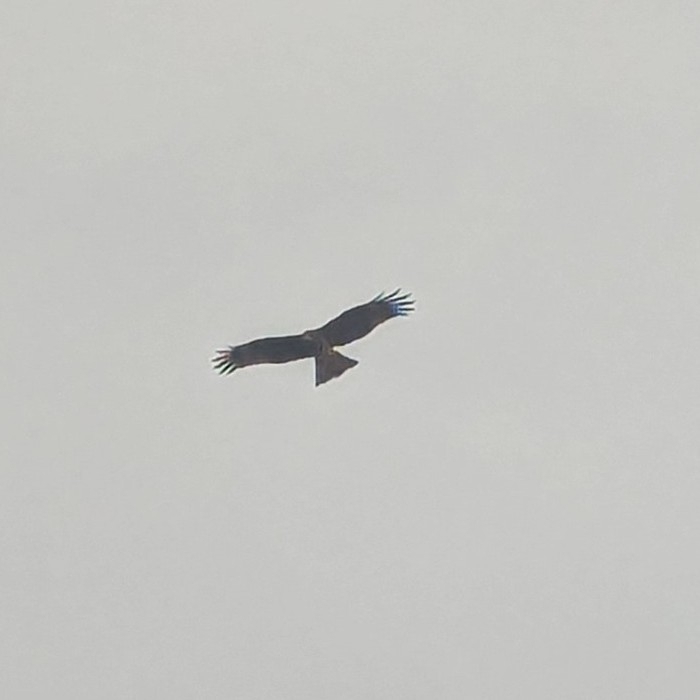
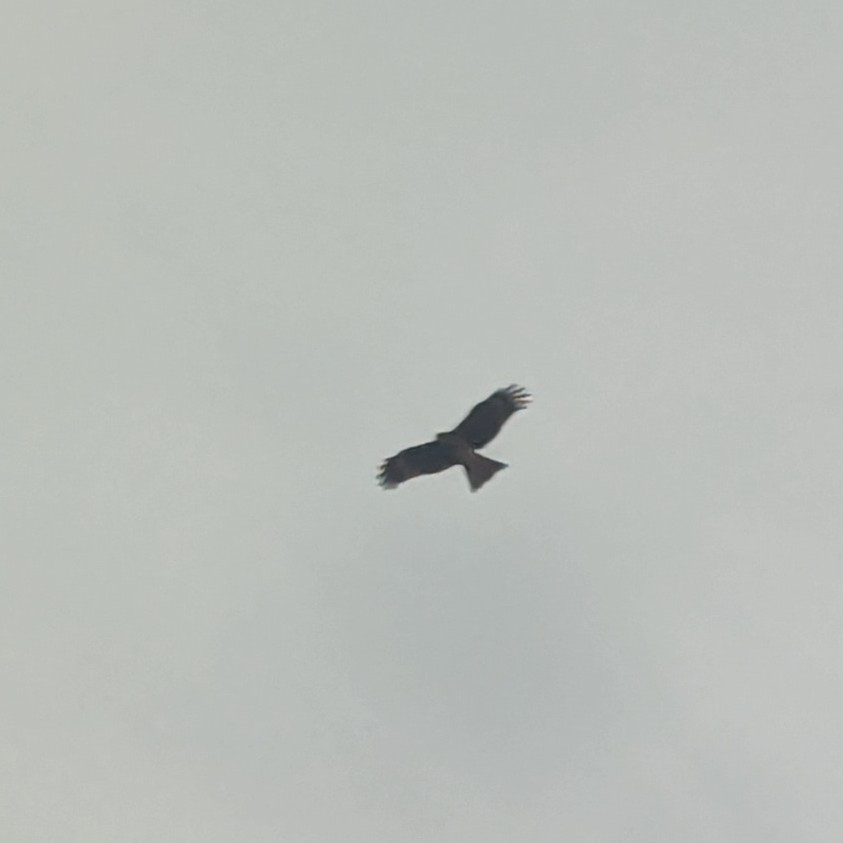
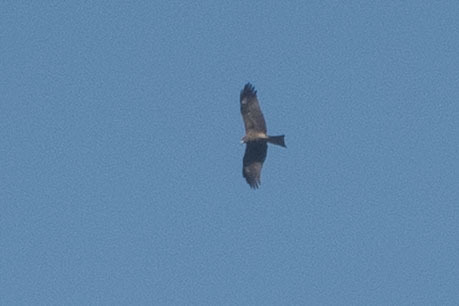
This is a medium-sized raptor with predominantly dark brown plumage over the upperparts, though the head and neck appear noticeably paler in most individuals. A darker patch behind the eye creates a masked effect. The outer flight feathers are black with dark cross bars and mottling at the base, while the underparts are pale brown, lightening toward the chin. The body feathers have dark central shafts, giving a subtle streaked appearance. The cere and gape are yellow, contrasting with the black bill, while the legs and feet are yellow with black talons. The tail is forked, though less deeply so than in the similar red kite. Females are slightly larger than males, though both sexes share identical plumage. Average weight is around 735 grams, with a wingspan of approximately 150 cm.
Identification
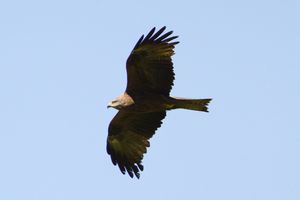
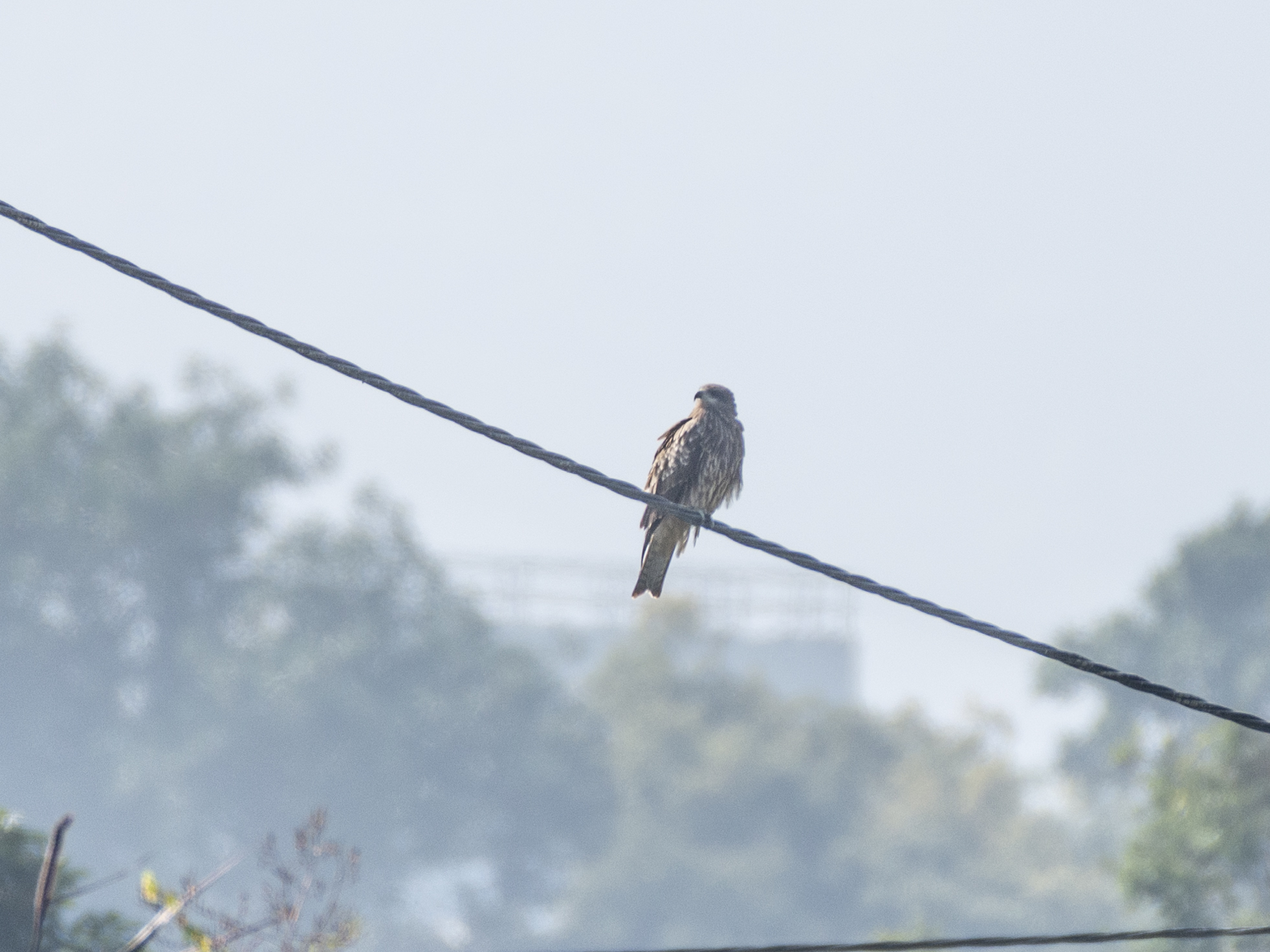
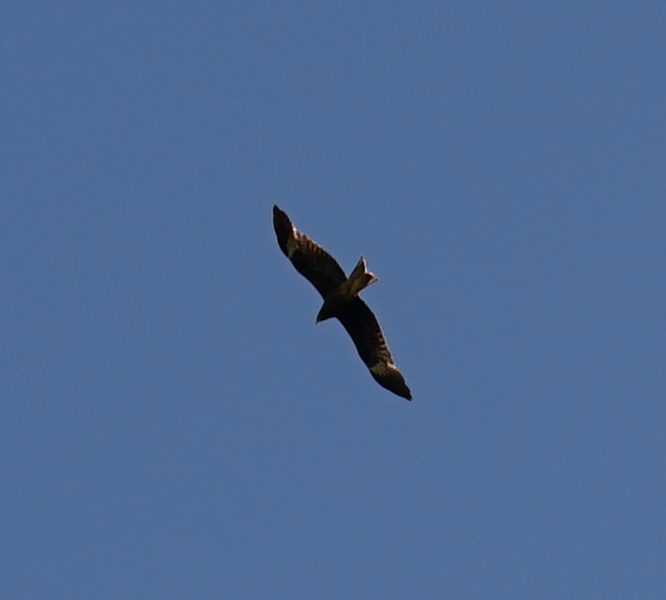
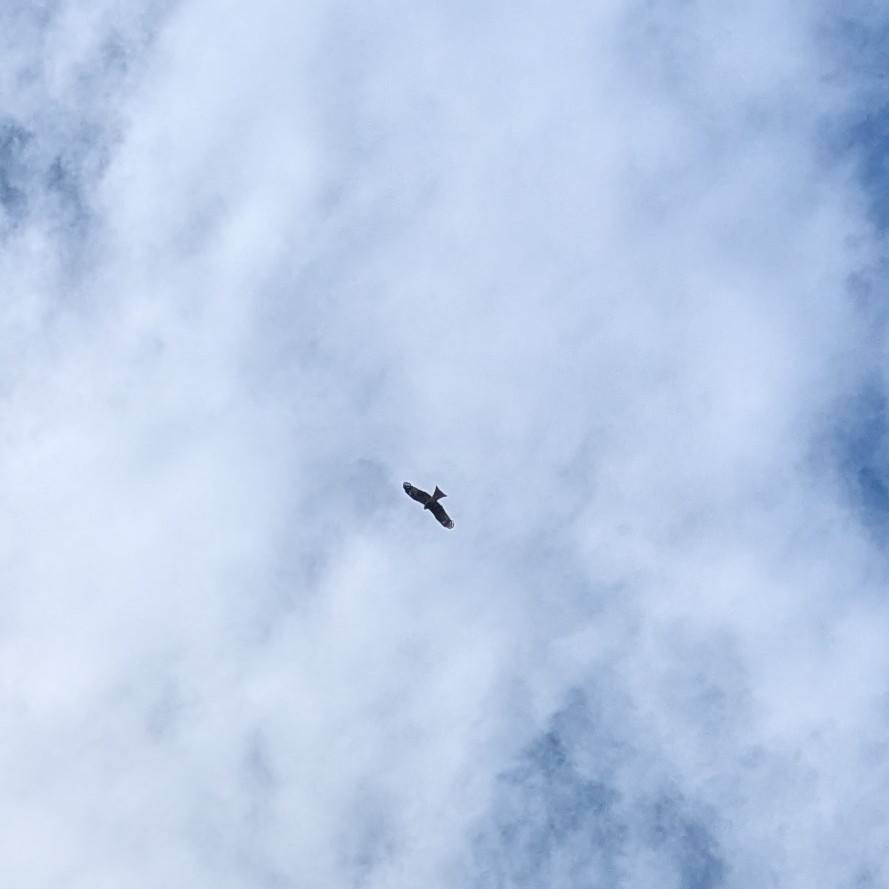
The forked tail and angled wings are the most reliable field marks, though these can be difficult to judge at distance. The key distinction from the red kite is the smaller size, less deeply forked tail, and entirely dark plumage lacking any rufous coloration. The yellow cere and gape separate it from the yellow-billed kite, which was formerly considered conspecific. In flight, the dark outer flight feathers contrast with the paler wing linings. The European subspecies has a whitish head, while the eastern lineatus subspecies shows a larger pale carpal patch. In Indian populations, the relatively shallow fork in the tail is a useful identifying feature, and they are often seen circling over urban areas in numbers.
Distribution & Habitat
This species has an enormous range spanning Europe, Asia, Africa, and Australia. Temperate populations are migratory, moving to tropical regions for winter, while tropical races are largely resident. The European and central Asian subspecies migrate to sub-Saharan Africa and South Asia respectively. The Indian subspecies is resident throughout the subcontinent, as are the Australasian populations in Indonesia, Papua New Guinea, and Australia. The species is notably absent from the Indonesian archipelago between the mainland and the Wallace Line. Vagrants occasionally reach far-flung locations including the Hawaiian Islands and New Zealand. In India, these kites reach exceptional densities in urban areas—surveys in Delhi recorded approximately 15 breeding pairs per square kilometer.
Behavior & Ecology
This raptor spends considerable time soaring on thermals in search of prey, using buoyant, effortless flight to cover large areas while expending minimal energy. Its diet is remarkably varied: small mammals, birds, bats, fish, insects, carrion, and household refuse all feature prominently. It is famously attracted to fires, where it hunts escaping prey, and in Australia has been observed deliberately spreading wildfires by carrying burning twigs. Indian populations have adapted exceptionally well to cities, readily approaching humans for food and sometimes snatching items from hands. Breeding seasons vary geographically—winter in India with young fledging before monsoons, summer in Europe. Both parents share nest-building, incubation, and chick-rearing duties, typically producing clutches of two to three eggs. They form large communal roosts in winter and are highly vocal, producing a distinctive shrill whistle followed by rapid whinnying.
Conservation
While the species as a whole remains abundant and widespread, certain populations have experienced dramatic declines or fluctuations that warrant concern. The European populations are notably small despite the species' global abundance. Major threats include electrocution on power lines, vehicle collisions when feeding on roadkill, and mass poisoning from agricultural rodenticides. They pose a significant birdstrike hazard at airports due to their size, leading to control measures in some locations. Mercury accumulation in feathers has been documented in polluted areas, with birds shedding contaminated plumage during moult. Despite these pressures, the global population remains large, and the species demonstrates considerable adaptability to human-modified landscapes.
Culture
The species appears in various cultural contexts across its range. Australian Aboriginal groups in the north have long recognized its unique fire-spreading behavior, with some cultures referring to these birds as firehawks in traditional knowledge systems. In British military slang, the scavenger behavior of feeding on refuse led to the derisive term shite-hawk. The species has also been referenced in cinema, including a 2017 film bearing its name. Historically, the Indian subspecies was known as the pariah kite, a name derived from the caste system that is now considered inappropriate. The species' adaptability to urban environments has made it a common sight in cities like Delhi and Mumbai, where locals have developed complicated relationships with these bold, noisy birds that readily exploit human generosity.
Source: Wikipedia · CC BY-SA 3.0
Taxonomy
- Order
- Accipitriformes
- Family
- Accipitridae
- Genus
- Milvus
- eBird Code
- blakit1
Vocalizations
Subspecies (7)
-
Milvus migrans aegyptius
Egypt, southwestern Arabia, and coastal northeastern Africa
-
Milvus migrans affinis
Sulawesi, Moluccas, Lesser Sundas, New Guinea, and northern and eastern Australia (Pilbara and Kimberley regions of Western Australia, and eastern South Australia)
-
Milvus migrans formosanus
Taiwan and Hainan (southern China)
-
Milvus migrans govinda
eastern Pakistan and India to southeastern Asia and western Yunnan in southern China
-
Milvus migrans lineatus
breeds Siberia to northern India, China, and Ryukyu Islands (southern Japan); winters to Iraq and southeastern Asia
-
Milvus migrans migrans
breeds northwestern Africa and Europe to south-central Asia; winters to southern Africa
-
Milvus migrans parasitus
sub-Saharan Africa, Madagascar, and Cape Verde and Comoro islands
Data Sources
Species description from Wikipedia, licensed under CC BY-SA 3.0.
Bird images and sounds sourced from GBIF, contributed by citizen scientists worldwide under Creative Commons licenses.
Taxonomy data from AviList 2025.