Coraciiformes / Meropidae / Merops
Blue-throated Bee-eater
Merops viridis · 蓝喉蜂虎
Introduction
A medium-large species in the bee-eater family, found across Southeast Asia in subtropical or tropical mangrove forests and various flat plains. It feeds primarily on bees, wasps, and dragonflies. The conservation status is Least Concern as of 2024.
Description
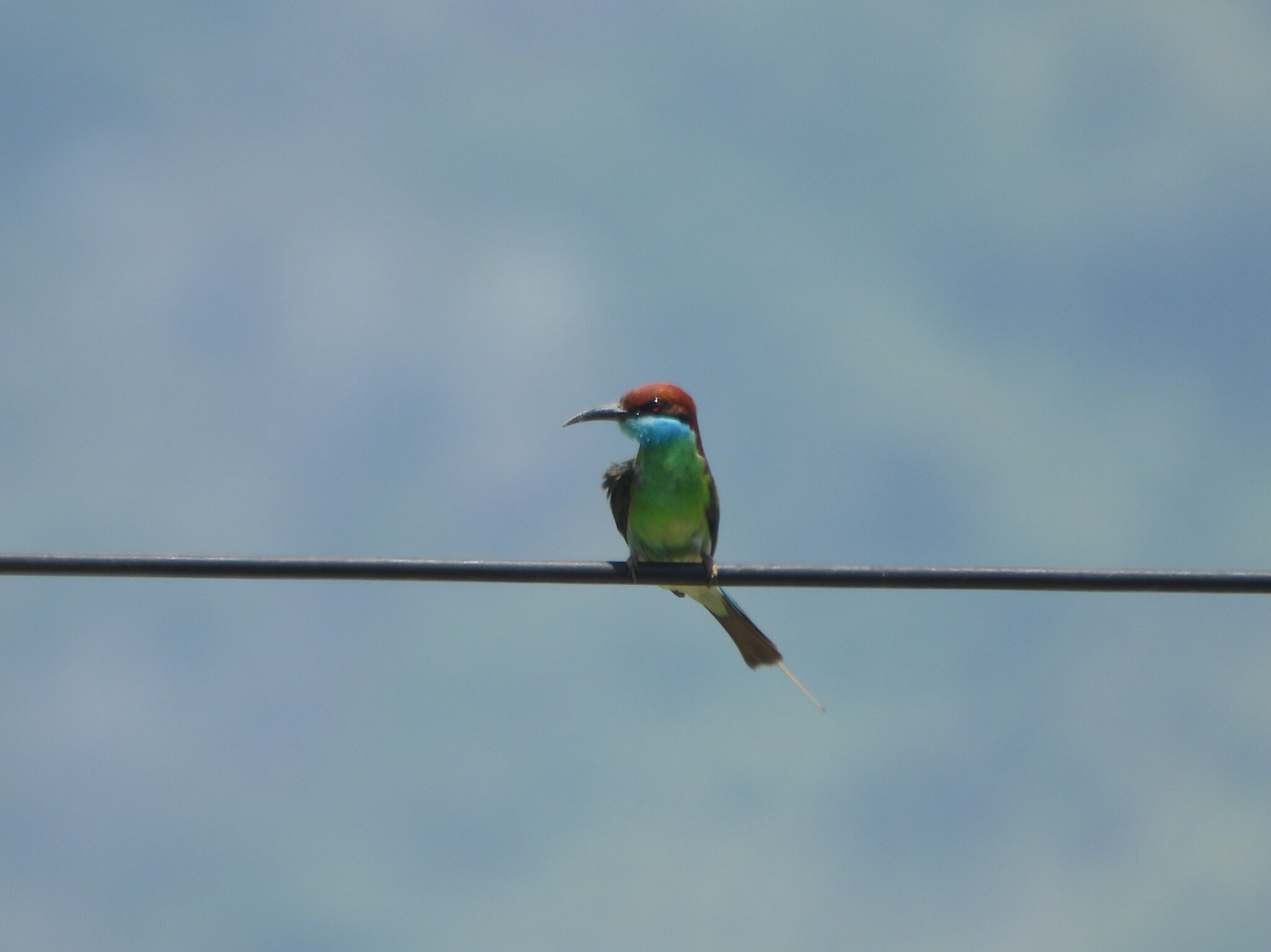
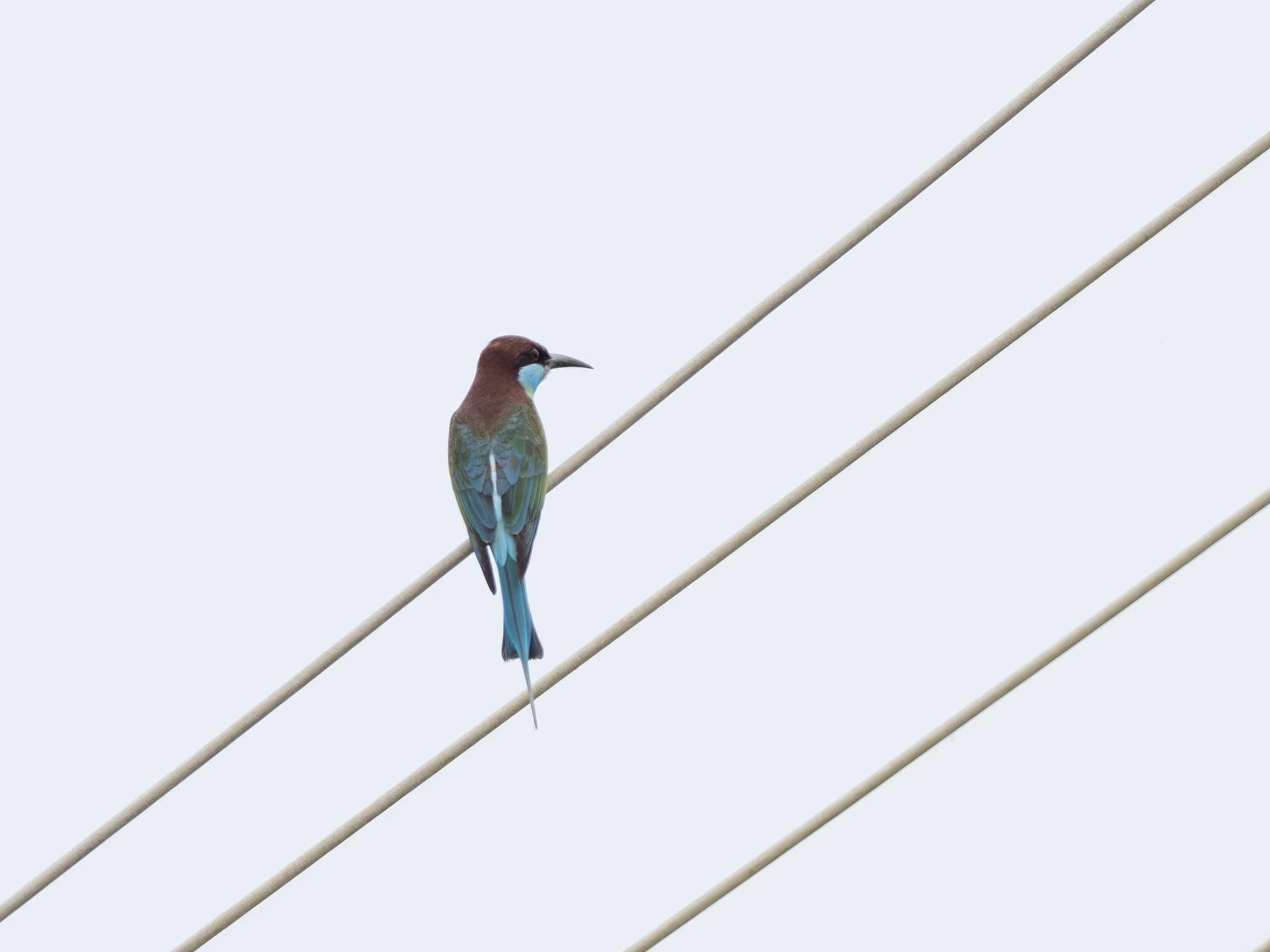
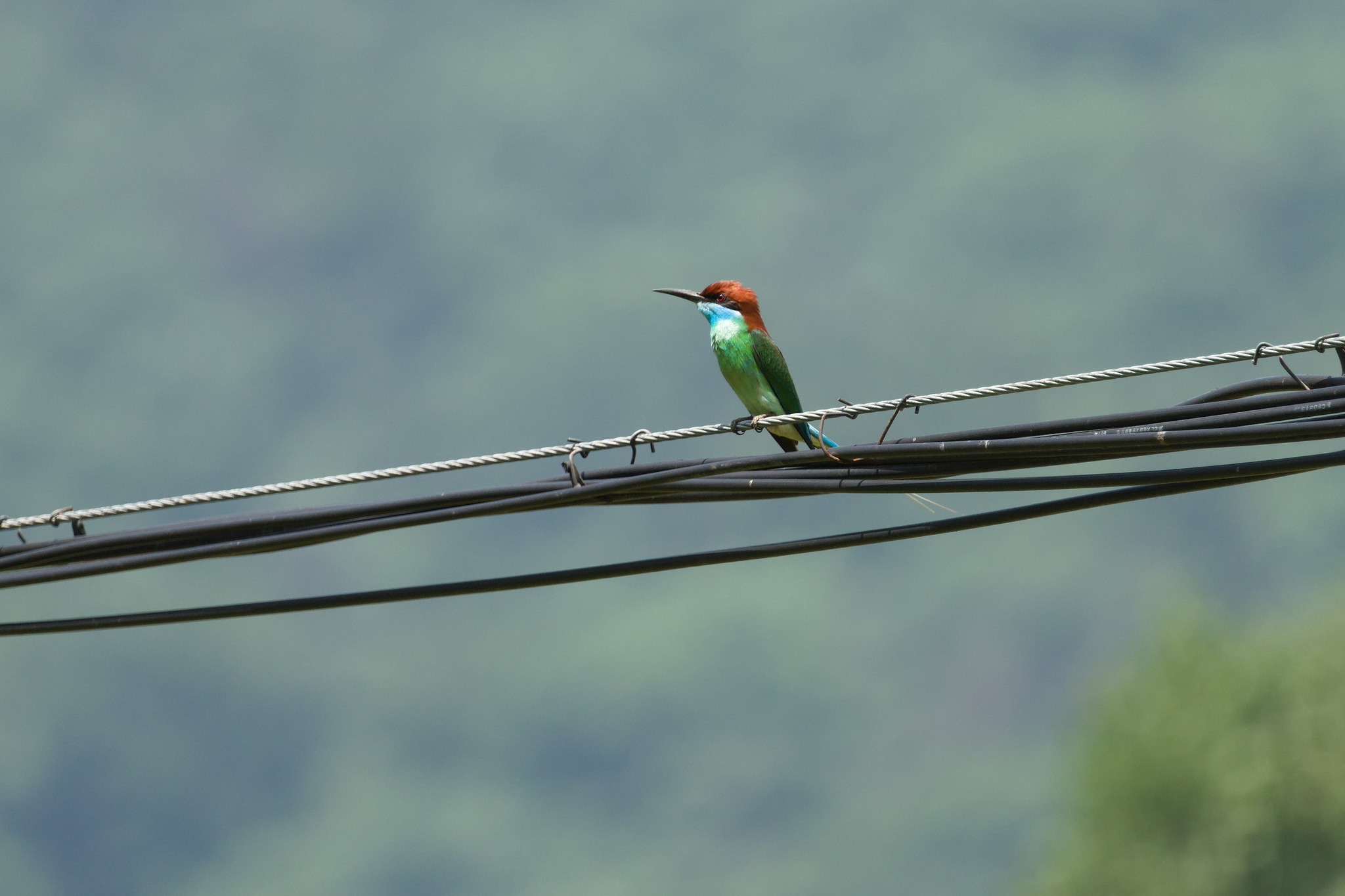
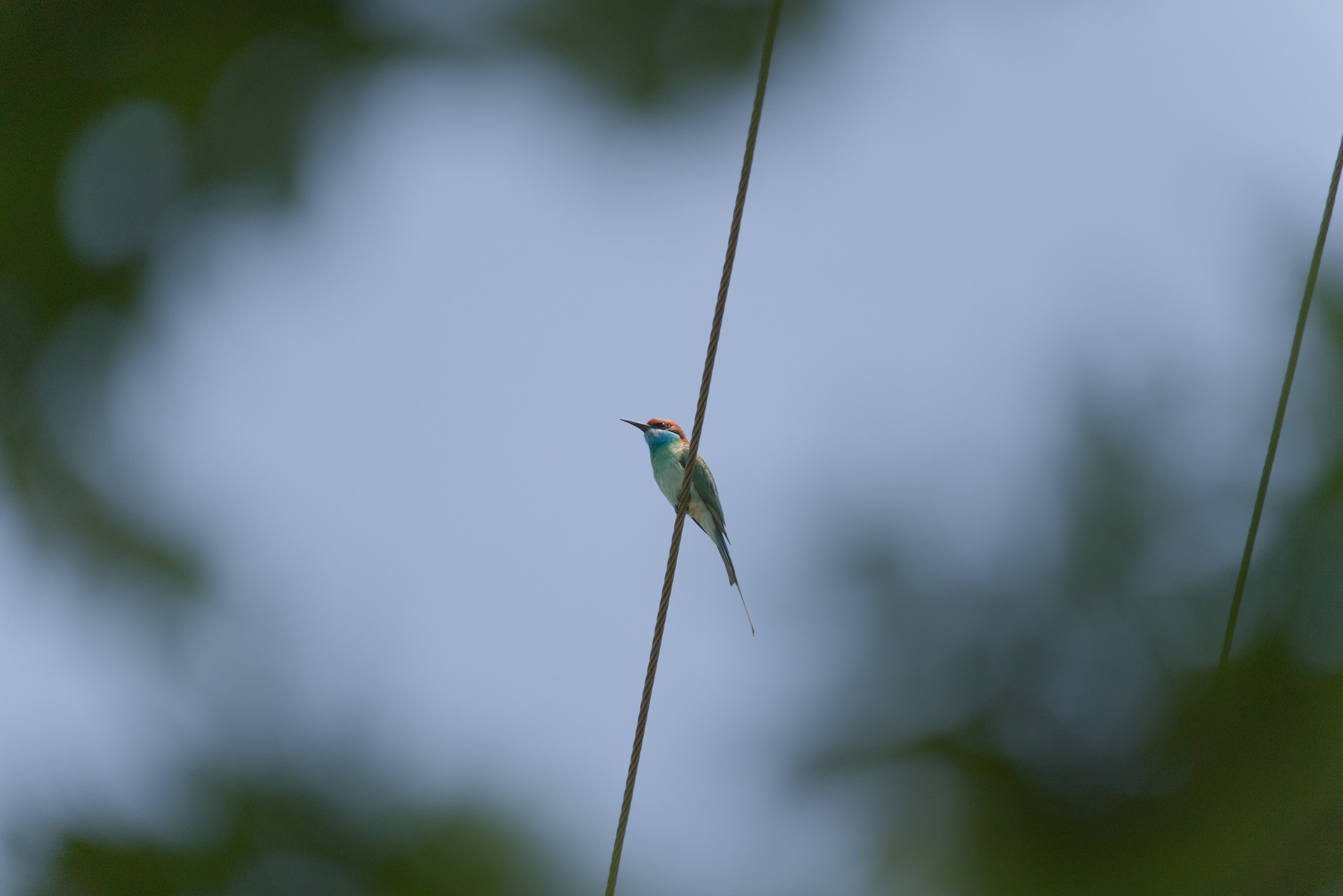
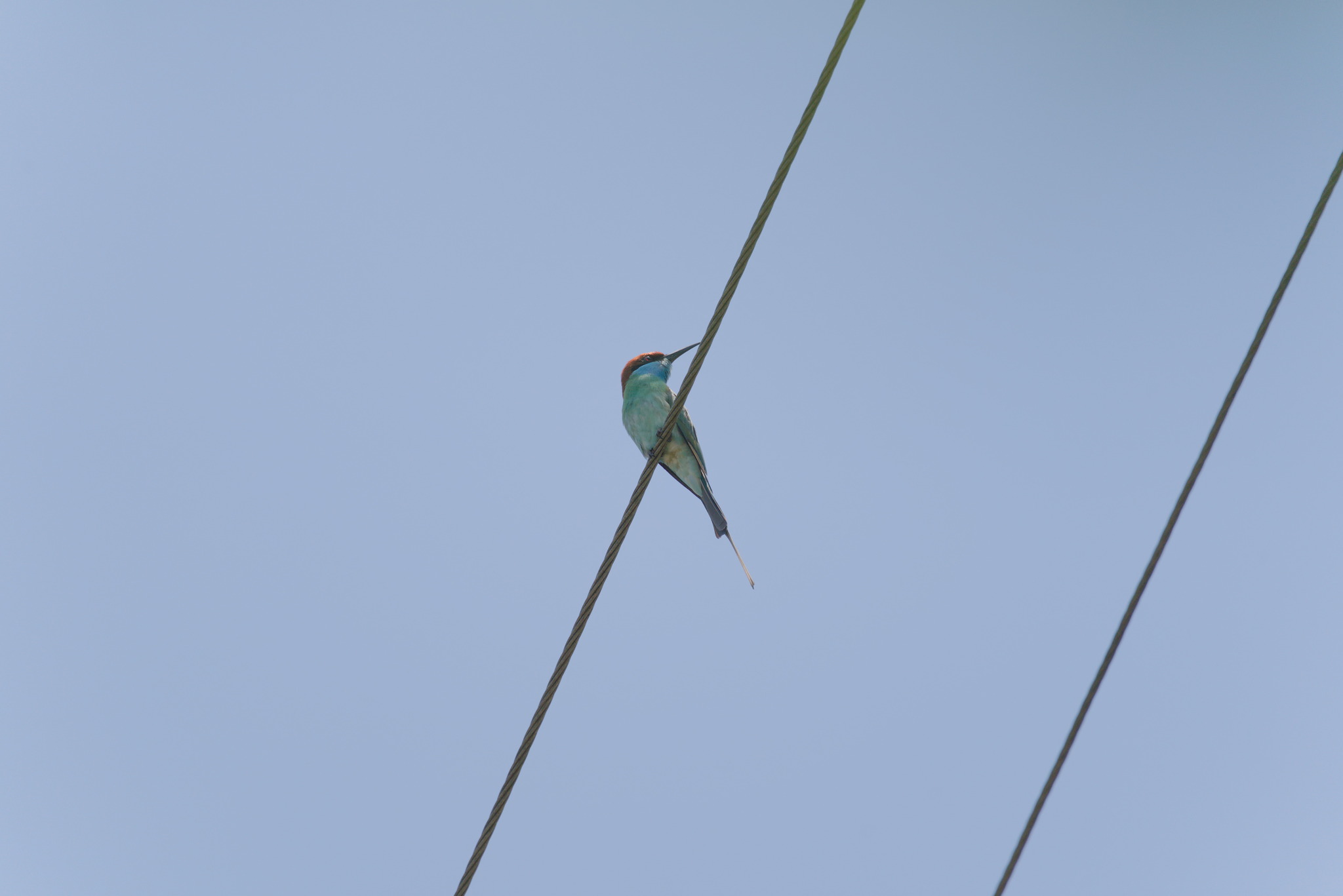
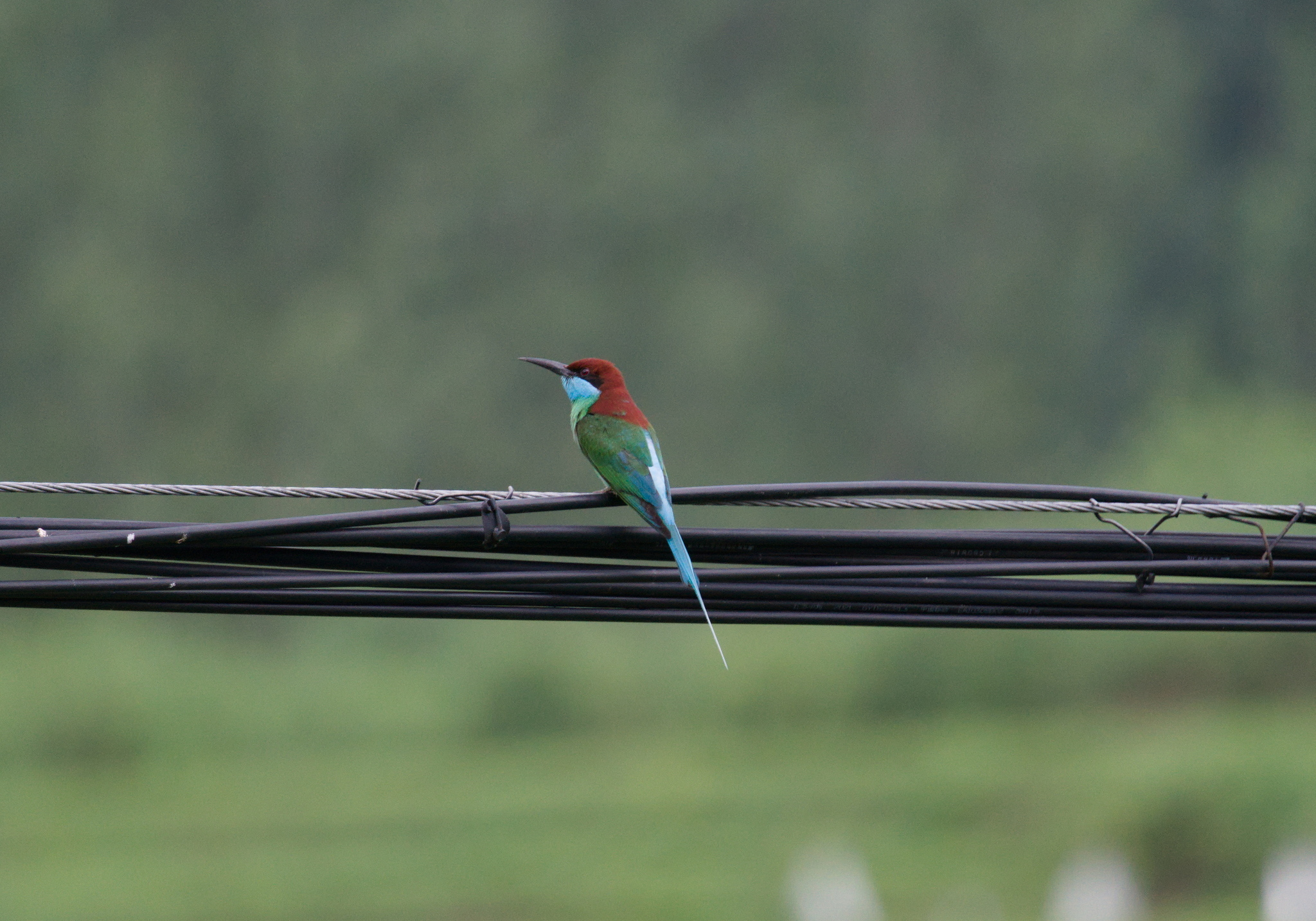
Adults are approximately 21 cm long, excluding elongated central tail feathers which add another 9 cm, and weigh 34–41 grams. Plumage features a red-brown crown and nape, dark green wings, blue tail, light green breast and belly, and a distinctive blue throat. Juveniles are mostly green with a dark green head and wings, light green breast, and lack the elongated tail feathers. Both ages have black eye stripes and eyes ranging from red to brown.
Identification
Key marks include the signature blue throat, red-brown nape, and elongated central tail feathers in adults. Juveniles are distinguished by their all-green plumage and lack of tail streamers. Flight style involves a combination of flapping and gliding, occasionally soaring on sea-breeze thermals.
Distribution & Habitat
Range extends from southeastern China to the Greater Sundas Islands, with concentrated populations in Singapore, Malaysia, southern Cambodia, and southern Thailand. Also found in Borneo and Java. Occurs at low altitudes (0–670 m) but up to 1,600 m. Habitats include farmland, suburban gardens, riversides, dunes, sandy clearings, and mangrove forests. Migrates from Sumatra to west coast Malaysia in spring and to breeding grounds in western China.
Behavior & Ecology
Diet consists mainly of flying insects like bees, wasps, and dragonflies, with feeding success highest in sunny conditions; no feeding occurs during rain. Nests are dug nearly horizontally into flat ground, unlike many relatives. Colony sizes range from 50 to 200 pairs, though some live solitarily. Breeding involves asynchronous brooding with 2–7 eggs; siblicide is common, with older chicks attacking younger ones. Vocalizations include long-distance calls, alarm calls, chirps, purrs, and trills.
Conservation
Listed as Least Concern as of June 12, 2024, due to large distribution and population stability. Primary threats include deforestation and habitat destruction from logging, which impacts avian diversity.
Source: Wikipedia · CC BY-SA 3.0
Taxonomy
- Order
- Coraciiformes
- Family
- Meropidae
- Genus
- Merops
Distribution
southern China, Thailand, and Indochina to Sumatra, Borneo, and Java
Vocalizations
Data Sources
Species description from Wikipedia, licensed under CC BY-SA 3.0.
Bird images and sounds sourced from GBIF, contributed by citizen scientists worldwide under Creative Commons licenses.
Taxonomy data from AviList 2025.