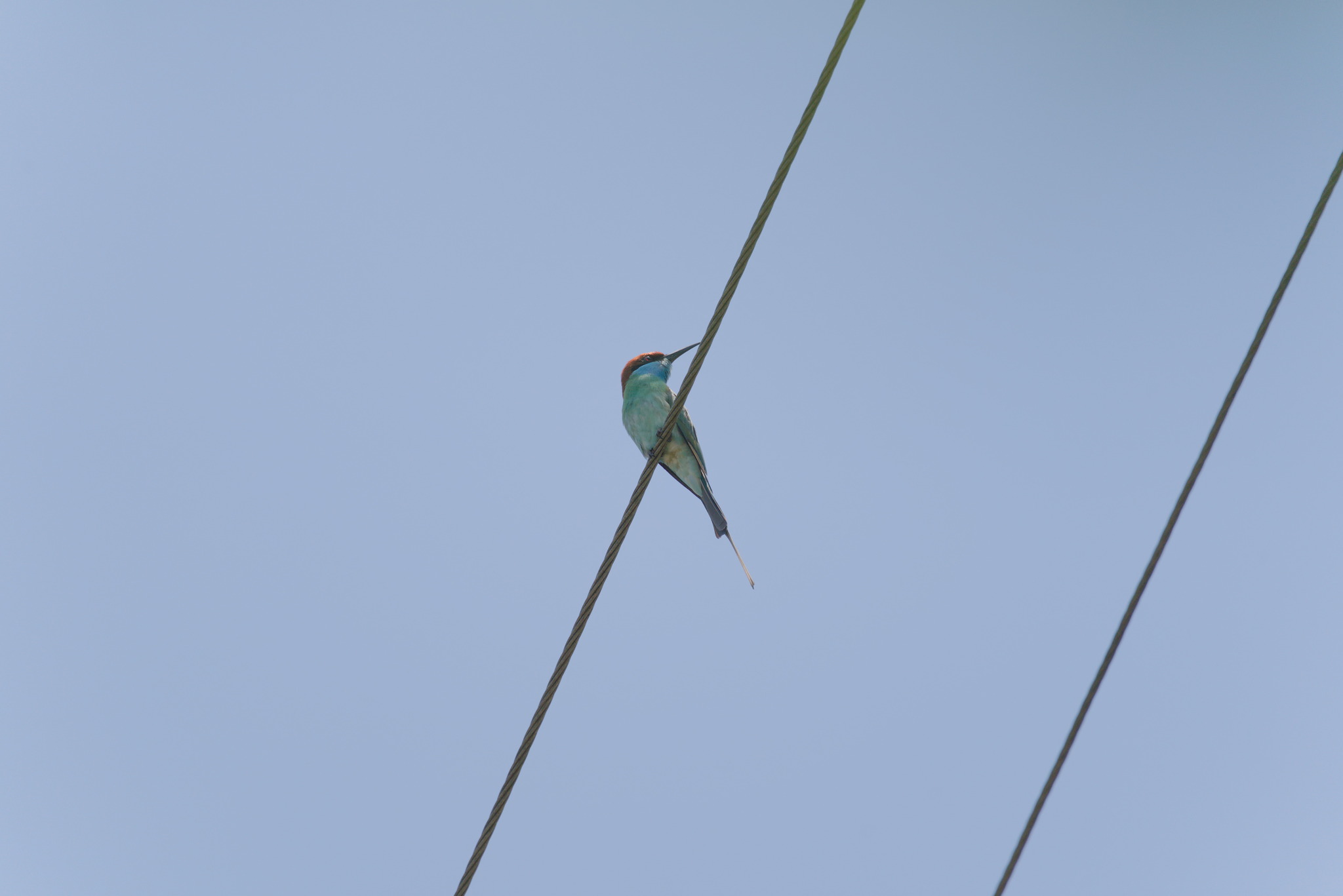
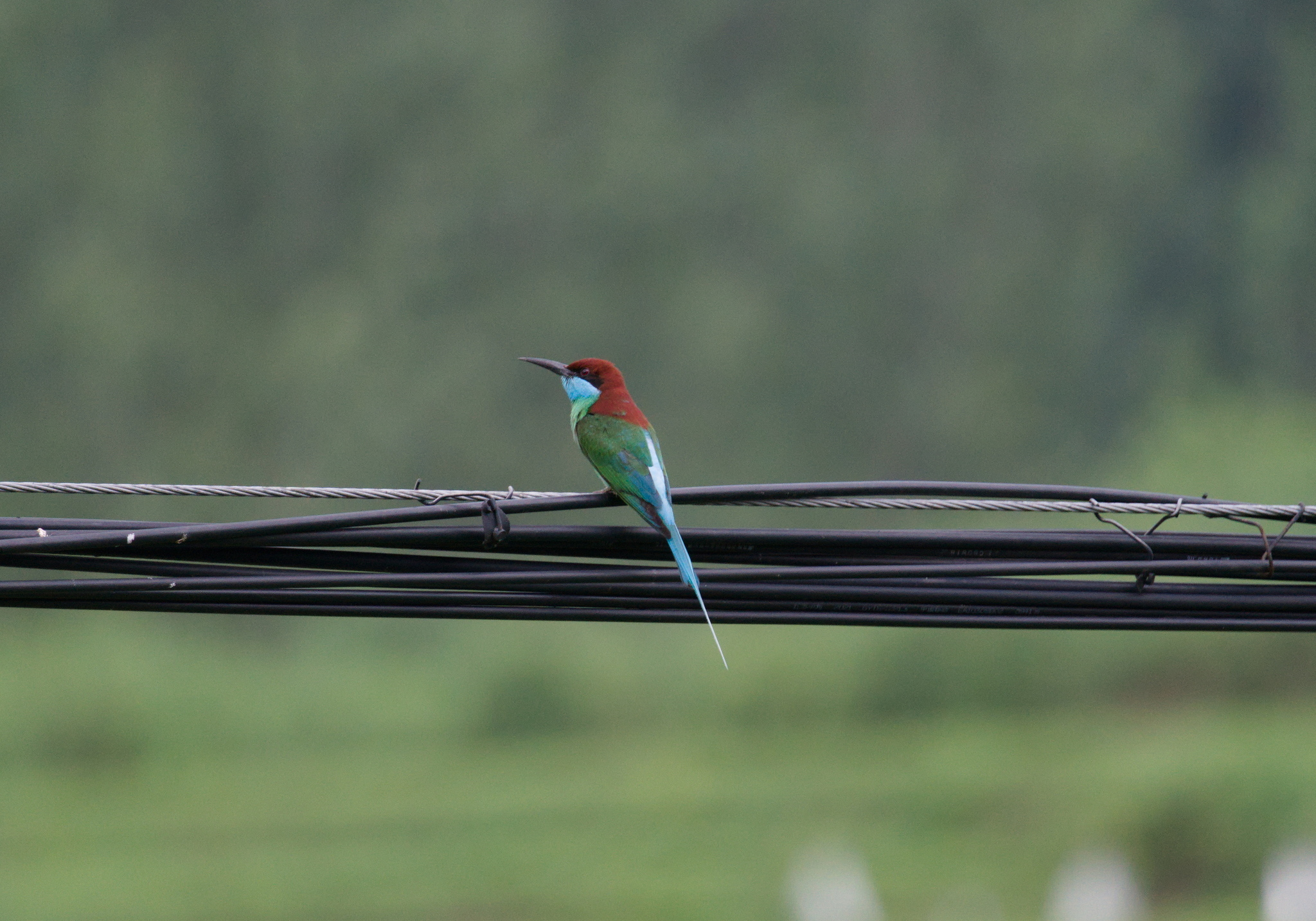
Blue-throated Bee-eater
Merops viridis
蓝喉蜂虎
Introduction
A species of bird in the bee-eater family (Meropidae), order Coraciiformes. Found throughout Southeast Asia from southeastern China to the Greater Sundas Islands. Inhabits subtropical or tropical mangrove forests, as well as open habitats including farmland, suburban gardens, riversides, dunes, and sandy clearings at elevations from 0 to 1,600 meters. Two notable traits distinguish this species: the prominent blue throat that gives the species its name, and its unique nest-building behavior of digging burrows horizontally into flat ground rather than near-vertical sand cliffs like most bee-eaters. Classified as Least Concern as of 2024 due to its large distribution and stable population.
Description
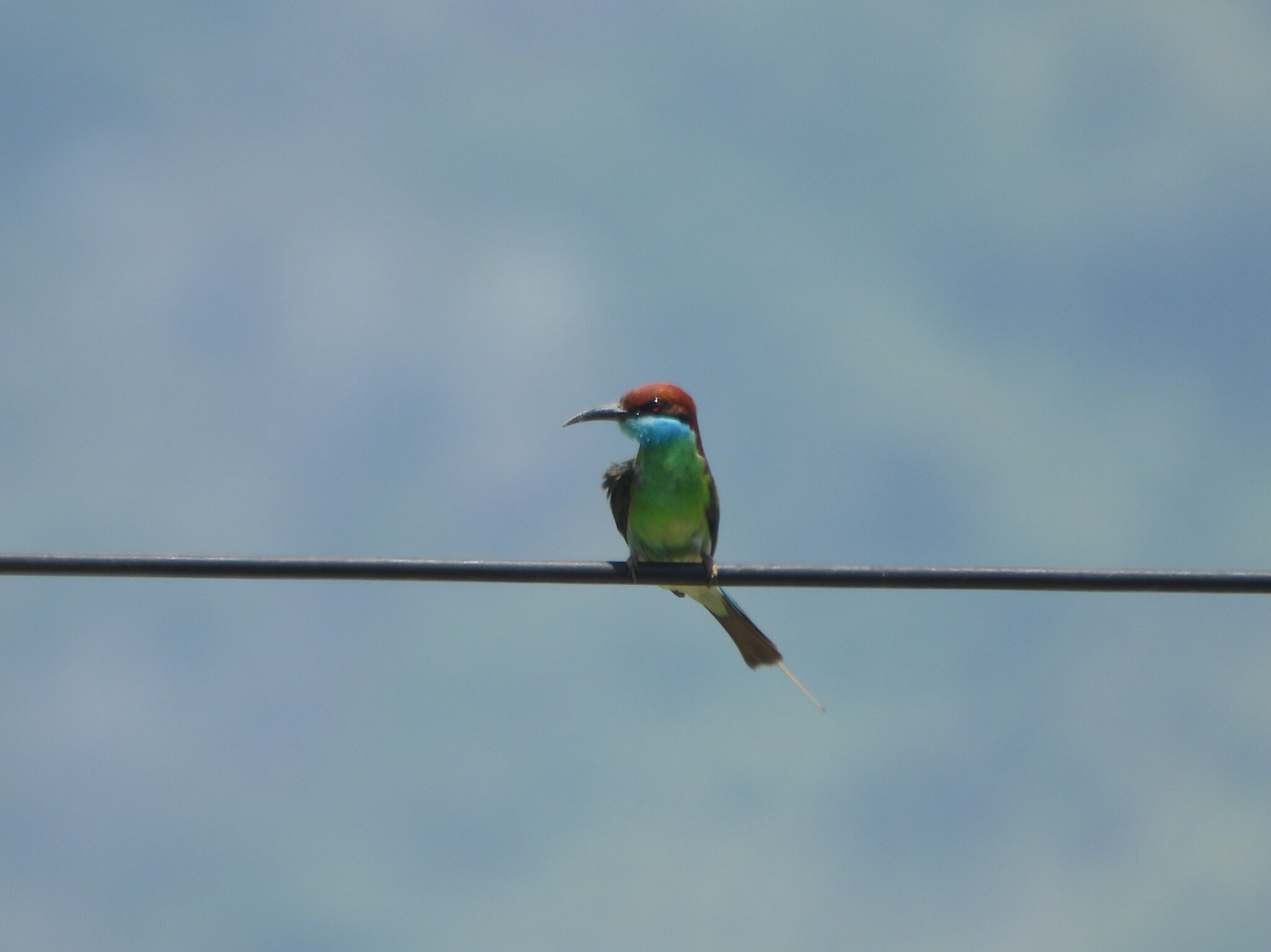
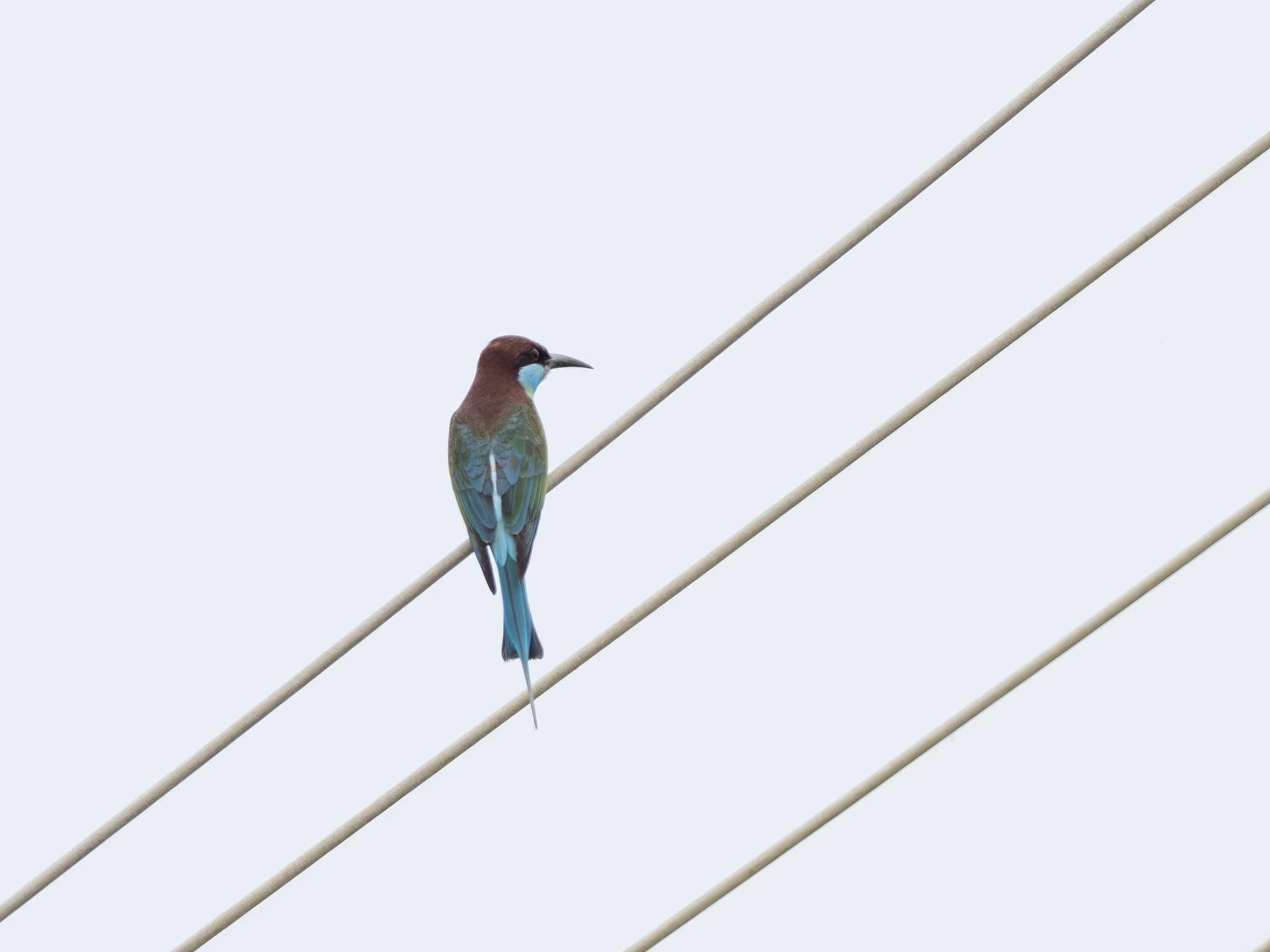
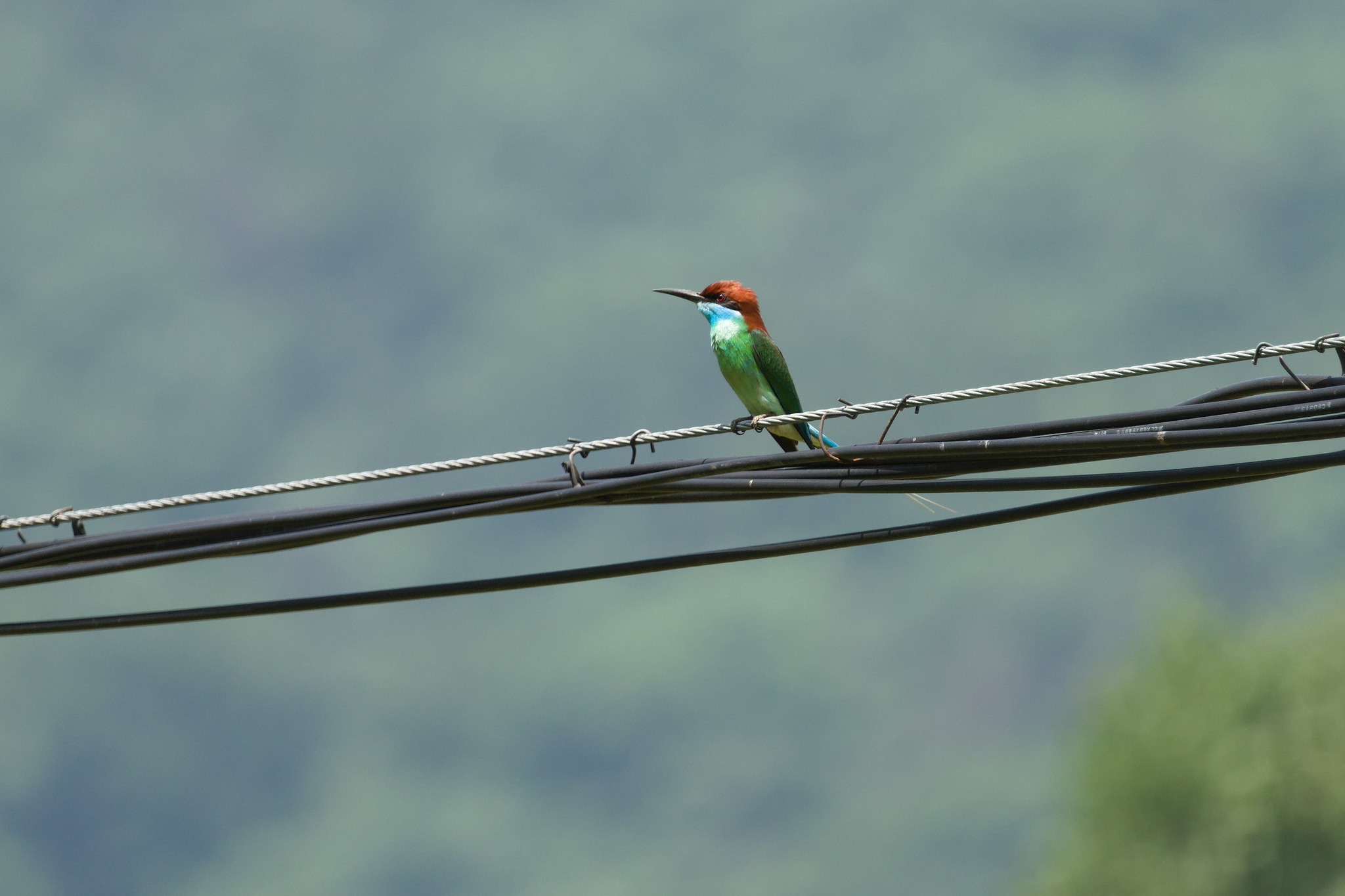
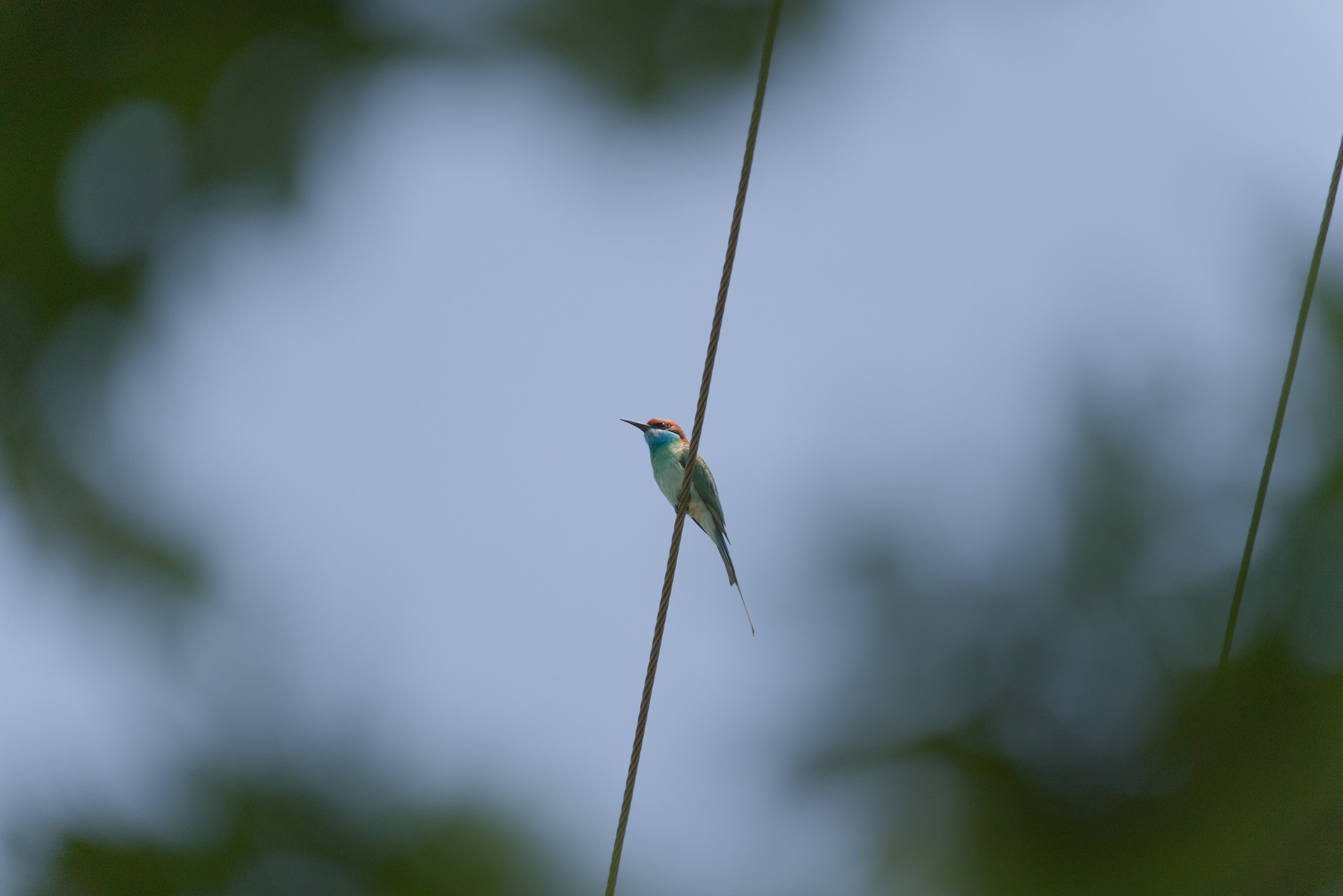
A medium-large bee-eater measuring approximately 21 cm in body length, with elongated central tail feathers adding an additional 9 cm. Adults weigh between 34 and 41 grams. The species displays spectacular plumage: a red-brown crown and nape, dark green wings, blue tail, light green breast and belly, and the characteristic blue throat. Both adults and juveniles have black eye stripes. The eyes range in color from red to brown or a combination of both. Juveniles are mostly green with a dark green head and wings and light green breast, lacking the elongated central tail feathers of adults, and develop full adult plumage as they mature.
Distribution & Habitat
Ranges from southeastern China to the Greater Sundas Islands. The most concentrated populations occur in Singapore, Malaysia, southern Cambodia, and southern Thailand, with broader dispersal in Borneo and Java. Found at low altitudes between 0 and 670 meters, though recorded up to 1,600 meters. Habitat includes various flat plain environments such as farmland, gardens, riversides, dunes, and sandy clearings. During winter, some populations move to forest canopies and saltwater channels of mangrove forests. Spring migration occurs from Sumatra across the Straits of Malacca to the west coast of Malaysia, with observed migration numbers of 2,226 bee-eaters between 2000 and 2001.
Behavior & Ecology
Vocalizations include long calls, alarm calls, chirps, low chirps, purrs, sharp coos, trills, and feeding calls. Long calls are performed during flight or from a perch by stretching and pointing the bill upward, used for long-distance communication. Diet consists primarily of flying insects including bees, wasps, and dragonflies, with highest catch success in sunny conditions; also consumes flies, beetles, and other bugs up to 42 mm. No feeding observed during rain or immediately after showers. Generation length is approximately 6.2 years. Breeding involves asynchronous brooding, with parents beginning incubation after the first egg is laid, causing chicks to hatch over a ten-day period. Lays two to seven eggs with zero to three chicks typically raised to fledging. Siblicide occurs, with younger chicks often dying due to attacks from older siblings using a sharp hook on the upper bill. Colony sizes range from 50 to 200 pairs, though some individuals live solitarily in open country.
Conservation
IUCN assessment: Least Concern, last evaluated on 12 June 2024. Population is considered stable throughout its large range. Primary threat is deforestation, which destroys habitat and decreases bird diversity. Logging and rainforest destruction impact both individual species and overall avian diversity in affected regions. However, bird diversity has been observed to recover within thirty years post-logging, with secondary forests eventually showing higher species richness than recently logged areas.
Culture
An alternative common name is the chestnut-headed bee-eater.
Source: Wikipedia · CC BY-SA 3.0
Taxonomy
- Order
- Coraciiformes
- Family
- Meropidae
- Genus
- Merops
- eBird Code
- btbeat2
Distribution
southern China, Thailand, and Indochina to Sumatra, Borneo, and Java
Vocalizations
Data Sources
Species description from Wikipedia, licensed under CC BY-SA 3.0.
Bird images and sounds sourced from GBIF, contributed by citizen scientists worldwide under Creative Commons licenses.
Taxonomy data from AviList 2025.