Anseriformes / Anatidae / Mergus
Scaly-sided Merganser
Mergus squamatus · 中华秋沙鸭
Introduction
An endangered typical merganser (genus Mergus) breeding in Manchuria and extreme Southeast Siberia, wintering in the south. It favors mid-sized rivers in primary mixed forests up to 1,000 meters ASL. Distinctive traits include nesting in tree cavities and a diet of aquatic arthropods and fish caught via diving.
Description
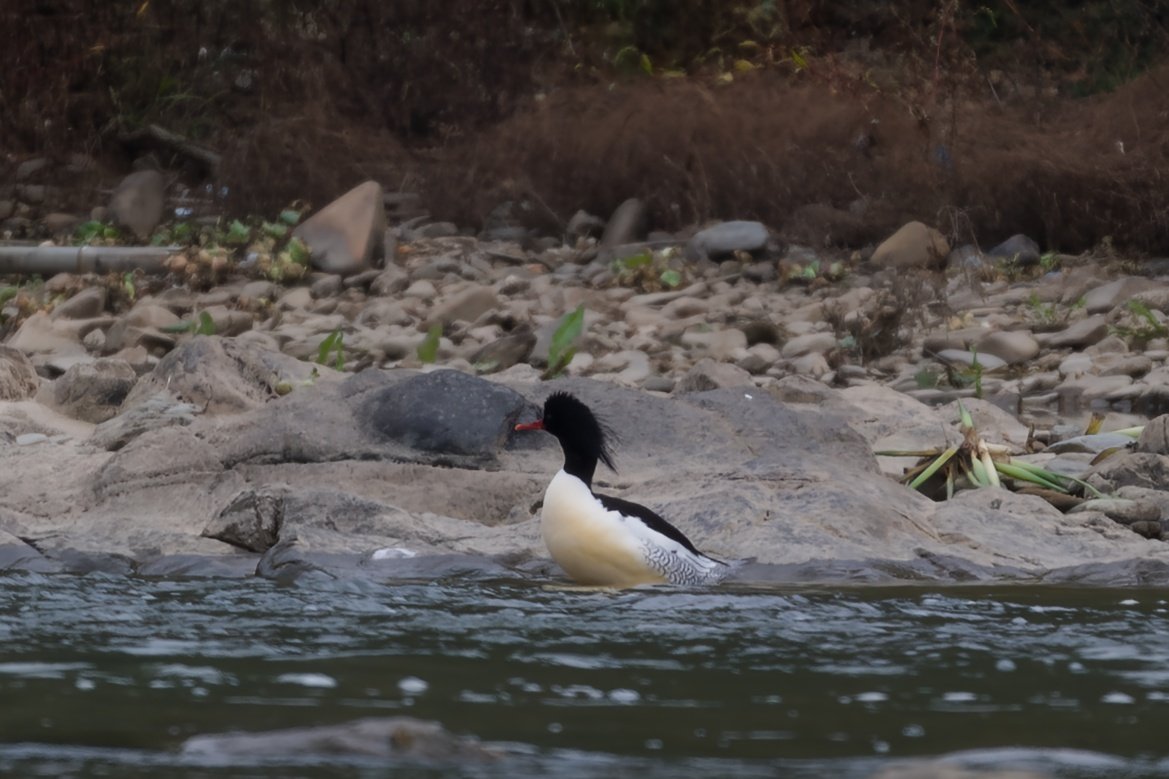
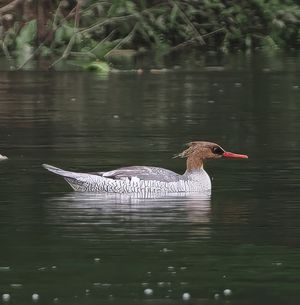
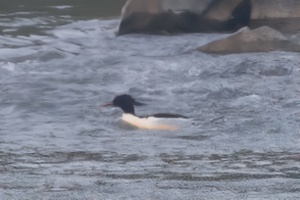
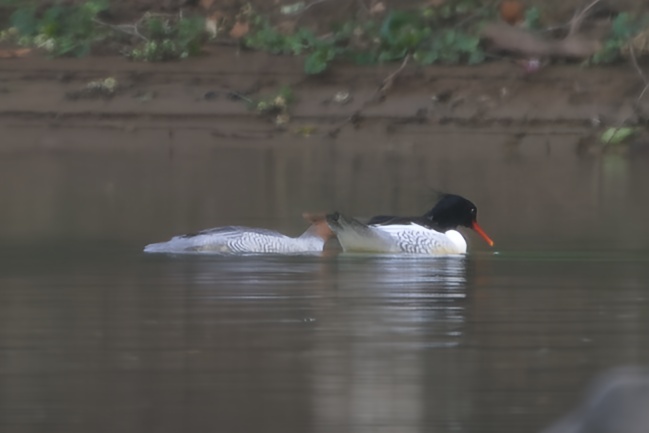
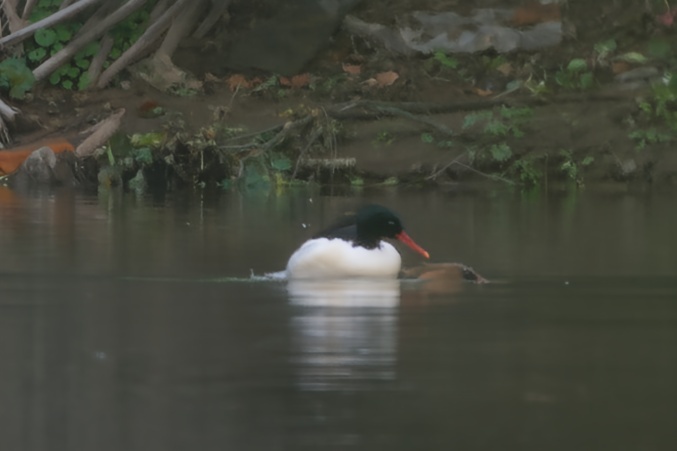
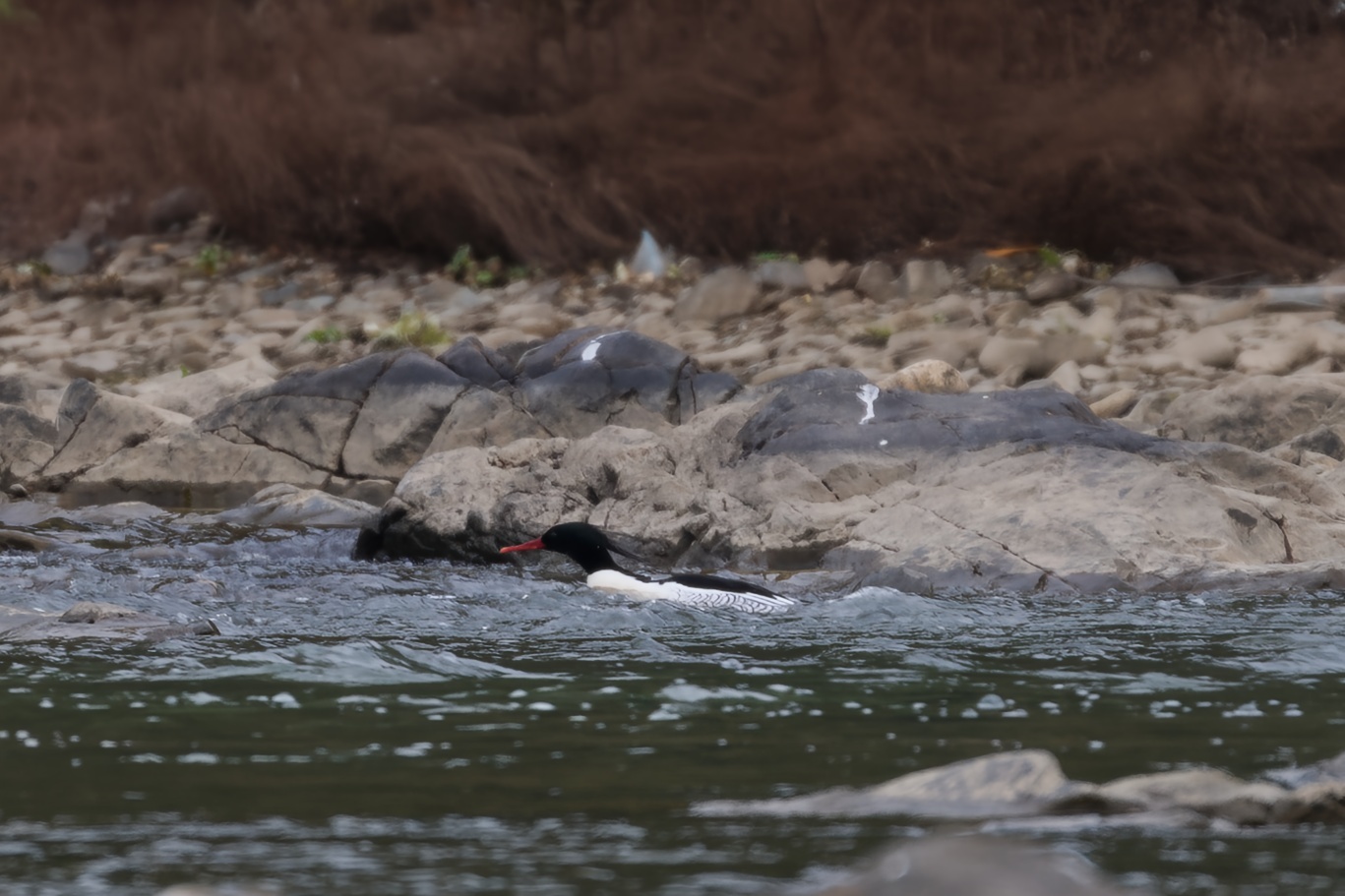
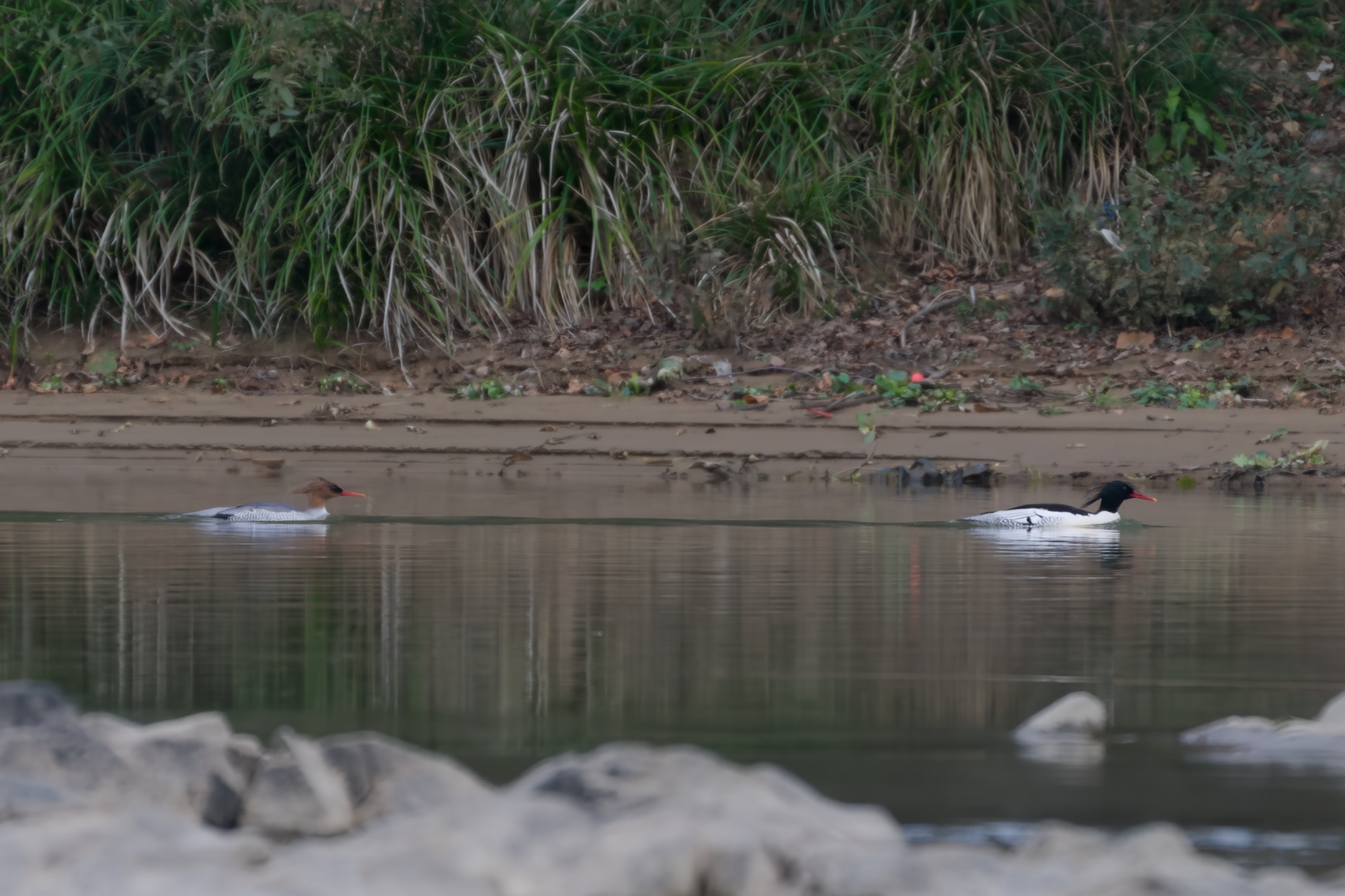
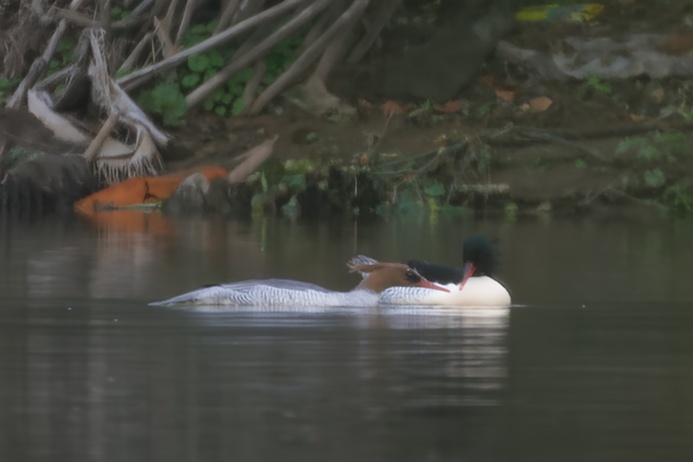
This sea duck has a thin red bill and a scaled dark pattern on the flanks and rump. Both sexes have a crest of wispy elongated feathers, reaching almost to the shoulders in adult males and being fairly short in females and immatures. The adult male has a black head and neck, white breast and underparts, and blackish mantle and wings, except for the white innerwings. The scaling is black, while the tail is medium grey. The female has a buffish head and otherwise replaces the male's black with grey colour. The legs are orange-red and the irides dark brown in both sexes.
Identification
Key marks include a thin red bill, scaled dark pattern on flanks and rump, and a wispy crest. Adult males show a black head/neck and white underparts; females have a buffish head and grey body replacing the male's black. Legs are orange-red.
Distribution & Habitat
Breeds in rivers in primary forest in the southeastern Russian Far East (85% of population), Changbai Mountains (China and DPRK), and Lesser Xingan Mtns (China). Migratory, wintering in central and southern China, with small numbers in Japan, South Korea, Taiwan, northern Vietnam, Myanmar, and Thailand. Arrives on breeding grounds in March and leaves in mid-November.
Behavior & Ecology
Favors mid-sized meandering rivers in mountains. Moves upriver when startled or foraging to avoid alerting prey downstream. Dives repeatedly for quarter-to half-minute intervals to catch aquatic arthropods, frogs, and fish from riverbed gravel using a serrated beak. Diet includes stonefly and caddisfly larvae, beetles, crustaceans, dojo loach, and lenok. Nests in tree cavities (e.g., daimyo oak, Ussuri poplar) or artificial boxes. Not very social during breeding; gathers in small groups in autumn/winter, rarely exceeding a dozen individuals.
Conservation
Classified as Endangered (EN C2a(ii)) by the IUCN. Fewer than 5,000 adult and first/second-year birds remain. Threats include loss of primary forests, illegal hunting, entanglement in ghost fishing nets, river pollution, sand mining, and habitat fragmentation. Conservation measures include providing artificial nest boxes, fishing regulation, protection of critical habitat, controlling recreation, and annual population surveys.
Culture
None
Source: Wikipedia · CC BY-SA 3.0
Taxonomy
- Order
- Anseriformes
- Family
- Anatidae
- Genus
- Mergus
Distribution
breeds eastern Siberia, Korean Peninsula, and northeastern China; winters to southern China
Data Sources
Species description from Wikipedia, licensed under CC BY-SA 3.0.
Bird images and sounds sourced from GBIF, contributed by citizen scientists worldwide under Creative Commons licenses.
Taxonomy data from AviList 2025.