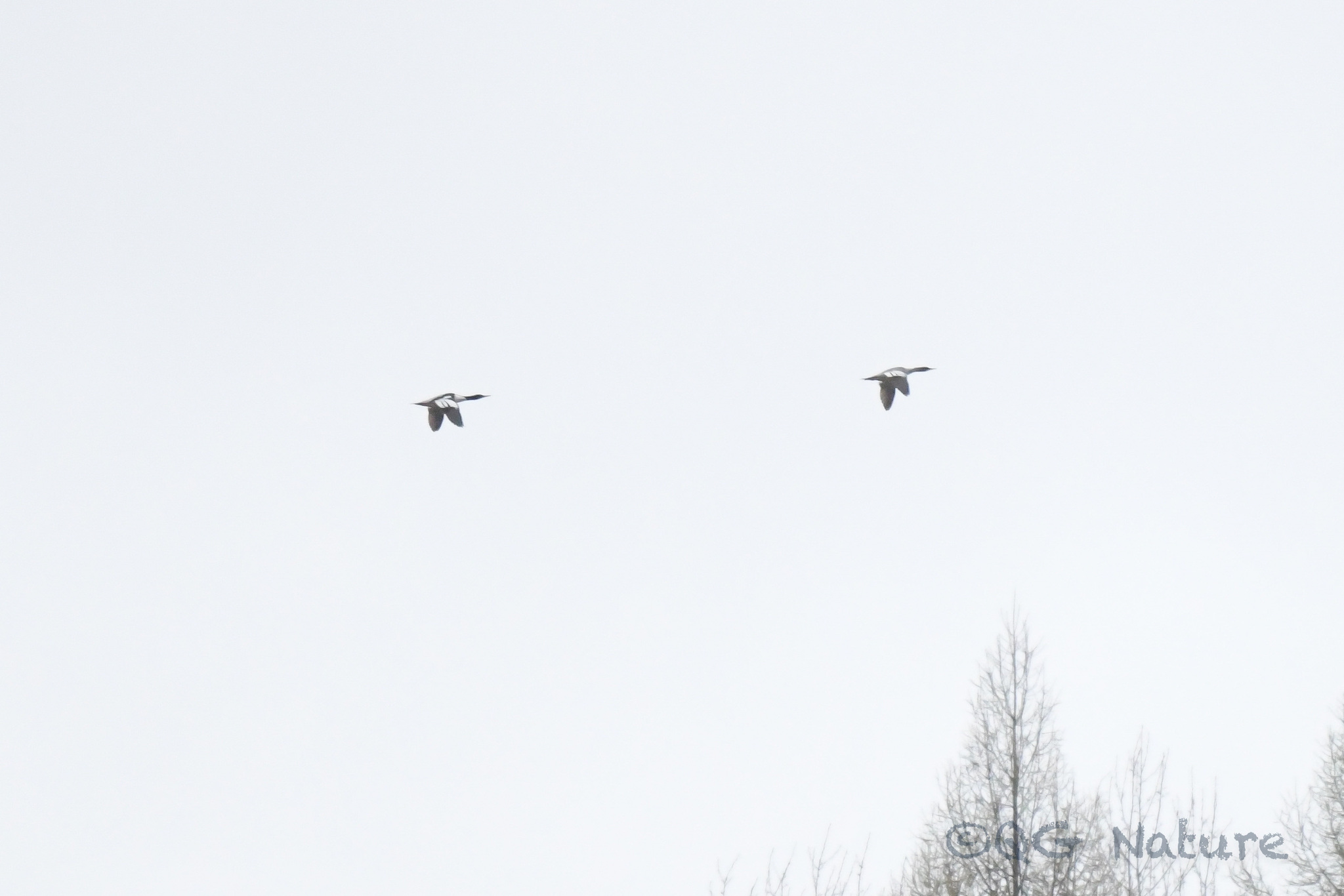
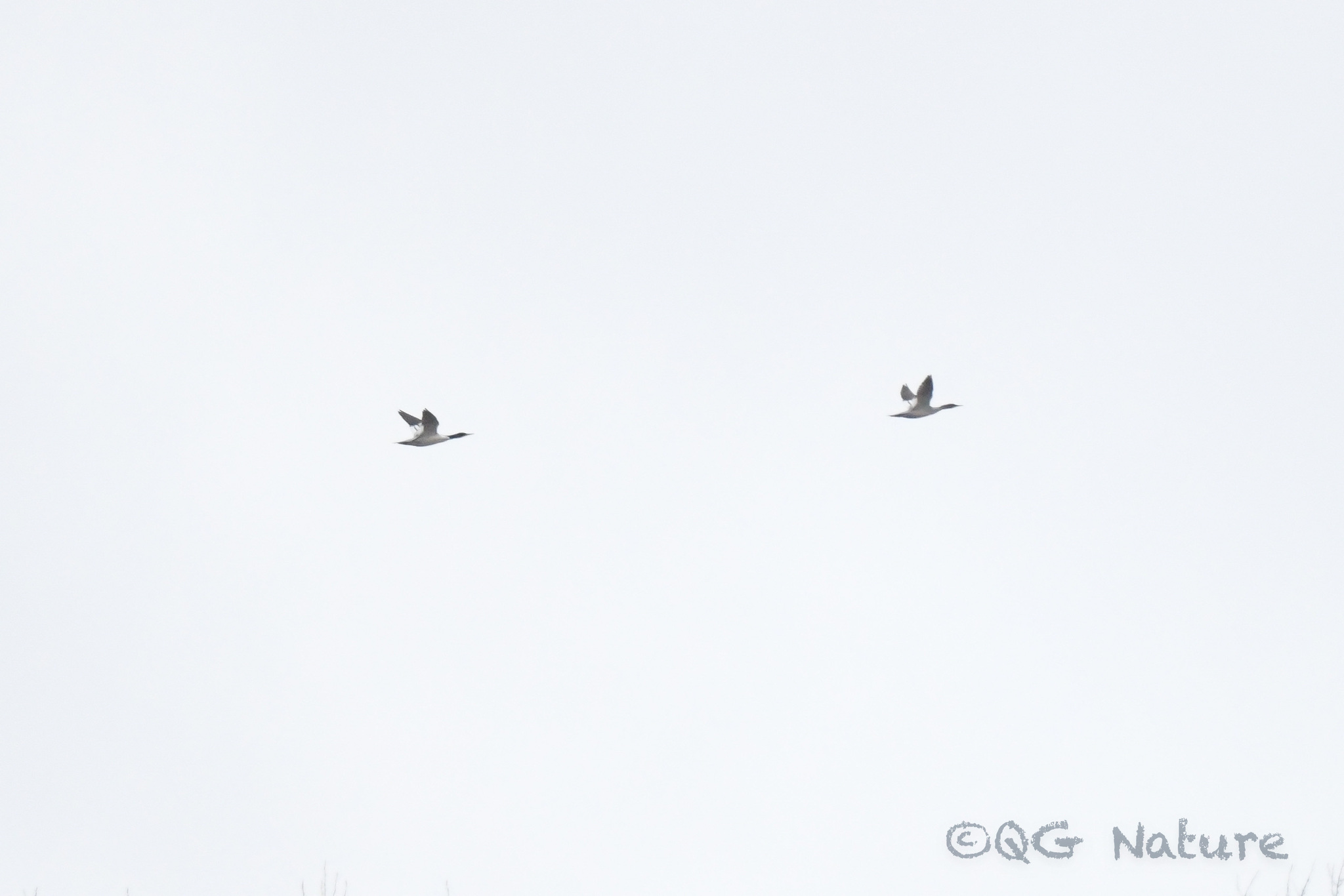
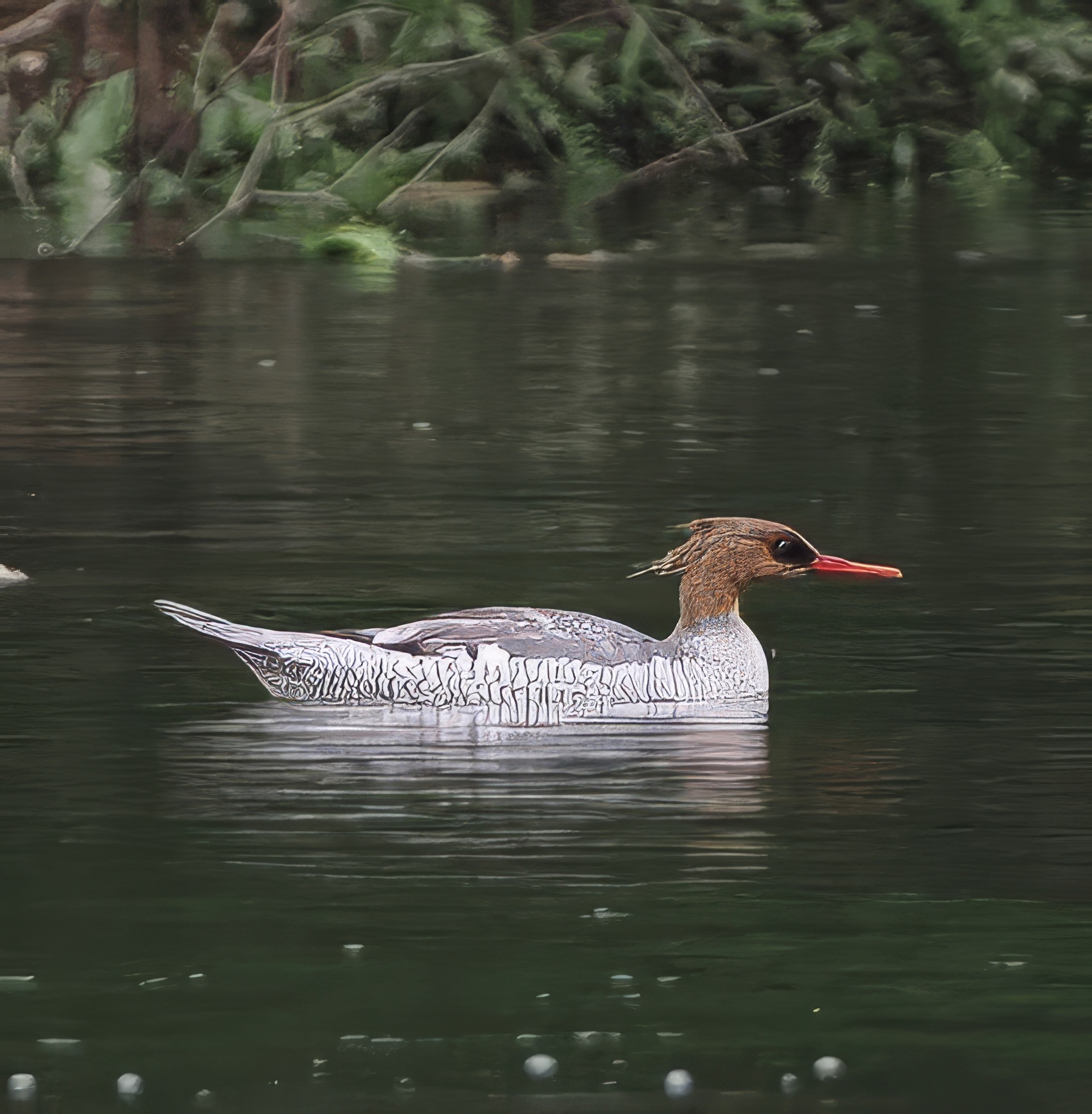


Scaly-sided Merganser
Mergus squamatus
中华秋沙鸭
Introduction
The Scaly-sided Merganser (Mergus squamatus) is an endangered sea duck endemic to East Asia. Its breeding range encompasses the river systems of the Russian Far East (Primorye region) and northeastern China (Changbai Mountains). Wintering populations occur in central and southern China, primarily along Yangtze River tributaries. This species inhabits pristine, fast-flowing rivers with clear water and abundant fish populations, typically surrounded by primary forest. It is typically observed singly or in small groups of up to twelve individuals. Males exhibit glossy black heads with bold white-black scaling on the body. Females have warm buff heads with grey upperparts. The species has declined significantly since the 1960s, primarily due to habitat degradation, dam construction, and pollution affecting river ecosystems. It is classified as Endangered by the IUCN.
Description
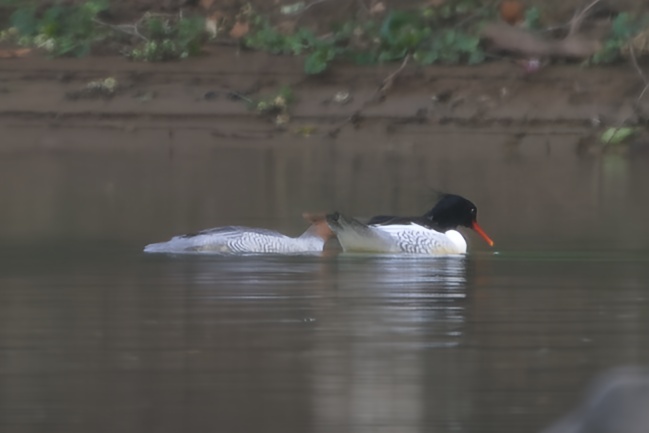
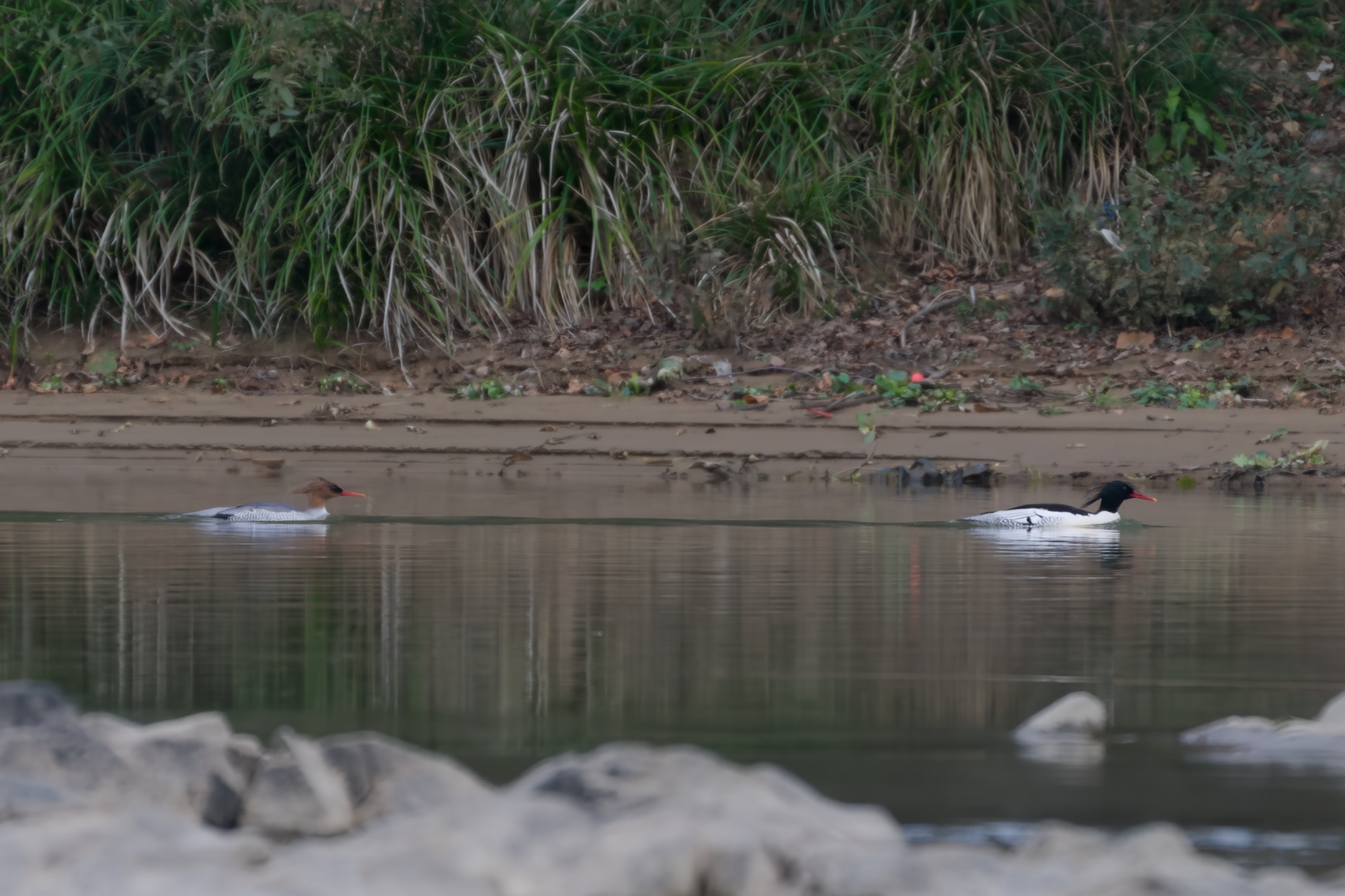
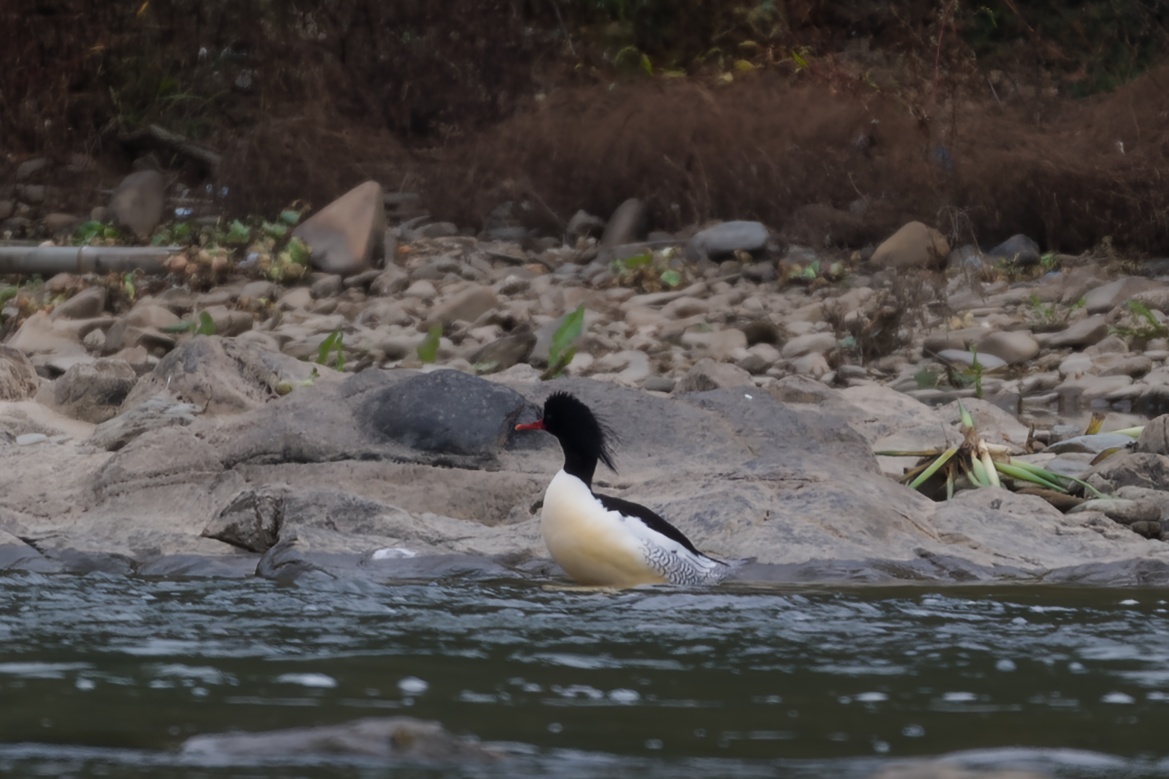
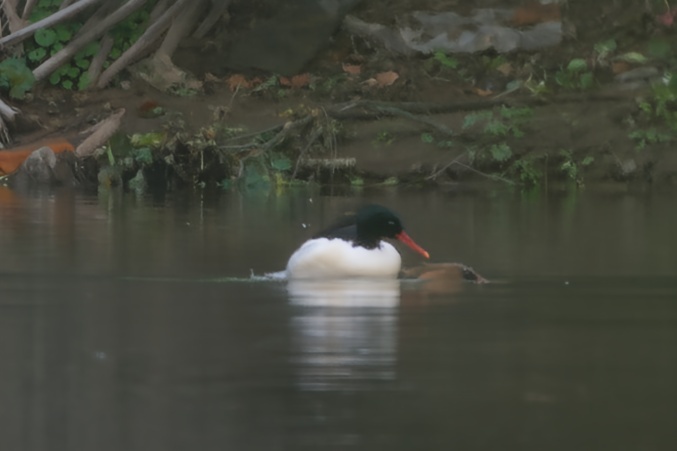
This striking sea duck has a thin, red bill equipped with serrated edges for gripping slippery prey. Both sexes display wispy elongated crest feathers—almost reaching the shoulders in adult males but noticeably shorter in females and immatures. Adult males present a dramatic black head and neck, contrasting with white breast and underparts, while the mantle and wings are blackish with white innerwings. Their most distinctive feature is the black scaled pattern on the flanks and rump, giving the species its name. The tail is medium grey. Females are more subdued, with a buffish head where the male shows black, and grey replacing the male's black colouring elsewhere. Both sexes share orange-red legs and dark brown irides. The overall impression is of an elegant, slender diving duck perfectly adapted to fast-flowing river habitats.
Identification
The scaly-sided merganser is distinguished from other merganser species by its unique scaled pattern on the flanks—a feature no other merganser possesses. The thin red bill separates it from the common merganser, which has a darker, heavier bill. Males are unmistakable with their black heads and bold black-and-white patterning. Females can be confused with female common mergansers but are distinguished by their buffish head (rather than brown), smaller size, shorter crest, and the faint scaling visible on the flanks. They favor faster, narrower mountain rivers than the common merganser and are generally more secretive. Their habit of moving upriver when disturbed, rather than flying away, can help with identification when observing them from riverbanks.
Distribution & Habitat
This species has a highly restricted and fragmented range. Approximately 85% of the global population breeds in the Russian Far East, particularly in Primorye and South Khabarovsk regions, with smaller populations in the Changbai Mountains straddling the China-North Korea border and isolated locations in the Lesser Xingan Mountains of northeastern China. It is migratory, arriving on breeding grounds in March and departing by mid-November. Wintering occurs primarily in central and southern China, particularly Yangtze River tributaries, with smaller numbers in South Korea, Japan, Taiwan, northern Vietnam, Myanmar, and Thailand. The species favors mid-sized, meandering rivers through mixed mountain forest up to 1,000 meters elevation.
Behavior & Ecology
Foraging activity concentrates during daylight hours, with a midday rest period for preening and socializing at riverbanks. The diet is opportunistic but specialized, consisting mainly of aquatic arthropods, frogs, and small to medium-sized fish. Stonefly and giant caddisfly larvae form a significant portion when available, along with dojo loach and lenok fish. Feeding involves diving repeatedly for 25-30 seconds with only brief pauses, or simply submerging the head in shallow water. Birds tend to move upstream while foraging, likely because stirred sediments alert and hide prey downstream. During breeding, they are solitary and territorial; small groups form in autumn and winter, though gatherings exceeding a dozen are rare. Nests are constructed in tree cavities, preferably in daimyo oak, Chozenia, linden, and Ussuri poplar. They readily use artificial nest boxes in degraded areas. They are sympatric with Mandarin ducks, potentially competing for nesting holes.
Conservation
Classified as Endangered under IUCN criteria EN C2a(ii), fewer than 5,000 individuals remain across all age classes. Populations crashed during the 1960s-70s due to extensive primary forest loss along major Russian rivers, though numbers appear to have stabilized in Russia since the 2000s. Current threats include illegal hunting, entanglement in ghost fishing nets, river pollution, ongoing habitat destruction, sand mining, fishing activities, riparian vegetation destruction, and habitat fragmentation. Conservation measures focus on providing artificial nest boxes, informing local communities, regulating fishing, protecting critical habitats, controlling recreation on breeding rivers, managing duck farming in wintering areas, protecting hydrology, and conducting annual population surveys. The species serves as an ambassador for freshwater ecosystem conservation throughout its limited range.
Culture
No specific cultural significance or folklore is documented for this species in the available sources.
Source: Wikipedia · CC BY-SA 3.0
Taxonomy
- Order
- Anseriformes
- Family
- Anatidae
- Genus
- Mergus
- eBird Code
- scsmer1
Distribution
breeds eastern Siberia, Korean Peninsula, and northeastern China; winters to southern China
Data Sources
Species description from Wikipedia, licensed under CC BY-SA 3.0.
Bird images and sounds sourced from GBIF, contributed by citizen scientists worldwide under Creative Commons licenses.
Taxonomy data from AviList 2025.