Anseriformes / Anatidae / Mergus
Red-breasted Merganser
Mergus serrator · 红胸秋沙鸭
Introduction
A duck species native to much of the temperate to subarctic Northern Hemisphere. It breeds on lakes and rivers and migrates to mostly coastal wintering areas, making it the most frequent member of its genus to regularly inhabit saltwater. Individuals feed by diving to pursue aquatic animals underwater using serrated bills. The worldwide population is stable.
Description
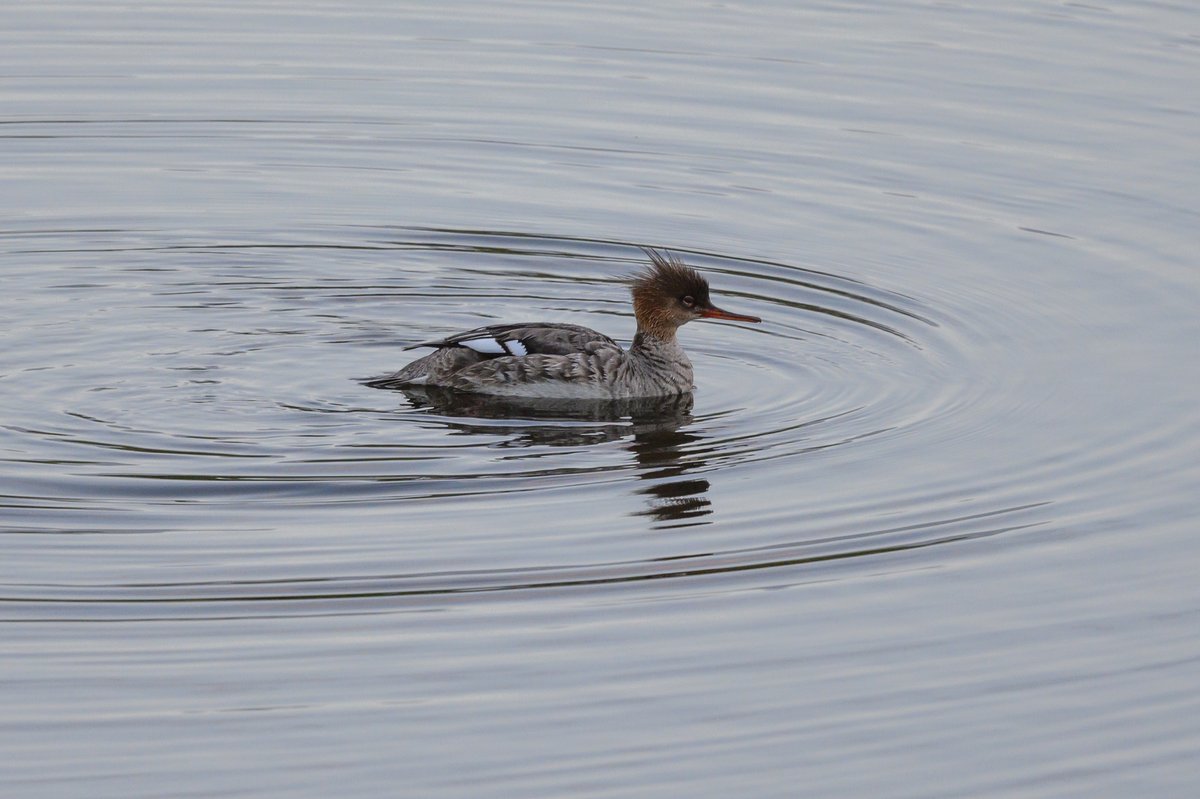
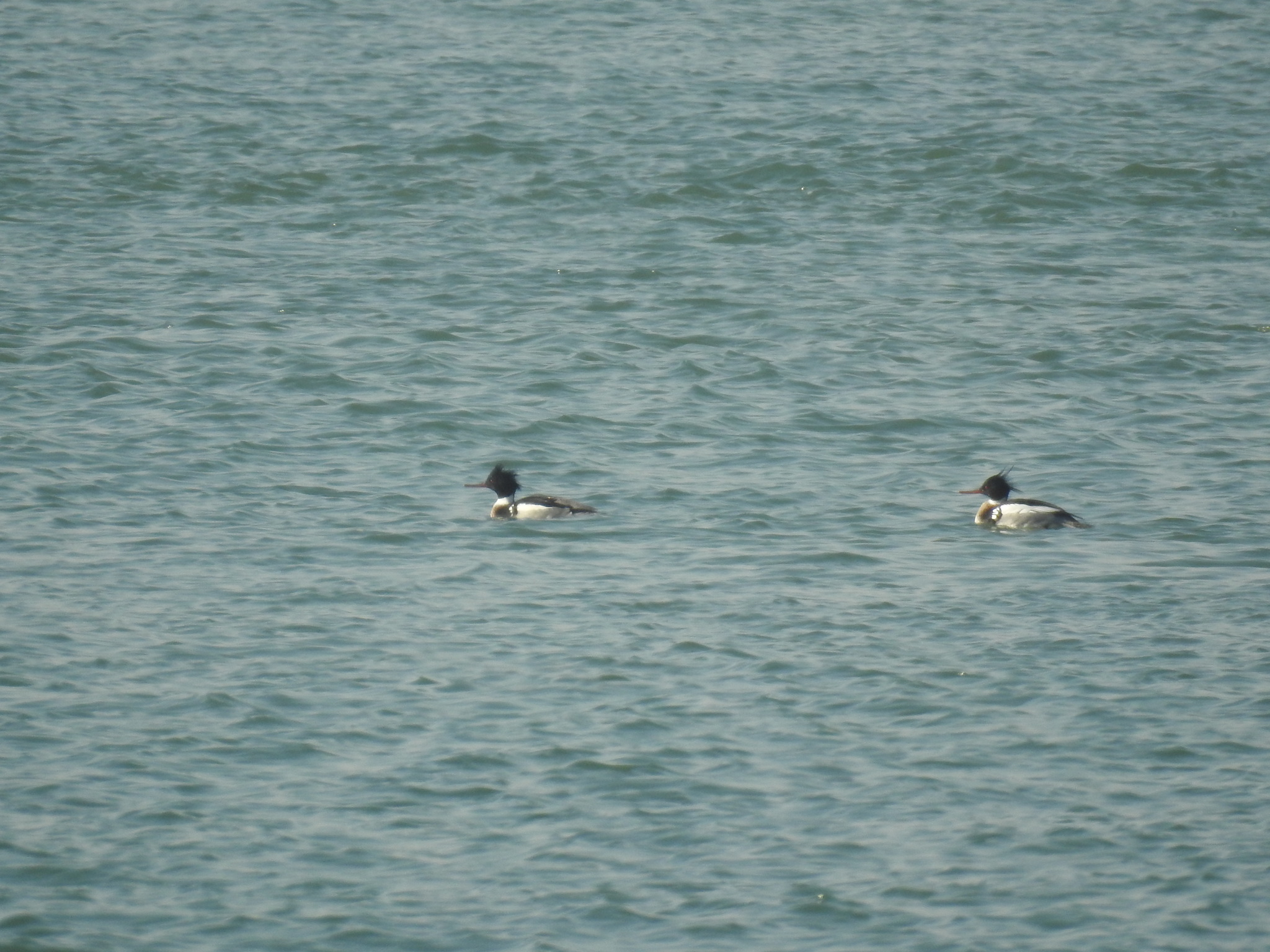
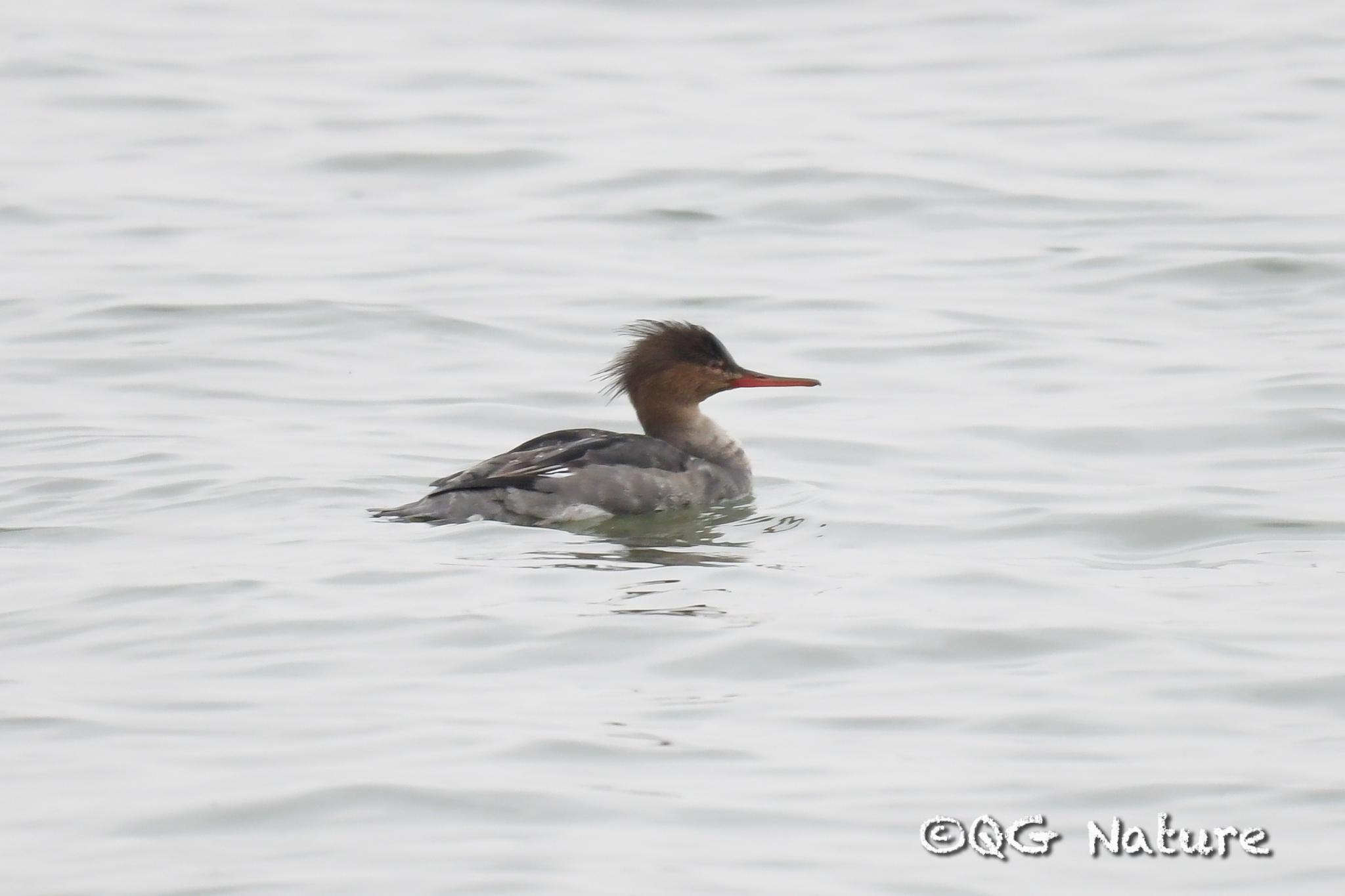
Adults are 51–64 cm (20–25 in) long with a wingspan of 66–74 cm (26–29 in). Males weigh 950–1,350 g (34–48 oz), while females weigh 800–1,100 g (28–39 oz). Both sexes have a spiky crest and a long, thin red bill with serrated edges. Breeding males display a dark head with a green sheen, white neck, rusty breast, black back, and white underparts. Adult females have a rusty head and greyish-brown body. Juveniles resemble females but possess a shorter crest and marginally smaller white wing patches.
Identification
Breeding male plumage is distinctive, but females, immatures, and non-breeding males are difficult to distinguish from the similar common merganser. Female common mergansers show more contrast between the darker head and lighter breast and have a light chin patch absent in this species. In flight, the female produces a harsh 'gruk'. During courtship, the female gives a rasping 'prrak prrak' and the male emits a catlike 'meow'. The species is largely silent at other times.
Distribution & Habitat
Breeds in freshwater lakes and rivers across northern North America, Greenland, Europe, and the Palearctic. Mostly migratory, with northern breeders wintering in coastal waters further south. Populations in parts of northwestern Europe with oceanic climates (Iceland, Ireland, Britain, Norway, and Baltic Sea islands) are largely resident or disperse only short distances. No subspecies are recognized.
Behavior & Ecology
Feeds mainly on small fish, also consuming aquatic insects, worms, crustaceans, and amphibians by diving and swimming underwater. Courtship displays involve males stretching, bending, and contracting their necks in synchrony while swimming, starting in mid-November and continuing until June or rarely July. Females select mates from nearby and may chase or attack males. Outside the breeding season, it forms flocks that are smaller during spring migration than in autumn and winter. Nests in sheltered ground locations near water, often close to estuaries or sea coasts.
Conservation
Assessed as Least Concern by the IUCN, though populations in some areas may be declining. Threats include habitat loss through wetland destruction, exposure to toxins such as pesticides and lead, and bycatch in commercial fishing operations. Illegal persecution by fisheries interests is significant in Britain, particularly Scotland. The species is covered by the Agreement on the Conservation of African-Eurasian Migratory Waterbirds (AEWA) and is considered a game bird under the Migratory Bird Treaty between the United States and Canada.
Source: Wikipedia · CC BY-SA 3.0
Taxonomy
- Order
- Anseriformes
- Family
- Anatidae
- Genus
- Mergus
Distribution
breeds southern Greenland, Iceland, northern British Isles, and Scandinavia to Sakhalin and Kamchatka peninsulas, and Kuril and Commander islands (southeastern Russia), in south through northern Kazakhstan and northeastern China; western Alaska mainland through mainland Canada from Arctic to northern Great Lakes and eastward to Nova Scotia; winters to coasts of southern Europe, Black and Caspian seas; Japan, Korean Peninsula, and eastern China; to west-central Mexico, Gulf Coast, and Florida
Vocalizations
Data Sources
Species description from Wikipedia, licensed under CC BY-SA 3.0.
Bird images and sounds sourced from GBIF, contributed by citizen scientists worldwide under Creative Commons licenses.
Taxonomy data from AviList 2025.