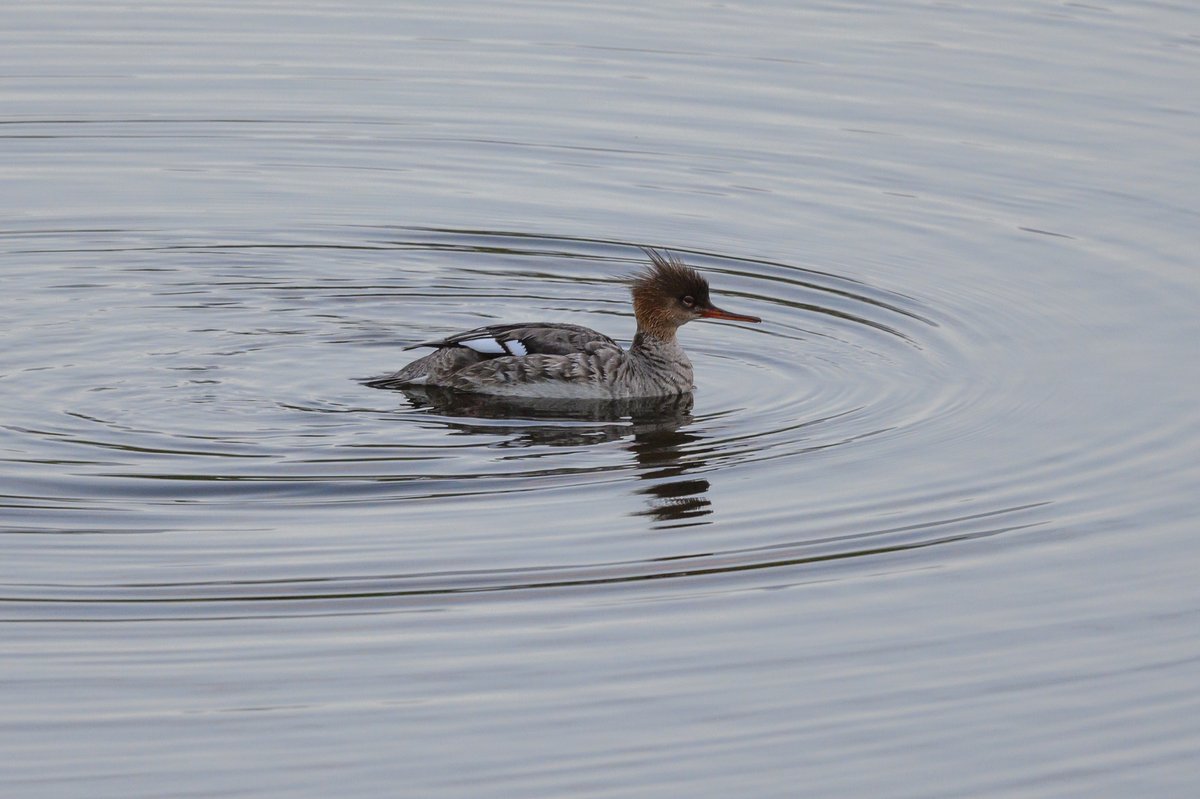
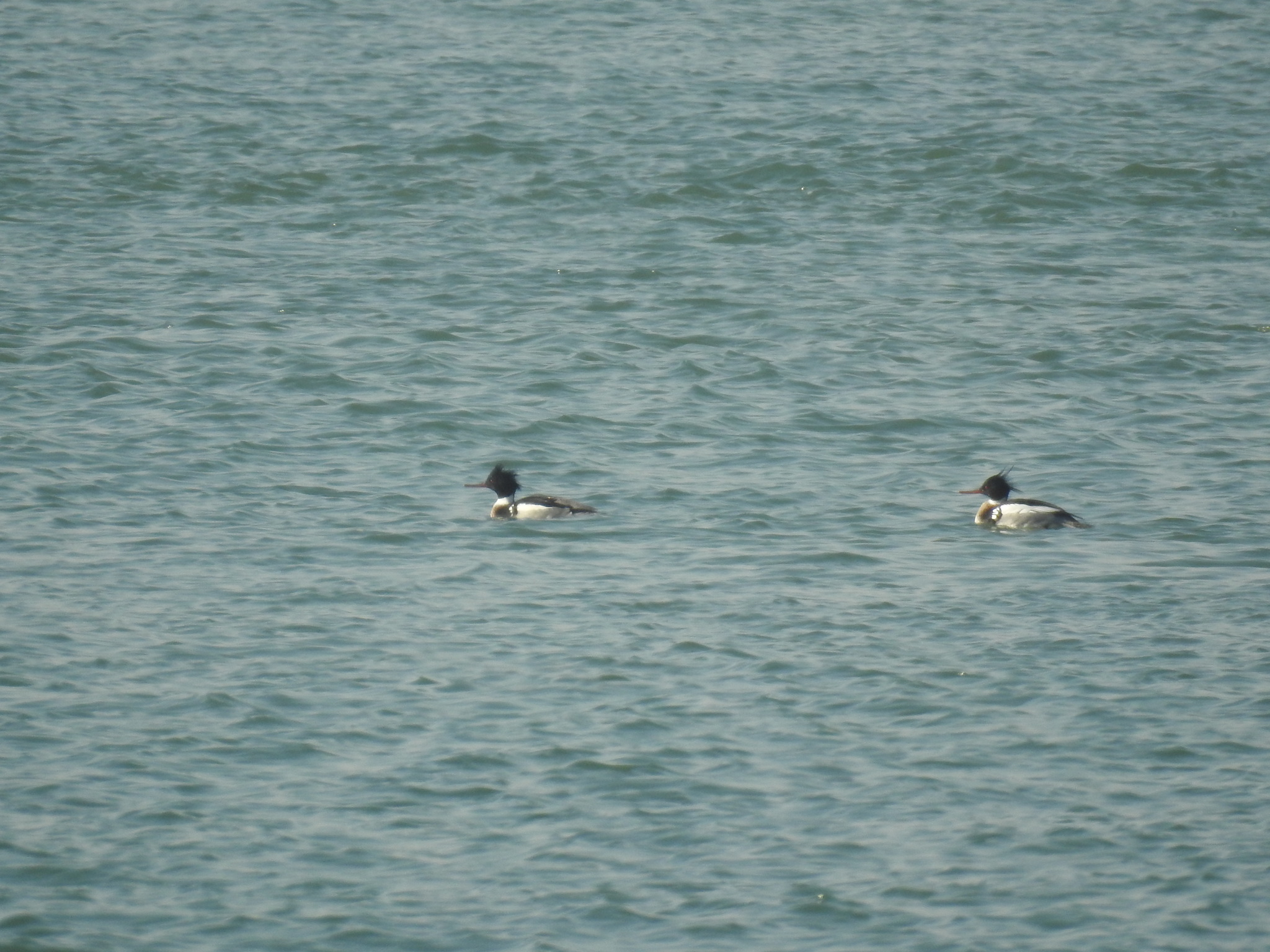
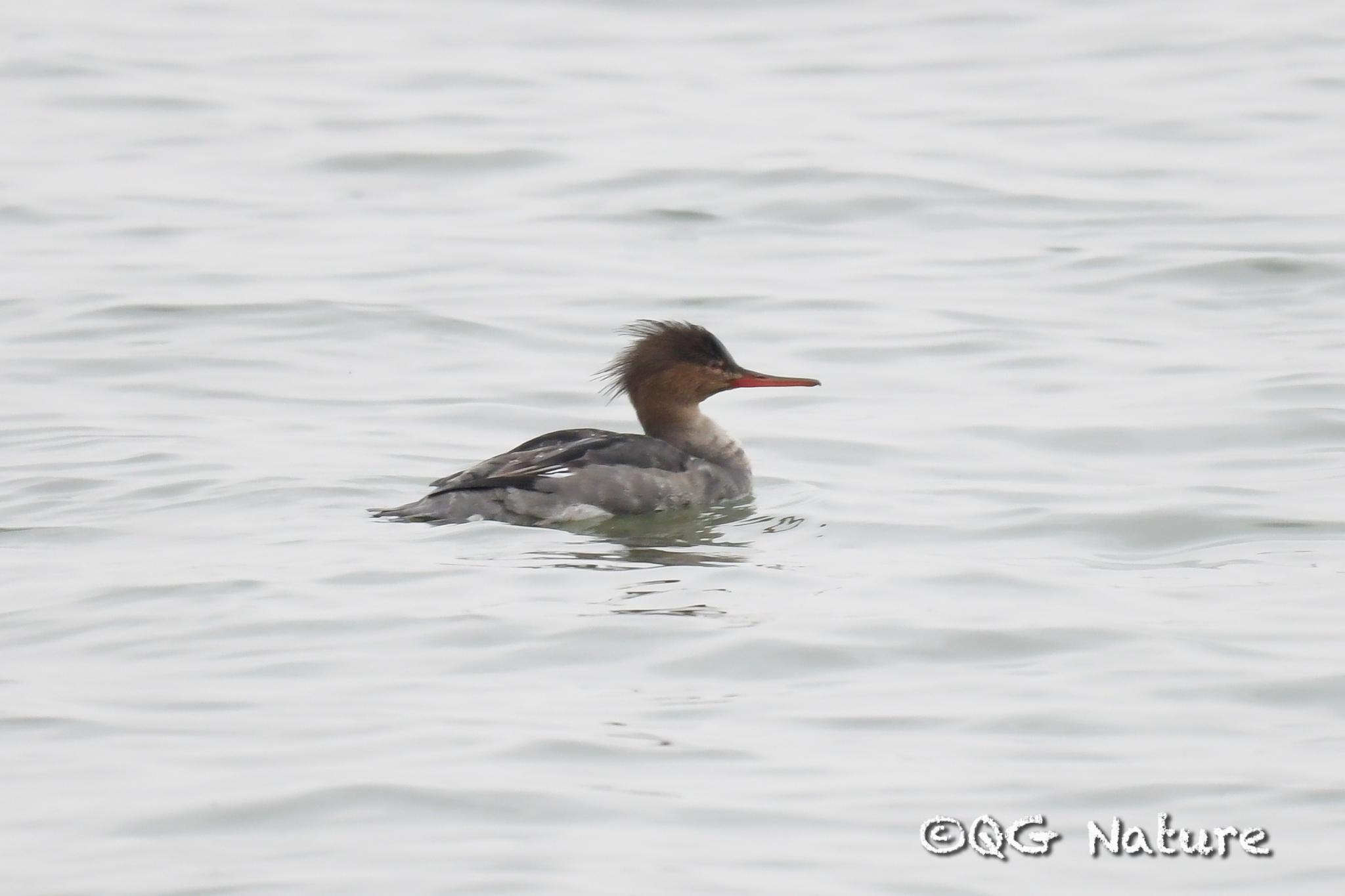
Red-breasted Merganser
Mergus serrator
红胸秋沙鸭
Introduction
This diving duck species is found across temperate to subarctic regions of the Northern Hemisphere, inhabiting both freshwater and coastal marine waters. It is the most saltwater-tolerant member of its genus. Adults measure 40-50 cm in length with a wingspan of 72-85 cm. Distinguishing features include a sleek profile, spiky crest, and a long, thin red bill with serrated edges. Males in breeding plumage display a dark green-sheened head, white neck, and rusty breast. The species breeds on northern lakes and rivers, migrating to coastal wintering areas, though some populations in western and northwestern Europe are resident year-round. It feeds primarily on fish and aquatic invertebrates by diving. The global population is considered stable, though local populations may be affected by habitat degradation. The species requires clean waters with abundant fish populations.
Description
This medium-sized diving duck measures 51-64 cm in length with a wingspan of 66-74 cm. Males are slightly larger, weighing 950-1350 g compared to females at 800-1100 g. The most distinctive feature is the long, thin red bill equipped with serrated edges for gripping fish. Breeding males display a dark head with green iridescence, a white neck, rusty breast, black back, and white underparts, complemented by a spiky crest. Adult females are more subdued, with a rusty head and greyish-brown body. Juveniles resemble females but have a shorter crest and smaller white wing patches. The sleek, elongated body shape and crest are consistent identification features across all plumages.
Identification
This species closely resembles the common merganser, and their ranges overlap significantly, meaning they may be encountered in the same areas. However, habitat preferences differ, with this species favoring saltwater environments while the common merganser typically chooses freshwater, though overlap occurs. The most reliable distinguishing feature involves female and immature plumage: the common merganser female shows stronger contrast between the darker head and lighter breast and possesses a distinctive light chin patch absent in this species. Breeding males are more distinctive, with the rusty breast and green head providing good identification cues. All plumages show the species' characteristic spiky crest and long red bill, which help separate them from similar diving ducks.
Distribution & Habitat
This species breeds across northern North America, Greenland, Europe, and the Palearctic, favoring freshwater lakes and rivers with suitable fish populations. Nest sites are located on the ground in sheltered locations near water, often but not always close to estuaries or sea coasts. The species is largely migratory, with northern populations moving south to coastal waters for winter. However, populations in Iceland, Ireland, Britain, Norway, and Baltic Sea islands are largely resident or make only short movements. During winter, birds congregate in coastal areas, forming flocks that are smaller during spring migration than in autumn or winter.
Behavior & Ecology
These diving ducks pursue prey underwater, swimming with powerful feet to catch small fish, though they also consume aquatic insects, worms, crustaceans, and amphibians. Courtship displays begin in mid-November and continue until June or July, with males performing an elaborate, metronomic routine while swimming—stretching, bending, and contracting their necks while alternately fanning and straightening their crests. Females select mates after observing displays, often chasing or attacking males during the process. Outside the breeding season, birds form flocks, typically smaller in spring than autumn or winter. Vocalizations include a rasping prrak-prrak from females during courtship, a catlike meow from males, and a harsh gruk given in flight. At other times, the species remains largely silent.
Conservation
The species holds a conservation status of least concern from the IUCN due to its widespread and relatively common distribution, though populations in some areas may be declining. International protection comes through the Agreement on the Conservation of African-Eurasian Migratory Waterbirds. In North America, the species is classified as a game bird under the Migratory Bird Treaty between the United States and Canada, allowing regulated hunting in specific seasons and locations, though few hunters pursue this duck and harvest numbers remain low. Primary threats include wetland destruction, exposure to pesticides and lead, commercial fishing bycatch, and illegal persecution by fisheries interests who view the birds as competitors. This illegal killing is particularly significant in Britain, especially Scotland, where fisheries interests target the species despite its protected status.
Culture
The species holds limited cultural significance beyond wildlife protection frameworks. Its primary cultural presence comes through legal protections under international conservation agreements and the North American Migratory Bird Treaty, which recognize its value as a migratory waterbird requiring management and conservation attention. The species does not feature prominently in folklore or cultural traditions, though birdwatchers and ornithologists appreciate its elegant courtship displays and distinctive appearance.
Source: Wikipedia · CC BY-SA 3.0
Taxonomy
- Order
- Anseriformes
- Family
- Anatidae
- Genus
- Mergus
- eBird Code
- rebmer
Distribution
breeds southern Greenland, Iceland, northern British Isles, and Scandinavia to Sakhalin and Kamchatka peninsulas, and Kuril and Commander islands (southeastern Russia), in south through northern Kazakhstan and northeastern China; western Alaska mainland through mainland Canada from Arctic to northern Great Lakes and eastward to Nova Scotia; winters to coasts of southern Europe, Black and Caspian seas; Japan, Korean Peninsula, and eastern China; to west-central Mexico, Gulf Coast, and Florida
Vocalizations
Data Sources
Species description from Wikipedia, licensed under CC BY-SA 3.0.
Bird images and sounds sourced from GBIF, contributed by citizen scientists worldwide under Creative Commons licenses.
Taxonomy data from AviList 2025.