Anseriformes / Anatidae / Mergus
Common Merganser
Mergus merganser · 普通秋沙鸭
Introduction
A large sea duck of rivers and lakes in forested areas of Europe, Asia, and North America. It feeds mainly on fish and nests in tree holes. The species is not threatened overall.
Description
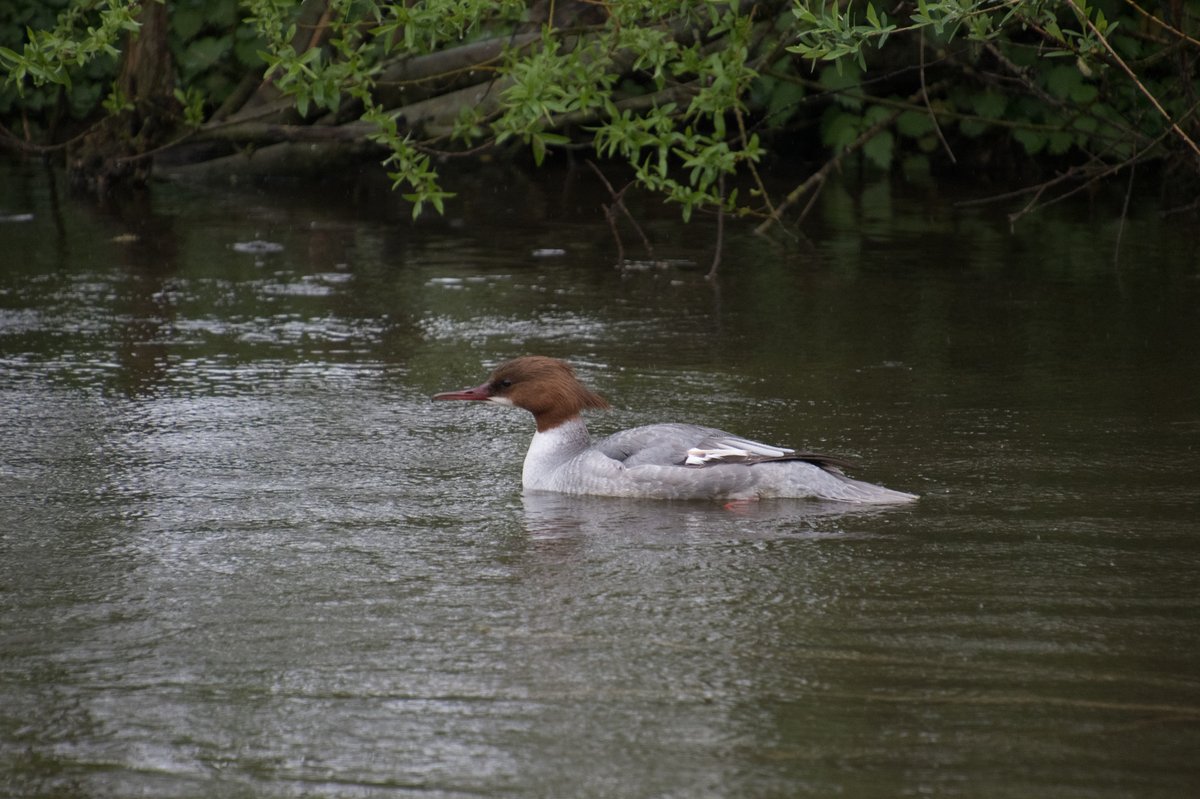
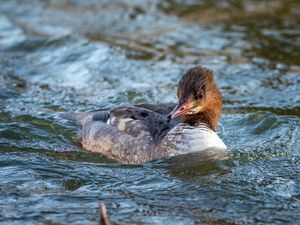
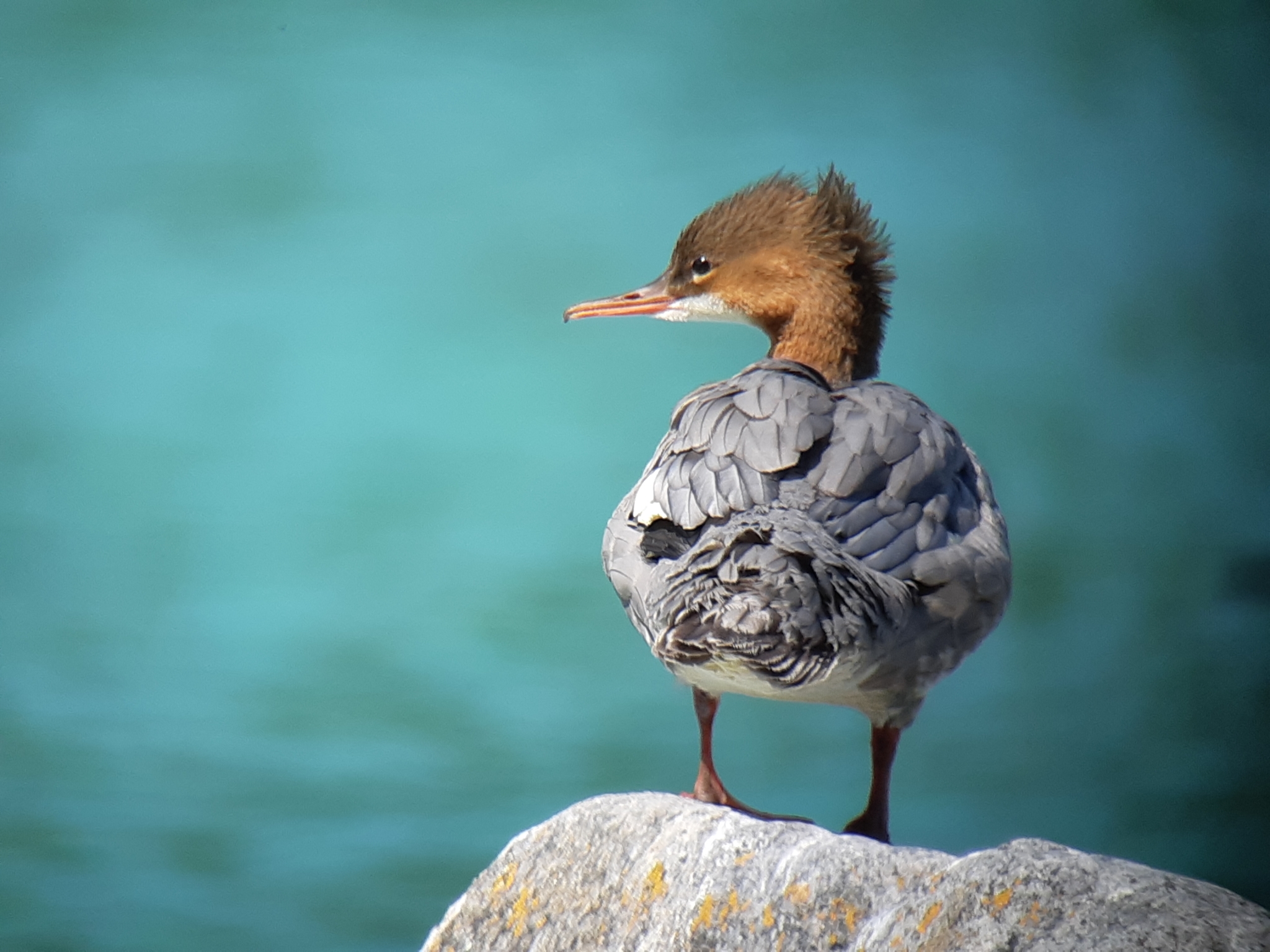
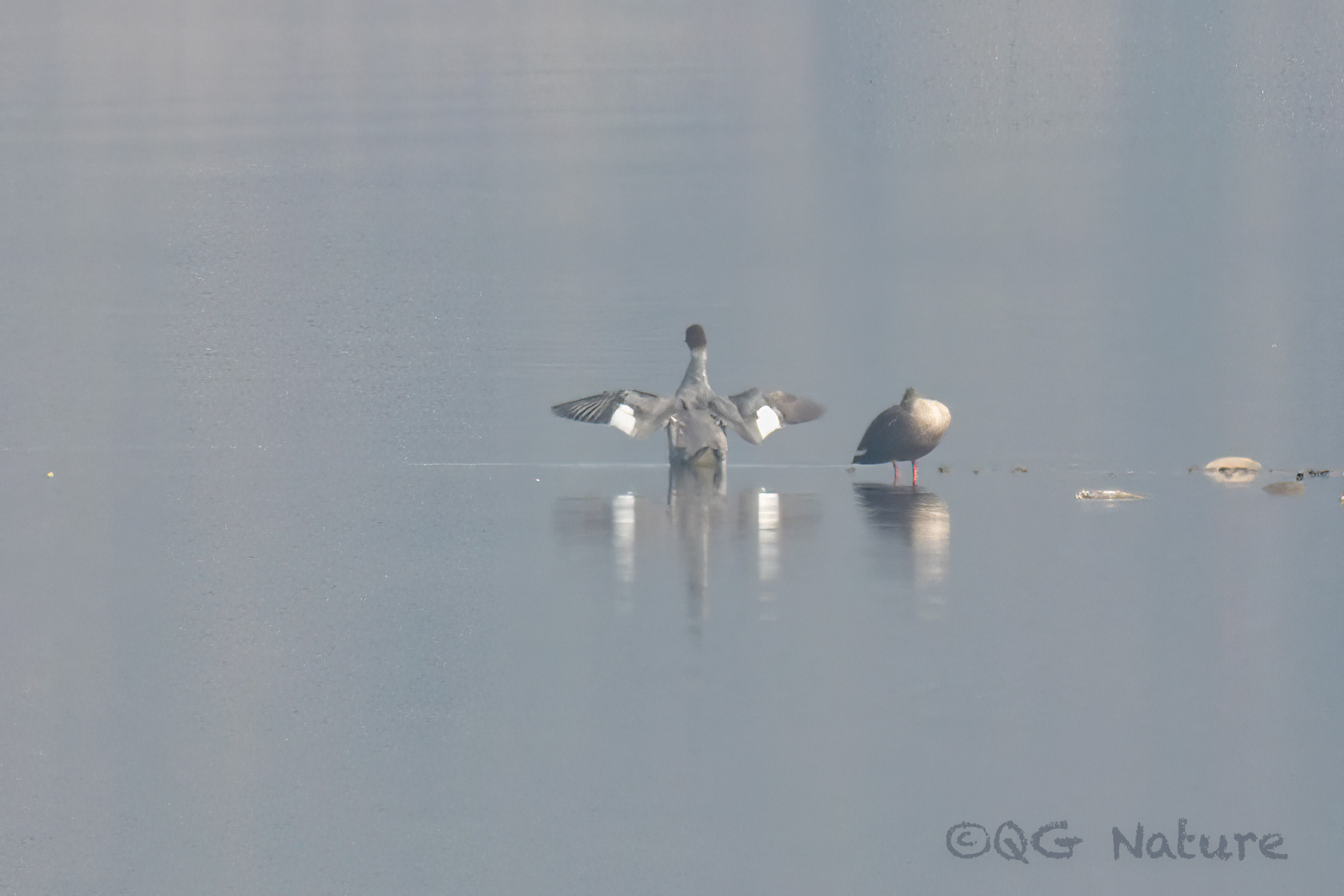
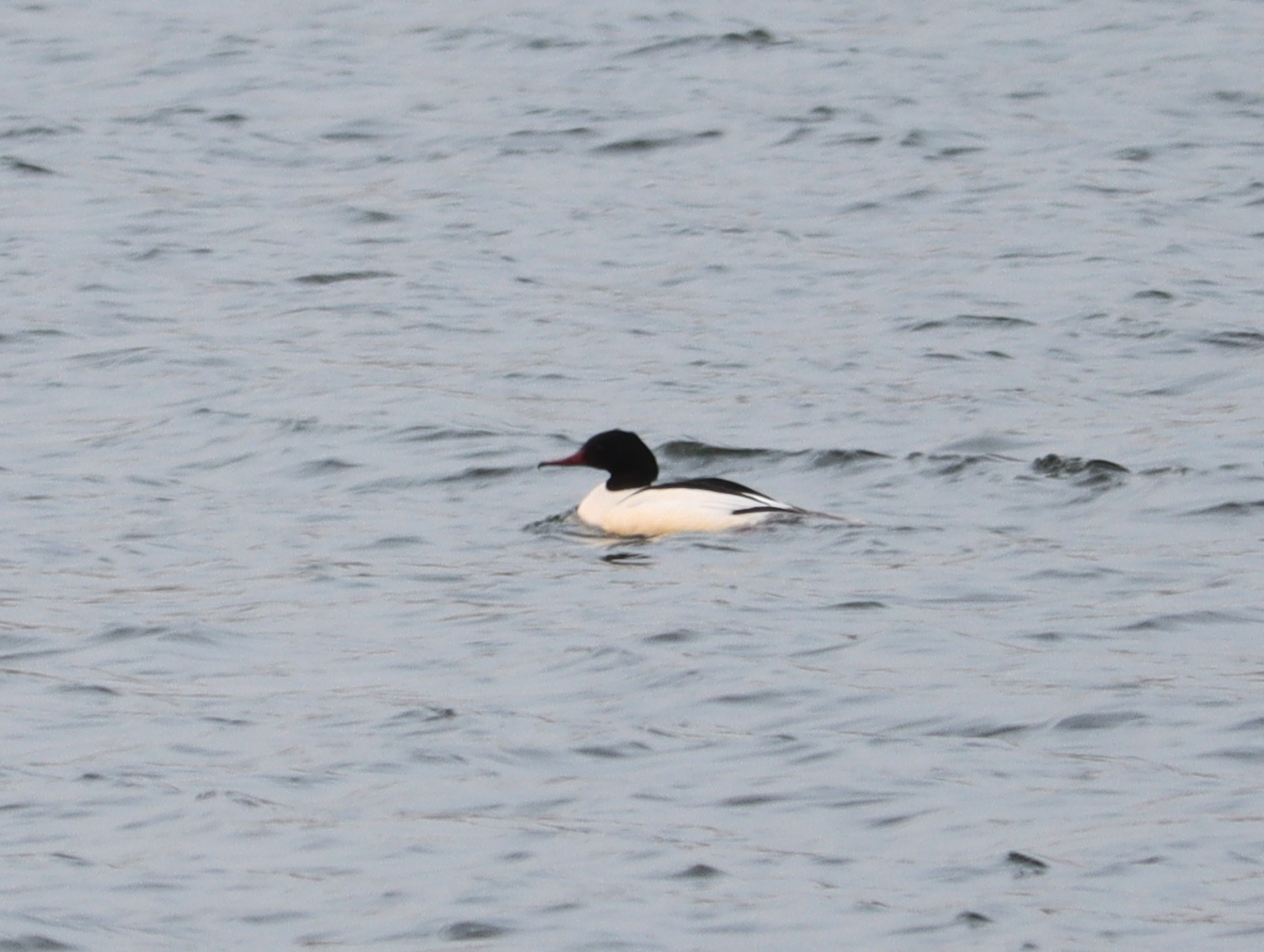
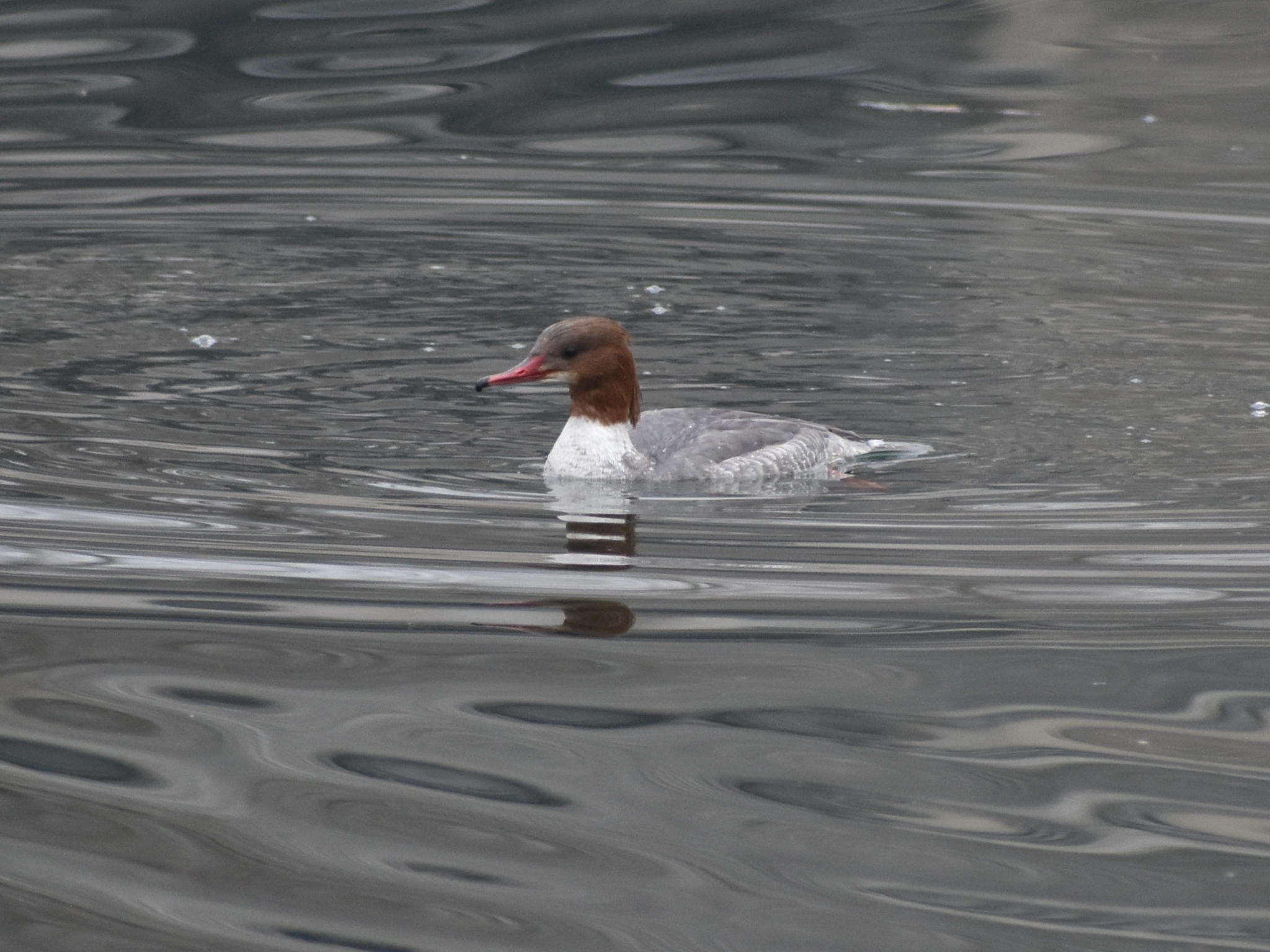
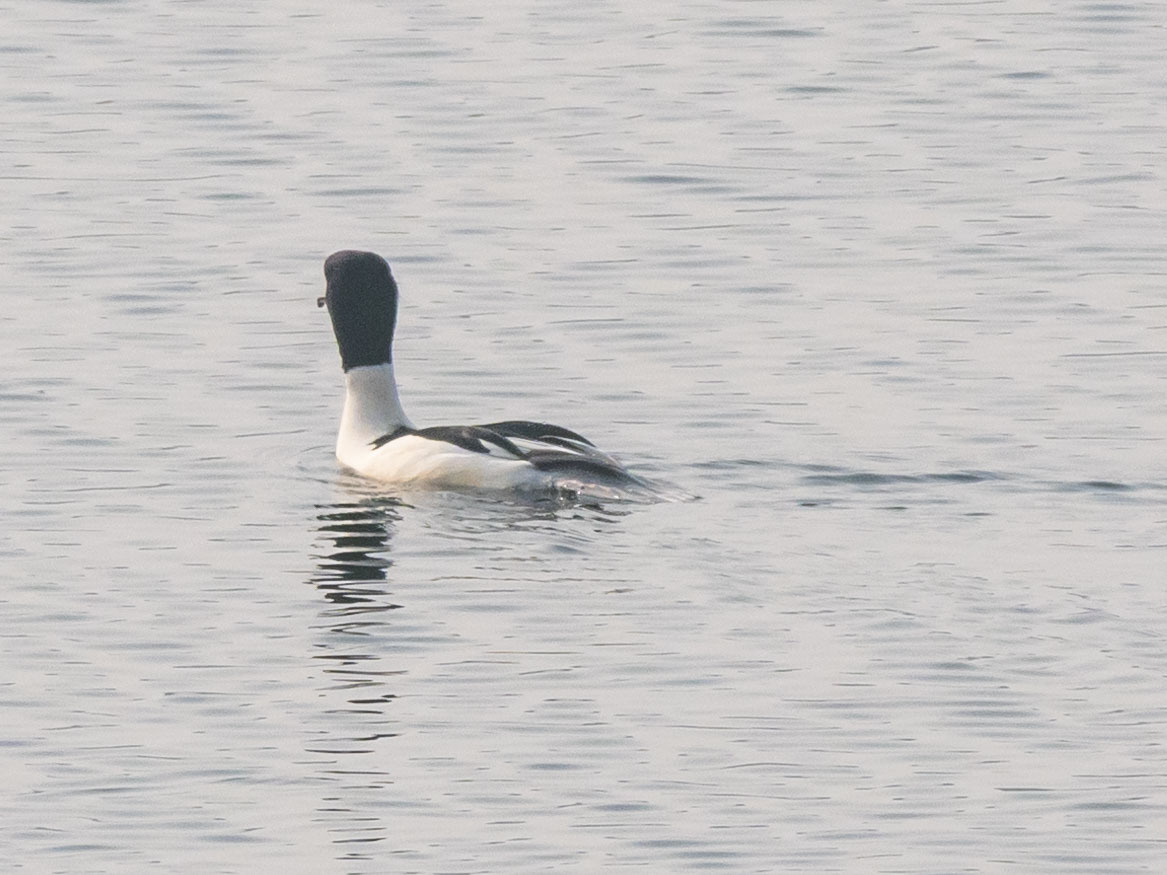
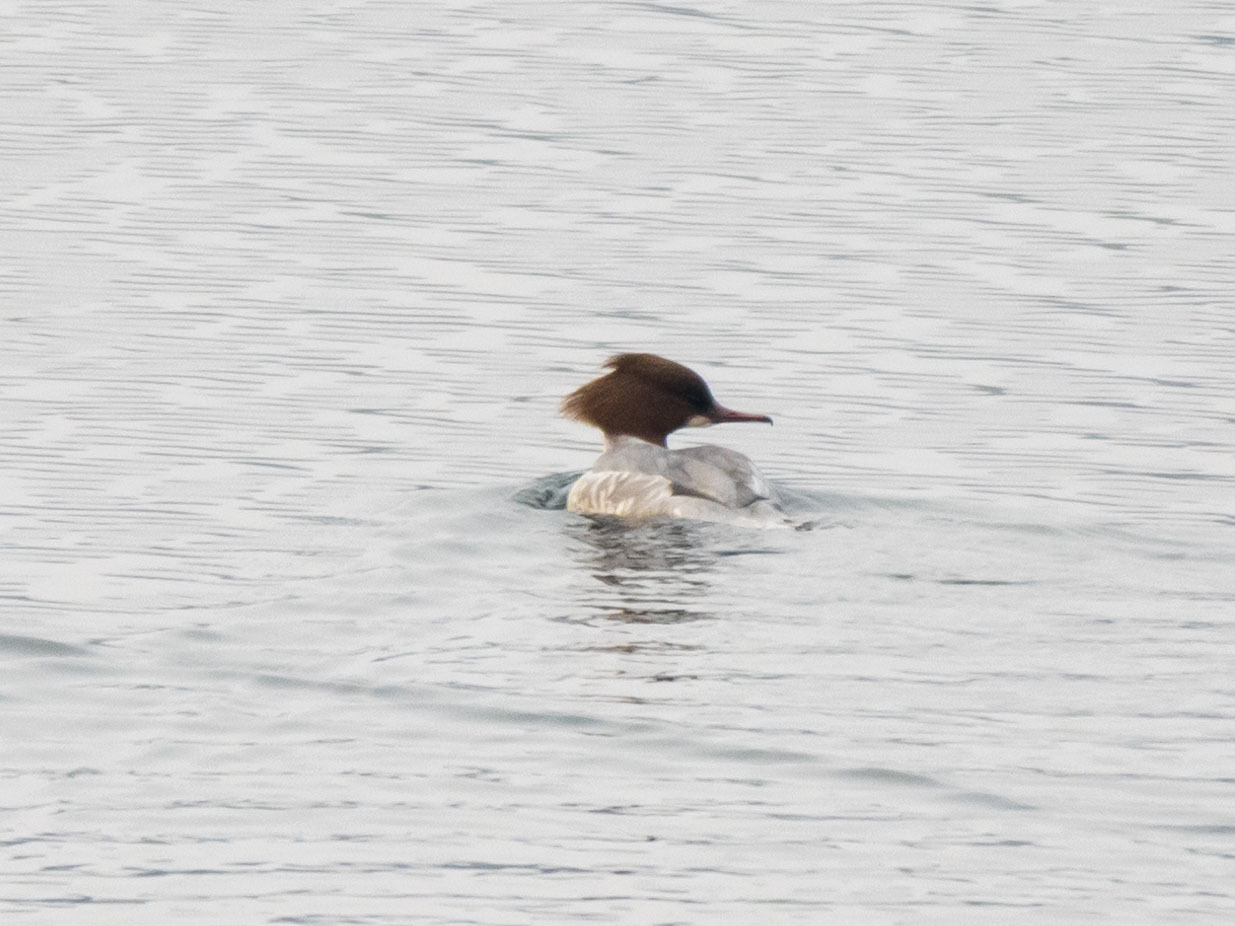
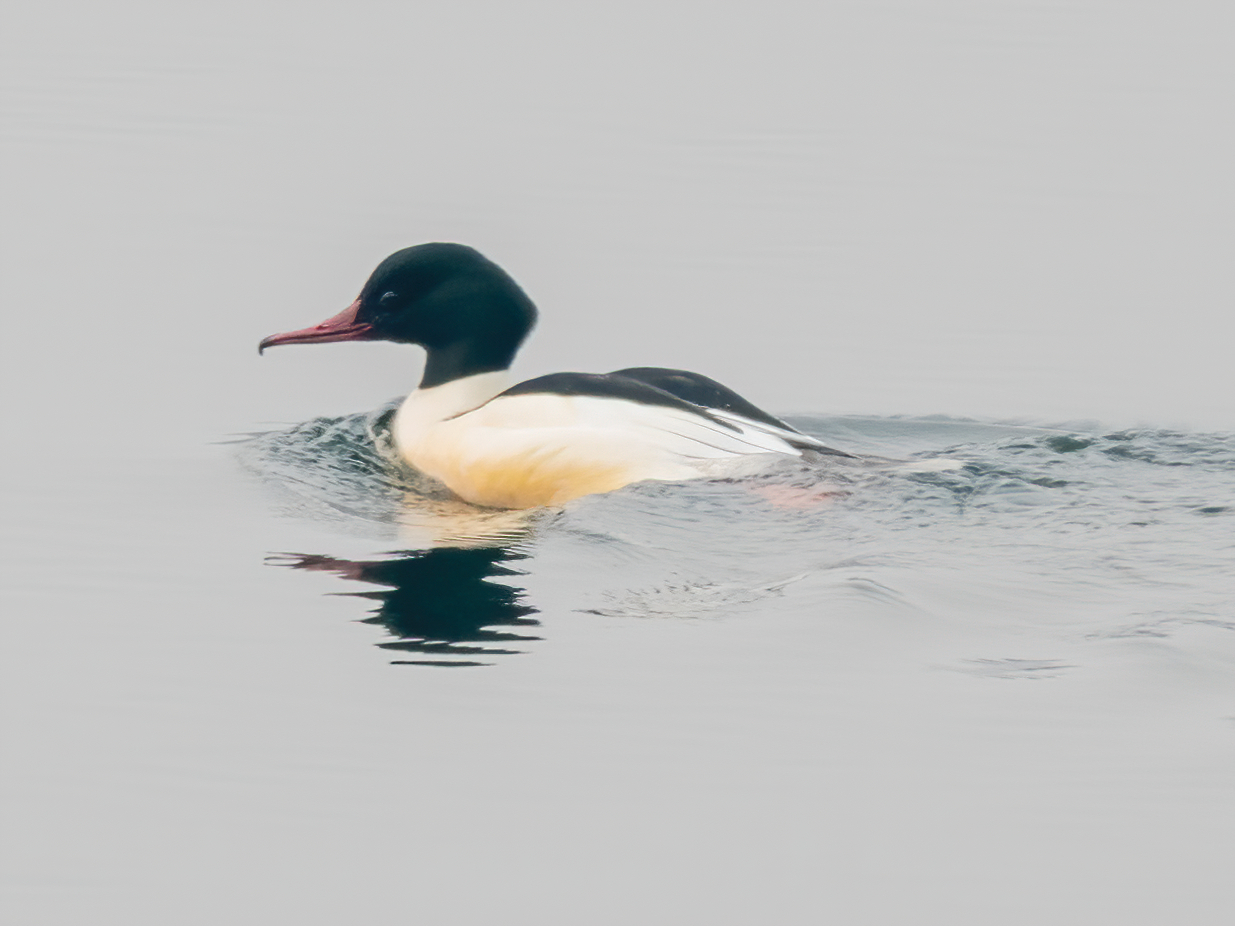
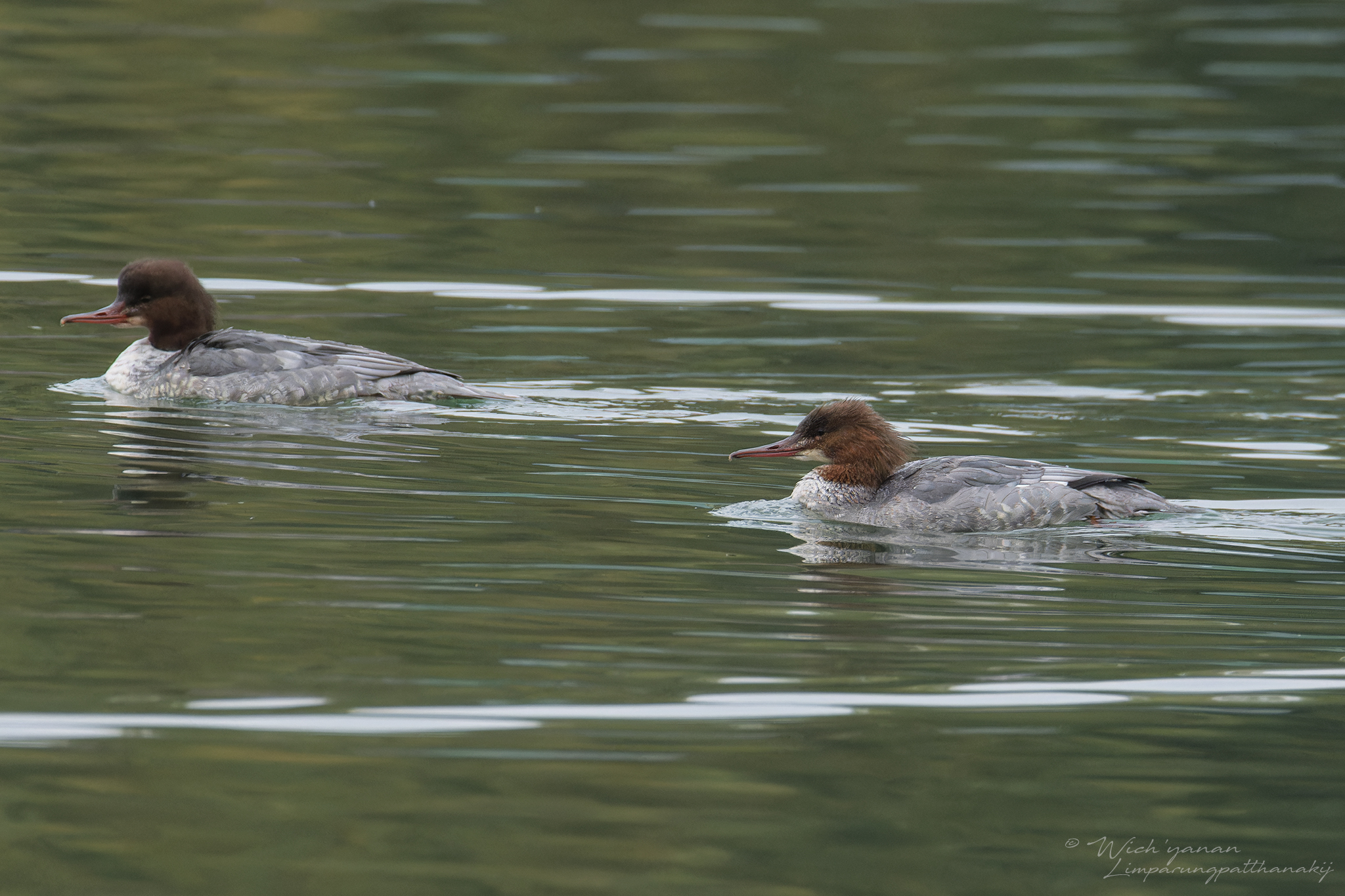
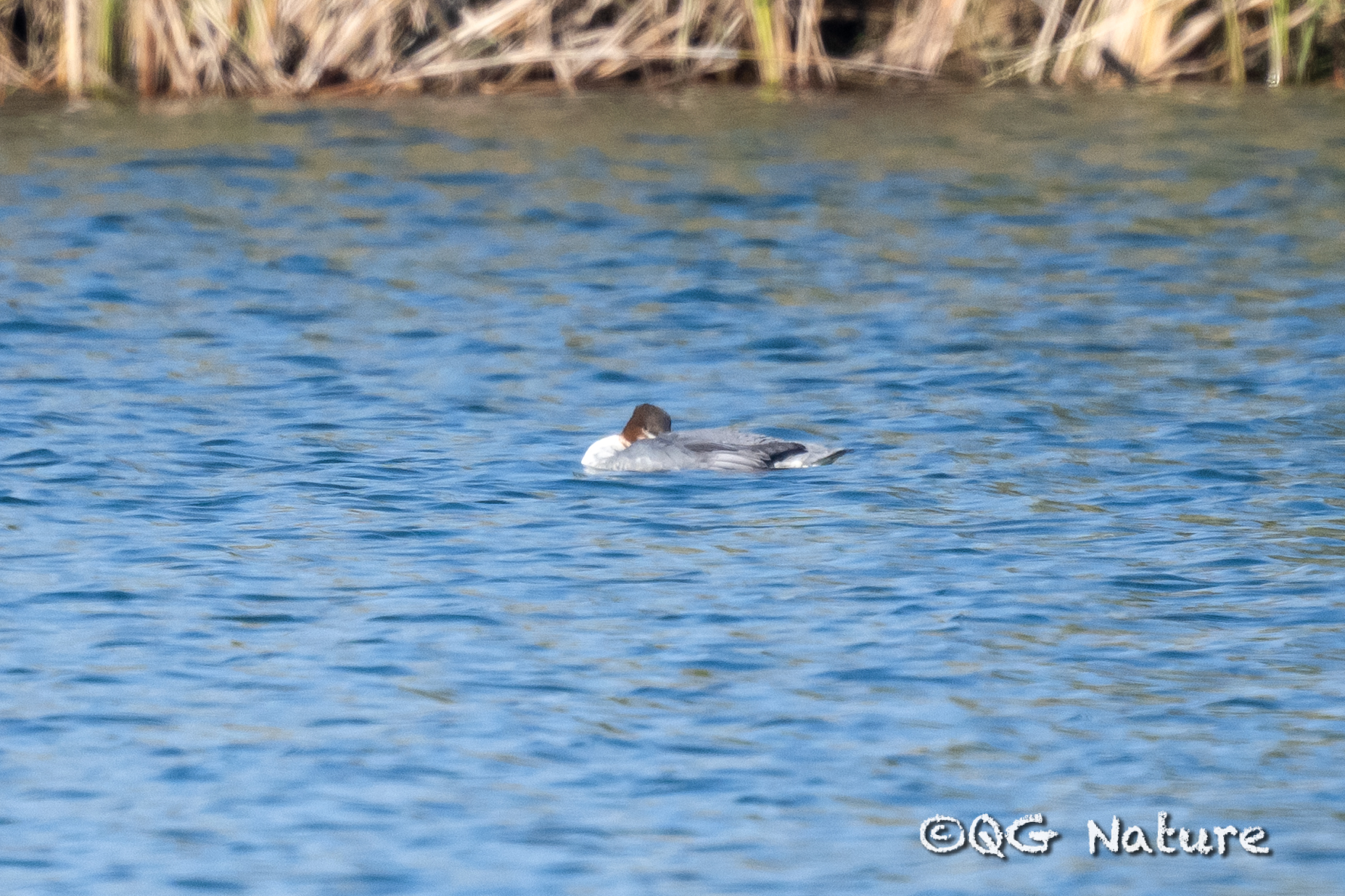
Length 58–72 cm (23–28.5 in), wingspan 78–97 cm (30.5–38 in), weight 0.9–2.1 kg (2 lb 0 oz – 4 lb 10 oz). Males are slightly larger than females. Breeding males have a white body with a variable salmon-pink tinge, black head with iridescent green sheen, grey rump and tail, and wings largely white on the inner half and black on the outer half. Females and males in eclipse plumage (July to October) are largely grey with a reddish-brown head, white chin, and white secondary wing feathers. Juveniles resemble adult females but show a short black-edged white stripe between the eye and bill. The bill and legs are red to brownish-red, brightest on adult males. A crest of longer head feathers usually lies smoothly rounded behind the head.
Identification
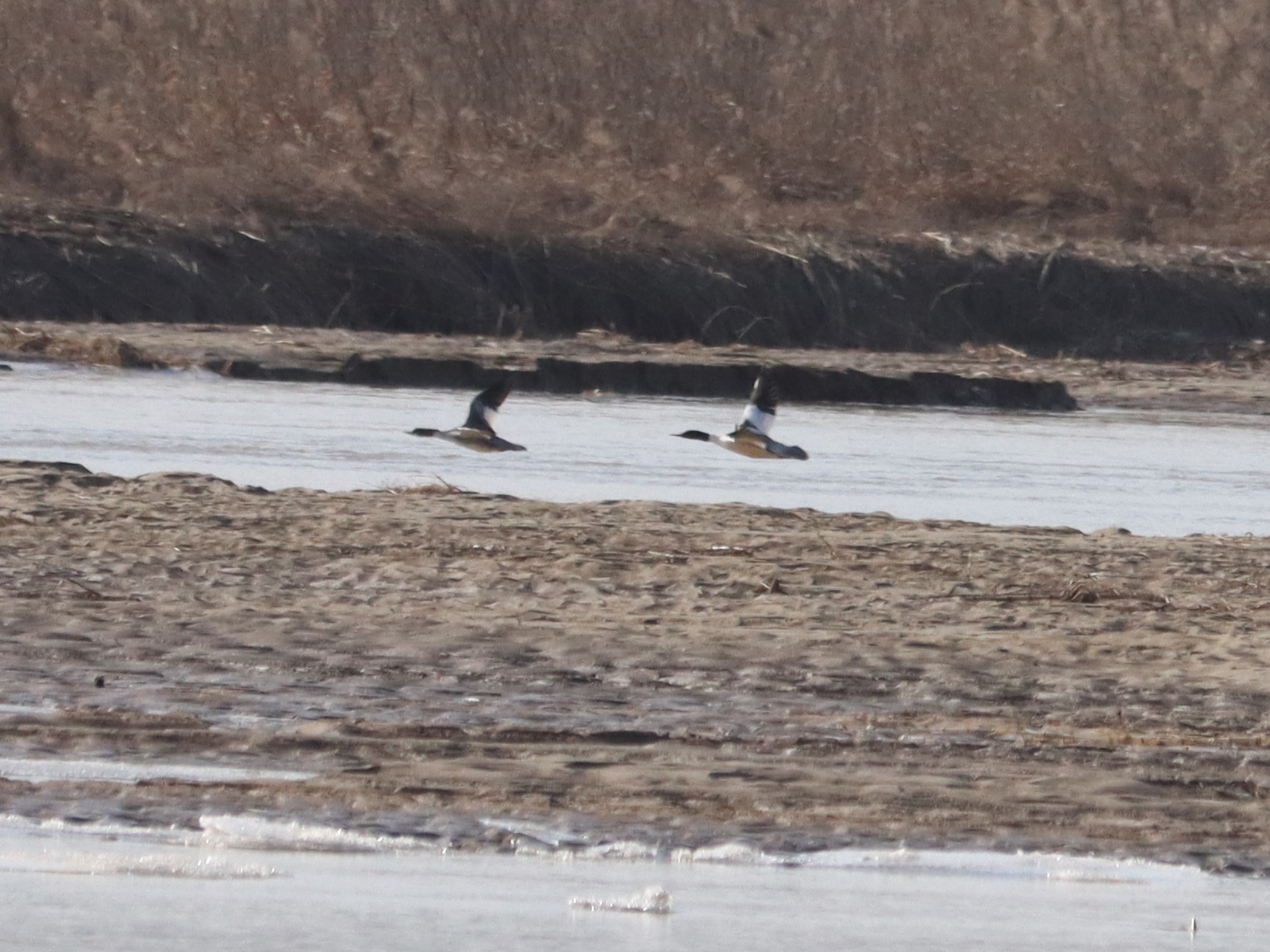
Possesses serrated bill edges, earning the name 'sawbill'. Distinguished from similar species by the breeding male's black head with green sheen and white body, or the female's grey body with reddish-brown head and white chin. Flight is strong and fast; birds flap along the water surface for many yards before becoming airborne.
Distribution & Habitat
Found in forested areas of Europe, Asia, and North America. Three subspecies exist with minor differences. Partial migrant; moves away from freezing waters in winter. Eastern North American birds migrate south to ice-free US waters; Pacific coast birds are permanent residents. Scandinavian and Russian birds migrate south, while western European and some Japanese populations are largely resident. Western European breeding range has expanded southward since 1850, colonizing Scotland (1871) and England (1941). Very rare in Ireland, with breeding restricted to County Wicklow.
Behavior & Ecology
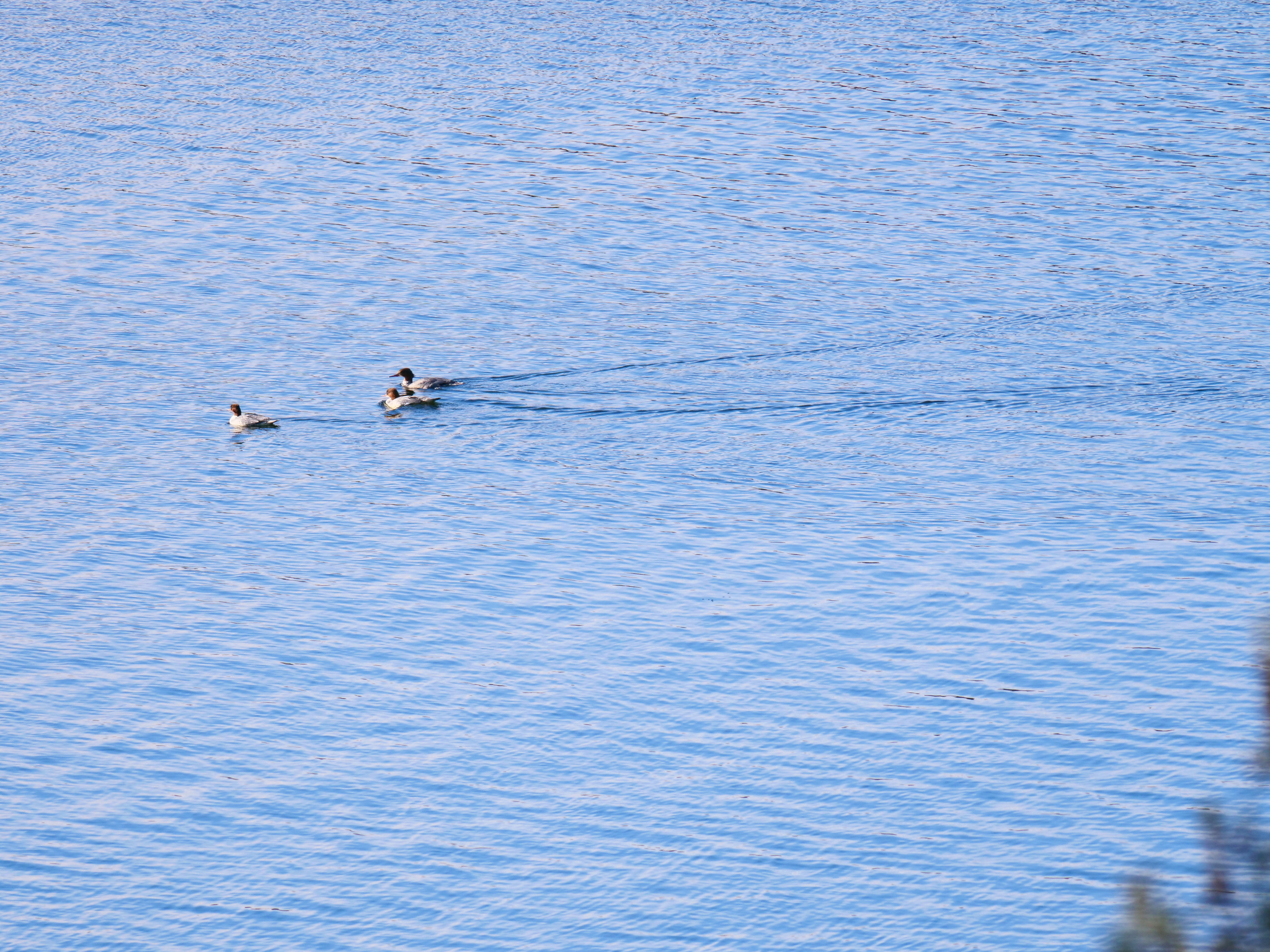
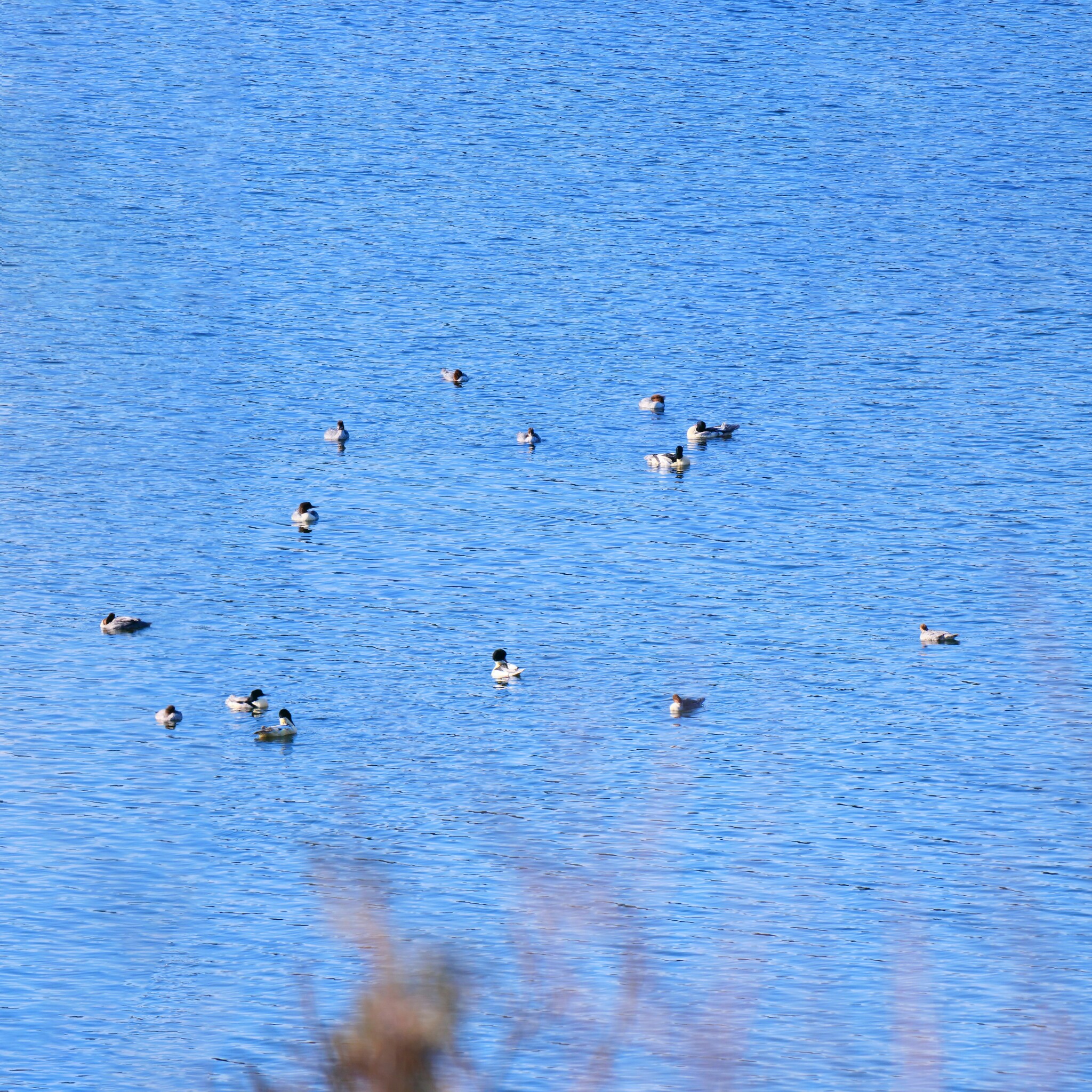
Piscivorous diet supplemented by molluscs, crustaceans, worms, insect larvae, amphibians, and rarely small mammals or birds. Serrated bills help grip prey. Often fishes in groups forming a semicircle to drive fish into shallow water. Floats down currents in rivers, twisting in rapids or fishing in deep pools. Swims deep like cormorants, especially upstream, and rests on rocks with wings half-open. Vocalizations include a low, harsh croak and, during breeding season, a plaintive soft whistle from males and juveniles. Generally wary with sentry duty behavior; may disgorge food if disturbed. Clumsy on land, running upright like penguins when pushed. Nests in tree cavities (requiring 15 cm/6 in entrance holes) or cliff holes in treeless areas. Female lays 6–17 eggs (usually 8–12); ducklings ride on mother's back to water, feeding on invertebrates and fry, fledging at 60–70 days. Young mature sexually at two years. Forms crèches with up to 70+ ducklings per female. Males in Western Europe often migrate north to Norway and Scotland to moult June–September.
Conservation
Overall not threatened. Illegal persecution by game-fishing interests is a problem in certain regions. Covered by the Agreement on the Conservation of African-Eurasian Migratory Waterbirds.
Source: Wikipedia · CC BY-SA 3.0
Taxonomy
- Order
- Anseriformes
- Family
- Anatidae
- Genus
- Mergus
Vocalizations
Subspecies (3)
-
Mergus merganser americanus
breeds southern and central Alaska eastward to eastern Canada and southward to northern California, Colorado, and the north-central and northeastern USA; winters southern Alaska and Maritime Provinces (Canada) southward to north-central Mexico
Data Sources
Species description from Wikipedia, licensed under CC BY-SA 3.0.
Bird images and sounds sourced from GBIF, contributed by citizen scientists worldwide under Creative Commons licenses.
Taxonomy data from AviList 2025.