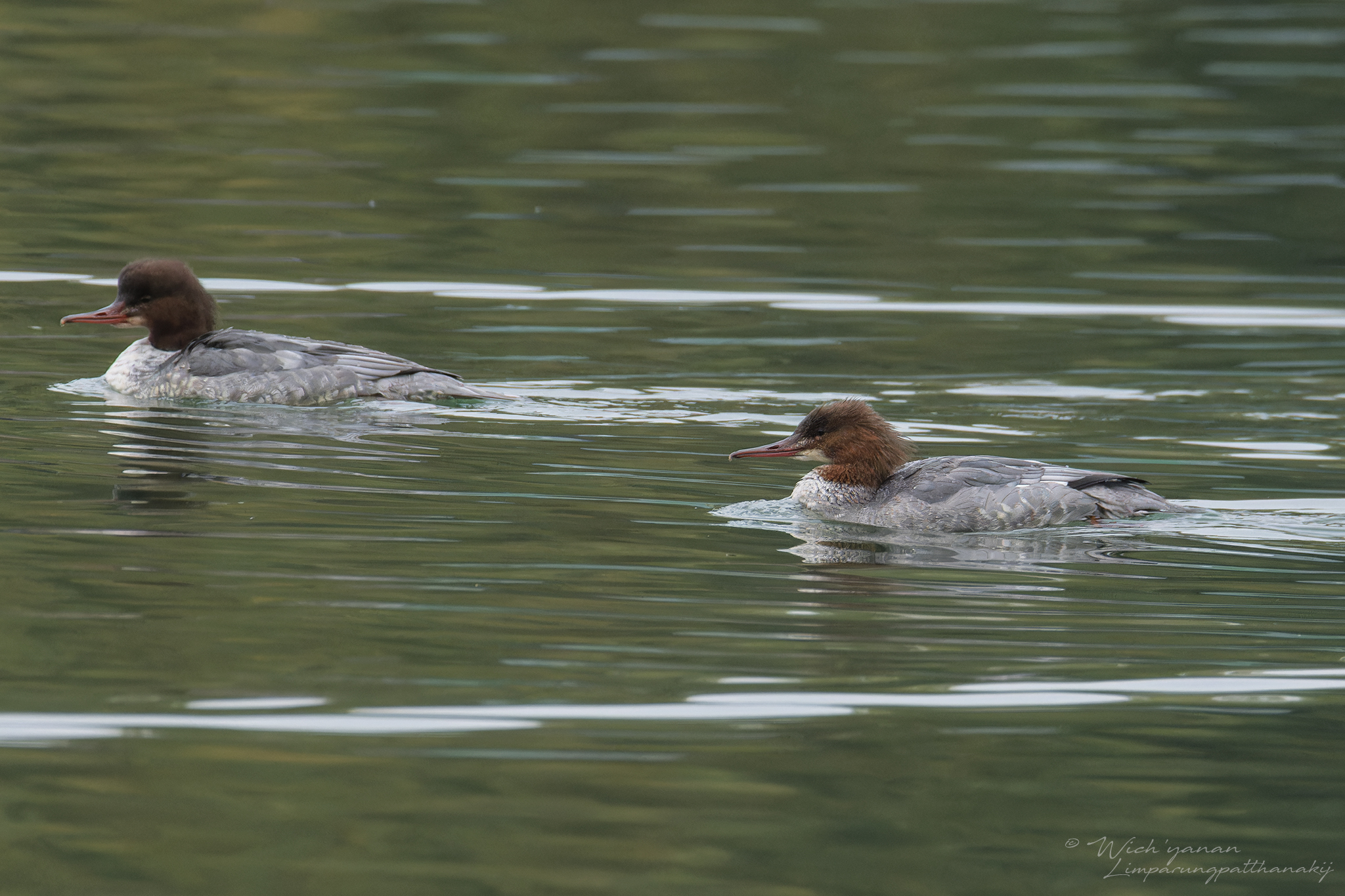
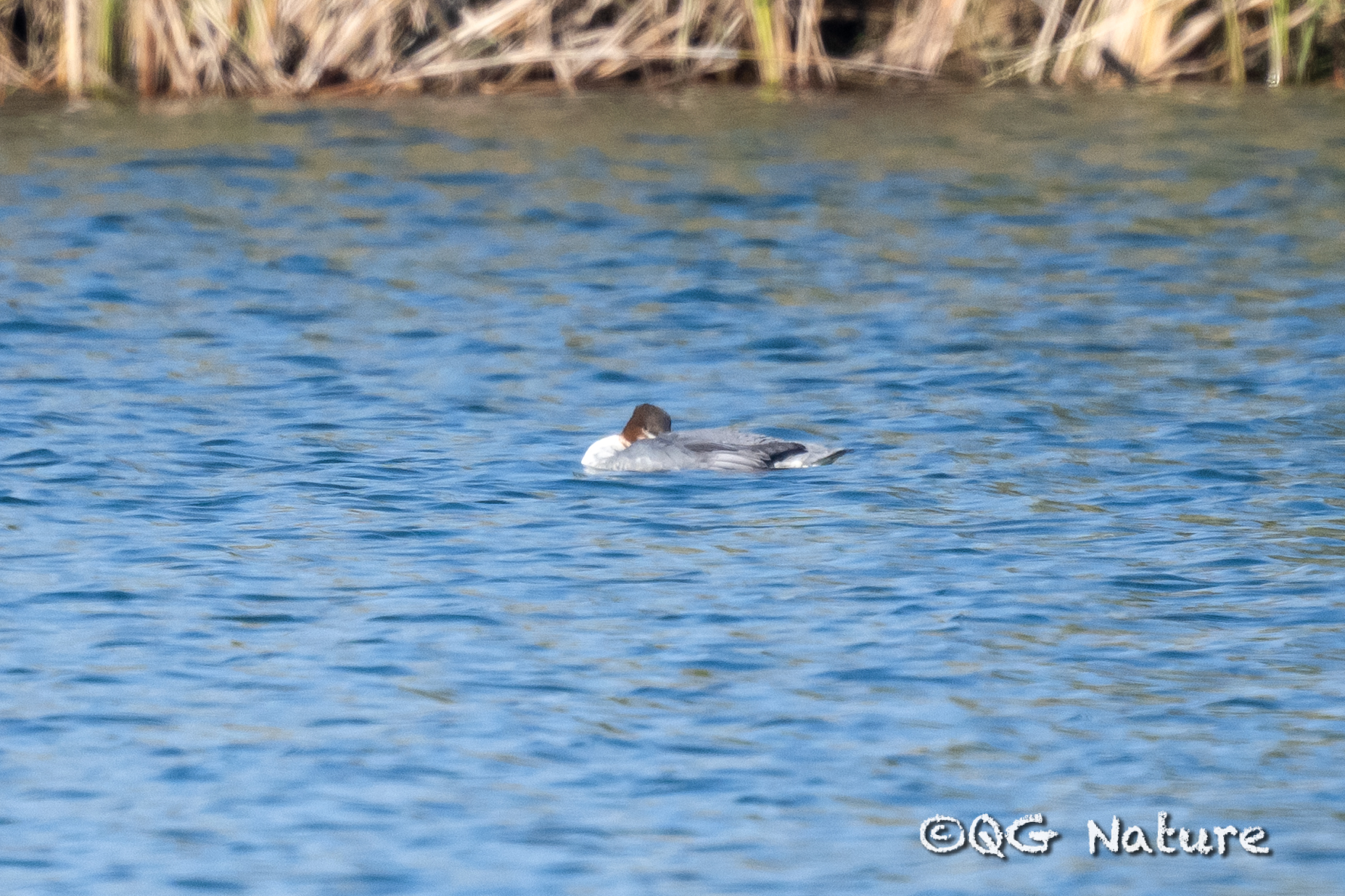
Common Merganser
Mergus merganser
普通秋沙鸭
Introduction
This large diving duck inhabits forested waterways across the Northern Hemisphere. It occurs on both fresh and salt water, favoring clear streams and lakes where fish are abundant. It feeds primarily by diving and pursues fish underwater. The species rests on mid-stream rocks and forms large flocks on wintering grounds where ice-free waters persist. In North America it is called the common merganser; in Eurasia, the goosander.
Description
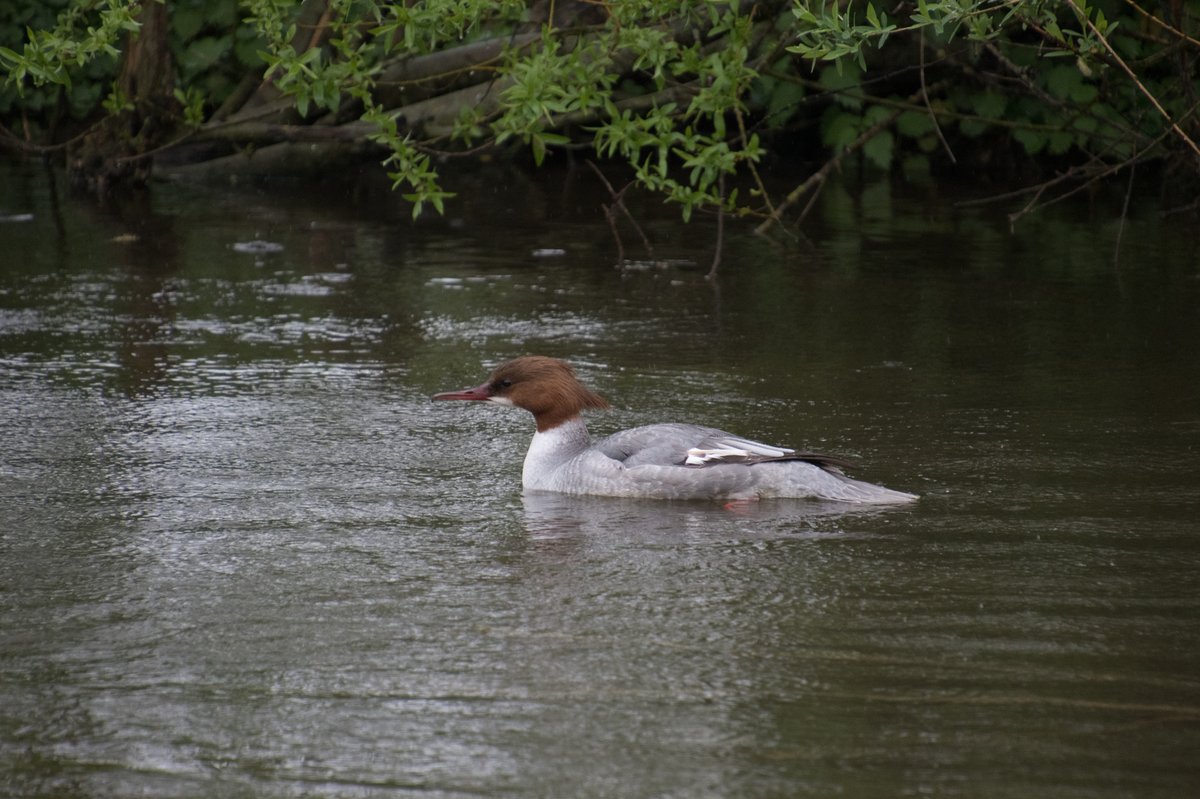
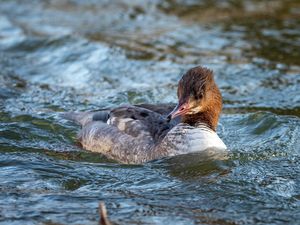
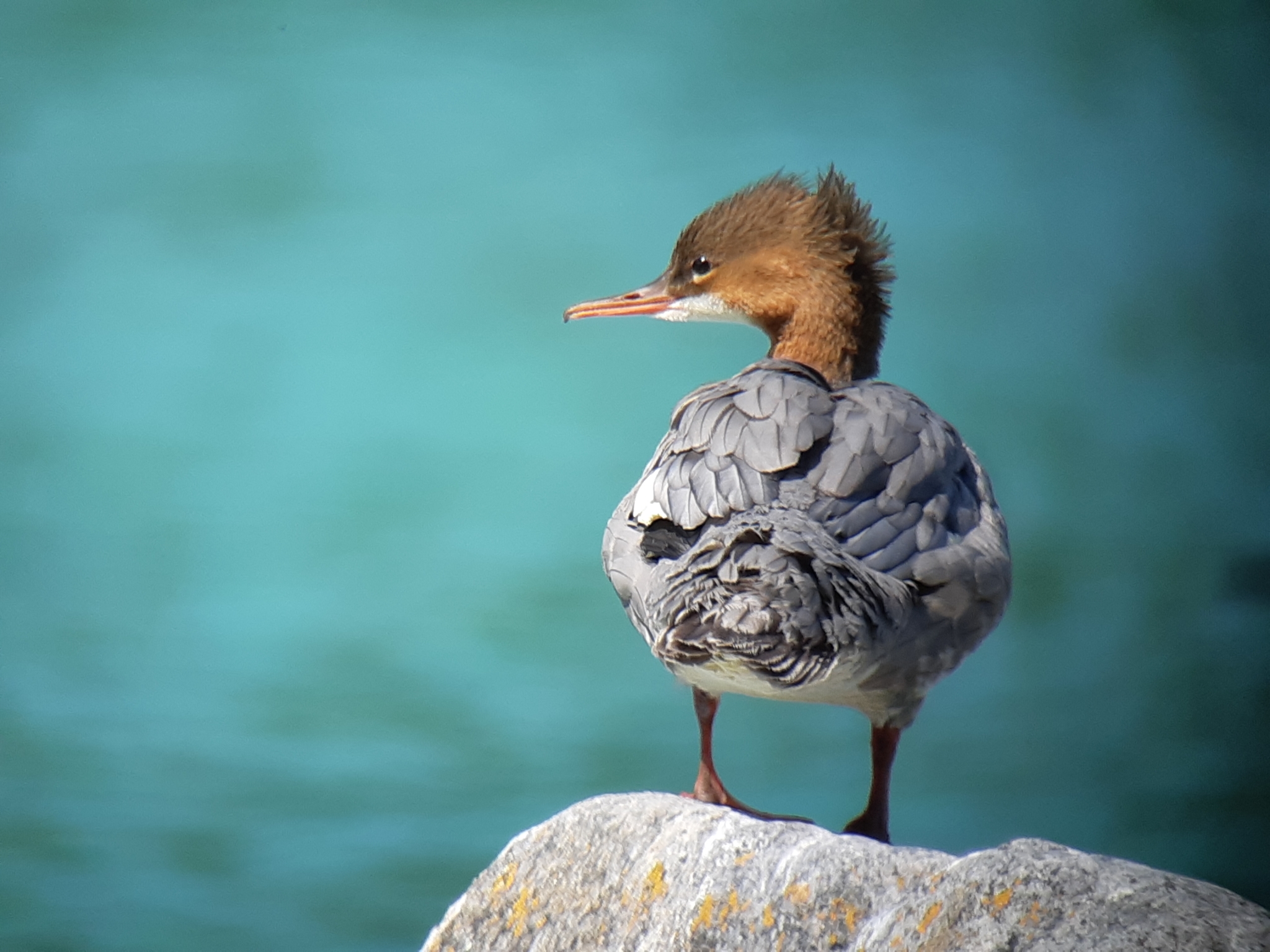
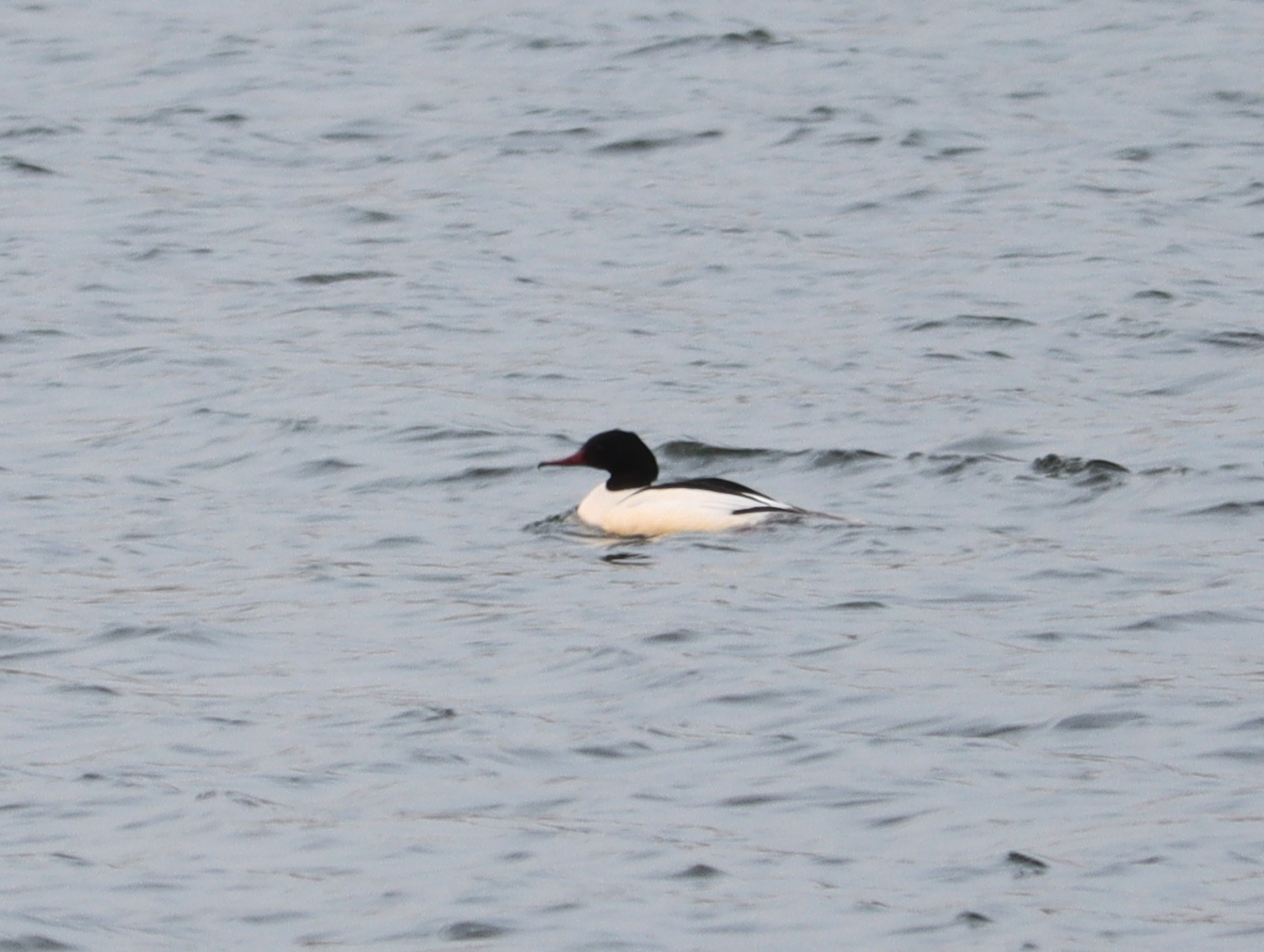
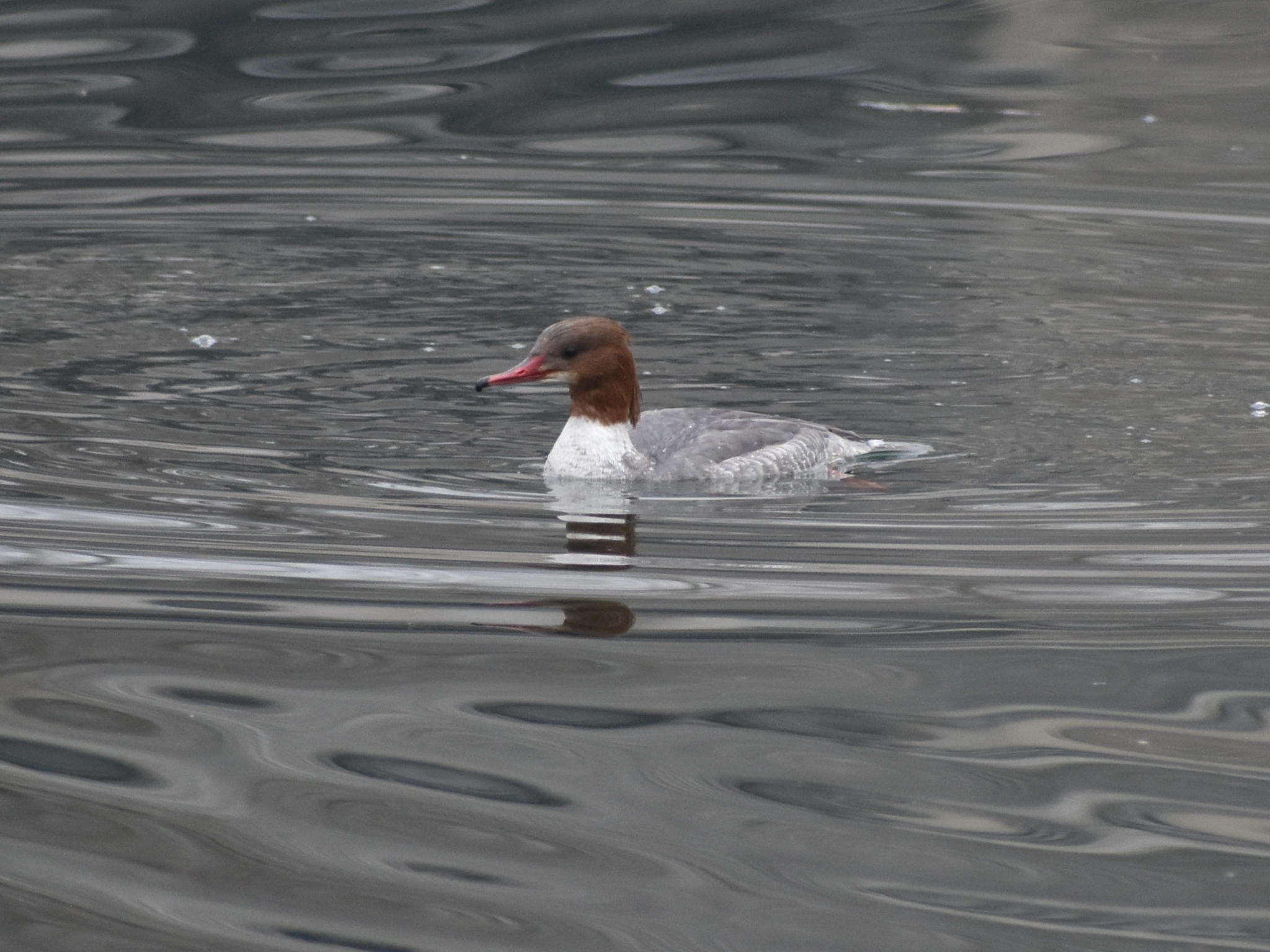
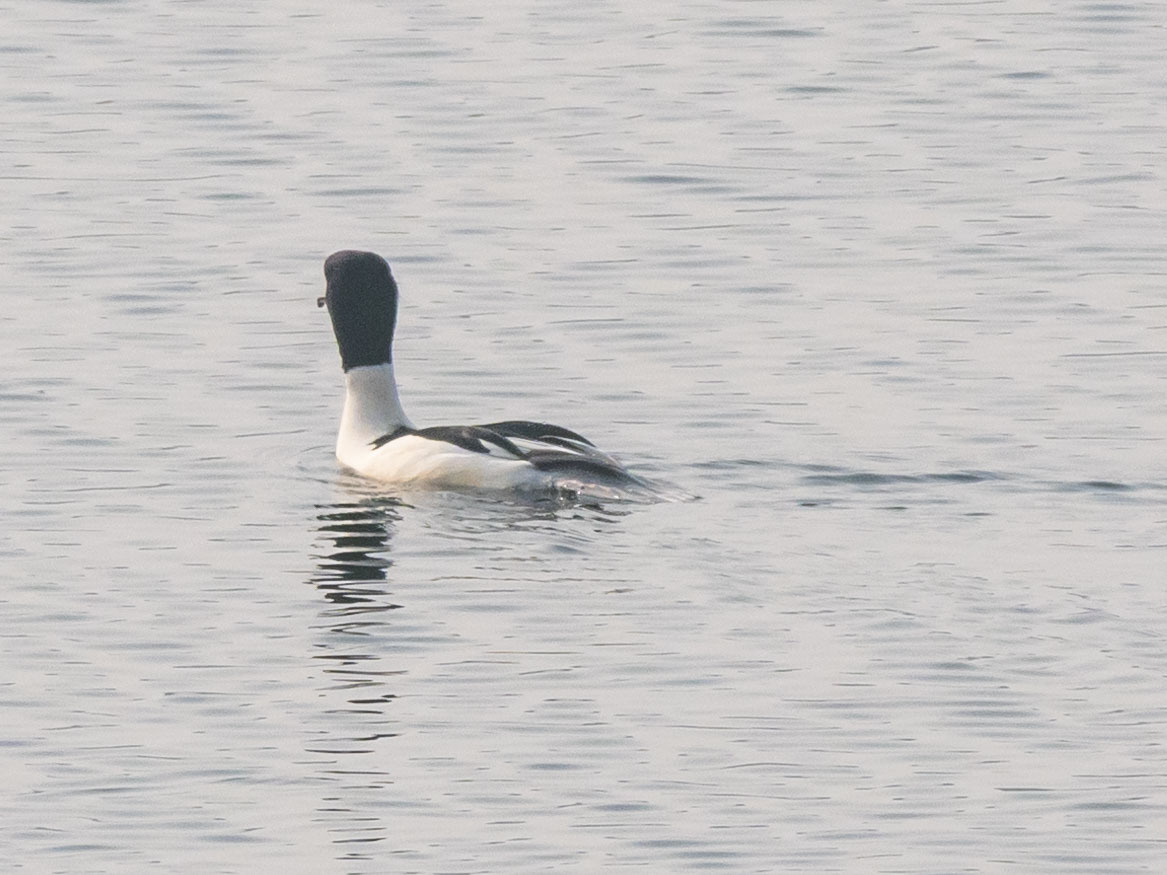
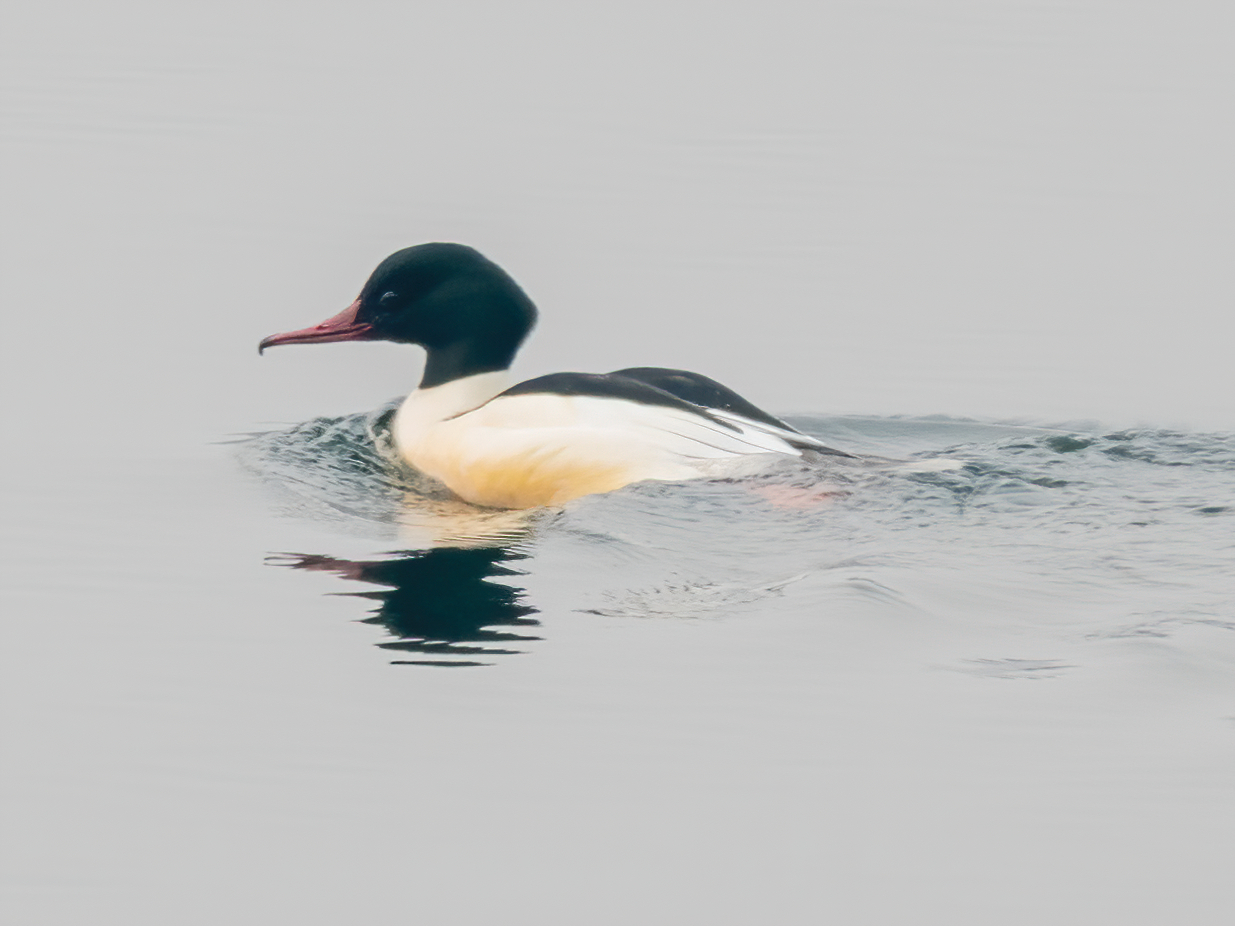
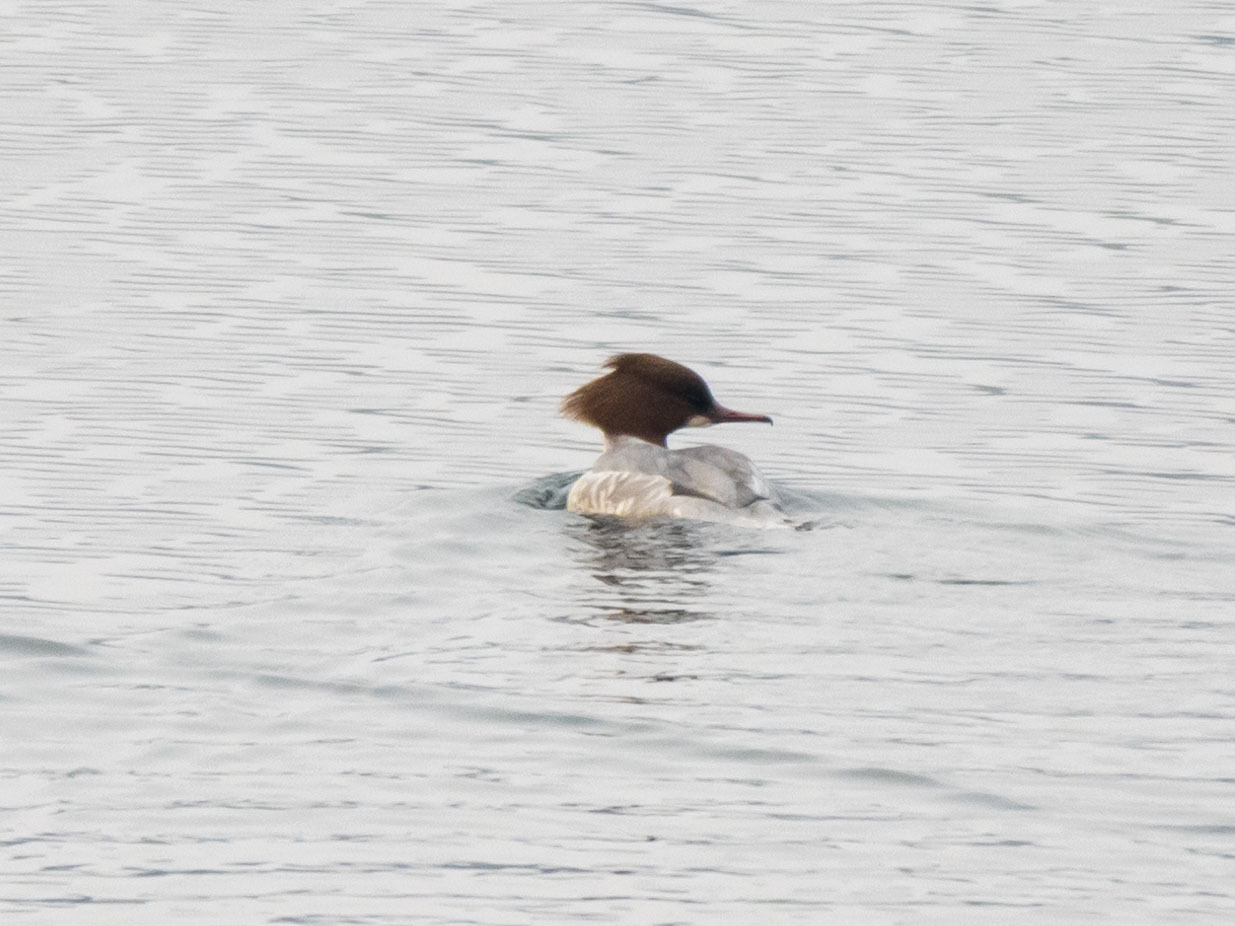
A large diving duck measuring 58-72 cm in length with a substantial 78-97 cm wingspan. Adults weigh between 0.9-2.1 kg, with males averaging slightly larger. The species possesses a characteristic crest of elongated head feathers that lie smoothly rounded rather than erect. Breeding males display a stunning plumage: white body with variable salmon-pink coloration, black head with iridescent green sheen, grey rump and tail, and wings showing white inner halves contrasting with black outer portions. Females and non-breeding males are predominantly grey with reddish-brown heads, white chin, and distinctive white secondary feathers. Juveniles resemble adult females but show a diagnostic short black-edged white stripe between eye and bill. The serrated red to brownish-red bill and legs are brightest in adult males.
Identification
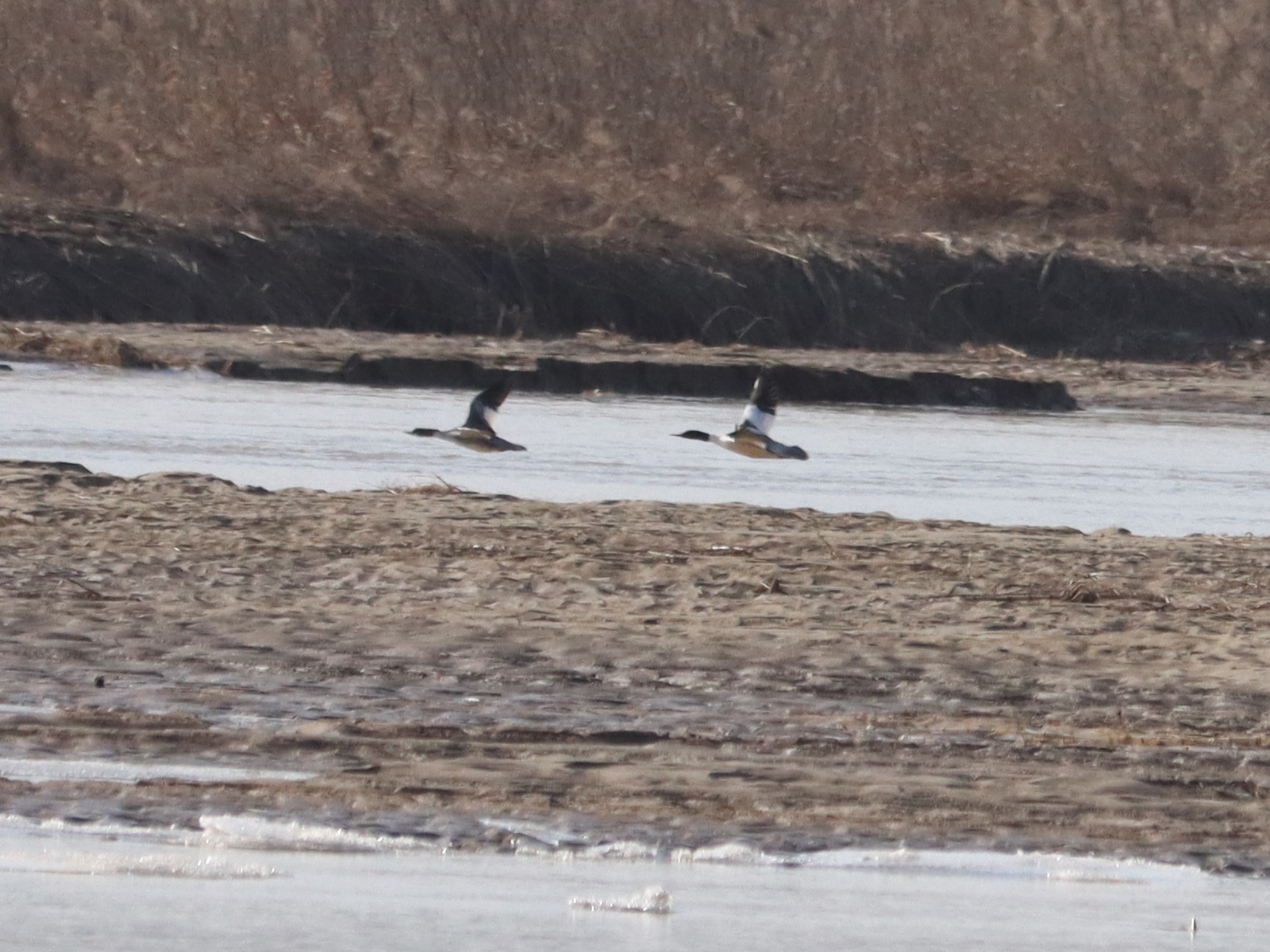
The serrated bill edge immediately separates mergansers from other diving ducks. Unlike the similar red-breasted merganser, this species shows more white on the wing and lacks the prominent erect crest, instead displaying a smooth rounded head profile. Breeding males are unmistakable with their black-and-green head and salmon-tinged white body. Females and eclipse males are best distinguished by their grey body, reddish-brown head, white chin patch, and white secondary feathers contrasting with dark wing coverts. The juvenile's eye stripe helps separate young birds from females. In flight, the extensive white wing panels and dark outer wing distinguish this species.
Distribution & Habitat
Breeds across forested regions of Europe, Asia, and North America, typically on clear rivers and lakes. Northern populations migrate south where waters freeze, while birds in milder regions remain year-round. Eastern North American populations move in small groups to ice-free areas across the United States, with permanent residents along the Pacific coast. Scandinavian and Russian birds migrate southward, while western European and some Japanese populations are largely resident. Males from western Europe perform a distinctive moult migration to northern Norwegian estuaries, leaving females to raise ducklings. Breeding range has expanded southward in Western Europe since 1850, colonizing Scotland in 1871 and England in 1941.
Behavior & Ecology
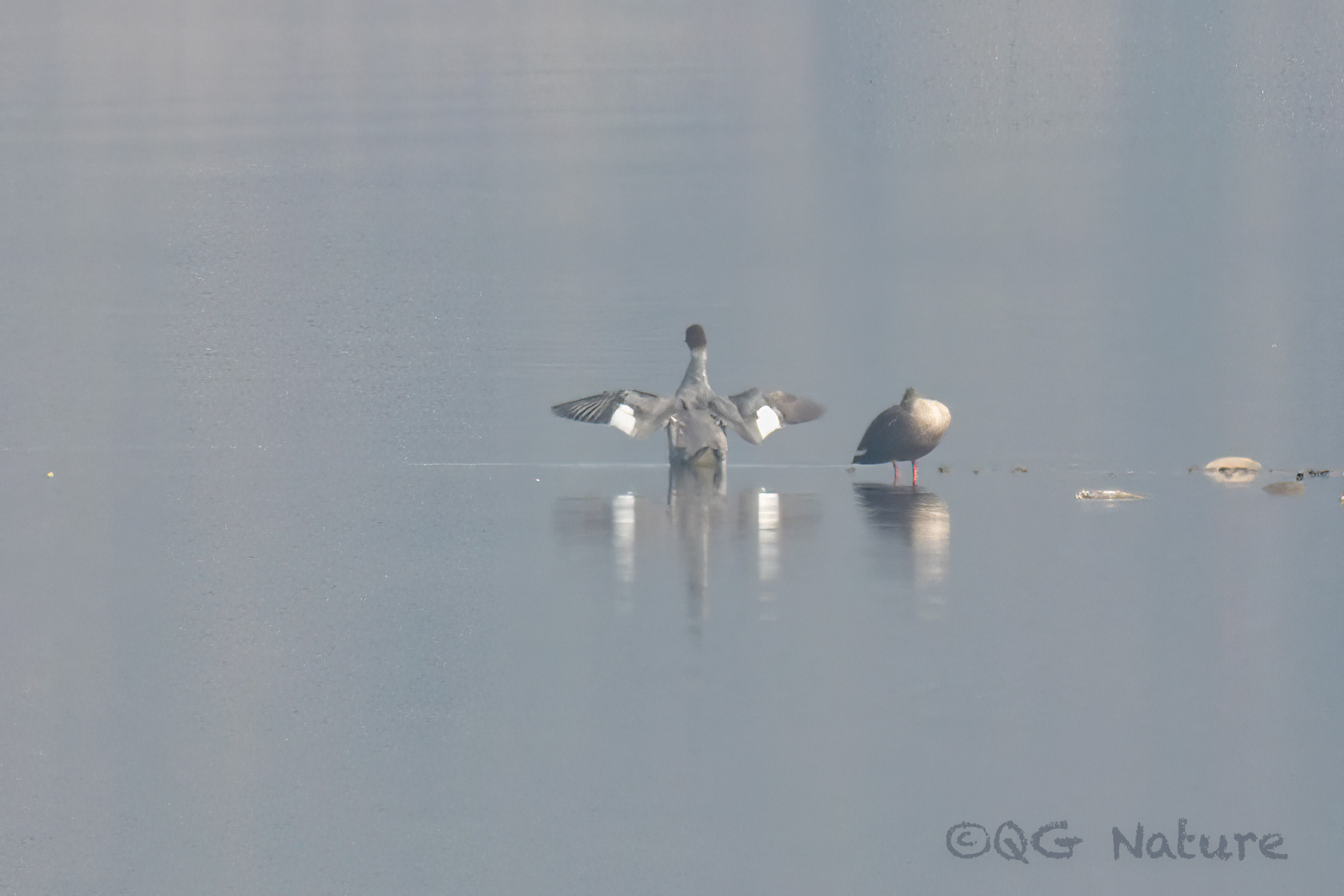
Piscivorous ducks using serrated bills to grip slippery prey, they take fish, molluscs, crustaceans, worms, insect larvae, and amphibians, occasionally small mammals and birds. They fish cooperatively in groups, forming semicircles to drive fish into shallows. When not diving, they swim on the surface or rest on mid-stream rocks, often sunning with wings half-spread. Their normal call is a low harsh croak, but breeding season brings plaintive whistles from males and juveniles. They nest in tree cavities, requiring mature forest, readily using large nest boxes with 15 cm entrance holes. The female lays 6-17 eggs and raises one brood. Ducklings ride on her back to feeding waters and fledge at 60-70 days. Crèches are common, with single females observed escorting over 70 ducklings.
Conservation
Not currently threatened globally, though illegal persecution by game-fishing interests persists in some regions. The species has expanded its breeding range significantly in Western Europe since 1850, with strong population increases in the Alps. Ireland holds very few breeding birds, restricted to County Wicklow. The species is protected under the Agreement on the Conservation of African-Eurasian Migratory Waterbirds. A rare February 2020 sighting in Central Park, New York, drew attention when the bird showed signs of distress with debris caught on its beak.
Culture
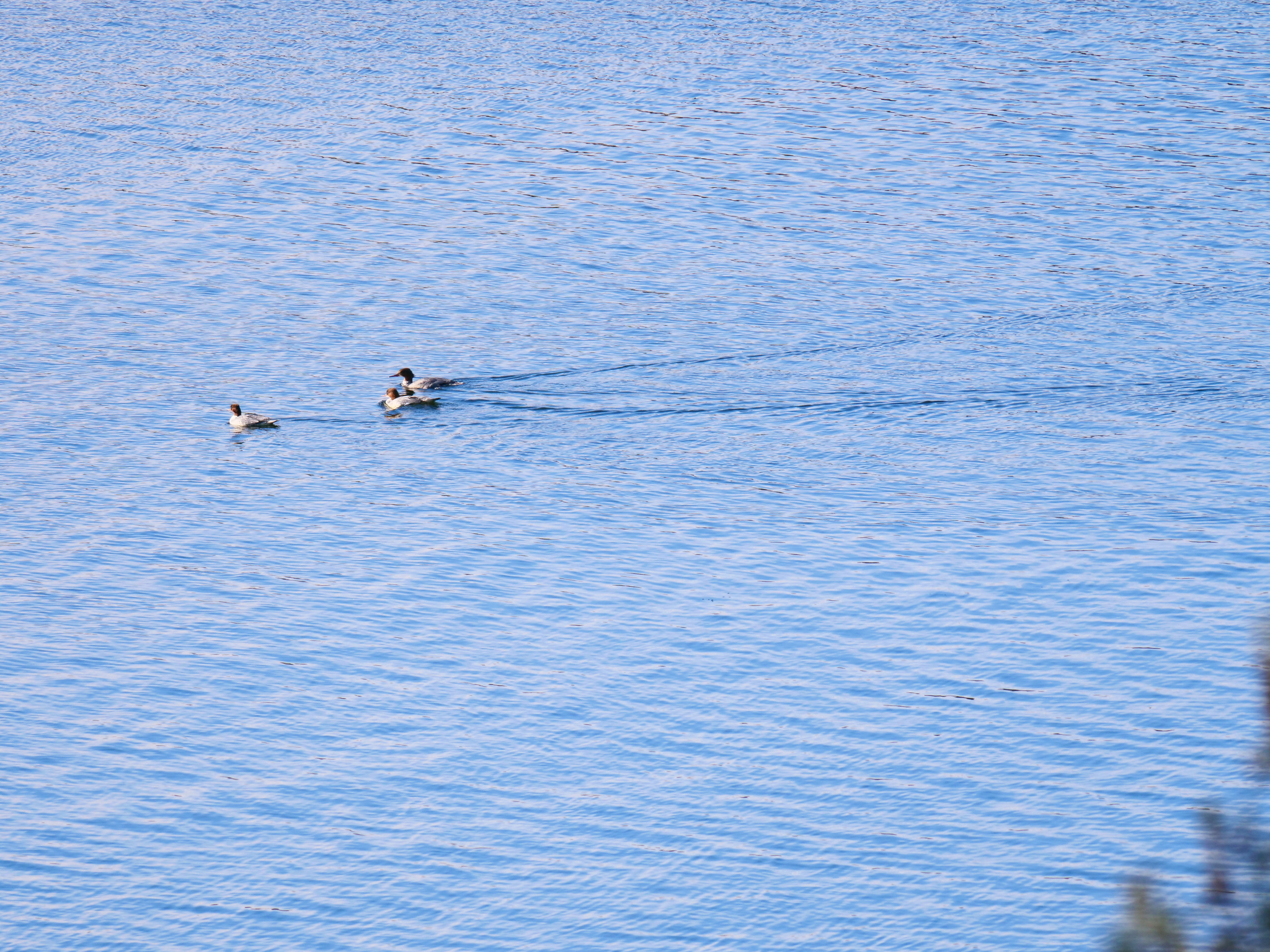
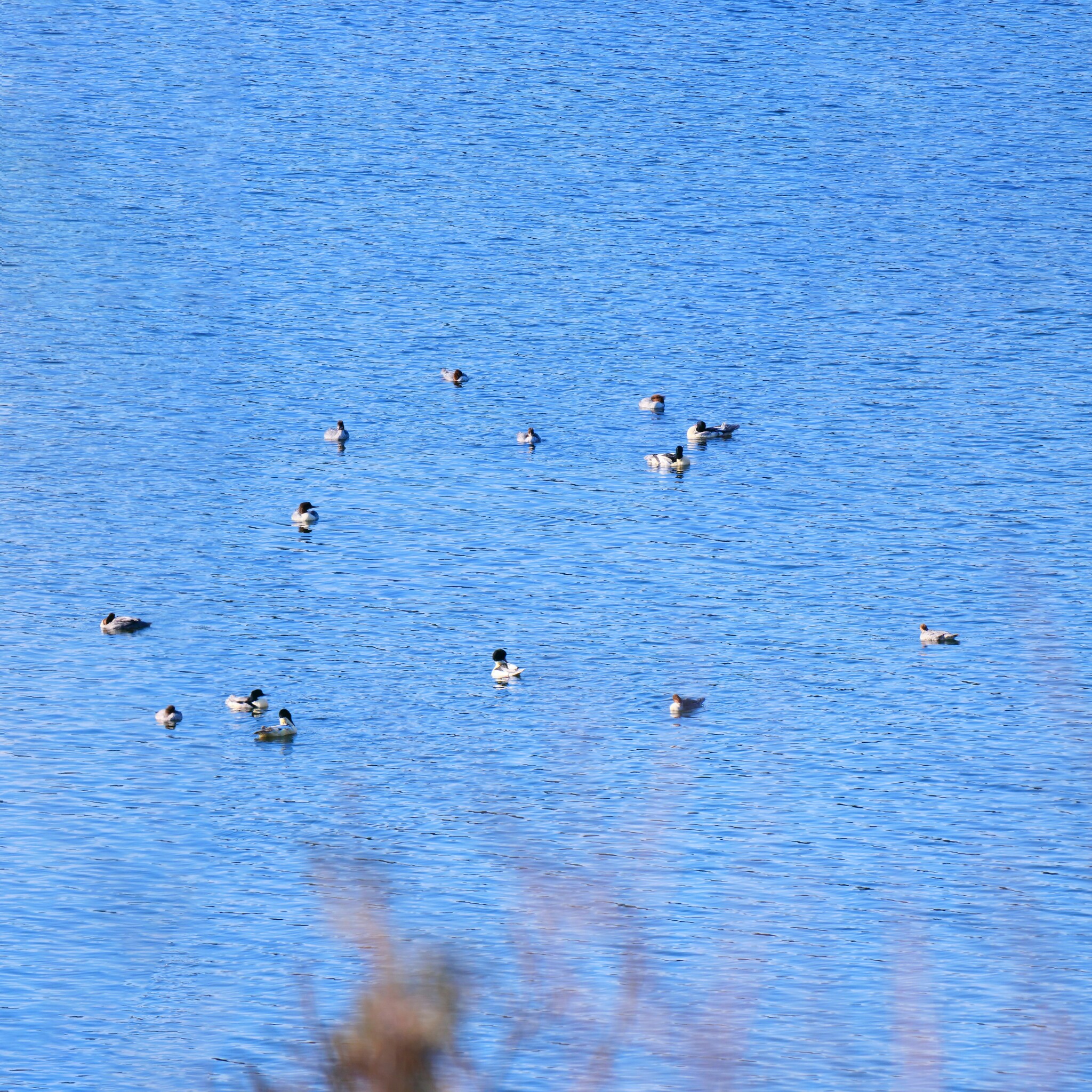
John James Audubon featured the species in his 1847 work The Birds of America, using both 'Buff-breasted Merganser' and 'goosander' names. Artist Robert Wilkinson Padley documented the species in an 1817 painting titled 'A Goosander'. The bird continues to inspire contemporary wildlife photography, with recent documentation of flocks at locations like Koshi Tappu Wildlife Reserve in Nepal and Ystad, Sweden. The species is one of many waterbirds protected by international conservation agreements covering African-Eurasian migratory species.
Source: Wikipedia · CC BY-SA 3.0
Taxonomy
- Order
- Anseriformes
- Family
- Anatidae
- Genus
- Mergus
- eBird Code
- commer
Vocalizations
Subspecies (3)
-
Mergus merganser americanus
breeds southern and central Alaska eastward to eastern Canada and southward to northern California, Colorado, and the north-central and northeastern USA; winters southern Alaska and Maritime Provinces (Canada) southward to north-central Mexico
-
Mergus merganser merganser
breeds Iceland, northern and central Europe, subarctic Russia eastward through northeastern Kazakhstan and northern Mongolia to Kamchatka, Hokkaido, and northeastern China; winters in southern Eurasia
-
Mergus merganser orientalis
breeds Afghanistan to Tibet and southern China; winters to India and southwestern China
Data Sources
Species description from Wikipedia, licensed under CC BY-SA 3.0.
Bird images and sounds sourced from GBIF, contributed by citizen scientists worldwide under Creative Commons licenses.
Taxonomy data from AviList 2025.