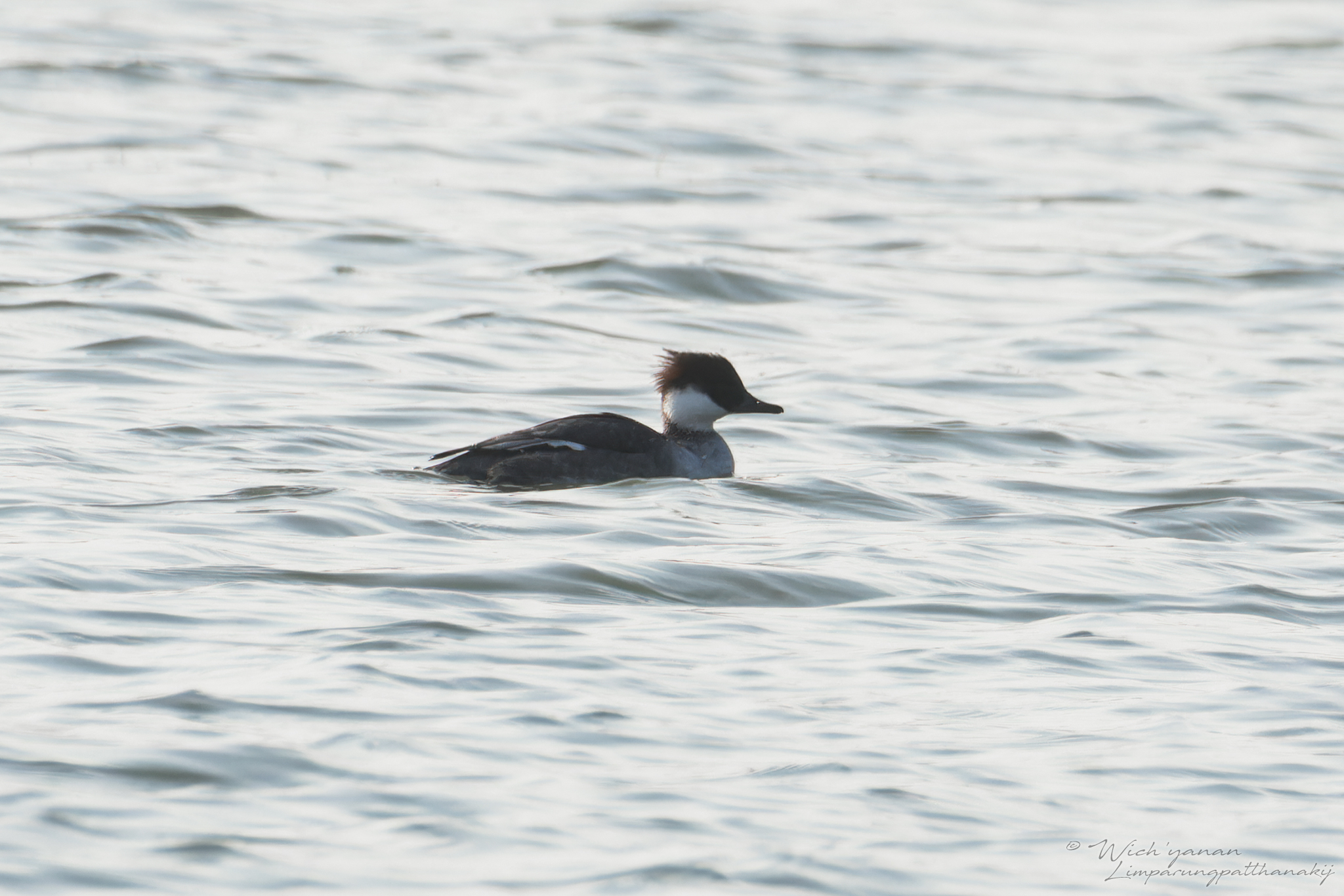
Anseriformes / Anatidae / Mergellus
Smew
Mergellus albellus · 斑头秋沙鸭
Introduction
A species of duck and the only living member of the genus Mergellus, which is the sister taxon to Mergus and Lophodytes. It breeds in the northern Palearctic taiga and winters on sheltered coasts and inland lakes across Europe and Asia. The species nests in tree holes and dives for fish. It is listed under the Agreement on the Conservation of African-Eurasian Migratory Waterbirds (AEWA) and its population is decreasing, though it is not considered threatened on the IUCN Red List.
Description
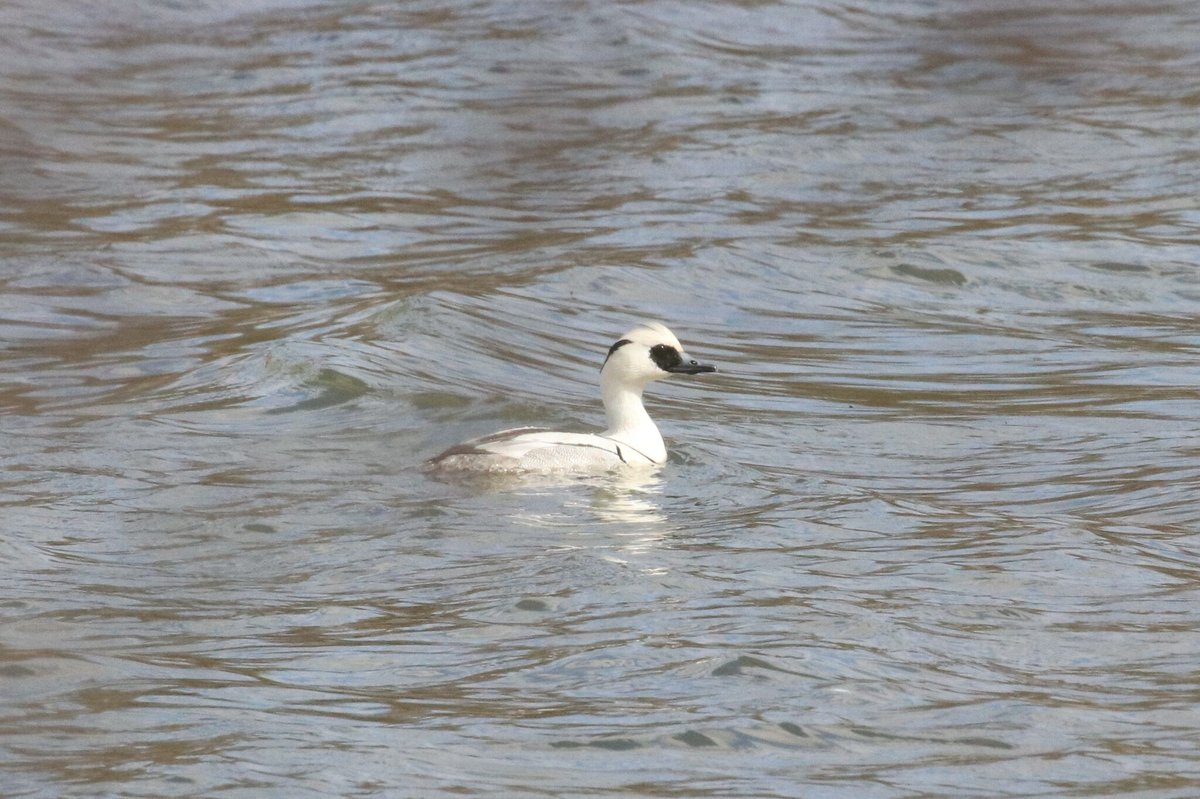
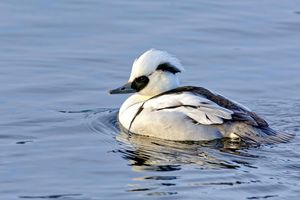
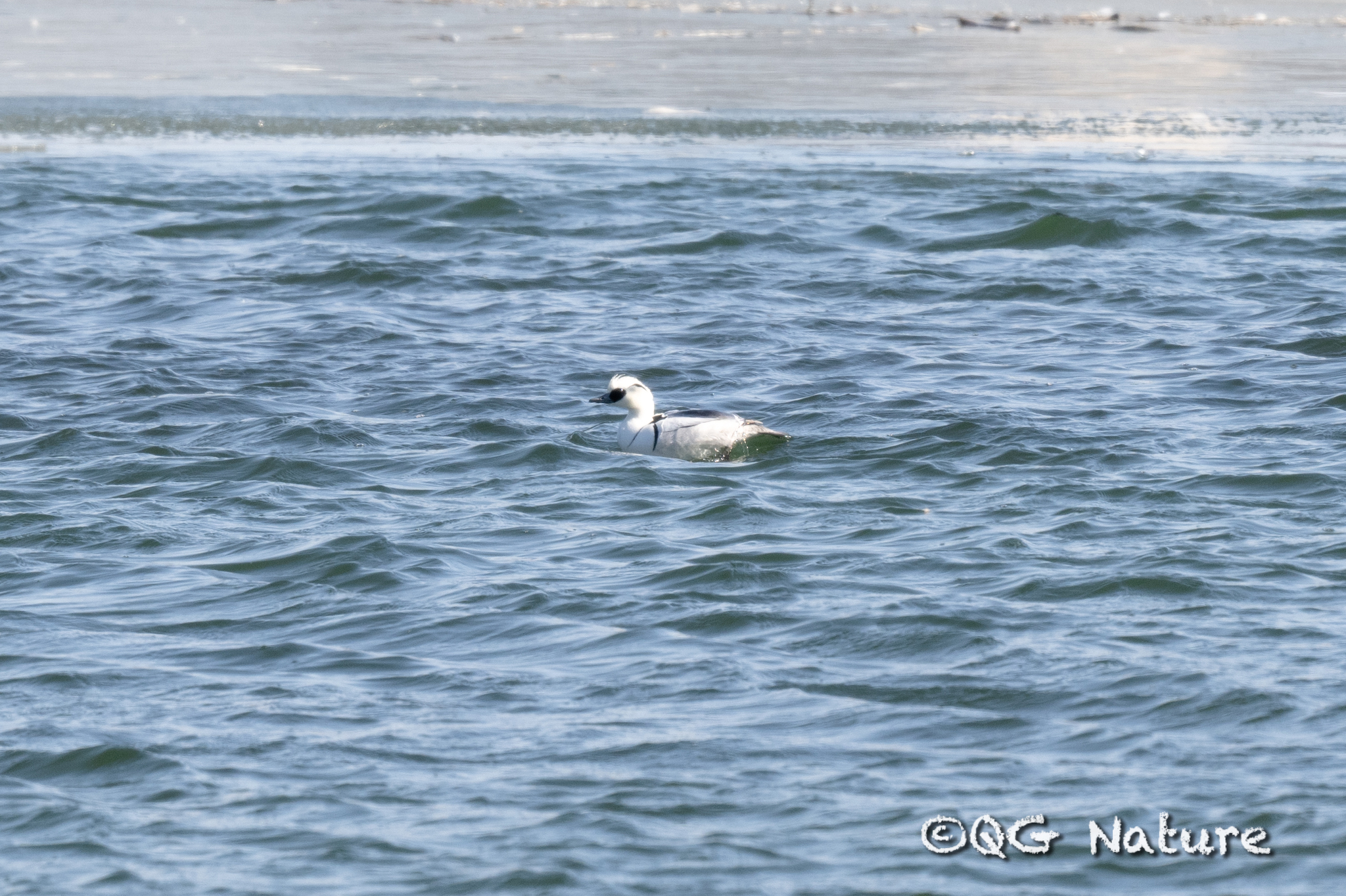
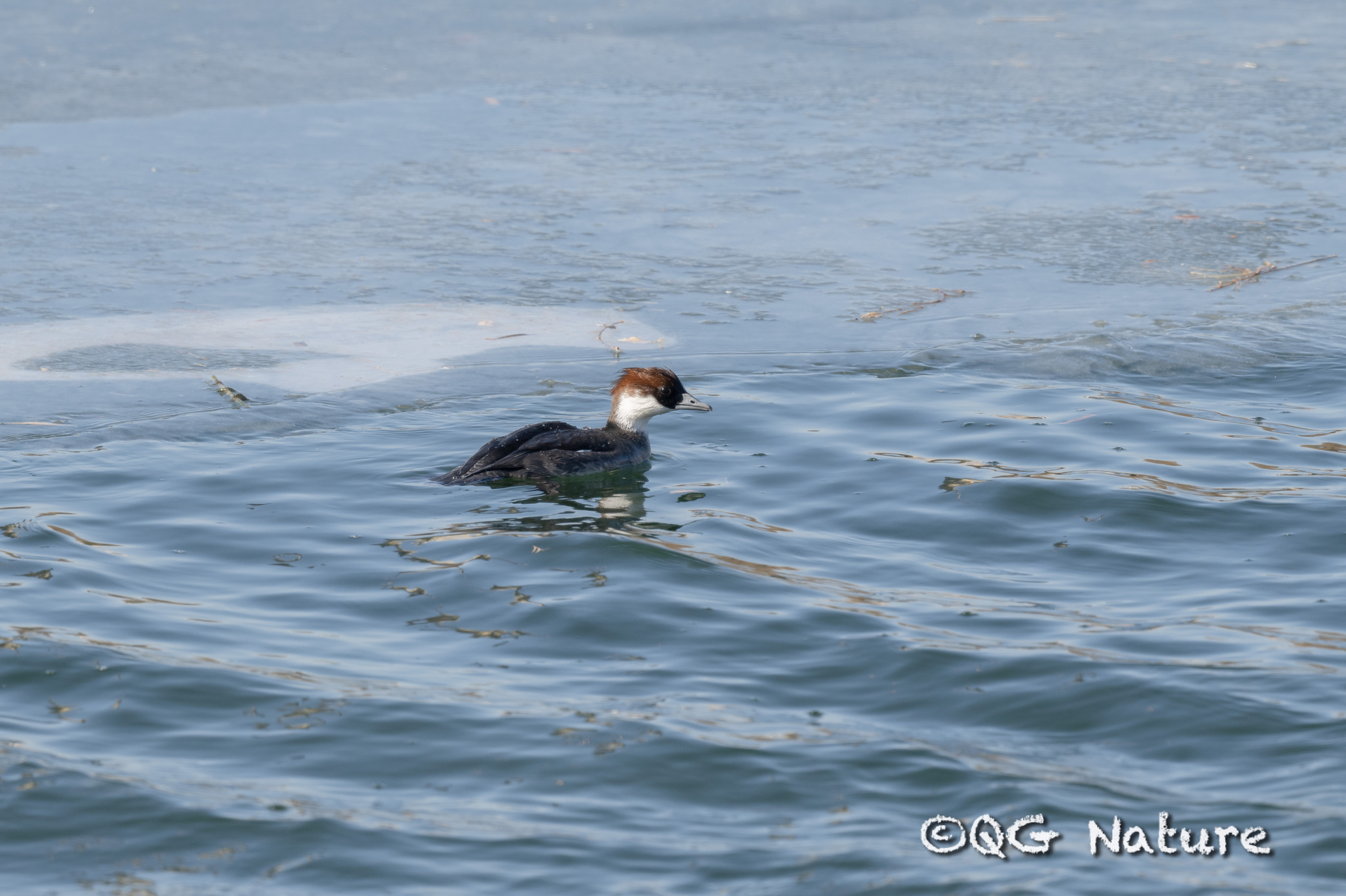
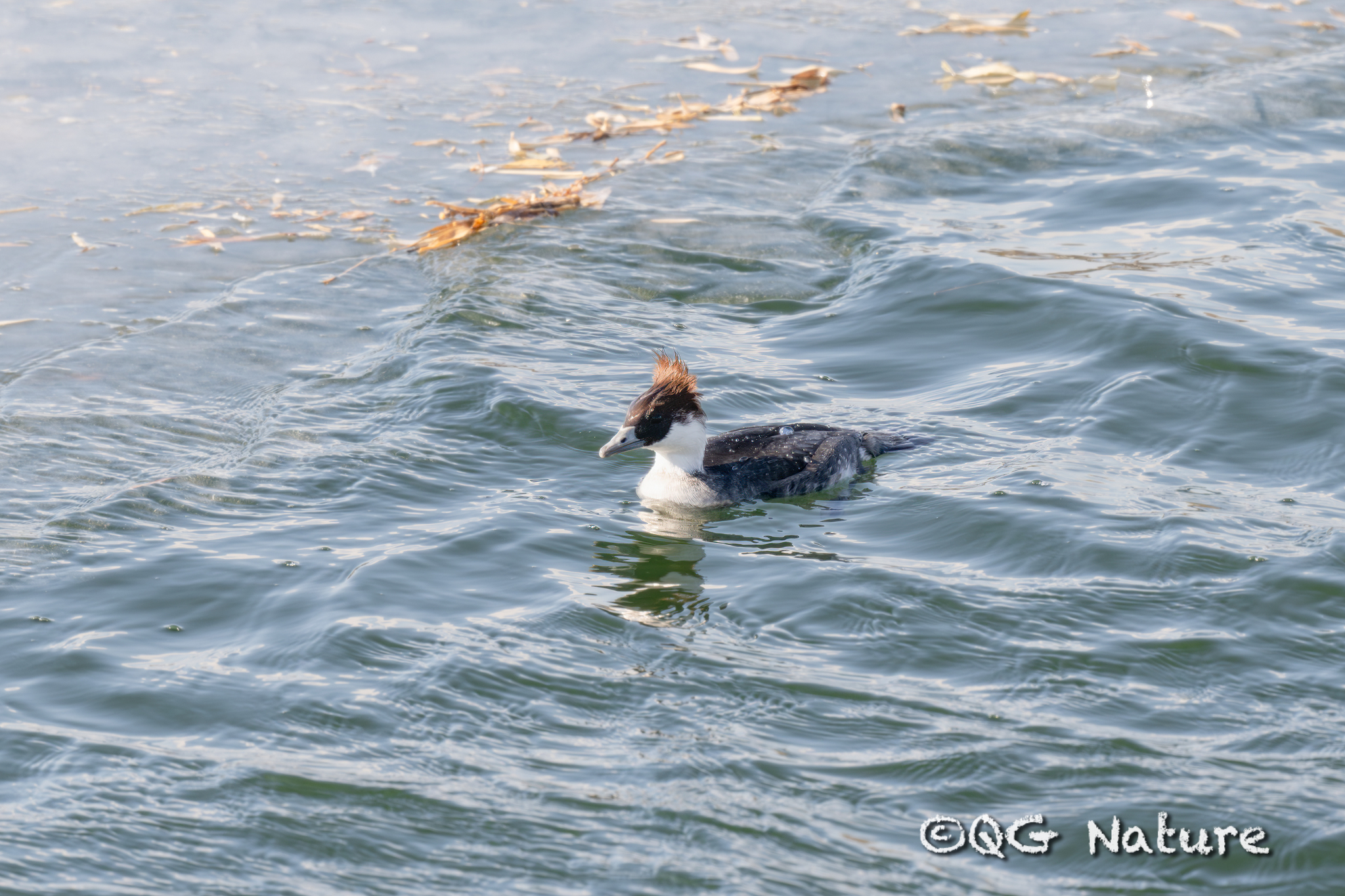
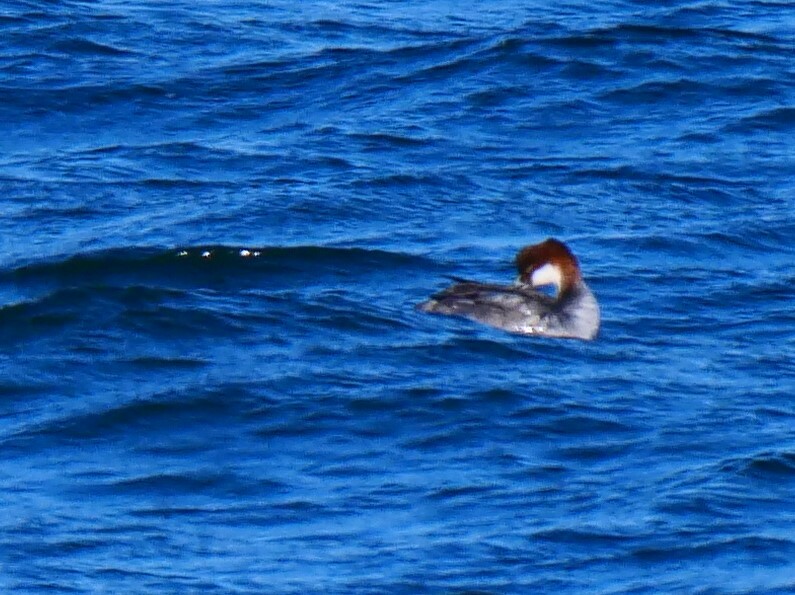
Length is 38–44 cm (15–17 in), wingspan 56–69 cm (22–27 in), and weight 450–650 g (16–23 oz). Adult males have a distinctive black-and-white 'cracked ice' or 'panda' appearance. Females and immature males are grey with a chestnut forehead and crown, white chin and cheeks, and black lores. Young males moult into adult plumage at 8–10 months old. Adult males exhibit an eclipse plumage similar to females but retain more white in the wing during late summer and autumn. The bill has a hooked tip and serrated edges.
Identification
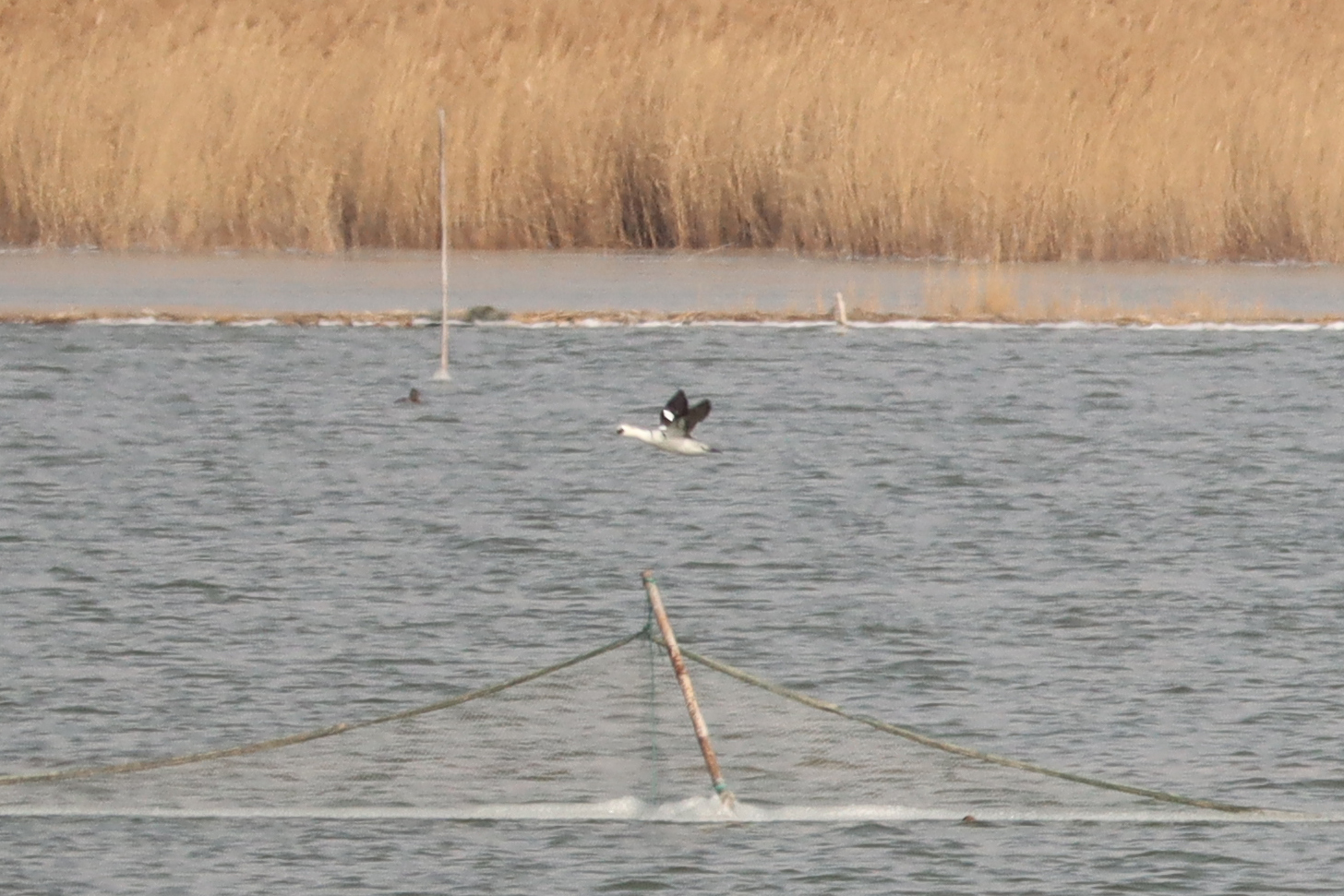
Adult males are unmistakable with their black-and-white pattern. In flight, the species shows oval white wing-patches and appears very black-and-white. Females and immatures are identified by their grey body, chestnut head, and white cheeks. The bill shape aids in identification when close.
Distribution & Habitat
Breeds in the northern taiga from northern Scandinavia east to Chukotka, requiring trees for nesting. Winters on sheltered coasts and inland lakes in Europe (Baltic Sea, Black Sea, northern Germany, Low Countries, Great Britain) and Asia (Caspian Sea, eastern China, Korea, Japan, and rarely northern India). Vagrants occur in northern Africa (Algeria, Egypt) and North America (regular in the Aleutian Islands, Alaska, and Canada).
Behavior & Ecology
Prefers fish-rich lakes and slow rivers, often staying near edges under small trees. Nests in tree holes, such as old woodpecker nests. Breeding occurs in May with a clutch of 7–11 cream-coloured eggs incubated by the female for 26–28 days. Ducklings leave the nest soon after hatching and fledge within about 10 weeks. The bird is shy and flushes easily. It dives to catch fish using its serrated bill.
Conservation
The population is decreasing. It is not considered threatened on the IUCN Red List. The species is covered by the Agreement on the Conservation of African-Eurasian Migratory Waterbirds (AEWA).
Source: Wikipedia · CC BY-SA 3.0
Taxonomy
- Order
- Anseriformes
- Family
- Anatidae
- Genus
- Mergellus
Distribution
northern Eurasia; winters to North Africa, India, and eastern China
Data Sources
CBR Notes: 中文名由白秋沙鸭改为斑头秋沙鸭
Species description from Wikipedia, licensed under CC BY-SA 3.0.
Bird images and sounds sourced from GBIF, contributed by citizen scientists worldwide under Creative Commons licenses.
Taxonomy data from AviList 2025.