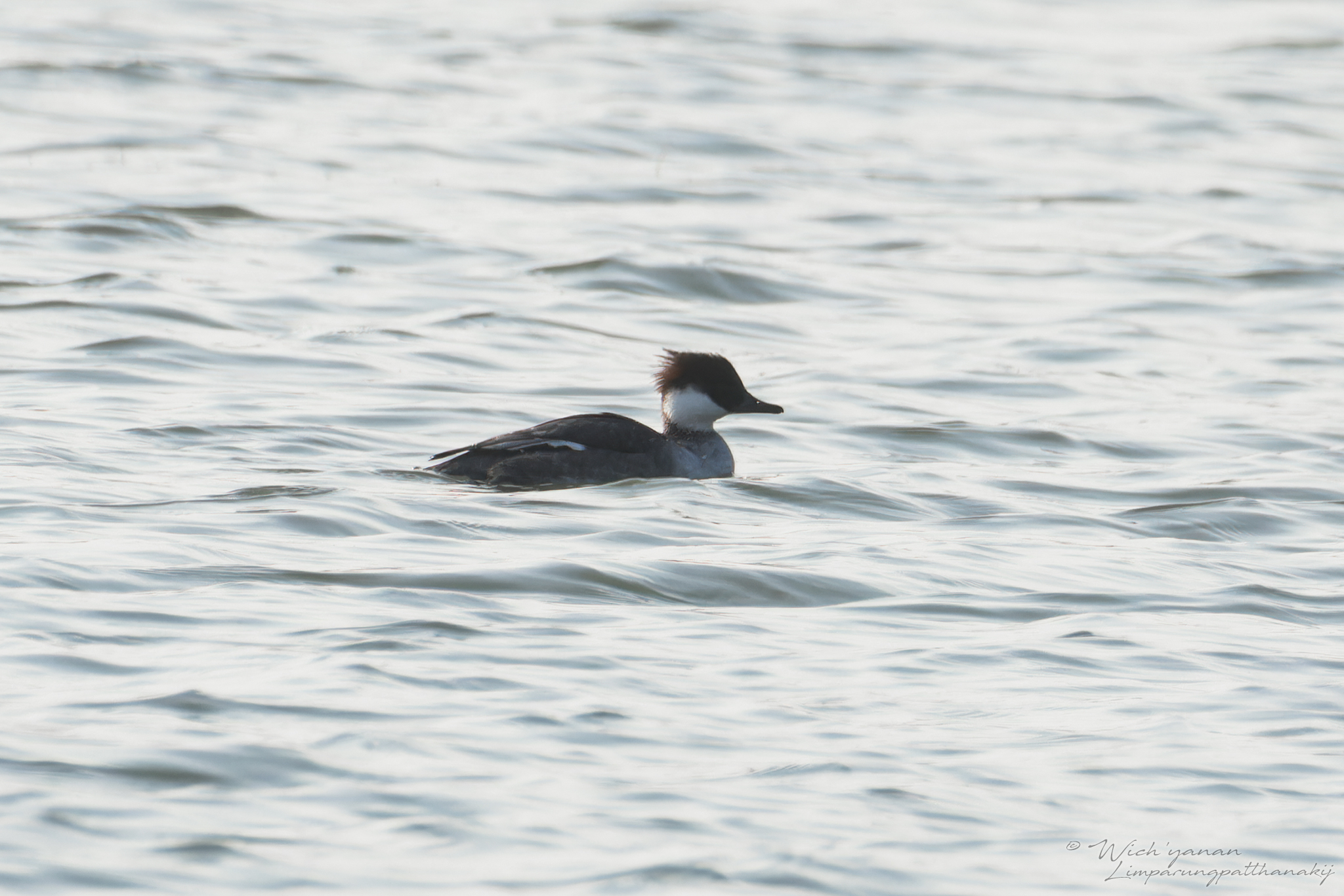
Smew
Mergellus albellus
斑头秋沙鸭
Introduction
The smew is a diving duck and the sole living member of the genus Mergellus. It is closely related to typical mergansers. During winter, it occurs across Europe and Asia, appearing in small numbers in Britain on sheltered coastal waters, reservoirs, and inland lakes. It frequently associates with other diving ducks such as goldeneye and pochard.
Description
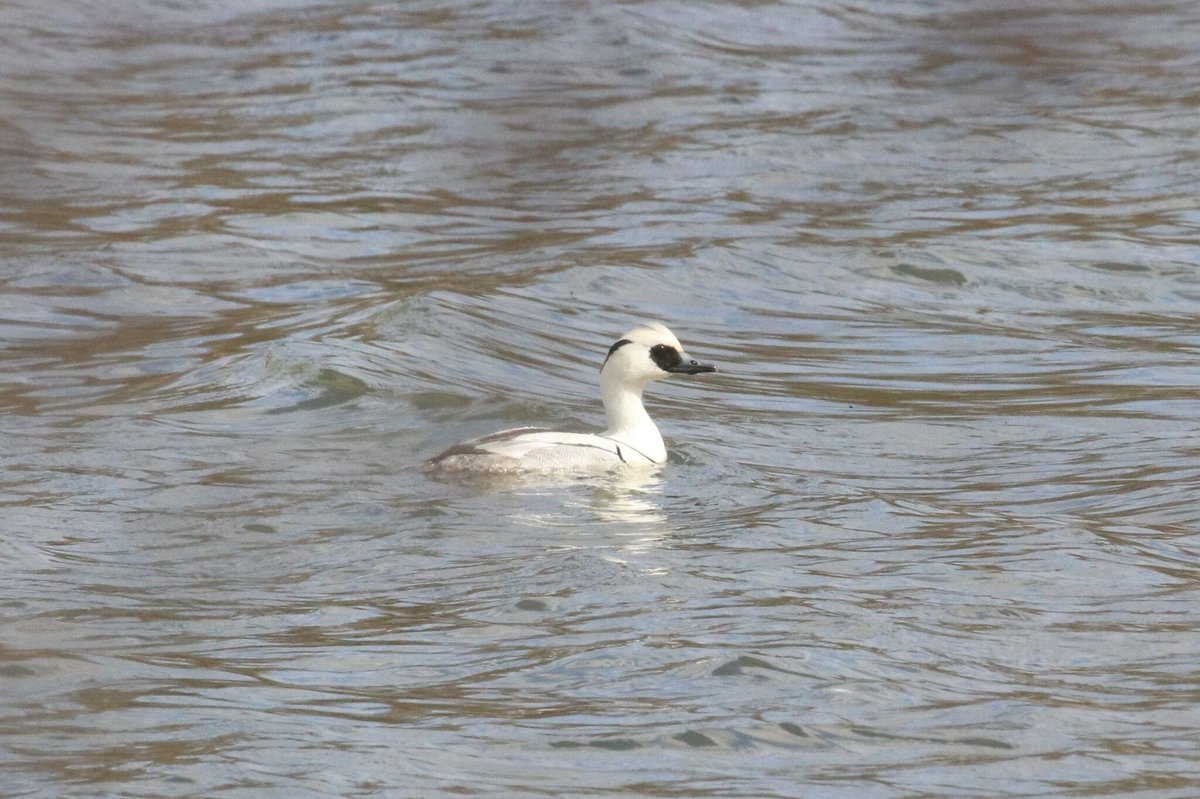
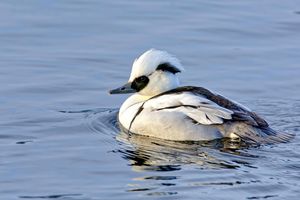
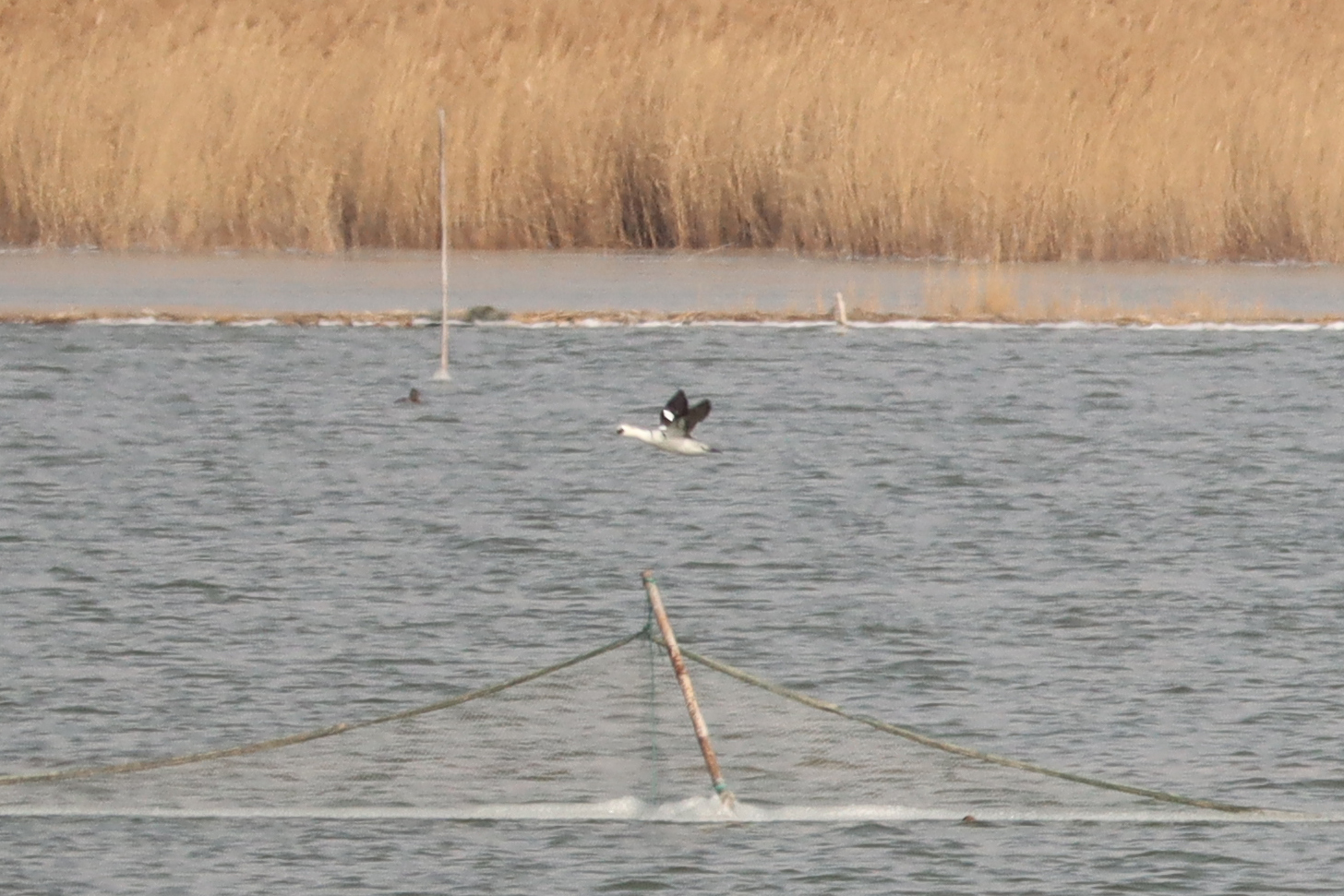
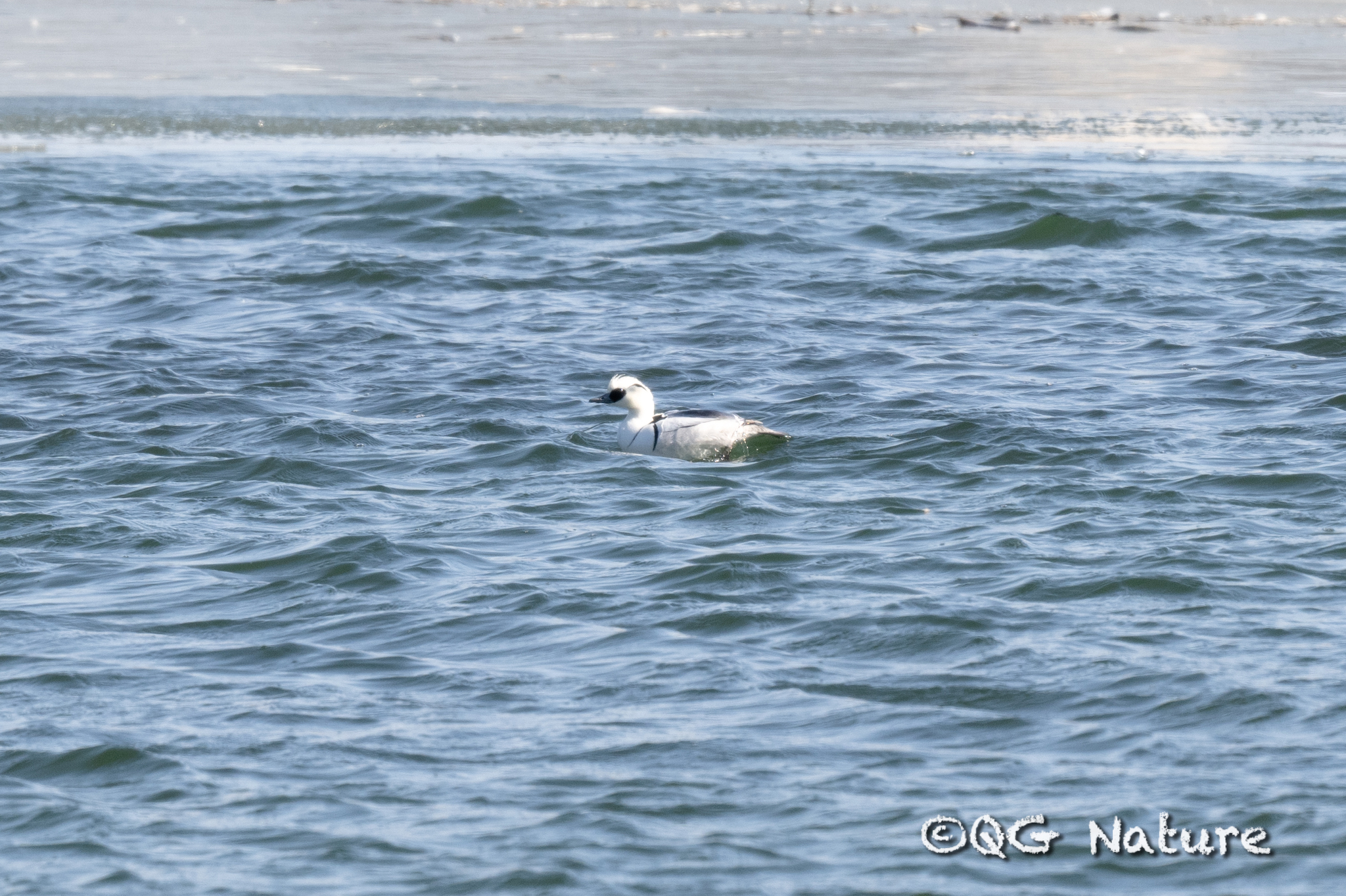
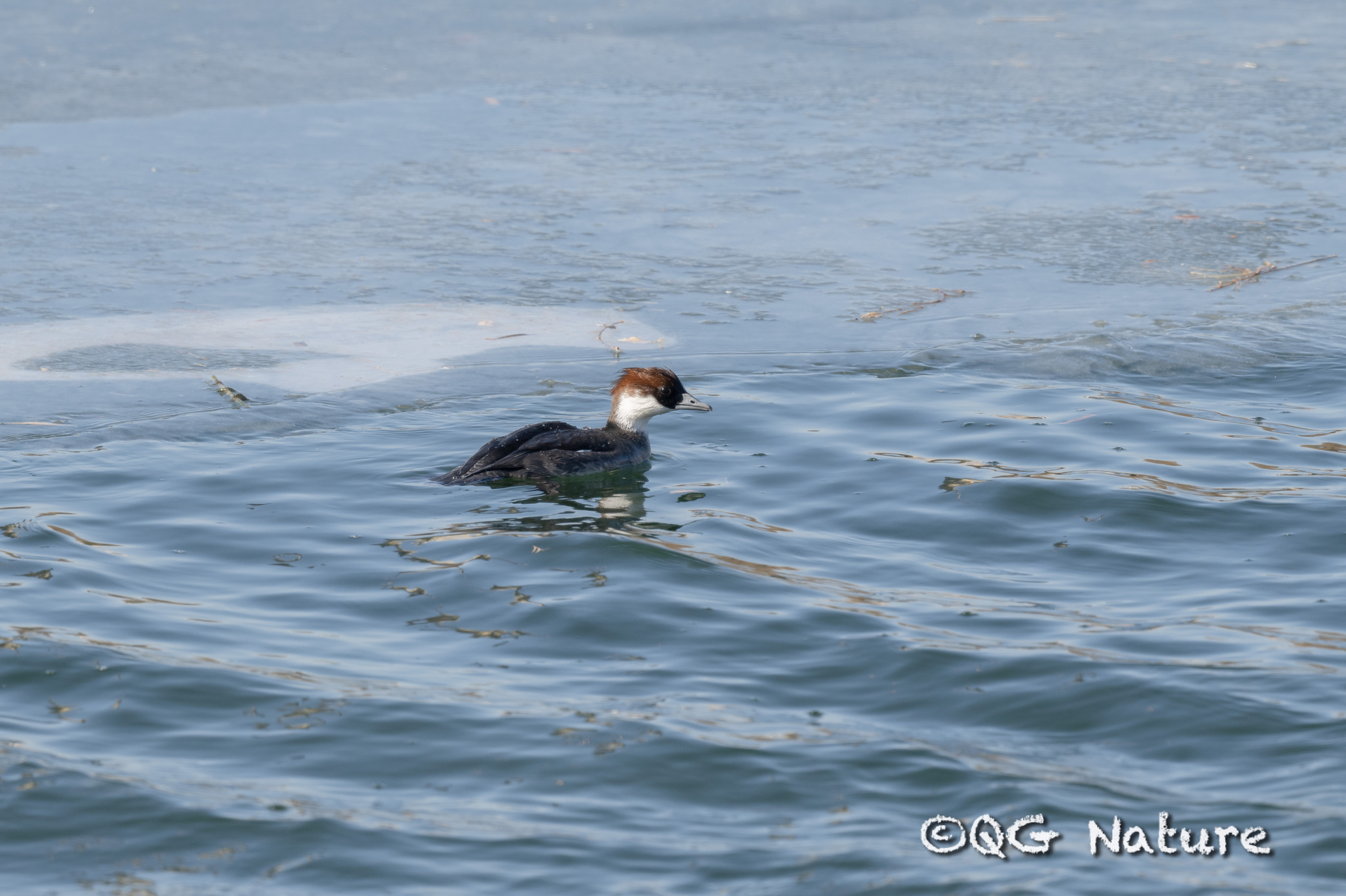
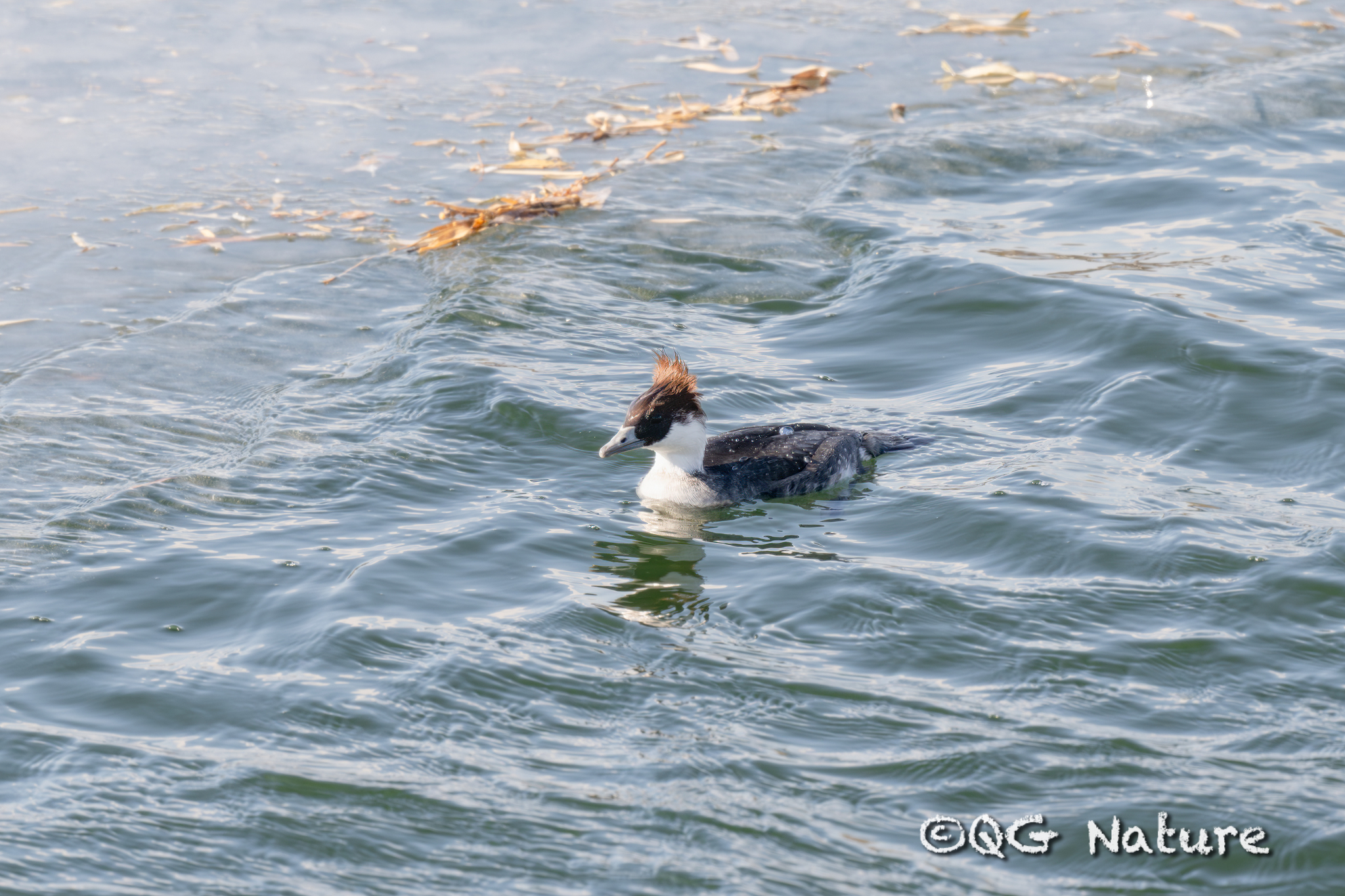
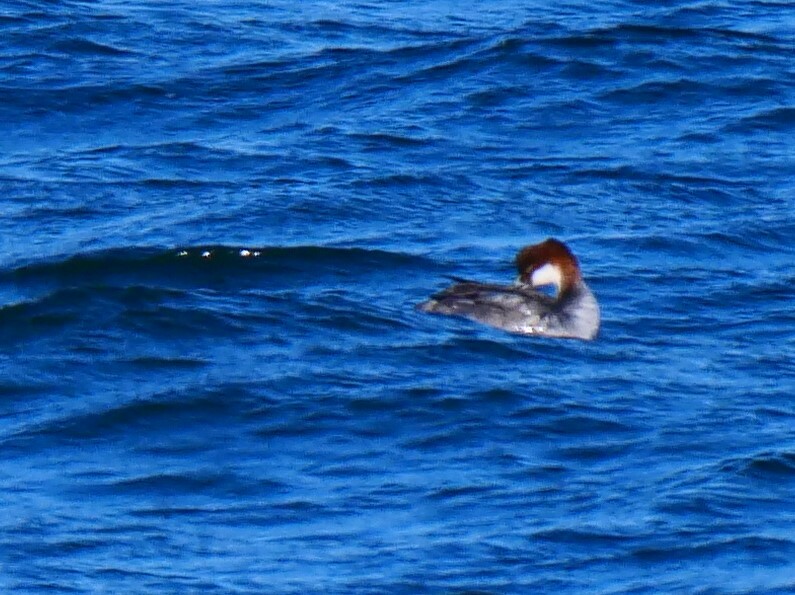
A compact diving duck measuring 38-44 cm in length with a wingspan of 56-69 cm and weighing 450-650 g. The adult male in breeding plumage is unmistakable, showing a predominantly white body with intricate black markings that create a 'cracked ice' pattern across the upperparts and a black face patch resembling a panda's markings. In flight, the contrast between black and white plumage is striking, with characteristic oval white patches on the wings. Females and immature males share a more subdued appearance: greyish body plumage with a distinctive chestnut forehead and crown, white chin and cheeks, and black lores, earning them the nickname 'redhead' smew. The bill is relatively short and laterally flattened with a hooked tip and serrated edges, an adaptation for catching slippery fish. Adult males molt into an eclipse plumage in late summer, becoming similar to females but retaining more white in the wing.
Identification
Adult male smew are unmistakable across all views due to their unique black-and-white 'panda' pattern. In flight, the combination of white wing-patches and dark body creates a distinctive silhouette. Females and young males can be distinguished from similar species by their combination of grey body, chestnut crown, and white face markings. They differ from female goldeneye in having a chestnut rather than brown crown and a more extensively white face. The relatively small size and compact structure help distinguish them from larger mergansers. When swimming, they sit low on the water and often show a slight crest. The hooked, serrated bill is visible at close range and is diagnostic among European diving ducks.
Distribution & Habitat
Breeds across the Palearctic northern taiga zone from northern Scandinavia eastward through Russia to Chukotka, requiring both fish-rich lakes or slow rivers and trees for nesting. As a migratory species, it leaves breeding areas in autumn to winter on sheltered coastal waters and inland lakes. In Europe, main wintering areas include the Baltic Sea, Black Sea coasts, northern Germany, the Low Countries, and Britain—primarily in southeast England though small numbers reach Scotland. Asian wintering grounds extend to the Caspian Sea, eastern China, Korea, and Japan, with occasional individuals reaching northern India. Vagrants have been recorded in North America, particularly Alaska and the Aleutian Islands, and in northern Africa including Algeria and Egypt.
Behavior & Ecology
This is a specialized fish-eating duck that hunts underwater, using its serrated bill to grip slippery prey. It prefers the edges of lakes where it can feed in shallower water, often under the cover of overhanging trees. The species breeds in May, laying 7-11 cream-colored eggs in tree cavities such as old woodpecker nests; the female incubates alone for 26-28 days. Ducklings leave the nest shortly after hatching and fledge within approximately 10 weeks. The smew is a shy bird that flushes easily when approached, taking flight with rapid wingbeats and low flight over water. In winter, they are typically seen in small groups or pairs, though larger aggregations can form at favorable sites. Vocalizations are generally limited, with most communication occurring through body movements and postures rather than calls.
Conservation
The smew is currently classified as Least Concern on the IUCN Red List, indicating that it does not face an immediate threat of extinction. However, populations are reported to be decreasing, likely due to habitat degradation, pollution affecting fish stocks in their freshwater habitats, and disturbance at wintering sites. The species is protected under the Agreement on the Conservation of African-Eurasian Migratory Waterbirds (AEWA), which aims to coordinate international conservation efforts for migratory waterbirds. Conservation concerns include the loss of suitable breeding habitat through forest management practices and the impacts of climate change on boreal freshwater ecosystems. Monitoring programs track numbers at key wintering sites to detect population trends.
Culture
The smew has no extensive folklore or cultural significance documented in the available literature. The etymology of the common name 'smew' traces to 17th-century usage, likely derived from Dutch 'smient' (wigeon) or German terms 'Schmeiente' or 'Schmünte' meaning wild duck, possibly connected to the dialectal term 'smee' for a wild duck. The scientific genus name Mergellus is a Latin diminutive of 'Mergus,' meaning to dive or submerge, used by Pliny for an unspecified diving bird. The species has occasionally appeared in ornithological works and bird art, primarily valued for its striking appearance rather than any cultural symbolism.
Source: Wikipedia · CC BY-SA 3.0
Taxonomy
- Order
- Anseriformes
- Family
- Anatidae
- Genus
- Mergellus
- eBird Code
- smew
Distribution
northern Eurasia; winters to North Africa, India, and eastern China
Data Sources
CBR Notes: 中文名由白秋沙鸭改为斑头秋沙鸭
Species description from Wikipedia, licensed under CC BY-SA 3.0.
Bird images and sounds sourced from GBIF, contributed by citizen scientists worldwide under Creative Commons licenses.
Taxonomy data from AviList 2025.