Coraciiformes / Alcedinidae / Megaceryle
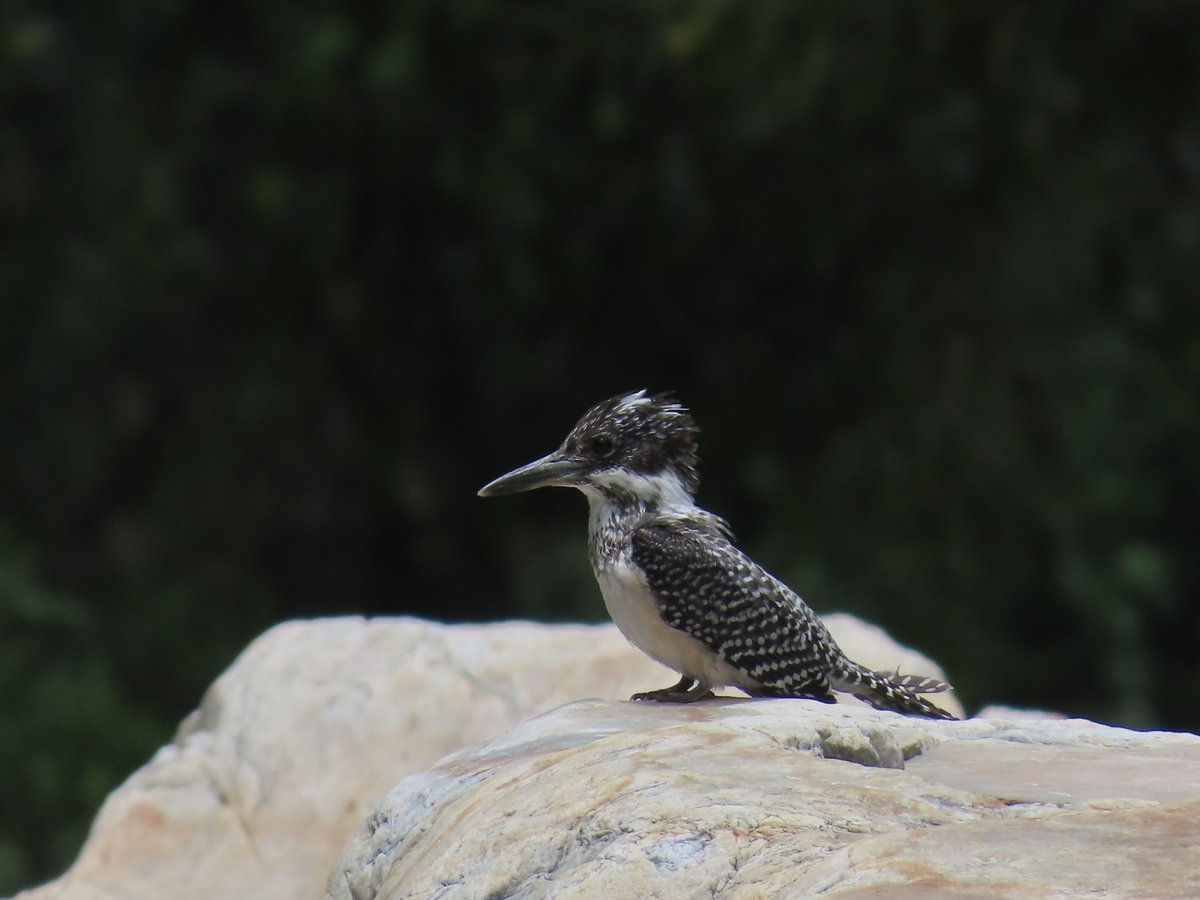
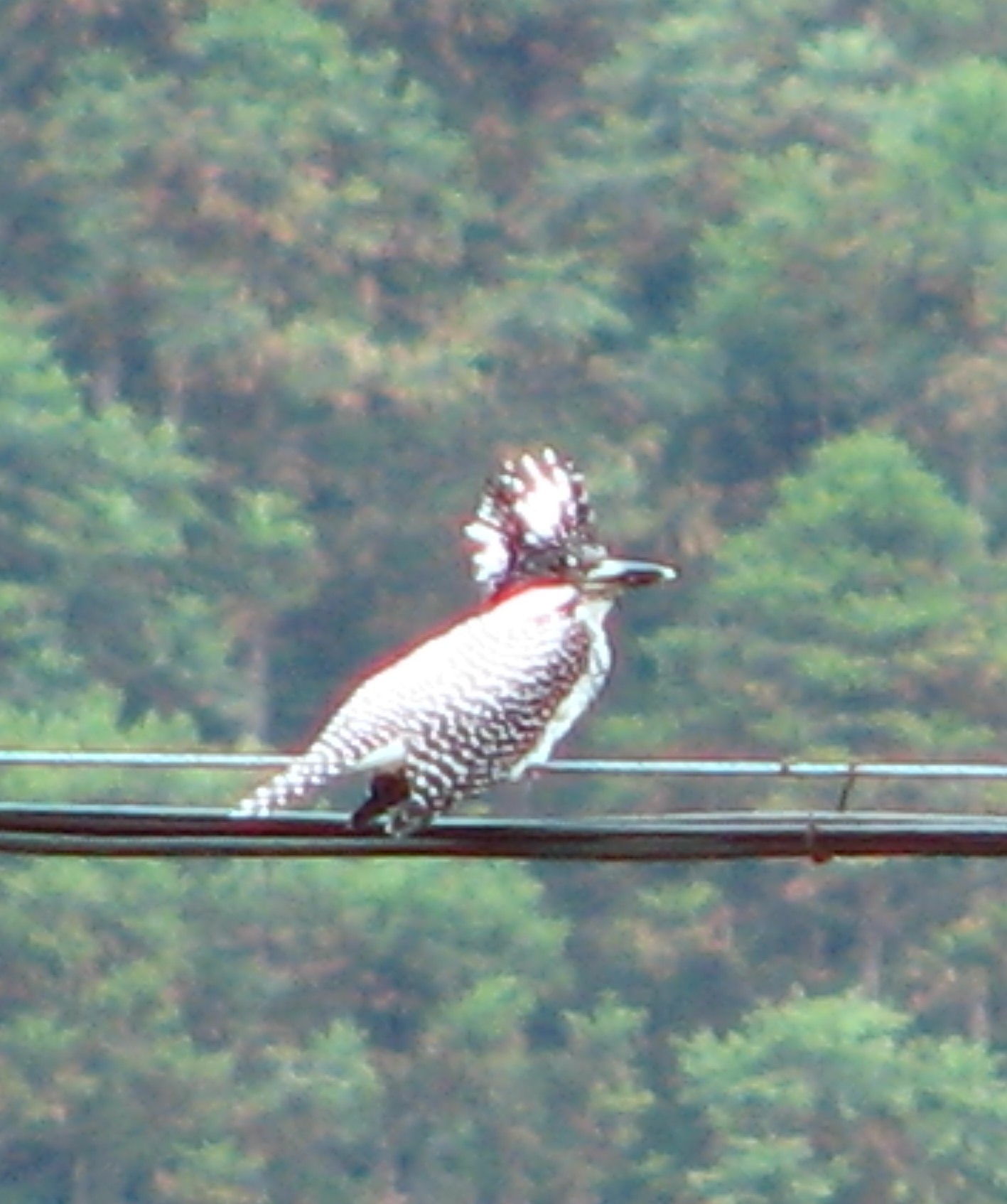
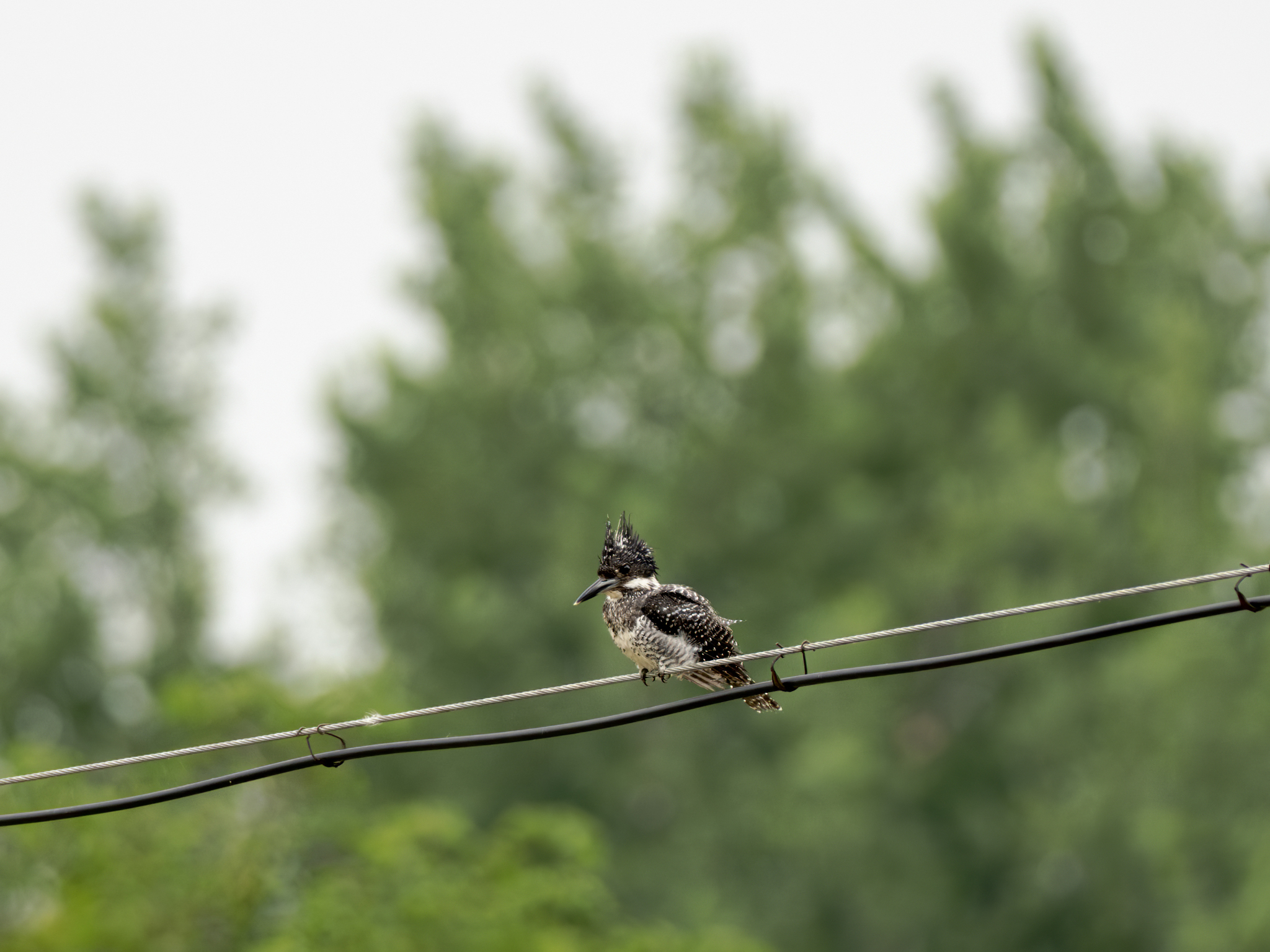
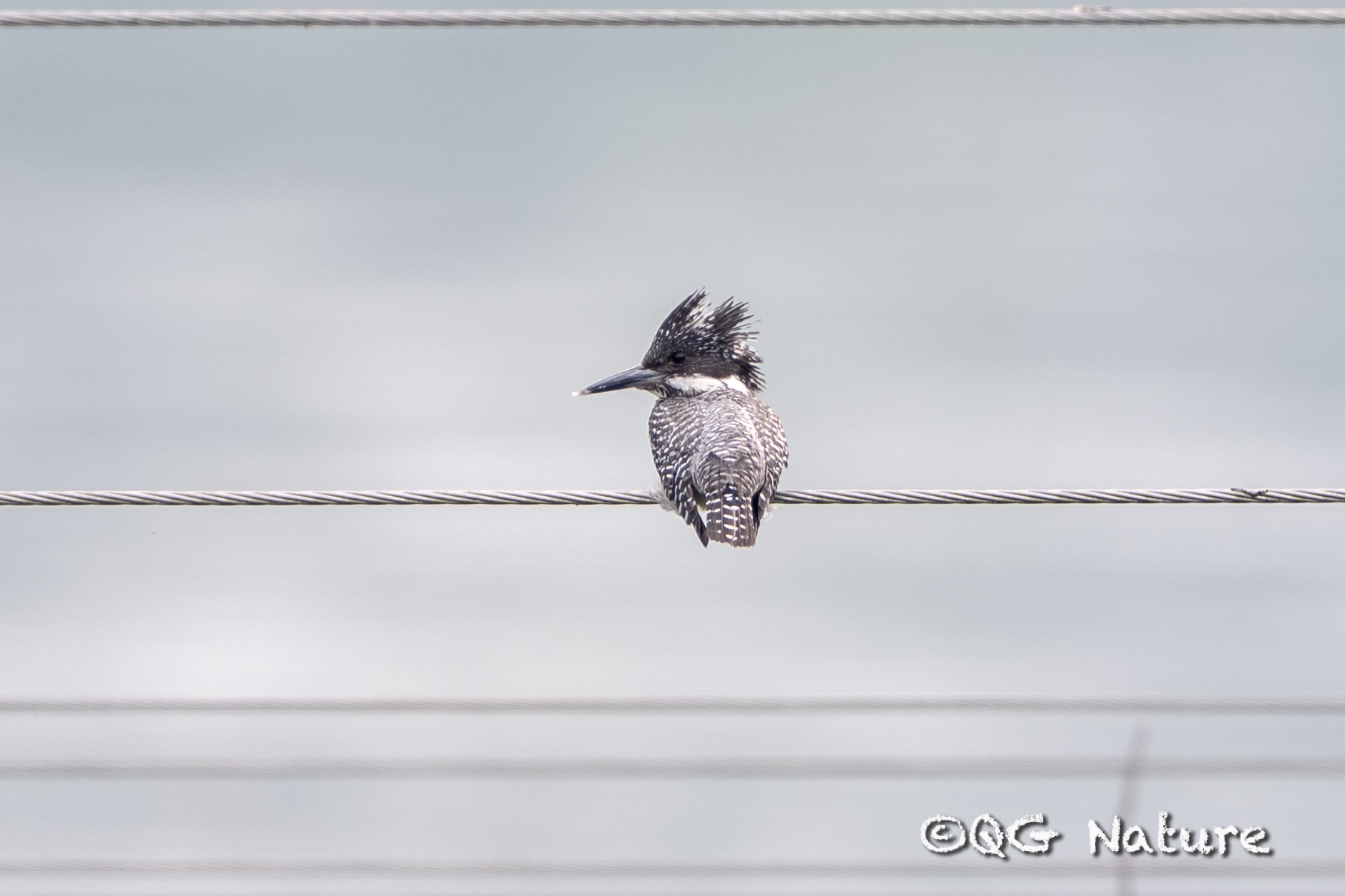
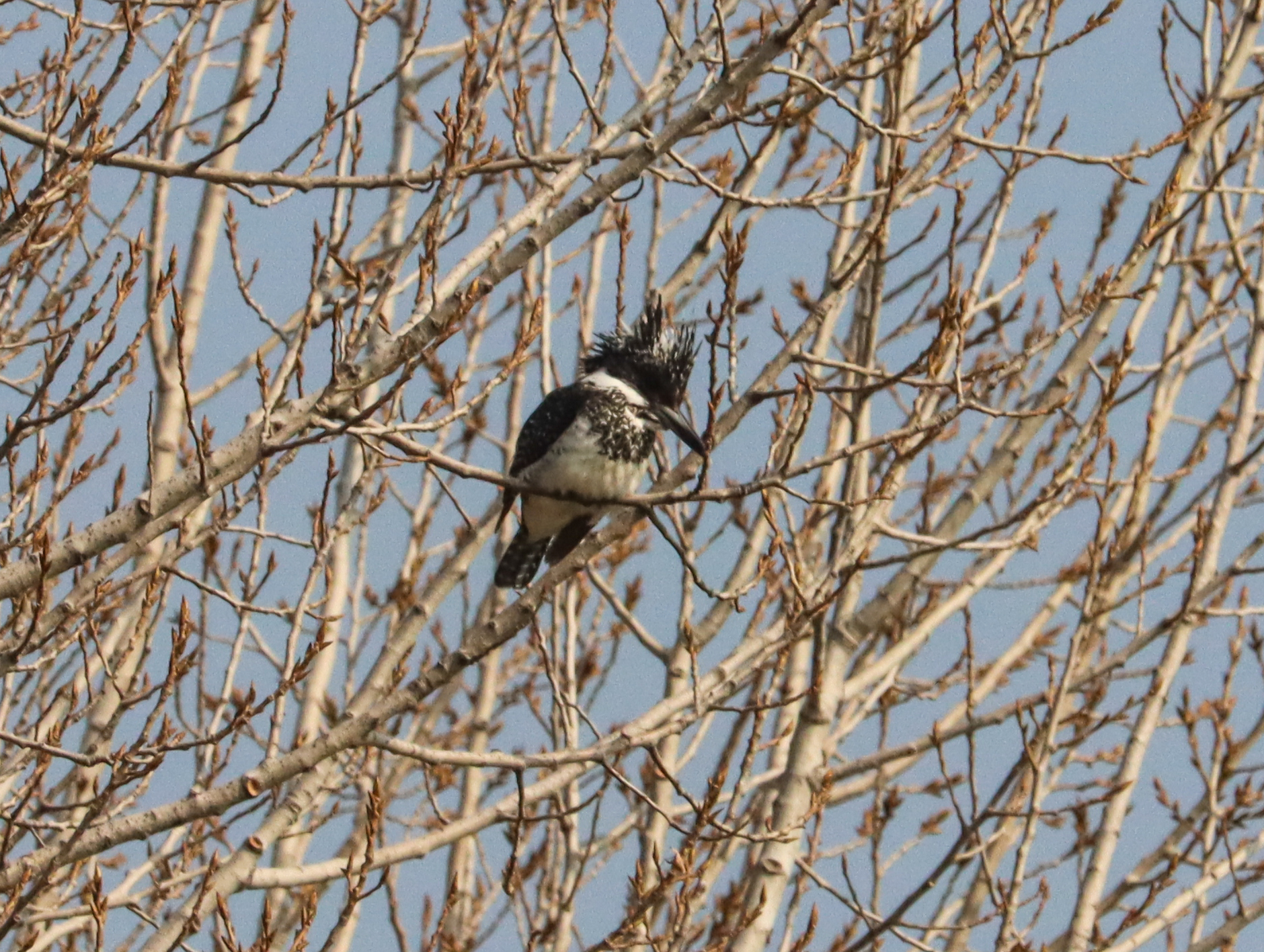
Crested Kingfisher
Megaceryle lugubris · 冠鱼狗
Introduction
A very large kingfisher in the genus Megaceryle, native to parts of southern Asia. It inhabits forested areas near rivers and mountain foothills, often at higher altitudes than sympatric species. Distinctive for diving from high perches rather than hovering and for excavating deep burrows in vertical banks. Classified as Least Concern by the IUCN.
Description
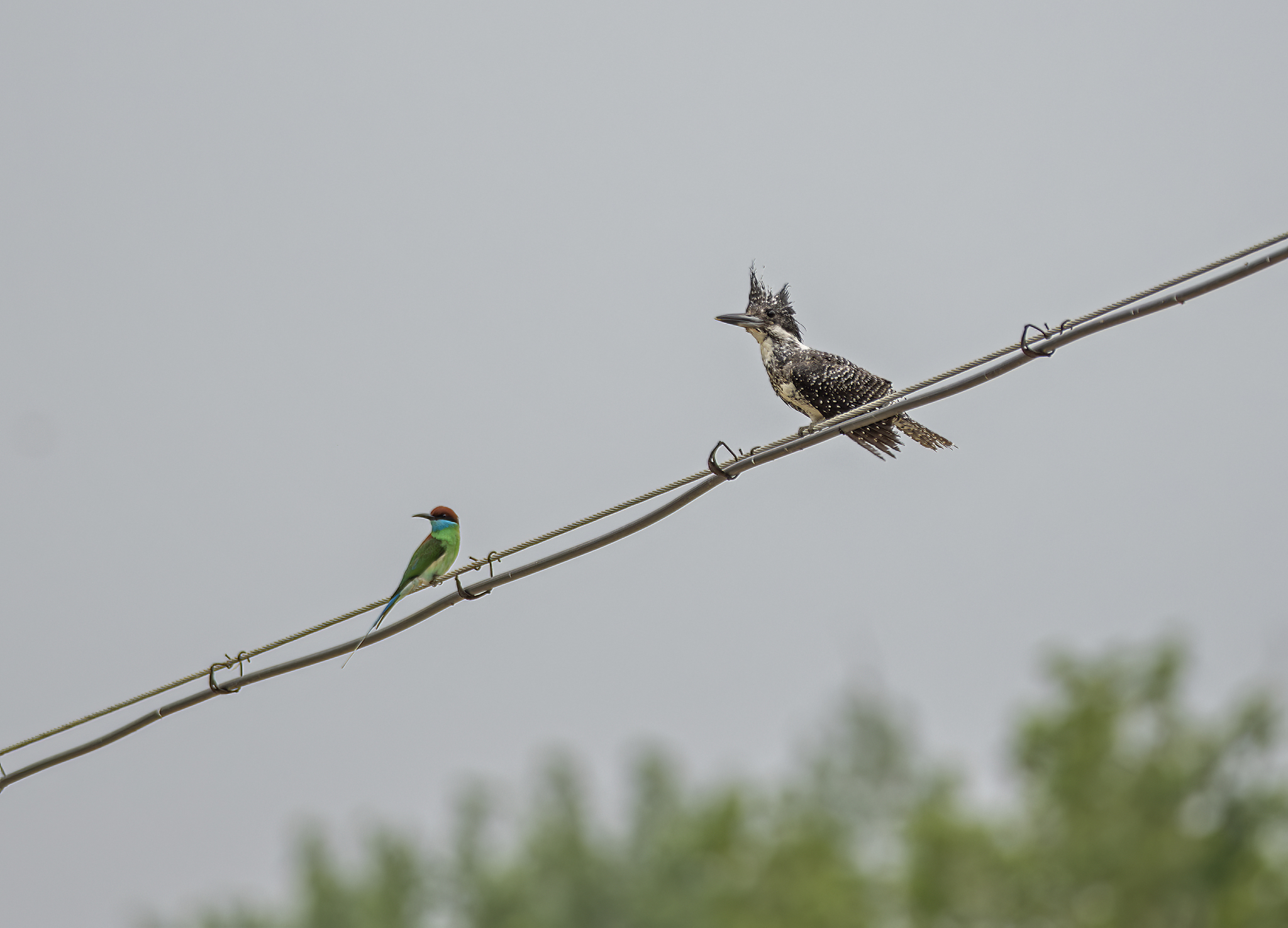
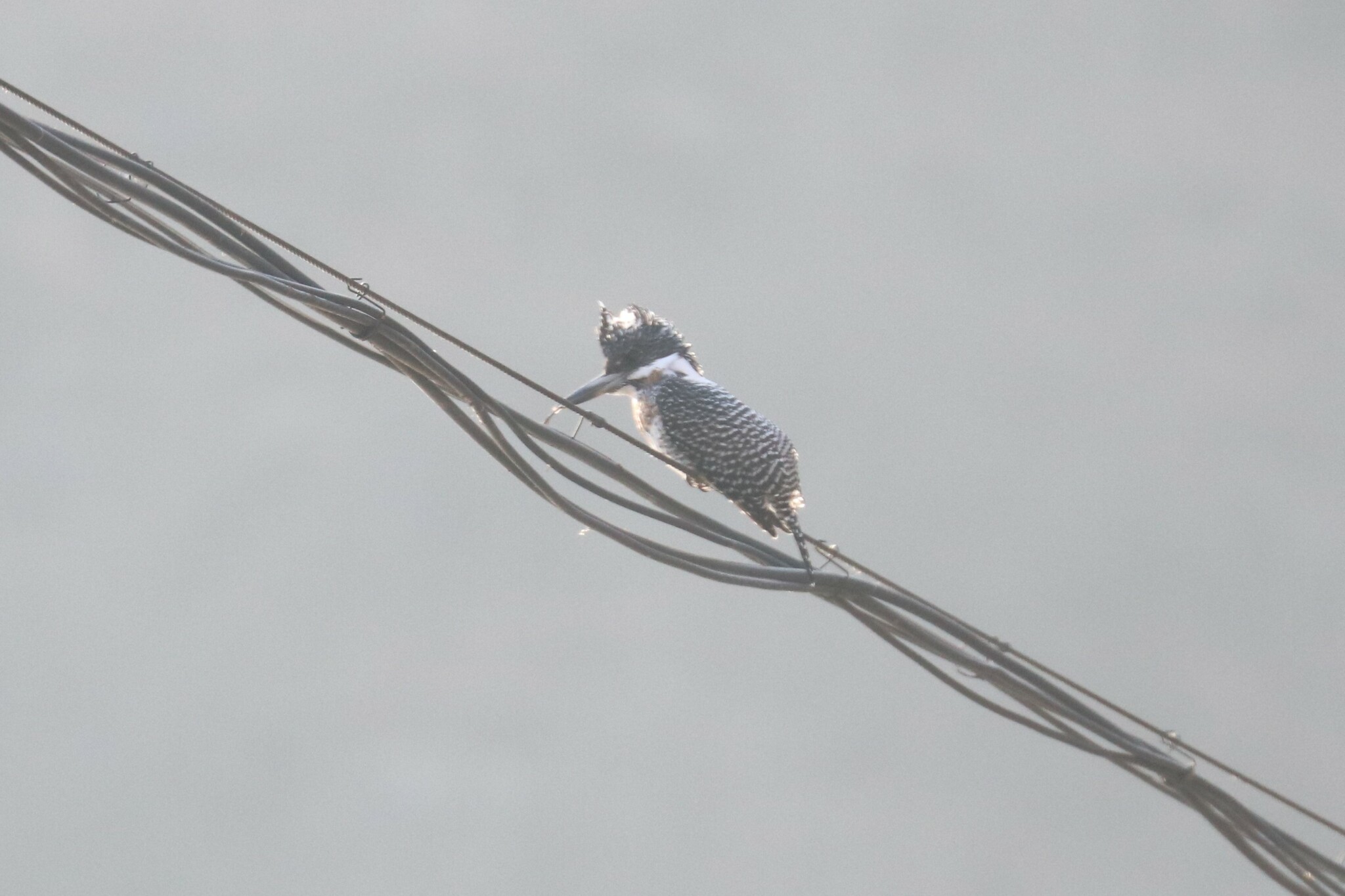
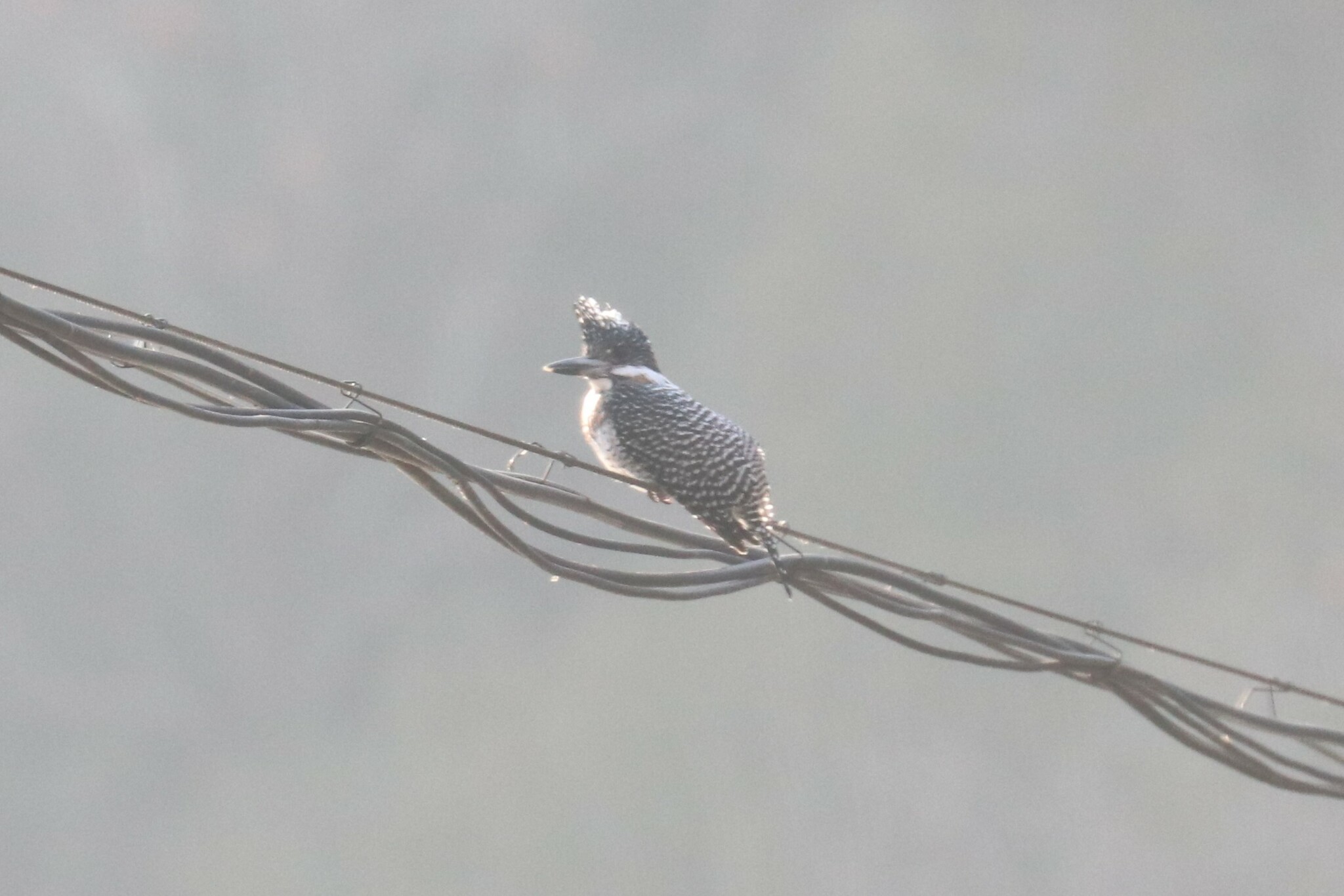
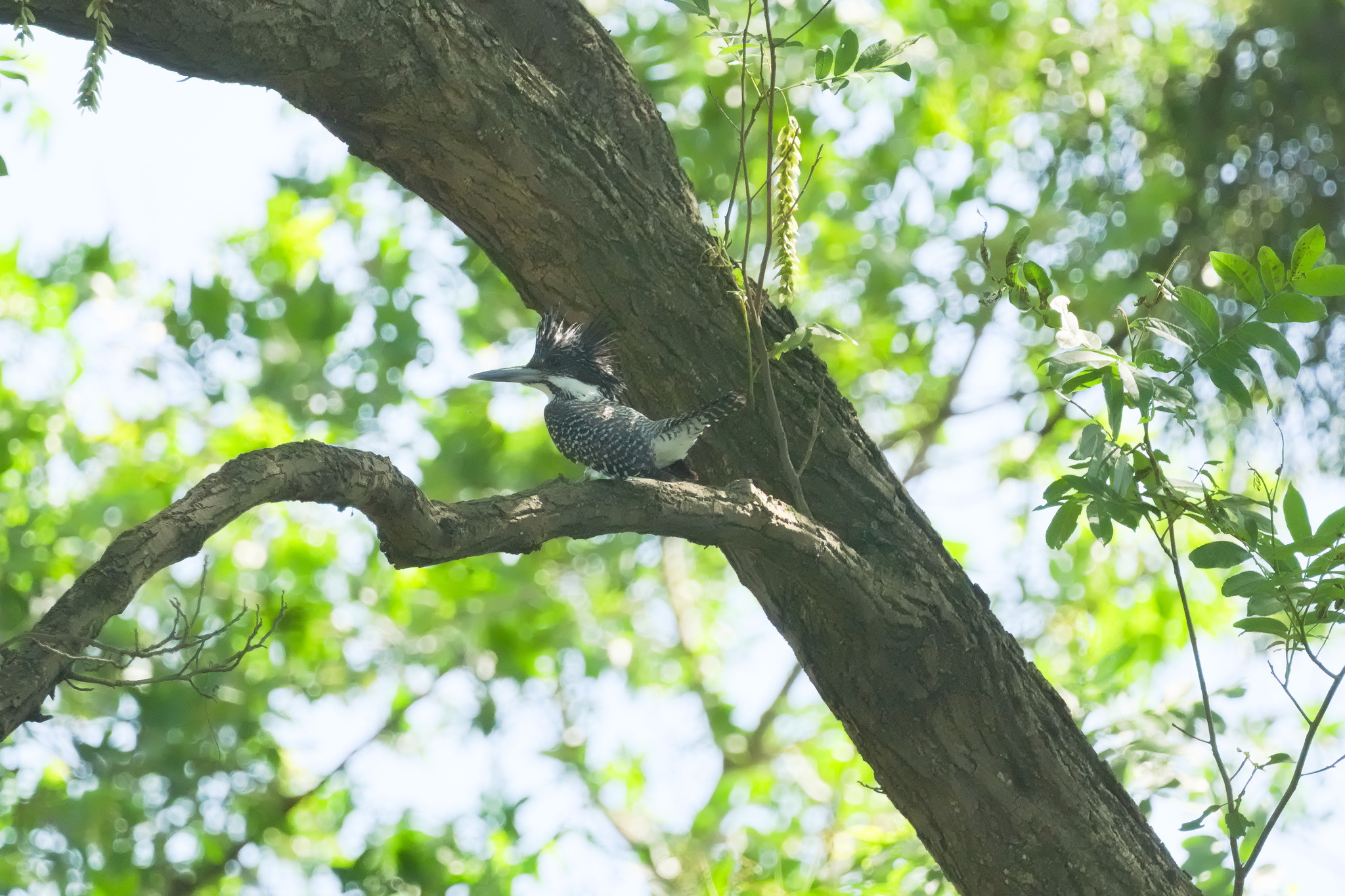
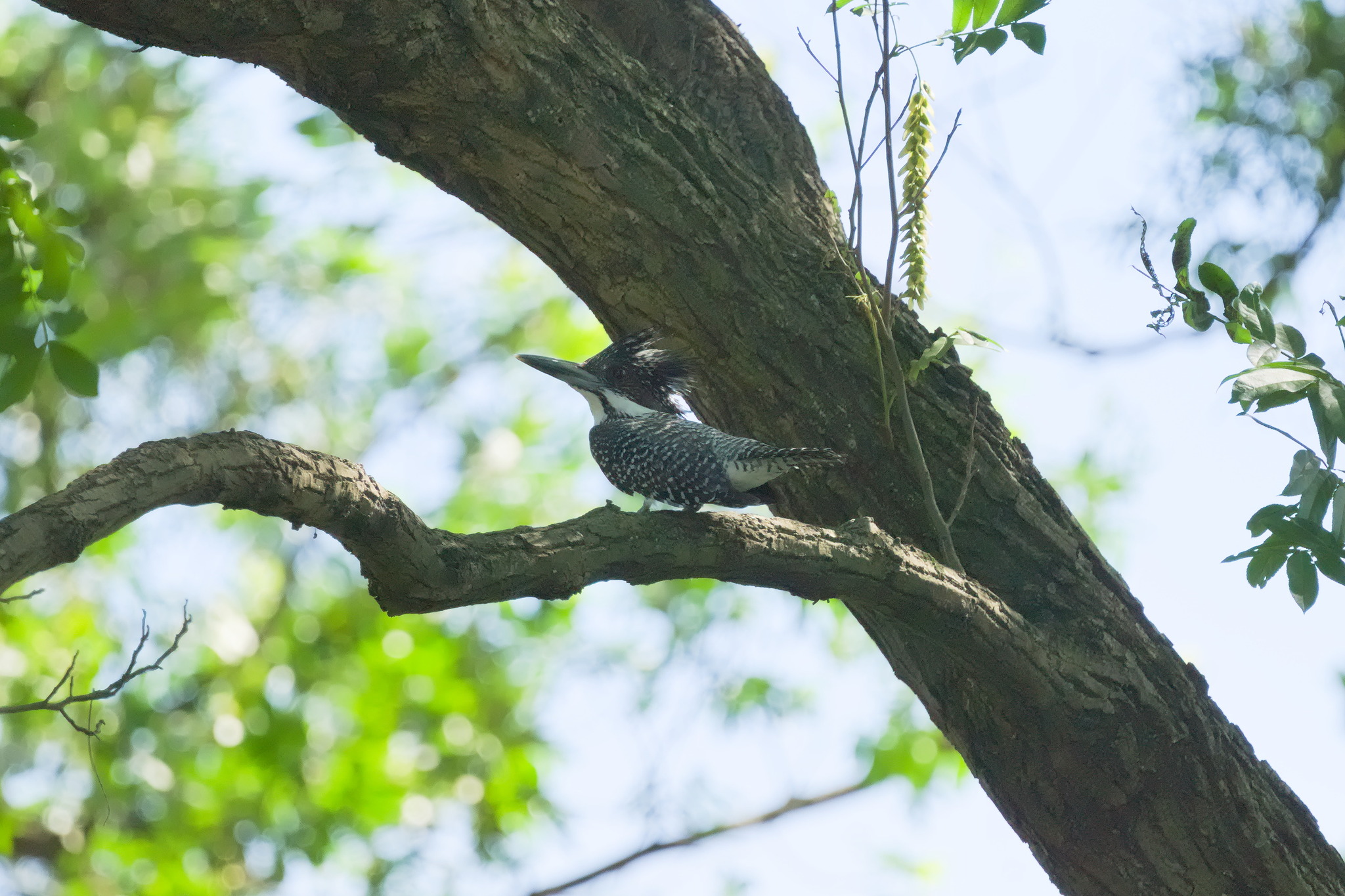
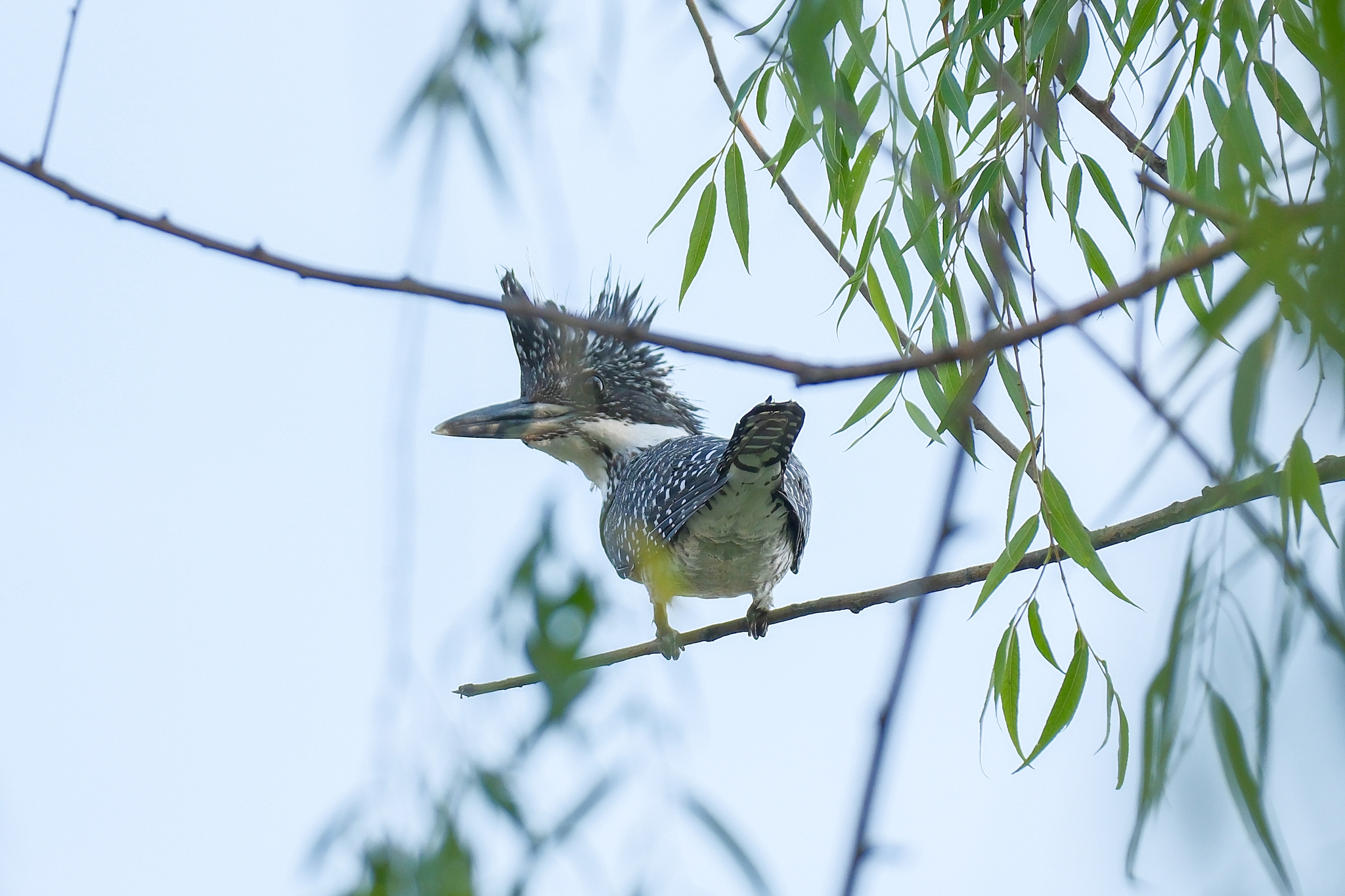
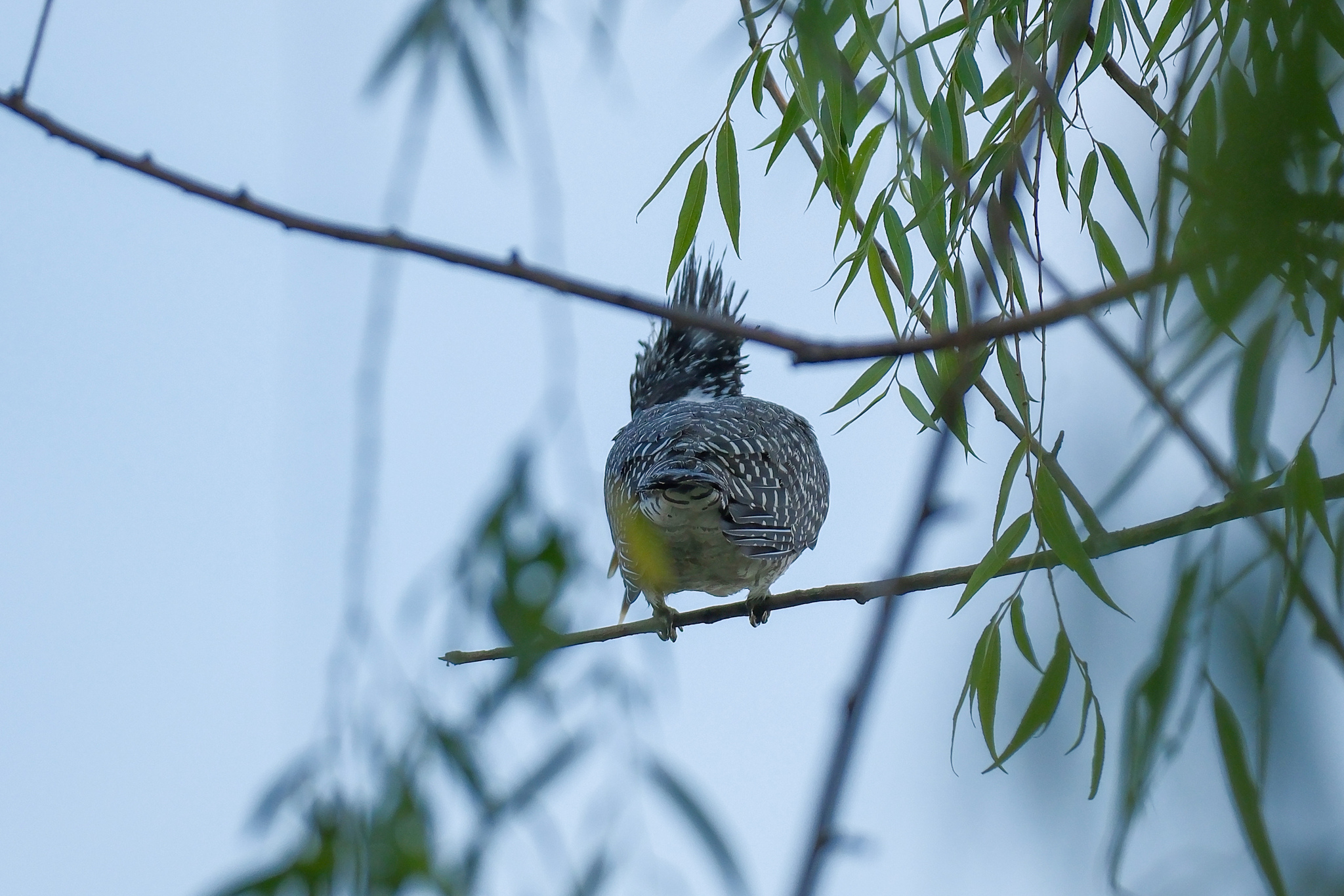
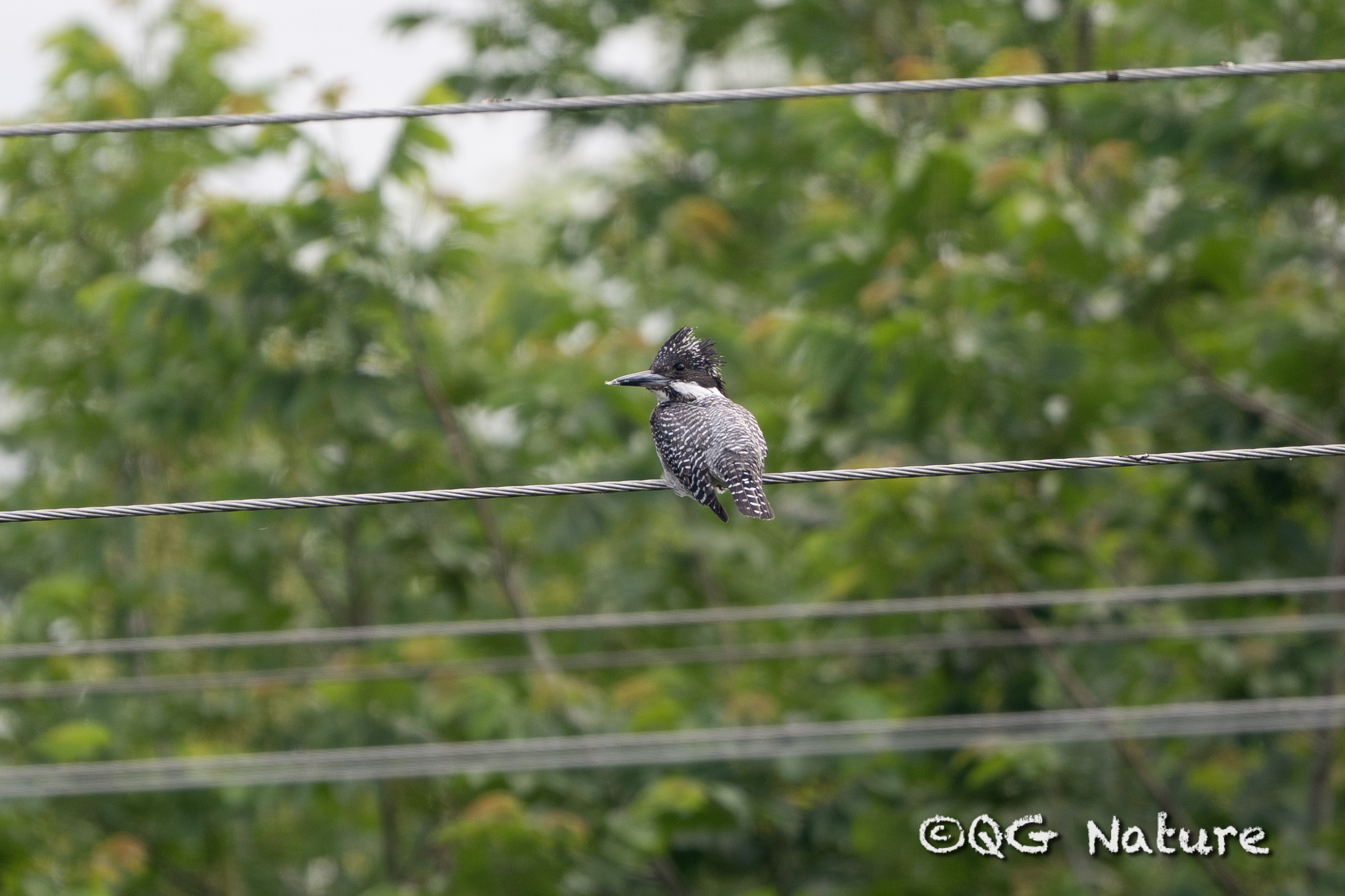
Very large and stocky, measuring 38–43 cm (15–17 in) and weighing 230–280 g (8–10 oz). Plumage is black and white with a large, shaggy, barred crest and finely barred upperparts. Features a white collar, grey-and-white barred flanks, and a white belly with a black-speckled breastband. The tail has 6–8 white bars. The bill is large, pointed, black with a yellowish-white tip. Females have bright pink-cinnamon underwing coverts, while males have rufous-orange feathers on the breastband.
Identification
Distinguished by its large size, prominent shaggy crest, and black-and-white barred plumage. Key field marks include the white collar extending from the bill to the neck and the specific sex-based differences in underwing and breast coloration. Vocalizations include a loud 'ket ket' in flight, deep croaks between pairs, and loud rattling calls when perched.
Distribution & Habitat
Range extends from northeast Afghanistan to central Vietnam and Japan. Four subspecies occupy distinct areas: M. l. continentalis in the western-central Himalayas; M. l. guttulata in the eastern Himalayas, central China, and northern Indochina; M. l. pallida in Hokkaido and southern Kuril Islands; and M. l. lugubris in central and southern Japan. Migrates altitudinally in winter in the Himalayas and Japan to avoid frozen rivers, though populations elsewhere are largely sedentary.
Behavior & Ecology
Specialist fish-eater that prefers diving from high perches rather than hovering. Hunts mainly in larger open channels, selecting deeper sites than competing species. Diet consists almost exclusively of fish, including Japanese Dace, Pale Chub, and Ayu. Nests are burrows excavated by both sexes in vertical sandy banks at least 2 m high, measuring 10–15 cm wide and 2–3 m long. Clutches of 4–7 eggs are laid between March and July; only the female incubates, while both parents feed nestlings for approximately 40 days before fledging.
Conservation
Classified as Least Concern by the IUCN (2006), with a population decline not considered significant enough to meet Vulnerable thresholds. However, it is listed as a threatened species in 32 of 47 prefectures in Japan due to habitat loss and decreased distribution. A 1996 report identified the species as regionally at risk in Bolikhamsai Province, Laos.
Source: Wikipedia · CC BY-SA 3.0
Taxonomy
- Order
- Coraciiformes
- Family
- Alcedinidae
- Genus
- Megaceryle
Vocalizations
Subspecies (4)
-
Megaceryle lugubris continentalis
western Himalayas (Kashmir to central Bhutan)
Data Sources
Species description from Wikipedia, licensed under CC BY-SA 3.0.
Bird images and sounds sourced from GBIF, contributed by citizen scientists worldwide under Creative Commons licenses.
Taxonomy data from AviList 2025.