Crested Kingfisher
Megaceryle lugubris
冠鱼狗
Introduction
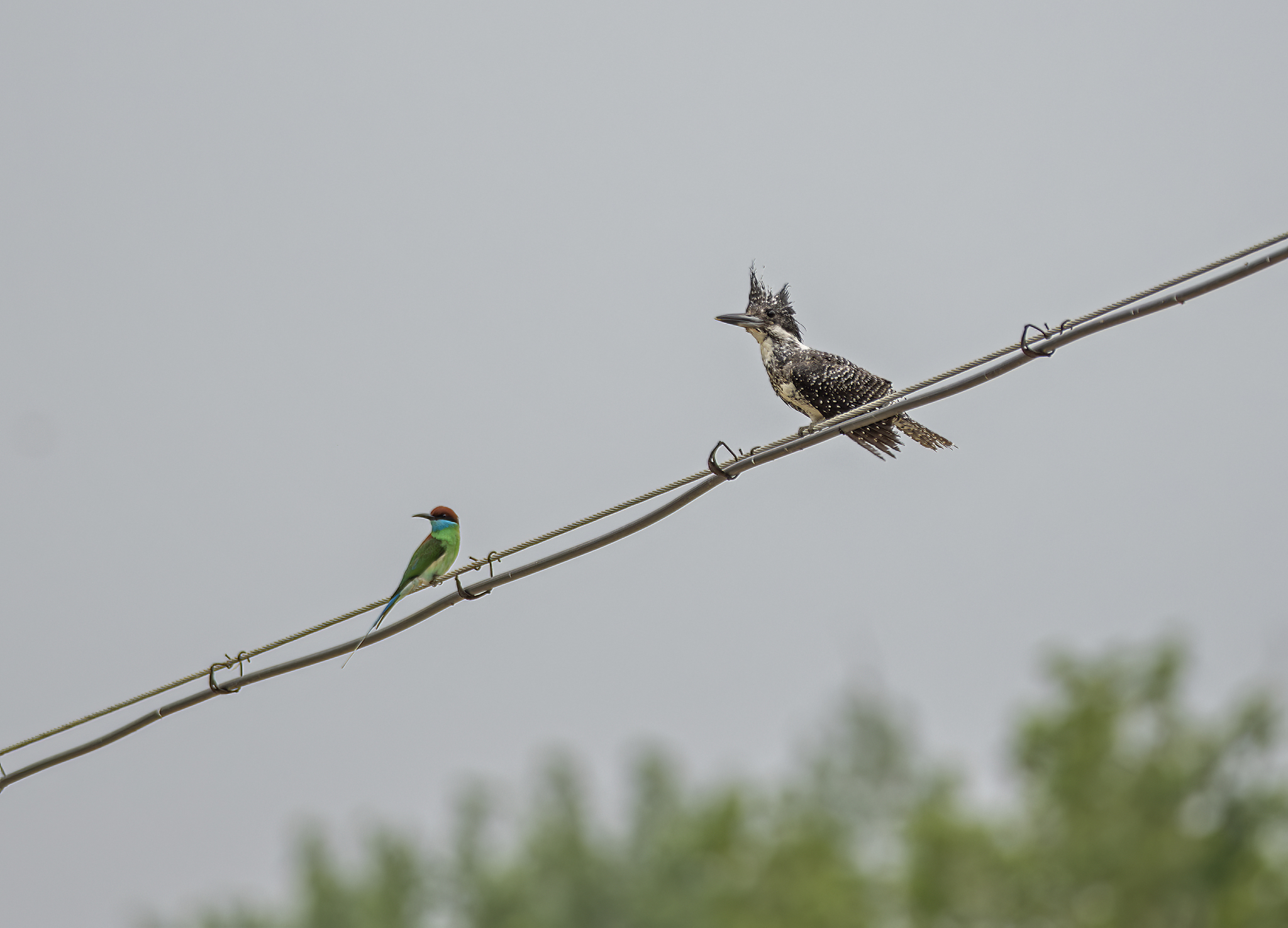
This large kingfisher is among the largest members of its family in Asia. Its range extends from Afghanistan through the Himalayas to Southeast Asia and Japan. It inhabits forested river systems, favoring faster-flowing streams at higher elevations than smaller kingfisher species. It has black-and-white plumage and a shaggy crest. It hunts from prominent perches in clear, fish-rich waters, dropping from heights rather than hovering before diving. Its vocalization is a loud rattling call.
Description
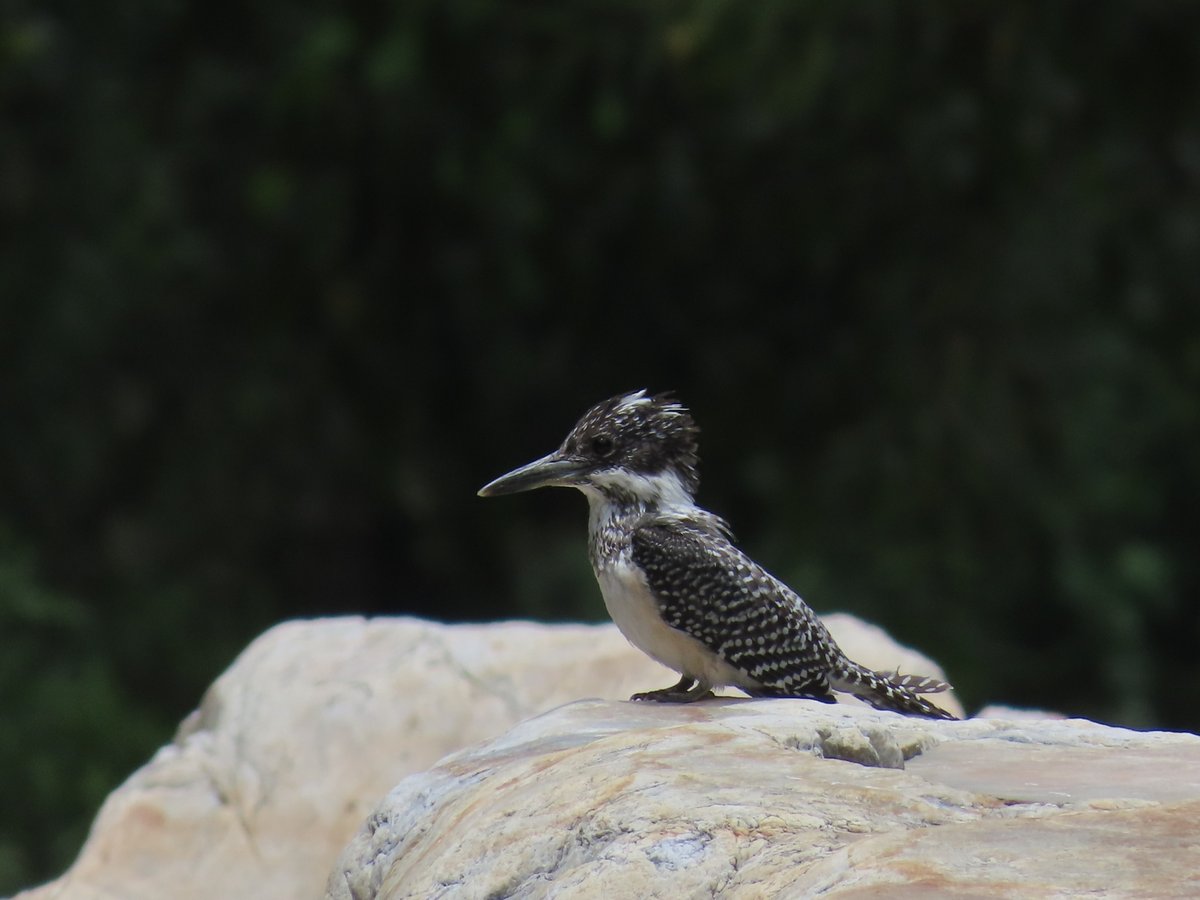
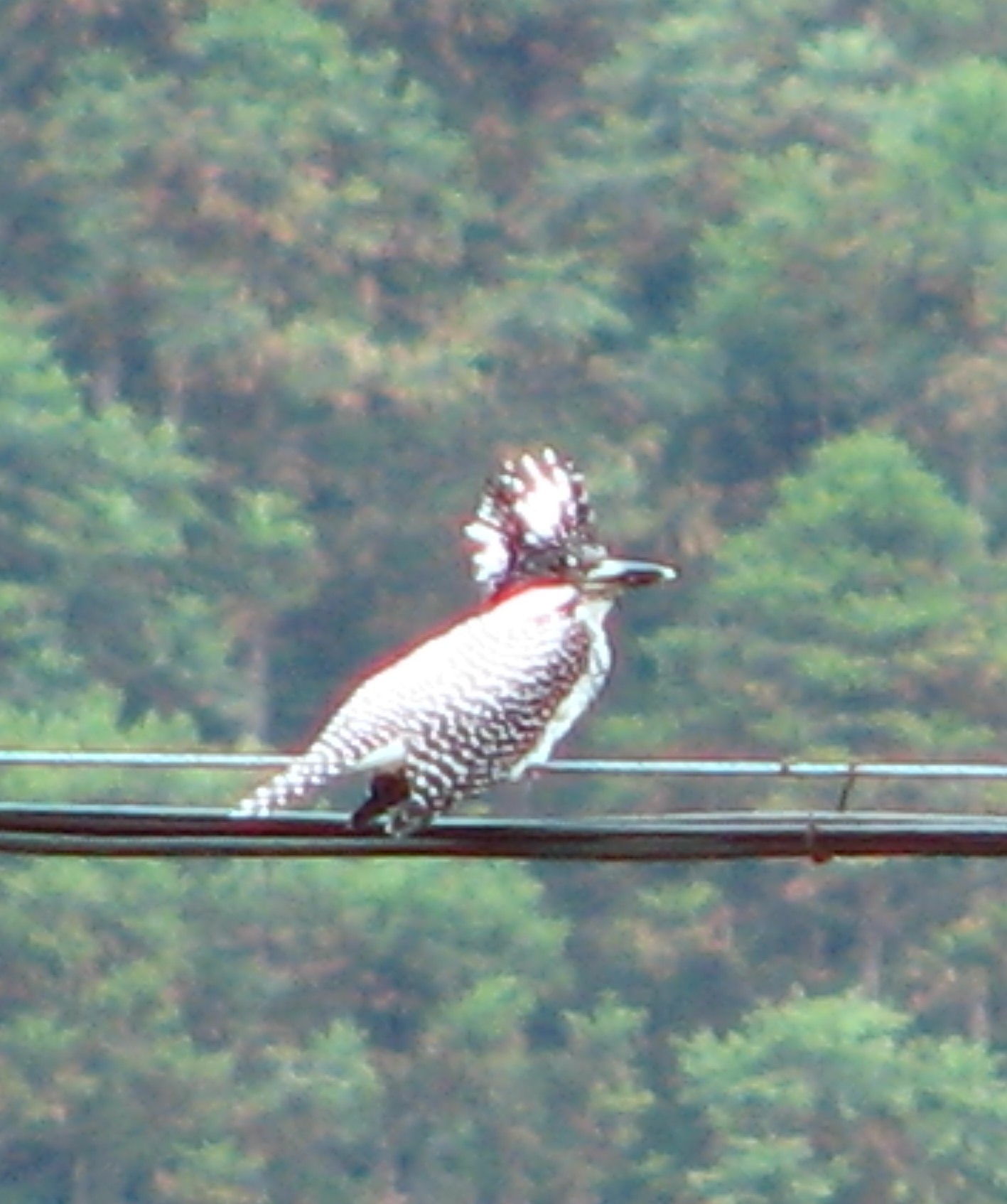
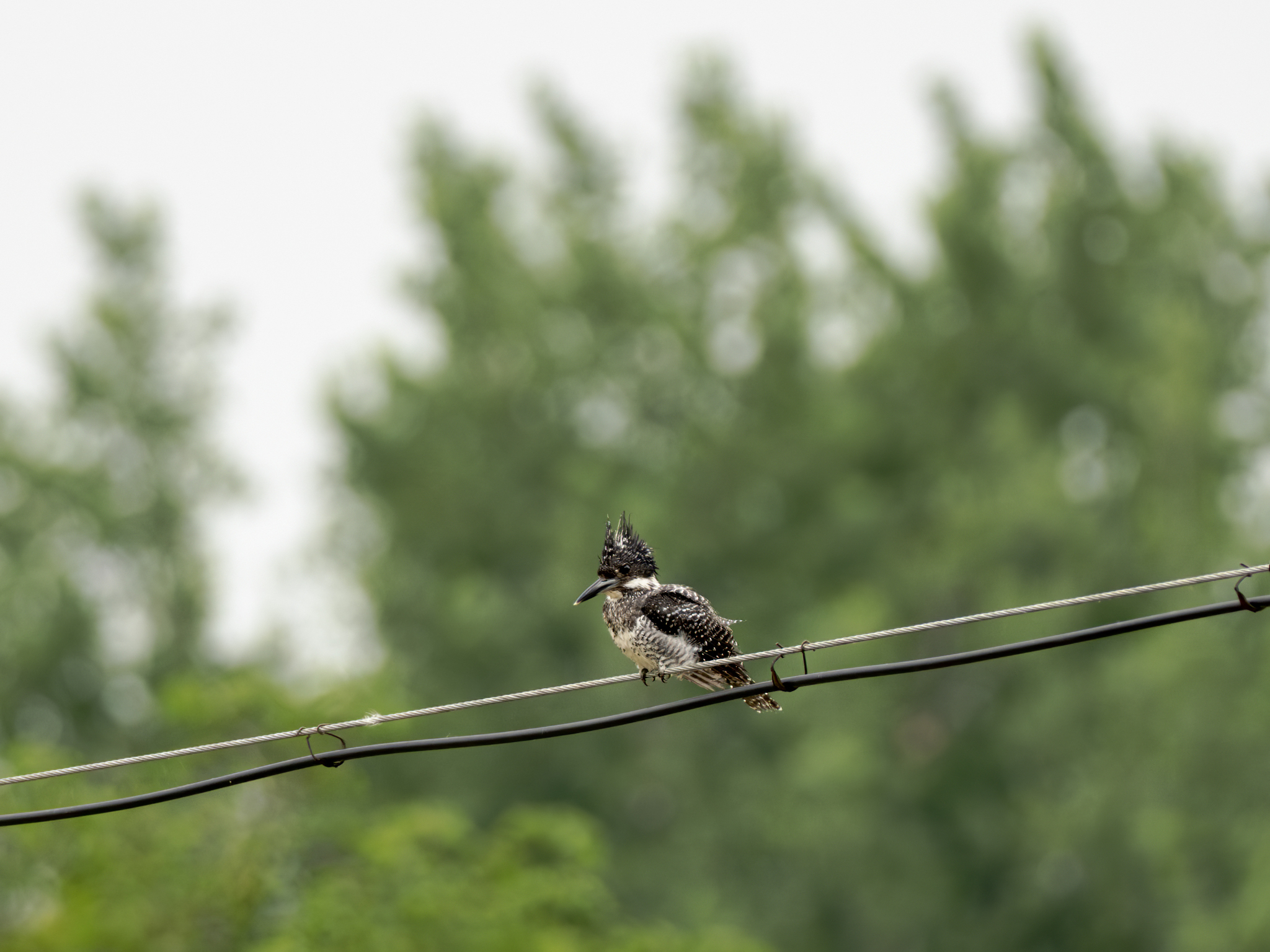
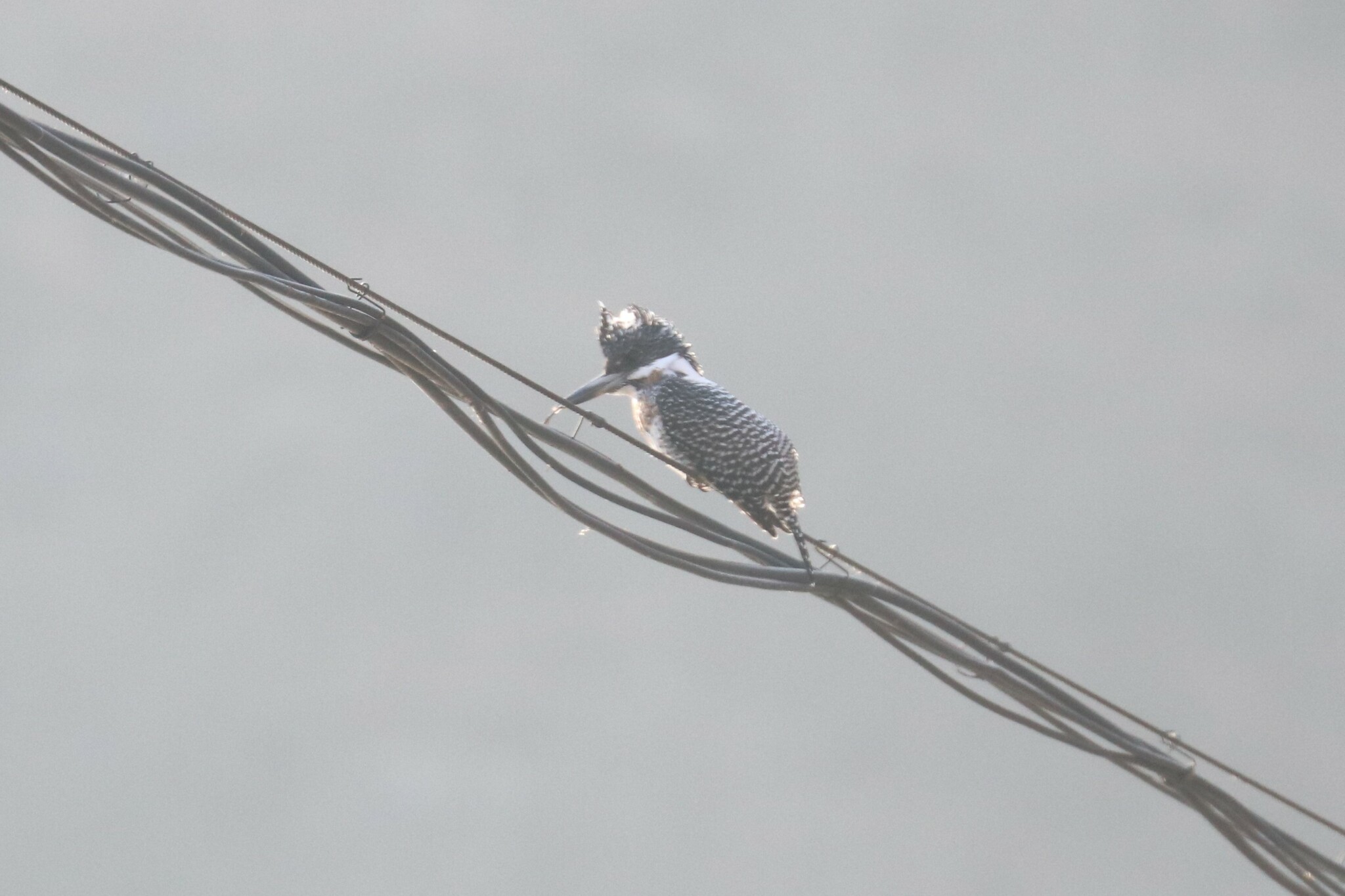
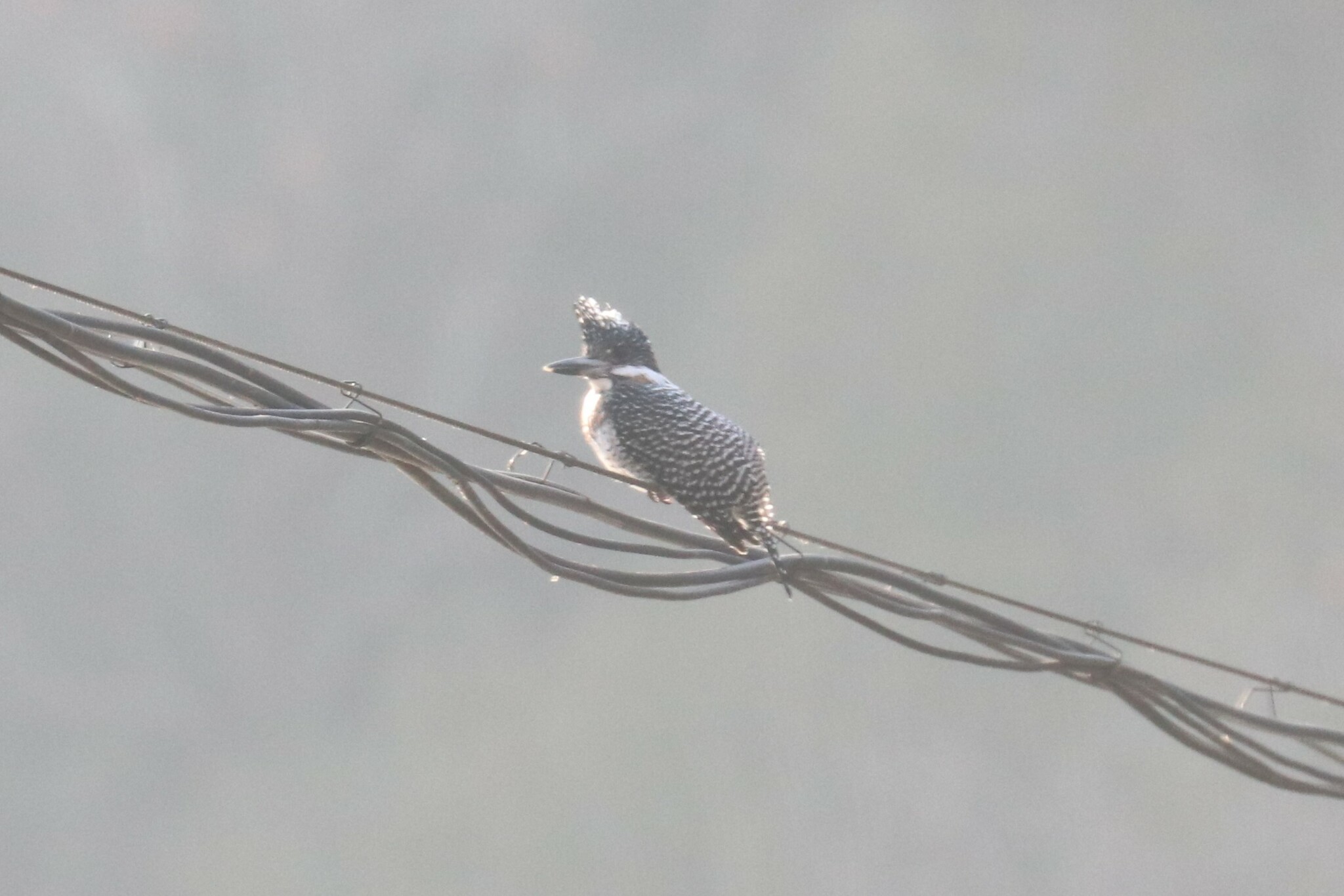
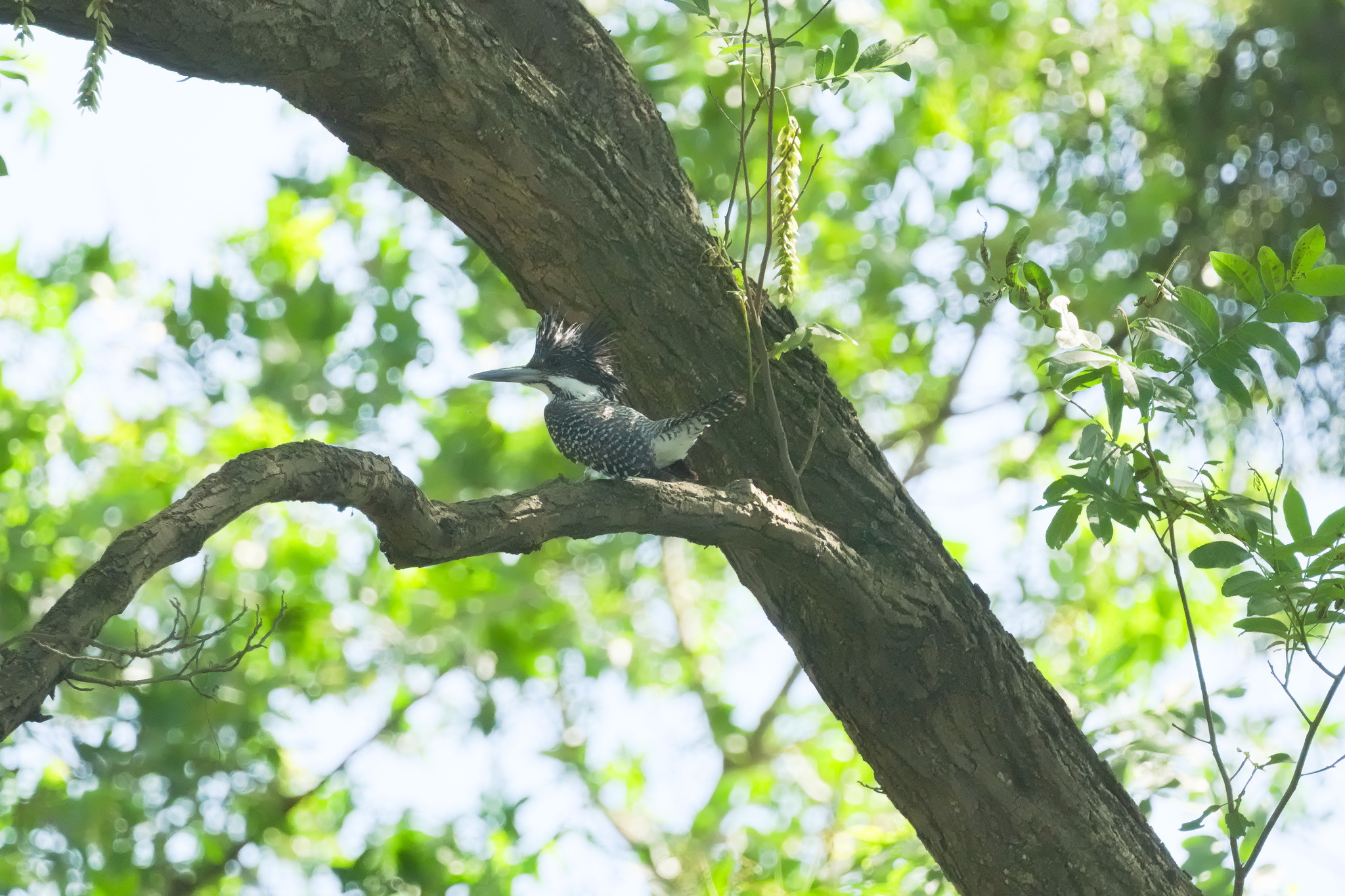
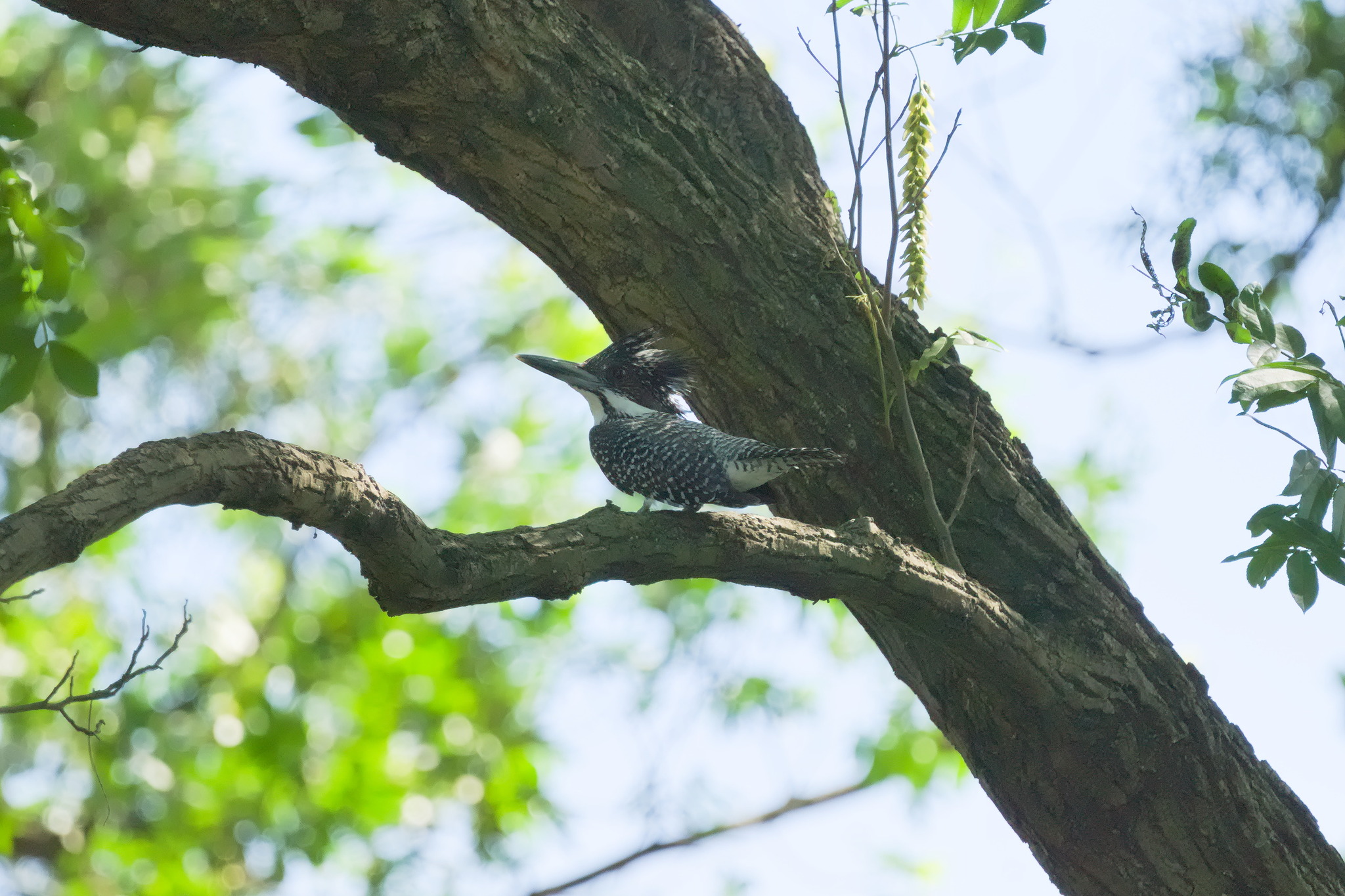
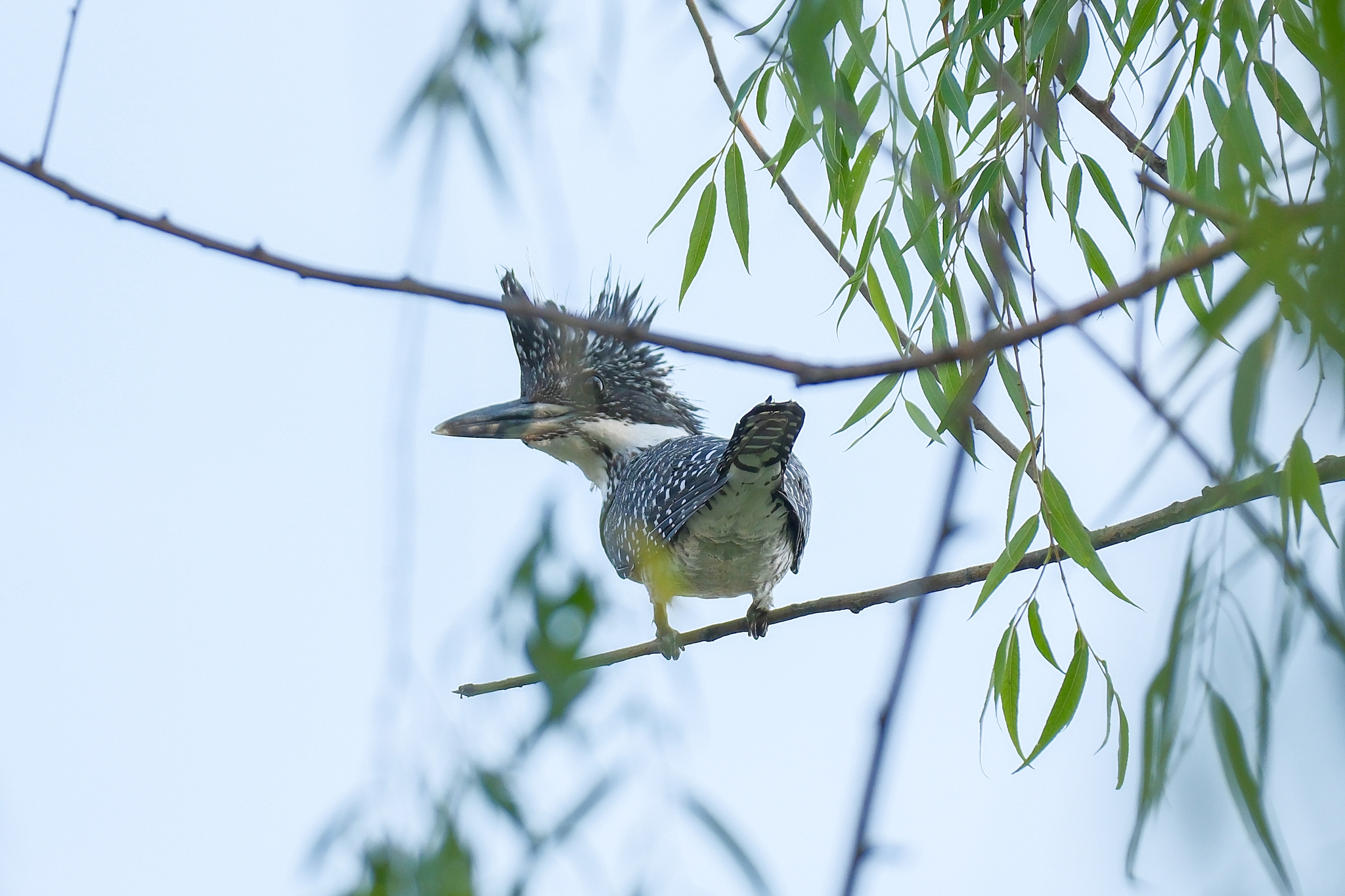
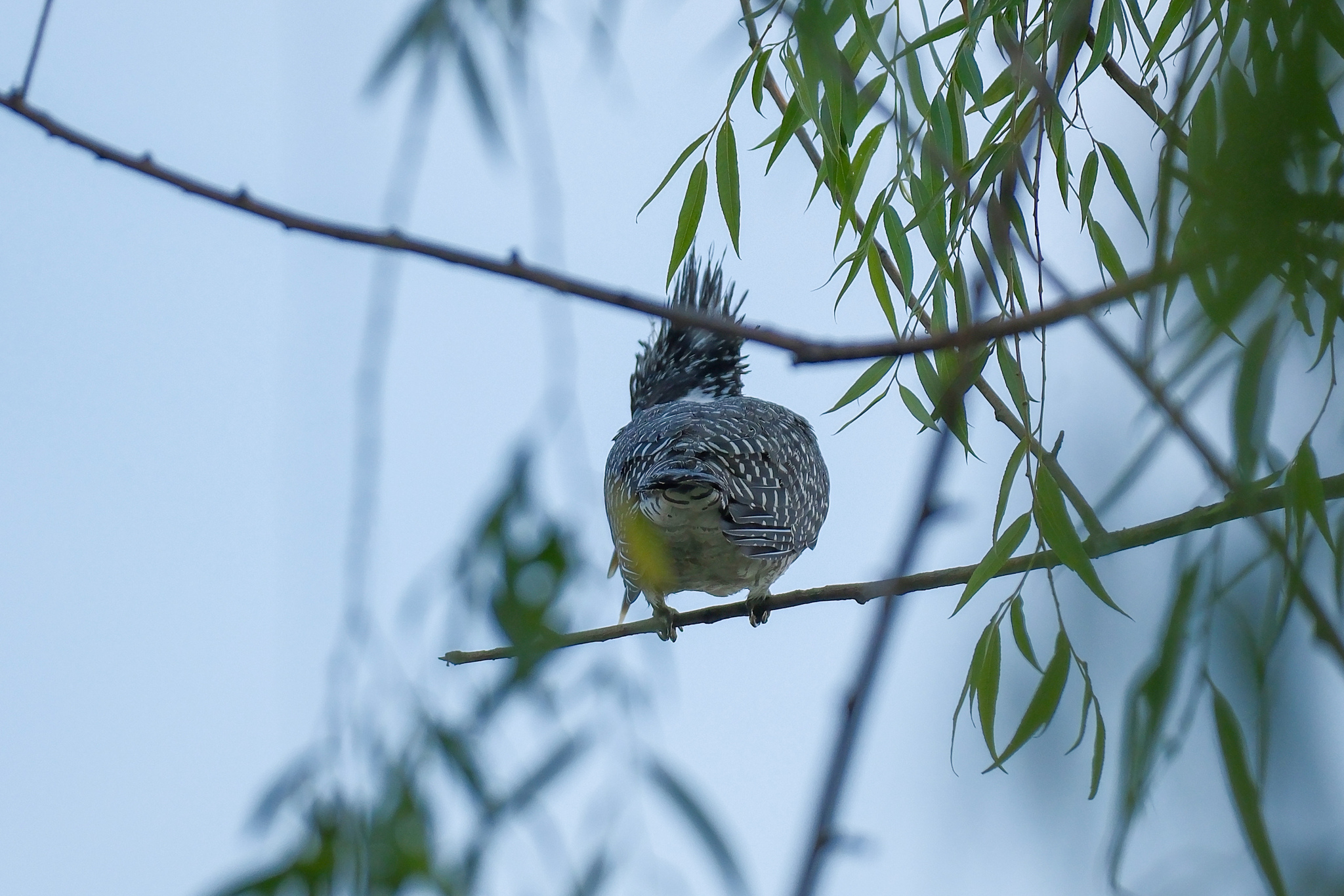
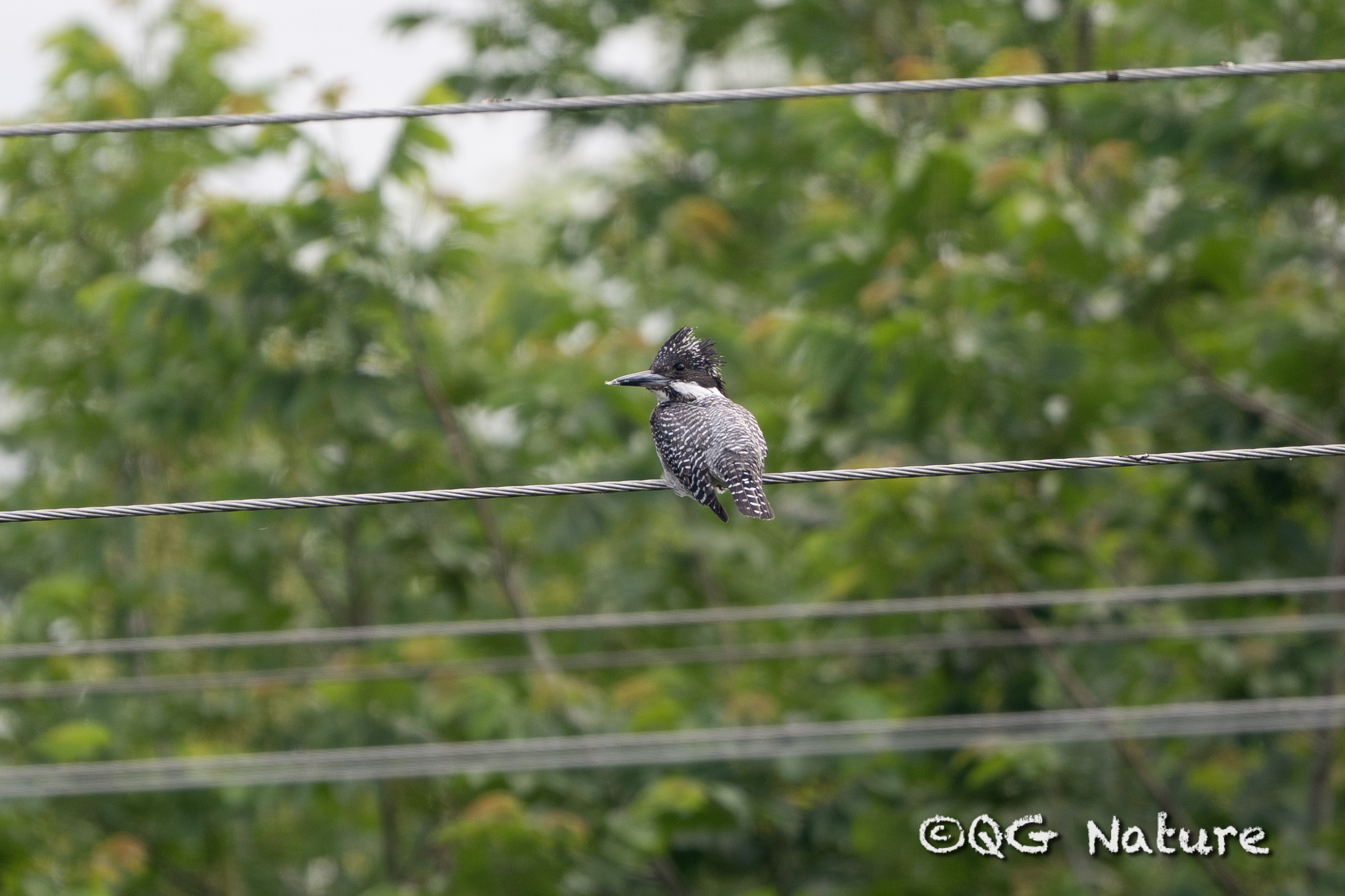
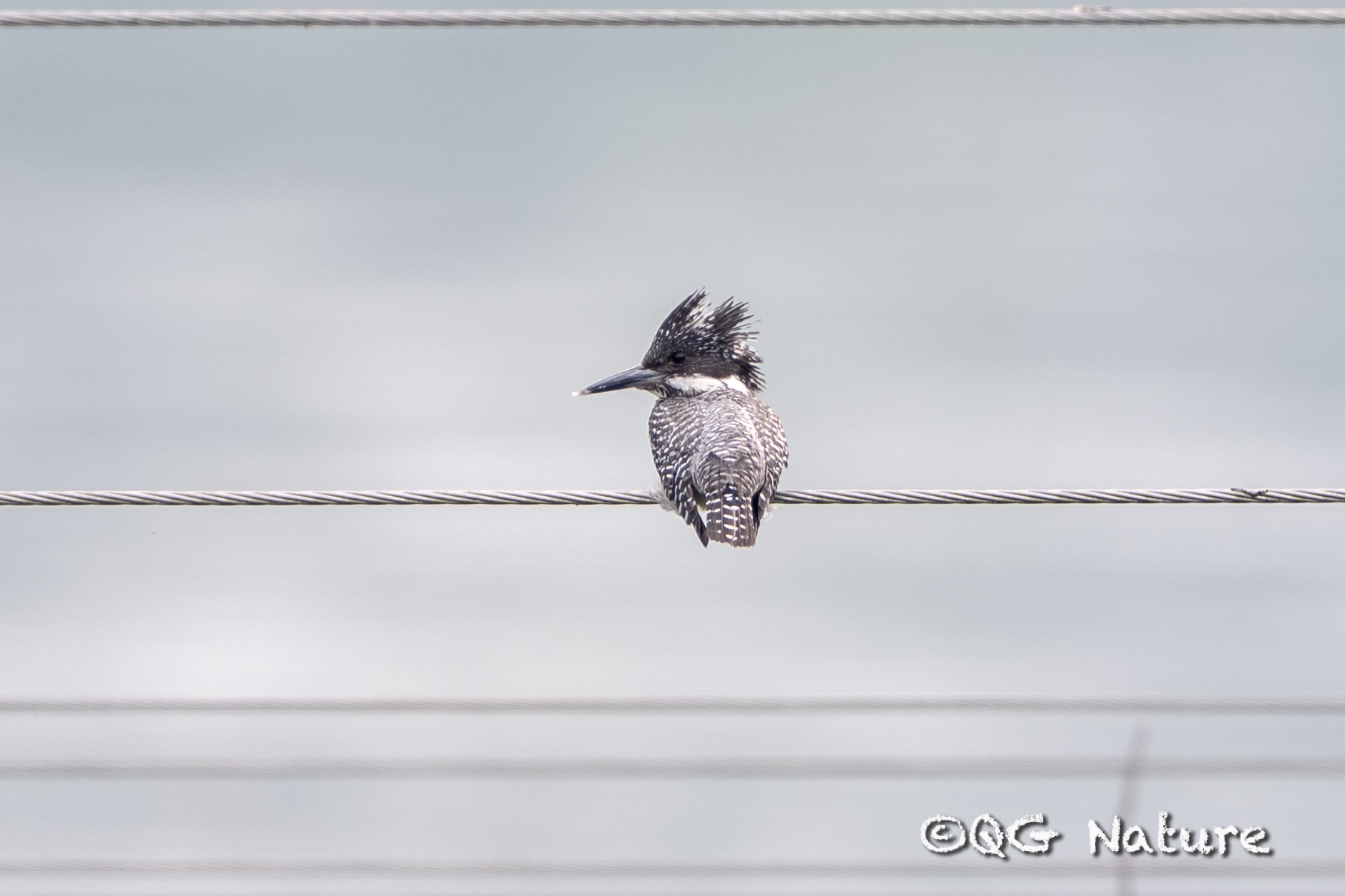
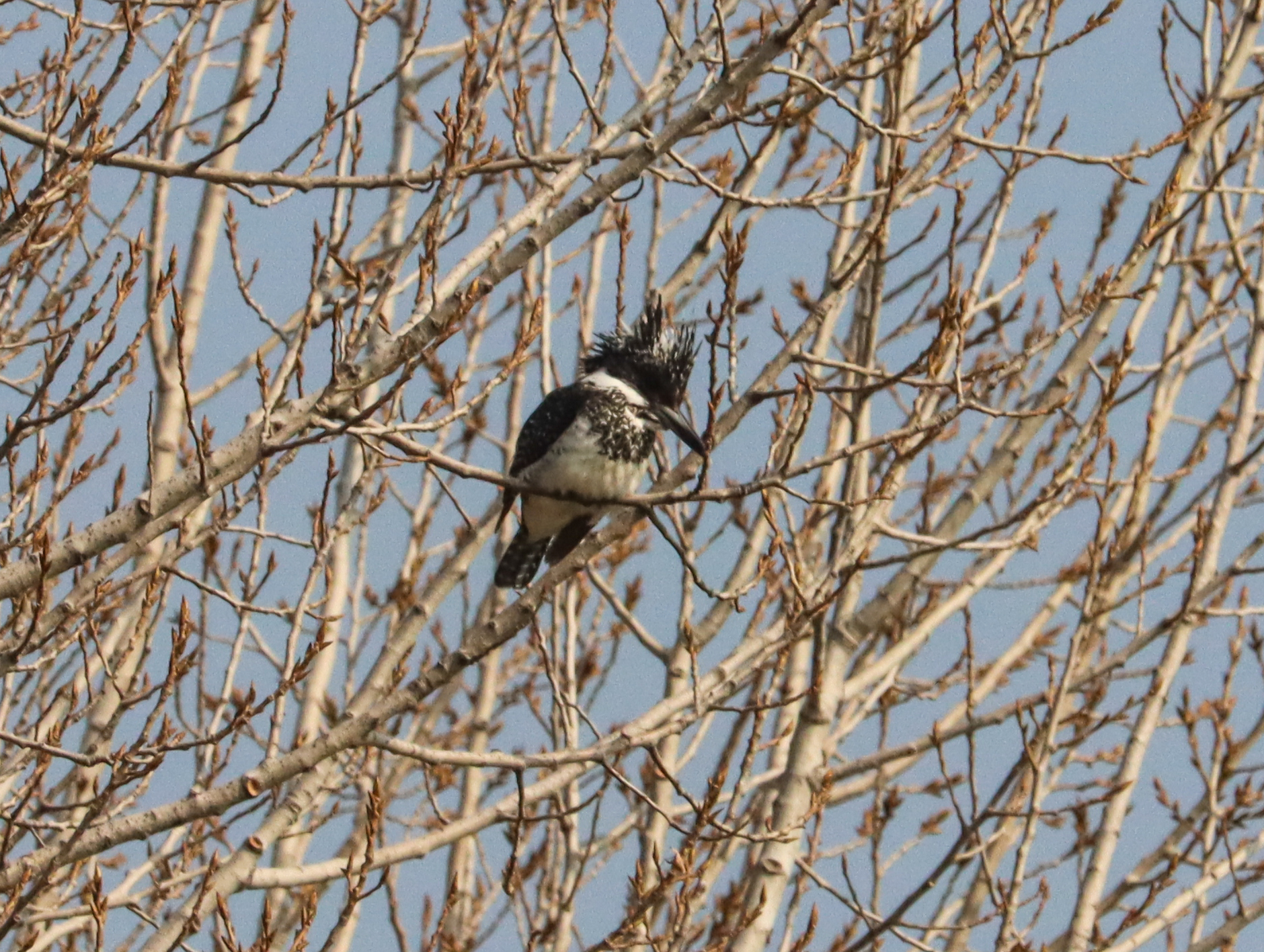
A very large, stocky kingfisher measuring 38-43 cm in length and weighing 230-280 g. The most striking feature is the large, shaggy black-and-white barred crest. It has a massive pointed black bill with a yellowish-white tip. The upperparts are finely barred black and white, while the underparts show grey-and-white barred flanks and a white belly crossed by a black-speckled breastband. A prominent white collar extends from the base of the bill around the back of the neck. The tail is black with 6-8 white bars. Males and females are identical in size but differ in plumage details: males display rufus-orange feathers on the breastband, while females show bright pink-cinnamon underwing coverts washed with pale rufous.
Identification
This is the largest kingfisher across most of its range and is unlikely to be confused with smaller species. The combination of massive size, shaggy crest, and black-and-white barring is distinctive. It differs from the belted kingfisher in its restricted Asian range and more pronounced crest. Unlike the common kingfisher, it inhabits larger, faster-flowing rivers at higher elevations and shows a preference for forested habitats. The species can be separated from other Megaceryle kingfishers by range and by its more contrasting black-and-white plumage pattern. In Japan, the subspecies pallida is notably paler overall.
Distribution & Habitat
The species occupies a broad but fragmented range from northeast Afghanistan through the Himalayas, Southeast Asia, and Japan. Four subspecies are recognized: continentalis in the western-central Himalayas; guttulata from the eastern Himalayas through northern Indochina to China and Korea; pallida in Hokkaido and the southern Kurils; and lugubris in central and southern Japan. It inhabits forested areas near rivers and mountain foothills, occurring at higher elevations than the common kingfisher where their ranges overlap. The species migrates altitudinally in winter to avoid frozen waterways, though individuals in Hokkaido remain near hot springs year-round. Nest sites are typically in forests within 1.5 km of water.
Behavior & Ecology
A specialist fish-eater that prefers diving from high perches rather than the hovering technique used by many other kingfishers. It hunts from elevated positions above water, watching for prey before striking. In areas where it overlaps with common kingfishers, it utilizes larger, open channels and dives from greater heights, catching fish at significantly deeper depths. Its laterally compressed, pointed bill is adapted for striking and grasping prey. The diet consists almost exclusively of fish, typically larger specimens than those taken by other kingfishers—particularly Japanese dace, pale chub, and ayu. Breeding pairs excavate nest burrows in vertical sandy banks, with both partners sharing construction duties over several weeks. The tunnel extends 2-3 meters and ends in an enlarged chamber. The female incubates 4-7 eggs alone, though both parents feed the nestlings for approximately 40 days until fledging. Vocalizations include a loud "ket ket" in flight, "ping" calls, and deep croaks between paired birds, with loud rattling calls given from perches.
Conservation
Listed as Least Concern on the IUCN Red List, though populations are declining. The species does not meet thresholds for Vulnerable status due to its relatively large range and population size. However, it faces significant regional threats: habitat loss from river modification, deforestation, and water pollution has caused substantial declines. In Japan, it is considered threatened in 32 of 47 prefectures due to reduced population size and contracting distribution. A 1996 report noted the species as regionally at risk in Bolikhamsai Province, Laos. Conservation efforts focus on protecting clean, fast-flowing river systems within forested landscapes.
Culture
No specific cultural information provided in the source material.
Source: Wikipedia · CC BY-SA 3.0
Taxonomy
- Order
- Coraciiformes
- Family
- Alcedinidae
- Genus
- Megaceryle
- eBird Code
- crekin1
Vocalizations
Subspecies (4)
-
Megaceryle lugubris continentalis
western Himalayas (Kashmir to central Bhutan)
-
Megaceryle lugubris guttulata
eastern Himalayas to China, Myanmar, and Thailand; Hainan
-
Megaceryle lugubris lugubris
Honshu, Shikoku, and Kyushu
-
Megaceryle lugubris pallida
southern Kuril Islands and Hokkaido
Data Sources
Species description from Wikipedia, licensed under CC BY-SA 3.0.
Bird images and sounds sourced from GBIF, contributed by citizen scientists worldwide under Creative Commons licenses.
Taxonomy data from AviList 2025.