Anseriformes / Anatidae / Mareca
Gadwall
Mareca strepera · 赤膀鸭
Introduction
A common and widespread dabbling duck in the family Anatidae. DNA studies identify it as a sister species to the falcated duck, closely related to wigeons, all within the genus Mareca. It inhabits open wetlands including prairie or steppe lakes, wet grasslands, and marshes with dense fringing vegetation. The species is strongly migratory and listed as Least Concern on the IUCN Red List.
Description
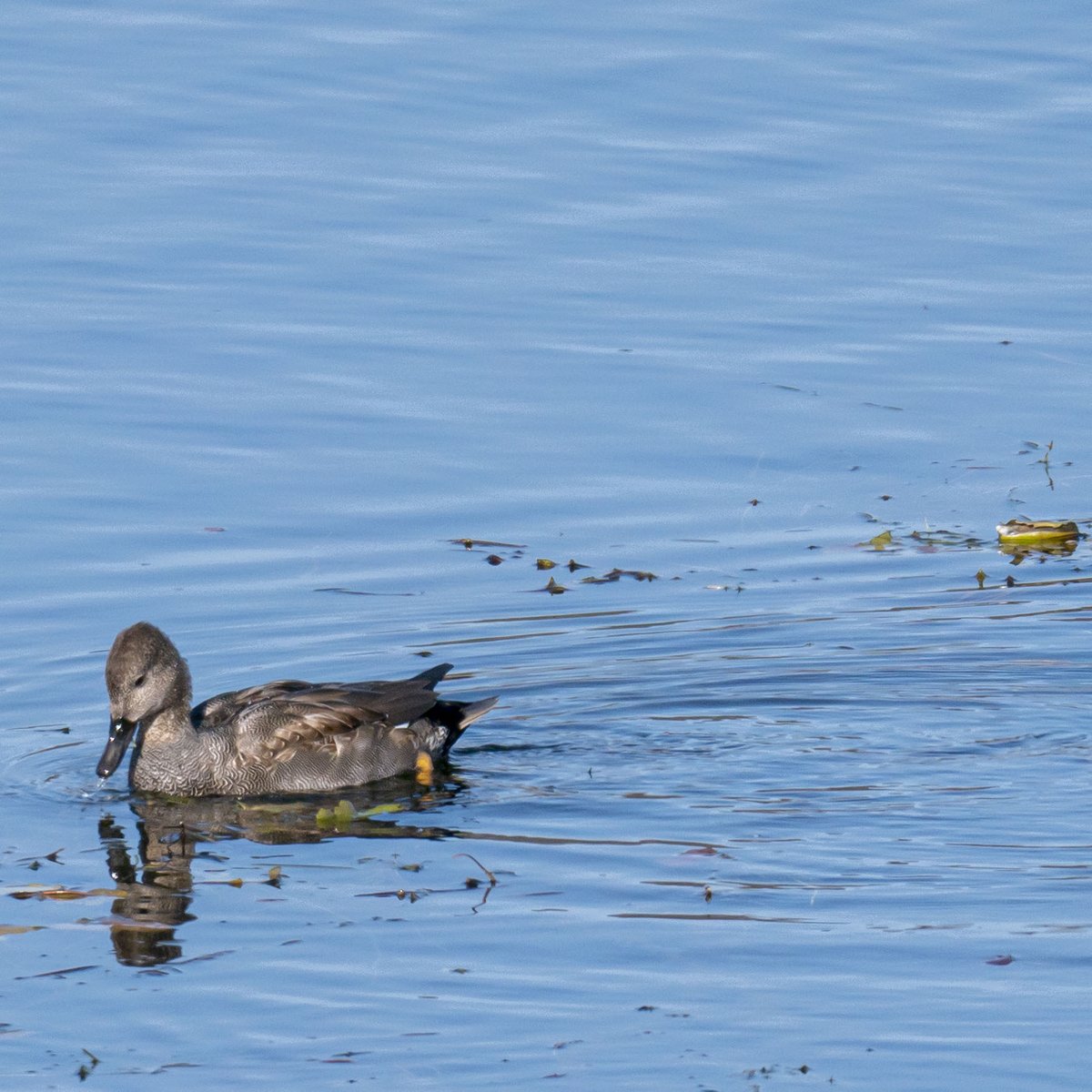
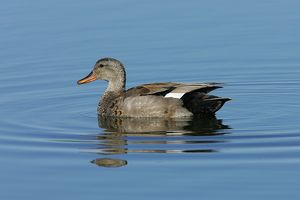
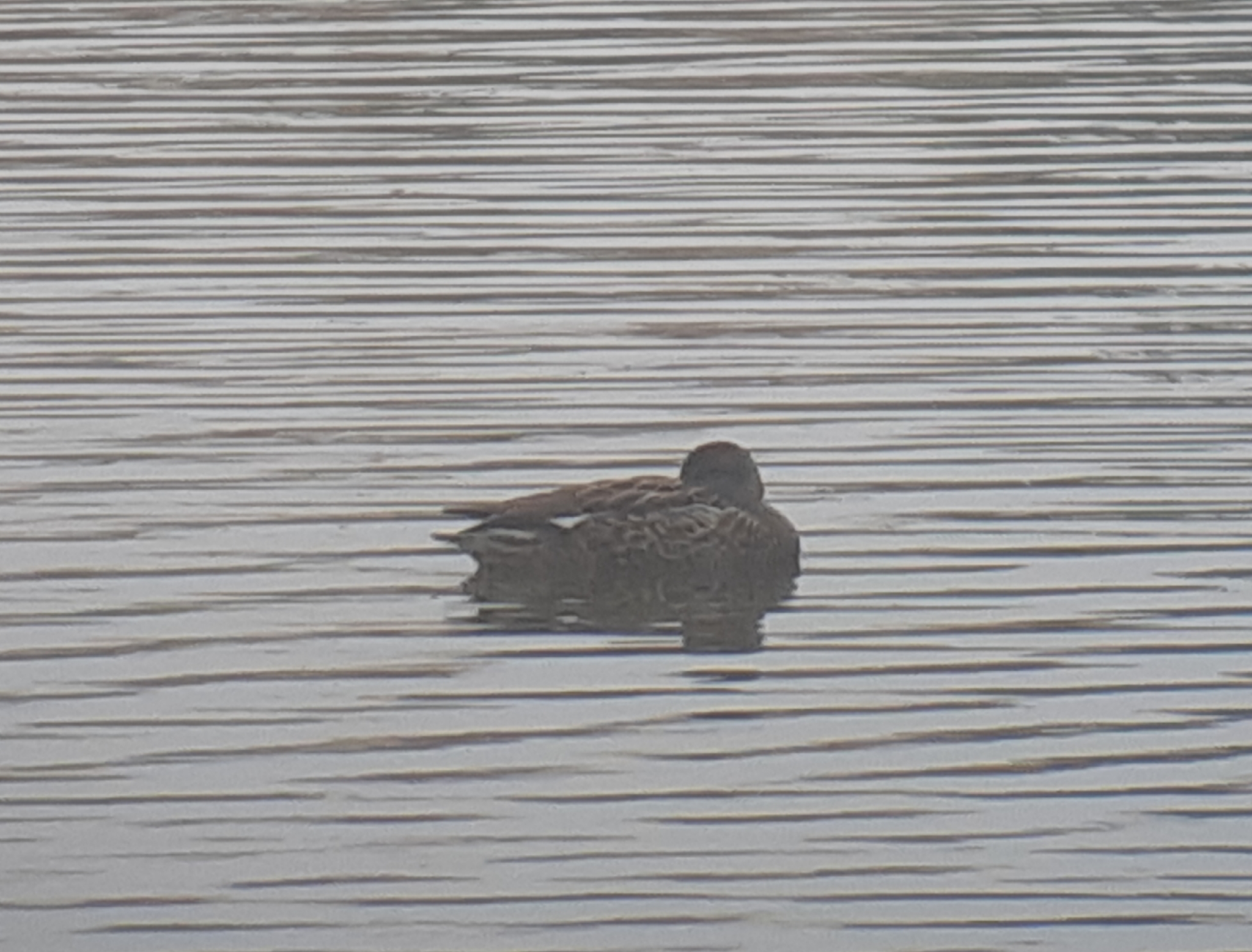
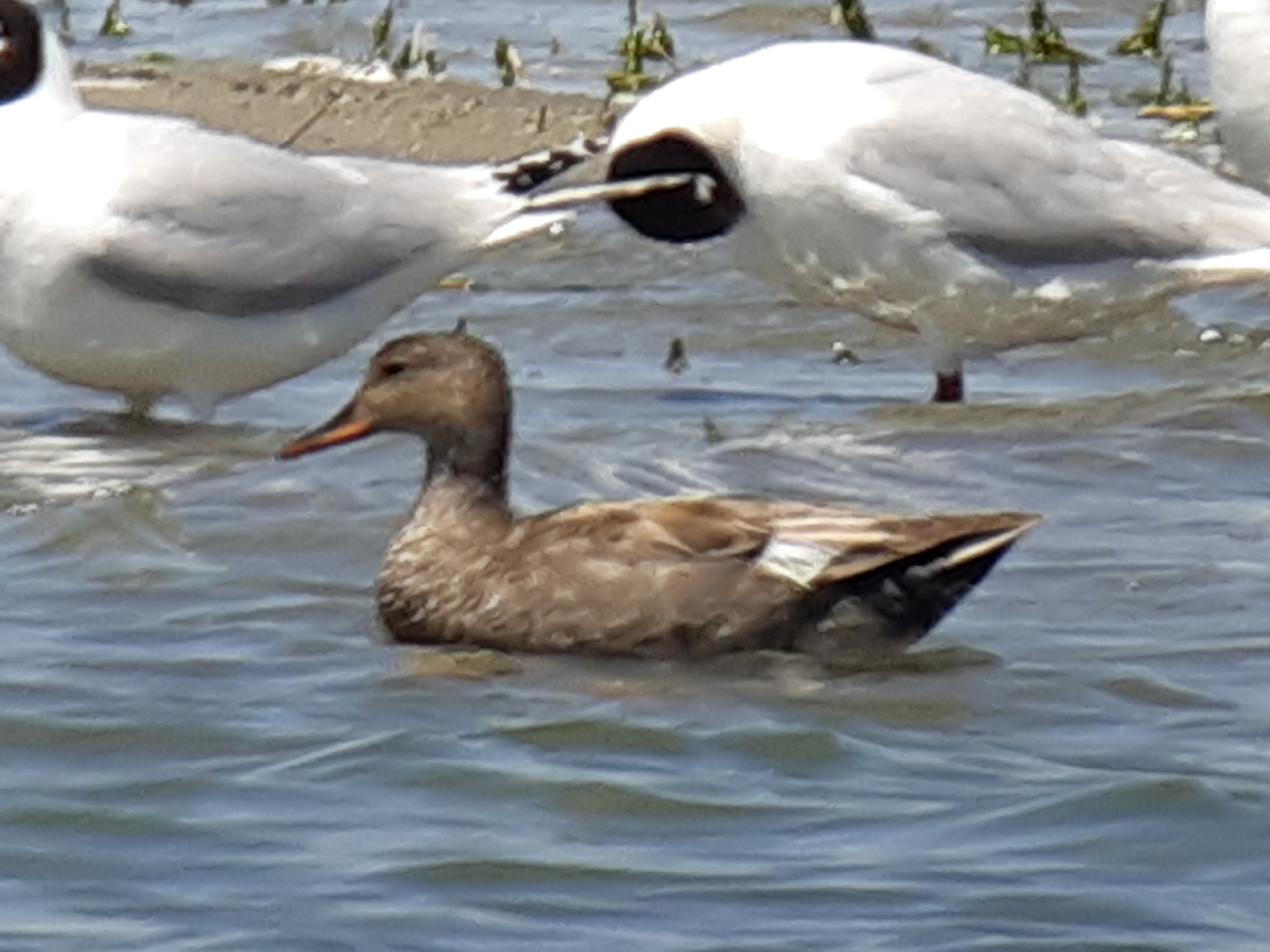
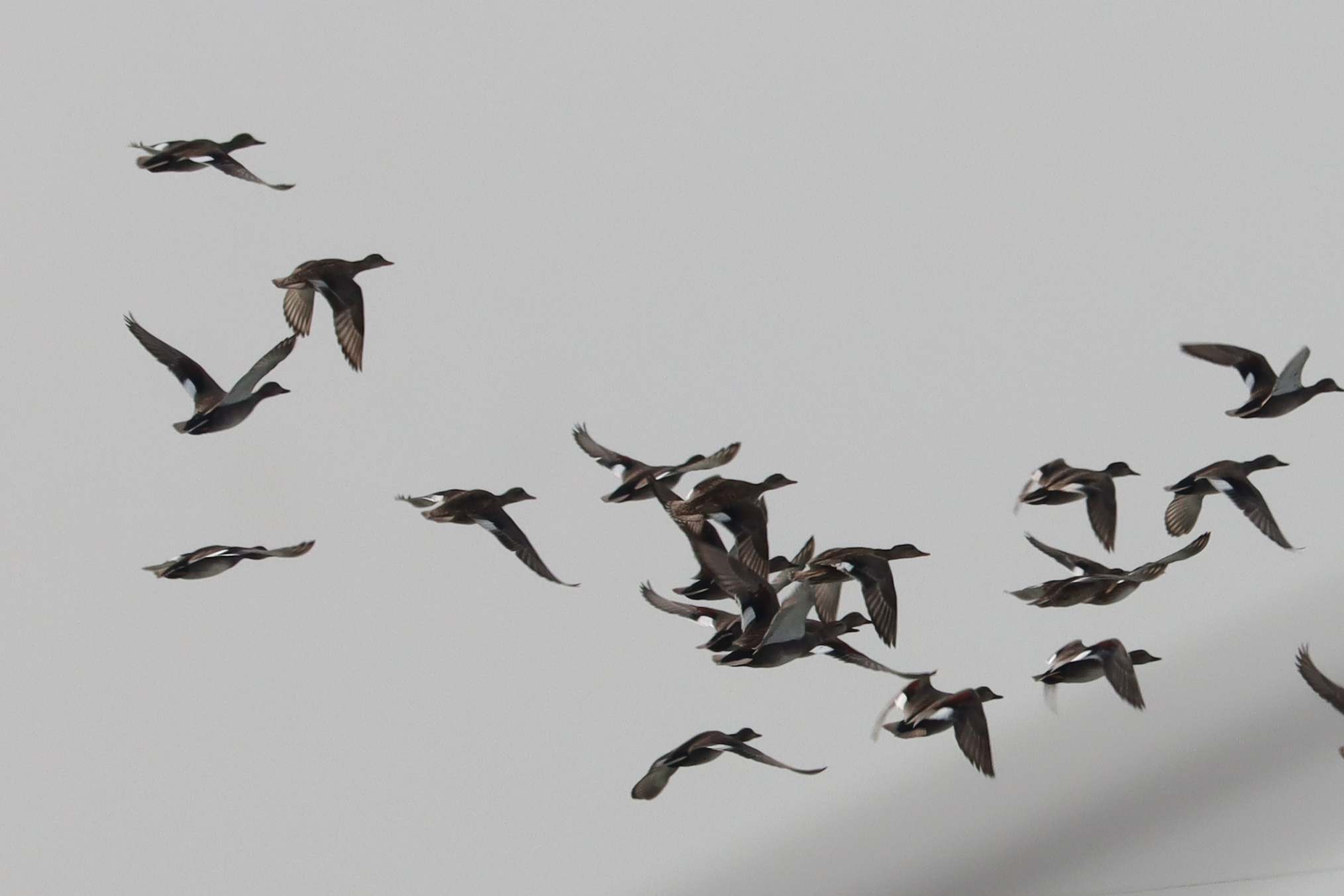
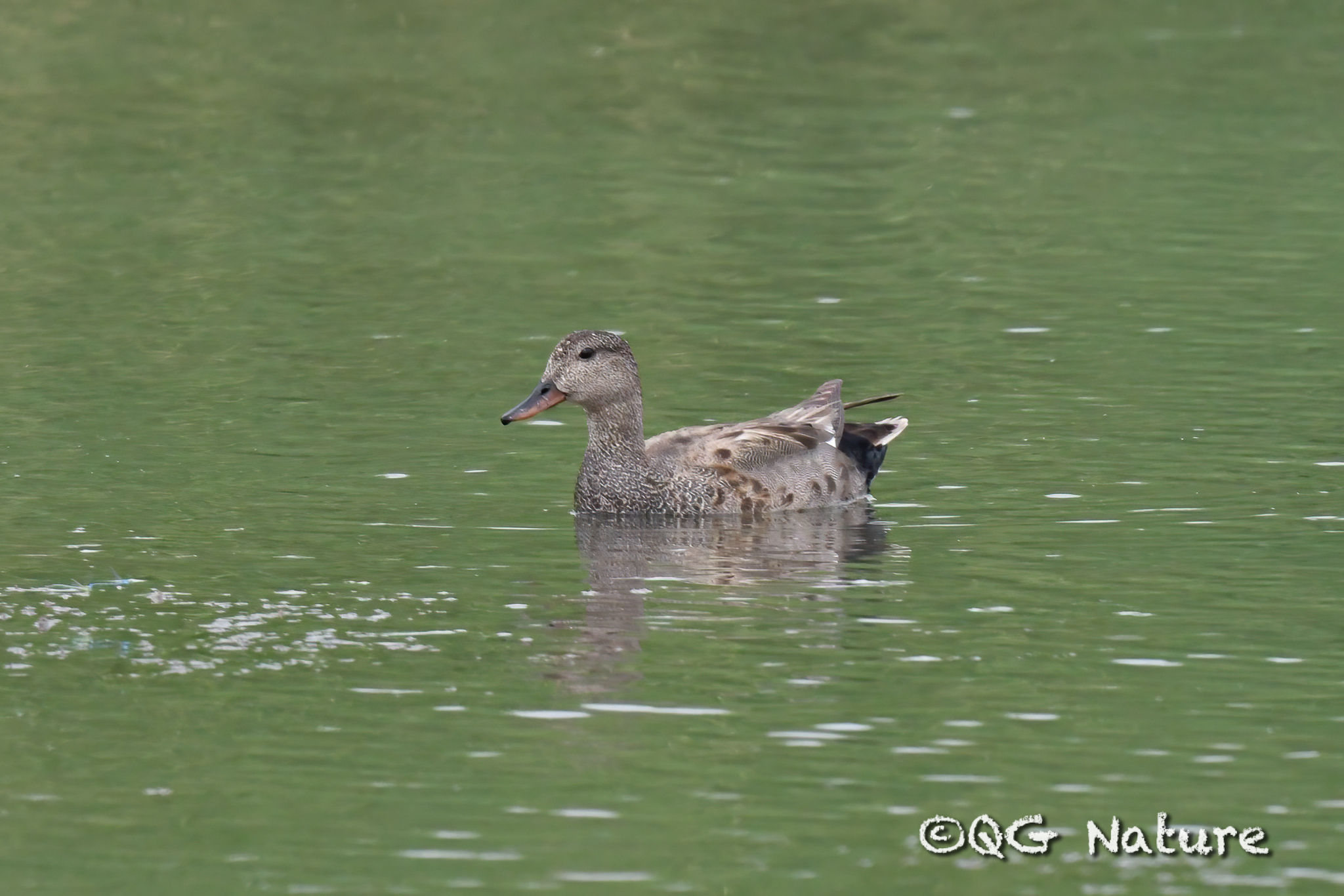
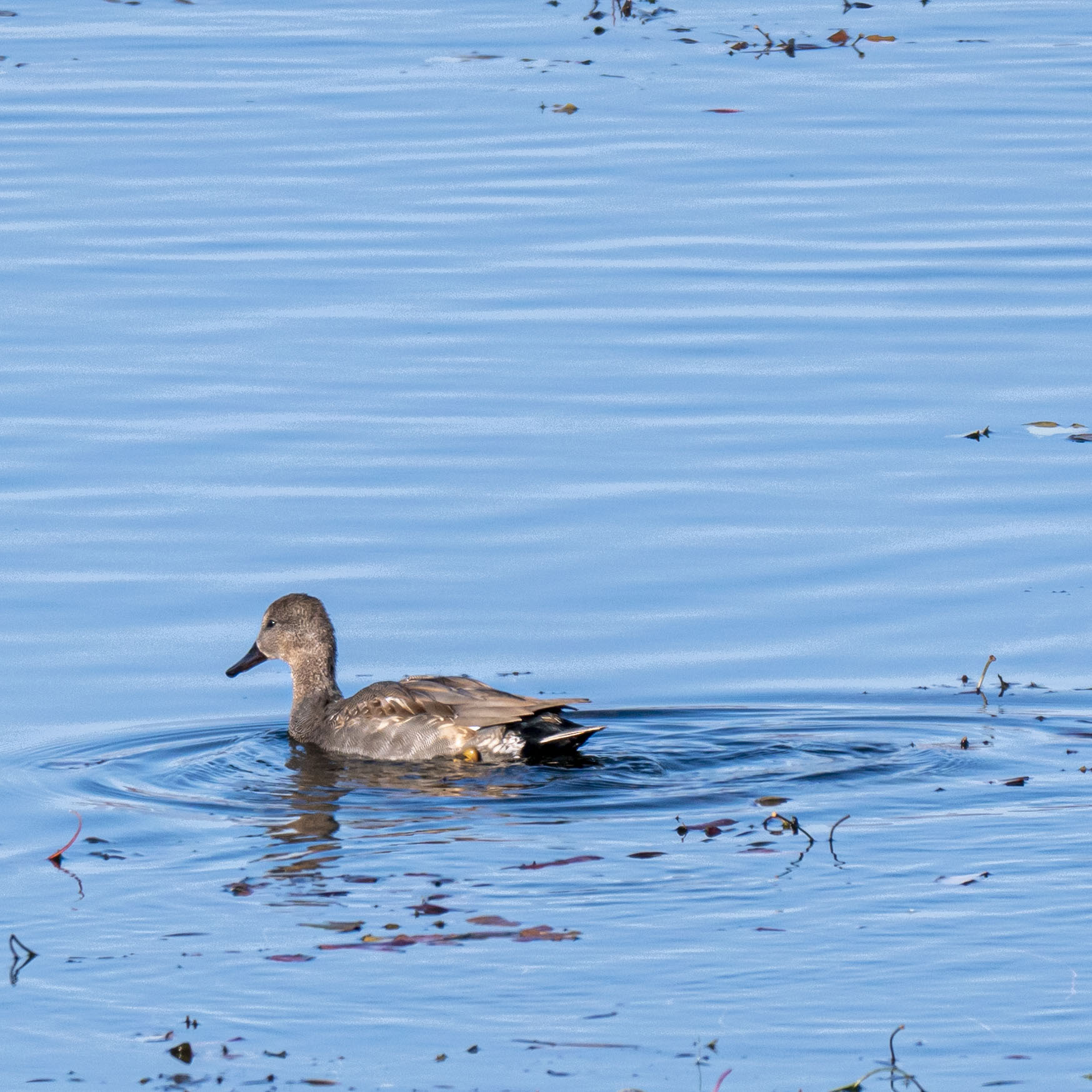
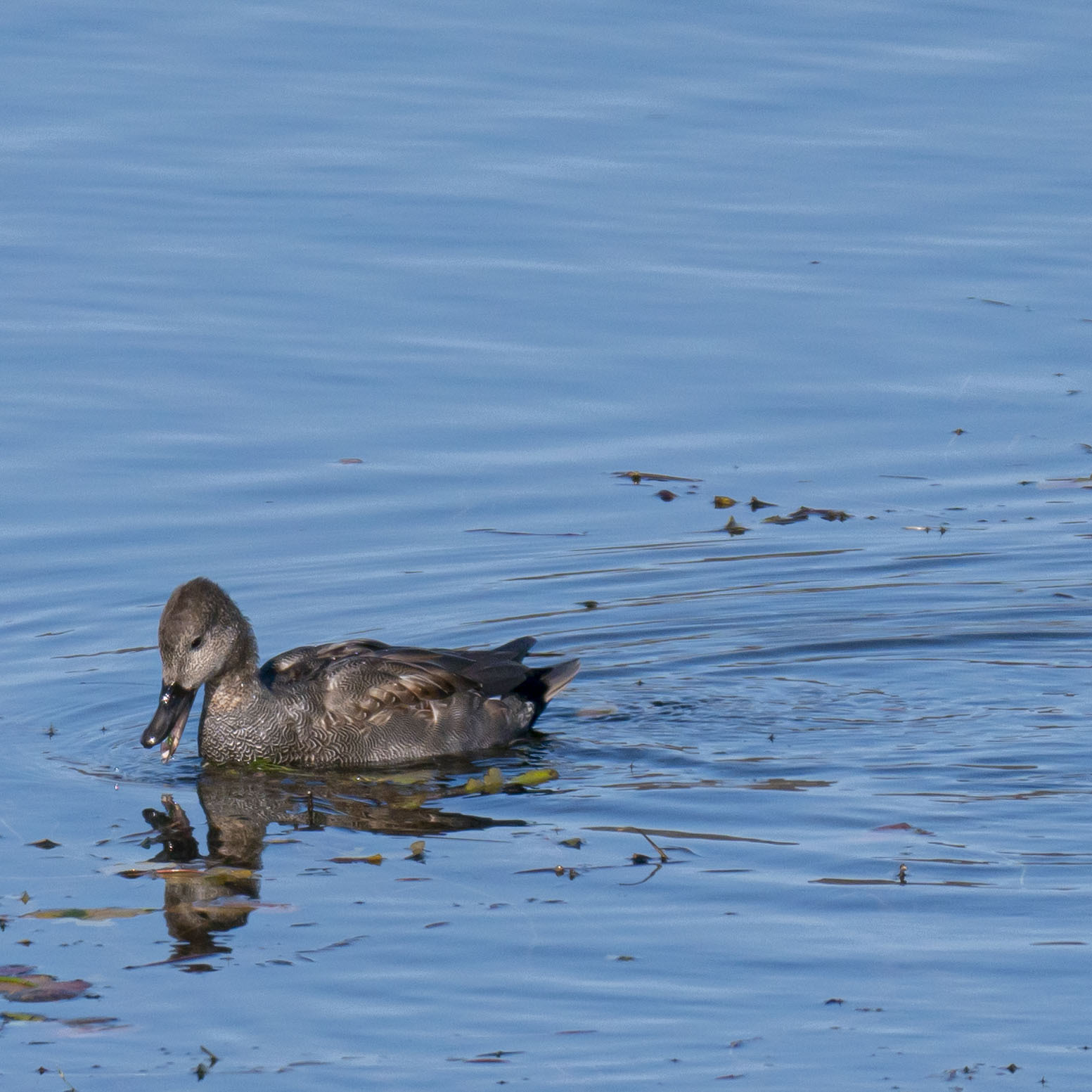
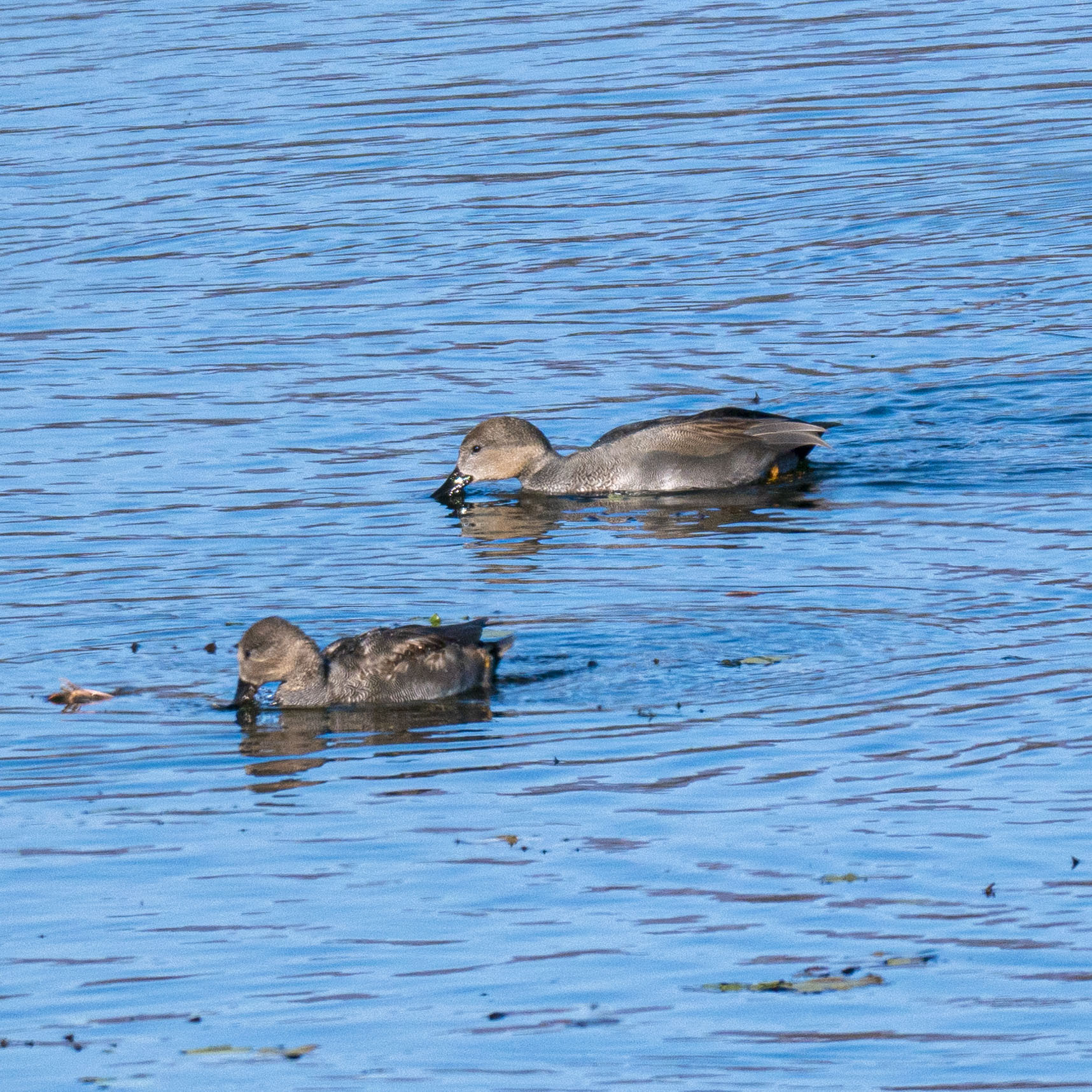
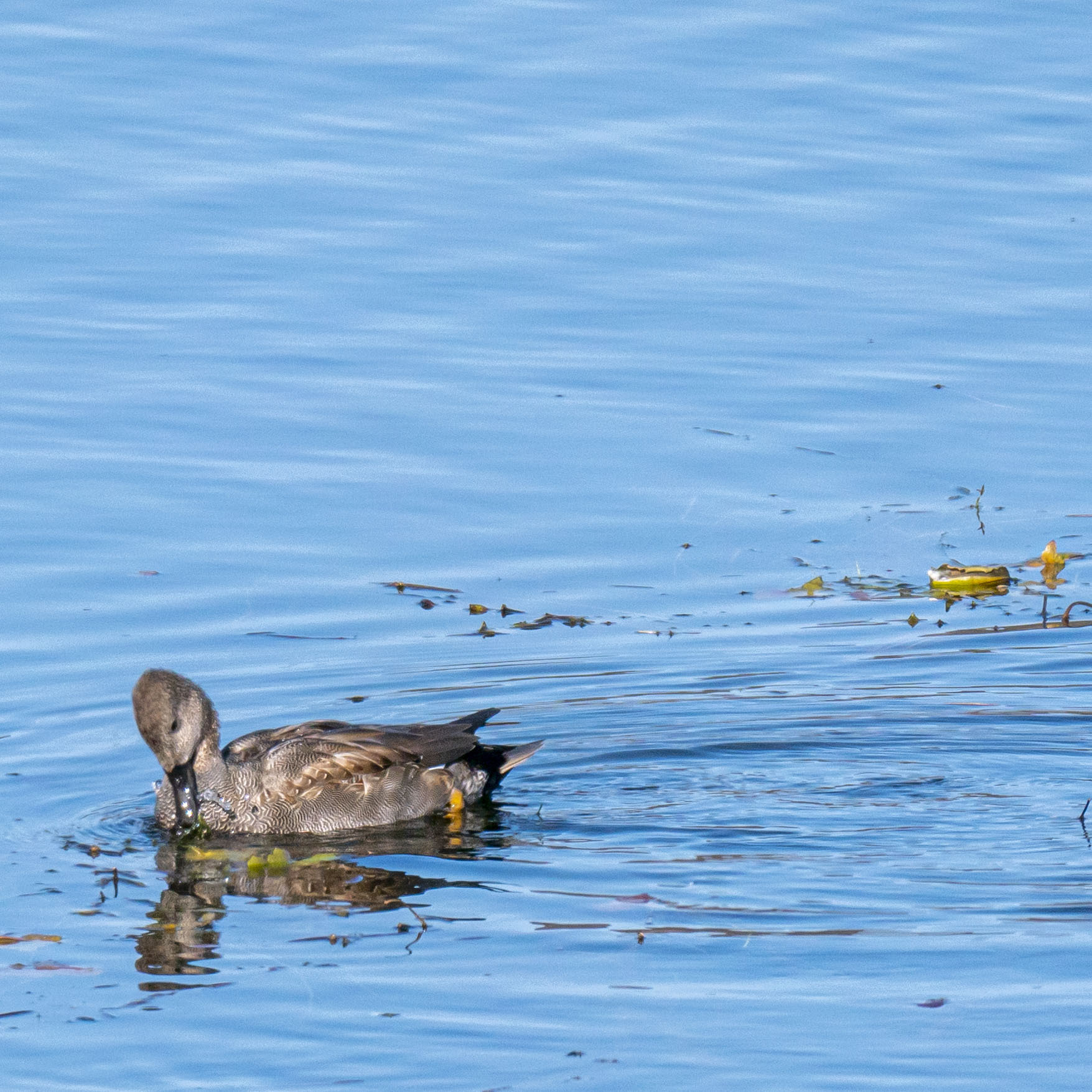
Length is 47–58 cm (19–23 in) with a wingspan of 78–85 cm (31–33 in). Males average 990 g (35 oz) and females 850 g (30 oz). Breeding males are patterned grey with a black rear end, light chestnut wings, and a brilliant white speculum visible in flight or at rest. In eclipse plumage, drakes resemble females but retain the male wing pattern and appear greyer above with less orange on the bill. Females are light brown, similar to female mallards, but distinguished by a dark orange-edged bill, smaller size, white speculum, and white belly. Both sexes undergo two annual moults following a juvenile moult.
Identification
Distinguished from female mallards by the dark orange-edged bill, smaller size, white speculum, and white belly. The white speculum is obvious in flight or at rest for both sexes. Vocalizations include a higher-pitched 'gag-ag-ag-ag' call from females and a grunt ('mep') and whistle from males.
Distribution & Habitat
Breeds in northern Europe, across the Palearctic, and central North America. The North American breeding range extends along the Saint Lawrence River, through the Great Lakes, Alberta, Saskatchewan, the Dakotas, south to Kansas, west to California, and along coastal Pacific Canada and southern coastal Alaska. The range is expanding into eastern North America. Strongly migratory, wintering from coastal Alaska south into Central America, and east into Idaho, Kansas, Ohio, and Virginia. Also found in parts of South Asia, particularly southern India. In Great Britain, it is a scarce-breeding bird and winter visitor with increasing populations; small breeding populations exist in Ireland.
Behavior & Ecology
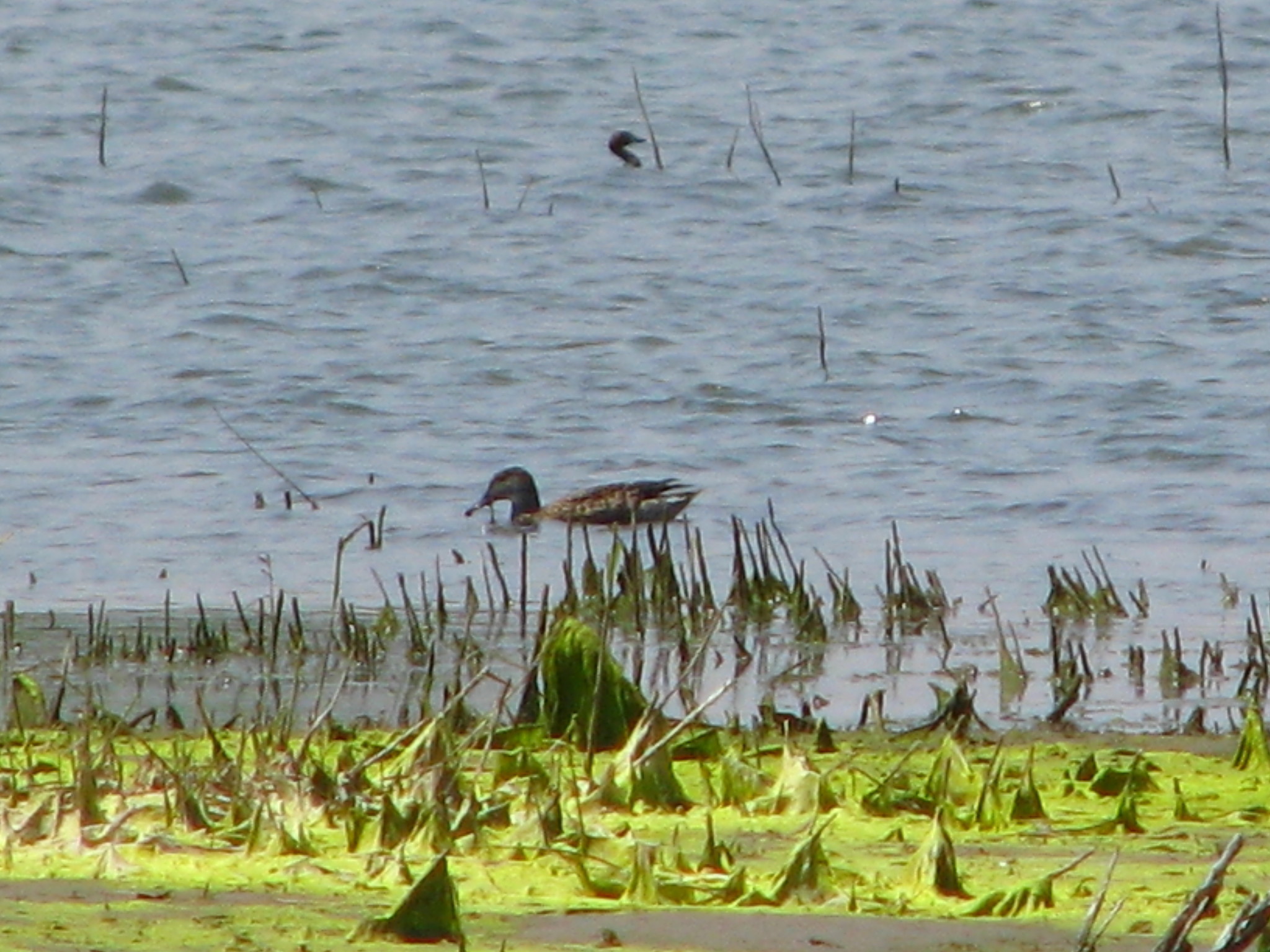
Feeds primarily by dabbling for plant food with head submerged, but can dive underwater more proficiently than other dabbling ducks and may steal food from diving birds like coots. Nests on the ground, often distant from water. Not highly gregarious outside breeding season, forming small flocks. Monogamous, potentially breeding after the first year. Pair formation occurs during fall migration, on breeding grounds, or in August. Courtship displays include the 'burp,' where the male raises his head pointing his bill toward a female while uttering a 'mep' call, and the 'grunt-whistle,' where the male rears his head, dips the bill into water to displace droplets toward a female, and emits a loud whistle followed by a low burp. Paired males may follow other females in flight displays. Females lay a clutch of 7–12 eggs measuring 4.9–6 cm in length and 3.4–4.4 cm in width. Incubation lasts 24–27 days, and nestlings leave after 1–2 days. Only one brood is raised per season.
Conservation
Listed as Least Concern on the IUCN Red List. Populations increased approximately 2.5% over 49 years (1966–2010) and continue to grow. It is one of the most hunted duck species, with 1.7 million shot annually, but remains sustainably hunted due to conservation efforts by groups such as Ducks Unlimited and Delta Waterfowl Foundation. The species is covered by the Agreement on the Conservation of African-Eurasian Migratory Waterbirds (AEWA).
Source: Wikipedia · CC BY-SA 3.0
Taxonomy
- Order
- Anseriformes
- Family
- Anatidae
- Genus
- Mareca
Subspecies (2)
-
Mareca strepera couesi
formerly Fanning Islands (central Pacific); extinct c. 1874
Data Sources
Species description from Wikipedia, licensed under CC BY-SA 3.0.
Bird images and sounds sourced from GBIF, contributed by citizen scientists worldwide under Creative Commons licenses.
Taxonomy data from AviList 2025.