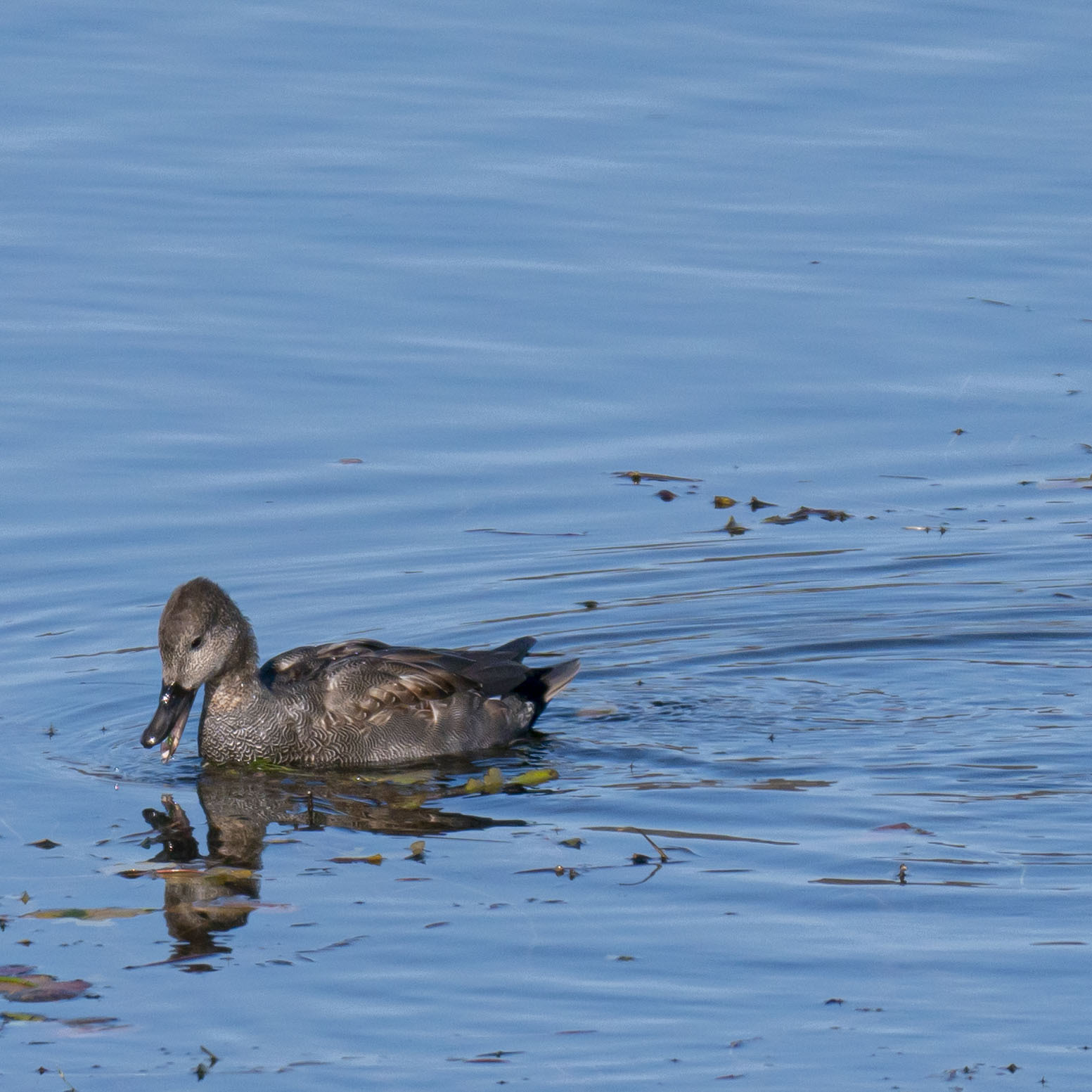
Gadwall
Mareca strepera
赤膀鸭
Introduction
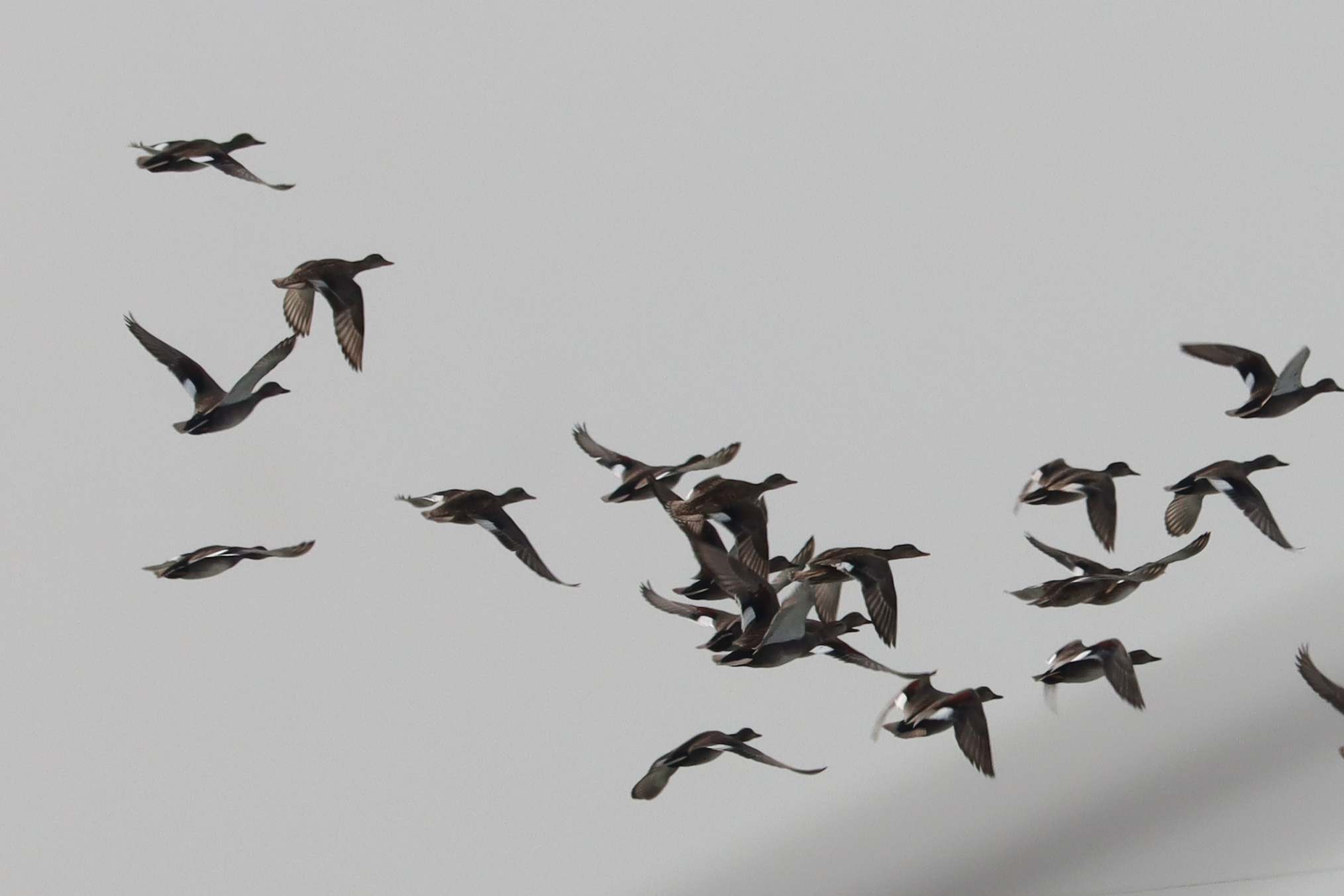
This dabbling duck occurs across wetlands of the Northern Hemisphere. Its range has expanded significantly in recent decades, particularly in eastern North America and parts of Europe. Genetic studies indicate close relationships with the falcated duck and the three wigeon species, forming a distinct group within dabbling ducks. The species has been moved between genera as taxonomic understanding has advanced. It frequently feeds in mixed flocks with other dabbling ducks and displays a distinctive wing pattern.
Description
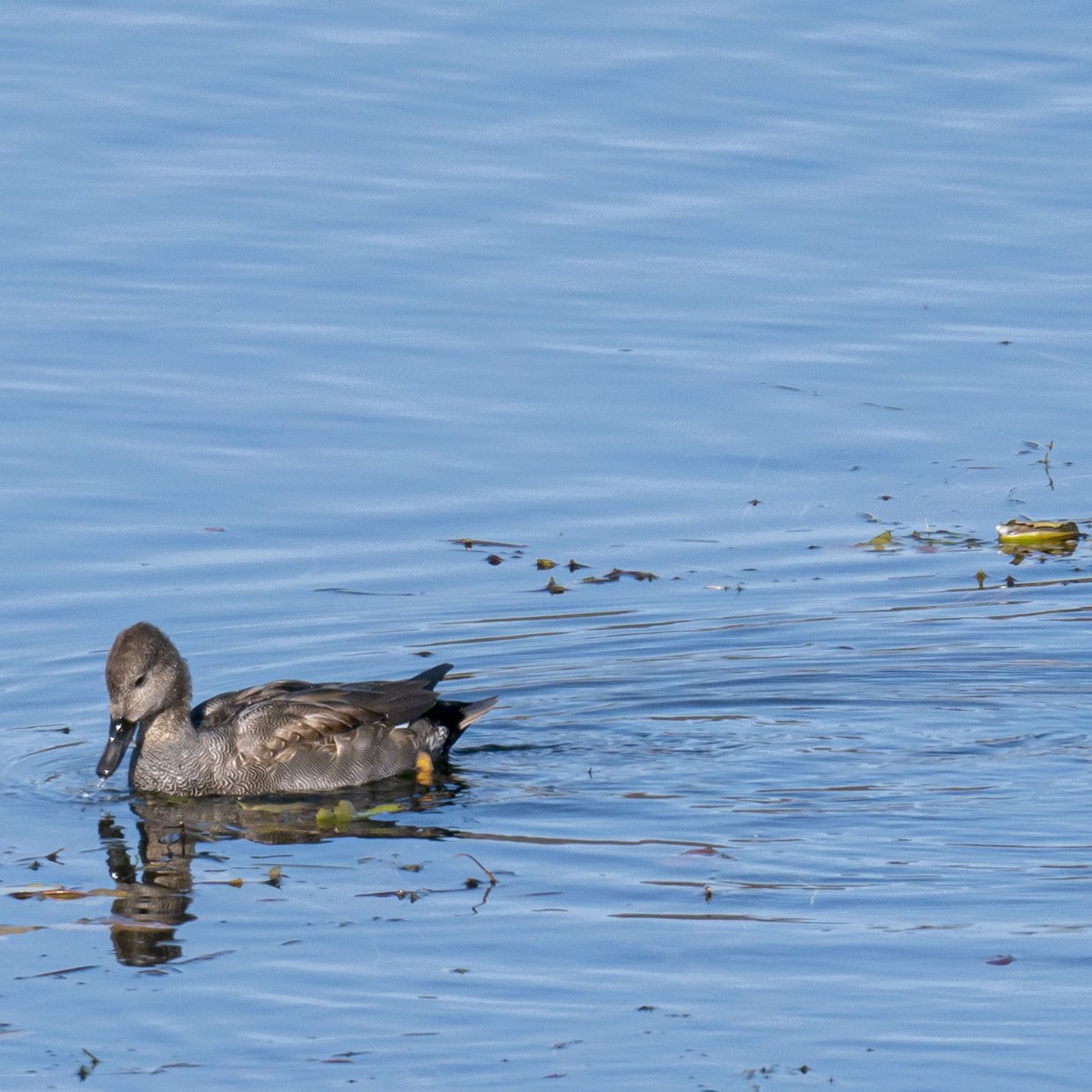
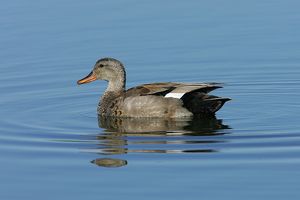
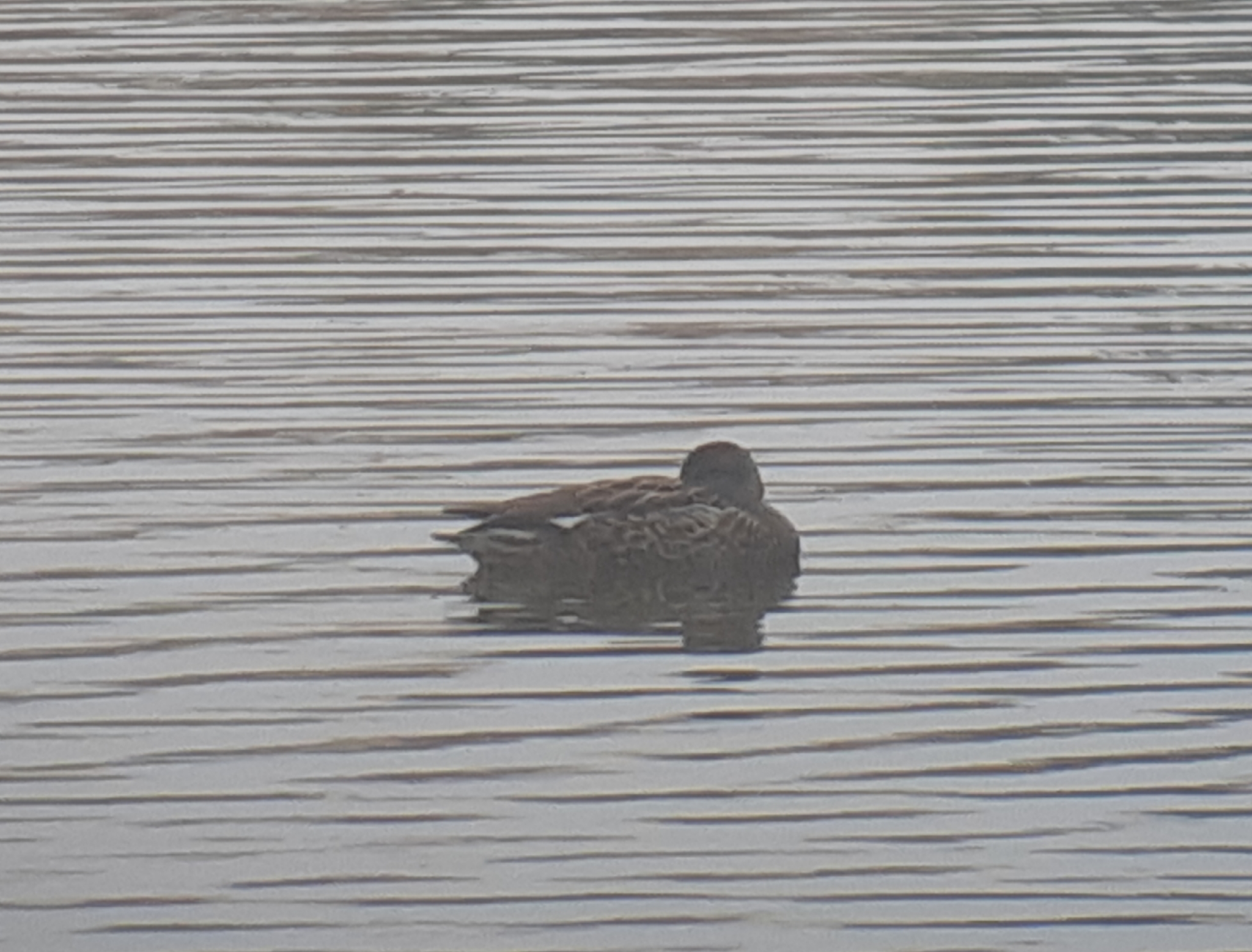
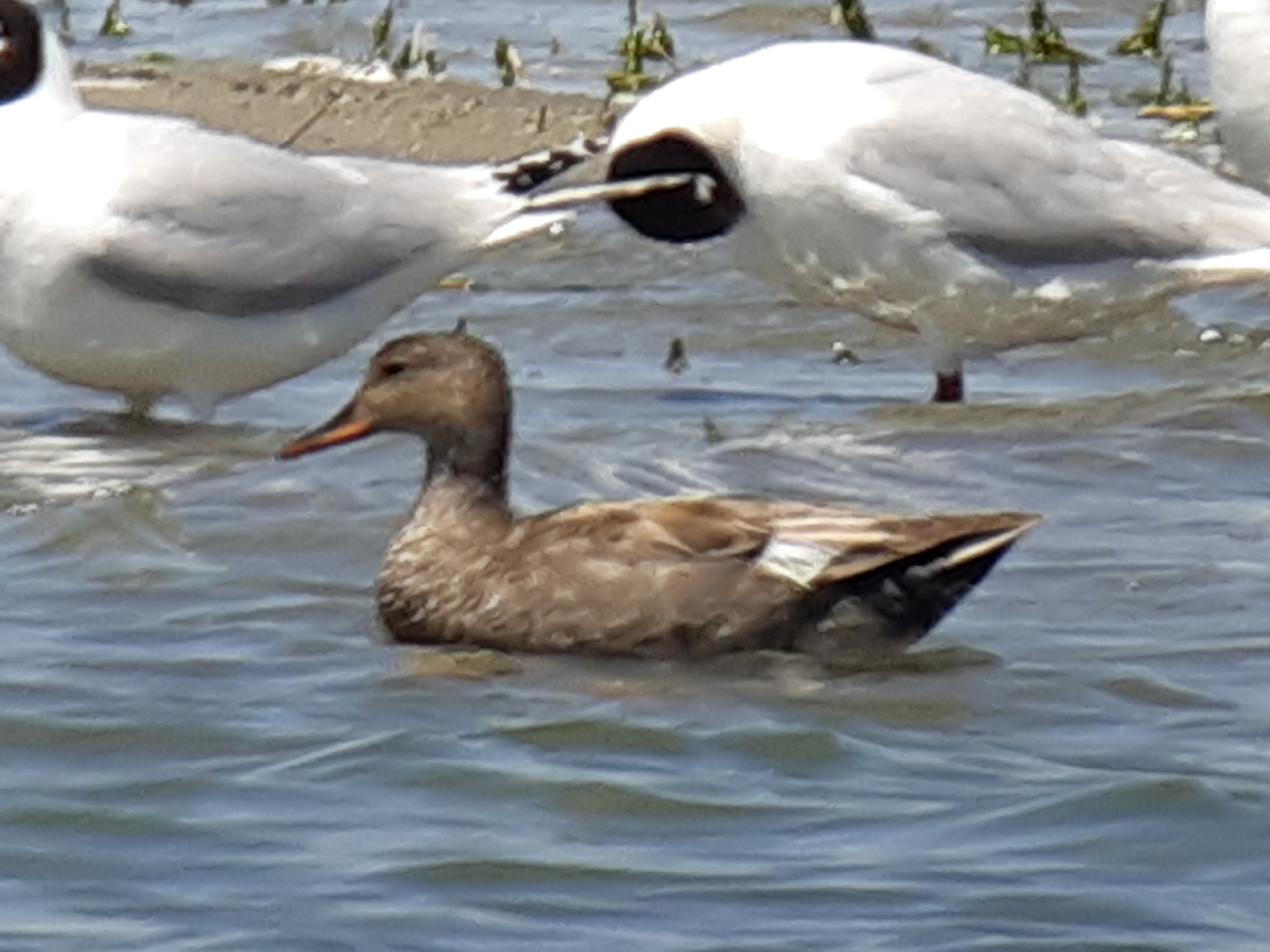
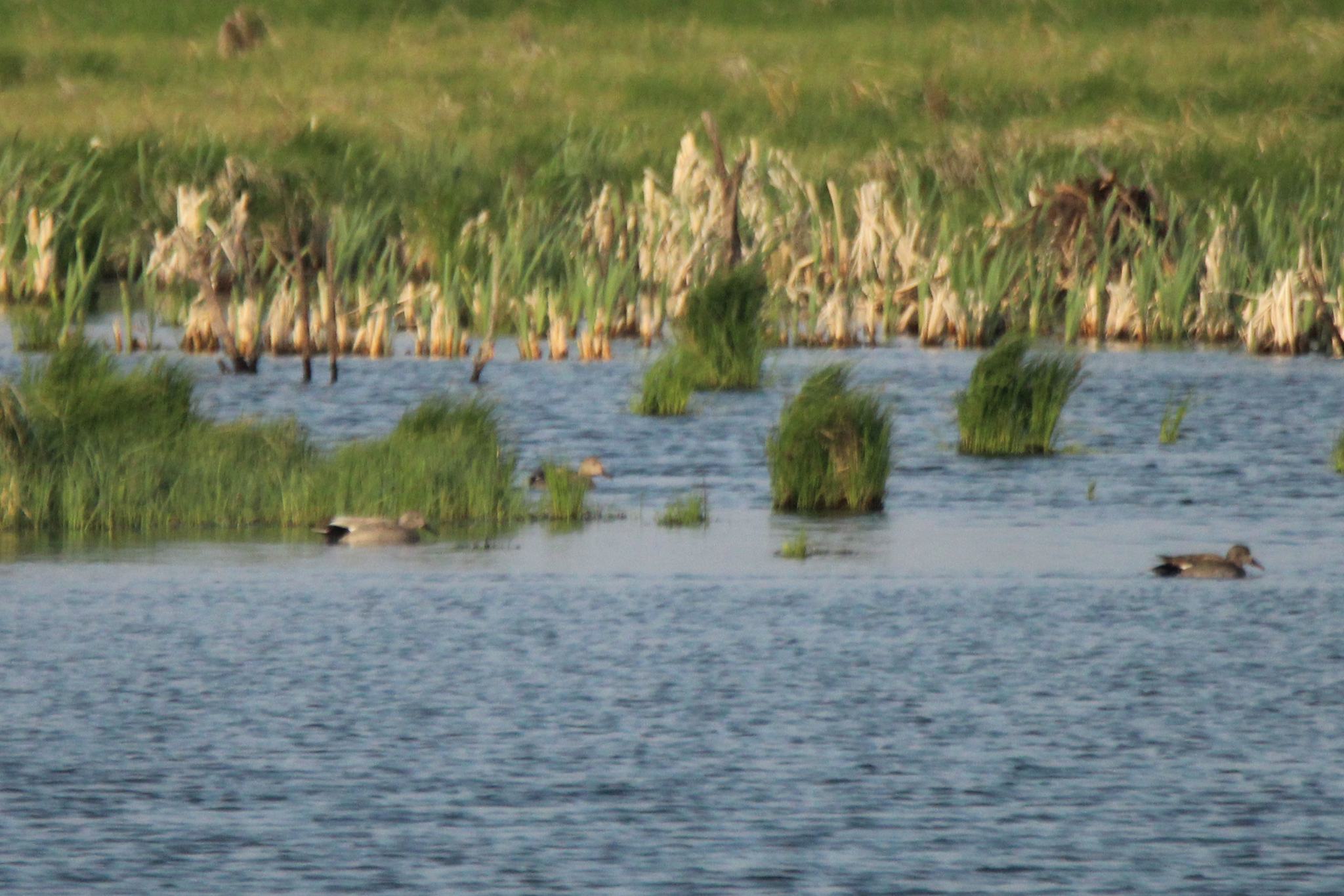
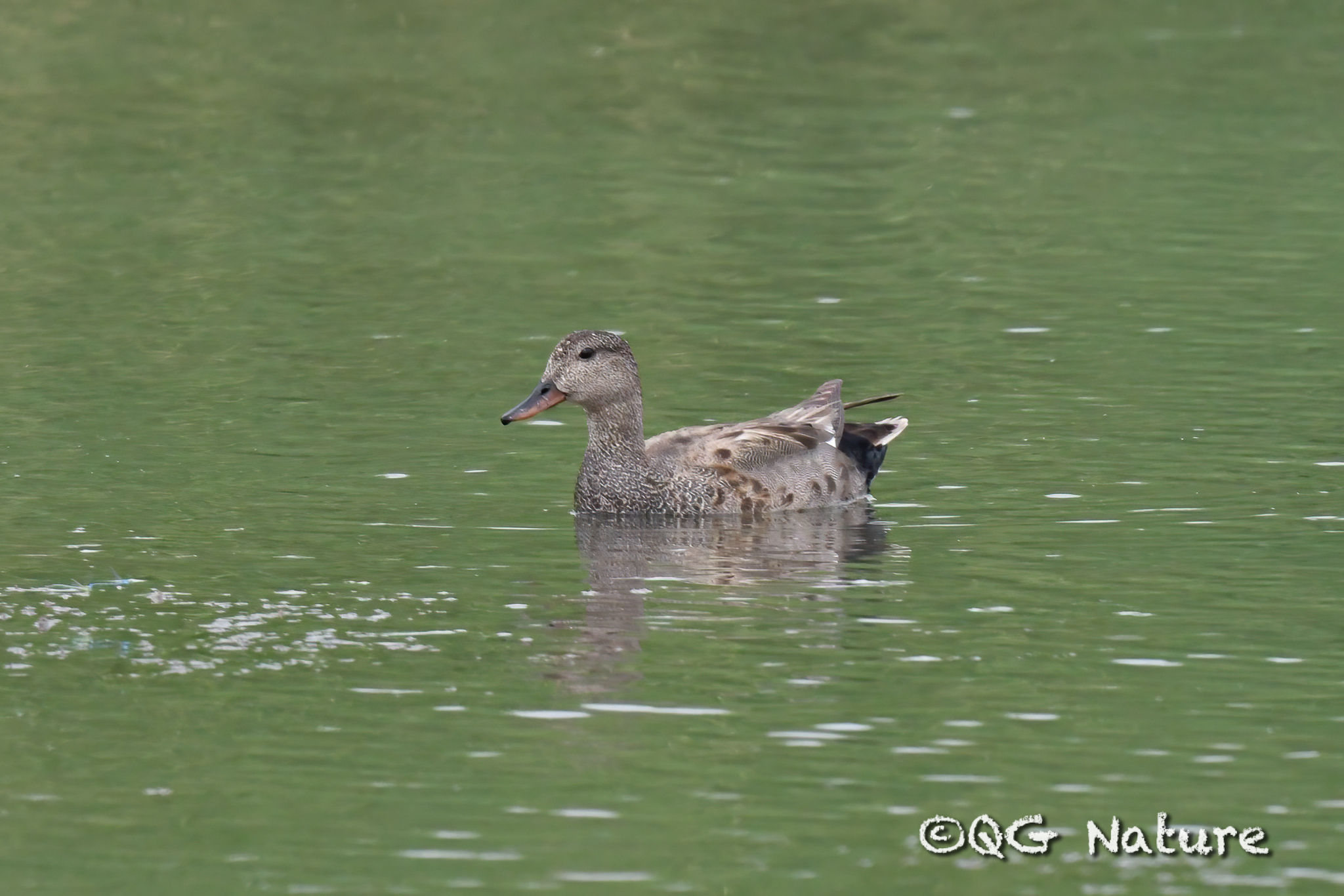
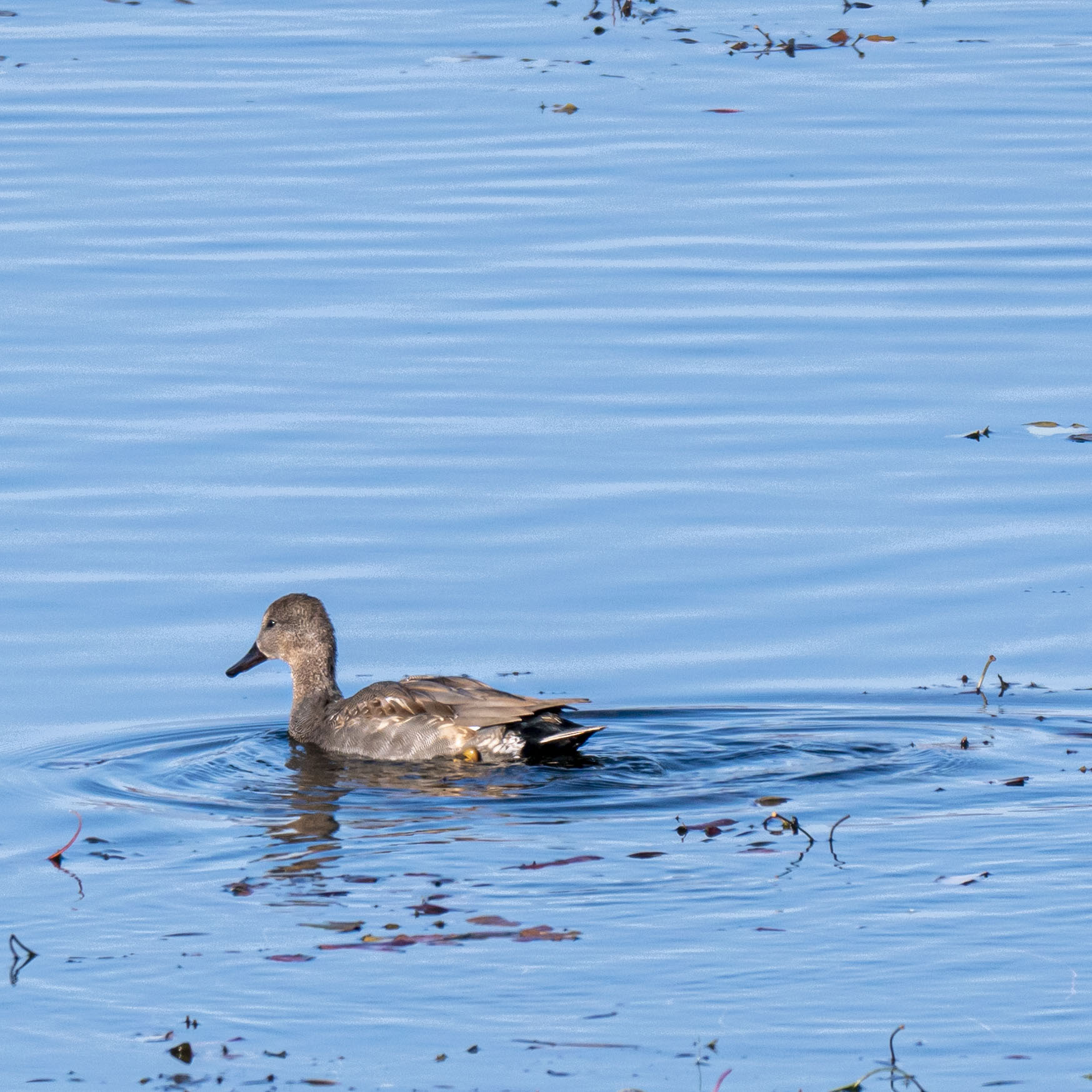
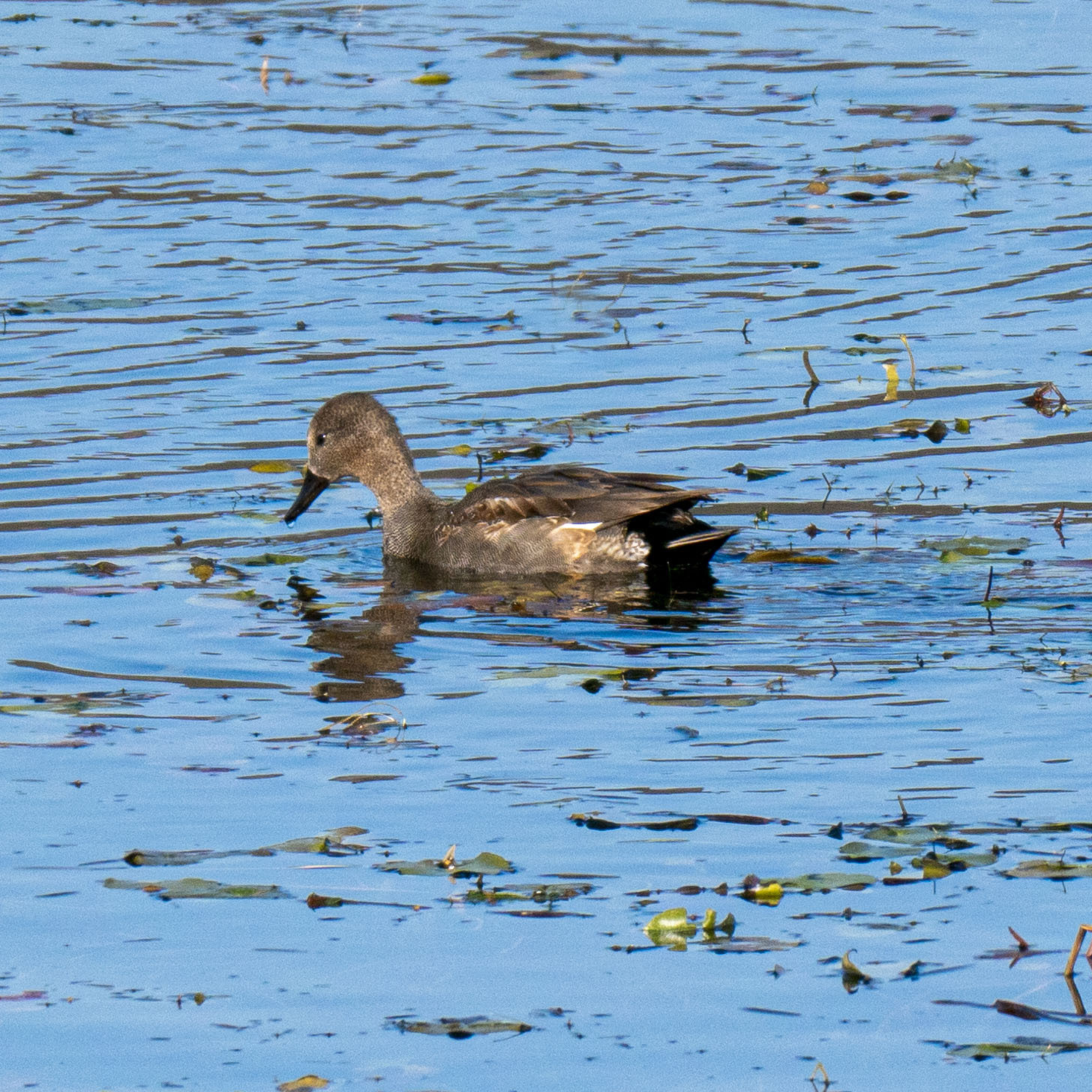
A medium-sized dabbling duck measuring 47-58 cm in length with a wingspan of 78-85 cm. Males average 990 g while females weigh approximately 850 g. The breeding male displays sophisticated grey patterning across the body, contrasting with a black rear end and light chestnut wings. Its most diagnostic feature is the brilliant white speculum, visible both in flight and at rest. Non-breeding males resemble females but maintain the distinctive wing pattern and tend to be greyer above with reduced orange on the bill. Females exhibit warm brown plumage similar to female mallards but can be distinguished by their dark orange-edged bill, smaller overall size, prominent white speculum, and white belly. Both sexes undergo two complete molts annually following their juvenile molt.
Identification
Females closely resemble female mallards but are distinguished by their smaller size, dark orange-edged bill, conspicuous white speculum, and white belly that contrasts with the brown upperparts. Males in eclipse plumage retain their distinctive wing pattern even when body plumage mimics the female, serving as a key identification feature. The wing pattern—light chestnut coverts with a bright white speculum—separates both sexes from mallards and most other dabbling ducks. In flight, the white speculum patch becomes particularly obvious. Females give a higher-pitched call than female mallards, transcribed as gag-ag-ag-ag, while males produce a distinctive grunt (mep) and whistle.
Distribution & Habitat
Breeds across northern Europe, the Palearctic region, and central North America. In North America, the breeding range extends from the Saint Lawrence River through the Great Lakes, across Alberta and Saskatchewan to the Dakotas and Kansas, westward to California, and along coastal regions of Pacific Canada and southern Alaska. The range continues expanding eastward. This species is strongly migratory, wintering from coastal Alaska south through Idaho, Kansas, Ohio, and Virginia to Central America. In Great Britain, it remains a scarce breeding bird and winter visitor, though populations have increased, likely through both introductions and natural colonization. A small breeding population has recently established in Ireland, centered on County Wexford and Lough Neagh. Occasional individuals appear in southern India.
Behavior & Ecology
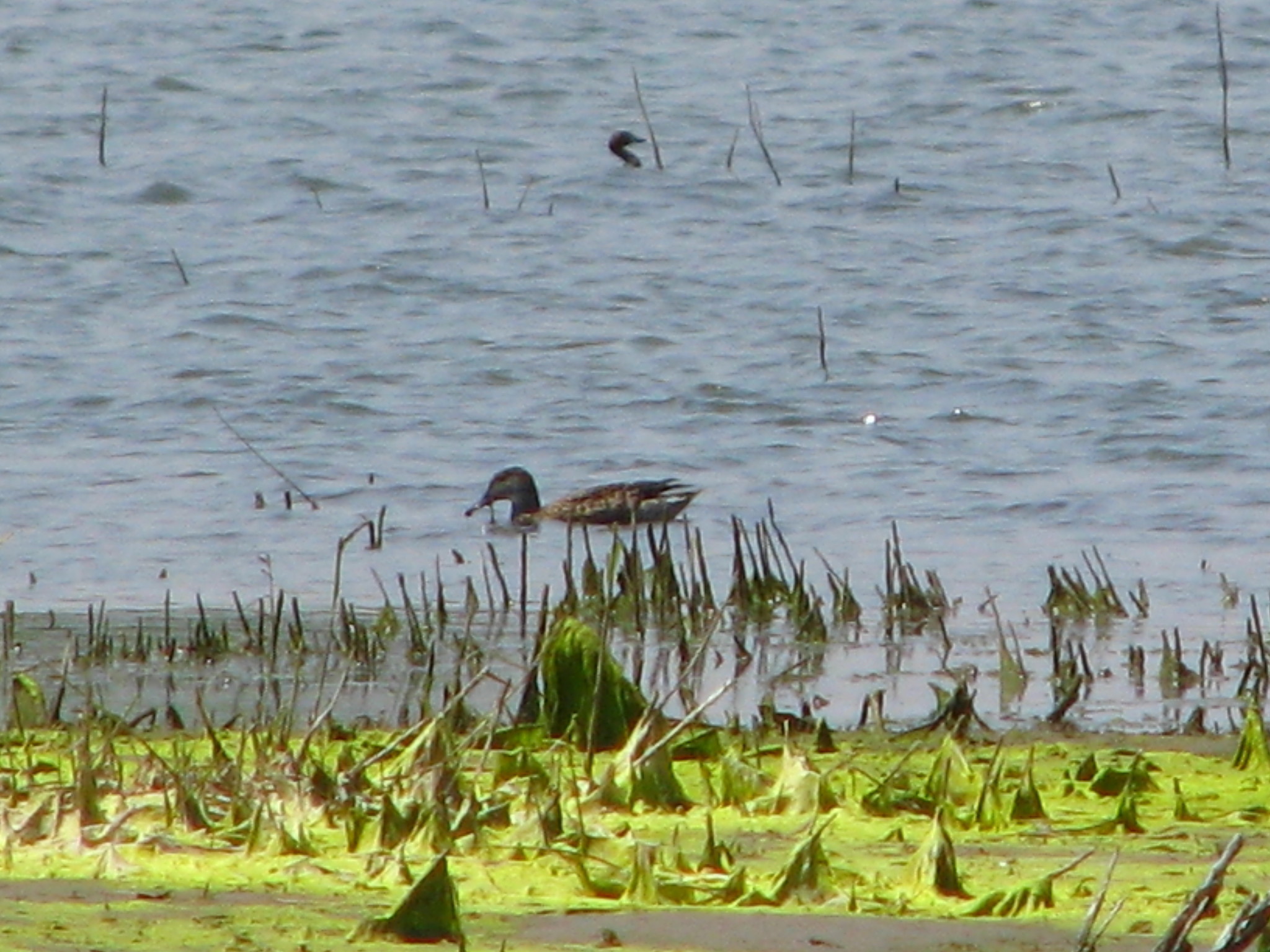
Inhabits open wetlands including prairie lakes, wet grasslands, and marshes with dense fringing vegetation. Feeds primarily by dabbling with head submerged but dives more proficiently than other dabbling ducks, sometimes stealing food from diving birds such as coots. Nests on the ground, often some distance from water. Outside breeding season, forms only small flocks rather than the large aggregations typical of some dabbling ducks. Monogamous pairs form during fall migration or on breeding grounds. Generally quiet except during elaborate courtship displays. The male performs a 'burp' display while raising his head toward the female, and a 'grunt-whistle' where water droplets are displaced toward the female. Females lay 7-12 eggs measuring 4.9-6 cm by 3.4-4.4 cm. Incubation lasts 24-27 days, and ducklings leave the nest after 1-2 days. Single brood per season.
Conservation
Listed as Least Concern on the IUCN Red List of Threatened Species. Protected under the Agreement on the Conservation of African-Eurasian Migratory Waterbirds (AEWA). Populations have increased approximately 2.5% over 49 years (1966-2010) and continue growing. Among the most harvested duck species, ranking third after mallards and green-winged teal, with an estimated 1.7 million individuals shot annually. Sustainable management through Ducks Unlimited, Delta Waterfowl Foundation, and other conservation organizations ensures continued hunting without population decline. The extinct subspecies Coues's gadwall disappeared from Teraina atoll around 1874, though the main subspecies remains abundant and expanding.
Culture
The specific name strepera derives from Late Latin meaning 'noisy,' referencing the species' vocalizations during courtship. The etymology of the common name 'gadwall' remains uncertain, though the term has been in use since 1666. No significant folklore or cultural traditions are specifically associated with this species beyond its place in waterfowl hunting traditions and birdwatching communities.
Source: Wikipedia · CC BY-SA 3.0
Taxonomy
- Order
- Anseriformes
- Family
- Anatidae
- Genus
- Mareca
- eBird Code
- gadwal
Subspecies (2)
-
Mareca strepera couesi
formerly Fanning Islands (central Pacific); extinct c. 1874
-
Mareca strepera strepera
breeds Eurasia from Britain through southeastern Russia and northeastern China, and southern Canada through the central USA; winters south through northern Africa, India to southeastern China, and to central Mexico and Cuba
Data Sources
Species description from Wikipedia, licensed under CC BY-SA 3.0.
Bird images and sounds sourced from GBIF, contributed by citizen scientists worldwide under Creative Commons licenses.
Taxonomy data from AviList 2025.