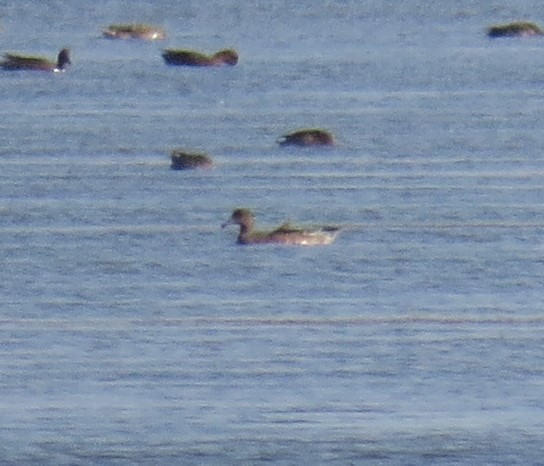
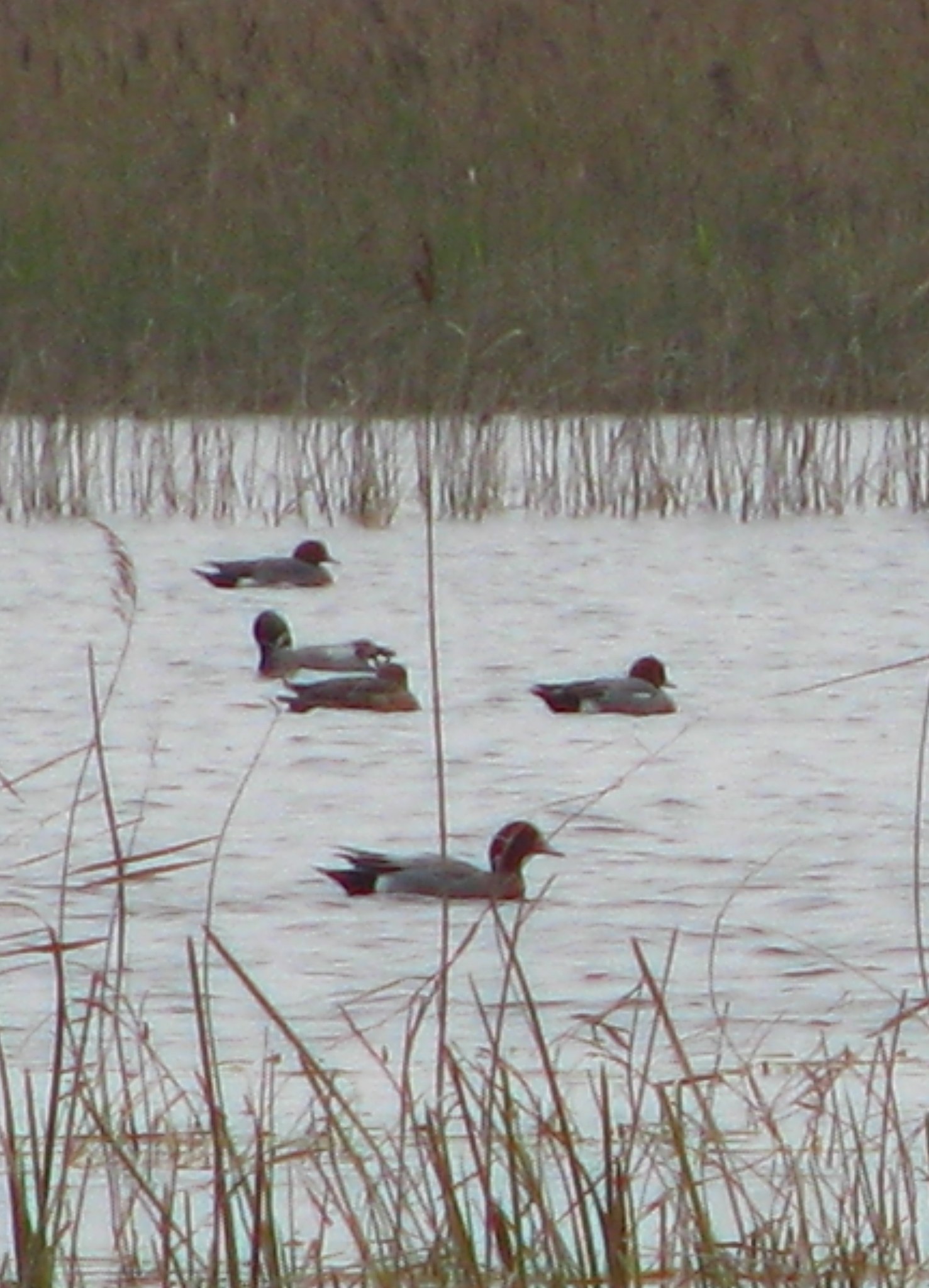
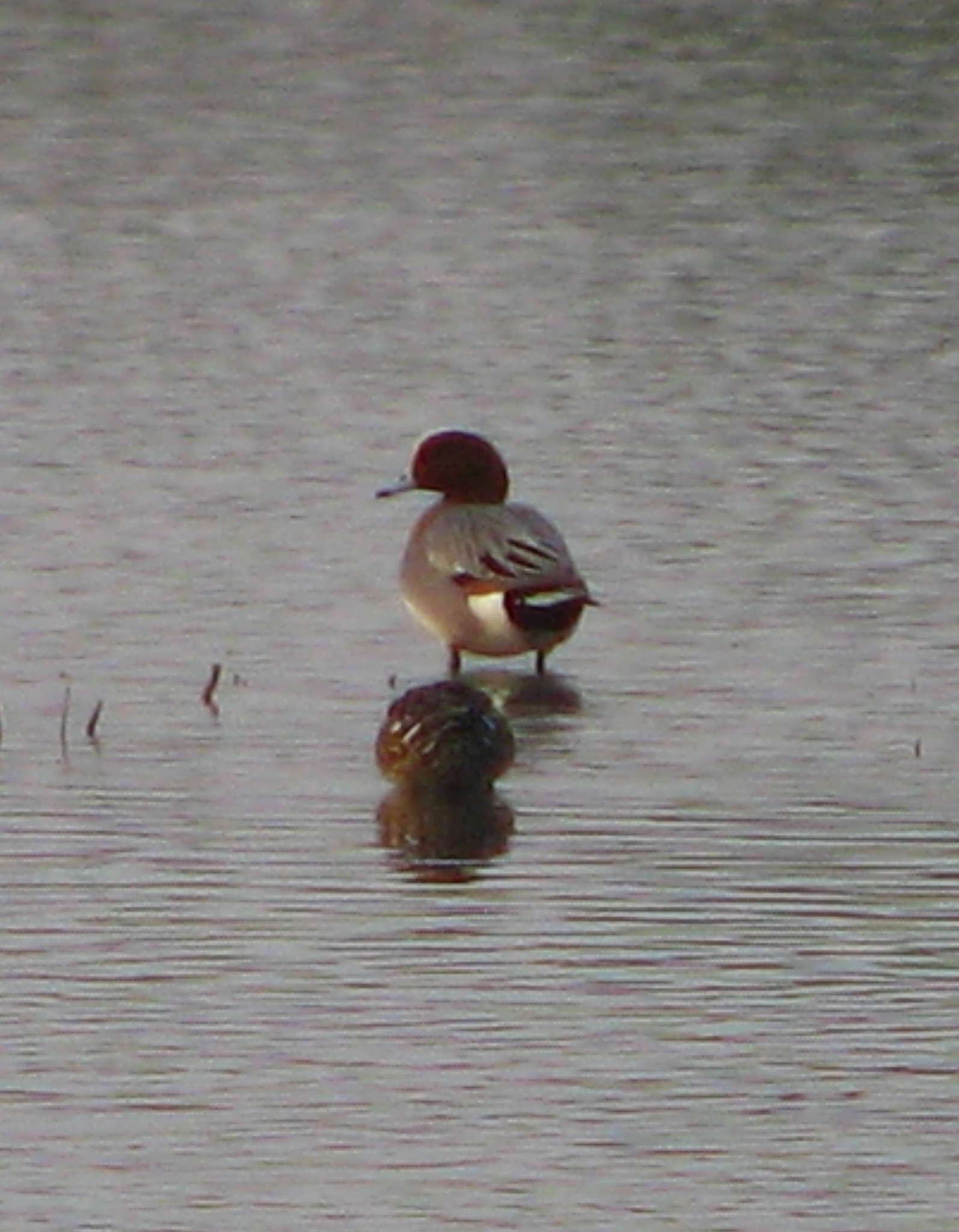
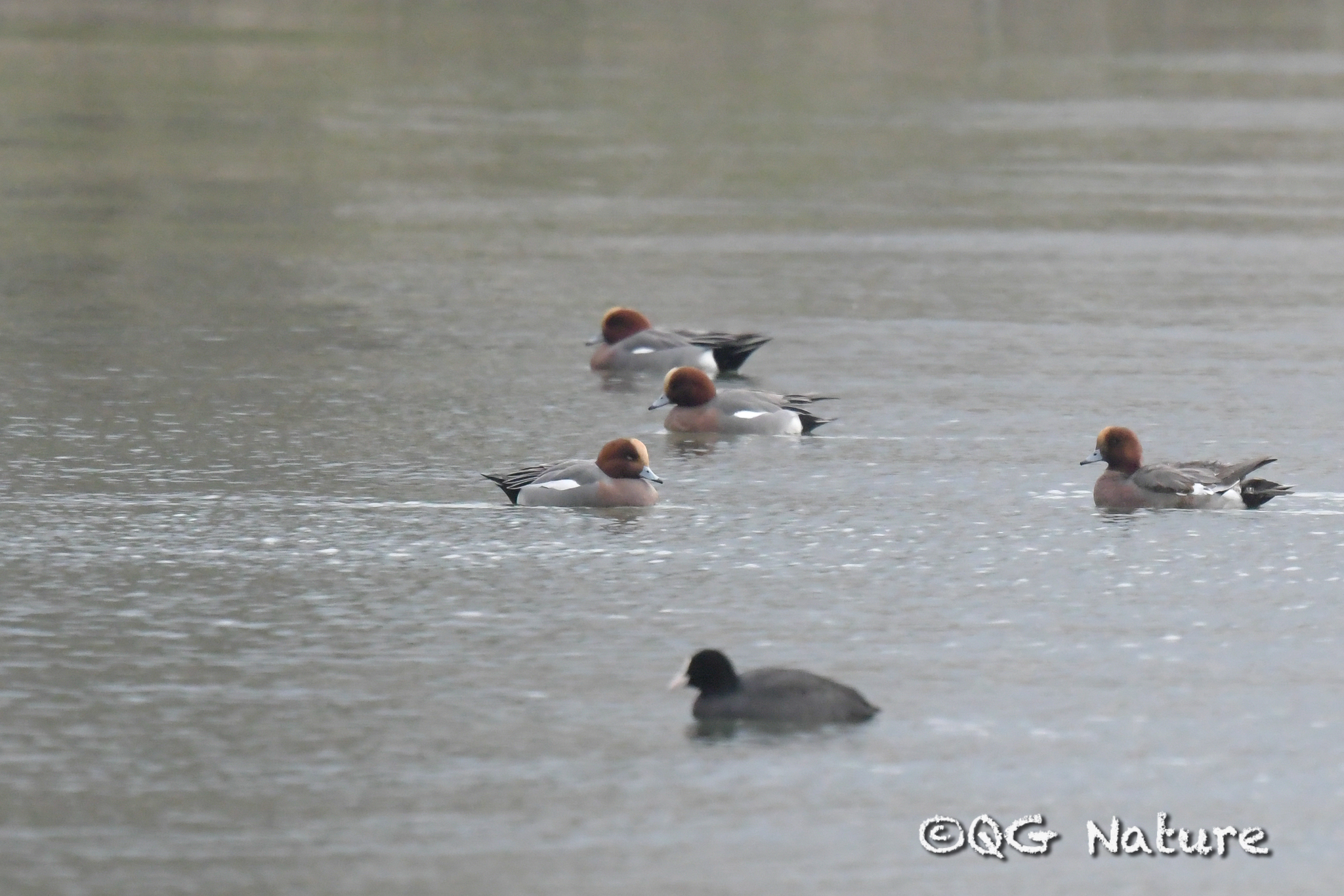
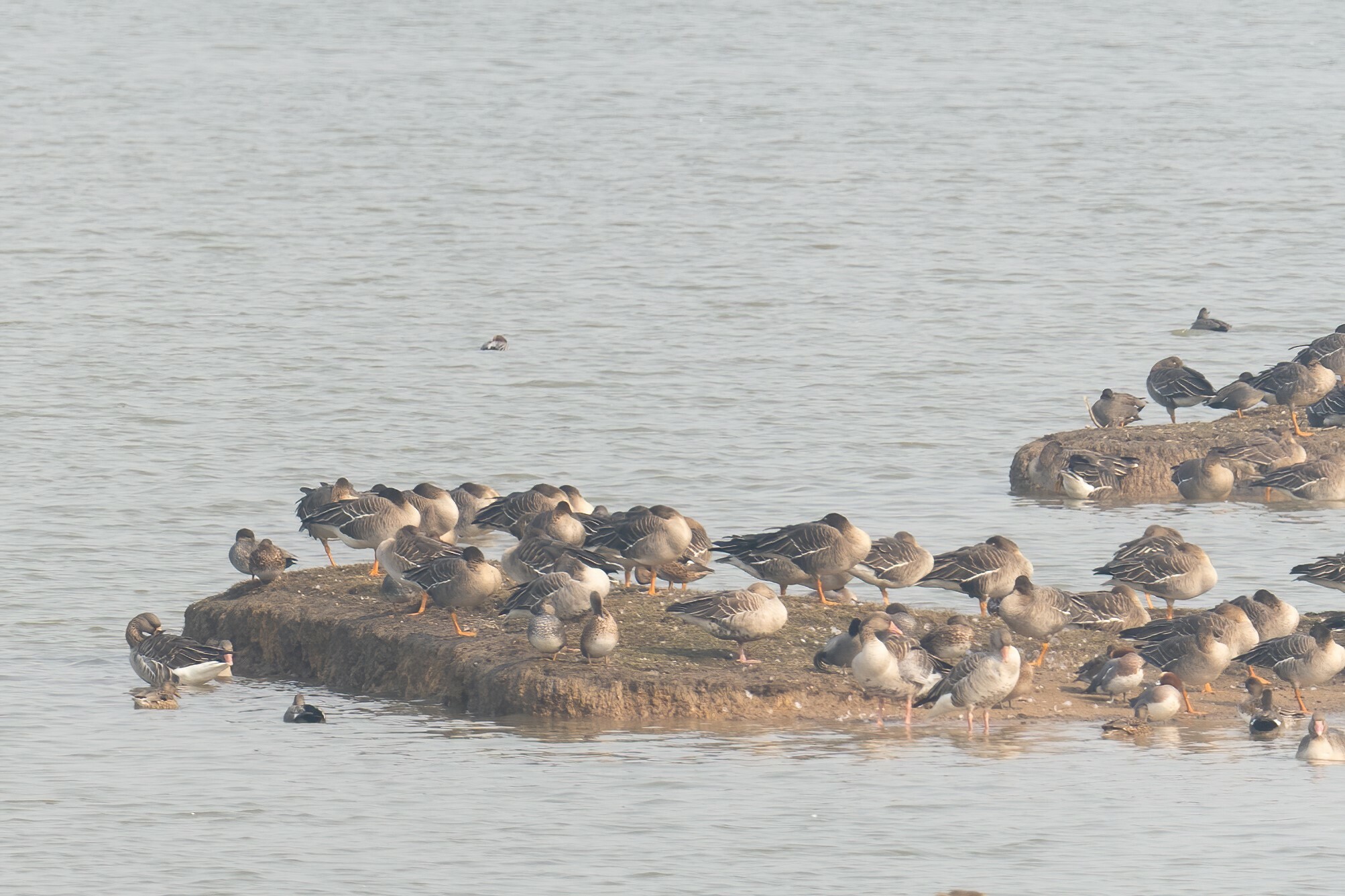
Anseriformes / Anatidae / Mareca
Eurasian Wigeon
Mareca penelope · 赤颈鸭
Introduction
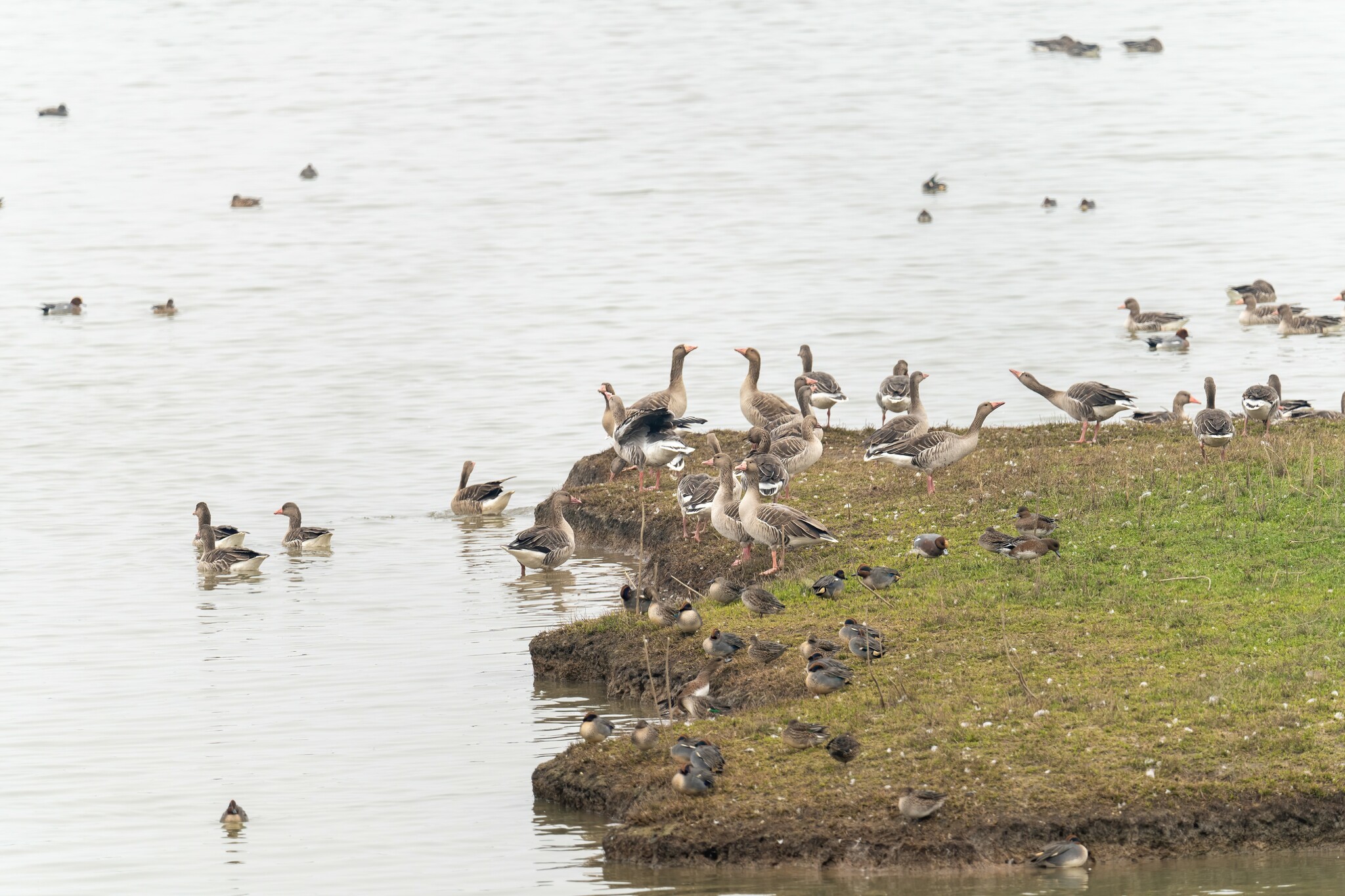
A dabbling duck in the genus Mareca, common and widespread within its Palearctic range. It inhabits open wetlands such as wet grasslands or marshes. The species is highly gregarious outside the breeding season and feeds by dabbling or grazing. Its conservation status is Least Concern.
Description
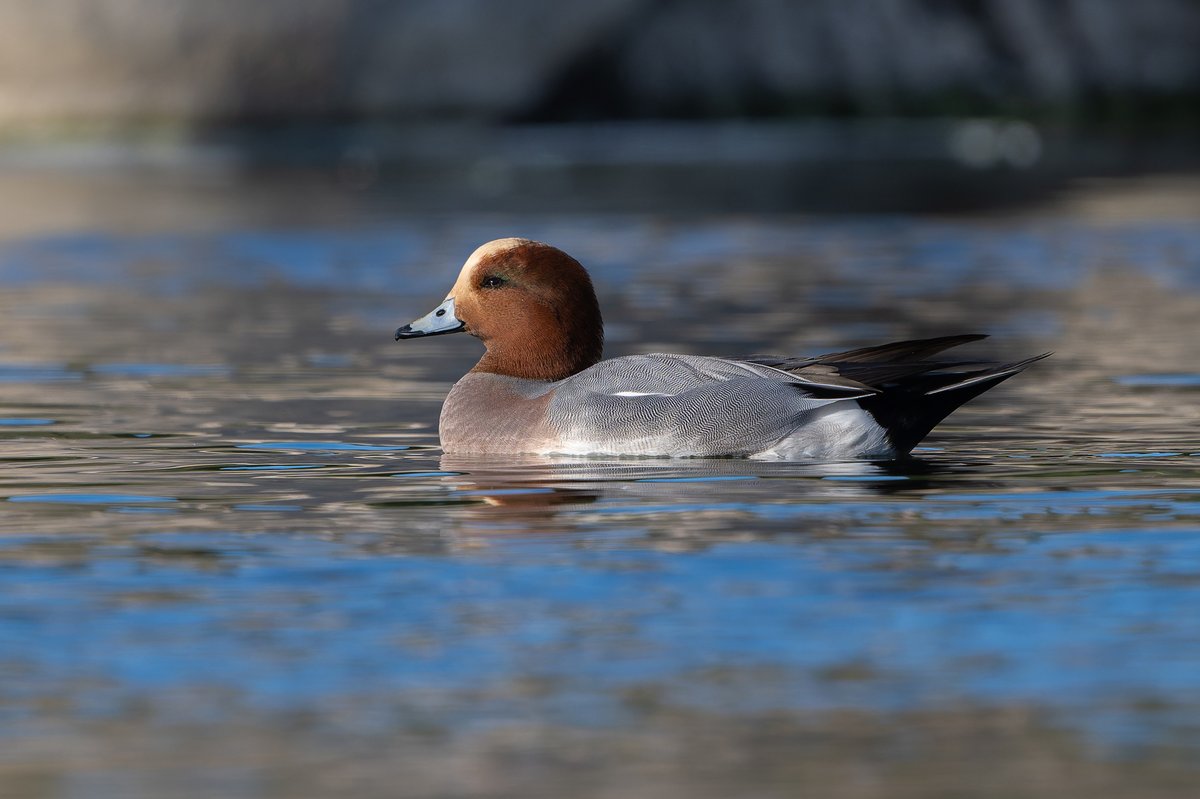
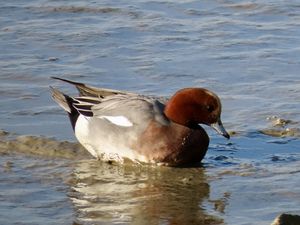
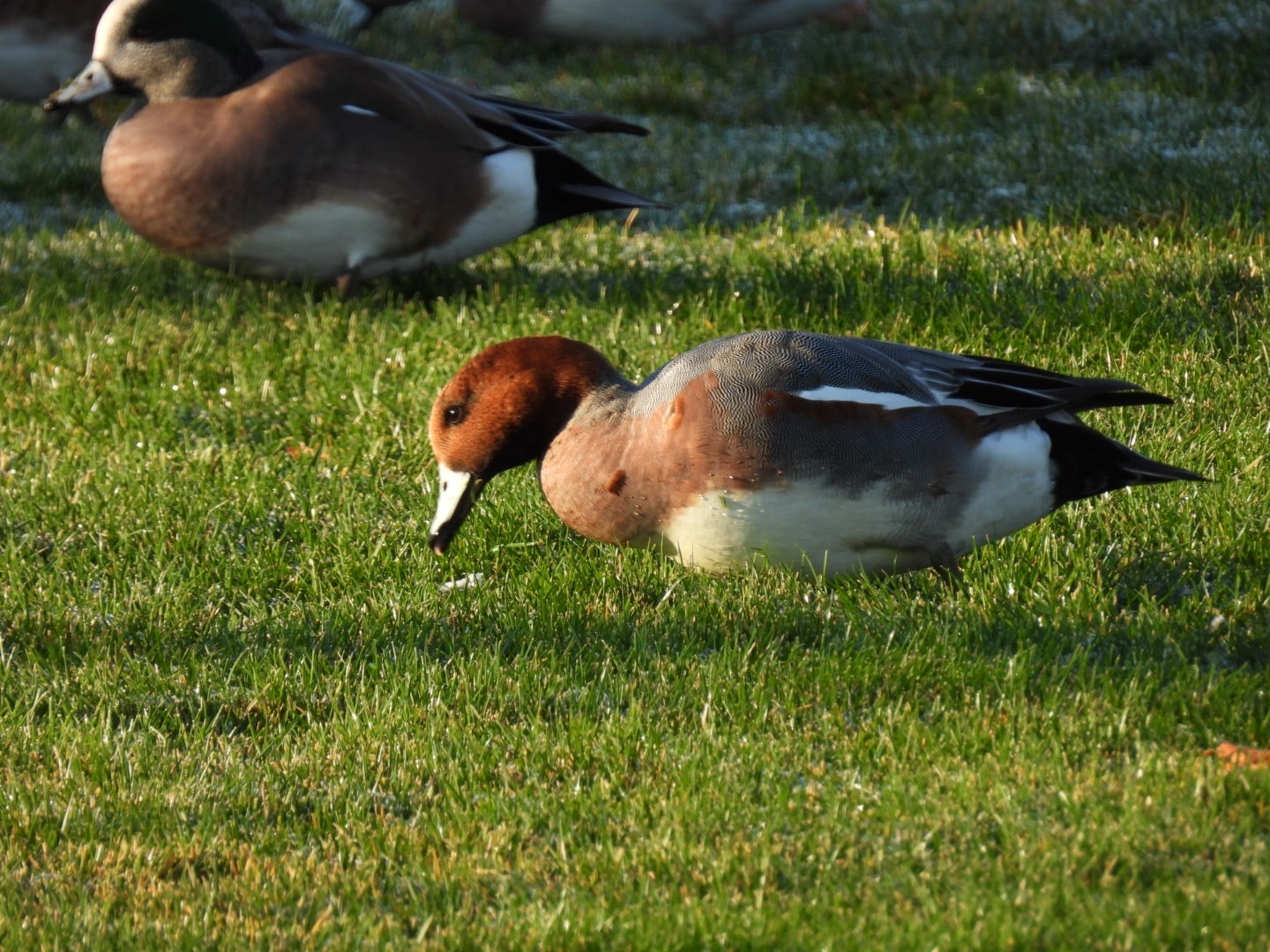
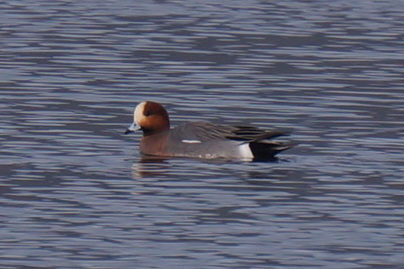
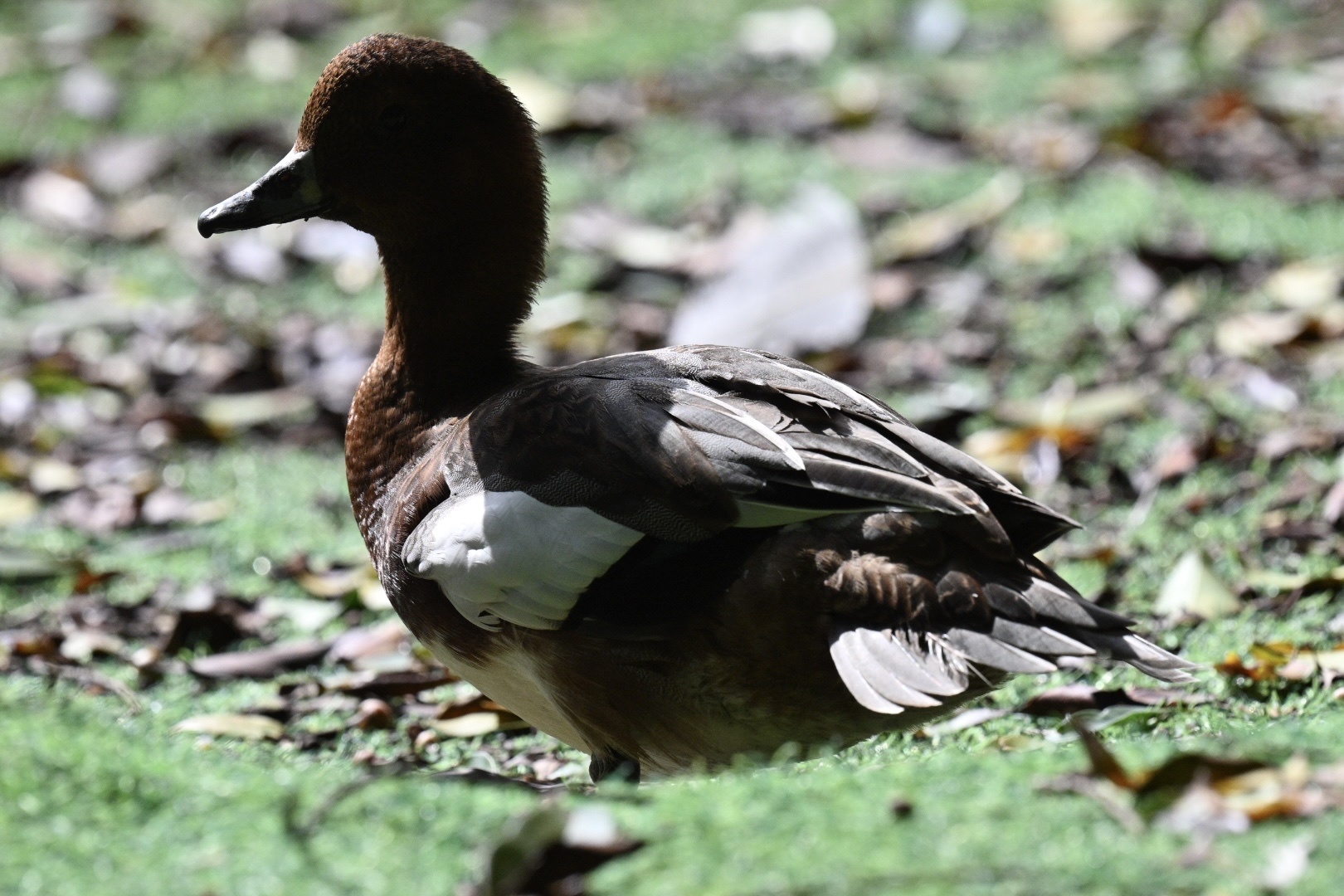
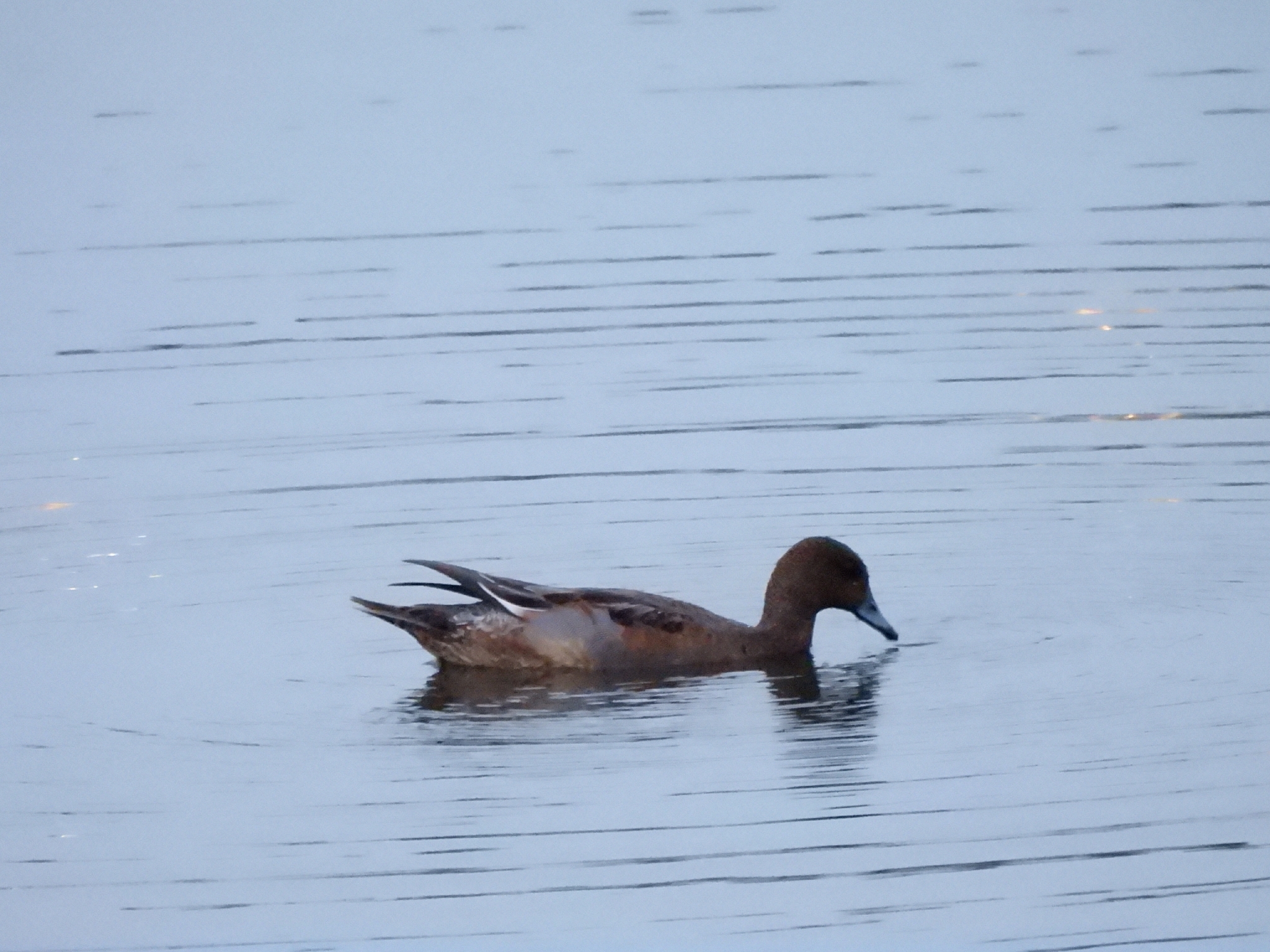
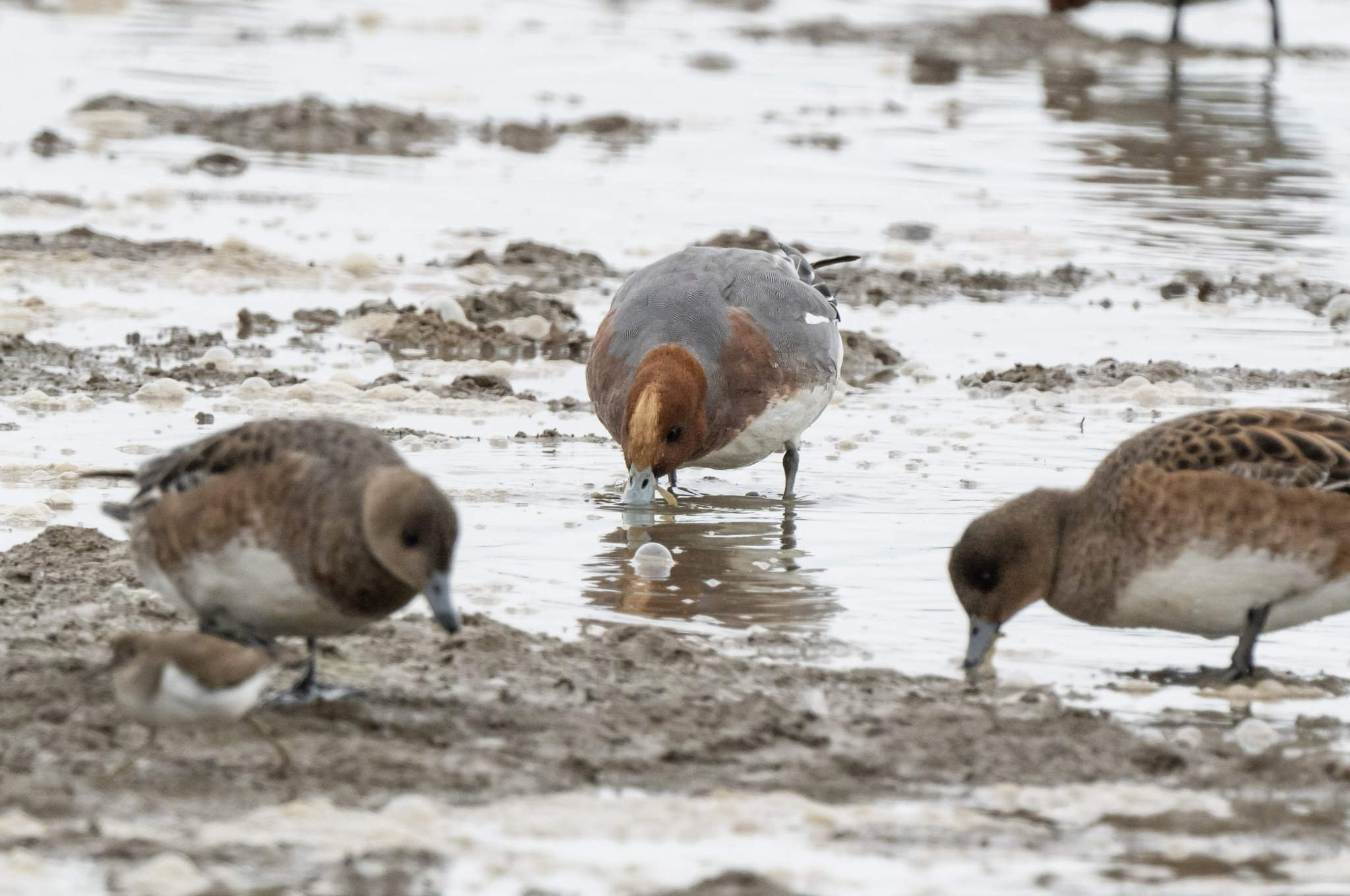
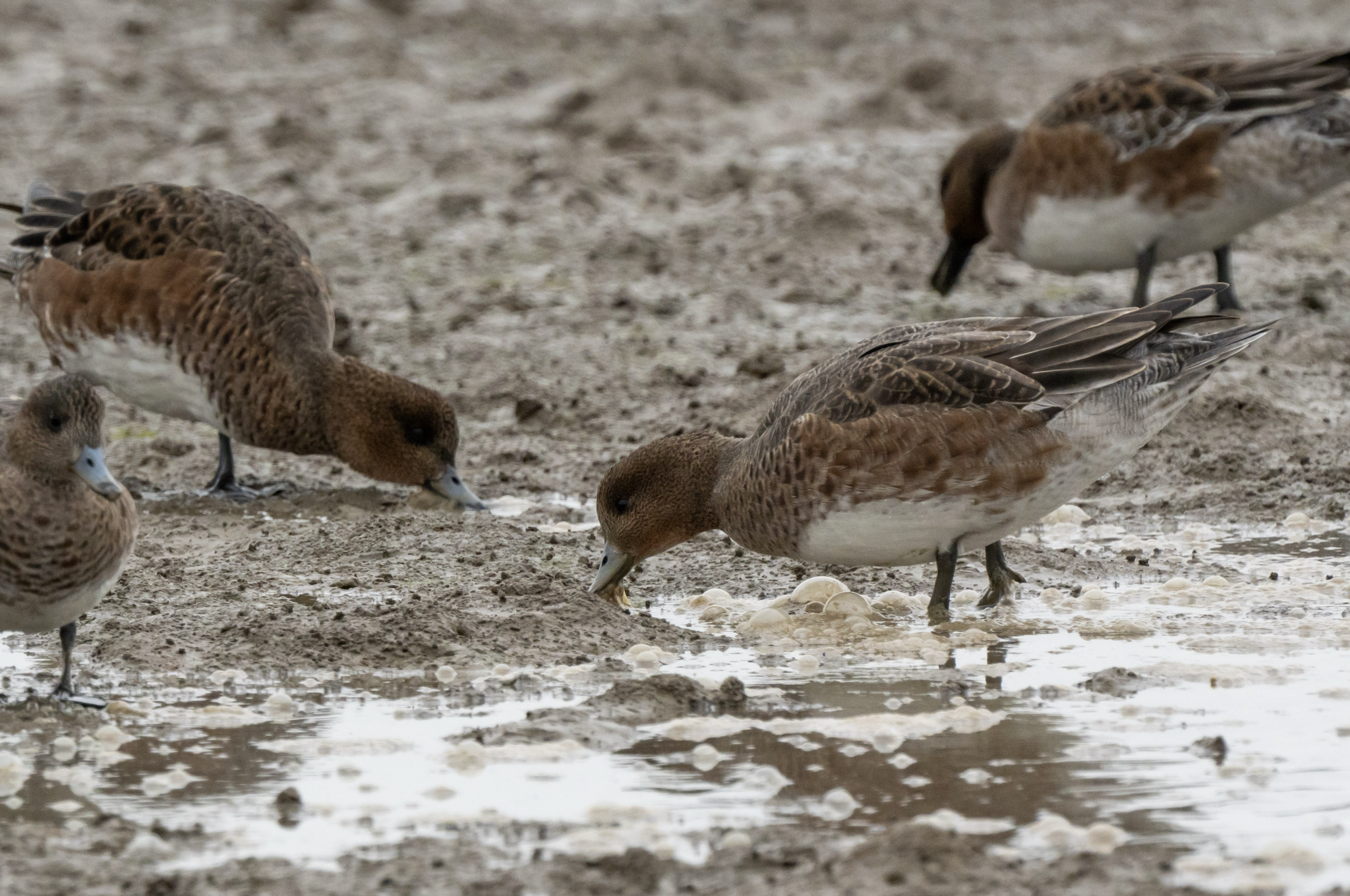
Length 42–52 cm (17–20 in), wingspan 71–80 cm (28–31 in), weight 500–1,073 g (1–2 lb). Breeding males have grey flanks and back, black rear end, dark green speculum, brilliant white patch on upper wings, pink breast, white belly, and chestnut head with creamy crown. Females are light brown, similar to female American wigeon, with rufous or gray morphs. Males in eclipse plumage resemble females.
Identification
Distinguished from most ducks by shape. Differentiated from American wigeon by darker head color and lack of white axillaries on underwings. Male produces distinctive whistle ('pjiew pjiew'); female has low growling sound ('rawr').
Distribution & Habitat
Breeds in northernmost Europe and the Palearctic. Strongly migratory, wintering in southern Asia and Africa. Common winter visitor in Great Britain and Ireland; scarce breeder in Scotland, Lake District, and Pennines. Uncommon winter visitor on mid-Atlantic and Pacific coasts of United States; rare elsewhere except Four Corners and southern Appalachians.
Behavior & Ecology
Inhabits open wetlands like wet grasslands or marshes. Feeds by dabbling for plant food or grazing. Nests on ground near water under cover. Highly gregarious outside breeding season, forming large flocks. May join and hybridize with American wigeon.
Conservation
Conservation status is Least Concern. It is a species to which the Agreement on the Conservation of African-Eurasian Migratory Waterbirds (AEWA) applies.
Source: Wikipedia · CC BY-SA 3.0
Taxonomy
- Order
- Anseriformes
- Family
- Anatidae
- Genus
- Mareca
Distribution
breeds northern and central Eurasia; winters to northern Africa and southern and southeastern Asia; frequent vagrant to North America
Data Sources
Species description from Wikipedia, licensed under CC BY-SA 3.0.
Bird images and sounds sourced from GBIF, contributed by citizen scientists worldwide under Creative Commons licenses.
Taxonomy data from AviList 2025.