Anseriformes / Anatidae / Mareca
Falcated Duck
Mareca falcata · 罗纹鸭
Introduction
A gadwall-sized dabbling duck from the east Palearctic, breeding in East Siberia, Mongolia, and northern Japan, and wintering to India. It is strongly migratory, gregarious outside the breeding season, and feeds by dabbling for plant food or grazing. The species is classified as Near Threatened on the IUCN Red List.
Description
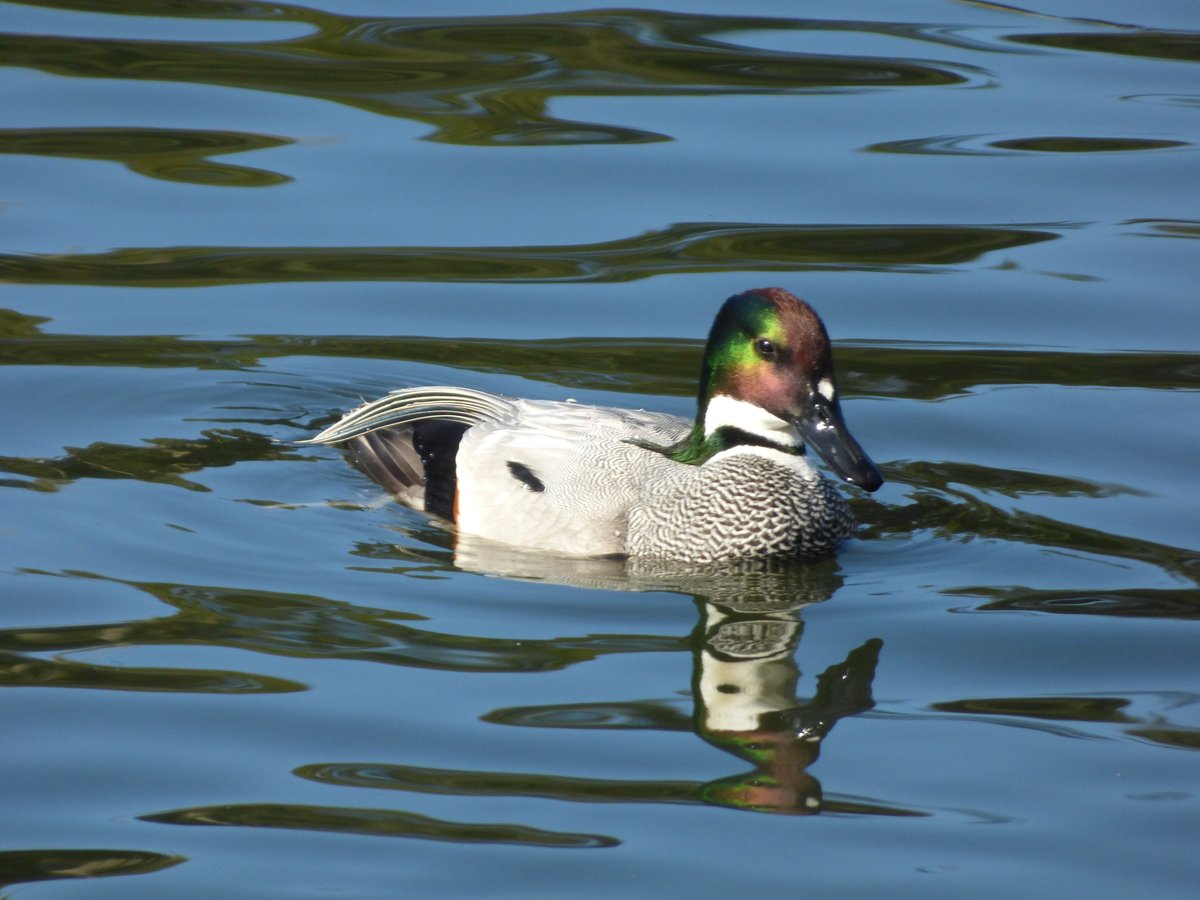
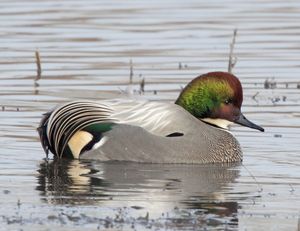
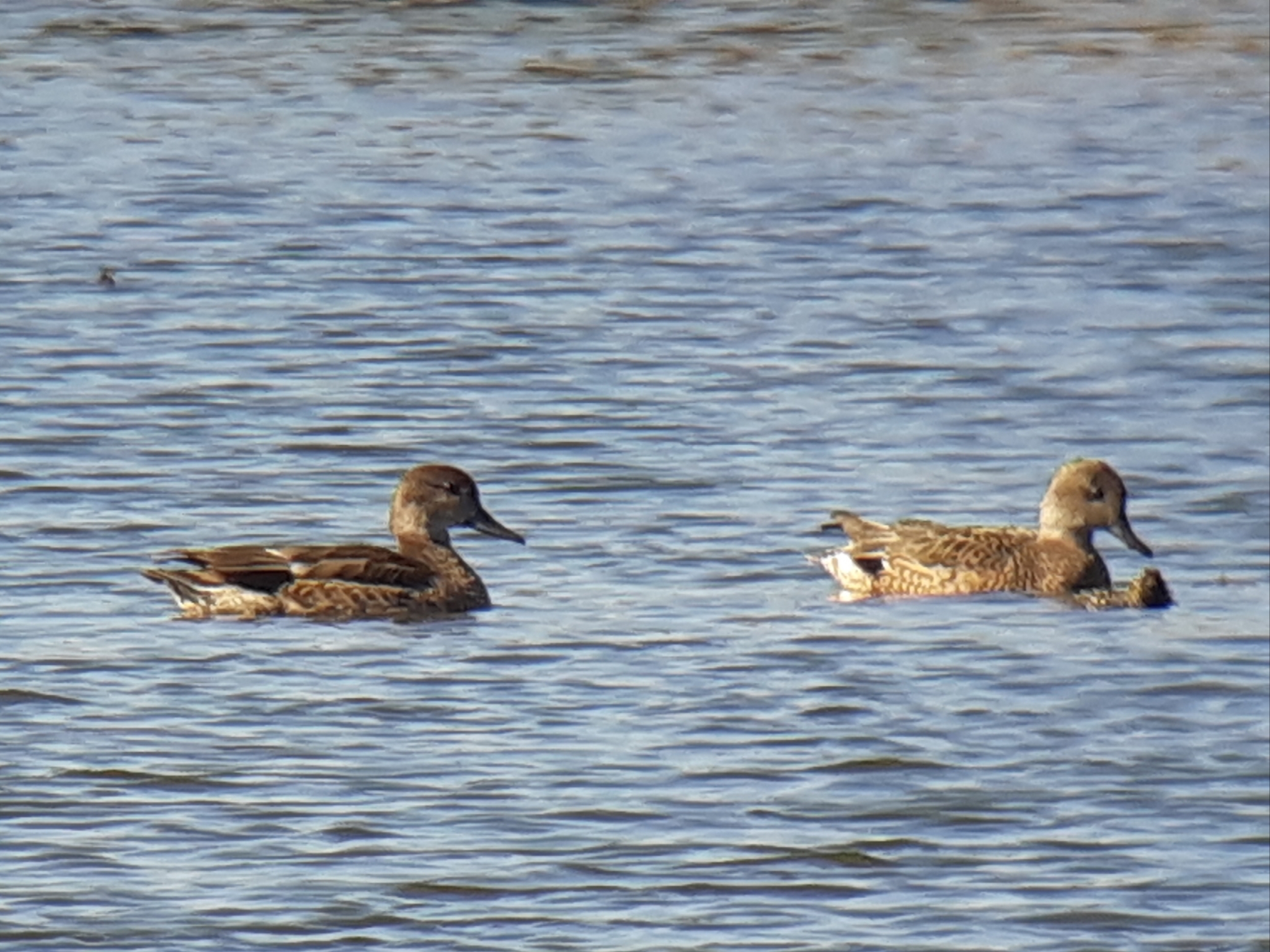
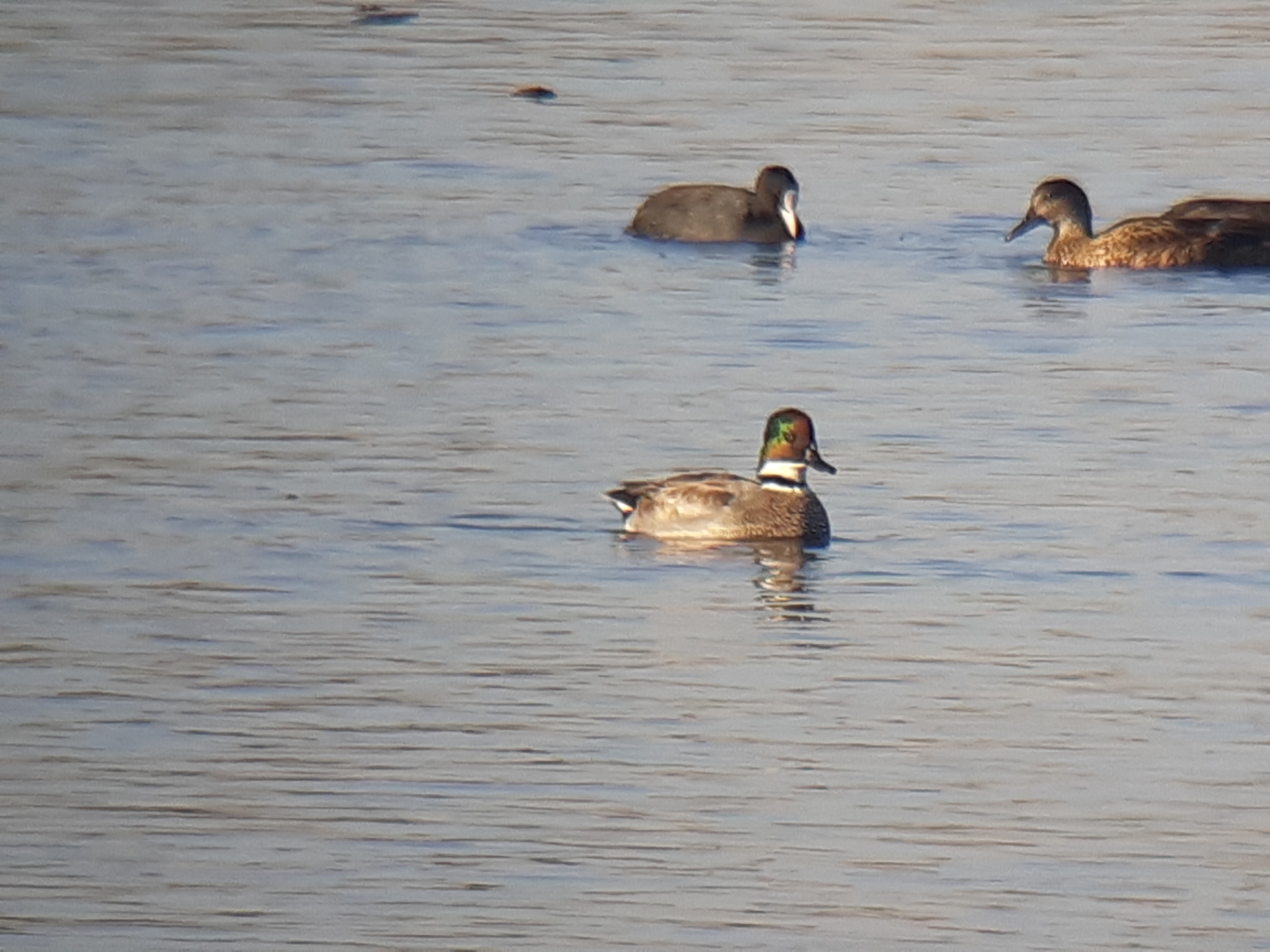
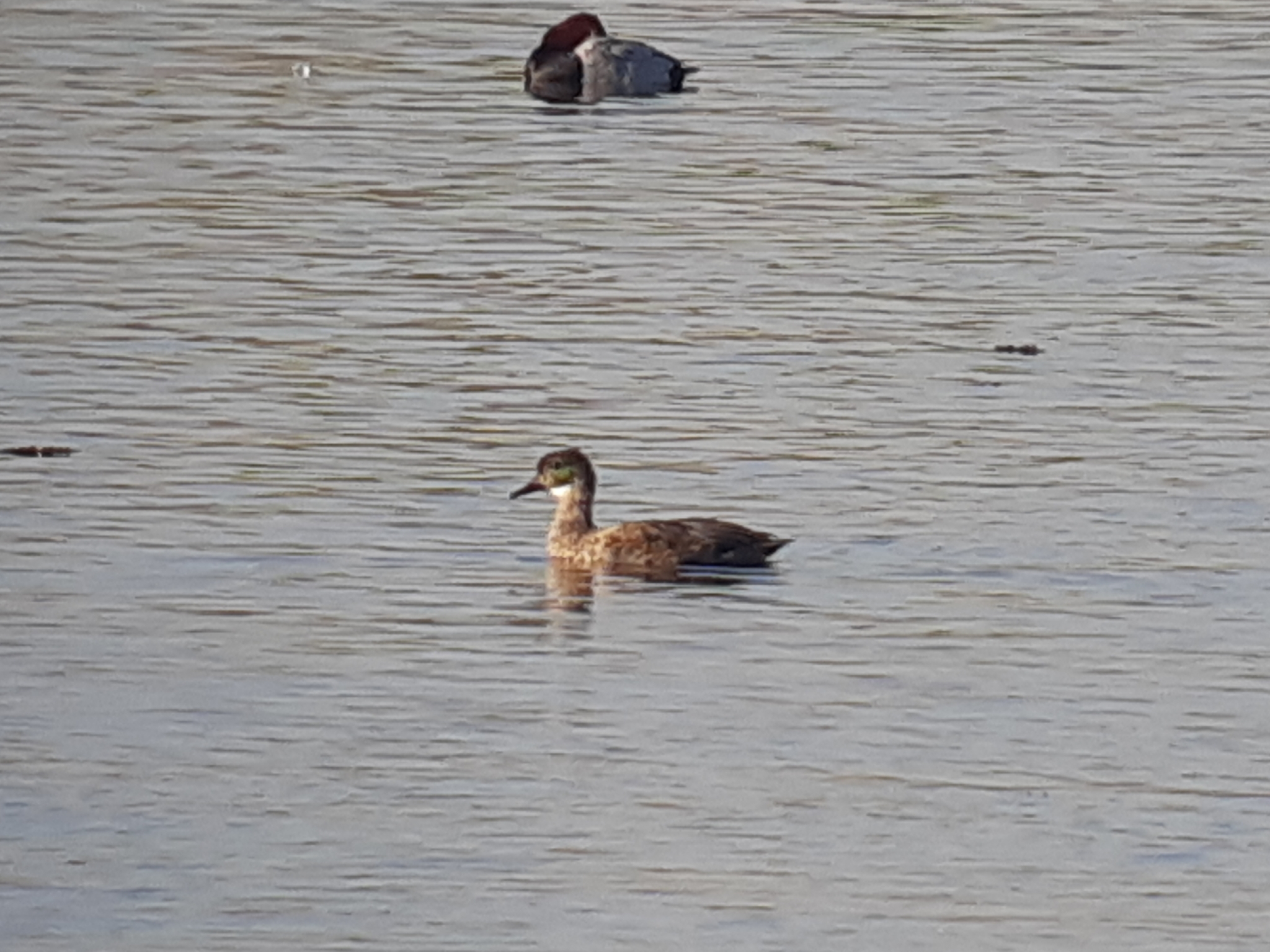
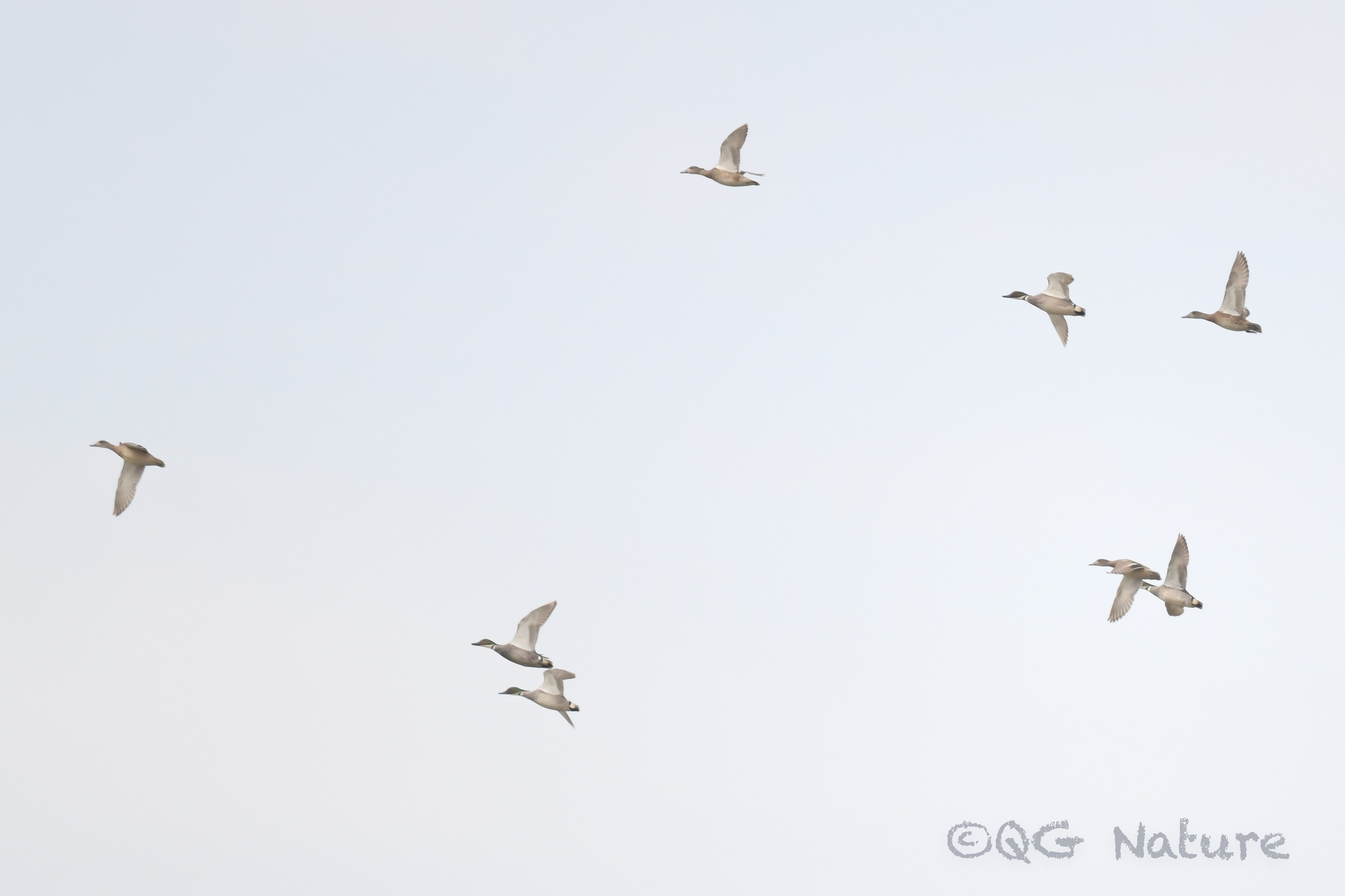
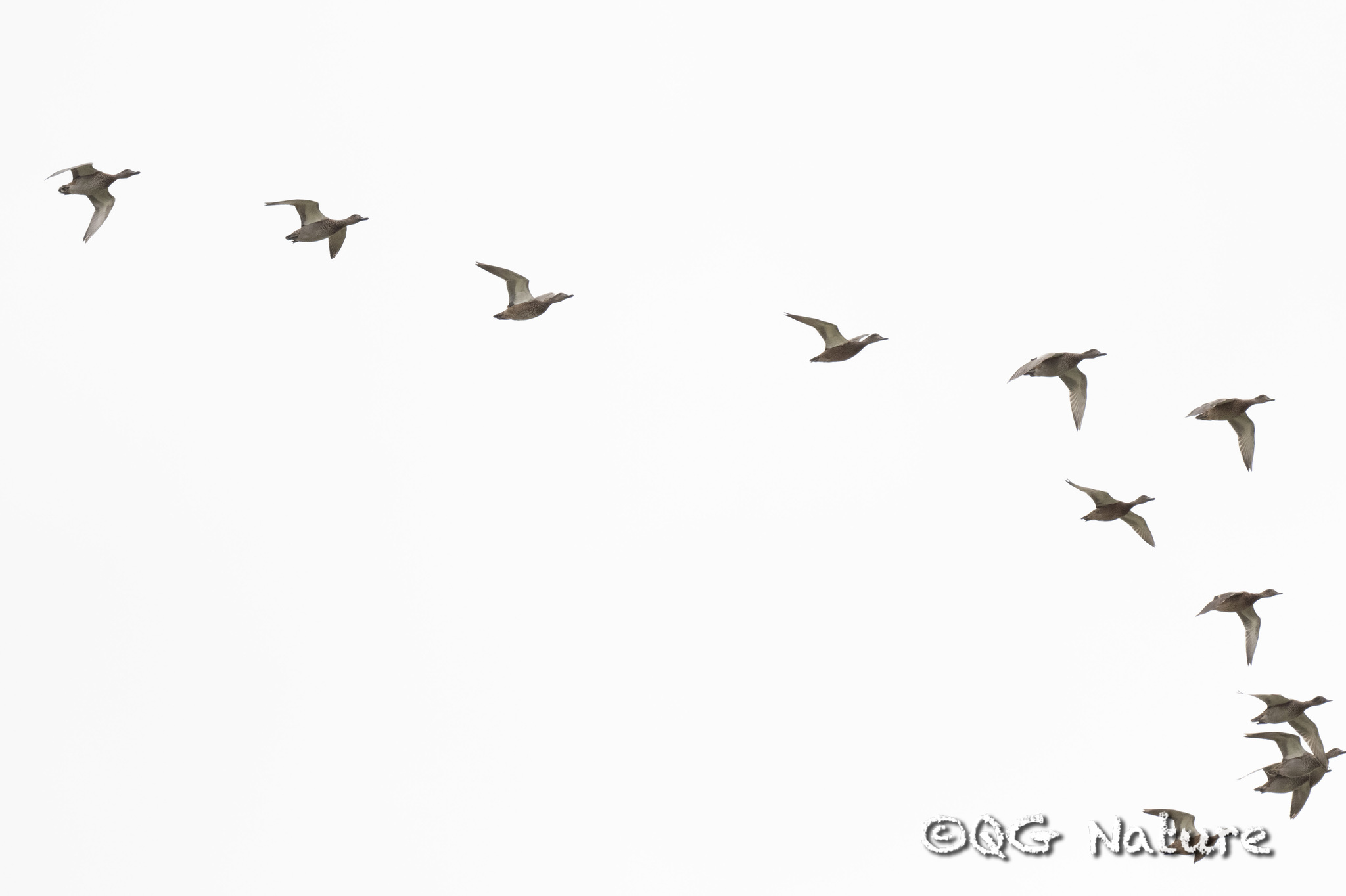
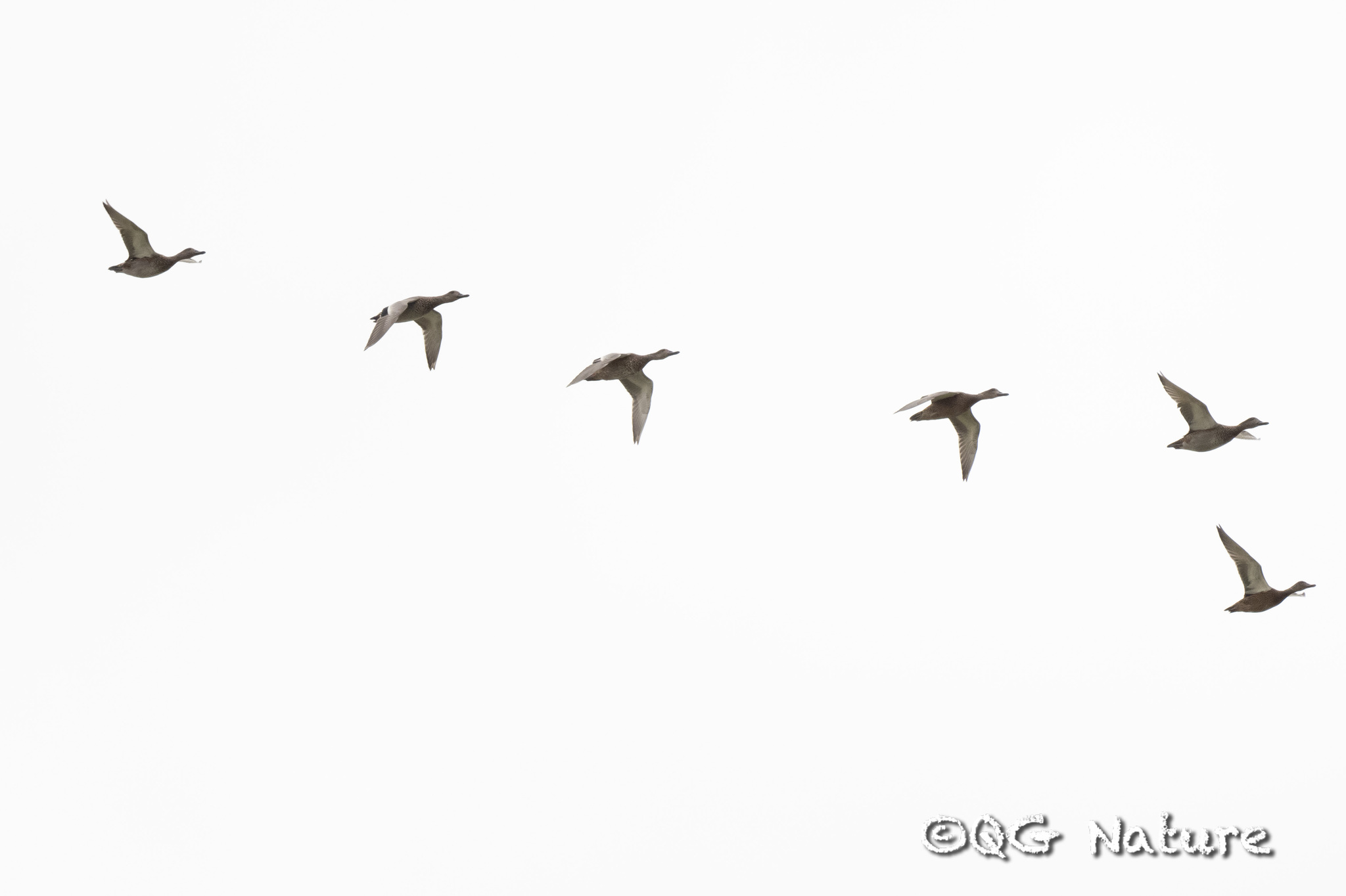
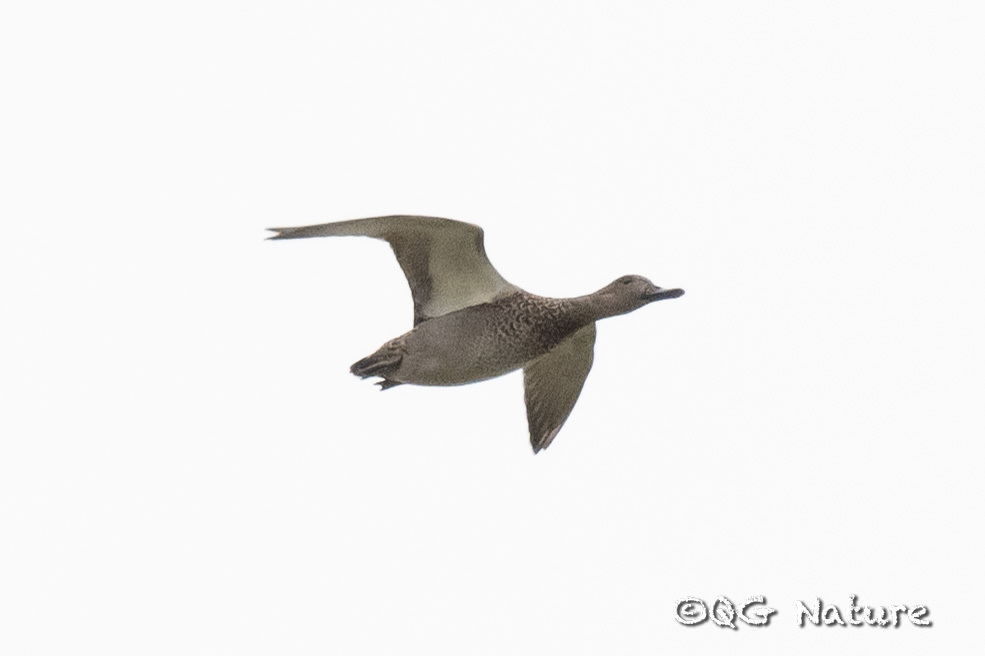
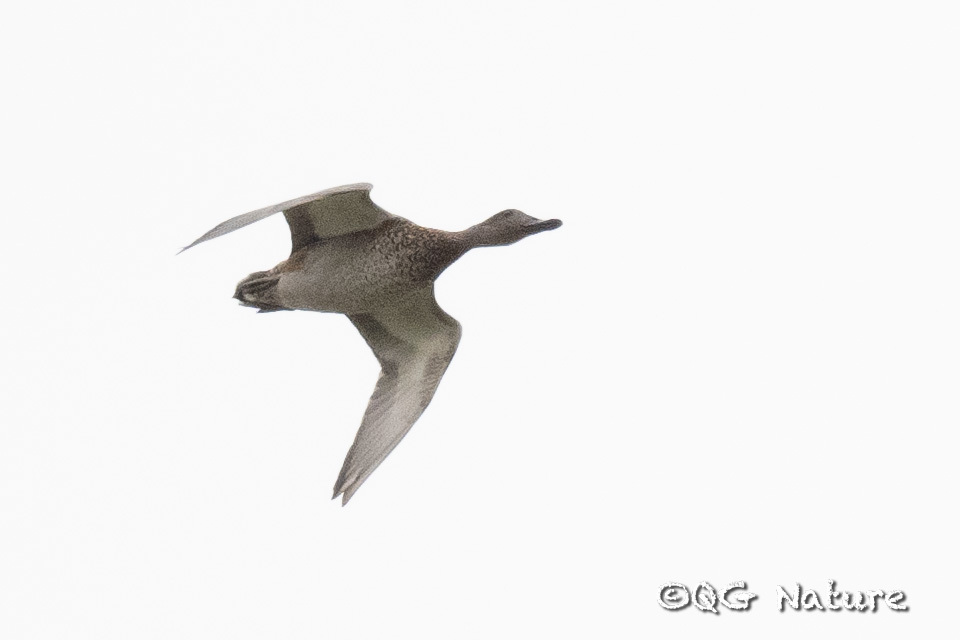
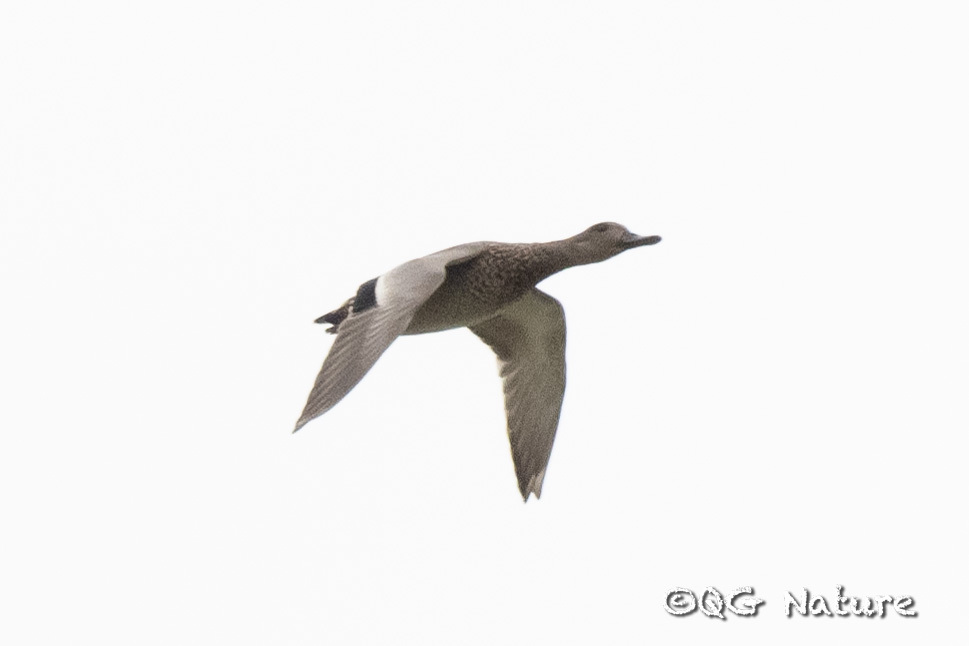
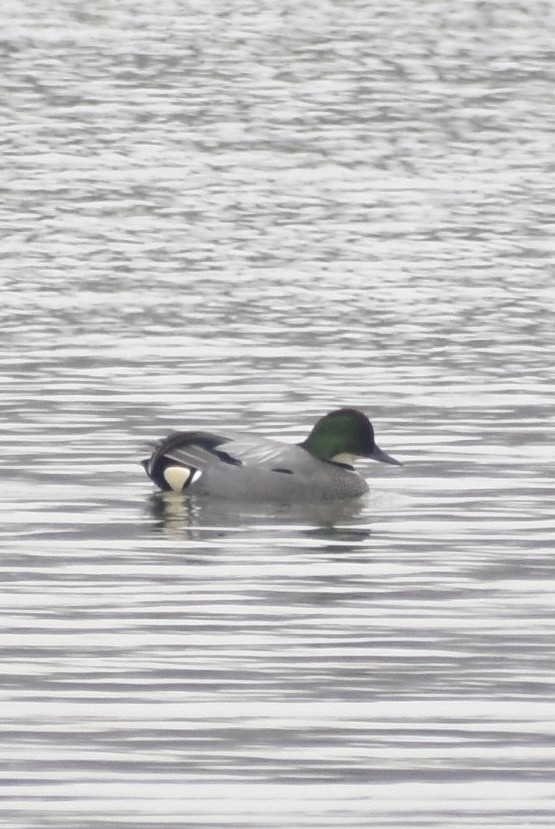
Males and females measure 46–53 cm (18–21 in) in length, with wingspans of 79–91 cm (31–36 in). Weight ranges from 422–770 g (14.9–27.2 oz), with males heavier than females. The breeding male has finely vermiculated grey body plumage, long sickle-shaped tertials hanging off its back, a dark green head with a white throat, dark green collar, and bronzed crown. The vent region is patterned in yellow, black, and white. The female is dark brown, resembling a female wigeon, with a long grey bill. Eclipse males resemble females but are darker on the back and head. Young birds are buffer than females with short tertials. In flight, both sexes show a pale grey underwing and a blackish speculum bordered with a white bar on the inner edge.
Identification
The breeding male is unmistakable due to long sickle-shaped tertials, dark green head, and white throat. Females are identified by their dark brown plumage similar to female wigeons but distinguished by a long grey bill. In flight, key marks include a pale grey underwing and a blackish speculum with an inner white border. Vocalizations include a male shrill whistle 'tyu-tyu-vit…tyu-vit…tyu-tyu-vit' and a quiet whistle ending in 'uit-trr'. Females produce a hoarse, quacking two-syllable inciting call and a high-pitched decrescendo call.
Distribution & Habitat
Breeds in eastern Russia (Khabarovsk, Primorskiy, Amur, Chita, Buryatia, Irkutsk, Tuva, eastern Krasnoyarsk, south central Sakha, Sakhalin), extreme northeastern North Korea, northern China (northeastern Inner Mongolia, northern Heilongjiang), and northern Japan (Hokkaidō, Aomori, Kuril Islands). Strongly migratory, wintering in Southeast Asia, including India (Uttar Pradesh, Bihār, Assam, eastern Haryāna), northern Bangladesh, Myanmar, Laos, Vietnam, and various provinces in China (Hainan, Taiwan, Yunnan, Guangxi, Guangdong, Fujian, Jiangxi, Hunan, Hubei, Zhejiang, Anhui, Jiangsu, Shandong, southern Hebei, Shanxi, northern Shaanxi). Global extent of occurrence is estimated at 1,000,000–10,000,000 km². Vagrants recorded in western North America and Poland.
Behavior & Ecology
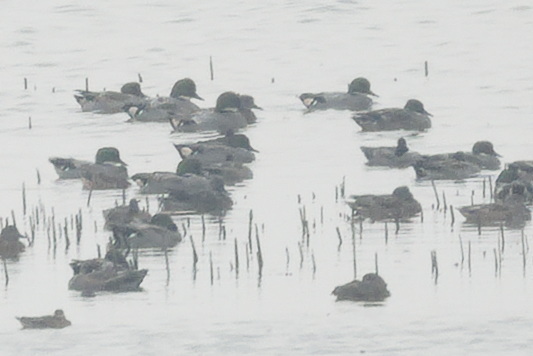
Gregarious outside the breeding season, forming large flocks. Feeds by dabbling or grazing on vegetation, seeds, grains, nuts, larvae, crustaceans, and mollusks. Nests on the ground in thick grasses, tussocks, or shrubbery near water, occasionally up to 80 m away. Clutch size is 6–10 eggs, laid in late May; eggs are white with a pinkish-yellow tint. Females incubate alone for 24–25 days while males leave. Courtship involves female inciting calls and preening, and male displays including neck-stretching burp calls, grunt whistles, and head-up-tail-up postures. Forms monogamous pairs during the mating season. Hybrids with Eurasian wigeon have been observed.
Conservation
Classified as Near Threatened on the IUCN Red List. Total population estimated at 89,000 individuals. Primary threats include hunting for food and feathers, and habitat loss due to wetland drainage and urbanization. Protected under the Migratory Bird Treaty Act. Populations exist in wildlife preservers and national parks, with 27% of the species found in National Nature Reserves. Conservation actions include monitoring populations, petitioning for hunting regulations, and improving nature reserve management.
Source: Wikipedia · CC BY-SA 3.0
Taxonomy
- Order
- Anseriformes
- Family
- Anatidae
- Genus
- Mareca
Distribution
breeds Mongolia, eastern Siberia, and northeastern China; winters northern India to southern and eastern China, southern Korean Peninsula, and Japan
Data Sources
CBR Notes: IUCN红色名录等级由NT降为LC
Species description from Wikipedia, licensed under CC BY-SA 3.0.
Bird images and sounds sourced from GBIF, contributed by citizen scientists worldwide under Creative Commons licenses.
Taxonomy data from AviList 2025.